Dr. Yann Quilcaille is a Researcher at ETH Zurich's Department of Environmental Systems Science, affiliated with the Professorship for Land Climate Dynamics. His work focuses on climate extremes, climate emulators, and socio-economic integration of climate models. He holds a PhD from Université Paris-Saclay and previously served as a research scholar at IIASA (Austria), advancing the OSCAR climate model. Key contributions include the MESMER-X emulator for spatially resolved climate extremes and research on fire weather, extreme event attribution, and climate overshoot scenarios. Dr. Quilcaille's research integrates physics-based and statistical approaches to develop low-cost climate emulators, aiming to bridge climate modeling with socio-economic frameworks. His expertise spans heatwaves, droughts, and fires, with a focus on global and regional climate impacts. Notable projects include analyzing fire weather overlaps between continents and quantifying carbon majors' contributions to historical heatwaves. His academic journey includes studies at Ecole Normale Supérieure de Paris-Saclay (Theoretical Physics), AgroParisTech (Economics of Sustainable Development), and Université Pierre & Marie Curie (Ocean, Atmosphere, Climate). He has authored over 50 publications on climate modeling, emulation techniques, and policy-relevant climate science.
Roles and Affiliations: Diana Santelia is a Privatdozent/Researcher at ETH Zürich's Department of Environmental Systems Science, affiliated with the Institute of Integrative Biology. She leads the Plant Molecular Physiology research group, focusing on carbohydrate metabolism in plants. She holds a senior scientist position and has been a habilitated lecturer since 2019, teaching molecular biology to Food Science and Environmental Sciences students. Education: BSc in Agricultural Sciences, University of Milan (2001) PhD in Molecular Plant Physiology, University of Zürich (2002–2006) Postdoctoral Researcher at ETH Zürich (2006–2011) Independent Group Leader at University of Zürich (2012–2019) Senior Scientist at ETH Zürich (2019–present) Research Interests: Her work centers on starch and sugar metabolism in guard cells and mesophyll tissues, particularly their roles in plant productivity, stress tolerance, and environmental responses. She uses Arabidopsis thaliana as a model and extends findings to crops like barley and tomato. Key areas include: Guard cell photosynthesis and stomatal movement regulation Starch granule formation and thylakoid membrane interactions Carbon allocation under abiotic stress Publications and Grants: Over 40 peer-reviewed articles since 2006, including work on thylakoid architecture, guard cell metabolism, and stress responses. Funded by Swiss National Science Foundation grants (e.g., 182570, 219583) for projects on starch metabolism and stomatal physiology. Teaching and Labs: Leads courses in molecular biology and contributes to plant environmental physiology workshops. Her lab develops tools like StomataPy for high-throughput phenotyping and collaborates internationally on plant stress adaptation.
Javier Picorel is a former researcher at École Polytechnique Fédérale de Lausanne (EPFL), affiliated with the Parallel Systems Architecture Lab (Parsa). His work focuses on computer architecture, distributed systems, and cloud computing, with an emphasis on optimizing storage systems, near-data processing, and high-performance computing. Picorel has contributed to advancements in scalable serverless computing, secure data center architectures, and accelerator design. His research interests include storage-class memory hierarchies, virtual machine performance optimization, and software-defined systems. Key projects include BlockNDP for block-storage acceleration, IndiLog for stateful serverless systems, and SPARTA for accelerator address translation. He has collaborated extensively with the Parsa group and published widely in top conferences such as ISCA, MICRO, and PACT.
François Grey is an Associate Professor at the University of Geneva, holding roles at the Geneva School of Economics and Management and the Research Institute for Statistics and Information Science. He previously served as Vice Dean for Studies and Director of Digital Strategy at the University of Geneva (2016–2018). His research focuses on citizen science, innovation management, and sustainable development goals, with a 15-year background in nanotechnology and 20+ years in citizen science. Grey coordinates the Citizen Cyberlab initiative, a partnership with CERN and UNITAR, and directs the Geneva Tsinghua Initiative for UN SDG education. He teaches courses on open science, crowdsourcing, and AI at both undergraduate and graduate levels. Education: Ph.D., University of Copenhagen Research Interests: Grey’s work bridges technology and societal impact, emphasizing participatory science through platforms like Citizen Cyberlab. His research explores public engagement in science, innovation programs in universities and labs, and leveraging citizen science for environmental and health challenges. He advocates for open science practices and has pioneered initiatives like hackathons to foster public participation. Labs/Teams: Coordinates the Citizen Cyberlab, driving participatory research technologies and exploring societal impacts of citizen science. Active in global education programs such as the Geneva Tsinghua Initiative.
Yi-Cheng Zhang is a Professor in the Department of Physics at the University of Fribourg, Switzerland. He is affiliated with the Faculty of Science and Medicine, where he contributes to research and teaching in complex systems and network science. His work bridges physics with interdisciplinary applications in economics, finance, and social systems. His research interests focus on complex networks, statistical mechanics, and their applications. This includes studying network dynamics, percolation theory, economic complexity, and information diffusion. He explores topics such as ranking algorithms, social recommendation systems, and the structural analysis of trade and financial networks. His interdisciplinary approach addresses challenges in both theoretical and applied domains, such as optimizing recommendation systems and understanding market dynamics through network models. Yi-Cheng Zhang has contributed to numerous publications on network science, with recent works examining the limitations of PageRank in sports data, the nested structure of world trade networks, and the role of information in economic systems. His research often integrates computational methods and empirical analysis to uncover patterns in complex systems. While specific details on grants or advising are not provided in the available texts, his extensive publication record reflects a sustained commitment to advancing the understanding of interconnected systems across multiple disciplines.
Alberto Lerner is a Senior Researcher at the Department of Informatics within the Interfaculty Informatics Department at the University of Fribourg. His research focuses on advancing database systems, storage architectures, and hardware-software co-design. He holds a strong interest in computational storage, network-accelerated query processing, and the integration of modern hardware technologies like CXL into database engines. Lerner's work emphasizes performance optimization and scalable solutions in data-intensive computing environments. His research interests include database architecture, storage co-design, hardware acceleration, and network-driven computing. Recent publications highlight innovations in point cloud data processing, reprogrammable storage devices, and software-defined controllers for NAND flash systems. Lerner's articles reflect a trend toward leveraging modern hardware advancements to enhance database and storage performance. He has contributed to frameworks like BABOL and Data Pipes, advancing declarative control over data movement and network-based graph mining.
Miloš Stojaković is a Full Professor at the Department of Mathematics and Informatics, Faculty of Sciences, University of Novi Sad, Serbia. He has held this position since 2016, following roles as Associate Professor (2011–2016) and Assistant Professor (2006–2011). His research focuses on positional games, discrete and computational geometry, discrete random structures, combinatorial algorithms, and graph theory. He leads the Foundations of Computer Science group since 2018. Stojaković earned his Ph.D. in Computer Science from ETH Zurich (2005), advised by Emo Welzl and Tibor Szabó, and holds M.Sc. and B.Sc. degrees from the University of Novi Sad. He has been recognized with the Dr Z. Đinđić Award (2008) for best young scientist in Vojvodina and the Best Student of University of Novi Sad Award (1998/99). He has advised three Ph.D. students: Mirjana Mikalački, Marko Savić, and Jelena Stratijev. His work spans over 60 publications, including seminal contributions to positional games and computational geometry. He serves on editorial boards of Discrete Mathematics & Theoretical Computer Science and the Novi Sad Journal of Mathematics . Stojaković teaches courses such as Combinatorial Algorithms, Graph Theory, and Theoretical Computer Science at the University of Novi Sad. He has also taught specialized courses on positional games at institutions like the University of Buenos Aires and Eötvös Loránd University Budapest. His research interests emphasize algorithmic and combinatorial aspects of games, geometry, and graph theory.
Jürgen Wassner is a Professor of Edge Computing and Co-Head of the Competence Center for Intelligent Sensors and Networks at the Lucerne School of Engineering and Architecture (HSLU T&A). He holds a master's degree from Technical University of Dresden and a PhD from ETH Zurich. His career spans industry roles in Silicon Valley Group Inc. and telecommunication R&D before joining academia in 2007. His research focuses on embedded systems, AI at the edge, FPGA/VHDL design, real-time systems, and powerline communication . He leads projects such as 'Visual-Servoing Testbed with AI-Hardware in the Loop' and 'Low-Cost High-Performance Intelligent Camera for Space Debris Mitigation,' collaborating with companies like Diehl Aerospace. Recent publications emphasize wire fault detection using powerline communication, AI-based odor classification systems, and hardware acceleration for CNNs. His work bridges theoretical research with practical applications in avionics, rail freight, and space debris mitigation. Wassner advises Master of Science in Engineering students and has been recognized for his media engagement including a feature in the Luzerner Zeitung. He teaches Digital Design (FPGA, VHDL) and Digital Signal Processing , emphasizing hands-on implementation of cutting-edge systems.
Kai Dröge is a Lecturer at the Lucerne School of Business (HSLU), specializing in qualitative research methods and digital transformation of the workplace. He holds a PhD in Sociology from Justus-Liebig-Universität Gießen (2009) and has taught at institutions like the University of Wuppertal and the Institute for Social Research in Frankfurt. His research focuses on sociology of work, digitalization of knowledge work, and online dating, with notable contributions to understanding societal impacts of digital platforms. Dröge is also actively involved in research blogs and YouTube content creation, such as his channel 'Qualitativ Forschen.' Education: M.A. in Sociology, Philosophy, and Computer Science from Universität Siegen (1999) PhD in Sociology from Justus-Liebig-Universität Gießen (2009) Research Interests: Dröge’s work bridges labor sociology and media sociology, exploring themes like digital disruption in knowledge work, online dating dynamics, and the societal role of performance principles. His recent projects include analyzing career transitions in digitalized sectors and the ethical implications of web 2.0 platforms. Key Contributions: Co-authored Digitale Disruption und biografische Verarbeitung (2023) Edited Digitalisierung der Wissensarbeit (2019) SNF-funded research on online dating (2008–2012) Labs/Activities: Maintains research blog RomanticEntrepreneur.net and YouTube channel Qualitativ Forschen , focusing on qualitative research methodologies and digital sociology.
Dr. Jorge Martinez Garcia is a Lecturer in X-Ray Imaging & Diffraction at the Lucerne School of Engineering and Architecture, where he conducts research at the Thermal Energy Storage Competence Center and Lucerne Ct Imaging laboratory. His interdisciplinary background spans physics, materials science, and mechanical engineering. Research expertise includes: Advanced X-ray computed tomography techniques Phase change material characterization Thermal energy storage optimization 3D imaging analysis algorithms His current work focuses on applying high-resolution imaging to study crystallization processes in thermal storage materials, developing novel analysis methods for energy systems, and improving manufacturing processes through non-destructive testing. He maintains active collaborations with industry partners in energy technology and materials science sectors.
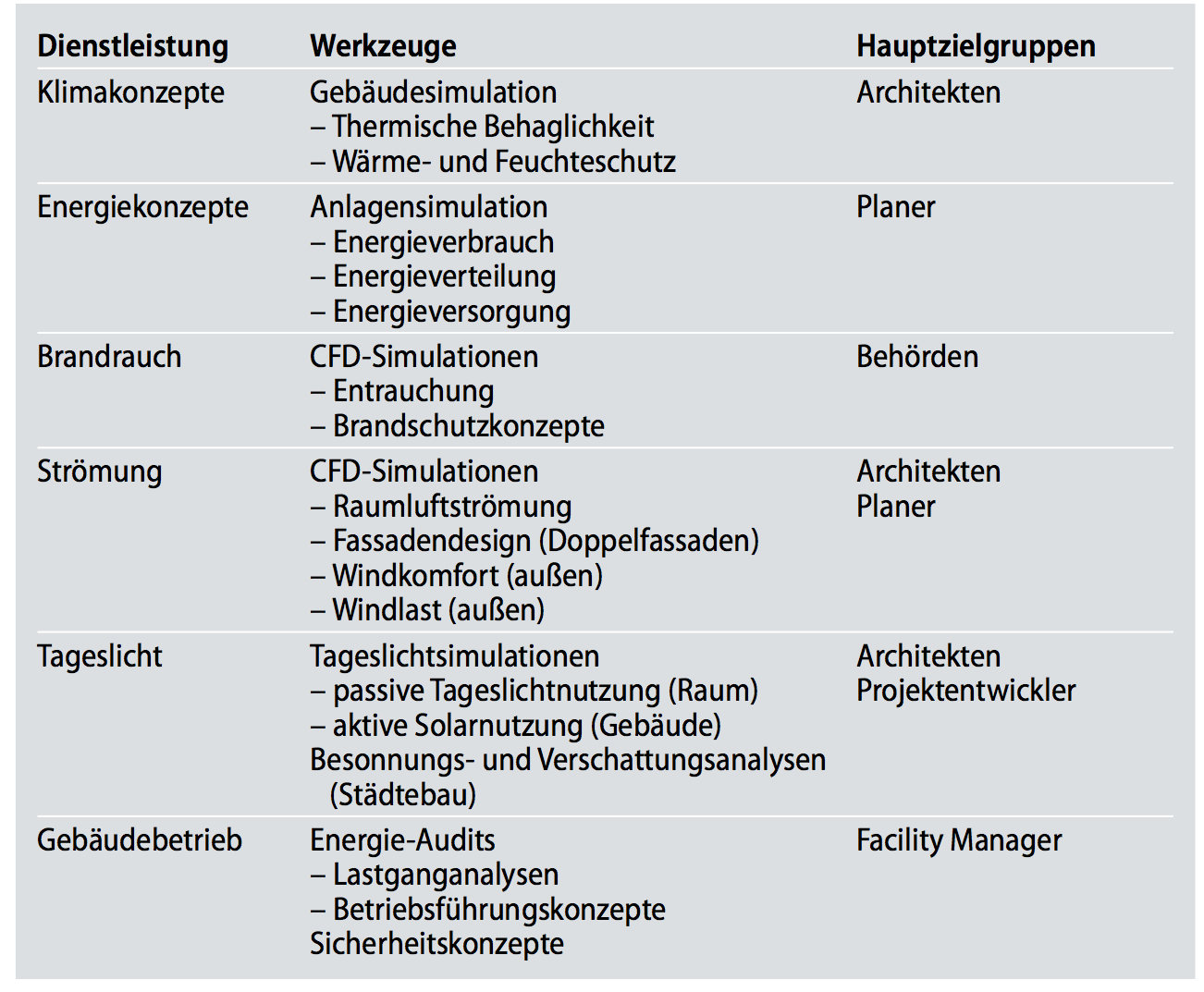
Axel Seerig is Professor of Building Climate and Building Technology at the Department of Technology and Architecture of Lucerne University of Applied Sciences and Arts (HSLU). He works at the Institute of Building Technology and Energy (IGE) and the Center for Integrated Building Technology, where he leads research and teaching in sustainable building concepts. With over 25 years of experience in building simulation and sustainable energy concepts for buildings, areas, and regions, he has established himself as a leading expert in climate-responsive building design. Seerig completed his studies in Process Engineering and earned his PhD in Thermodynamics at the Technical University of Berlin. His academic journey includes leadership roles as program director for Building Technology at the Austrian University of Applied Sciences Burgenland and senior researcher positions at AIT (Austrian Institute of Technology) and AEE-intec. His research focuses on the development of sustainable energy concepts using computer simulations for building climate control. He applies scientific principles of thermodynamics, heat transfer, and fluid mechanics through dynamic simulations in the disciplines of building climatic engineering and building simulation. His work emphasizes maximizing natural resources and user exposure to the outdoors through natural air conditioning, ventilation, and lighting, with human well-being as the central focus of planning. Current research includes energy efficiency in engineering systems for Central Asia, climate change adaptation in building design, and advanced data analysis for building performance assessment. His publication record shows a consistent focus on building energy efficiency, climate-responsive design, and simulation methods. Recent work emphasizes the integration of data analysis techniques like Monte-Carlo methods and artificial neural networks with traditional building simulation approaches. His research addresses critical challenges including climate change impacts on building performance, uncertainty in occupancy patterns, and the development of robust building concepts that maintain performance throughout their lifecycle. Seerig serves as an advisor in the Master of Science program MSE in Building Technologies and for doctoral studies at Middlesex University in London. He has received research funding through projects like SCCER FEEB&D (Swiss Competence Center for Energy Research) and has consulted internationally for the German Society for International Cooperation (GIZ) in Central Asia and Africa. He is an active member of the building science community, serving on the board of the International Building Performance Simulation Association (IBPSA), as a reviewer for the Austrian Research Promotion Agency (FFG), and as a member of professional organizations SIA and VDI. His work connects academic research with practical building projects, including notable collaborations with firms like Gruner AG on buildings such as the Roche OPAL office building, Siemens Headquarters Austria, and the Vienna Central Station.
Marcel Uhr is a Lecturer at the Lucerne School of Computer Science and Information Technology, part of Lucerne University of Applied Sciences and Arts. He holds a biology degree and doctorate from ETH Zurich, alongside a certificate in university didactics. His professional journey includes roles as an Assistant at ETH Zurich’s Institute for Hygiene and Occupational Physiology, CEO of soultank AG, and Principal Consultant at the same firm. His research and teaching focus on User Experience , Usability , and Human Factors , with competencies in Design Thinking , Human-Computer Interaction , and Ergonomics . He has led projects like the Digital Twin for Education & Research , Herzfroh 2.0 (sexuality education tool), and AI Supported MultiTouch . He previously taught the Master Digital Ideation program until 2023. Outside academia, he serves as President of the KMU Next association and is actively involved in logistics as a Lorry Driver. His work emphasizes practical applications of design principles in healthcare and education technology.
Tim Weingärtner is a Lecturer at Lucerne School of Computer Science and Information Technology, part of Lucerne University of Applied Sciences and Arts. He holds a Dr.-Ing. from the University of Karlsruhe (now KIT) and a Dipl. Inform. in Computer Science. His professional experience includes roles as a Product Manager, Managing Director, and Senior Manager in finance and IT sectors, alongside academic roles as a Research Assistant and Lecturer. His research focuses on Blockchain technology, Smart Contracts, Self-Sovereign Identity, Innovation Management, and FinTech. He leads projects like SSI 4 Sport and Environmental assessment of DLT solutions , and is involved with organizations like the Blockchain Lab and DEC Association. His academic contributions include books on Blockchain and cybersecurity, and peer-reviewed articles on decentralized finance risks and quantum mechanics education. Notable awards include a 2021 2nd Prize at the Blockchain International Scientific Conference. He actively promotes innovation through initiatives like Smart-up and serves as Vice President of DIDAS and President of DEC Association.
Dr. Abdelouahab Dehbi is a Senior Scientist at the Paul Scherrer Institute (PSI), Switzerland, affiliated with the Laboratory for Simulation and Modelling within the Center for Scientific Computing, Theory and Data. His research focuses on computational fluid dynamics (CFD), aerosol behavior, and severe accident analysis in nuclear systems. Key projects include the ARTIST initiative investigating aerosol retention in steam generators during severe accident scenarios. He specializes in modeling turbulence, multiphase flows, and thermal hydraulics with applications to nuclear reactor safety. Notable contributions include CFD-based studies on particle dispersion, condensation phenomena, and validation of safety codes against experimental data. Collaborations span international institutions, emphasizing experimental validation and code benchmarking. Research Contributions Development of stochastic and LES-based models for particle transport and deposition. Investigation of steam condensation dynamics in the presence of noncondensable gases. Leadership in the ARTIST project, yielding insights into SGTR (Steam Generator Tube Rupture) aerosol retention. Pioneering work on granular flow dynamics in pebble-bed reactors and hydrogen mitigation strategies. Key Collaborations Active in OECD/NEA CFD4NRS workshops and international projects like PHEBEN-2 and IPRESCA. His work bridges CFD simulations with experimental data from facilities like CESANE and PANDA. Future Work Ongoing focus on enhancing safety analyses through advanced CFD techniques, thermal radiation modeling, and validation of correlations for steam condensation under extreme conditions.
Gail Weiss is a Lecturer and Post-Doctoral Researcher at École Polytechnique Fédérale de Lausanne (EPFL), affiliated with the Natural Language Processing Laboratory (NLP) within the School of Computer and Communication Sciences. She holds dual roles in research and teaching, contributing to both academic research and coursework in natural language processing and formal methods. Her research focuses on the intersection of formal language theory and machine learning, particularly exploring the capabilities of neural networks such as recurrent neural networks (RNNs) and transformers in recognizing formal languages. Recent work examines the vulnerability of higher education to AI tools and advances methods for extracting formal models from neural architectures. Teaching includes courses like 'Topics in Natural Language Processing' and contributes to the EDIC academic program. Her research has been published in top venues, addressing theoretical foundations of neural networks and practical applications in knowledge representation. She is based at INR 240 in Lausanne.