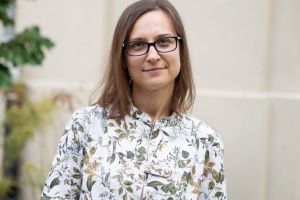
Prof. Tadeusz Andruniów serves as a full Professor at the Institute of Advanced Materials within the Faculty of Chemistry at Wrocław University of Science and Technology. His research program integrates quantum chemical methodologies with photobiological systems, focusing on light-induced processes in biological chromophores. With continuous publication output from 2004 to 2025, he maintains an active research trajectory evidenced by contributions to high-impact journals including the Journal of the American Chemical Society and Proceedings of the National Academy of Sciences. His core research interests encompass: Quantum Chemistry of Biological Systems Photoisomerization Dynamics in Rhodopsin Resonance Raman Spectroscopy Two-Photon Absorption Phenomena Protein-Chromophore Interactions Computational Photobiology These interests drive his investigations into excited-state behavior, energy storage mechanisms, and spectroscopic signatures of chromophores in complex biological environments. Analysis of his 2020-2025 publications reveals three dominant research thrusts: (1) Precision modeling of two-photon absorption in rhodopsin and fluorescent protein chromophores using high-level coupled-cluster methods; (2) Elucidation of protein environmental effects on spectroscopic properties through QM/MM simulations; and (3) Extension of computational frameworks to abiotic systems like sequence-defined polyurethanes. His work consistently demonstrates methodological innovation in handling excited-state dynamics and nonlinear optical properties. While specific grant details and student supervision records are not documented in available sources, his collaborative publication pattern involving international co-authors indicates active research networking. His technical contributions to computational protocols for artifact removal in polarizable embedding calculations and quantum region optimization represent significant methodological advances for the field.
Prof. Kazimierz Bęcek is affiliated with the Wrocław University of Science and Technology as a faculty member in the Faculty of Geoengineering, Mining and Geology , specifically within the Department of Geodesy and Geoinformatics . His research spans multiple domains including geodesy, remote sensing, and geomatics, with a strong focus on elevation data analysis and environmental monitoring. Ecology Photogrammetry Remote Sensing Geodesy Geomatics Prof. Bęcek's work primarily investigates geospatial data accuracy, environmental dynamics, and geodetic methodologies. He has contributed significantly to elevation model validation, land subsidence detection, and vegetation collapse analysis through advanced remote sensing techniques. Recent publications highlight his expertise in Digital Elevation Model evaluation , LiDAR data processing , and environmental monitoring using satellite observations. His research extends to climate-ocean interactions and real-time geospatial mapping challenges. Contact: kazimierz.becek@pwr.edu.pl Physical address: ul. Na Grobli 15, 50-421 Wrocław, building L-1 (Geocentrum), room 366
Jakub Grela is a Lecturer at AGH University of Science and Technology, affiliated with the Department of Power Electronics and Automation of Energy Conversion Systems within the Faculty of Electrical Engineering, Automatics, Computer Science, and Biomedical Engineering. His work focuses on building automation systems, IoT applications in energy management, and renewable energy integration. Current faculty member at AGH University Specializes in energy efficiency and smart grid technologies Active in IoT-driven building automation research Research interests include hybrid energy storage systems, thermal modeling for heating optimization, and demand response solutions in smart grids. His publications emphasize practical implementations of IoT in consumer electronics and energy management systems. His recent work explores trends in transactive energy systems, human-centric building automation, and heat recovery simulations. Articles highlight case studies across university infrastructure, street lighting, and residential energy systems, demonstrating cross-disciplinary applications of IoT in energy efficiency.
Michał Turek is a Professor at the Department of Applied Informatics within the Faculty of Electrical Engineering, Automatics, Computer Science and Biomedical Engineering at AGH University of Science and Technology in Kraków, Poland. His primary workplace is located in room 303a of building C-2, and he maintains active contact through email (mitu@agh.edu.pl) and phone (+48 12 617 52 03), indicating current academic engagement. His research spans Software Engineering with particular emphasis on Workflow Management Systems integration with industrial applications, Image Analysis for 3D surface inspection, and Agile Methodologies implementation. Turek has pioneered innovations in Scrum adaptation for multi-project environments and software product lines, while developing formal verification frameworks for business processes and service-oriented architectures. His work bridges theoretical computer science with practical industrial solutions, especially in automated damage identification systems and workflow optimization. Analysis of his 15 most recent publications reveals consistent focus on workflow system intelligence (2020-2022), with significant contributions to automatic correction mechanisms and smart procedure integration. Earlier works (2010-2016) demonstrate deep expertise in formal verification methods, Scrum economics, and 3D surface analysis techniques. The publications show interdisciplinary convergence between software engineering, computer vision, and industrial automation, with recurring themes of system resilience and process optimization across both English and Polish scholarly outputs.
Prof. Marek Rogatko is affiliated with the Department of Theoretical Physics at the Faculty of Mathematics, Physics and Computer Science of Maria Curie-Skłodowska University (UMCS) in Lublin, Poland. His research spans theoretical physics , focusing on gravity , black holes , holography , and dark matter . Research Themes : Uniqueness theorems in modified gravity, holographic superconductors, phase transitions, and anisotropic superfluids. Collaborations : Regularly works with Karol I. Wysokinski and Łukasz Nakonieczny. Recent publications (2014-2018) explore wormhole geometries , holographic models of graphene , and dark matter interactions in gravitational and condensed matter systems. Topics include Einstein-Maxwell-dilaton solutions, viscosity bounds, and photon sphere dynamics.
Adam Chuderski is an Associate Professor at the Jagiellonian University in Krakow, where he serves as Head of the Cognitive Science Department and Head of MA Programs in Cognitive Science within the Faculty of Philosophy. With a strong interdisciplinary background spanning computer science and psychology, he has established himself as a leading researcher in cognitive science with particular expertise in fluid intelligence, working memory, and relational reasoning. MA in Computer Science, University of Łódź, 1999 PhD in Psychology, Jagiellonian University, 2006 Habilitation in Psychology, Jagiellonian University, 2014 Chuderski's research focuses on the cognitive and neurophysiological mechanisms underlying relational reasoning and learning, with special emphasis on fluid intelligence and working memory. He employs diverse methodologies including behavioral experimentation, psychometric methods, eye-tracking, electroencephalography (EEG), and functional near-infrared spectroscopy (fNIRS). His work integrates computational modeling, structural equation modeling, and advanced signal analysis techniques to understand how neural oscillations relate to cognitive abilities. He is also deeply interested in foundational questions in cognitive science, particularly biologically-plausible cognitive architectures and emergentist theories of the human mind. His extensive publication record demonstrates a consistent focus on how working memory relates to fluid intelligence, with particular attention to how time pressure affects this relationship. Recent work has explored neural oscillations (particularly theta and gamma rhythms) as potential mechanisms underlying individual differences in reasoning ability, and how transcranial stimulation techniques might modulate these processes. Several Prizes for scientific achievements awarded by the Rector of Jagiellonian University (2013-2016) Best paper prize (with K. Andrelczyk & T. Smoleń), International Conference on Cognitive Modeling, Berlin (2012) Featured article on Scientific American website (2013) Chuderski has secured substantial research funding from Poland's National Science Center and Foundation for Polish Science, including multiple OPUS and SONATA grants totaling over 5 million PLN. His research on neural dynamics underlying relational reasoning (2020-2023) and oscillatory mechanisms of reasoning ability (2016-2018) represents some of his most significant contributions. He has mentored numerous students through the Cognitive Science Department's programs and collaborates extensively with researchers across multiple laboratories including the Brain and Cognition Lab and ERPinator Lab at Jagiellonian University. His work bridges theoretical cognitive science with practical applications in understanding individual differences in cognitive abilities, with implications for educational approaches and cognitive enhancement techniques.
Szymon Płotka is a Researcher in the Medical Imaging and Robotics department at the University of Amsterdam's Informatics Institute. His work focuses on advancing prenatal care through deep learning, particularly in fetal ultrasound analysis and AI-driven medical solutions. He holds a PhD in Computer Science from the University of Amsterdam (2024), with a thesis on enhancing prenatal care via machine learning. Research Interests : Integration of deep learning techniques for medical image analysis Development of AI tools for diagnostic accuracy and clinical workflow optimization Multimodal data fusion in healthcare Real-time surgical imaging applications Recent work emphasizes fetal biometry measurements, endoscopic synthetic datasets, and real-time placental vessel segmentation. His research bridges cutting-edge AI with clinical practice, aiming to improve accessibility and efficiency in medical imaging. Key Contributions : Advances in fetal ultrasound video analysis matching human expert accuracy Pioneering synthetic endoscopic dataset generation with diffusion models Development of BabyNet++ for birth weight prediction No formal students listed, but his projects likely involve collaborations with academic teams. Active in organizing and participating in medical imaging challenges (e.g., FeTA, FetReg).
Aleksandra Knapińska is a doctoral researcher at the Wrocław University of Science and Technology, Faculty of Electronics, Photonics and Microsystems, Department of Computer Networks and Systems. She is an active member of multiple research teams including the Computer Networks Team, Machine Learning Team, and Advanced Data Analysis Methods Team. Her work is primarily associated with the MAAN project focused on optimizing multilayer application-aware networks. Her research interests center on network optimization , machine learning for traffic prediction , and multi-criteria optimization in optical and multilayer networks . She applies advanced data analysis and machine learning techniques to model and predict time-varying network traffic, particularly in backbone and optical networks. Her work bridges theoretical modeling with practical network performance evaluation. The most recent articles highlight a strong trend in using machine learning—especially ensemble and neural network models—for short-term and long-term network traffic forecasting. These publications emphasize challenges such as feature selection, bandwidth blocking, node failure resilience, and traffic fragmentation in spectrally-spatially flexible optical networks. The research is deeply applied, targeting real-world network performance improvements. Scientific profiles: Google Scholar ResearchGate ORCID: 0000-0003-2654-4893 She is involved in supervising diploma theses and has participated in international research collaborations, including an internship at Politecnico di Torino, Italy, under the InterDocSchool program. She has presented her work at major conferences such as GLOBECOM, ONDM, RNDM, and CNSM. Her PhD thesis, titled "Optimization of multilayer networks with time-varying traffic aided by traffic prediction", is supervised by Prof. Krzysztof Walkowiak, with Dr. Piotr Lechowicz as co-supervisor. She is part of ongoing research projects including: Dark-Box Optimization – Developing highly effective general-purpose optimizers Evolutionary methods for multi-criteria optimization with many criteria Advanced optimization of multi-layer application-aware networks (MAAN) Using multi-criteria optimization in classifier training for decision-making tasks
Prof. Jan Magott holds a research position at the Faculty of Information and Communication Technology of Wrocław University of Science and Technology , specifically within the Department of Computer Engineering . His work bridges formal methods in computer science with safety engineering applications. Focus on safety-critical systems across railway and aviation domains Expertise in computational intelligence and dependability analysis Research interests span: Formal verification of time-dependent systems Fault tree modeling with temporal constraints Functional Resonance Analysis Method (FRAM) applications Hospital safety and medical diagnostics optimization Urban transport reliability analysis Human factors in safety systems Recent publications show increasing focus on: Railway safety protocols and traffic management (2023) Medical error prevention in primary care (2021-2020) Formal timing analysis in software engineering (2016) Aviation incident modeling with fuzzy logic (2016) Key methodological contributions include: Time-dependent fault tree analysis Execution time modeling for real-time systems Fuzzy probability applications in safety engineering FRAM framework for complex system analysis
Dr. Ashraf O. Abdel Aziz is a prominent academic and clinician in the field of hepatology and oncology, affiliated with leading Egyptian institutions including Cairo University , the National Cancer Institute , and the National Research Centre . He serves in the Faculty of Medicine at Cairo University, contributing to both clinical practice and advanced research in liver diseases and cancer. His research interests center on hepatocellular carcinoma (HCC) , hepatitis C virus (HCV) , and the application of novel therapies such as immune checkpoint inhibitors and sofosbuvir-based antiviral regimens . He has pioneered the use of data mining techniques to predict HCC risk in Egyptian populations, addressing a major public health challenge. His work bridges clinical medicine with computational and molecular approaches to improve patient outcomes. The most recent publications highlight a strong trend in translational hepatology , focusing on real-world treatment efficacy, viral recurrence post-transplant, and genetic factors in disease progression. His research is deeply rooted in the Egyptian healthcare context, particularly concerning HCV genotype 4 and post-liver transplant management. Dr. Abdel Aziz has secured research funding and collaboration from prestigious sponsors including the National Institutes of Health and the Bill & Melinda Gates Foundation , underscoring his international academic influence. While no formal advising roles are listed, his extensive co-authorship network suggests active mentorship and team-based research leadership. His work is conducted within multidisciplinary teams at major medical centers such as the National Cancer Institute and Dar Al Fouad Hospital , where clinical and research units collaborate to advance liver disease treatment and cancer care in Egypt.
Paweł Tarnowski is a researcher at the Institute of the Theory of Electrical Engineering, Measurement and Information Systems , Faculty of Electrical Engineering, Warsaw University of Technology. His work focuses on biomedical signal processing, emotion recognition, and machine learning applications in affective computing and human-computer interaction. Research areas include Information and Communication Technology (ICT) Electrical and Electronic Engineering Artificial Intelligence Neuroscience Human Factors His recent publications highlight trends in emotion recognition using multimodal physiological signals (EEG, EOG, GSR), driver fatigue detection, and deep learning techniques like 1D-CNN for medical diagnostics. Articles also address urban traffic monitoring and neuromarketing research via EEG analysis. At Warsaw University of Technology, he supervises thesis projects and contributes to interdisciplinary research in biomedical engineering and signal processing. Labs/Teams: Institute of the Theory of Electrical Engineering, Measurement and Information Systems .
Ronald Kim is an Associate Professor of Linguistics in the Department of Older Germanic Languages within the Faculty of English at Adam Mickiewicz University in Poznań, Poland. Born and raised in New Jersey, USA, he completed his undergraduate studies at Princeton University in 1996 before earning his Ph.D. in Linguistics from the University of Pennsylvania in 2002. After a postdoctoral fellowship at Cornell University, he taught at several US institutions including Penn, Temple, and Swarthmore before joining Adam Mickiewicz University in 2009 as a Visiting Professor, eventually securing his current position as Associate Professor. Kim's academic credentials include an AB in Astrophysical Sciences from Princeton University (1996), a Ph.D. in Linguistics from the University of Pennsylvania (2002), and a D. Litt. in English Linguistics from Adam Mickiewicz University in Poznań (2015). His research spans multiple areas of historical linguistics with particular focus on Indo-European languages including Tocharian, Iranian, Balto-Slavic, Greek, Celtic, and Anatolian, as well as Semitic languages like Aramaic. His work encompasses sociolinguistics, language variation, language contact phenomena, dialect geography, phonology (particularly autosegmental, nonlinear, and prosodic approaches), morphology, and pidgin and creole linguistics with emphasis on English-based contact languages of the Pacific. Analysis of Kim's recent publications reveals a clear trajectory in his scholarly work, with increasing focus on Iranian languages, particularly Ossetic, while maintaining strong connections to broader Indo-European studies. His work demonstrates sophisticated integration of comparative linguistic methods with computational approaches to language evolution, particularly evident in his contributions to phylogenetic studies of Indo-European languages. There's also a consistent thread of interest in suppletion phenomena across multiple language families. His research often bridges theoretical linguistic concerns with historical and geographical contexts, particularly the linguistic landscape of Central Asia and the Silk Road region. Erasmus+ teaching exchange, Ludwig-Maximilians-Universität München, January 2020 Heiwa Nakajima Foundation fellowship, Graduate School of Humanities and Sociology, The University of Tokyo, Spring 2017 AMU research travel grant, Department of Linguistics, University of Pennsylvania, September 2013 Junior Research Grant, Swarthmore College, Spring 2007 Mellon Postdoctoral Fellowship in the Humanities, Cornell University, 2002-03 University of Pennsylvania Graduate School of Arts and Sciences Dissertation Fellowship, 2001-02 William Penn Graduate Fellowship, University of Pennsylvania, 1996-2000 Adam Mickiewicz University rector's prize for publications, 2019 Kim serves in multiple editorial capacities, including General Editor of Indo-European Linguistics (with Joseph F. Eska) and Chatreššar: International Journal for Indo-European, Semitic, and Cuneiform Languages (with Petr Zemánek). He also sits on the Editorial Board of Brill's Studies in Indo-European Languages & Linguistics, the Editorial Advisory Board of Lingua Posnaniensis, and serves as a Board of Reviewer for Tocharian and Indo-European Studies and the Academic Journal of Modern Philology. His research has been supported by numerous grants including projects on Ossetic Historical Grammar funded by the National Science Centre Poland (2020-23), The Historical Morphology of the Old Armenian Verb funded by the Czech Science Foundation (2017-19), and participation in the Indo-European Cognate Relationships project at the Max Planck Institute for the Science of Human History (2015-). Kim maintains an active international presence through frequent conference participation and invited lectures at major institutions worldwide including University of Pennsylvania, Princeton University, Harvard University, Kyoto University, and Ludwig-Maximilians-Universität München. His scholarly network spans multiple continents, reflecting the international nature of Indo-European linguistic research.
Dr. Magdalena Zabielska is an Assistant Professor at the Faculty of English, Adam Mickiewicz University (UAM) in Poznań, Poland. She earned her M.A. (2006) and Ph.D. (2010) in English from Poznań, specializing in sociolinguistics and discourse analysis. Her primary research explores medical communication, cross-cultural healthcare interactions, and digital discourse, with ongoing projects on migrant patient experiences and pandemic-related language. Research Focus: Zabielska investigates how language shapes healthcare experiences, analyzing professional medical texts, online patient forums, and crisis communication. Her work bridges sociolinguistics with applied contexts like migration medicine and public health messaging, employing methods from discourse analysis to thematic interpretation. Recent Publications: Her 2022-2024 articles reveal concentrated work on pandemic discourse, war narratives in digital media, and structural analysis of medical genres. Trends include heightened focus on marginalized voices (migrants, patients) and cross-cultural institutional communication. Awards & Projects: Rector's Awards for teaching excellence (2014) and research (2015, 2018) Principal Investigator for two major projects: 1) Communication challenges for foreign patients in Poznań (NSC-funded, 2020-2021); 2) COVID-19 discourse in medical vs. public spheres (AMU-funded, 2020-2021) Collaborations & Service: She co-organizes international conferences (e.g., COMET 2025), reviews for linguistics journals, and partners with researchers like Kiełkiewicz-Janowiak on medical discourse studies. Her teaching covers academic writing, healthcare communication, and sociolinguistics.
Lukasz Mezyk is a researcher at the Division of Aircraft Engines , Institute of Heat Engineering, Warsaw University of Technology. He specializes in advanced propulsion systems for spacecraft with a focus on resistojet and cold gas thrusters. Email: lukasz.mezyk@pw.edu.pl Room: 303 Professional Membership: Polish Combustion Institute, Space Technology Projects Expert Research Focus : Dr. Mezyk's work centers on: Resistojet thruster development Green propellant technologies Thermal decomposition of hydrogen peroxide Spacecraft attitude control systems Supercapacitor-powered propulsion Microgravity robotics propulsion Publication Trends : His recent work emphasizes resistojet optimization using supercapacitors and green monopropellants, with significant contributions to thermal decomposition mechanisms and spacecraft robotics applications. Awards : I degree Team Award for organisational achievements (2018) Teaching : He instructs courses on astronautics, rocket propulsion, and spacecraft design, while supervising numerous diploma theses and serving on academic committees. Organizational Roles : Dr. Mezyk serves as secretary of diploma exams and contributes to training programs for space technology projects, including satellite design phases and propulsion systems education.
Artur Rusowicz is a Professor at the Faculty of Power and Aeronautical Engineering , Warsaw University of Technology , specializing in the Department of Refrigeration and Building Energy . His research focuses on heat and mass transfer in refrigeration systems, free cooling technologies, plasma coatings, and entropy generation minimization in thermal systems. Key Roles: Prodziekan ds. ogólnych (since 2016), former advisor for the Student Scientific Association of Refrigeration Engineers (until 2017), Editor-in-Chief of Chłodnictwo magazine, and expert for the International Institute of Refrigeration (IIR) in Paris. Projects: Led national and international research on refrigeration, heat recovery, and plasma waste destruction, including grants from KBN, MNiSW, and Warsaw Technology Incubator. Scientific Contributions: Authored 15+ publications in leading journals like Energy , Thermal Science , and Przemysł Chemiczny , addressing thermal optimization, refrigeration cycles, and sustainable energy systems. 2020: Optimized microjet cooling systems for data centers using CFD. 2019: Refrigerant selection for Organic Rankine Cycles with environmental impact analysis. 2017: Thermoacoustic refrigeration performance evaluation. Awards: Recipient of the Rector's Award (II Class) for scientific achievements (2017, 2012) , Golden SIMP Medal (2014) , and Bronze Medal for Long Service (2012) . Also recognized for mentorship in student thesis competitions. Editorial & Organizational Roles: Served as Editor-in-Chief of Chłodnictwo , head of Warsaw SIMP Refrigeration and Air Conditioning Section, and expert in numerous scientific committees.