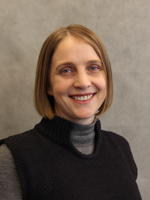
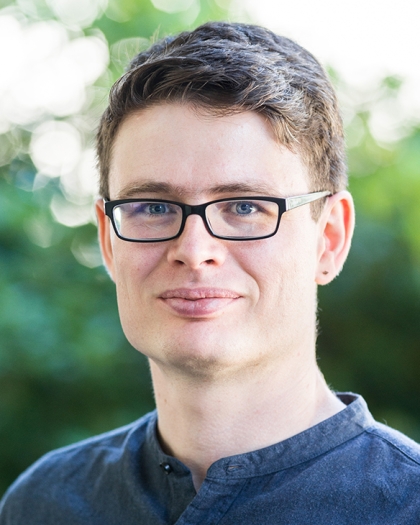
Elena Marianne Pummer is a Professor at the Norwegian University of Science and Technology (NTNU), affiliated with the Department of Civil and Environmental Engineering and the Faculty of Engineering. She holds a Dr.-Ing. from RWTH Aachen University (2016) and a Dipl.-Wirtsch.-Ing. from TU Darmstadt (2011). Her research focuses on hydrodynamics, sediment transport, hydraulic structures, and geomorphological processes. She leads projects like RenewHydro (sediment handling), HydroCen (hydropower innovation), and InSpillyFish (spillway improvements with fish passage). Notably, she investigates GLOF hydraulics, underground pumped storage plants, and culvert blockage dynamics. Pummer has supervised PhD students including Jan Hrebrina and Nils Solheim, and previously advised Subhojit Kadia and Joakim Sellevold. Her awards include the Friedrich-Wilhelm Award (2017), ICOLD Young Engineers Award (2017), and the DTK & WasserWirtschaft Prize (2019). She contributes to committees like IAHR’s Hydraulic Structures and EERA Hydropower initiatives. Her work spans experimental modeling, CFD simulations, and policy-driven hydropower modernization.
Elena Parmiggiani is an Associate Professor in Computer-Supported Cooperative Work (CSCW) and Digital Collaboration at NTNU's Department of Computer Science, where she also serves as Deputy Head of Department for Sustainability. She holds a part-time Senior Researcher position (20%) at Sintef Nord in Tromsø. Her research focuses on sustainable digital platforms, responsible AI, data curation, and digital transformation in public sectors. She leads the AI4Users project (2020-2025) and previously managed the AlgoCult research network. She earned her PhD in Computer Science from NTNU (2015), with a thesis on environmental monitoring infrastructures in offshore oil operations. Education: PhD in Computer Science, NTNU (2015) MSc in Computer Engineering, University of Modena and Reggio Emilia (2010) BSc in Computer Engineering, University of Modena and Reggio Emilia (2008) Research Interests: Her work examines sociotechnical challenges in digital platform implementation, data governance, and AI ethics. Methodologically, she employs ethnographically inspired interpretive approaches. Key themes include: Responsible AI (RAI) and its societal implications Data curation practices in data science and infrastructures Knowledge work transformation through digitalization Algorithmic governance in public services Publications: Her recent work analyzes citizen attitudes toward AI in welfare services, labor displacement in AI-driven sectors, and data governance in food supply chains. She co-edits the CSCW Journal and serves on editorial boards for the European Journal of Information Systems and Scandinavian Journal of Information Systems . Awards & Grants: Funded projects include Norwegian Research Council grants for AI4Users (IKTPLUSS) and AlgoCult (SAMKUL). She coordinates NTNU's Digital Enterprise Research Priority Area (2019-2022). Labs/Teams: Active in the Applied Information Technologies (AIT) group at NTNU, collaborating with industry partners like Sintef Nord. Her work bridges academic research with practical digital transformation initiatives in public and private sectors.
Erica Margareta C E Löfström is a Researcher at the Norwegian University of Science and Technology (NTNU), affiliated with the Department of Psychology and Department of Design. Her work focuses on Radical Innovation for Sustainable Futures, emphasizing eco-visualization, provotyping, and co-design methodologies to drive systemic changes toward a low-carbon society. She has extensive experience in participatory processes involving stakeholders to co-create sustainable solutions. Her research projects include Nature In Your Face (NIYF) , which develops transformative societal change methodologies, INCITE-DEM (enhancing democratic innovation and civic engagement), and CLEANcultures (exploring local climate solutions via learning processes). She has authored/co-authored numerous publications on topics like smart cities, energy efficiency, and sustainable urban planning. Löfström teaches courses in product design, interaction design, environmental communication, and eco-visualization methods. She holds a PhD in Technology and Social Change and has supervised multiple Master’s and PhD students focusing on narratives of sustainability, visualization tools in city planning, and collective climate action. Her expertise spans interdisciplinary fields including environmental psychology, Science-Technology Studies (STS), and digital engagement strategies. She actively participates in international conferences and has contributed to reports on sustainable building practices and user participation in energy systems.
Professor Hans Ola Fredin holds a faculty position at the Department of Geosciences, NTNU within the Faculty of Engineering. His research focuses on Quaternary geology, glacial landforms, and geohazards related to loose materials like quick clays. He employs advanced techniques such as GIS, remote sensing, and machine learning to study spatial relationships and geological processes. Current research projects include Antarctic ice volume changes, deglaciation patterns of Norway/Scandinavia, and AI-driven geoscience applications. His work bridges field observations with computational methods, contributing to understanding both past glacial dynamics and modern geohazard mitigation. Publications from 2020–2024 highlight interdisciplinary approaches to glacial geomorphology, ice sheet behavior, and environmental risk assessment. Notable contributions include studies on strandflat formation mechanisms, radon risks from rock-avalanche deposits, and mid-Pliocene Antarctic ice thickness reconstructions.
Henrik Peter Sahlin Pettersen is an Associate Professor at the Department of Clinical and Molecular Medicine, Norwegian University of Science and Technology (NTNU). His research focuses on molecular mechanisms of DNA repair, cancer biology, and applications of digital pathology. He is affiliated with the Molecular Biology research group (http://www.ntnu.no/dmf/ikm/molbiol) and the DNA Repair and Genome Stability group (http://www.ntnu.no/dmf/ikm/dna-r). His work spans interdisciplinary areas including: Genomic instability and mutagenesis in cancer Role of tumor-associated macrophages in meningiomas Development of AI-driven tools for histopathological analysis Quantitative immunohistochemistry methods Recent studies highlight contributions to: IBD treatment mechanisms using patient-derived colonoids Disease differentiation in inflammatory bowel diseases through T-cell analysis Automated breast cancer segmentation techniques He actively collaborates across disciplines, integrating molecular biology with computational pathology solutions. His presentations at international conferences reflect commitment to advancing translational research in oncology and digital diagnostics.
Basel Cat is a Professor and Head of the Department of Information Security and Communication Technology at NTNU's Faculty of Information Technology and Electrical Engineering. His research focuses on cybersecurity, information security assurance, and innovative approaches to cyber range technologies. Key areas include vulnerability analysis, privacy protection, and AI-driven security solutions. Research Interests Cybersecurity incident triage and attack chain analysis Quantitative security evaluation models for web and cloud services Automated vulnerability injection in source code IoT security and cognitive digital twin architectures Adversarial AI applications in cybersecurity exercises Publications highlight advancements in cybersecurity education, attack-defense scenario modeling, and the integration of AI/LLMs in security frameworks. Recent work explores frameworks for evaluating cloud services and OWASP-aligned web application security standards. Collaborations involve development of hybrid IoT cyber ranges and frameworks for security assurance metrics. His research has been featured in top-tier journals like Computers & Security and Journal of Information Security and Applications .
Jo Eidsvik is a Professor at the Department of Mathematical Sciences, Norwegian University of Science and Technology (NTNU). He holds a MSc in applied mathematics from the University of Oslo (1997) and a PhD from NTNU (2003). His research focuses on spatio-temporal statistics, computational statistics, and their applications in Earth sciences, including geophysics and oceanography. He leads projects like the Center for Geophysical Forecasting (SFI-CGF) and Maritime Autonomous Sampling and Control (MASCOT). Eidsvik has supervised over 60 graduate students and is an associate editor for *Mathematical Geosciences* and *Statistics and Computing*. His work bridges theory and practice, addressing challenges in data assimilation, value of information analysis, and autonomous systems for environmental monitoring. **Education & Background**: MSc (University of Oslo), PhD (NTNU). Industry experience includes roles at Statoil and the Norwegian Defense Research Establishment. Visiting scholar at Stanford University, Duke University, and SAMSI. **Research Themes**: Spatio-temporal modeling, machine learning for irregular time series, and decision analysis in geological contexts. Key projects include geophysical forecasting, CO₂ storage monitoring, and autonomous underwater vehicle (AUV) sampling strategies. His book *Value of Information in the Earth Sciences* (Cambridge Press) synthesizes methodologies for optimizing data-driven decisions. **Awards & Recognition**: While no specific awards are listed, his editorial roles and project leadership reflect scholarly impact. His work emphasizes interdisciplinary collaboration, with applications in climate science, energy systems, and robotics. **Advising & Grants**: Supervised 60+ MSc students and 12 PhD students. Active in NTNU’s Physics and Mathematics program and Industrial Mathematics initiatives. Projects funded by SFI, EU, and industry partners. **Teams & Labs**: Involved with NTNU’s GEOPARD (data assimilation in geological models), Havvarsel (oceanographic data assimilation), and ML4ITS (machine learning for irregular time series). Collaborates with international institutions like Stanford and Duke.
Guennadi A. Kouzaev is a Professor at the Department of Electronic Systems, NTNU, affiliated with the Circuit and Radio Systems research group. His academic journey includes a PhD in Physics and Mathematics from the Kotelnikov Institute of Radio Engineering and Electronics (USSR Academy of Sciences, Moscow) and a Doctor of Science in Electrical Engineering from the Moscow State Institute of Electronics and Mathematics. Research focuses on advanced electromagnetics, microwave systems, graphene-based devices, quantum electronics, and virus genomics analysis. Key areas include microwave-assisted chemical reactors, terahertz technology, and spatial logic processors. He has published extensively in journals like Nanomaterials , AIMS Electronics and Electrical Engineering , and IEEE Transactions . Recent work emphasizes novel coaxial reactor designs for rapid chemistry and biophysical studies of viral RNA sequences. His contributions bridge electromagnetics with quantum mechanics, nanotechnology, and biomedical applications.
Diogo Kramel is a Research Fellow in the Industrial Ecology Program at the Department of Energy and Process Engineering, Norwegian University of Science and Technology (NTNU). He holds degrees in Naval Architecture and Maritime Engineering (BSc/MSc, University of São Paulo) and Maritime Spatial Planning (MSc, University of Sevilla/University of the Azores/University of Venice). His PhD research (2024) focused on climate change mitigation in the maritime sector through the CLIMMS project. Currently, he leads the Nord_H2ub project, applying the MariTEAM model combined with Life-Cycle Assessment to reduce GHG emissions in shipping. His work integrates modeling techniques with policy analysis to inform sustainable maritime strategies. Key research interests include shipping emissions, energy systems modeling, and climate policy. He has published extensively on topics such as shipping scenarios, emissions reduction strategies, and integrated assessment frameworks. His contributions include developing the MariTEAM model for global fleet analysis and linking it with tools like MESSAGEix. Recent presentations include talks at the European Geosciences Union and the Gordon Research Conference on Climate Intervention.
Marija Slavkovik is a Professor at the Department of Information Science and Media Studies, Faculty of Social Sciences, University of Bergen. She serves as Head of Department and is a leading researcher in artificial intelligence, with expertise in multi-agent systems, machine ethics, and computational social choice. Research Interests: Focuses on automating moral reasoning, ethical behavior in computational agents, and trust in algorithmic decision-making within public institutions. Grants: Leading applications for ERC Synergy Grants and managing ongoing projects like MediaFutures and Better Video Workflows via AI Techniques. Outreach: A vocal advocate for responsible AI, she participates in public debates and media discussions on AI's societal impact. Supervision: Advises doctoral students Than Htut Soe and Mina Young Pedersen, with past co-supervision of Flavio Tisi, Einar Søreide Johansen, and Hanna Kubacka. Scientific Awards: Received the Best Paper award at Norsk Informatikkonferanse 2020 for bias mitigation studies. Her work bridges logic, ethics, and AI, emphasizing societal trust, fairness, and interdisciplinary collaboration. She co-organizes Dagstuhl Seminars and serves on the editorial board of AI Magazine.
Ana Isabel Silva Martins is a Doctoral Research Fellow at the University of Oslo's Faculty of Mathematics and Natural Sciences , affiliated with the Department of Astrophysics. Her research focuses on cosmology, gravitational waves, and machine learning applications in high-performance computing. Education: MSc in Experimental Physics (2022-2024), Utrecht University BSc in Engineering Physics (2019-2022), Instituto Superior Técnico, University of Lisbon Research Interests: She explores early detection mechanisms for gravitational wave signals from binary neutron star coalescence, leveraging convolutional neural networks (CNNs) and field-programmable gate arrays (FPGAs). Her work bridges astrophysics, machine learning, and computational hardware optimization. Projects & Groups: Active in the CMB&CO group , Cosmoglobe , and CosmoglobeHD . Collaborates on cosmology and extragalactic astronomy research.
Luca Cibinel is a Doctoral Research Fellow at the University of Oslo, affiliated with the Department of Mathematics and the Statistics and Data Science group. His PhD project, supervised by Basil Ell, Johan Pensar, and Riccardo De Bin, focuses on developing statistical learning techniques for assessing and generating transition metal complexes based on observational data and theoretical knowledge. Prior to this, he earned a master's degree in mathematics from the University of Trento (2023), with a thesis on penalized likelihood inference for Gaussian covariance graph models. He also worked as an early-stage researcher at the University of Padua, investigating probabilistic graphical models for count data in high-dimensional scenarios. His research interests include statistical relational learning, probabilistic logic, and machine learning applications for graph-structured data. Luca is based at the Niels Henrik Abels hus in Oslo. Education: Master's in Mathematics, University of Trento (2023) Early-stage Researcher role at University of Padua (2024) Research Focus: Luca's work bridges statistical methodology and computational modeling, particularly in contexts requiring integration of theoretical and empirical data. His current project aims to create frameworks for evaluating and generating transition metal complexes, with potential applications in materials science and chemistry. Professional Affiliations: Faculty of Mathematics and Natural Sciences (student status), Statistics and Data Science research group. Links: LinkedIn Profile
Thordis Linda Thorarinsdottir is a Professor of Statistics and Data Science at the University of Oslo's Department of Mathematics, affiliated with the Faculty of Mathematics and Natural Sciences. She previously worked as a Chief Research Scientist and Research Leader for Climate and Environment at the Norwegian Computing Center (2006–2023). Her research focuses on developing stochastic models for environmental sciences, emphasizing uncertainty quantification and probabilistic prediction in climate, weather, and hydrology. Key areas include spatial and spatio-temporal modeling, Bayesian frameworks, and forecast evaluation. **Education**: PhD in Mathematical Statistics from Aarhus University (2006). **Research Interests**: Environmental applications in climate science, spatial modeling, probabilistic forecasting, and extreme event analysis. She collaborates with experts in meteorology, hydrology, and climate science to address data deficiencies and real-world challenges. **Projects**: Leads initiatives like CONFER (Climate Futures) and is part of the Integreat research group. Her work integrates statistical theory with environmental process understanding to enhance predictive accuracy and decision-making under uncertainty. **Awards**: Not explicitly listed, but her contributions to climate and environmental statistics are recognized internationally. **Grants & Labs**: Active in interdisciplinary collaborations, including the Norwegian Research Council-funded projects. Her team focuses on probabilistic modeling and ensemble forecasting techniques.
Professor Vadim Kimmelman is affiliated with the Department of Linguistic, Literary and Aesthetic Studies at the University of Bergen. His primary research interests lie in sign language linguistics, with a focus on syntax, nonmanual markers, classifier predicates, and computational methods in linguistic analysis. He has contributed to foundational studies on Russian Sign Language (RSL), Sign Language of the Netherlands (NGT), and other signed languages. Key research areas include the formal analysis of argument structure, transitivity, metaphorical extensions, and the role of nonmanual components in grammatical and pragmatic functions. His work combines corpus linguistics with computational tools, such as computer vision techniques for analyzing nonmanual behaviors in sign language interactions. Published in high-impact journals like Annual Review of Linguistics , Open Linguistics , and Sign Language Studies . Recipient of ERC funding for projects on nonmanual properties and sign language processing. Co-authored a textbook on sign language linguistics with Svetlana Burkova ( Vvedenie v lingvistiku zhestovyh jazykov ). Recent projects involve developing benchmark datasets (e.g., FluentSigners-50) and tools for sign language recognition, reflecting his interdisciplinary approach to bridging linguistics and computational science.
Harsha Ratnaweera is a full-time Professor of Water and Wastewater Engineering at the Department of Civil and Environmental Engineering, Faculty of Natural Sciences and Technology, Norwegian University of Life Sciences (NMBU), where he has been employed since 2012 (previously as an Adjunct Professor from 2001). He previously served as Director of International Projects and Innovation at the Norwegian Institute for Water Research (NIVA) from 1991 to 2012. His educational background includes a Dr. Ing. in Civil Engineering from the Norwegian University of Science and Technology (NTNU, 1992) and an MSc (Hons) in Chemical Engineering from the National Technical University of Ukraine KPI. Harsha's research focuses on modeling and optimization of coagulation, real-time monitoring and control of treatment processes, membrane technologies, virtual sensors, biofilm systems, and digital tools for wastewater systems. He has pioneered work in process automation, sensor validation, and holistic optimization of water systems. His research also extends to harmonizing graduate water education across Asia, Africa, and Eurasia. The 15 most recent publications reflect a strong trend toward digitalization in water treatment, including AI-based fault detection, machine learning for sensor estimation, cloud-based forecasting, and deep learning for process control. There is also significant emphasis on hybrid treatment systems, resource recovery (e.g., phosphorus, metals), and advanced monitoring of micropollutants like PFAS and pharmaceuticals. IWA Distinguished Fellow People’s Ambassador of Shandong Province, China Qingdao International Scientific Cooperation Award High-End Foreign Expert Fellowships (China, multiple) Fellow, European Academy of Sciences Fellow, Norwegian Academy of Technological Sciences Vice President, European Water Association (EWA) Director, IWA Board Harsha has led numerous major international research and educational projects funded by EU Horizon, Erasmus+, NORAD, and the Research Council of Norway. He has advised multiple master’s and PhD students and leads the Process Analytics and Water Treatment Group at NMBU. He has also served as Head of Research at the Faculty of Science & Technology and held leadership roles in UNESCO and UNECE initiatives. He is the founder and chairman of DOSCON AS and has led over 20 major international projects, including WaterHarmony.net, MEMPREX, and Water ESSENCE, involving more than 100 universities across 54 countries. He has organized multiple international conferences and serves on scientific advisory boards for Aquateam and EU ERA-NET Water JPI.