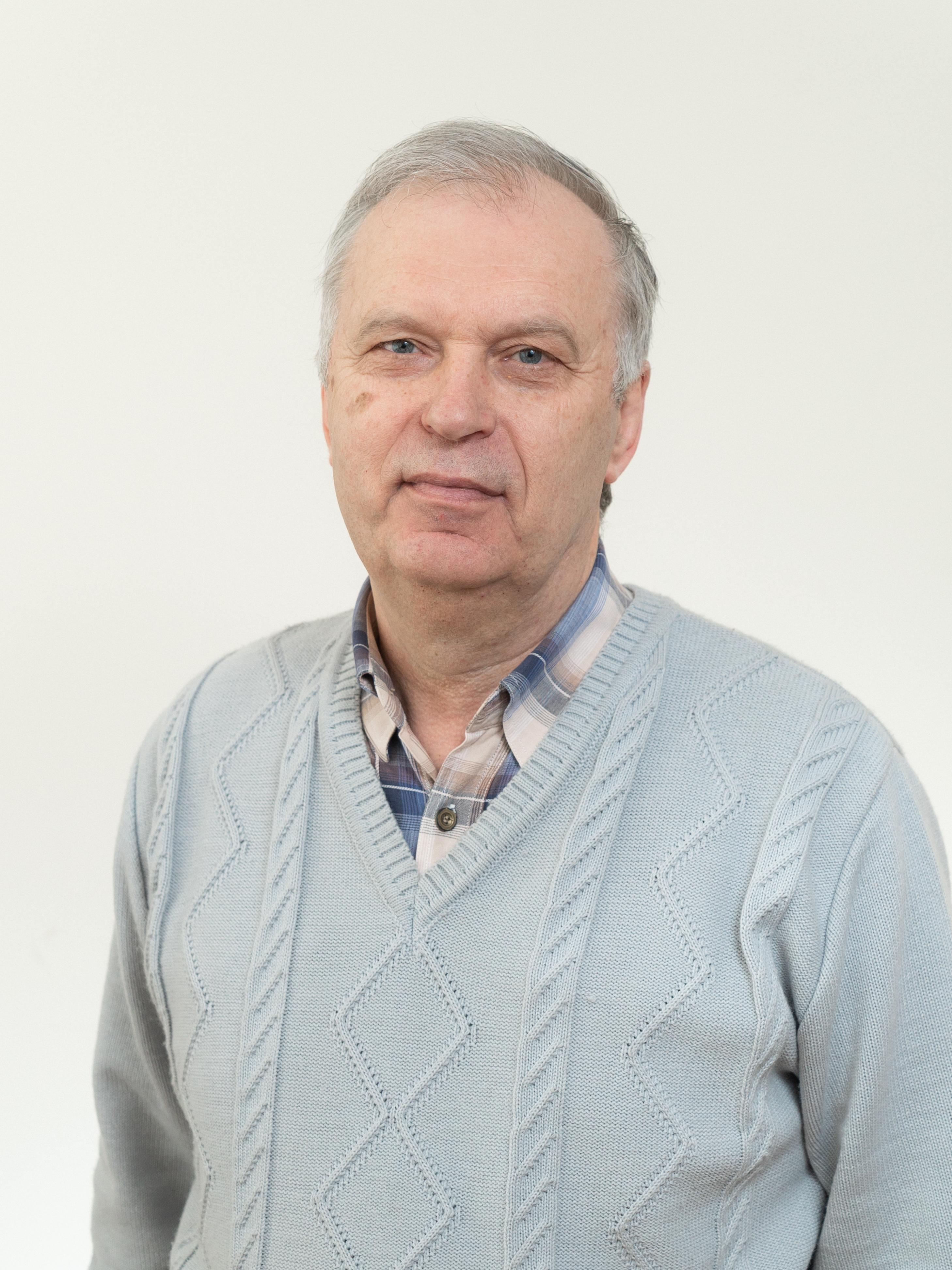
Dr. Mindaugas Juodis is a Researcher at the Blockchain and Quantum Technologies Group within Vilnius University's Institute of Data Science and Digital Technologies. His work centers on advanced statistical modeling of blockchain systems and decentralized networks. His research spans blockchain, cryptocurrency, quantum computing, and probability theory. Key investigations include Bitcoin price regime shifts using Bayesian methods, Ethereum transactional decentralization metrics, and wealth distribution analysis in blockchain networks. Earlier theoretical work focused on self-normalized sums, central limit theorems, and functional limit theorems for dependent processes. Publications reveal a clear trajectory from theoretical statistics (2004-2007) to applied blockchain analytics (2024-2025). Recent work bridges mathematical rigor with cryptocurrency applications, appearing in Mathematics, ICT Express, and IEEE conferences. His research demonstrates expertise in translating complex statistical frameworks to real-world decentralization problems. As part of the Blockchain and Quantum Technologies Group, he contributes to cutting-edge research in blockchain analytics and quantum computing intersections, focusing on empirical validation of decentralization metrics and network properties.
Marco Marcozzi is a researcher at the Vilnius University Blockchain and Quantum Technologies Group. His work focuses on blockchain systems, quantum computing, and performability analysis of fault-tolerant protocols. Research Interests : Blockchain technology, quantum computing, Byzantine fault tolerance, consensus protocols, and data-driven system performance modeling. Key Contributions : Led studies on quantum-enhanced machine learning, performability analysis of PBFT systems, and classification of DLT consensus protocols using clustering algorithms. Publications Trend : Recent works emphasize quantum computing applications in blockchain systems, performability modeling for fault-tolerant architectures, and machine learning approaches to consensus protocol analysis across disciplines like computer science and system reliability engineering. Current Affiliation : Blockchain and Quantum Technologies Group, Vilnius University, Akademijos St. 4, Vilnius.
Dr. Anita Juškevičienė is a Senior Researcher at the Educational Systems Group of Vilnius University's Institute of Data Science and Digital Technologies. Her work focuses on computational thinking, STEM education, and digital competence development. Research Interests : Computational thinking in primary/secondary education, STEAM integration, gender balance in STEM, educational technology adoption, and digital competence frameworks. Publications Trends : Recent work addresses pedagogical approaches for informatics education, teacher motivation, physical computing in STEM, and data modeling techniques for educational systems. Supervision : Currently supervising Snow White Bagocienė on modeling automatic assessment systems for design thinking. Projects : Active in analyzing global trends in computing education and implementing mobile learning scenarios for computer engineering training.
Oskaras Klimašauskas is a Researcher affiliated with the Cognitive Computing Group at Vilnius University's Institute of Data Science and Digital Technologies. His work focuses on reinforcement learning applications in autonomous vehicle navigation and route optimization. His research explores Artificial Intelligence , Machine Learning , and Visual Environment Development . Recent publications (2024-2025) demonstrate his expertise in applying reinforcement learning to autonomous driving scenarios, including route navigation, track driving, and interactive route computing environments. The articles reflect interdisciplinary work at the intersection of Computer Science , Data Science , and Software Engineering . Key sub-fields include simulation, optimization, intelligent navigation systems, and vehicle control algorithms. Though no formal awards are listed, his publications indicate active research contributions.
Arnold Budžys is a Junior Researcher at the Vilnius University Institute of Data Science and Digital Technologies , focusing on cybersecurity, machine learning, and behavioral biometrics. His work addresses critical infrastructure security, insider threat detection, and keystroke dynamics-based authentication. Research Highlights : Keystroke biometrics, anomaly detection, deep learning, data fusion, and red team tactics. Technical Focus : Behavioral analysis, neural networks, security frameworks, and adversarial attack modeling. His publications reveal a trend toward integrating advanced AI techniques with cybersecurity protocols to enhance authentication accuracy and threat prevention in sensitive systems.
Dr. Marijus Vaičiulis is a researcher at the Institute of Mathematics and Informatics (Vilnius University) , affiliated with the Interdisciplinary Statistical Research Group . He holds a Doctor of Mathematics degree (awarded in 2004 by Vilnius Gediminas Technical University and MII). Education Bachelor's degree in Mathematics and Computer Science from Šiauliai University (1995) Master's degree in Mathematics and Computer Science from Šiauliai University (1997) Research interests focus on random processes with distant dependence and applied statistics , particularly in extreme value theory, tail index estimation, and network analysis. His work bridges theoretical probability with practical applications in stochastic processes and heavy-tailed data modeling. Publications demonstrate expertise in tail index estimation techniques, evolving random graph analysis, and extreme value statistics. Collaborations with Natalia Markovich and Maxim Ryzhov highlight interdisciplinary approaches to network theory and statistical inference. Pedagogical activities include teaching probability theory , mathematical statistics , and random processes at Šiauliai University and Vilnius University. Current affiliation is with the Interdisciplinary Statistical Research Group at Vilnius University's Institute of Mathematics and Informatics. His work address is Akademijos St. 4, room 218, Vilnius.
Dr. Stasys Steišūnas serves as an Affiliated Scientist at the Smart Technologies Research Group within Vilnius University Institute of Data Science and Digital Technologies (VU DMSTI), formerly known as the Institute of Mathematics and Informatics (MII), located at Akademijos St. 4, Vilnius. His academic profile centers on theoretical research in probability and stochastic modeling without indication of teaching responsibilities. His primary research domains include Queueing Theory , Stochastic Processes , and Mathematical Modeling , with specialized contributions to open/multiphase queueing networks, Brownian motion dynamics, and message switching systems. Collaborative work with Saulius Minkevičius constitutes the majority of his publications, demonstrating sustained focus on deriving limit theorems and performance metrics for complex stochastic systems. Publication analysis reveals concentrated output between 1999-2012 across journals like Nonlinear Analysis: Modelling and Control and International Journal of Pure and Applied Mathematics , with recurring themes in heavy traffic approximations, sojourn time analysis, and departure process modeling. The absence of recent publications suggests potential shift in professional focus while maintaining institutional affiliation. As part of VU DMSTI's research infrastructure, Steišūnas contributes to Lithuania's mathematical research ecosystem through rigorous theoretical work in stochastic network analysis, though no laboratory-specific affiliations or grant details are documented in available sources.
Prof. Kęstutis Kubilius serves as an Adjunct Professor within the Interdisciplinary Statistical Research Group at Vilnius University's Institute of Data Science and Digital Technologies. His research office is located at Akademijos Street 4, room 208 in Vilnius, with contact numbers +370 5 210 9731 and +370 618 06064. His research program centers on advanced stochastic processes, specializing in fractional Brownian motion and fractional stochastic differential equations (FSDEs). Key contributions include developing existence-uniqueness frameworks for FSDEs with stochastic forcing, creating numerical approximation schemes like the implicit Euler method, and advancing parameter estimation techniques for Hurst and Orey indices. His work bridges theoretical probability with applications in financial mathematics and statistical modeling of long-range dependent phenomena. Analysis of his 15 most recent publications reveals consistent focus on fractional calculus applications, with increasing emphasis on numerical methods since 2020. The research demonstrates methodological evolution from theoretical foundations toward practical implementation, particularly in volatility modeling and boundary-conditioned SDEs. Recent collaborative works (notably with Medžiūnas and Mishura) highlight interdisciplinary approaches combining statistical inference with computational mathematics. Prof. Kubilius actively supervises doctoral candidates, having guided Aidas Medžiūnas through completion of the 2018-2022 dissertation 'Parameter evaluation for mixed SDLs'. His research group maintains strong connections with international probability theory communities, evidenced by co-authorships with leading scholars in fractional calculus. As a core member of the Interdisciplinary Statistical Research Group, he contributes to Vilnius University's strategic focus on advanced statistical methodologies for complex data systems, with particular relevance to financial engineering and time-series analysis applications.
Rimantas Rudzkis is an Affiliated Professor at Vilnius University's Institute of Mathematics and Informatics, specifically within the Interdisciplinary Statistical Research Group. He serves as the Head of the Applied Statistics Department and has been working at the Institute since 1978. His academic credentials include a Doctor of Mathematics from Vilnius University (1978), a Habilitation Doctor from the Institute of Mathematics and Informatics (1993), and Professor title from Vytautas Magnus University (1996). Dr. Rudzkis has extensive educational background, having graduated from Kaunas Polytechnic Institute in 1973 with a specialization in computing technology and engineering mathematics. His professional journey began as an assistant at KPI (1973-1974), followed by postgraduate studies at the Institute of Mathematics and Informatics (1974-1977). His research primarily focuses on probability theory , mathematical statistics , and econometric modeling . He has developed methods for data clustering, nonparametric density estimation, and created mathematical models of Lithuanian macroeconomic indicators using VAR methodology. His work spans theoretical developments in statistical decision algorithms and practical applications in economic forecasting. Analysis of his recent publications reveals a consistent focus on statistical methodology development, particularly in goodness-of-fit testing, multivariate analysis, and applications to economic and financial data. His research shows a clear progression from theoretical probability work toward increasingly applied econometric modeling, with significant emphasis on Baltic region economic analysis in recent years. Dr. Rudzkis maintains significant professional engagement through multiple editorial roles, including membership on the editorial boards of 'Lithuanian Mathematical Collection' (since 1999), 'Lithuanian Statistical Works' (since 2000), and 'Money Studies' (since 2000). He has also served as Editor for proceedings of the '8th International Conference on Probability Theory and Mathematical Statistics'. His academic service includes leadership as Head of the Applied Statistics Department Seminar, membership on the program committee for international conferences, and serving as an Expert member of the Lithuanian Academy of Sciences since 1994. He has also been actively involved with professional societies, serving on the boards of both the Lithuanian Mathematical Society and Lithuanian Statistical Union since 1998. Dr. Rudzkis teaches probability theory, mathematical statistics, and specialized courses including multivariate statistics, time series analysis, correlation-regression analysis, and econometrics at multiple universities including VDU, KTU, and VGTU.
Prof. Dr. Dalia Krikščiūnienė is a Professor at the Institute of Data Science and Digital Technologies, Vilnius University. She works at Naugardo St. 2, room 3.1.01, Kaunas, and her research spans interdisciplinary areas including Artificial Intelligence Blockchain and Quantum Technologies Educational Systems Cybersocial Systems . Her affiliation with Vilnius University connects her to multiple research groups, such as the Artificial Intelligence Laboratory and Blockchain and Quantum Technologies Group. These areas inform her scientific production and academic contributions. The Institute of Data Science and Digital Technologies hosts her work, aligning with broader institutional research trends in computational and statistical sciences.
Roles & Affiliations: Assistant Professor at the Department of Organizational Information and Communication Research, Faculty of Communication, Vilnius University. Active in research projects, academic conferences, and editorial roles. Education: PhD in Mathematics and Informatics (2012), Vilnius University, Thesis: 'The applications of datamining methods to personalized learning environments.' MA in Informatics (1995), Vilnius Pedagogical University. Research Interests: Focus on e-learning methodologies, big data processing, educational technology, and business intelligence. Explores applications of machine learning in finance and personalized learning systems. Publications & Projects: Over 15 articles in peer-reviewed journals and conferences (e.g., Applied Sciences, Mykolas Romeris University Proceedings). Led the EU-funded project 'Development and Introduction of Multilingual Teacher Education Programmes in Georgia and Ukraine (DIMTEGU)' (2012–2016). Active in conference organizing and editorial work. Grants & Memberships: Participated in EU-funded projects. Member of the National Association of Distance Education (NADE), Lithuanian Association of Distance and e-Learning (LieDM), and Lithuanian Computer Society (LIKS). Labs & Teams: Involved in research groups focused on educational technology, data analytics, and digital transformation initiatives within the Faculty of Communication.
Jonas Dagys serves as an Associate Professor in the Department of History of Philosophy and Analytical Philosophy at Vilnius University, where his research centers on contemporary analytic philosophy, logic, and the historical development of analytic thought. His scholarly profile reflects deep engagement with methodological implications of psychophysical reductionism and antireductionism, as well as critical examinations of temporal metaphysics through comparative studies of philosophers like McTaggart and Mellor. His research trajectory demonstrates evolving specialization: early work (2006-2012) established foundations in consciousness studies and mind-body problems, while recent publications (2019-2022) reveal intensified focus on medieval logic—particularly Buridan's modal propositions—and intersections between analytic philosophy and early Christian thought. Additional interests include Fregean semantics, university management during crises, and Wittgensteinian philosophy, indicating both historical depth and contemporary relevance in his analytical approach. Analysis of his 15 most recent publications shows a clear methodological pattern: rigorous logical formalization of historical philosophical concepts combined with empirical considerations in identity studies. The 2020-2022 output particularly highlights adaptation to contemporary academic challenges, including pandemic-era educational management alongside sustained exploration of foundational philosophical questions through medieval and modern lenses. No scientific awards were documented in the provided sources. Information regarding student supervision, research grants, laboratory affiliations, or collaborative research teams was not present in the available materials, suggesting either omission in the source texts or primary focus on independent scholarly publication rather than team-based research activities.
Goda Klumbytė is a Lecturer and post-doctoral researcher at the University of Kassel, working within the Participatory IT Design department in the Faculty of Electrical Engineering and Computer Science. She is an interdisciplinary scholar bridging informatics with humanities and social sciences, with particular expertise in feminist new materialism, posthumanism, and human-computer interaction. Her research focuses on creating more contextualized and accountable machine learning systems through feminist and critical theoretical approaches. Her research interests include Critical Algorithm Studies, Science and Technology Studies, Human-Computer Interaction Design, Feminist Epistemology, Critical Theory, Posthumanism, and New Materialism. She approaches the study of algorithmic systems from a feminist perspective that emphasizes situated knowledges, intersectionality, and material-semiotic approaches to technology design. Her recent publications demonstrate a clear trend toward developing feminist frameworks for explainable AI and accountable machine learning systems. Her work examines how critical theoretical concepts from social sciences and humanities can be integrated into computing practices, with particular attention to how power relations and structural inequalities manifest in algorithmic systems. She has been particularly active in exploring how feminist intersectional perspectives can reshape approaches to AI explainability and accountability. Co-edited 'More Posthuman Glossary' with R. Braidotti and E. Jones (Bloomsbury, 2022) Published in 'Posthuman Glossary' (Braidotti & Hlavajova, 2018) Contributed to 'Everyday Feminist Research Praxis' (Leurs & Olivieri, 2015) Published in journals including Online Information Review, Digital Creativity and ASAP Presented at major informatics conferences including ACM's CHI, nordiCHI and FAccT Dr. Klumbytė leads significant research projects including 'AI Forensics: Accountability through Interpretability in Visual AI Systems' (funded by Volkswagen Foundation, 2022-2025) and 'CF+: Reconfiguring Computing Through Cyberfeminism and New Materialism' (University of Kassel, 2018-2019). She also serves as one of the editors of the critical computing blog 'engines of difference,' which provides a platform for critical perspectives on computing and technology.
Jūratė Maksvytytė serves as an Assistant Professor at Kaunas University of Technology (KTU), affiliated with the Faculty of Social Sciences, Arts and Humanities and the Academic Centre of Social Sciences, Arts and Humanities. She is an active member of the Language and Technologies research group within the university's humanities division. Her research focuses on the intersection of Philology (Science field H004) and technological applications, operating under the broader Humanities science area. This specialization emphasizes computational approaches to linguistic analysis and historical language studies, reflecting KTU's interdisciplinary initiatives in language technologies. Primary research domain: Philological analysis integrated with digital tools Methodological focus: Technology-enhanced language processing Academic context: Humanities-centered technological innovation Dr. Maksvytytė's work contributes to KTU's strategic emphasis on merging traditional philological scholarship with modern computational methodologies through the Language and Technologies research group.
Arūnas Gudinavičius is a Professor and Vice-Dean for Science at Vilnius University's Faculty of Communication, Department of Digital Cultures and Communication. He holds a PhD in Communication and Information Sciences (2012) from Vilnius University, following a Master's in Electrical Engineering from Kaunas University of Technology (1999) and a Bachelor's in Electrical Engineering (1997). His research focuses on digital publishing, human-computer interaction, and usability in digital media, with notable projects like the 'Digital Publishing in Lithuania' initiative (2014) and contributions to the COST Action E-READ (2014-2018). Key research interests include digital book quality, e-book markets, museum website usability, and accessibility in publishing. He has published extensively on topics such as reading behavior, piracy dynamics, and digital literacy, with over 30 peer-reviewed articles and several books. Notable awards include the 2017 Vilnius University best article award (shared with colleagues). He teaches courses on digital publishing and media technologies, advising PhD students like Alisa Žarkova and Arūnas Šileris. His professional roles include editorial board memberships for journals like Information & Media and leadership in organizations such as the Lithuanian Publishers Association. He has participated in international conferences globally and led projects on digital literacy, museum accessibility, and scholarly communication.