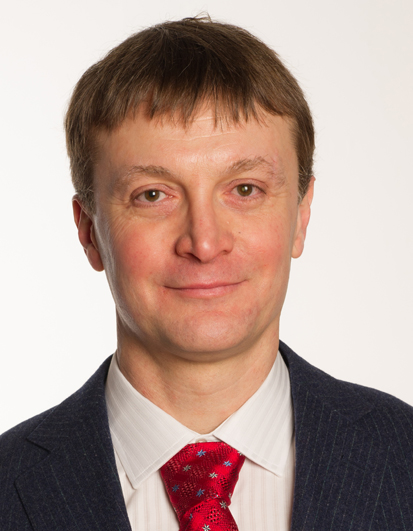
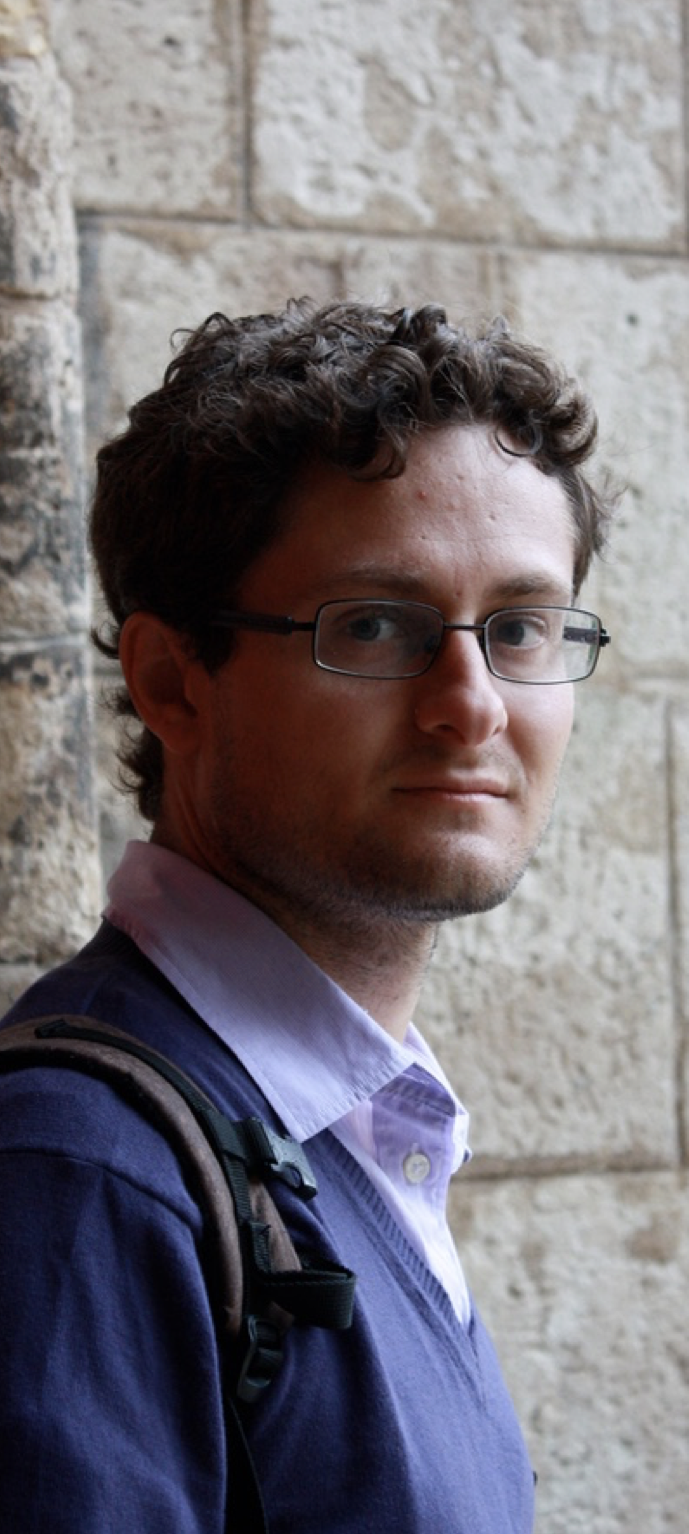
Aldo Conca serves as a Full Professor in the Department of Mathematics (DIMA) at the University of Genoa, Italy, teaching Algebra courses across Computer Science, Mathematics, and Architectural Sciences degree programs including undergraduate and graduate levels (2025-2026 curriculum codes: 73027, 118396, 25905, 90694). His research expertise spans Commutative Algebra , Algebraic Geometry , and Invariant Theory , with specialized focus on Sagbi bases, power sum ideals, invariant rings of classical groups, and combinatorial properties of maximal minors. Methodologically, he integrates computational techniques with theoretical algebraic frameworks to address structural problems in ideal theory and algebraic invariants. Recent publications (2024-2025) demonstrate consistent advancement in computational commutative algebra, particularly regarding nonunimodal h-vectors in invariant rings, V-invariant properties, and Sagbi combinatorics. His work reveals profound connections between algebraic structures and combinatorial phenomena, with significant implications for understanding geometric moduli spaces and symmetric function theory.
Marco Gilli is a Full Professor at the Department of Electronics and Telecommunications (DET) of the Polytechnic University of Turin . His research focuses on nonlinear circuits, neuromorphic computing, and memristor technology for advanced information processing. Scientific Disciplinary Sector: IIET-01/A - Electrical Engineering (Area 0009 - Industrial and Information Engineering) Key research areas: Image processing, neural networks, nonlinear dynamics, and cleantech applications Research & Projects : He has led national and institutional collaborations, including the School 2.0 Project (2017-2020) and partnerships with ENEA (2016-2021). His work spans real-time image processing using nonlinear partial differential equations and memristor-based reservoir computing. Publications : Recent works include advancements in Hodgkin–Huxley neuristors (2025), equilibrium propagation networks (2024), and TaOx ReRAM memory effects (2024). His research integrates nonlinear dynamics, neuromorphic hardware, and green AI.
Umberto Morbiducci is Full Professor of Industrial Bioengineering at the Department of Mechanical and Aerospace Engineering (DIMEAS) , Politecnico di Torino , Italy. He holds a Master's degree in Electronic Engineering from University of Rome La Sapienza and a PhD in Mechanical Engineering from Università Politecnica delle Marche, Ancona. He serves as Coordinator of Biomedical Engineering BS/MS programs and heads the Biomedical Simulations Unit since 2012. Research Interests focus on cardiovascular fluid mechanics , computational hemodynamics , digital twin , and in silico medicine . His work spans Prosthesis and artificial organ design Multiscale modeling (from atomistic to continuum) Dynamic culture devices (bioreactors) for tissue engineering Transport phenomena in biomedical systems Recent Articles highlight trends in hemodynamic risk assessment , stent design optimization , and AI-driven cardiovascular diagnostics . Key topics include coronary plaque stability, YAP mechanoactivation in vascular grafts, and CPAP device mechanics. Scientific Awards : Jack Perkins Prize (IPEM, 2018) ASME Swiss Section Young Engineer Award (2013) ESB Travel Award (2012) TERMIS Travel Award (2012) Editorial Roles : Associate Editor, Annals of Biomedical Engineering (2013-) Associate Editor, Frontiers in Cardiovascular Medicine (2017-) Associate Editor, Journal of Biomechanics (2022-) Editorial Board, Computers in Biology and Medicine (2021-) Labs & Collaborations : Board member, PoliToBIOMed Lab (80+ researchers) Bilateral agreements with Beihang University (China) and Cyprus University of Technology Scientific Director for projects with Istituto Superiore di Sanità
Letizia Scuderi is a Tenured Associate Professor at the Department of Mathematical Sciences 'GL Lagrange' (DISMA) , Politecnico di Torino. She is affiliated with the College of Mathematical Engineering and contributes to teaching in Chemical and Sustainable Process Engineering, Mathematics for Engineering, and Aerospace Engineering programs. Her research focuses on numerical methods for wave propagation problems, particularly acoustic and elastic waves in bounded and unbounded domains. Scientific Branch: Numerical Analysis (MATH-05/A) Research Interests: Acoustic waves, Elasticity, Integral Equations, Wave Propagation, Computational Methods, etc. She actively collaborates with the Numerical Analysis and Scientific Computing (DISMA) research group. Her work involves coupling Boundary Element Methods (BEM) , Finite Element Methods (FEM) , and Virtual Element Methods (VEM) to solve partial differential equations in complex domains. Recent publications highlight her contributions to: Wave scattering problems Time-domain simulations Non-reflecting boundary conditions Curved virtual elements Convolution quadrature Wavelet-based matrix sparsification She supervises PhD students Davide Collato and Matteo Ferrari , focusing on non-symmetric coupling techniques and wave propagation in unbounded domains.
Giacomo Vitali is a Ph.D. candidate in Computer and Systems Engineering at the Politecnico di Torino , Department of Control and Computer Science (DAUIN), while also serving as a Lecturer at the same institution. His research focuses on Quantum Computing , Machine Learning , and Parallel and Distributed Systems . Education: M.Sc. in Physics of Fundamental Interactions (2018) from the University of Pisa Research: Pioneering hybrid quantum-classical algorithms for industrial applications, including BBQ-mIS and DEN models for graph problems and quantum hardware optimization Teaching: Contributing to courses on Quantum Hardware Design and Quantum Computing at the M.Sc. level, as well as undergraduate courses in Computer Science
Alessandro Aimasso is a PhD student in Aerospace Engineering (38th cycle, 2022-2025) at the Polytechnic University of Turin's Department of Mechanical and Aerospace Engineering (DIMEAS), where he also serves as an external lecturer and teaching assistant. He contributes to research activities at the ASTRA group (Additive Manufacturing for Systems and Structures in Aerospace) and the interdepartmental Center for Photonic Technologies PhotoNext. His research focuses on optical sensors for aeronautical and space applications, particularly Fiber Bragg Grating (FBG) technology for system lifecycle management. Specific interests include: Augmented reality visualization of sensor data Thermal and structural monitoring of aerospace systems Smart composites manufacturing with embedded sensors Lunar habitat construction technologies Real-time monitoring systems for spacecraft Analysis of his recent publications shows strong focus on experimental validation of FBG sensor applications in extreme environments, development of real-time monitoring systems, and integration of augmented reality for data visualization. His work frequently involves rapid prototyping and multidisciplinary approaches to aerospace challenges. He holds two patents: USE AND INTEGRATION OF SENSORS IN THE STRUCTURE AND EQUIPMENT OF COMPLEX MACHINES FOR THE DEVELOPMENT OF INTELLIGENT MONITORING SYSTEMS AND CREATION OF MULTIFUNCTIONAL VIRTUAL SENSORS Gas-dynamic nozzle for an end-jet engine, specifically a launcher As a teaching assistant, he contributes to courses on Modeling, Simulation, and Testing of Aerospace Systems, and Photonics in the Digital Revolution. His laboratory work involves the ASTRA group's facilities focusing on additive manufacturing and photonic technologies.
Stefano Quer is an Associate Professor at the Department of Control and Computer Science (DAUIN), Politecnico di Torino. He holds a PhD in Electronic Engineering from the same institution and has been affiliated with DAUIN since 1996. Researcher (1996-2000) Associate Professor (2000-present) Visiting Faculty at UC Berkeley (1994-1995) Research Interests His work spans Formal Verification BDD/SAT Techniques Embedded Systems Hardware/Software Co-Verification Parallel Computing with applications in VLSI CAD, industrial IoT, and energy-efficient systems. Recent articles focus on GPU-accelerated graph algorithms, wireless sensor calibration, and AI-driven test optimization. Scientific Awards Best Paper Award, IEEE EURO-DAC'94 Academic Contributions Supervised PhD students Lorenzo Cardone and Andrea Calabrese Member of DATE, ICSOFT Technical Program Committees Topical Advisor for Sensors MDPI 60+ publications in IEEE/ACM venues
Emiliano Casalicchio serves as a Full Professor in the Department of Computer Science at Sapienza University of Rome, maintaining his office in building E, room 303 (3rd floor) at Via Regina Elena 295, Rome. His contact includes telephone +39.06.49255.469 (ext. 36469) and institutional email. His research centers on data-driven autonomic management of large-scale distributed systems , with concentrated expertise in cloud, edge, and fog computing environments. Key contributions span Autonomic Computing (encompassing self-optimization, self-configuration, and self-protection mechanisms), Resource-efficient Federated Learning , Cybersecurity frameworks, and comprehensive Performance Evaluation and Optimization methodologies for distributed architectures. Currently active in the "Earth In The Cloud" research initiative funded by POR FESR Lazio 2014–2020 (Action 1.2.1), his work bridges theoretical autonomic systems with practical large-scale deployment challenges across computing paradigms.
Mancini Luigi Vincenzo serves as a Professor in the Department of Computer Science at Sapienza University of Rome. His office is located in Building E (Viale Regina Elena, 295), 1st floor, room 103, with contact available via email lv.mancini@di.uniroma1.it or telephone +39.06.49255.421 (extension 36421). His research spans foundational and applied domains within Computer Science, with emphasis on Theoretical Computer Science, Algorithms, and Software Engineering. These areas drive innovation in computational theory, efficient problem-solving methodologies, and robust software systems development, bridging academic inquiry with real-world technological applications.
Vigilio Ballabeni is an Associate Professor at the Department of Food and Pharmaceutical Sciences, University of Parma, Italy. He holds a PhD in Gastroenterological Sciences (1996) and has been a tenured faculty member since 2006. His academic career spans teaching roles in Pharmacology & Pharmacotherapy, Pharmacovigilance, and specialized modules in Hospital Pharmacy. Current research focuses on gastrointestinal pathophysiology, Eph-ephrin signaling, and pharmacological interventions in neurodegenerative and inflammatory diseases. Graduated in Pharmaceutical Chemistry (1985) and Pharmacy (1986), University of Parma PhD in Gastroenterological Sciences (1996) Research interests include: Characterization of anti-inflammatory/analgesic compounds (synthetic and natural products) Development of selective histamine H3 antagonists Neurogastroenterology in experimental Parkinson’s disease Pharmacological modulation of Eph-ephrin systems in cancer and inflammation Key scientific contributions involve: Targeting CCL20/CCR6 axis for IBD therapy Structural optimization of EphA2 antagonists Characterization of Eph-ephrinB signaling in colitis Discovery of neuroprotective effects in Parkinson’s models Contact: vigilio.ballabeni@unipr.it | Office: Department of Food and Pharmaceutical Sciences, Parma, Italy
Nicola Gatti is an Associate Professor in Computer Science and Artificial Intelligence at the Department of Electronics, Information and Bioengineering, Politecnico di Milano. He serves as Co-director of the Observatory Artificial Intelligence of Politecnico di Milano and holds board positions at the Italian National Laboratory of Artificial Intelligence and Intelligent Systems (CINI AIIS) and the Italian Association for Artificial Intelligence (AIxIA). His research spans the intersection of Computer Science, Microeconomics, Optimization, and Machine Learning, with specific focus on Algorithmic Game Theory, Mechanism Design, and Online Learning. He has made significant contributions to areas including negotiation, security games, equilibrium computation, sponsored search auctions, online advertising, election manipulation, and regret minimization in economic problems. Gatti's recent publications demonstrate strong trends in applying game-theoretic and learning approaches to practical problems in advertising, contract design, and constrained decision making. His work frequently appears in top AI venues including AAAI, AAMAS, NeurIPS, and ICML, reflecting his standing as one of the most prolific AI researchers in Italy. He has received notable recognition including being awarded as the best Italian young researcher on Artificial Intelligence in 2011 by AIxIA. His research is supported through competitive projects like PRIN2017 Algadimar and industrial collaborations with companies including lastminute.com, DoveVivo, MMM group, AdsHotel, Analisi e Valore, and the Italian Navy. In addition to his research, Gatti is actively involved in education, teaching courses on Systems Informatics, Economic and Computation, Data Intelligence Application, and specialized industry courses on Online Machine Learning and Algorithmic Game Theory for companies including lastminute.com, Niuma, and Ferrari GES Scuderia F1. Since 2018, he has chaired the Honours Programme in Scientific Research in Information Technology at Politecnico di Milano.
Emilio Russo is a Full Professor in the Department of Economics, Statistics and Finance at the University of Calabria, Italy, where he has maintained continuous academic appointments since 2003. His career progression includes teaching assistant positions (2003-2007), Researcher (2007-2015), Associate Professor (2015-2024), and Full Professor (2024-present), with consistent teaching responsibilities in Financial Mathematics and Mathematical Methods for Economics across undergraduate and graduate programs in Economics, Business Administration, and Mathematics. He holds a Degree in Statistics and Actuarial Science (cum laude, 2003) from the University of Calabria, an MPhil from Brunel University (2005), and a PhD in Computational Methods for Economic and Financial Forecasts and Decisions from the University of Bergamo (2006). His research focuses on mathematical finance and actuarial mathematics, particularly option pricing theory, interest rate models, regime-switching frameworks, and insurance policy valuation under stochastic environments. Analysis of his recent publications reveals a dominant trend in developing lattice-based numerical methods for pricing complex financial derivatives and insurance products under multiple risk factors, including fractional Brownian motion, stochastic volatility, and regime-switching dynamics. His work frequently addresses path-dependent features in variable annuities, surrender options, and the impact of exogenous factors on policyholder behavior, with strong emphasis on computational efficiency and model flexibility. Professor Russo serves as Principal Investigator for the PRIN 2022 project "Building resilience to emerging risks in financial and insurance markets" and Task Leader for PNRR 2022's "Age-It" project (Spoke 6, Work Package 5). He actively contributes to academic discourse as a reviewer for Quantitative Finance, Journal of Computational and Applied Mathematics, Scandinavian Actuarial Journal, and other leading publications. He is a core member of the University of Calabria's research group "Metodi quantitativi per l'economia, la finanza ed il management," which specializes in quantitative decision-making models for finance, actuarial science, industrial economics, and logistics using mathematical programming, econometric techniques, and statistical methods.
Silvia Cammarone is a Researcher at the Department of Pharmaceutical Chemistry and Technology within Sapienza University of Rome . Her work spans pharmaceutical chemistry, nanotechnology, and natural product-based drug development, with a focus on antimicrobial resistance reversal and tumor-targeted therapies. Research Focus: Antibiotic delivery systems, immunosensor development, and cancer-targeting compounds Key Projects: Synthesis of Smoothened receptor antagonists for Hedgehog-dependent tumors Research Interests center on overcoming antibiotic resistance through ArnT inhibitors, developing nanovehicles for drug delivery, and exploring natural products for anticancer and antiviral applications. Her work on resorc[4]arene-functionalized nanomaterials advances biosensor technology. Publication Trends show expertise in Journal of Organic Chemistry , International Journal of Pharmaceutics , and Antibiotics , with recent emphasis on nanocarrier systems and structure-activity relationship studies. Scientific Collaborations include participation in the Paul Ehrlich Euro-PhD Network and the XLVI International Summer School on Organic Synthesis.
Daniela Secci is a Full Professor at the Department of Chemistry and Pharmaceutical Technology , Sapienza University of Rome. Her research focuses on drug design and discovery for anticancer agents, neuroprotective molecules, and anti-infectives, with particular emphasis on monoamine oxidase (MAO) inhibitors , epigenetic modulators , and carbonic anhydrase isoform IX/XII inhibitors . She leads the MALDI Laboratory and Laboratory 108-110 , utilizing advanced analytical tools for high-resolution mass spectrometry and chiral compound analysis . Developing metal-organic frameworks (MOFs) for biomedical applications Designing hybrid molecules for multitarget inhibition in neuroinflammation and cancer Her recent work explores CO-releasing molecules for rheumatoid arthritis therapy, enantioselective drug synthesis , and environmental impact assessment of lithium-ion battery fire extinguishing agents. She teaches Pharmaceutical Biotechnology and Chemical Analysis of Doping Substances , with 95% research and 5% teaching activity allocation. Research Collaborations: Alberto Boffi (Biochemical Sciences), Alessandra Giorgi (Biochemical Sciences), Paul Guglielmi (Chemistry and Pharmaceutical Technology).
Anton Proskurnikov is an Associate Professor in the Department of Electronics and Telecommunications at Politecnico di Torino, Italy. His academic appointment spans the College of Computer, Film and Mechatronics Engineering and the College of Mechanical, Aerospace and Automotive Engineering. Based in office L.240, he maintains an active research program focused on control theory with applications to complex networked systems. Dr. Proskurnikov's research centers on complex networks, multi-agent systems, nonlinear control, and social network analysis, with significant contributions to understanding opinion dynamics and consensus mechanisms. His work bridges theoretical control engineering with practical applications in social dynamics, earning recognition through prestigious awards including the O. Hugo Schuck Best Paper Award (2023). His expertise spans control theory, optimization, and network analysis with implications for sustainable infrastructure and smart cities. His publication trajectory reveals a sophisticated evolution from foundational control theory toward increasingly complex applications in social dynamics and networked systems, with recent emphasis on bounded confidence models, higher-order interactions in social dynamics, and quantum optimization for complex system design. This interdisciplinary approach connects traditional control engineering with emerging challenges in social network analysis. Dr. Proskurnikov has received multiple significant awards: O. Hugo Schuck Best Paper Award (2023) from the American Automatic Control Council EPEPS Best Paper Award (2020) from EPEPS Conference Annual Reviews in Control Paper Prize (2020) from IFAC As an academic advisor, Dr. Proskurnikov currently supervises PhD student Jinze Wu in Electrical, Electronics, and Communications Engineering. His research is supported by the National Research PRIN project "Higher-order interactions in social dynamics with application to monetary networks" (2023-2025), for which he serves as Scientific Manager. He contributes to editorial boards of leading journals including IEEE TRANSACTIONS ON AUTOMATIC CONTROL and INTERNATIONAL JOURNAL OF CONTROL, reflecting his standing in the control theory community. Dr. Proskurnikov is an active member of the Automatica research group within the Department of Electronics and Telecommunications, focusing on systems, automation, and control. His collaborative work extends internationally to institutions including TU Delft, St. Petersburg National Research University, and the University of Groningen, demonstrating his strong international research presence and interdisciplinary approach to complex networked systems.