Dr. Anna-Maria Platschek is an academic staff member at the Institute of Movement and Neurosciences (German Sport University Cologne). Her research focuses on cancer-related fatigue , cognitive impairments , and exercise interventions for pediatric oncology patients. She collaborates extensively with institutions like the Institute of Cardiology and Sports Medicine and researchers including Thomas Abel , Saskia Henckert , and Hans-Georg Predel . Awards : Outstanding Trainee Research Award (MASCC Fatigue Study Group, 2019) Multiple Reisestipendium awards (2013–2022) Projects : ExerBrain Study (2024–2027) MORE! Move & Relax! (2020–2023) ChiMove (2016–2020) Her work bridges neuroscience and sports medicine , aiming to improve quality of life for children undergoing cancer therapy through tailored physical interventions.
Philip Wadler is Professor of Theoretical Computer Science at the University of Edinburgh and Senior Research Fellow at IOHK. He is an ACM Fellow, Fellow of the Royal Society, and Fellow of the Royal Society of Edinburgh. His work spans programming language design, type systems, and formal verification, with significant contributions to Haskell, Java, and XQuery. He has held leadership roles in ACM SIGPLAN and served on editorial boards for major journals. Research Interests: Wadler's research focuses on the foundations of programming languages , including Gradual and session typing Language-integrated query Functional and logic programming XML data models Parametricity and free theorems Verification of smart contracts Publication Trends: Recent articles emphasize type safety, formal verification, and blockchain applications. Key themes include gradual typing (blame calculus), session types for concurrency, and logical foundations of programming. His 2015–2025 papers show sustained focus on type theory and language design . Awards & Recognition: POPL Most Influential Paper (2003 for 1993 work) SIGPLAN Distinguished Service Award Best Paper SBMF 2018 Royal Society-Wolfson Fellowship (2004–2009) ACM Fellow (2007) Fellow of Royal Society of Edinburgh (2005) Advising & Grants: He has supervised numerous PhD students in programs like the Centre for Doctoral Training in Pervasive Parallelism. His EPSRC Programme Grant "From Data Types to Session Types" (2013–2020) funded major advances in concurrency theory. Current work with IOHK explores blockchain verification using Haskell-based Plutus.
Christof Weiß is a Professor for Computational Humanities at the CAIDAS / Institute of Computer Science, Julius-Maximilians-Universität Würzburg (JMU), Germany. He serves as Head of the DFG-funded Emmy Noether group on Computational Analysis of Music Audio Recordings: A Cross-Version Approach. His academic journey includes previous positions as Visiting Researcher at University Télécom Paris (2021), Visiting Lecturer at Karlsruhe University of Music (2020, 2021), and Research Assistant at International Audio Laboratories Erlangen (2015-2022) and Fraunhofer Institute for Digital Media Technology (2012-2015). His educational background encompasses a PhD in Media Technology from University of Technology Ilmenau (2017), Concert Diploma in Composition from Würzburg University of Music (2012), Physics Diploma from University of Würzburg (2012), and Music Diploma in Composition from Würzburg University of Music (2011). This unique combination of technical and artistic training forms the foundation of his interdisciplinary research approach. Weiß's research operates at the critical intersection of computer science and musicology, developing novel computational methods for analyzing musical structures in audio recordings. His work bridges technical audio processing with musicological insights, creating methodologies for tonal analysis, key estimation, and cross-version comparison of musical performances. His approach combines deep learning techniques with music theory to extract meaningful patterns from large music corpora, enabling new forms of musicological corpus studies that were previously impossible. His recent publications reveal a clear research trajectory toward integrating advanced machine learning with fundamental musicological questions. The consistent theme across his work involves analyzing classical music structures through computational lenses, with particular emphasis on cross-version consistency in performances, tonal complexity measurement, and developing datasets that support computational musicology. His publications span both highly technical audio processing journals and musicology-focused venues, demonstrating his commitment to bridging these disciplines. Best paper award at the 4th conference on Computational Humanities Research (CHR), 2023 KlarText award for science communication of the Klaus Tschira Foundation, 2018 2nd prize at Festival Pablo Casals composition competition, Prades (France), 2013 Youth Cultural Advancement Award (Kulturförderpreis) of the city of Amberg, Germany, 2011 As principal investigator of the DFG Emmy Noether group, Weiß leads a multidisciplinary research team investigating computational analysis of music audio recordings through a cross-version approach. His research has secured significant funding including the prestigious Emmy Noether program, supporting doctoral and postdoctoral researchers working on various aspects of music information retrieval and computational humanities. His collaborative network spans institutions across Europe, including University Télécom Paris, Queen Mary University of London, and multiple German research centers. Weiß leads the Computational Humanities research group at CAIDAS, which focuses on developing computational methodologies for music analysis with particular emphasis on classical repertoire. The lab creates specialized datasets (including the Wagner Ring Dataset and Schubert Winterreise Dataset), develops algorithms for structural music analysis, and applies these tools to address musicological questions that require computational scale and precision. Their work bridges the gap between technical audio processing capabilities and humanities research questions, creating new pathways for understanding musical structure and evolution.
Falko Dressler is a Full Professor and Chair for Telecommunication Networks at the School of Electrical Engineering and Computer Science, Technische Universität Berlin. He holds a Ph.D. and M.Sc. in Computer Science from Friedrich-Alexander University of Erlangen-Nuremberg (1998-2003). His research focuses on next-generation wireless systems , distributed machine learning , edge computing , and applications in Internet of Things (IoT) , cyber-physical systems , and internet of bio-nano-things . Editorial roles: IEEE Trans. on Mobile Computing, Elsevier Computer Communications, IEEE/ACM Trans. on Networking Conference leadership: IEEE INFOCOM, ACM MobiSys, IEEE VNC Textbooks: Self-Organization in Sensor and Actor Networks (Wiley), Vehicular Networking (Cambridge) Recent publications highlight trends in Edge Computing Resilience and 6G Network Architecture , with a strong emphasis on Molecular Communication , Terahertz Band Synchronization , and Federated Learning in vehicular environments. Scientific contributions include multiple IEEE Fellow , ACM Fellow , and VDE ITG Prize 2023 recognitions. Advisory and professional activities include membership in the German National Academy of Science and Engineering (acatech), IEEE COMSOC Conference Council, and ACM SIGMOBILE Executive Committee. His work spans cooperative driving, ultra-low power sensor networks, and security in nano-communication systems.
Prof. Dr. Harald Ritz serves as Professor of Practical Computer Science, especially Business Informatics, at the Technical University of Central Hesse (THM) within the Department of Mathematics, Natural Sciences and Computer Science since 2003. He holds leadership roles as Chair of Examination Committees for B.Sc. and M.Sc. Business Information Systems and Spokesperson for the MNI department in the Business Informatics Working Group (AKWI). His educational background includes a Diplom in Business Informatics (Dipl.-Wirtsch.-Inform.) and doctorate (Dr. rer. pol.) from the Technical University of Darmstadt, following professional experience at SAP SI AG and a professorship at Heilbronn University of Applied Sciences. Ritz's research centers on AI-driven digital transformation for data-driven enterprises, with focus on the “Data to Decision” value chain encompassing Framing, Allocation, Analytics, and Preparation phases. His work integrates business intelligence, data warehousing, machine learning, and SAP ecosystems to address challenges in SME digitalization, operational IT management, and educational technology. Current projects emphasize AI applications in higher education, including intelligent tutoring systems and automated feedback mechanisms. Analysis of his 15 most recent publications reveals a consistent trajectory toward applied AI solutions in business contexts, particularly in intelligent chatbots for educational support, financial trading algorithms, and cloud-based data infrastructure. The research demonstrates increasing integration of no-code platforms, real-time analytics, and domain-specific AI applications across logistics, banking, and procurement sectors. No scientific awards were documented in the source materials. Professor Ritz actively supervises academic development through bachelor’s and master’s theses, doctoral research, and collaborative projects. Current initiatives include the “Winfy” AI chatbot (v4.0, 2025), AI-based feedback systems for educational content (Freiraum 2025 grant), the frits intelligent tutoring project with Prof. Kammer, and doctoral research on AI adoption in SMEs. His work bridges theoretical research with practical implementation in SAP environments and cloud platforms. He operates within THM’s MNI department infrastructure, collaborating through the Business Informatics Working Group (AKWI) and contributing to the Digital Classroom communication platform for online education.
Prof. Dr. Martin Luccarelli serves as Professor of Industrial and Material Design and Deputy Head of the Teaching and Research Centre for Interactive Materials (LFZ IMAT) at Reutlingen University's TEXOVERSUM School of Textiles. His expertise bridges sustainable design, material innovation, and user-centered product development. Teaching Areas: Industrial/material design Location: Building 1, Room 116 Research focuses on green design cues , interactive materials , and sustainable product personality , particularly in automotive contexts. Publications highlight interdisciplinary approaches to design education , eco-friendly material perception , and user interface optimization . Key projects include InBiO (bio-based car interiors) and KICKup (AI-driven cellulose cycles). Contact: martin.luccarelli@reutlingen-university.de
Andreas Langenohl is a full Professor at the Institute of Sociology , Justus Liebig University Giessen , holding the Chair in General Comparative Studies. He has held fellowships at institutions like the Kulturwissenschaftliches Kolleg (Konstanz) and the Collaborative Research Center in Freiburg, and is an Extra-Ordinary Professor at North-West University (South Africa). PhD in Social Sciences (1999, magna cum laude ), Justus Liebig University Giessen M.A. in Sociology and Slavic Philology (1996, with highest honors ) His research spans economic sociology , financial market temporality , security studies , and cultural foundations of integration . He explores intersections of finance and politics, infrastructural security, and socio-temporal dynamics in economic theory. Recent work focuses on geoeconomic hegemony during the Ukraine conflict, pandemic security governance, and decentralized finance algorithms. Scientific Awards : Karl-Polanyi-Award (2010) for economic sociology Wolfgang-Mittermaier-Award (2007) for academic teaching Knowledge Unlatched Open Access selection (2020) Grants : He has secured multiple DFG and foundation grants for projects on financial infrastructures, securitization, and EU-Russia relations, including collaborations with institutions like Cornell University and the Einaudi Center for European Studies. Labs & Teams : Langenohl leads projects within the Collaborative Research Centre/Transregio 138 Dynamics of Security (Giessen & Marburg) and contributed to the Center of Excellence Cultural Foundations of Integration (Konstanz).
Prof. Dr. Wolfgang Schneider is an Honorary Professor of Mathematics Didactics at the University of Augsburg, affiliated with the Faculty of Mathematics, Natural Sciences and Technology and the Institute of Mathematics. His work focuses on the didactics of mathematics, particularly the transition from school to university mathematics education, and algebra with emphasis on ring and module theory. Dr. Schneider's primary research interests lie in two main areas: university mathematics didactics (with special focus on the transition from school to university) and algebra (particularly the theory of rings and modules). His work bridges educational theory with practical classroom applications, developing approaches to help students navigate the challenging transition between secondary and tertiary mathematics education. In algebra, he has made contributions to ring theory, module theory, and related algebraic structures. Analysis of Dr. Schneider's publications reveals a consistent focus on mathematics education and algebra. His work spans from theoretical explorations in ring and module theory to practical applications in mathematics teaching. A significant portion of his research addresses the challenges students face when transitioning from school to university mathematics, with numerous publications focusing on geometry education, problem-solving techniques, and the use of technology in mathematics instruction. His research demonstrates a commitment to improving mathematics education through both theoretical insights and practical teaching methods. Dr. Schneider holds several notable professional memberships: Member of the Society for Mathematics Education since 1996 Founding member of the Caratheodory Society since 1999 Member of the Mathematical Association of America since 2008 Offered membership in the American Mathematical Society in 2011 Dr. Schneider actively participates in teaching and academic guidance at the University of Augsburg. He teaches courses such as "Analysis III and Number Theory/Algebra for secondary school teachers," "Linear Algebra 1," and leads a research group. His teaching approach emphasizes the connection between theoretical mathematics and practical pedagogy, particularly focusing on the transition challenges students face when moving from school to university mathematics. While specific grant information is not provided in the available materials, his extensive publication record and professional activities suggest sustained research engagement. Dr. Schneider is part of the Didactics of Mathematics team at the University of Augsburg, working alongside colleagues including Prof. Dr. Reinhard Oldenburg, Prof. Dr. Hans-Georg Weigand, and Dr. Renate Motzer. This collaborative environment supports research in mathematics education, teacher training, and the development of innovative teaching approaches for both school and university settings.
Johanna Sommer is a researcher at the Technical University of Munich , affiliated with the Department of Informatics under the TUM School of Computation, Information and Technology. She contributes to research and teaching in advanced machine learning domains. Education : M.Sc. Computer Science (TUM, passed with distinction), B.Sc. Applied Computer Science (Baden-Württemberg Cooperative State University). Research Interests : Her work spans Robust Machine Learning , machine learning for graphs and sequential data, Bayesian learning with uncertainty quantification, and efficiency improvements in training algorithms. She applies these to tasks like molecular generation and continuous-time modeling. Teaching : Johanna leads seminars and courses on topics including Advanced Machine Learning: Deep Generative Models , Machine Learning for Graphs and Sequential Data , and Large-Scale Machine Learning , often in collaboration with industry partners. Publications highlight her contributions to robustness analysis of combinatorial solvers, molecule generation from 3D shapes, and efficient alternatives to neural ODEs. These works appear at top venues like ICLR and NeurIPS .
Max Wardetzky is a Professor at the Institute for Numerical and Applied Mathematics within the Faculty of Mathematics and Computer Science at the University of Göttingen, Germany. His office is located at Lotzestraße 16-18, 37083 Göttingen, and he can be reached via email at wardetzky@math.uni-goettingen.de or by phone at +49 551 39 26778. Professor Wardetzky leads the Discrete Differential Geometry Lab at the University of Göttingen, where he conducts research at the intersection of mathematics, computer science, and geometry processing. His work bridges theoretical foundations with practical applications in computer graphics and scientific computing. His primary research interests include: Applied Geometry Discrete Differential Geometry Numerical Analysis Geometry Processing Physical Simulation Computer Graphics Professor Wardetzky's extensive publication record demonstrates significant contributions to the field of discrete differential geometry and its applications. His work shows a consistent focus on developing mathematically rigorous yet computationally efficient methods for geometric problems. Key trends in his research include the development of discrete analogues of smooth geometric objects, the study of convergence properties between discrete and continuous models, and the application of these methods to problems in computer graphics and physical simulation. Professor Wardetzky has made substantial contributions to the theoretical foundations of discrete differential geometry while maintaining strong connections to practical applications. His work on discrete Laplacians, curvature approximations, and geometric flows has influenced both theoretical mathematics and practical geometry processing algorithms.
Professor Amr Rizk is the Director of the Networks and Communication Systems (NCS) Lab at the University of Duisburg-Essen, where he has been serving as Professor since April 2021. Previously, he was Assistant Professor at Ulm University (2019-2021) and completed his habilitation at TU Darmstadt in 2019. His academic journey includes research positions at prestigious institutions including University of Massachusetts Amherst, University of Warwick, and TU Darmstadt where he was an Athene Young Investigator. Professor Rizk's research spans multiple aspects of networking and communication systems with a particular focus on network performance analysis, stochastic modeling, and practical implementations. His work bridges theoretical foundations with real-world applications, especially in content delivery, video streaming, and network protocols. He has made significant contributions to network calculus, quality of experience optimization, and novel approaches to congestion control and caching mechanisms. His publication record demonstrates consistent high-impact contributions across top networking conferences and journals. Recent work shows a growing emphasis on programmable data planes, AI/ML applications in networking, and advanced techniques for network measurement and performance prediction. His research group at Duisburg-Essen maintains strong connections with both academic and industrial partners in the networking ecosystem. Best Paper Award at ACM MMSys Conference (2023) Distinguished TPC Member for IEEE INFOCOM (2020, 2022) Best Paper Award at ACM/USENIX Middleware Conference (2017) Athene Young Investigator Award, TU Darmstadt (2017) Professor Rizk serves as Associate Editor for Elsevier Computer Communications and has extensive experience with research funding bodies as a reviewer. His leadership extends to conference organization, including roles as PC Co-Chair for IEEE MIPR (2023) and Steering Committee member for Workshop on Network Calculus (2022). He maintains active participation in numerous top networking conferences as Technical Program Committee member, reflecting his standing within the international networking research community.
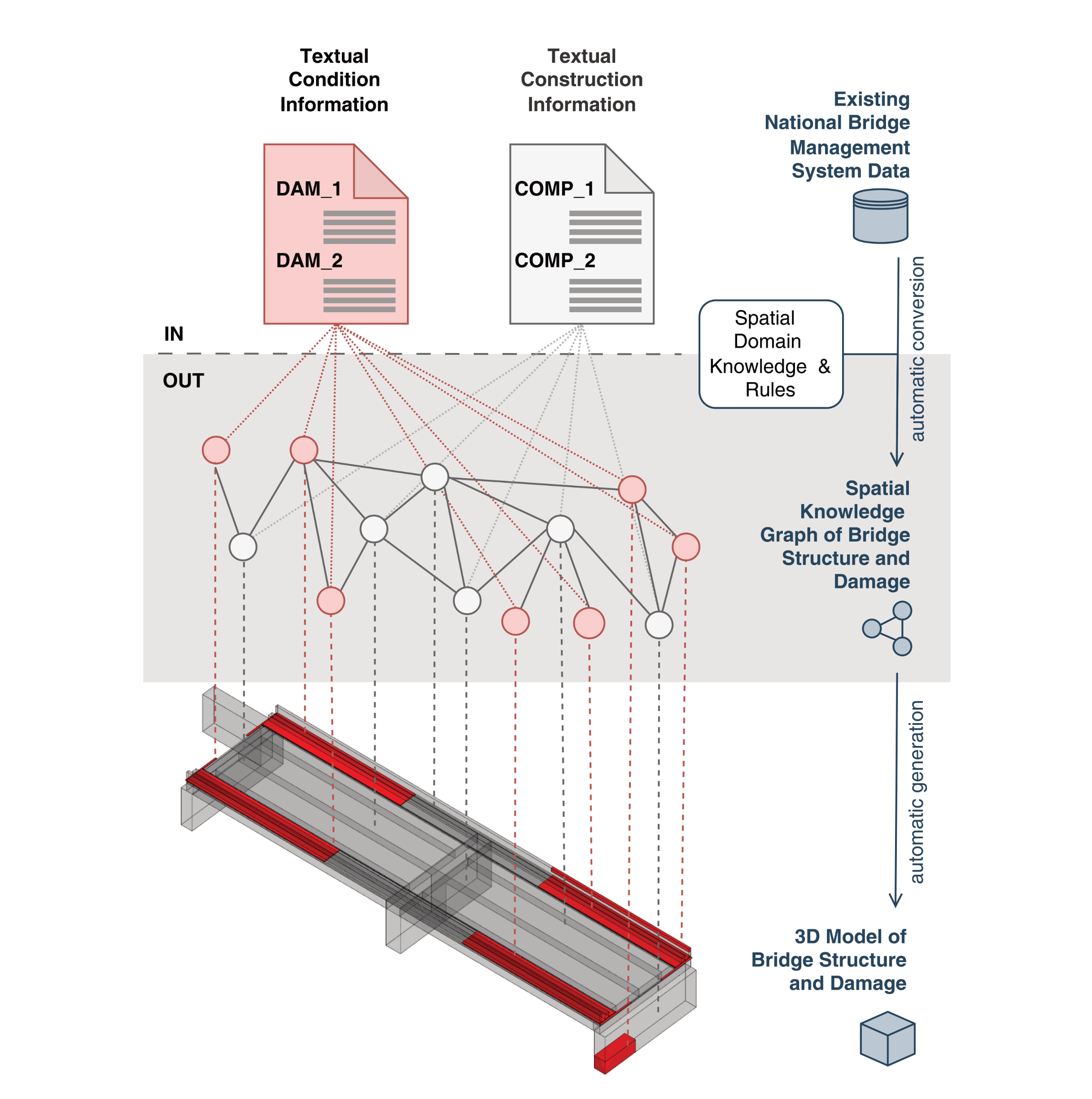
Prof. Dr. Jakob Beetz serves as a University Professor at RWTH Aachen University's Faculty of Architecture, leading the Design Computation (DC) research group. His work addresses critical challenges in sustainable built environments through digital innovation, focusing on integrating knowledge, information, and data across disciplines to reduce the sector's energy and material consumption—which accounts for over one-third of global totals—while advancing climate goals under the European Green Deal. His research spans Building Information Modeling (BIM), digital twins, and artificial intelligence, with emphasis on graph-based data federation, semantic web technologies, and large language models in construction. Key interests include evidence-based planning, parametric design optimization, building physics simulation, and networked knowledge modeling. Recent projects explore federated digital twin ecosystems for infrastructure management, intelligent damage assessment systems, and AI-driven solutions for wood structure preservation, directly contributing to sustainable development targets. Analysis of his 2024-2025 publications reveals a cohesive trajectory toward decentralized data environments and AI integration in Architecture, Engineering, and Construction (AEC). His work bridges theoretical foundations in knowledge representation with practical applications in bridge maintenance, road infrastructure, and timber construction, demonstrating consistent innovation in spatial data querying, federated issue management, and ontology-based process modeling. Prof. Beetz actively supervises PhD candidates, as evidenced by DC.Promotions 2024, and drives international collaboration through events like the Forum Construction Informatics 2025 and CIB W78 conferences. His research group engages with industry standards including Industry Foundation Classes (IFC) and Common Data Environments (CDEs), emphasizing open data principles and interoperability to transform construction workflows.
Prof. Dr. Ferdinand Evers is a Chair of Computational Condensed Matter Theory at the Institute of Theoretical Physics , University of Regensburg. His research spans quantum transport , spintronics , molecular electronics , and many-body localization , with a focus on ab initio and DFT-based modeling of nanostructures and low-dimensional systems . Key Research Areas: Quantum transport in molecular junctions Spin-orbit coupling and chiral effects Multifractality at quantum phase transitions Electronic structure of topological materials Ultrafast laser-driven electron dynamics Anderson localization and disorder Recent Article Trends (2021–2024): High-harmonic generation in topological insulators Spin-selective transport in chiral systems Mechanical torque in molecular rotors Self-consistent GW methods for molecular electronics Quantum interference in graphene nanoribbons Teaching: Lecturer for Theoretical Physics I-IV , Advanced Quantum Mechanics , and Scientific Perspectives courses at the University of Regensburg Focus on statistical mechanics , quantum transport , and computational nanoscience
Kihong Heo is an Associate Professor in the School of Computing and Graduate School of Information Security at KAIST (Korea Advanced Institute of Science and Technology) in South Korea. His academic career includes serving as an Assistant Professor at KAIST from 2017-2019 before being promoted to Associate Professor in 2020, following his postdoctoral research at the University of Pennsylvania. He earned both his Ph.D. and B.S. in Computer Science & Engineering from Seoul National University. Dr. Heo's research focuses on developing program reasoning systems for safe and reliable software, with specific interests in AI-based program analysis systems for detecting deep semantic software bugs, general-purpose program simplification systems for secure and efficient software, and scalable program synthesis systems for automatic software generation and repair. His work bridges the gap between programming languages, program analysis, and machine learning techniques to create next-generation programming systems. Analysis of his recent publications reveals a strong trend toward integrating machine learning techniques with traditional program analysis methods, with significant contributions in compiler validation, software security, fault localization, and program debloating. His research has practical impact, with some of his work incorporated into Facebook's Infer static analyzer. ACM SIGSOFT Distinguished Paper Award, FSE 2025 Amazon Research Award, 2024 The Soo-Young Lee Teaching Innovation Award, KAIST, 2024 Prize for Excellence in Teaching, KAIST, 2024 Best Artifact Award, ICSE 2022 ACM SIGPLAN Distinguished Paper Award, PLDI 2019 ACM SIGSOFT Distinguished Paper Award, ICSE 2019 Dr. Heo actively mentors graduate students, currently advising several Ph.D. candidates including Yeonhee Ryou, Taeeun Kim, and Sujin Jang, as well as master's students. He has served on program committees for major software engineering and programming language conferences including PLDI, ICSE, POPL, and SPLASH, demonstrating his active role in the academic community. His laboratory, the Programming Systems Laboratory at KAIST, focuses on creating innovative programming systems that leverage both semantic-based program analysis and AI techniques.
Dr. Magdalena Schreter-Fleischhacker works at the Technical University of Munich within the Professorship of Simulation for Additive Manufacturing . Her research focuses on physics-based computational modeling of coupled liquid-powder-gas dynamics in metal additive manufacturing, including melt pool dynamics and powder-gas interactions . She specializes in multi-phase flow modeling using cut-element and diffuse interface methods with continuous/discontinuous Galerkin schemes . She also develops constitutive models for quasi-brittle materials like 3D printed concrete and rock, incorporating anisotropy , gradient-enhanced damage mechanics , and micropolar continua . Her computational work leverages matrix-free algorithms and parallel computing , with significant contributions to the deal.II finite element library . Research Interests Physics-based computational modeling of coupled liquid-powder-gas dynamics in additive manufacturing Multi-phase flow simulation using sharp/diffuse interface methods Advanced constitutive modeling for quasi-brittle materials (rock, soils, 3D printed concrete) High-performance computing and matrix-free algorithms Notable Contributions Development of consistent diffuse-interface models for melt-vapor dynamics Improvements to continuum surface flux models in additive manufacturing Formulation of gradient-enhanced damage-plasticity models for geological materials Principal contributor to the deal.II library (version 9.6) Supervised Student Projects Johannes Resch (2024): DG-based thermo-hydrodynamic melt pool simulations Julian Brotz (2024): DEM-FEM coupling for fluid-powder interaction Andreas Ritthaler (2024): Matrix-free cutDG formulation for complex flows Tinh Vo (2023): Laser modeling for melt pool simulations Scientific Awards ERC Starting Grant recipient