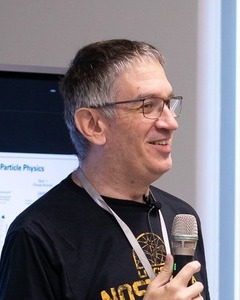
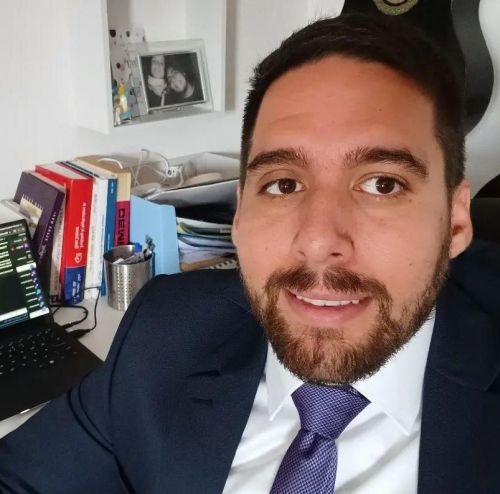
Dr. Ivica Rubelj is a Senior Researcher at the Ruđer Bošković Institute in Zagreb, Croatia, affiliated with the Division of Molecular Biology and leading the Laboratory for Molecular and Cellular Biology. His work bridges molecular biology, aging research, and genome stability through studies on telomere dynamics, senescence mechanisms, and antioxidant interventions. Ruđer Bošković Institute - Division of Molecular Biology - Laboratory for Molecular and Cellular Biology Research focuses on: Telomere biology's role in cellular aging Stochastic mechanisms of senescence Antioxidant effects on age-related biomarkers FTO gene polymorphisms in metabolic disorders Epigenetic influences on longevity Phytochemical analysis of Brassica species Recent publications examine resveratrol/melatonin impacts on aging rats, lysophospholipid contributions to SASP, and telomere heterogeneity's influence on cell culture dynamics. He has mentored over 20 graduate students in molecular biology and aging research. Key collaborations with Croatian Medical Journal, MDPI, and Springer journals Active in conferences like Science & Wine World Congress and European Workshops on Telomeres
Marko Šoštar is a Senior Lecturer at the Ruđer Bošković Institute , specializing in molecular biology and cell dynamics. His research focuses on small GTPases, Rac1 activity, and macropinocytosis in Dictyostelium discoideum . Current affiliation: Ruđer Bošković Institute, Division of Molecular Biology Key research areas: Cell Biology, Computational Biology, Biophysics Šoštar's work involves advanced fluorescent imaging and computational modeling to analyze Rac1 oscillations, actin cytoskeleton regulation, and endocytic processes. He has published extensively in journals like Plos Computational Biology and Proceedings of the National Academy of Sciences. His recent publications highlight collaborations with researchers such as Maja Marinović, Vedrana Filić, and Igor Weber, focusing on protein dynamics and signaling pathways in highly motile cells.
Dunja Ćosić serves as a Lecturer at the Polytechnic of Požega, Croatia, based at Holy Trinity Square 3 in Požega. Her academic credentials include a master's degree in mathematics (univ. mag. math.), and she maintains active contact through email dunja.cosic@ptfos.hr. Her educational foundation in mathematics directly informs her academic role. While specific institutional details of her degree are unlisted, her position demonstrates advanced expertise in mathematical disciplines requiring rigorous analytical training. Research activities center on Mathematics with interdisciplinary applications evident through doctoral supervision in Food Technology. Her work likely involves statistical modeling, computational methods, and quantitative analysis relevant to food science optimization and process engineering, bridging theoretical mathematics with industrial applications. Dr. Ćosić currently mentors two doctoral candidates: Mario Nosić (defense scheduled August 26, 2025) Esma Karahmet Farhat (defense scheduled July 18, 2025) Both students are engaged in the Food Technology doctoral program, indicating her role in advancing research at the mathematics-technology interface. No scientific awards or honors are documented in available institutional records.
Davor Horvatić is a full professor at the Institute for Theoretical Physics of Particles and Fields , Faculty of Natural Sciences and Mathematics, University of Zagreb. His professional journey began in 2000, and he has held various teaching roles in physics and computational subjects. Graduated: 1999 PhD: 2008 Email: davorh@phy.hr Teaching Activities He teaches courses such as Electrodynamics, Quantum Physics, and Symbolic Programming, often combining theoretical instruction with laboratory and auditory exercises. Research Focus His research aligns with the institute’s focus areas: theoretical physics of particles and fields, including cosmology and field theory. Key project: Elementary particles, field theory and cosmology (MZOŠ 119-0982930-1016)
Prof. Dr. Miroslav Požek is a full professor with permanent appointment at the Department of Experimental Physics , Faculty of Science, University of Zagreb. His research focuses on condensed matter physics , superconductivity , and magnetic resonance techniques. Key projects include "Interplay of structure, spin, and orbital order in perovskite cuprates and titanates" (Humboldt Stiftung, 2020-2024) and "Local Probe and Mesoscopic Dynamics of Strongly Correlated Electron Systems" (HRZZ, 2014-2018) . His scientific work spans cuprate superconductors , rare-earth titanates , and nanostructured materials , with recent studies on strain-controlled ferromagnetism and charge localization mechanisms . Articles highlight applications of NMR/NQR and microwave conductivity in probing quantum phases. Selected publications include "Uniaxial Strain Control of Bulk Ferromagnetism in Rare-Earth Titanates" (Phys. Rev. Lett., 2022) and "Unusual Behavior of Cuprates Explained by Heterogeneous Charge Localization" (Science Advances, 2019) .
Assistant Professor Juraj Klarić is affiliated with the Institute for Theoretical Physics of Particles and Fields at the Faculty of Natural Sciences and Mathematics, University of Zagreb. He completed his PhD in 2019 and has been active in theoretical physics since joining the institute in 2023. Education: PhD (2019), Graduated (2013). Research Focus: Particle physics, quantum field theory, and high-energy theoretical models. Projects: Involved in initiatives like PRECIOUS, SAT-PHENO, and NucEDF.
Mihael Grbić is an Associate Professor at the Department of Physics , Faculty of Science , University of Zagreb , Croatia. He leads research at the laboratory for solid-state NMR and high-frequency measurements (Room 010). Graduated in 2005, earned PhD in 2011, and has been with the institute since 2006 Research Interests His work focuses on high-temperature superconductivity in cuprates and pnictides, quantum magnetism in low-dimensional systems, and heavy fermion materials . He specializes in solid-state NMR/NQR and microwave conductivity measurements to probe quantum criticality and phase transitions. Projects Quantum CoreS CeNIKS (Center for Advanced Research in Complex Systems) MicroS - Croatian Science Foundation INSPINOR Instrumentation Expertise Developed advanced equipment for NMR experiments including: Two-axis goniometer for precise crystal orientation Elliptical cylindrical resonant cavity systems Optimized NMR antenna-receiver chains Microwave surface impedance measurement tools
Jamal Hammoud serves as an Assistant Professor at the Institute for Theoretical Physics of Particles and Fields within the Faculty of Natural Sciences and Mathematics at the University of Zagreb. His teaching responsibilities span undergraduate and integrated graduate programs, including General Physics courses (auditory exercises and seminars), Statistics and Fundamentals of Physical Measurements, and Computer Science and Practicum laboratory sessions. His research focuses on theoretical frameworks in particle physics and quantum field theory, as evidenced by his affiliation with the Institute for Theoretical Physics of Particles and Fields. This institute specializes in high-energy theoretical physics, elementary particle phenomena, and advanced field theory applications within the university's physics research ecosystem. No scientific awards, student advisement records, or publication details were documented in the source materials.
Associate Professor Irena Radic Rossi, Ph.D. has been a faculty member at the University of Zadar, Department of Archaeology since 2009, where she teaches at undergraduate, graduate and postgraduate levels. Born in Zagreb in 1964, she is a leading Croatian underwater archaeologist specialising in maritime heritage of the Adriatic. Education 1987 – B.A. in Archaeology, Faculty of Philosophy, University of Zagreb 1993 – M.Sc. in Archaeology (topic: Amphorae of the Lamboglia 2 and Dressel 6a types on the eastern coast of the Adriatic in light of underwater finds ) 2011 – Ph.D. in Archaeology, University of Zadar (topic: Problems of prehistoric and ancient archaeological sites in the Croatian underwater world ) Research Interests Her research encompasses the full spectrum of underwater and maritime archaeology, from ship construction and naval architecture to ancient trade routes , seafaring technologies , and protection of submerged cultural heritage . She employs interdisciplinary methods combining traditional excavation with advanced digital recording, numerical simulation and archaeometric analyses. Her work illuminates how human interaction with the sea has shaped the civilisations of the Adriatic and the wider Mediterranean. Publications Overview Across more than 80 publications since 2017, her research can be grouped into four dominant themes: (1) hull analysis and ship performance , where engineering approaches are applied to ancient vessels; (2) site-specific studies of iconic wrecks such as Gnalić (1583), Santo Hieronimo (1576) and Roman sites at Caska and Trstenik; (3) environmental reconstructions using salt-pan and microfossil proxies to track Holocene sea-level change; and (4) material culture studies focusing on amphorae, glass and pottery as evidence of trade and technology transfer. Scientific Awards & Recognition While explicit awards are not listed, her sustained international collaborations—Centre Camille Jullian (CNRS), Ca’ Foscari University Venice, Texas A&M University, UNESCO Participation Programme—underscore significant peer recognition. Projects & Funding Principal Investigator, Ships and Navigation in the Roman Province of Dalmatia (with Centre Camille Jullian, France, since 2007) Co-director, Ars Nautica – Educational Program in Archaeology and Maritime History (with Ca’ Foscari University & UNESCO, 2008–2011) Coordinator, The Shipwreck near Gnalić – A Mirror of Renaissance Europe (with Texas A&M University and partners, since 2011) Laboratories & Teams She leads the University of Zadar’s underwater archaeology research group, integrating students and post-docs into field projects that combine diving operations, 3-D photogrammetric recording, and laboratory analyses in dendrochronology and archaeometry. Fieldwork is conducted from the department’s own research vessel, providing a fully equipped platform for multidisciplinary campaigns along the Croatian coast.
Siniša Sovilj is an Associate Professor at the Faculty of Informatics in Pula (FIPU), part of the University of Pula in Croatia. He maintains an active teaching position with an office at Alda Negrija Street 6, room 012, and can be contacted at sinisa.sovilj@unipu.hr. His professional profile is available on LinkedIn. Dr. Sovilj's teaching responsibilities span multiple computing disciplines: Programming on the Java Virtual Machine (undergraduate) Data Analysis and Information Processing (graduate) Internet of Things (graduate) Mobile Applications (graduate) IT Solution Development (graduate) Graduation thesis supervision His research demonstrates significant interdisciplinary breadth with a progression from biomedical engineering toward computational and economic modeling. Early in his career, Dr. Sovilj focused on cardiac electrical activity modeling and ECG analysis, developing real-time P-wave detectors and predictive models for atrial fibrillation. More recently, his work has centered on Internet of Things systems, programming language analysis, and system dynamics approaches to economic and business problems. Dr. Sovilj's scholarly output reveals an interesting trajectory from specialized biomedical applications to broader computational frameworks. His recent publications (2021-2024) particularly highlight work on Kotlin-based system dynamics modeling, covariance analysis in object-oriented languages, and IoT educational platforms like the "Food Computer" demonstration system. His notable contributions include: Development of IoT monitoring systems for environmental applications Analysis of congestion mechanisms in IoT networks System dynamics modeling approaches for economic analysis Early work on cardiac electrical modeling and ECG analysis techniques As an educator, Dr. Sovilj has developed curriculum content across multiple computing disciplines, reflecting the evolving landscape of computer science education from traditional programming to emerging IoT technologies.
Katarina Kostelić, Ph.D., serves as an Assistant Professor at the Faculty of Informatics in Pula, part of Juraj Dobrila University of Pula. She earned her doctorate in 2017 and maintains an active role in both undergraduate and graduate education, teaching courses including Social Network Analysis, Quantitative Methods of Business Decision Making, Operations Research, Statistics, and Business Analytics. Her office is located at room 13 (Negrijeva ulica 6; university campus). Dr. Kostelić's research spans multiple interconnected domains, with a strong emphasis on game theory applications in decision-making processes, social network analysis, and cybersecurity. Her work frequently examines how awareness (or lack thereof) influences strategic interactions, with particular attention to emotional intelligence in organizational contexts. She has made significant contributions to understanding business networks, tourism economics, and statistical methodologies. Analysis of her recent publications reveals a clear trajectory toward increasingly complex applications of game theory in cybersecurity contexts, alongside continued exploration of social networks in tourism and business environments. Her research demonstrates interdisciplinary reach, connecting computer science, economics, psychology, and management studies. The integration of neutrosophic sets in satisfaction measurement and the application of TOPSIS frameworks to cybersecurity risk assessment highlight her methodological innovation. Dr. Kostelić serves in multiple editorial capacities, including Managing Editor of Applied Sciences and Business Economics, Member of the Editorial Board of Journal of Interdisciplinary Sciences, and Member of the Editorial Team for Symmetry. She has also contributed to the popularization of science through accessible explanations of strategic situations, game theory applications in cybersecurity, and business network dynamics. Her research leadership is evident through projects including 'Analysis of social networks in Croatian tourism' (2019-2022), 'Role of emotions in strategic decision-making' (2019-2023), and contributions to international collaborations like MEGASFORA and SMART INNO. Dr. Kostelić has also developed educational resources, most notably her 2024 publication 'Introduction to R and RStudio,' supporting statistical education.
Ivan Lorencin is an Assistant Professor at the Faculty of Informatics in Pula , University of Pula. He holds a PhD in Electrical Engineering and Computer Science (2022) from the University of Rijeka, where he also graduated in 2018. His academic roles include Vice-Dean for Business Cooperation and Science, and he teaches courses such as Artificial Intelligence, Network Systems, and Mechatronics. PhD: 2022, University of Rijeka MSc: 2018, University of Rijeka Dr. Lorencin’s research focuses on Artificial Intelligence , Robotics , and High-Performance Computing . His work spans biomedical applications (e.g., cancer diagnostics), maritime domain (e.g., vessel recognition), and energy systems (e.g., power plant optimization). He has published over 90 papers, with 31 in Q1/Q2 journals. His recent publications emphasize machine learning in healthcare (bladder/cervical cancer diagnosis), symbolic regression for energy systems, and computer vision applications (YOLO algorithms, CLIP). He collaborates on international projects like DATACROSS , EDIH Adria , and Erasmus+ WICT . He serves as an editor for the journal Mathematics and contributes to scientific consortia including the Science Center for Excellence in Data Science . His teaching portfolio includes courses in artificial intelligence, data science, and robotics, with a focus on practical exercises and thesis supervision.
Siniša Miličić is an Assistant Professor at the Faculty of Informatics in Pula, University of Pula, where he also serves as Vice Dean for Teaching and Students since 2021. He holds a PhD in mathematics from the University of Zagreb (2013) and previously worked as a junior researcher at the Faculty of Electrical Engineering and Computing in Zagreb from 2007 to 2017. Dr. Miličić's research focuses on the theory of dynamical systems and fractal dimensions, with applications extending to informatics and computer science, particularly in data science. His work bridges theoretical mathematics with practical computational applications, demonstrating expertise in both pure mathematical theory and its implementation in modern technological contexts. His teaching portfolio spans from foundational mathematics to advanced computational topics, including Differential and Integral Calculus, Geometry and Linear Algebra, Functional Programming, and Statistics across undergraduate, graduate, and integrated programs. His publication record shows a clear evolution from theoretical mathematics toward applied computational methods. Early works (2006-2013) focused on fundamental aspects of dynamical systems, fractal geometry, and differential equations. More recent publications (2018-2025) emphasize time-frequency analysis, image processing, and signal denoising, reflecting his growing interest in practical implementations of mathematical theory in data science applications. As Vice Dean for Teaching and Students, Dr. Miličić actively participates in the development of courses and design of study programs at the Faculty of Informatics in Pula. He teaches a comprehensive range of mathematics courses from introductory level to advanced topics including methodological courses in mathematics teaching, demonstrating his commitment to both theoretical foundations and practical applications of mathematics in informatics education.
Assistant Professor Nikola Tanković, Ph.D. (born 1986 in Pula, Croatia) is affiliated with the Faculty of Informatics in Pula at Juraj Dobrila University of Pula . He received his B.Sc. (2009) and Ph.D. (2017) in Computer Science from University of Zagreb Faculty of Electrical Engineering and Computing. His roles include Project Leader of EDIH Adria , Vice Dean for Science and Industry Relations (2020-2024), and Member of University Informatics Committee (2019-present). Teaching: Offers courses in Programming, Software Engineering, Distributed Systems, and Web Applications Research: Focuses on Software Modeling, Quality Optimization, Distributed Systems, and Machine Learning applications across domains His 15 most recent publications span Cloud Computing , Peer-to-Peer Learning , Medical Imaging Optimization , and Business Process Modeling . Awards include the Rector's Award for SCORE 2009 Championship . He advises students on projects related to database systems, distributed architectures, and AI applications. Current initiatives include EDIAH Adria (European Digital Innovation Hub) and EVOSOFT (Software Evolution Analysis).
Luka Blašković, MSc in Informatics, is an Assistant Professor at the Faculty of Informatics in Pula, Croatia. He contributes to both undergraduate and graduate programs, teaching courses in Operating Systems, Programming in Scripting Languages, Business Process Management, Web Applications, and Distributed Systems. Department: Department of Informatics Research Focus: Computer Science, Game Development, Artificial Intelligence, User Experience Projects: Key participant in the EDIH Adria initiative (European Digital Innovation Hub) His research spans Human-Computer Interaction , Gaming Experience Evaluation , and Mobile Banking Applications . Recent work includes developing a conversational agent for personalized teaching materials (2024) and analyzing EDIH Adria TBI projects' impact (2025). Scientific publications include studies on Unity Engine game development (2023), vector databases (2022), and mobile banking quality (2022). While no explicit awards are listed, his active participation in international conferences like MIPRO underscores his academic engagement. Contact: luka.blaskovic@unipu.hr | Personal Website