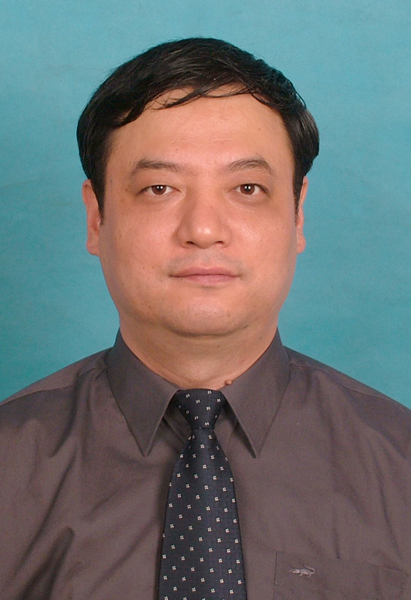
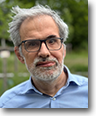
Xiang Bai serves as a Professor at Huazhong University of Science and Technology (HUST) in Wuhan, China, with primary academic affiliation to this institution. Research Interests: Computer Vision (core specialization) Computer Science (broad discipline) Pattern Recognition Image Processing Artificial Intelligence applications His editorial role as Associate Editor for Computer Vision at Frontiers in Computer Science demonstrates active scholarly contribution in visual computing domains. Research output shows significant academic visibility with 853 profile views despite unlisted publications. Advising and Funding: Student supervision records unavailable Grant history not disclosed in source material Laboratory and collaborative team details are not provided in the current academic profile.
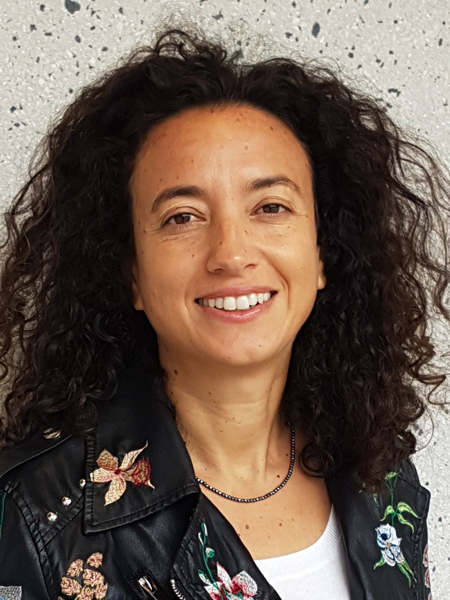
Costanza Bonadonna is a Full Professor at the University of Geneva (since 2019), specializing in volcanic hazards and Earth sciences. She holds a PhD supported by the European Commission (1998–2000) and has held academic positions across institutions including the University of South Florida and University of Hawaii. Her research focuses on volcanic ash dispersal modeling, risk assessment, and physical volcanology, with notable contributions to understanding tephra deposits and eruption dynamics. Bonadonna has received prestigious awards such as the 2020 AGU Volcanology presidency and the International Galileo Galilei Award. She leads the CERG-C (Centre for Environmental Risk Studies) and has organized major international workshops on volcanic risk and ash dispersal. Her work integrates numerical modeling, field investigations, and geophysical observations to enhance volcanic hazard forecasting and community resilience strategies. Research Grants: 2019–2023: SNSF Probabilistic volcanic risk framework 2018–2021: H2020 NEWTON-g and EUROVOLC networks 2017–2020: SNSF Gravitational instabilities in volcanic clouds Awards: 2020 President elect of AGU Volcanology Division Galileo Galilei Award (2020) Outstanding Woman in Science (2004, GSA) She has advised numerous international projects and collaborates with global institutions through initiatives like MeMoVolc and NEMOH. Her research bridges geophysical observations with computational models to address multi-hazard scenarios and improve disaster preparedness.
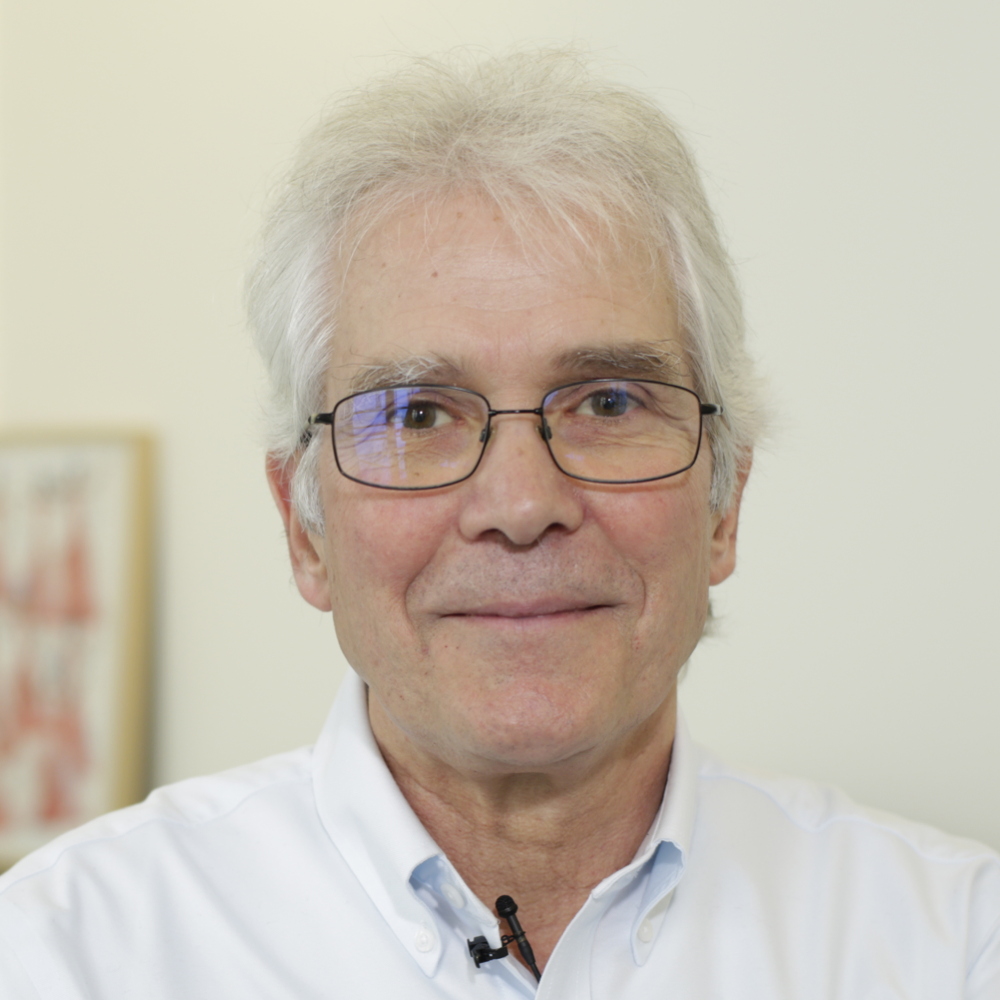
Jean-Pierre Gattuso is a CNRS Research Professor at the Laboratoire d'Océanographie de Villefranche (Sorbonne University) and Associate Scientist at the Institute for Sustainable Development and International Relations (IDDRI-SciencesPo, Paris). His research focuses on the impacts of ocean acidification and warming on marine ecosystems, as well as ocean-based solutions to climate change mitigation and adaptation. Current Roles : CNRS Research Professor, Associate Scientist at IDDRI-SciencesPo Past Positions : Research Professor at Shantou University (2006–2009), Visiting Scientist at Rutgers University and NCAR (2004–2005), Group Leader at Laboratoire d'Océanographie de Villefranche (1998–2004), and others. His research interests span ocean acidification , carbon and carbonate cycling , climate change impacts on marine ecosystems , and ocean-based mitigation strategies . He co-edited the first book on ocean acidification and contributed to IPCC AR5 and AR6 reports. Recent publications highlight his work on ocean alkalinity enhancement , CO2 sequestration , and climate policy integration . He has developed tools like FOCE systems for in situ ocean acidification experiments and standardized ocean carbonate chemistry analysis. Scientific Awards : Ruth Patrick Award (2020), Blaise Pascal Medal (2014), Vladimir Vernadsky Medal (2012), and others. Academic Memberships : Foreign member of the Chinese Academy of Sciences, elected member of the European Academy of Sciences, Academia Europaea, and founder of the European Geosciences Union. Gattuso has led the Ocean Acidification International Coordination Centre at the International Atomic Energy Agency and will co-chair the 2025 One Ocean Science Congress.
Aaron Quigley is the Science Director and Deputy Director of CSIRO’s Data61, and an Adjunct Professor of Computer Science at the University of New South Wales (UNSW) in Sydney, Australia. He previously served as Head of the School of Computer Science and Engineering and Deputy Dean of Engineering at UNSW (until 2023), and as Chair of Human Computer Interaction at the University of St Andrews (until 2020). He holds a PhD from the University of Newcastle and a first-class honours degree from Trinity College Dublin. Research Focus: AI-HCI, discreet computing, pervasive and ubiquitous computing, information visualization, and augmented reality. Awards: ACM Distinguished Scientist (2020), ACM SIGCHI Lifetime Service Award, and ACM Distinguished Member. Professional Roles: Served as General Chair for ACM CHI, UIST, and MobileHCI; member of the Australian Academy of Science’s National Committee; and co-founder of DataLab. His research has been supported by organizations such as EPSRC, AHRC, and industry partners like Intel and Microsoft. He has held academic and industry roles across Australia, the UK, Japan, and the U.S.
Univ.-Prof. Aiko Voigt is a Professor and Head of the Department of Meteorology and Geophysics at the University of Vienna. Her research focuses on climate dynamics, cloud physics, and atmospheric processes. She leads the Environment and Climate Research Hub and teaches advanced courses like 'Climate Modelling Lab' and 'Cloud Physics.' Her work explores cloud-radiative interactions, climate change impacts, and extreme weather dynamics. Recent studies analyze energy imbalances, high-cloud feedbacks, and tropical precipitation patterns. Voigt's contributions bridge climate modeling with observational data, emphasizing high-resolution simulations and interdisciplinary approaches. Teaching includes courses such as 'Climate System of the Earth,' 'Scientific Communication,' and 'Introduction to Computational Meteorology.' Her research spans from present-day climate to Snowball Earth scenarios, addressing both modern and paleoclimatic challenges. Publications highlight advancements in radiative transfer algorithms, cyclone dynamics under warming, and uncertainties in climate model predictions. Her work underscores the critical role of clouds in amplifying climate sensitivity and reshaping atmospheric circulation patterns.
Endre Süli is a Professor of Numerical Analysis at the University of Oxford, affiliated with Worcester College and Linacre College. He has held various academic roles since 1985, including Fellowships and Tutorships in Mathematics. University Education: B.Sc. in Mathematics, University of Belgrade (1974-1978) M.Sc. in Mathematics, University of Belgrade (1978-1980) Ph.D. in Mathematics, University of Belgrade (1985) M.A., University of Oxford (1985) British Council Visiting Student, Reading University and University of Oxford (1983/84) Süli's research focuses on numerical methods for partial differential equations (PDEs), with expertise in finite element methods, adaptive algorithms, error control, and computational modeling of fractures and non-Newtonian fluids. His work bridges mathematical theory and practical applications in fluid dynamics and material science. His recent publications emphasize finite element approximations, nonlinear PDEs, and stochastic models for polymer dynamics. Themes include multiscale methods, tensor-sparsity for high-dimensional problems, and compressible flow simulations. Scientific Awards: Fellow of the Royal Society (2021) London Mathematical Society Naylor Prize and Lectureship (2021) Pro Urbe Prize, City of Subotica (2021) SIAM Fellow (2016) Member, Academia Europaea (2020) Foreign Member, Serbian National Academy of Sciences and Arts (2009) IMA Service Award (2011) Fellow, European Academy of Sciences (EurASc) (2010) Fellow, Institute of Mathematics and its Applications (2007) London Mathematical Society/New Zealand Mathematical Society Forder Lecturer (2015) Professor Hospitus, Charles University, Prague (2012) Distinguished Visiting Chair Professor, Shanghai Jiao Tong University (2013) Invited Speaker, International Congress of Mathematicians, Madrid (2006) Süli has supervised numerous research projects and held visiting appointments globally. His contributions to numerical analysis span foundational work on error estimation, nonlinear stability, and advanced computational frameworks for complex physical systems.
Prof. Maosong Sun is a Professor at the Department of Computer Science and Technology, Tsinghua University, China. He holds additional leadership roles including Executive Vice Dean of the Institute for Artificial Intelligence and Deputy Director of the National Engineering Laboratory for Cyberlearning and Intelligent Technology. His research focuses on natural language processing (NLP), artificial intelligence, machine learning, and computational education. He leads interdisciplinary projects in computational humanities, knowledge graphs, and MOOC platforms like XuetangX, which has over 58.8 million registered learners. Key contributions include pioneering work in Chinese NLP tools, poetry generation systems like Jiuge, and large-scale research initiatives funded by Chinese and Singaporean programs. Awards include the Tsinghua University Education Award (2019) and the National Outstanding Practitioner Award (2007). Established NLP and Computational Humanities & Social Sciences Lab (2008) Co-director of the Joint Research Center for Extreme Search (2011-present) Over 200 publications with 11,000+ citations (h-index 47)
Prof. Pierre Jaïs serves as University Professor in Cardiology and Cardiac Electrophysiology at the University of Bordeaux and Head of the Electrophysiology Unit at Bordeaux University Hospital. He concurrently leads the Electrophysiology and Heart Modeling Institute (LIRYC) as CEO since 2021, driving innovation in cardiac rhythm disorder treatments through multidisciplinary research. His research revolutionized cardiac electrophysiology by identifying pulmonary veins as primary sources of atrial fibrillation, establishing pulmonary vein isolation as the global treatment standard. Current work focuses on pulsed field ablation—a non-thermal technique with potential to replace conventional ablation—and developing advanced imaging for precise arrhythmia targeting, reflecting his commitment to translating scientific discovery into clinical solutions. Analysis of recent publications (2017-2021) reveals dominant trends in pulsed field ablation optimization, comparative ablation techniques, and AI integration in cardiovascular imaging. These works consistently address atrial fibrillation treatment efficacy, safety profiles, and technological innovation, positioning him at the forefront of electrophysiology advancement. His distinguished contributions are recognized through prestigious awards including: 2019: Eli S. Gang Most Innovative Abstract Award (Heart Rhythm Society) 2018: Eric N. Prystowsky Lectureship Award 2012: Academy of Medicine Membership (Paris) 2009: Circulation Best Paper Award Multiple National Academy of Medicine honors Prof. Jaïs actively mentors electrophysiology trainees and secures substantial research funding, notably leading an EU-funded randomized trial comparing pulsed field versus thermal ablation. His LIRYC institute integrates cardiology, engineering, and computational expertise to accelerate therapeutic innovation. The LIRYC institute operates as a collaborative hub where clinicians, biomedical engineers, and data scientists develop next-generation electrophysiology tools. Current projects include real-time arrhythmia mapping systems, tissue-selective ablation protocols, and AI-driven predictive models for treatment personalization, fostering seamless translation from bench to bedside.
Marco Di Renzo is a CNRS Professor (Directeur de Recherche Titulaire) at University of Paris-Saclay, affiliated with CentraleSupelec and the Signals and Systems Laboratory (L2S). He serves as Coordinator of the Communications Networks Area at the DigiCosme Laboratory of Excellence and Editor-in-Chief of IEEE Communications Letters. His academic leadership includes membership in the Ph.D. School on ICT Admission Committee at Paris-Saclay University. His educational background includes a Laurea (cum laude) and Ph.D. in Electrical Engineering from University of L'Aquila, Italy (2003, 2007), and a Habilitation à Diriger des Recherches from University Paris-Sud (2013). Laurea (cum laude), Electrical Engineering, University of L'Aquila (2003) Ph.D., Electrical Engineering, University of L'Aquila (2007) Habilitation à Diriger des Recherches, University Paris-Sud (2013) Di Renzo's research focuses on next-generation wireless communications, particularly reconfigurable intelligent surfaces (RIS), 6G technologies, and stochastic geometry modeling. His work bridges theoretical communication theory with practical implementations in cellular networks, millimeter-wave communications, and ultra-wide band systems. Recent publications demonstrate leadership in holographic metasurfaces, integrated sensing and communication (ISAC), and AI-empowered network design, establishing him as a pioneer in electromagnetic wave manipulation for future networks. His award-winning publications span RIS-aided communications, channel modeling, and security frameworks. Analysis of his recent work reveals consistent focus on three pillars: (1) fundamental electromagnetic theory for wave manipulation, (2) practical RIS implementations across frequency bands, and (3) integration with AI for network optimization. His articles frequently address industrial applications including factory automation and space-air-ground networks. Di Renzo's scientific recognition includes: IEEE Fellow (2020) and IET Fellow (2020) Highly Cited Researcher (Web of Science, 2019) SEE-IEEE Alain Glavieux Award (2017) Multiple Best Paper Awards (IEEE ICC, EURASIP) Nokia Foundation Visiting Professorship (2020) As Principal Investigator for CNRS, he coordinates multiple Horizon 2020 projects including SURFER, PathFinder, and MetaWireless. His leadership extends to serving as Project Coordinator for H2020 5Gwireless, 5Gaura, MAPNET, and REDESIGN. With over 350 publications, 17,000+ citations, and h-index of 66+, his research group maintains strong industry partnerships with Nokia and other telecommunications leaders. Di Renzo directs the Signals and Systems Laboratory (L2S) at Paris-Saclay and coordinates the DigiCosme Excellence Lab's Communications Networks Area. His team specializes in electromagnetic modeling for wireless networks and has pioneered the European Telecommunications Standards Institute (ETSI) Industry Specification Group on RIS. The group maintains active collaborations with Aalto University (Finland), University of Technology Sydney (Australia), and University of L'Aquila (Italy).
Hans Irschik is a Full Professor and Head of the Institute of Technical Mechanics at Johannes Kepler University of Linz, Austria. He has held key academic roles, including Vice-Rector for Research (1995-2001) and Chair of the Senate (2009-2013) at JKU, and serves as Editor-in-Chief of Acta Mechanica . His work bridges structural mechanics, mechatronics, and control systems. Education: Studied Civil Engineering at Vienna University of Technology, earned Doctor of Technical Sciences (1981) and Habilitation in Mechanics (1986). Research interests include structural control, continuum mechanics, and smart materials. His contributions span theoretical developments and applied control strategies for aging structures. Recent articles focus on Lagrangian formulations, piezoelectric sensors, and beam theories, reflecting his expertise in mechanics and structural health monitoring. Scientific Awards & Memberships: Full Member, Austrian Academy of Sciences (since 2011) Honorary Doctorate, St. Petersburg Polytechnical University (2009) President, European Association of Structural Control and Health Monitoring (2008-2012) Fellow, Japanese Society for the Promotion of Science (2006) City of Vienna Award (1988) Kardinal Innitzer-Award (1988) Grants & Projects: Led Austrian Science Fund (FWF) research since 1993. Key researcher in the K2-Austrian Center of Competence in Mechatronics (since 2001). Participated in EUROMECH committees and European Science Foundation programs.
Heidi Vandebosch is a Professor at the University of Antwerp's Department of Communication Studies. A prominent figure in cyberbullying research since 2005, she combines academic rigor with practical applications through her role as senior member of the MIOS research group and leadership in international COST actions. PhD in Social Sciences from KU Leuven (1999) Postdoctoral grants from FWO and KU Leuven research council Academic career progression from assistant professor (2004) to full professor (since 2016) Research Focus : Cyberbullying prevalence, impact, and interventions; digital health games; media psychology; food literacy promotion through social media. Her work bridges theoretical research with practical implementation, including development of the Friendly ATTAC digital game and Cyberscan anti-bullying tools. Key Projects : Friendly ATTAC (€1.04M IWT SBO grant) Cyber-shoc interdisciplinary research BOF Concerted Research Project on adaptive health interventions Awards & Grants : Multiple prestigious FWO grants, IWT SBO funding, and BOF research support. She chairs expert panels and contributes to national educational policy through the Flemish Educational Board (VLOR). Teaching : Offers courses at all academic levels including Introduction to Communication Studies (1BA), Media Audiences & Effects (2BA), and Health Communication (MA). International Engagement : Active in COST actions, editorial roles at Communications. The European Journal of Communication Research , and advisory positions for media literacy initiatives.
Ulrich Berger is a Professor of Economics at the Department of Economics of WU Vienna University of Economics and Business (WU Vienna). He serves as Editor-in-Chief of the journal Games and is actively involved in promoting science through the Vienna Skeptics Society. His research focuses on game theory, including non-cooperative, evolutionary, behavioral, and experimental variants. He has been recognized with multiple awards, including the WU Best Paper Award and an Outstanding Reviewer Award. His work explores dynamics of cooperation, reputation systems, and strategic behavior in economic contexts. Key research areas include evolutionary stability in reputation games, indirect reciprocity, and cognitive hierarchies in strategic interactions. His publications span peer-reviewed journals like PLoS ONE and Scientific Reports , as well as popular science articles in outlets like derStandard.at . Berger has led research projects on topics such as cognitive hierarchies in minimizer games and has contributed to policy discussions on access pricing in telecommunications. His academic contributions reflect a blend of theoretical rigor and practical engagement, with recent work emphasizing evolutionary mechanisms of deterrence and experimental validation of equilibrium concepts.
Marco Canteri is a Researcher in the Department of Experimental Physics at the University of Innsbruck, Austria. He holds an MSc degree and contributes to quantum information science with a focus on trapped-ion systems for quantum computing and networking. His educational background includes a Master of Science degree. The specific institution is not provided in available sources. Canteri's research spans quantum networking, quantum communication, and quantum sensing using trapped ions. Key areas include ion-photon interfaces, quantum memory, entanglement distribution, and scalable quantum hardware. His work addresses challenges in noise resilience and long-distance quantum links through experimental implementations of multiqubit systems and telecom-wavelength interfaces. Analysis of his 12 recent publications (2020-2025) reveals consistent advancement in trapped-ion quantum technologies. Notable achievements include entanglement distribution over 101 kilometers, multimode quantum networking, and development of ten-qubit quantum registers. The research demonstrates strong interdisciplinary integration of atomic physics, quantum optics, and quantum information theory for practical quantum network applications. No scientific awards are listed in the available information. Information regarding students advised or research grants obtained by Marco Canteri is not provided in current sources. He operates within the quantum information research group of the Department of Experimental Physics, utilizing advanced laboratories equipped for trapped-ion quantum computing experiments including optical cavities, precision laser systems, and single-photon detection infrastructure under department head Hanns-Christoph Nägerl.
Hilda Tellioglu is an Associate Professor and Dean of Academic Affairs for Informatics at TU Wien, leading the Artifact-based Computing and User Research department. She holds a dual role as Head of Research Unit and oversees the Office of the Dean. Her work focuses on Human-Computer Interaction (HCI), Design Thinking, and Digital Transformation, with a strong emphasis on socio-technical systems and participatory design methodologies. Research interests span software engineering, CSCW, ambient assisted living (AAL), and digital co-creation practices in urban planning. She has spearheaded projects like aspern.mobil LAB, EnviSense, and StreetForum, exploring smart mobility, environmental sensing, and citizen participation in urban development. Her work frequently integrates tangible interfaces and model-based design approaches. Key contributions include frameworks for digital transformation evaluation (EEFCET 2020), user-centered design for informal caregivers (TOPIC platform), and crisis management systems using crowdsourcing (RE-ACTA). She has led over 20+ research projects funded by FFG, EU, and national agencies, focusing on mobility innovation, healthcare technology, and sustainable urban systems. Teaching responsibilities include courses on Design Thinking, Digital Transformation, and Research Methods across bachelor's, master's, and PhD programs. She actively promotes interdisciplinary collaboration through initiatives like the Center for Technology & Society (CTS) and Living Lab methodologies.
Jürgen Gauss is a Professor of Theoretical Chemistry at Johannes Gutenberg-Universität Mainz, Germany. With over 350 publications and an h-index of 85 (ISI WebOfScience)/96 (Google Scholar), his work focuses on high-accuracy quantum-chemical methods for energy and property calculations. Education: PhD in Theoretical Chemistry (1988), Universität zu Köln Positions: Full Professor (2001-present), Associate Professor (1995-2001), Research Associate (1991-1995), Postdoctoral Researcher (1990-1991) His research revolutionized NMR chemical shift calculations through the GIAO-MP2 scheme, extended to Cholesky decomposition techniques. He pioneered the first CCSD(T)-level analytic second derivatives for magnetic properties and developed the HEAT protocol for sub-kJ/mol thermochemical accuracy. Scientific Awards: Carl-Duisberg Gedächtnispreis (1996) Medal of International Academy of Quantum Molecular Science (1997) Akademiepreis (2003) Gottfried-Wilhelm Leibniz-Prize (2005) Foreign Member, Norwegian Academy of Science and Letters (2018) Advisees: Current PhD students include Sophia Burger, Florian Mast, Max Erichsen, and Malte Hellmann. His group develops the widely-used CFOUR quantum chemistry software package (over 1,000 licenses).