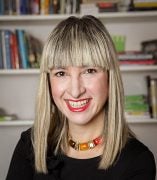
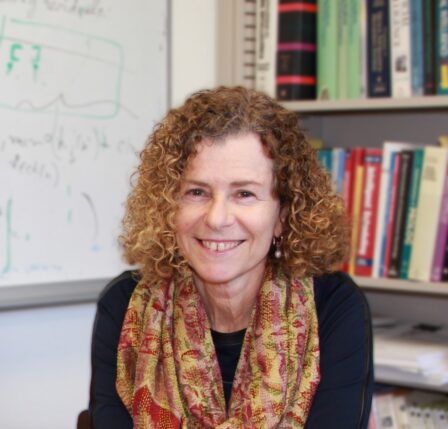
Shahram Ghiasinejad is a Senior Lecturer in the Department of Psychology at the University of Central Florida (UCF), affiliated with the College of Sciences. He joined UCF in 2007 and specializes in education technology, student engagement, and equity in academic settings. Dr. Ghiasinejad holds a B.A. in Computer Science from the University of Texas at Austin, and an M.S. and Ph.D. in Cognition and Neuroscience from the University of Texas at Dallas. Bachelor of Arts: Computer Science, University of Texas at Austin Master of Science: Applied Cognition and Neuroscience, University of Texas at Dallas Doctor of Philosophy: Cognition and Neuroscience, University of Texas at Dallas His research focuses on leveraging experimental and computational methods to understand human language comprehension, alongside innovative approaches to support underrepresented students through multimedia tools and undergraduate research initiatives. Recent work emphasizes equity and engagement in higher education, including strategies for transfer students and first-generation learners. Publications highlight themes such as JoVE video integration for marginalized students, the role of undergraduate research in fostering equity, and creative solutions for academic challenges faced by underrepresented groups. While no formal awards are listed, his work underscores a commitment to inclusive education and student success.
Jeff Alstott is a Professor of Policy Analysis at the RAND School of Public Policy, serving as the Director of RAND's Center for Technology and Security Policy (TASP) . He holds a concurrent role as a Senior Information Scientist at RAND and directs a program on technology forecasting and improving R&D investment returns at the National Science Foundation. Previously, he held leadership roles in the U.S. government, including the White House as Director for Technology and National Security at the National Security Council and Assistant Director for Technology Competition and Risks at the Office of Science and Technology Policy. Prior to that, he was a program manager at IARPA, focusing on AI, biosecurity, and science forecasting, and has held academic and research positions at MIT, Singapore University of Technology and Design, the World Bank, and the University of Chicago. Education : Doctorate in complex networks from the University of Cambridge; MBA and bachelor's degrees from Indiana University. Alstott's research spans artificial intelligence , technology forecasting , complex networks , and science and technology policy . His recent publications focus on AI security , existential risk from advanced technologies , and collaborative frameworks for AI safety , reflecting his expertise in balancing technological innovation with national and global security. He has contributed to understanding AI model weight protection , cybersecurity challenges , and policy implications of emerging technologies . Alstott has received recognition for his work, including being part of an award-winning team on technology counterintelligence . His policy recommendations and technical research have informed federal strategies for responding to advanced technologies , emphasizing the need for proactive governance and cross-sector collaboration.
Melanie Mitchell is a Professor at the Santa Fe Institute, focusing on artificial intelligence, cognitive science, and complex systems. She is an inaugural Fractal Faculty member and originated the Complexity Explorer platform. PhD in Computer Science from University of Michigan (1990) Faculty/research roles at Santa Fe Institute, Portland State University, Los Alamos National Laboratory, and others Her research explores abstraction, analogy-making, and reasoning in AI and human intelligence. She has authored six books, including the award-winning Complexity: A Guided Tour and Artificial Intelligence: A Guide for Thinking Humans . Recent work examines large language models, conceptual understanding, and cognitive parallels between humans and AI. Her 15 most recent publications address topics like AI reasoning, language model robustness, cognitive metaphors, and the Turing test's evolving relevance. Awards include the Phi Beta Kappa Science Book Award and the Herbert A. Simon Award. She advises numerous PhD and postdoctoral students and leads public outreach through online courses and media appearances.
Nate Foster is a Professor of Computer Science at Cornell University and currently serves as the Associate Dean for Research in the Ann S. Bowers College of Computing and Information Science. He is also a Visiting Researcher at Jane Street and served as a Visiting Professor at École Polytechnique Fédérale de Lausanne during the 2023-24 academic year. His research uses ideas from programming languages to solve problems in networking, databases, and security. BA in Computer Science, Williams College (2001) MPhil in History and Philosophy of Science, University of Cambridge (2008, all work completed in 2003) PhD in Computer and Information Science, University of Pennsylvania (2009) Foster's research focuses on developing languages and tools that make it easy for programmers to build secure and reliable systems. His current work centers on the design and implementation of languages and tools for programmable networks, particularly using the P4 language. His past work includes bidirectional languages (also known as 'lenses'), database query languages, data provenance, type systems, mechanized proof, and formal semantics. His research group at Cornell has made significant contributions to network verification, software-defined networking, and formal foundations for programmable data planes. Analysis of Foster's recent publications reveals a strong focus on network verification and programming language foundations for networking. His work consistently applies formal methods to practical networking problems, with a particular emphasis on the NetKAT and P4 languages. Over the past five years, his research has evolved toward more complex network verification techniques, including infinite state verification, active learning of network models, and dependently-typed approaches to network programming. His work bridges theoretical computer science with practical networking systems, making formal methods accessible to network engineers. ACM Fellow (2025) ACM SIGPLAN Robin Milner Award (2023) ACM SIGCOMM Rising Star Award (2018) NSF CAREER Award (2013) Alfred P. Sloan Fellowship (2012) Multiple distinguished paper awards across top conferences including POPL, PLDI, and SIGCOMM Foster has advised numerous PhD and Master's students who have gone on to prominent positions in both industry and academia, with many continuing work in programming languages and networking. He has led multiple significant research grants including an NSF CAREER Award and has been involved in the P4 Language Consortium, serving as Chair of the P4 Language Governing Board. His work has been supported by various organizations including NSF, DARPA, and industry partners like Intel and Jane Street. Foster is also active in the programming languages research community, serving on numerous program committees and as Vice Chair of DARPA's Information Science and Technology (ISAT) study group. Foster leads a vibrant research group at Cornell focused on programming languages for networks, with collaborators from academia and industry. His group has developed several influential tools and frameworks including NetKAT, Petr4, and KATch. They maintain strong connections with the P4 community and work closely with industry partners to ensure their research has practical impact on real-world networking systems.
William H. Matthaeus is the Martin A. Pomerantz Chair of Physics & Astronomy at the University of Delaware, where he has been a faculty member since 1983. He is affiliated with the Bartol Research Institute, housed in the H. Rodney Sharp Laboratory on the University of Delaware campus. His work focuses on space physics, plasma physics, turbulence theory, and computational physics. Dr. Matthaeus received his B.A. degree in physics and philosophy from the University of Pennsylvania in 1973, followed by a Ph.D. from William and Mary in 1979. His academic journey included a National Academy of Sciences Research Associate position from 1980-1982 before joining the University of Delaware. Matthaeus's research spans solar wind physics, space plasmas, kinetic microinstabilities, and space mission development. His work involves theoretical, computational, and observational approaches to understanding plasma turbulence and magnetic reconnection in space environments. He has made significant contributions to understanding energy transfer in magnetohydrodynamic turbulence, solar wind dynamics, and particle acceleration mechanisms. His recent publications demonstrate a continued focus on multiscale plasma phenomena, with particular attention to turbulence in the solar wind, magnetosheath, and near-Sun environments. The research utilizes data from multiple spacecraft missions including Parker Solar Probe, MMS, and HelioSwarm, combined with sophisticated numerical simulations. James Clerk Maxwell Prize in Plasma Physics (2019) from the American Physical Society James B. Macelwane Award from the American Physical Society University of Delaware College of Arts & Sciences Scholarship Award Fellow of the American Physical Society Fellow of the American Geophysical Union Fellow of the American Association for the Advancement of Science Fellow of The Institute of Physics Dr. Matthaeus serves as director of the Delaware NASA Space Grant Consortium and the Delaware NASA EPSCoR program. He is a co-investigator on several major spacecraft missions including Cluster/PEACE, the Magnetospheric Multiscale mission, the Parker Solar Probe ISOIS instruments, the Interstellar Mapping and Acceleration Probe, PUNCH and Helioswarm. For over a decade, he has organized the Arcetri Workshop on Plasma Astrophysics in Florence, Italy, fostering international collaboration in the field. His research group at the Bartol Research Institute maintains active collaborations with scientists worldwide and contributes to advancing our understanding of fundamental plasma processes that govern space weather and astrophysical phenomena.
Seth Lloyd is a Professor of Mechanical Engineering at the Massachusetts Institute of Technology (MIT), where he directs the Center for Extreme Quantum Information Theory (xQIT). His work bridges theoretical physics, quantum information science, and complex systems theory. He has made significant contributions to the foundations of quantum computing and quantum information processing. Lloyd received his education from prestigious institutions: B.A. from Harvard College (1982) M.Phil from Cambridge University (1984) as a Marshall Scholar Ph.D. in Physics from Rockefeller University (1988) Lloyd's research focuses on quantum information science, particularly quantum computation and quantum communications. He has pioneered work in quantum analog computation, quantum error correction, and quantum metrology. His research explores how quantum mechanics can be harnessed for information processing tasks, with applications ranging from quantum computing to understanding biological processes like photosynthesis. Lloyd is also known for his work on complex systems and the relationship between information and physical systems, arguing that the universe itself can be viewed as a quantum computer. His publication record shows a clear progression from foundational quantum computing work to applications in quantum machine learning and quantum biology. The most recent articles reveal a strong focus on quantum algorithms for machine learning, quantum metrology, and the intersection of quantum mechanics with biological systems. His work on the HHL algorithm for solving linear systems has been particularly influential in quantum machine learning, though its practical advantages have been debated following Ewin Tang's classical algorithms. Lloyd has received numerous scientific honors: Lindbergh Fellow (1994) Finmeccanica Professorship (1996) Edgerton Prize (2001) Fellow of the American Physical Society (2007) Quantum Communication Award (2012) International Quantum Communication Award (2012) Throughout his career, Lloyd has mentored numerous students and researchers in quantum information science. He has secured significant research funding for his work in quantum computing and complex systems. His research has been supported by various foundations and government agencies interested in advancing quantum technologies. Lloyd has also been involved in interdisciplinary collaborations, particularly with biologists studying quantum effects in photosynthesis. Lloyd directs the Center for Extreme Quantum Information Theory (xQIT) at MIT, which brings together researchers from physics, computer science, and engineering to tackle fundamental challenges in quantum information processing. His lab has been at the forefront of developing theoretical frameworks for quantum computing and exploring practical implementations of quantum information protocols.
Dr Mobarak Hoque serves as a Senior Lecturer in the Division of Informatics, Imaging and Data Sciences, School of Health Sciences, University of Manchester. He concurrently holds an external position as Honorary Senior Research Fellow at University College London (UCL) from July 2025 to June 2028. Academic Background: Doctor of Philosophy in Representation Learning in Multimodal Spatiotemporal Image-Guided Medical Procedures, National University of Singapore (NUS), awarded 2019 Research Expertise: Dr Hoque's work centers on Biomedical Data Science and Artificial Intelligence with specialization in Multimodal Large Language Models , Vision-Language Models , and Safe and Responsible AI . His research directly addresses UN Sustainable Development Goal 3 (Good Health and Well-being) through innovations in surgical robotics, medical imaging, and endoscopic procedures including polyp segmentation and low-light enhancement. Publication Trends: Recent publications (2023-2025) reveal a cohesive research trajectory focused on robust AI for surgical applications. Key methodologies include adversarial feature disentanglement, semi-supervised learning frameworks, and multimodal integration of vision-language models. His work consistently targets real-world clinical challenges like instrument segmentation, surgical workflow recognition, and low-light endoscopy enhancement using advanced techniques such as wavelet attention and diffusion models. Academic Supervision: Dr Hoque actively mentors PhD candidates in Biomedical Data Science and AI, particularly welcoming students interested in multimodal learning and responsible AI deployment for healthcare applications.
Anders Søgaard is a Professor at the University of Copenhagen , affiliated with both the Department of Computer Science and the Department of Communication. His research bridges Natural Language Processing and Machine Learning with a focus on AI ethics , explainability , and human-AI interaction . Primary Affiliation: Department of Computer Science, University of Copenhagen Secondary Affiliation: Department of Communication, University of Copenhagen Email: soegaard@di.ku.dk, soegaard@hum.ku.dk Research Interests His work spans Natural Language Processing , Machine Learning , and AI ethics , with recent studies addressing: Trustworthiness in AI systems Explainable AI (XAI) frameworks Multilingual model fairness and alignment Human-AI collaboration in reasoning tasks Ethical implications of social robots Mental health analytics using ML Recent Publications His 2025 output highlights trends in: AI ethics (e.g., fairness metrics, trustworthy systems) Multilingual model analysis (knowledge retention, cross-lingual transfer) Human-centric AI (gaze data, cultural considerations) Applications in healthcare and social good
Christopher Kanan is a tenured Associate Professor of Computer Science at the University of Rochester, leading the AI Initiative within the Hajim School of Engineering & Applied Sciences. He holds secondary appointments in Brain and Cognitive Sciences, the Goergen Institute for Data Science and AI (GIDS-AI), and the Center for Visual Science. His research focuses on deep learning systems for artificial general intelligence (AGI), including continual learning, medical computer vision, and visual question answering. Previously, he was an Associate Professor at RIT’s Carlson Center for Imaging Science and a leader at Paige.AI, contributing to the FDA-cleared Paige Prostate system. Kanan earned his PhD from UC San Diego, completed postdoctoral work at Caltech, and worked at NASA JPL. Education: PhD in Computer Science, UC San Diego MS in Computer Science, University of Southern California Bachelor’s in Philosophy and Computer Science, Oklahoma State University Research Interests: Kanan’s work spans foundational AI capabilities like continual learning, medical imaging (pathology and radiology), multi-modal reasoning, and cognitive science-inspired models. His lab develops bias-robust AI systems and applies deep learning to healthcare and fusion research. Articles Trends: His recent work emphasizes out-of-distribution generalization, foundation models in pathology, and stability in continual learning. Key themes include AI applications in healthcare, model robustness, and neuroscience-inspired algorithms. Awards: NSF CAREER Award Senior Member, AAAI and IEEE DoE and NSF grants totaling $5M+ DARPA/ARL awards Advising & Grants: Mentored over 10 PhD students, including Robik Shrestha and Usman Mahmood. Secured grants for AI in nuclear fusion and medical imaging. Led RIT’s Center for Human-aware AI (CHAI) as Associate Director. Labs & Teams: Heads the University of Rochester AI Initiative, collaborates with Paige.AI, and leads teams advancing AI in pathology and robotics. His lab’s KLab (klab.cis.rit.edu) focuses on vision and learning systems.
Prof. Raffaello D'Andrea is a Full Professor at ETH Zürich's Department of Mechanical and Process Engineering, affiliated with the Institute for Dynamic Systems and Control. His research focuses on bridging digital and physical worlds through robotics, control systems, and autonomous systems. He has pioneered work in aerial robotics, swarm systems, tactile sensing, and soft robotics. His philosophy emphasizes solving 'easy' problems with scalable, robust solutions, prioritizing simplicity and replicability. Key research areas include UAV navigation, distributed control, tactile sensor design, and fault-tolerant systems. He has founded multiple organizations and led roles as CTO/CEO, emphasizing cross-disciplinary innovation. His work has commercial applications in logistics, healthcare, and automation, driven by a belief in technology's role in improving human life. Notable projects include the Cubli robotic cube, aerial vehicle swarms, and optical tactile sensors for robotics. His lab emphasizes collaboration and team leadership, aiming to translate theoretical insights into practical, scalable technologies. Scientific awards: None explicitly listed in the provided texts. Advising and grants: No students listed in the provided texts; grants information not detailed. Labs/Teams: Leads research at ETH Zurich's Institute for Dynamic Systems and Control, collaborating with industry and academic partners globally.
Zizi Papacharissi is a UIC Distinguished Professor of Communication and Political Science at the University of Illinois at Chicago (UIC), serving as Department Head of Communication. She is also a University Scholar and affiliate faculty at the Discovery Partners Institute (University of Illinois System). Her research explores the social and political implications of digital media, with a focus on affective publics, networked identities, and democratic processes. She holds a PhD from the University of Texas at Austin and has authored over 10 books and 80+ journal articles. Education: PhD, University of Texas at Austin (2000) in New Media Technologies and Political Communication MA, Kent State University (1997) in Communication Studies BA, Mount Holyoke College (1995) in Media Studies and Economics Research Interests: Dr. Papacharissi investigates how digital media shape political participation, identity formation, and public discourse. Key areas include affective publics (emotional dimensions of online activism), the role of social media in democracy, and the ethical implications of AI and connective technologies. Her work bridges communication studies, political theory, and sociology. Recent Contributions: Her 2021 book After Democracy explores post-democratic futures in the digital age. She edits Social Media & Society and collaborates with tech firms like Facebook/Meta and Tencent on media ethics and policy. Her research on #Egypt and #OWS movements highlights social media’s role in mobilizing protests. Awards & Recognition: 2018 Wayne Danielson Award (National Communication Association) 2015 Best Book Award (NCA Human Communication and Technology Division) High-Impact Scholar (University of Texas at Austin) Advising & Grants: While no student names are listed, her courses (e.g., Democracy in a Digital Age ) reflect her mentorship in critical media studies. She has secured grants from the National Academies of Science and the Institute of Medicine for projects on youth well-being and digital media. Labs & Teams: Her research lab focuses on digital media’s societal impact, collaborating with global institutions like the Oxford Internet Institute and the Harvard Kennedy School. She chairs UIC’s interdisciplinary Digital Media and Democracy initiative.
Edward H. Adelson is the John and Dorothy Wilson Professor of Vision Science at MIT, affiliated with the Department of Brain and Cognitive Sciences and the Computer Science and Artificial Intelligence Laboratory (CSAIL). His research spans computer vision, human vision science, and robotics, with a focus on artificial touch sensing and tactile robotics. He has pioneered technologies like the GelSight tactile sensor, enabling high-resolution touch sensing for robots surpassing human skin sensitivity. Adelson holds a PhD in Experimental Psychology from the University of Michigan (1979) and a BA in Physics and Philosophy from Yale University (1974). His career includes roles at MIT since 1987, progressing from Associate Professor to Professor and later the Wilson Chair. He contributed to early vision theories, including the plenoptic function and motion energy models, and has been recognized with prestigious awards like the Helmholtz Prize (2013) and Rank Prize (1992). His research interests include material perception, optical sensing, and the integration of vision and touch. Key innovations include the plenoptic camera, layered representation techniques for motion analysis, and tactile sensors for robotics. Adelson has authored over 300 publications and holds numerous patents in imaging, vision, and robotics. Awards and honors include membership in the National Academy of Sciences and the American Academy of Arts and Sciences. His work bridges neuroscience and engineering, advancing both fundamental understanding and practical applications in robotics and computer vision.
Fabio Aurelio D'Asaro is a Researcher at the Department of Human Sciences , University of Verona. His research focuses on Logic , Non-Standard Logics (non-monotonic, paraconsistent, modal, and probabilistic reasoning), and Explainable AI , with interdisciplinary connections to Philosophy of Science and Computational Epistemology . He explores how transparent AI systems can enhance trust, reliability, and ethical considerations in human-machine interactions, addressing topics like autonomy, control, and moral responsibility. D'Asaro is involved in international collaborations with institutions such as UCL KIDS , Imperial SPIKE , and LUCI Unimi . He also serves as an editor and organizer for journals and conferences on Explainable AI , AI Ethics , and Formal Argumentation . Research Grants : Development of Artificial Intelligence methods to support insurance policy sales (2022–2025) Scientific Awards : Premio italiano di Pedagogia 2025 (SIPED prize) for the book Il feedback a scuola. Strategie per promuovere l'apprendimento Teaching Roles : Big data epistemology (Master's Degree in Data Science) Computational epistemology and philosophy (Master's Degree in Artificial Intelligence) Logic and philosophy of science (Bachelor's Degree in Philosophy) Clinical logic and philosophy of science in physiotherapy (Bachelor's Degree in Physiotherapy programs across Vicenza, Rovereto, and Verona) Committee Memberships : ETHICS COMMITTEE – Human Sciences Research Policy Committee Seminar and Publications Committee
Cathryn Carson is a Professor in the Department of History at the University of California, Berkeley. Her work bridges the philosophical, cultural, and political dimensions of 20th-century science, with a focus on theoretical physics, nuclear history, and the integration of social sciences and humanities into engineering education. Education: AB in History and Philosophy of Science from University of Chicago (1990) AM in Physics from Harvard University (1993) PhD in History of Science from Harvard University (1995) Her research explores the interplay between science and philosophy, particularly in Germany and the U.S., alongside the institutionalization of data science. She teaches graduate and undergraduate courses, including Berkeley’s Data Science major’s Human Contexts and Ethics of Data course. Scientific Awards: Berkeley Collegium Award for Excellence in Undergraduate Education (2017) Distinguished Service Award, Division of Social Sciences (2014) Carol D. Soc Distinguished Graduate Student Mentoring Award (2014) Fellow of the American Association for the Advancement of Science Fellow of the American Physical Society Mellon New Directions Fellowship NSF CAREER Award Alexander von Humboldt Foundation Research Fellowship Member, Institute for Advanced Study, Princeton Carson has served in multiple leadership roles, including Associate Dean of Social Sciences, founding Interim Director of the D-Lab (Social Science Data Laboratory), and Faculty Lead of Berkeley’s Data Science Education Program. She is currently accepting students for advising and contributes to campus governance through roles in the Academic Senate.
Rina Dechter is a Professor of Computer Science at the University of California, Irvine (UCI), affiliated with the Donald Bren School of Information and Computer Sciences (ICS). She specializes in automated reasoning, probabilistic and constraint-based graphical models, and causal inference. Dechter has held leadership roles, including Co-Editor-in-Chief of Artificial Intelligence since 2011 and editorial board memberships in journals such as the Constraint Journal and Journal of Machine Learning Research . Education : Ph.D., Computer Science, University of California, Los Angeles (UCLA) M.S., Applied Mathematics, Weizmann Institute B.S., Mathematics and Statistics, Hebrew University of Jerusalem Research Interests : Dechter’s work focuses on computational aspects of automated reasoning, constraint processing, probabilistic reasoning, and causal inference. She develops efficient algorithms for graphical models, emphasizing tractable reasoning tasks and anytime search strategies. Her recent projects include causal decision-making frameworks funded by a $5M NSF grant. Awards : Presidential Young Investigator Award (1991) AAAI Fellow (1994) ACP Research Excellence Award (2007) ACM Fellow (2013) Elected to the American Academy of Arts & Sciences (2025) Grants & Collaborations : She leads a multi-institutional NSF-funded project on causal foundations of AI decision-making. Her work emphasizes trustworthiness in AI through causal models, with applications in robotics and public health.