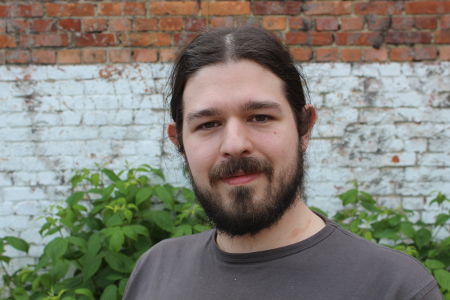
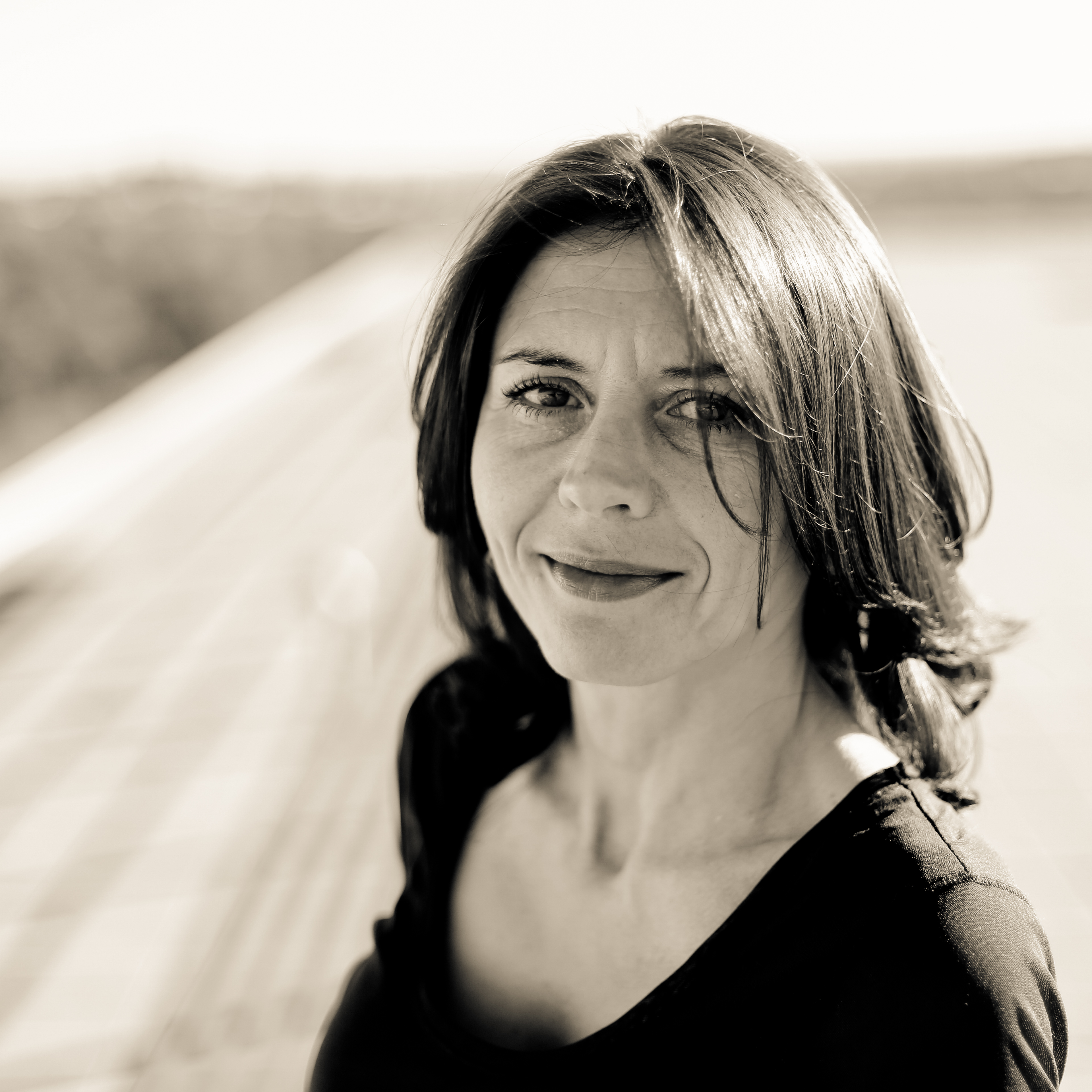
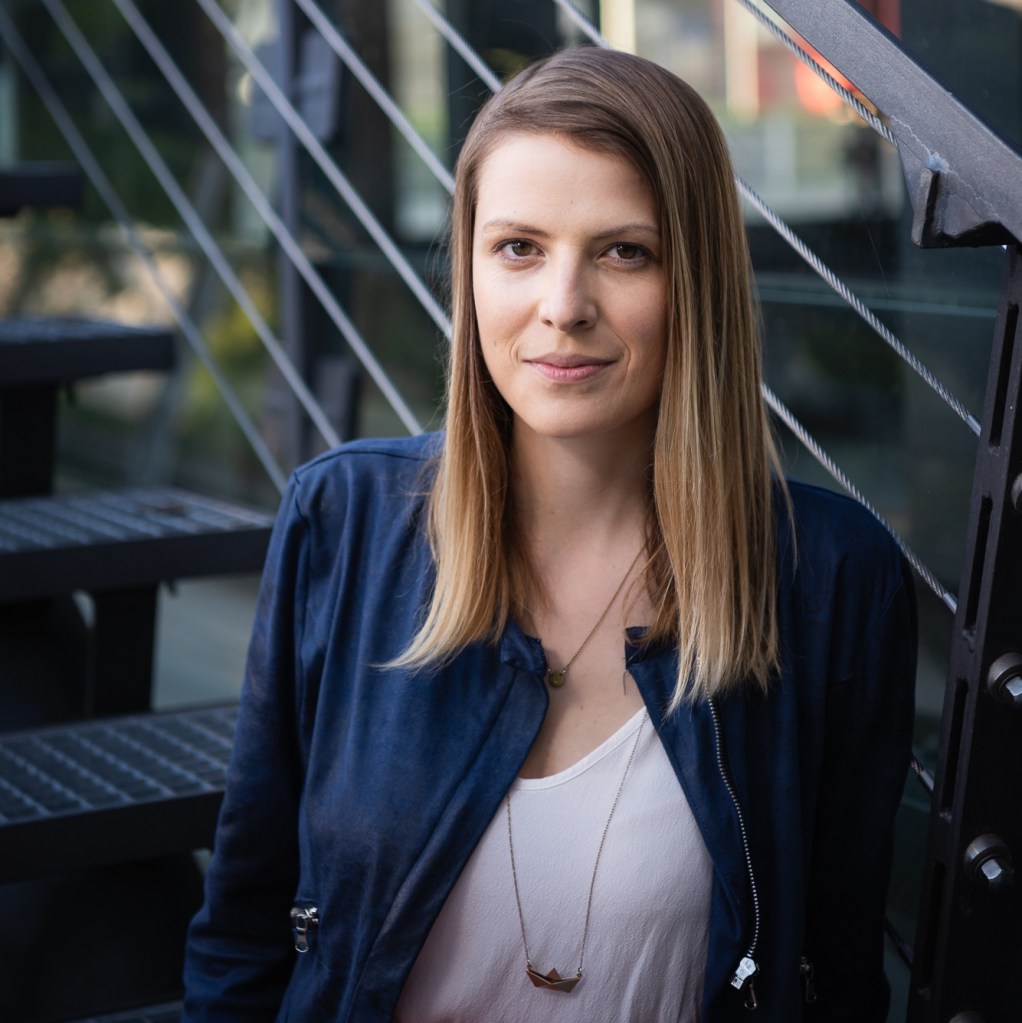
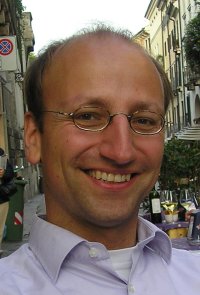
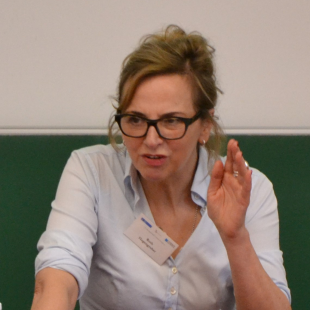
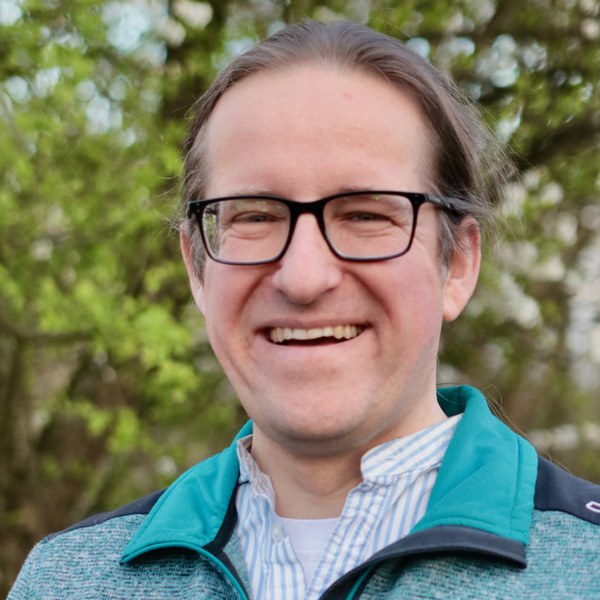
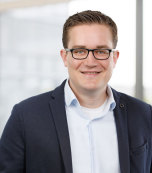
Michael Cochez is an Assistant Professor in the Learning and Reasoning group at the Faculty of Science, Vrije Universiteit Amsterdam . His research focuses on Machine Learning , Knowledge Graph Embedding , and Prototype-Based Ontologies , with applications in Scalable Hierarchical Clustering , Ontology Matching , and Knowledge Evolution . He teaches Intelligent Systems , Data Mining , and Machine Learning courses. His research explores integrating Knowledge Graphs into end-to-end ML models , addressing challenges in Approximate Query Answering and Knowledge Representation . He has also contributed to Multi-Agent Systems and Cloud Communication through projects like Graphino.nl (his consultancy business). His students include Jiawen Chen (supervised thesis on Smart Semantic Multi-channel Communication ).
Catherine Faron is a Full Professor at Université Côte d'Azur , affiliated with the I3S laboratory and Inria center . She serves as vice-head of the Wimmics joint research team and leads the Artificial Intelligence and Data Engineering (IAID) program at Polytech Nice Sophia engineer school. Habilitation à diriger les recherches (HDR) in Computer Science, UCA (2017) PhD in Computer Science, Univ. Paris 6 (1997) Her research focuses on Artificial Intelligence , particularly in Knowledge Representation and Reasoning (KRR) and Semantic Web technologies. She develops hybrid intelligent systems combining KRR with machine learning for knowledge extraction, integration, and exploitation across education, health, and digital humanities. Recent publications highlight her work on: 2025 : Knowledge graphs for historical zoological data 2024 : Semantic annotation frameworks in agronomy 2023 : Agricultural data mapping and medical record enrichment 2022 : Visual exploration of big linked data Scientific recognitions include: 2023: Best Paper Award, ESWC 2017: Scientific Excellence Award, UCA 2016: Best Demo Award, ISWC 2015: Best Paper Award, IC 2008: Best PhD Paper Award, ECPPM She has supervised 19 PhD/Master's students and leads/has led projects like D2KAB , DEKALOG , and ZOOMATHIA , with partnerships across academic and industrial institutions.
Markus Heydenreich is a Professor at the Institute of Mathematics, Faculty of Mathematics, Natural Sciences and Technology, University of Augsburg. His research focuses on probability theory, particularly discrete random objects in statistical mechanics, mean-field behavior, lace expansion, and spatial random graph models. 2025: Workshop Bayrischzell 2024: Workshop Frauenchiemsee His recent publications highlight critical phenomena in random connection models, percolation, and spatial networks. He contributes to editorial boards and DFG-funded projects, including Random Geometric Systems and Mathematics of Many-Body Quantum Systems . Teaching includes courses on stochastic processes and seminars on probability and forensics. Key research themes: phase transitions, high-dimensional random walks, and mathematical physics applications. Collaborators include Remco van der Hofstad, Christian Hirsch, and Kilian Matzke. The team at Augsburg comprises doctoral researchers and postdocs.
Irina Rish is a Research Professor at Mila - Quebec AI Institute, affiliated with Université de Montréal, and maintains a significant research affiliation with IBM Research. With an extensive publication record spanning decades and continuing through 2025, she is an active leader in artificial intelligence research. Primary Affiliation: Mila - Quebec AI Institute, Université de Montréal Secondary Affiliation: IBM Research Research Focus Areas: Machine Learning, AI Systems, and Applications Dr. Rish's research interests encompass machine learning theory and applications, with particular expertise in neural networks, language models, reinforcement learning, and efficient AI systems. Her work bridges theoretical understanding with practical implementations across multiple domains including healthcare, time series analysis, and multimodal systems. Analysis of her recent publications (2023-2025) reveals a strong trend toward efficient AI architectures, with significant contributions to model quantization (particularly ternary models), scaling laws in language models, and novel techniques for continual learning. Her research demonstrates how theoretical insights can translate into practical improvements in model efficiency and performance. Key Publication Trends: Model efficiency, scaling laws, continual learning Application Areas: Healthcare (EEG analysis), time series forecasting, vision-language systems Dr. Rish collaborates extensively with researchers across academia and industry, working with notable colleagues including Guillermo A. Cecchi, Djallel Bouneffouf, Eugene Belilovsky, and Matthew Riemer. Her work appears regularly in top-tier conferences (NeurIPS, ICML, ICLR, AAAI) and journals like Transactions of Machine Learning Research, demonstrating both the quality and impact of her research contributions. She leads research in federated learning techniques, reinforcement learning systems, and multimodal AI architectures, with recent work focusing on making AI systems more robust, efficient, and applicable across diverse real-world scenarios. Her research program demonstrates consistent growth in impact and scope, with increasing publication output in recent years.
Dr. Sophie Bruns is a Researcher at the Department of Journalism and Communication Research, Leibniz University Hannover, specializing in media effects, political communication, and health communication. Her work examines how media content influences social perceptions, emotional responses, and behavioral norms, particularly in crisis contexts like the COVID-19 pandemic. Her research interests center on media effects , with emphasis on hostile media phenomena, moral psychology in news processing, and social identity threats. She investigates how media framing shapes public understanding of scientific controversies (e.g., animal research) and health behaviors. Her methodological expertise includes longitudinal designs, experimental approaches, and computational communication science. Bruns' recent publications reveal strong focus on pandemic communication (social distancing norms, topic fatigue), moral psychology (effects of immoral news content), and media branding . Her work bridges political communication, health contexts, and computational methods, often using German-speaking populations as case studies. Best Student Paper Award of the Information Systems Division at ICA 2018 Bruns actively contributes to major communication associations including ICA, ECREA, and DGPuK. Her research integrates theoretical frameworks from social identity theory, moral foundations theory, and third-person effect to analyze media's role in societal conflicts and norm formation.
Ngoc Tien Tran is a Junior Professor for Numerical Simulation at the Institute of Mathematics, Faculty of Mathematics, Natural Sciences and Technology, University of Augsburg since 2023. Previously, he was a Research Associate at Friedrich Schiller University Jena (2021-2023) and Humboldt University of Berlin (2018-2021). Dr. Tran's educational background includes: Doctorate in Mathematics, Humboldt University of Berlin (2021) Master of Mathematics, Humboldt University of Berlin (2018) Bachelor of Mathematics, Humboldt University of Berlin (2016) Dr. Tran's research focuses on advanced numerical methods for complex mathematical problems. His primary areas of interest include numerical methods for completely non-linear second-order PDEs , the convergence behavior of adaptive methods , nonstandard discretizations and hybridizable methods , and convex minimization and eigenvalue problems . His work bridges theoretical mathematics with practical computational techniques, developing innovative approaches to solve challenging problems in numerical analysis. Dr. Tran's publication record demonstrates a consistent focus on hybrid high-order methods and their applications to various mathematical problems. His recent work shows a progression from foundational methods to specialized applications in areas like the Monge-Ampère equation, eigenvalue problems, and convex minimization. A notable trend is his emphasis on guaranteed error control and stability analysis, reflecting a commitment to robust and reliable numerical methods. Dr. Tran is involved in research supported by the ERC Consolidator Grant and participates in the GAMM Workshop on Numerical Analysis and the One World Numerical Analysis Seminar. As a Junior Professor at the University of Augsburg, Dr. Tran advises students and contributes to the Numerical Mathematics research team. His teaching includes courses such as 'Finite elements in the calculus of variations' and a 'Seminar on Numerics' for Summer semester 2025. He is part of a vibrant research community that includes colleagues like Daniel Peterseim and Tatjana Stykel, as well as numerous research associates.
Javier García is a faculty member at the University Carlos III of Madrid, affiliated with the Department of Computer Science within the School of Engineering. His research lies at the intersection of artificial intelligence, reinforcement learning, and robotics, with a strong emphasis on safety, transferability, and real-world applications. His research interests include: Safe and robust reinforcement learning Transfer and multi-task learning in AI Adversarial attacks and defenses in deep RL Automated planning and decision-making under uncertainty Applications in social assistive robotics and financial systems The recent trend in his publications shows a focus on formalizing similarity between decision-making tasks, improving robustness against corrupted rewards and adversarial policies, and applying AI techniques to domains such as geriatric care and automated market making. His work often involves collaboration with Fernando Fernández and other researchers in Spain. He has contributed significantly to frameworks like CLARC for comprehensive geriatric assessment using robots, and has developed tools such as TIMIPLAN for transportation tasks. His research bridges theoretical AI with practical deployment in cognitive robotics and business simulators. Notable scientific contributions include a comprehensive survey on safe reinforcement learning (JMLR 2015), foundational work on policy reuse, and the development of taxonomies for MDP similarity. He has secured research funding through collaborative projects, though specific grants are not detailed in the provided text. He has advised several students and junior researchers, evident from co-authored publications, though specific names are not listed. He is part of research teams working on lifelong learning technologies and cognitive robot systems.
Dr. Lisa Kohl is a tenured Researcher in the Cryptology Group at CWI Amsterdam since October 2020. Her work focuses on secure computation and practical post-quantum secure protocols . Prior to CWI, she was a postdoctoral researcher at Technion with Yuval Ishai and completed her PhD at Karlsruhe Institute of Technology under Dennis Hofheinz in 2019. She also spent eight months at the FACT center, IDC Herzliya during her PhD and wrote her master’s thesis at CWI Cryptology Group as a visiting student in 2015. PhD in Cryptology (2019, Karlsruhe Institute of Technology) Postdoctoral Researcher (Technion, 2019-2020) Research Visit Fellow (FACT Center, 2015-2019) Visiting Student (CWI Cryptology Group, 2015) Her research spans secure multi-party computation , homomorphic secret sharing , post-quantum cryptography , and pseudorandom correlation generation . Articles demonstrate expertise in optimizing oblivious transfer , improving Σ-protocol efficiency , and constructing cryptographic primitives from lattice problems and LPN assumptions . Contact: Lisa.Kohl@cwi.nl
Prof. Dr. Jens Hornbostel is affiliated with the Bergische Universität Wuppertal as a Professor in the Department of Mathematics and Computer Science under the Faculty of Mathematics and Natural Sciences. He actively contributes to the Arbeitsgruppe Topologie and serves as Speaker and Principal Investigator of the DFG-GRK 2240 on algebro-geometric methods in topology. Research focuses on algebraic topology, K-theory, Witt groups, and motivic homotopy theory. Key themes in recent publications include Real Topological Hochschild Homology, Schubert calculus in algebraic cobordism, and tensor-triangulated categories. He is a member of the Journal of Homotopy and Related Structures editorial board and participates in DFG-SPP 1786 and other committees. Former advisees include PhD students Ruth Joachimi and Herman Rohrbach, as well as postdocs like Valentina Kiritchenko and Jeremiah Heller.
Urs Schreiber is a Professor at New York University in Abu Dhabi (NYU AD), working in the Mathematics Division of Science. He leads the Research Center for Quantum and Topological Systems (CQTS) under the group of Prof. Hisham Sati. His work bridges mathematical physics, quantum theory, and topology, with significant contributions to understanding strongly-coupled quantum systems and their applications to topological quantum technology. His research focuses on applying tools from algebraic topology and geometric homotopy theory to fundamental problems in quantum physics. His major projects include Hypothesis H on flux quantization in M-theory, geometric engineering of anyons on M5-branes, and developing quantum language via linear homotopy types. His work represents a unique synthesis of advanced mathematical techniques with cutting-edge theoretical physics, particularly in the areas of M-theory, topological quantum computing, and differential cohomology. Schreiber has established himself as a leading figure in the application of higher categorical and homotopical methods to physics. His research demonstrates a clear trajectory toward developing mathematical frameworks for next-generation quantum technologies, with particular emphasis on topological approaches that could provide fault-tolerant quantum computing platforms. His work shows strong connections between abstract mathematical structures and practical quantum computing applications, particularly through homotopy type theory implementations. Monograph: The Character Map in Non-Abelian Cohomology (with D. Fiorenza & H. Sati, 2023) Monograph: Equivariant Principal ∞-Bundles (with H. Sati, 2025) Contributor: Mathematical Foundations of Quantum Field and Perturbative String Theory (2011) Schreiber has advised numerous graduate students in areas spanning homotopy theory, quantum field theory, and mathematical physics. His teaching portfolio includes courses on Mathematical Quantum Field Theory, Topological K-Theory, and Stable Homotopy Theory. He is also the founder of the nLab research wiki project (started in November 2008), which has become an essential resource for researchers working at the intersection of mathematics and physics. His research group actively develops mathematical foundations for quantum and topological systems with practical implications for quantum technology development.
Ruth Hagengruber is a Professor of Philosophy at the Department of Philosophy , Paderborn University , and serves as Head of the Faculty of Arts and Humanities. She founded the Center for the History of Women Philosophers and Scientists (2016) and EcoTechGender research area (2006). Präsidentin der Deutschen Gesellschaft für Philosophie e.V. (Since 2025) Secretary, International Association of Women Philosophers e.V. (Since 2021) Co-founder of the Elisabeth of Bohemia Prize and Encyclopedia of Concise Concepts by Women Philosophers (2018) Her Habilitation (1998) and Doctorate (1993, magna cum laude) focus on Practical Philosophy, natural sciences history, and ancient church history. She has held academic roles at the University of Koblenz-Landau (Associate Professor, 2005; Research Assistant, 2001-2003; 1996-1999) and Albertus Magnus University of Cologne (Lecturer, 1995-2005). Her research spans Philosophy of Informatics (creativity, digital humanities), History of Women Philosophers (Émilie Du Châtelet manuscripts, Elisabeth von Böhmen), and EcoTechGender (economic, technological, and gender intersections). Recent publications include editions of Du Châtelet's works and gender-focused philosophy journals. 2015 : Wiener-Schmidt Prize, Society for Cybernetics and Systems Theory 2014 : Award for Innovation and Quality in Teaching, Paderborn University (for Philosophy in the Media ) 2016-2017 : Research Award Fellowship, Stifterverband Essen Since 2019 : Lifetime Member, International Association for Computing and Philosophy She organizes international projects (Erasmus collaborations), editorial boards (Springer Series Women in the History of Philosophy and Sciences ), and academic events like the 2016 Émilie Du Châtelet session at the International Leibniz Congress. Her work integrates theatre, film, and media to explore philosophical themes.
Professor Ingrid Scharlau is a faculty member at the University of Paderborn, affiliated with the Faculty of Cultural Studies, Institute for Human Sciences, Department of Psychology, where she leads the Cognitive Psychology and Psychology Didactics unit. She holds office hours on Wednesdays from 1-2 p.m. at Warburger Str. 100, Paderborn, in room H4.129. Her research interests include: Experimental psychology and visual-spatial attention Modeling cognitive processes Psychology of Explainability Qualitative research and metaphor analysis Theory and history of psychology didactics Science didactics and academic writing Prof. Scharlau is actively involved in several research projects, particularly within the TRR 318 "Constructing Explainability" Collaborative Research Center. Her recent publications demonstrate her interdisciplinary approach that combines quantitative experimental methods with qualitative analysis across cognitive psychology, attention research, and academic writing domains. Prof. Scharlau is heavily involved in mentoring early-career researchers, having established mentoring programs for doctoral students at the University of Paderborn. She heads the Writing Competence Center at Paderborn University, which supports students in academic writing and teachers in teaching writing. Her teaching focuses on general or cognitive psychology, psychology didactics, and educational psychology, with courses aimed at psychology education students, computer science students with psychology minor, and educational sciences students. Her professional affiliations include: German Society for Psychology, Section for General Psychology (DGPs) Society for Writing Didactics and Writing Research (gefsus) The European Society of Psychology Learning and Teaching (ESPLAT) Community of Professionals of Lehre-hoch-n She also organizes workshops on academic writing, plagiarism handling, and teaching methods, and has developed teaching materials for psychology classes in schools.
Lukas Arnold is a Professor and Head of the Fire Dynamics Division at Forschungszentrum Jülich GmbH, affiliated with the Institute for Advanced Simulation (IAS) and its Civil Safety Research Group (IAS-7). He holds a chair in Computational Civil Engineering at the University of Wuppertal and leads major research initiatives in fire safety science using computational methods. Research Focus: Fire Dynamics Simulation Academic Rank: Professor Key Collaborations: University of Wuppertal, DFG, BMBF His research spans fire dynamics simulation, visibility modeling in smoke environments, and flame spread prediction. He develops advanced numerical methods like CFD-based models and inverse modeling techniques for pyrolysis kinetics, smoke propagation, and material decomposition analysis. His work integrates experimental data from real-scale fires with computational tools to improve evacuation safety and risk assessment. Recent publications highlight his expertise in smoke visibility, PMMA pyrolysis, and GPU-accelerated fire simulations. He supervises PhD students in projects involving TGA experiments, multi-scale modeling, and emergency management systems. Arnold's work has been supported by third-party grants from BMBF, DFG, and State NRW, focusing on AI-driven fire modeling, high-performance computing, and disaster resilience. He organizes bi-annual summer schools on fire modeling and contributes to open-access scientific resources.
Martin Presselt is a researcher at the Leibniz Institute of Photonic Technology (IPHT) , focusing on Photonics and Quantum Detection . He leads the working group on Organic Thin Films and Interfaces, exploring applications in energy transfer, sensing, and material stability. Research Themes : Interfacial engineering, electrochemical sensors, solar cell longevity, and supramolecular design. Notable Collaborations : Sarah Jasmin Finkelmeyer, Benjamin Dietzek-Ivanšić, Ksenija Glusac, Sylvestre Bonnet. His recent work includes defect-free anisotropic membranes via plasticizers (Journal of Colloid and Interface Science, 2025), optical property tuning through intermolecular interactions (Chemistry-A European Journal, 2025), and calcium-sensitive TTA upconversion systems (Journal of Physical Chemistry Letters, 2024). He investigates graphene nanoribbon electrochemistry (JACS, 2024) and amphiphilic additives for solar cells (ACS Applied Electronic Materials, 2024). He contributes to cross-disciplinary perspectives on weak interactions (PCCP, 2023) and develops bifacial dye membranes for photocatalysis (Advanced Materials, 2023). His studies combine experimental and computational approaches, addressing challenges in material longevity and functional design. Contact : martin.presselt@leibniz-ipht.de
Dr. Len Ole Schäfer is a Postdoctoral Researcher at the CATALPA research cluster, FernUniversität in Hagen, leading the project 'Organizational Resilience and Creativity: Exploring the Future of Educational Technology in Higher Education' (ORC) in collaboration with the Alexander von Humboldt Institute for Internet and Society (HIIG). His work investigates the interplay between organizational resilience, creativity frameworks, and educational technology implementation within higher education institutions, emphasizing trust-based leadership and strategic adaptation. Schäfer holds a PhD in Sociology (2018) from the University of Bamberg examining the UK's Research Excellence Framework impact on academic practice, and a Diploma in Sociology (2012) focused on ranking construction in science. His academic trajectory includes research positions at Zeppelin University (2018), University College London's Centre for Global Higher Education (2016), and the University of Bamberg (2012-2018). His research centers on higher education organizational dynamics, particularly how universities navigate digital transformation through resilience-building and creativity cultivation. Key interests include sociological theory applications, organizational sociology frameworks, and the role of digitalization strategies in enabling innovation. His work consistently analyzes resistance to digital change, strategic ambiguities in institutional policies, and trust mechanisms that foster EdTech adoption across diverse academic contexts. Recent publications reveal a cohesive trajectory examining organizational responses to digital disruption, with emphasis on faculty perspectives, leadership approaches, and structural adaptations. His studies—primarily qualitative and mixed-methods—highlight tensions between centralized strategies and decentralized implementation, resistance triggers, and the paradoxical role of ambiguity in enabling innovation during rapid technological change. As an active community contributor, Schäfer serves on the advisory board of FernUniversität's #NewLearning Blog and reviews for 'Higher Education - The International Journal of Higher Education Research'. His project leadership in ORC (2023–present) and OrA (until 2023) demonstrates sustained engagement with German higher education's adaptability challenges, while international collaborations with HIIG and conference presentations at EGOS and Swiss Sociological Association forums extend his scholarly impact.