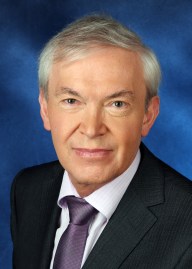
Prof. Dr.-Ing. Harald Strating is a Professor at the Faculty of Engineering and Computer Science at Osnabrück University of Applied Sciences. He serves as Head of the Laboratory for Didactics of Technology (Labor Didaktik der Technik). His role focuses on advancing educational methodologies in technical fields. His research interests center on didactics of technology, exploring effective teaching strategies and curricular innovation for engineering and computer science education. The laboratory under his leadership develops practical frameworks for integrating modern pedagogical approaches into technical disciplines. No specific awards or grants are listed, but his contributions to educational innovation are highlighted through his academic position and laboratory work. He is reachable at h.strating@hs-osnabrueck.de and located in MA 0204.
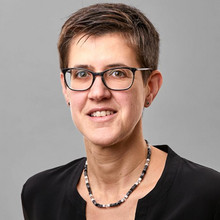
Kathrin Padberg-Gehle is a W3 Professor of Applied Mathematics at the Institute for Mathematics and its Didactics , Faculty of Education, Leuphana University of Lüneburg. Her research focuses on developing numerical methods for simulating and analyzing dynamic systems, particularly time-dependent processes like technical or natural flow dynamics, where she investigates long-lived coherent structures influencing transport and mixing. She contributes to the DFG Collaborative Research Center SMART Reactors for Future Process Engineering . Education: First State Examination in Secondary School Teacher Training (Mathematics and English) at University of Paderborn (11/2000) Studies in Mathematics and English at University of Paderborn and Aston University, Birmingham (10/1995 - 11/2000) Doctor of Natural Sciences (Dr. rer. nat.) in Numerical Analysis of Transport in Dynamical Systems at University of Paderborn (06/2005) Research Interests center on computational approaches to dynamical systems, emphasizing particle/energy transport and mixing in flow processes. Her work bridges theoretical and data-driven methodologies. Teaching includes subject-specific mathematical training for vocational education (social pedagogy/business education) and foundational courses in the Master's program Management & Data Science . Students : Dominik Schlüter Thanh Tung Thai Friederike von Kienitz Lisa-Marie Wienecke
Marc Zimmermann is a Lecturer and Campus Manager at Ludwigsburg University of Education. He holds a Master's degree in subject didactics (mathematics, physics) and has extensive experience in education and academic administration. His roles include serving as a Senate Elected Member and coordinating the introduction of HISinOne university management software. Zimmermann has held positions as a Research Associate and Lecturer at the Institute of Mathematics and Computer Science, with additional academic staff roles at the University of Economics and the Environment Nürtingen-Geislingen. Educational background includes a first state examination for teaching secondary schools (history, mathematics, physics) and advanced studies in mathematics and physics didactics. His research focuses on mathematics education innovation, including intelligent assessment tools, active learning strategies, and didactic frameworks for STEM subjects. Notable projects include the SAiL-M project addressing teaching methodologies and the development of the 'open math room' concept for active learning environments. Zimmermann’s work emphasizes bridging theory and practice in education through technology integration, such as e-learning tools and lecture recordings. His recent publications explore chemical reaction mechanisms, self-efficacy in mathematics learners, and conceptual understanding in STEM fields. He has contributed to curriculum development across multiple institutions and remains active in improving teaching quality through collaborative academic initiatives.
Prof. Dr. Norbert Kalus serves as a Professor in the Faculty of Mathematics-Physics-Chemistry at Beuth University of Applied Sciences Berlin (formerly Technische Fachhochschule Berlin). His academic appointments include Academic advisor and internship coordinator for the Master's program in Computational Engineering, Spokesperson of the Calculation Engineers Group, and Organizer of the Mathematical Colloquium of Department II. His research expertise spans multiple domains of applied mathematics: Numerical Algorithms and Computational Methods Finite Element Analysis and Variational Methods Partial Differential Equation Modeling Statistical Analysis and Optimization Mathematical Applications in Engineering Prof. Kalus pioneered integrated international study programs with the University of Hertfordshire (UK) and Université de Haute Alsace (France), enabling students to earn dual degrees including Dipl. Math. (FH) and Maîtrise de Mathématiques through coordinated 9-semester curricula. Professional affiliations include: Working Group Didactics at Beuth University SEFI (European Society for Engineering Education) Mathematics Working Group VDI (Association of German Engineers) Mathematics in Research and Practice Technical Committee 12 Mathematics of the ASIIN Administrative leadership roles encompass membership on the University Board of Trustees, chairing the Mathematics Department Day, and representing the institution in the Tiburtius Prize selection committee and German-Hungarian equivalence agreement commission.
Dr. Sabine Salome Fesel is a Lecturer at the German University of Health and Sport's Department of Health, Medical Education program (Unna campus), and previously held academic roles at institutions like Radboud University and Düsseldorf University of Applied Sciences. She specializes in Educational Psychology and Adult Education Didactics, focusing on digital text comprehension and hypertext learning. Education: PhD in Social Sciences (Educational Psychology), Radboud University (2015) MSc in Cognitive Psychology, University of Twente (2008–2009) BSc in Psychology, University of Twente (2005–2008) Research Interests: Her work explores how digital formats influence reading comprehension, strategy training for hypertext navigation, and cognitive processes in educational technology. She also addresses adult education methodologies and health-related didactics. Publications: Her research emphasizes digital learning environments, with key papers on hypertext comprehension, mind-mapping strategies, and knowledge representation in children. Recent work focuses on educational interventions in digital spaces. Professional Activities: She has served as a consultant in family law and educational psychology, and maintains part-time teaching roles in health promotion at police academies across Germany.
Ashok Basawapatna is an Associate Professor and Chair of the Department of Mathematics, Computer & Information Science at the State University of New York College at Old Westbury. His academic focus spans computational thinking, computer science education, and adaptive learning systems. Research Interests: Computational Thinking Pedagogy Block-Based Programming Tools STEM Learning Simulations Educational Game Design Recent publications highlight innovations in programming education, including prebugging techniques (2024), flow retention in tutorials (2019-2021), and systemic computer science education reforms (2015-2016). His work examines the balance between convenience and computational thinking in STEM learning (2014) and adaptive spectrum analysis technologies (2015).
Margarita Isabel Asensio Pastor is a Permanent Professor at the University of Almería's Department of Education, affiliated with the Technical Scientific Building III Mathematics and Computer Science (CITE III). She specializes in the Teaching of Language and Literature, focusing on oral communication skills and multilingual education strategies. Her research group, 'Education, Cinema and Oral Culture (HUM863)', is led by Nieves Gomez Lopez. Teaching responsibilities for 2025-26 include 'Development of Oral Communication Skills and their Didactics' for the Degree in Early Childhood Education, and 'Strategies for Communication in Multilingual Groups' for the Degree in Social Education. Office hours are held in CITE III (Office 0.230) on Mondays, Tuesdays, and Wednesdays from 9:30-11:30 AM, requiring prior appointment via email. No scientific awards or grants are explicitly mentioned in the provided text.
Antonio Granero Gallegos serves as a Professor in the Department of Education at the University of Almería, based in office 0.185 of the Technical Scientific Building III (CITE III), Mathematics and Computer Science. His active teaching and research profile centers on physical education and sports sciences within academic frameworks. His research focuses on school-based physical education, health habits, and learning contexts, leading the research group Contexts in School Learning in Physical Education and Health Habits (HUM628) . Teaching responsibilities span multiple programs including Expressive and Corporal Activities, Practicum, Physical Education Didactics, and Quantitative Research Methodology. Tutoring occurs Tuesdays and Thursdays from 11:00–12:30 (2025-26 academic year) via virtual appointments, reflecting ongoing engagement with student development and curriculum innovation in physical activity sciences.
Karima Sayah is a researcher in Educational Sciences and Mathematics Didactics at the French Institute of Education, École Normale Supérieure de Lyon. Her work focuses on teacher resource systems, competency-based approaches, and ICT integration in education. She holds a PhD from Claude Bernard Lyon 1 University (2018), supervised by Luc Trouche, and has extensive academic background in computer science and educational engineering. **Education:** PhD in Educational Sciences and Mathematics Didactics (2012–2018), Claude Bernard Lyon 1 University Master in Human-Machine Communication and Educational Engineering (2006–2008), University of Maine Postgraduate Diploma in Advanced Information Processing (1994–1996), Badji Mokhtar University State Engineer in Computer Science (1985–1990), Badji Mokhtar University **Research Interests:** Her research examines how teachers’ resource systems evolve during educational reforms, particularly in Algeria. She studies collaborative work among mathematics teachers using Sésamath resources, emphasizing competency-based approaches and ICT integration. Key themes include teacher professional development, resource taxonomy, and systemic modeling of educational practices. **Publications:** Her work spans book chapters, conference proceedings, and peer-reviewed articles, focusing on resource systems analysis, teacher collaboration dynamics, and cross-cultural educational strategies. Recent contributions include studies on static/dynamic resource system analysis and modeling frameworks linking teacher schemas with resource use. **Grants & Labs:** Engaged with EducTice research group and S2HEP initiatives, contributing to collaborative projects on teacher resource systems and educational reform implementation.
Claire Polo is a Lecturer at Université Lumière Lyon 2, affiliated with the Structure Fédérative Recherche en Education Lyon-Saint Etienne (SFR RELYS) . Her work bridges educational sciences and language sciences, focusing on argumentative practices and socio-cognitive-emotional processes in educational contexts. She holds a PhD in Educational Sciences and has conducted interdisciplinary research on controversies, emotional regulation, and collaborative learning. Research interests include: - Argumentative practices in educational debates - Socio-cognitive-emotional dimensions of reasoning - Multimodal mediation in science communication - Climate change education and affectivity - Philosophical dialogue methodologies Recent publications explore: - Vaccination controversy debates during the pandemic - Remote learning emotion regulation - Water management socio-scientific controversies - Cultural frictions in democratic dialogue Professional roles include: - Editorial board member of International Journal of Computer-Supported Collaborative Learning - Former coordinator of EARLI's Argumentation SIG (2018-2023) - Active contributor to international conferences (CSCL, EARLI, SYSU)
Maria Inmaculada Vicente Lopez is a Part-Time Associate Professor in the Department of Translation and Interpreting at the University of Murcia's Faculty of Arts and Humanities. She completed her doctoral studies at the same university with a thesis titled Aspectos cognitivos y emocionales de la posedición de traducción automática: un estudio de movimientos oculares (2024), supervised by Dr. Ana María Rojo López and Dr. Purificación Meseguer Cutillas. Her research focuses on the intersection of translation studies, cognitive science, and technology, particularly exploring how emotional and cognitive factors influence translation processes through eye-tracking methodologies. She is affiliated with the 'Translation, Didactics and Cognition' research group. No academic awards or funded grants are explicitly mentioned in the provided materials. She has not listed any advisees or publications beyond her doctoral work.
Herwig Oberlerchner is a Researcher in the Department of Clinical Psychology, Psychotherapy, and Psychoanalysis at Alpen-Adria-Universität Klagenfurt (AAU). His work bridges clinical psychology with interdisciplinary research areas, including media literacy and technology-driven behavioral studies. He contributes to projects like the #NoFakeFacts citizen science initiative promoting media literacy among youth. His research spans clinical psychology, digital communication, and interdisciplinary methodologies, with recent publications exploring political microtargeting avoidance, swarm robotics dynamics, and sustainable business ecosystems. He collaborates on EU-funded initiatives and maintains an active presence in academic publishing, focusing on both theoretical and applied research. Contact: Herwig.Oberlerchner@aau.at | +43 650 5531288. Research Interests Clinical psychology practices and psychotherapeutic methodologies Impact of digital technologies on mental health and societal behavior Interdisciplinary research methods (e.g., poetry workshops in migration studies) Education and training in clinical settings Recent Research Trends His 2025 publications emphasize cross-disciplinary themes: (1) political communication and digital behavior, (2) robotics and swarm systems, and (3) sustainable business models. He often collaborates across faculties (e.g., technical sciences, humanities) to address complex societal challenges. Grants & Projects Co-investigator on Erasmus+ projects and FFG-funded robotics initiatives Contributor to EU-funded media literacy programs (e.g., #NoFakeFacts) Active in university-industry partnerships (e.g., Infineon Technologies collaboration) Labs/Teams Participates in AAU’s clinical psychology research teams and interdisciplinary working groups focused on technology ethics and education innovation.
Claus Edmund Dabringer is a faculty member at the Institut für Informatikdidaktik (Institute for Informatics Didactics) at Alpen-Adria-Universität Klagenfurt . He can be reached via email at Claus.Dabringer@aau.at or claus.dabringer@gmail.com . His academic work focuses on teaching informatics and digital education strategies . The institute he is affiliated with emphasizes pedagogical approaches in computer science education and digital literacy. While no specific research publications or advisees are listed, his contact information and institutional affiliation suggest active engagement in educational technology and informatics curriculum development .
Peter Karl Antonitsch serves as a Lecturer at the Institute for Computer Science Education at the University of Klagenfurt. With academic credentials denoted as Mag.Mag.Dr., he holds significant academic qualifications and is primarily focused on teaching responsibilities within the institution. His research and teaching interests center on computer science education, with specific focus areas including: Computer Science Didactics of Technical Sciences Computer Science Didactics These areas indicate his specialization lies at the intersection of pedagogical approaches and computer science instruction. While no specific publications or research projects directly attributed to him are listed in the available information, his work appears to focus on the educational aspects of computer science rather than pure technical research. For contact, he can be reached via email at Peter.Antonitsch@aau.at or by phone at +43 463 2700 3504 (through his secretary), with consultation hours available by appointment.
Francisco Alejandro Soler Vera is a Part-Time Lecturer in the Department of Didactics of Mathematical and Social Sciences at the Faculty of Education, Universidad de Murcia. He holds a PhD from Universidad de Murcia with a thesis on satellite motion mathematics. His research spans mathematics education in STEM contexts and applied mathematical modeling in astrophysics, particularly celestial mechanics and orbital dynamics. Soler Vera develops educational approaches for secondary STEM curriculum implementation.