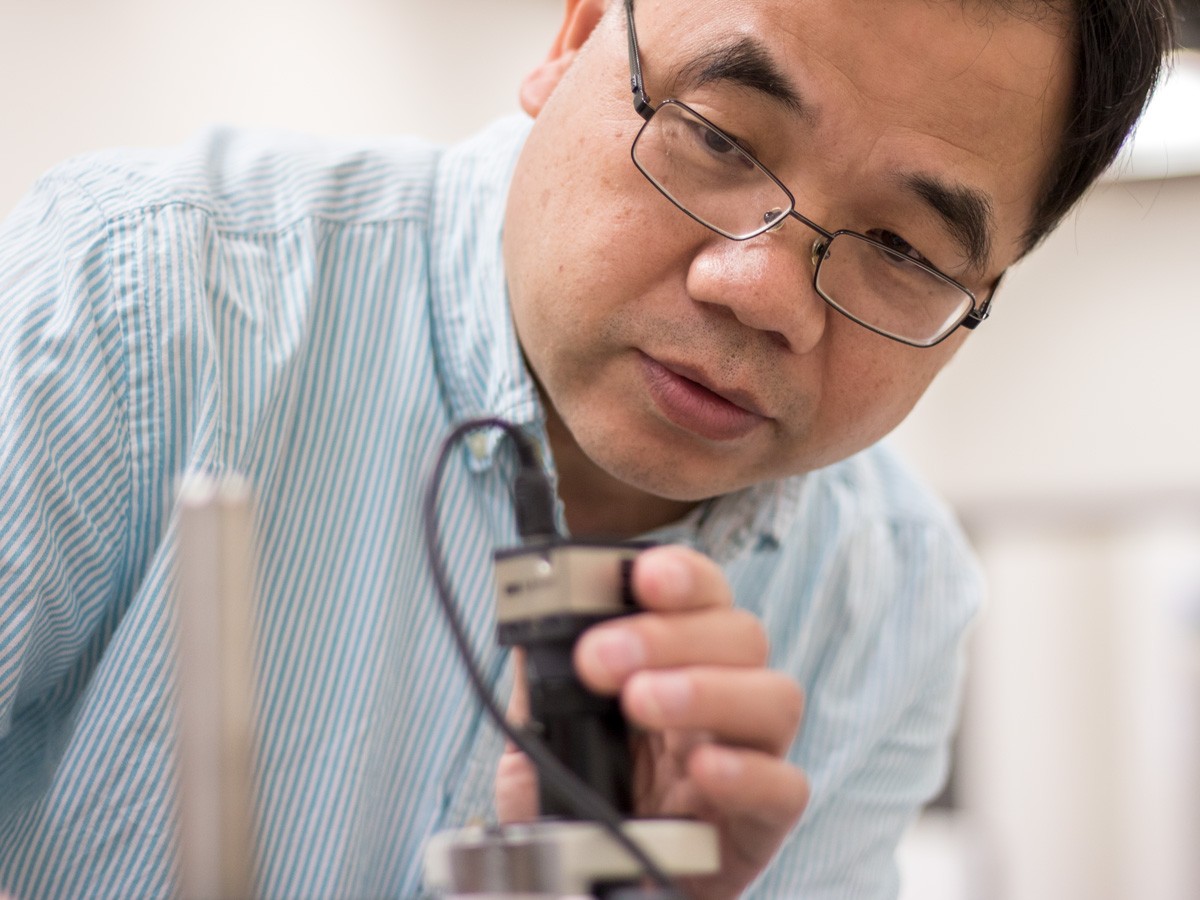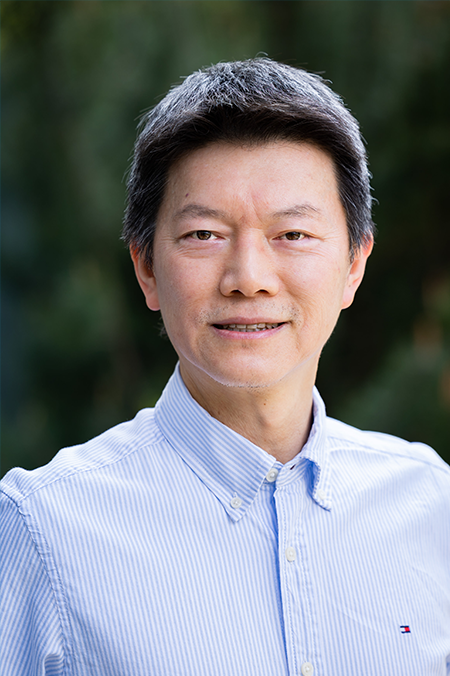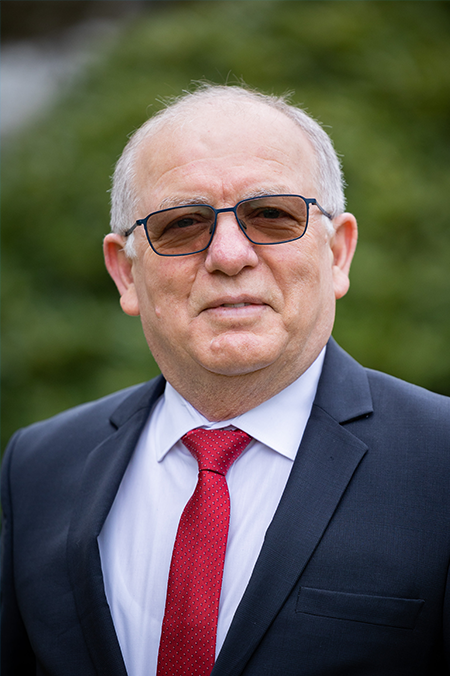
Yusuf Altintas is a Professor in the Department of Mechanical Engineering at the University of British Columbia's Faculty of Applied Science, holding the NSERC–P&WC-Sandrik Coromant Industrial Research Chair and coordinating the Mechatronics Option. An internationally acclaimed scholar, he is a Fellow of 10 prestigious academies including the National Academy of Engineering (NAE), Royal Society of Canada (RSC), and ASME. His academic credentials include a Ph.D. from McMaster University, an Honorary Doctor of Engineering from the University of Stuttgart, and a Doctor of Technical Sciences from Budapest University of Technology and Economics. Professor Altintas's research pioneers the integration of physics-based modeling and data-driven approaches for machining systems. His work spans virtual high-performance machining simulation, machine tool dynamics, chatter stability prediction, and intelligent process control for CNC systems. Current projects focus on digital twin development for machining processes, spindle health diagnostics, ultrasonic vibration-assisted tooling, and adaptive damping systems for aerospace manufacturing applications. His methodologies bridge theoretical mechanics with industrial implementation in die/mold and aerospace sectors. Analysis of his 2022-2025 publications reveals dominant trends in physics-informed machine learning for spindle fault detection, topology-optimized tool design, and chatter avoidance in thin-walled component machining. Key thematic clusters include digital twin implementation (28% of recent work), dynamics modeling of multi-axis systems (35%), and intelligent monitoring algorithms (22%), with growing emphasis on anisotropic material machining and 3D printing process control. Georg Schlesinger Award (2016) NSERC Strategic Research Network in Virtual Machining Grant (2016) NSERC Synergy Award (2013) ASME Blackall Machine Tool and Gage Award (2013) Special Distinguished Scientist Award from Turkey's Scientific and Technical Research Council (2013) He directs the Manufacturing Automation Laboratory at UBC, leading an international research consortium on virtual machining systems supported by NSERC and industry partners including Sandvik Coromant and Pratt & Whitney Canada. His team develops real-time process monitoring frameworks and physics-based simulation tools that have been adopted in aerospace manufacturing for blade machining and die/mold production. The laboratory maintains advanced testbeds for five-axis machining dynamics, spindle health monitoring, and ultrasonic vibration-assisted tooling, serving as a hub for industry-academic collaboration in next-generation manufacturing technologies.