Robert Verner is an Associate Professor at the Department of Quantitative Methods within the Faculty of Economics and Business at the University of Economics in Bratislava. His work focuses on financial markets, optimization methods, and statistical modeling, contributing to both academic research and practical applications in business analytics. His recent publications span topics such as: Computational finance and machine learning Stock market forecasting with neural networks Risk analysis in insurance using AI Educational assessment frameworks He has also participated in international research initiatives and collaborative programs, including the Central Europe Connect initiative, which brings together students from leading business schools in Warsaw, Bratislava, and Vienna.
Peter Procházka is an Assistant Professor at the University of Economics in Bratislava, affiliated with the Faculty of Economic Informatics and the Department of Applied Informatics . His teaching and research focus on IoT , UX Design , Multimedia Applications , and technical education. His research spans several subfields, including: IoT : Development of educational tools using Arduino, smart device integration, and open-source platforms. Generative AI : Prompt engineering for neural networks and machine learning applications. Web Analysis : SEO tools, linguistic summaries for data visualization, and compliance with public administration standards. His publications highlight a trend toward data-driven decision-making in technology, including big data, machine learning, and IoT frameworks. He has also contributed pedagogical works on computer hardware, multimedia, and IoT, alongside collaborative studies on digital citizenship and pandemic response in educational institutions.
Šlapak Eugen is an Assistant Professor at the Technical University of Košice. His research focuses on autonomous driving systems, edge computing, and network optimization, with a particular emphasis on applying neural networks and blockchain technologies in vehicular and 5G networks. Eugen Šlapak holds a PhD in [specific field not explicitly stated, likely Engineering/Computer Science] and an Ing. (engineer) degree. His academic background combines technical expertise in telecommunications and computer science. His research interests span autonomous driving technologies, including simulation and control systems, as well as edge computing and metaverse integration. He also explores blockchain applications in vehicular networks, resource allocation in 5G and beyond, and the use of graph neural networks for network optimization. His work intersects machine learning, robotics, and telecommunications to address challenges in modern communication systems and intelligent transportation. Recent publications highlight advancements in neural radiance fields for industrial robotics, distributed edge video compression for autonomous driving, and blockchain-based resource allocation in connected vehicles. Earlier work includes optimization of UAV-assisted networks and HetNet topology design using machine learning clustering methods. While no formal awards are listed, his contributions to vehicular networks, edge computing, and AI-driven network design reflect significant scholarly impact. Advising details are not documented here, but his research collaborations likely involve cross-disciplinary teams focusing on autonomous systems and 5G infrastructure. No lab affiliations or teams are explicitly mentioned, though his teaching role in the course Stochastické modelovanie a analýza dát (SMaAD) suggests involvement in data analysis and stochastic modeling initiatives.
Máté Hireš is an Assistant Professor at the Technical University of Košice's Department of Computers and Informatics. He earned his PhD in computer science from the same institution, specializing in Parkinson's disease diagnosis using deep learning for voice analysis. His doctoral research extended his master's thesis on distributed neural radiance fields for autonomous vehicles. Hireš's work bridges neural networks, deep learning, and biomedical applications, particularly in analyzing handwriting, speech, and signal data for neurological disorder detection. His publications demonstrate consistent focus on Parkinson's disease diagnostics through innovative machine learning approaches applied to voice recordings and handwriting samples. Research Focus Deep learning for pathological speech detection Handwriting analysis for neurodegenerative diseases Robust diagnostic model development Biomedical signal processing
Allan Jose Sequeira Lopez is an Assistant Professor at the Department of Romance and Slavic Languages within the Faculty of Applied Languages at the University of Economics in Bratislava. His academic career spans teaching, research, and international collaboration. PhD in Economics and Management (2021) MSc in Quantitative Methods in Economics (2015) Research Interests : Lopez specializes in Game Theory , applying multi-criteria decision-making models to Spatial Competition and economic policy. His work explores regulatory interventions, bimatrix games, and evolutionary algorithms in economic contexts. Scientific Contributions : His research includes 2 WoS/Scopus-registered outputs and participation in VEGA projects like 1/0351/17 and 1/0427/20 , focusing on game-theoretic applications for economic problems in Slovakia. International Engagement : He has conducted lectures and research at institutions including Masaryk University (Brno), University of Las Palmas de Gran Canaria, and Jihlava Polytechnic University, emphasizing cross-border academic exchange.
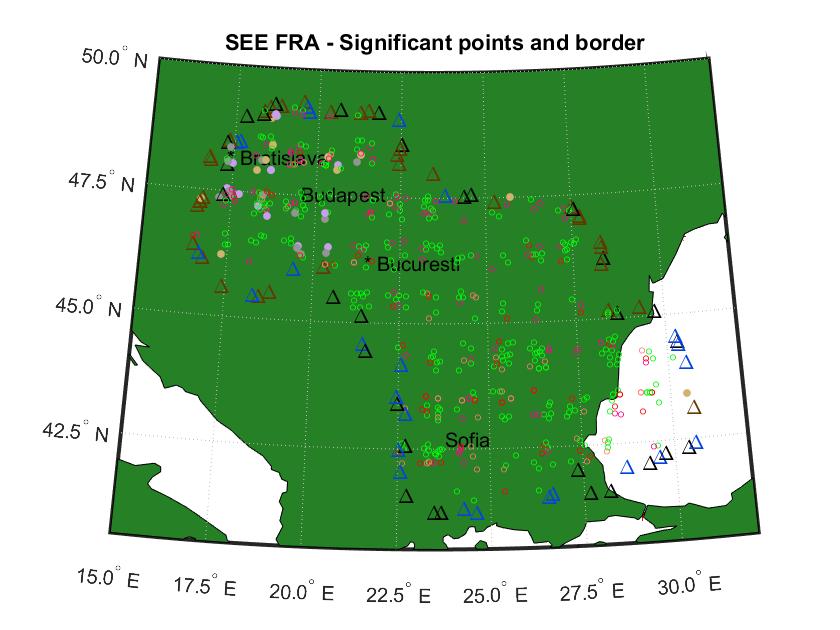
Peter Szabó is an Associate Professor at the Department of Aviation Technical Training , Faculty of Aeronautics , Technical University of Košice , Slovakia. He is actively involved in research at the intersection of mathematics, computer algebra, and aerospace engineering. Academic Affiliation: Technical University of Košice, Faculty of Aeronautics, Department of Aviation Technical Training Research Interests include: Mathematical modeling in aviation (Free Route Airspace, complex networks) Linear algebra and numerical methods with MATLAB/SageMath Calculus education and computational techniques Graph theory applications to air traffic systems Recent Article Trends highlight: Integration of calculus and numerical analysis for educational tools (2025) Mathematical axioms for airspace modeling (2022) Cloud computing in aviation research (2022) Linear algebra textbooks and computational exercises (2019) Advising : Mentored students on topics ranging from satellite stabilization to air traffic optimization.
Alžbeta Michalíková serves as Associate Professor at Matej Bel University's Faculty of Arts, Department of Computer Science. Her academic profile spans mathematical foundations and applied computational research with significant contributions to fuzzy logic systems. Her research focuses on Fuzzy Sets and Intuitionistic Fuzzy Sets with applications in Computer Vision, Biology, and Medicine. She investigates mathematical properties of these structures and explores integrations with Neural Networks and Evolutionary Algorithms. Recent work emphasizes smart city applications, air quality analysis, and digital education tools. Her publication trends show evolution from theoretical fuzzy mathematics (2005-2015) to applied AI systems (2020-present), particularly in environmental monitoring and transportation systems. Key themes include uncertainty modeling, image classification, and real-time data processing for urban applications. Erasmus+ KA2 projects on air pollution technologies (2022-2024) KEGA projects for digital educational tools (2020-2025) VEGA research on fuzzy models (2011-2017) APVV projects on scientific outreach She teaches Mathematics for Computer Scientists, Numerical Methods, and specialized Fuzzy Sets courses. Her technical infrastructure includes ORCID (0000-0002-0568-9279), SCOPUS (24448471500), and ResearchGate profiles. Current work focuses on digital identification keys for mycology education and AI-driven smart city analytics.
Michal Povinský serves as a university teacher at the Department of Computer Science, Matej Bel University (MBU) in Banská Bystrica, Slovakia, holding the academic title Mgr. (Master). His primary institutional affiliation centers on teaching and academic duties within the university's computing discipline. His research spans core areas of computer science, with emphasis on: Artificial Intelligence Data Science Software Engineering Theoretical Computer Science Computer Networks Machine Learning No scientific awards or honors were documented in available sources. Information regarding student supervision, research grants, or external funding remains unreported. Similarly, no laboratory affiliations, research teams, or collaborative projects were specified in the provided materials.
Radim Hladík is a Researcher at the Centre for Science, Technology, and Society Studies within the Institute of Philosophy of the Czech Academy of Sciences in Prague. He serves as the coordinator of the LINDAT/CLARIAH-CZ working group , an editor of the Theory of Science journal , and the chair of the Czech Association for Digital Humanities . PhD in Sociology (Charles University, 2011) MA in Media Studies (Charles University, 2006) Fulbright Student Fellow (Columbia University, 2009–2010) JSPS Postdoctoral Fellow (National Institute of Informatics, 2017–2019) His research focuses on quantitative science studies , text analytics , digital humanities , and scholarly communication , with a particular interest in how science funding and open science principles shape research practices. He develops open-source software Requal for qualitative data analysis and advocates for computational methods in social sciences. The recent publications highlight his work in topic modeling , scientometric analysis , and reproducibility frameworks . He also organizes workshops on enhancing qualitative analysis reproducibility and contributes to software development for academic research. Scientific Awards : Fulbright Student Fellow (2009–2010) JSPS Postdoctoral Fellow (2017–2019) Hladík has previously held roles as scientific secretary at IP CAS and executive editor of the Theory of Science journal. He has taught at Charles University , Film and TV School of Academy of Performing Arts , Czech Technical University , and University of Finance and Administration , covering topics like post-socialism , collective memory , and social media studies .
Ladislav Végh, PhD., serves as an Associate Professor in the Department of Informatics at the Faculty of Economics and Informatics, J. Selye University in Komárno, Slovakia. With an office in TP3C and contactable via veghl@ujs.sk, he has maintained continuous academic employment at the university since 2005. His academic journey includes university studies in teaching mathematics-informatics at Constantine the Philosopher University in Nitra (1994-1999), examina rigorosa in teaching informatics at J. Selye University (2007-2008), and PhD studies in Basics and Methodology of Informatics at ELTE, Budapest (2009-2018). Végh's research focuses on innovative approaches to computer science education, particularly teaching programming through interactive methods. His primary research interests include teaching programming using animations, machine learning applications in education, and artificial intelligence integration in pedagogical contexts. He has consistently explored how game-based learning and visual representations can enhance students' understanding of complex programming concepts, with particular emphasis on algorithmic thinking and object-oriented programming principles. His publication record demonstrates a clear trajectory from foundational work on algorithm animations for teaching sorting concepts toward increasingly sophisticated applications of machine learning and deep learning in educational contexts. Recent publications show expansion into medical informatics applications, cultural heritage preservation through 3D modeling, and pandemic-era educational adaptations, while maintaining his core focus on programming education methodologies. His work frequently appears in reputable international conferences and journals, with growing citation impact. Electronic support of teaching programming (2008-2010) Terminology in e-learning (2009-2011) Modeling and animation-simulation models in e-learning (2011-2013) Modelling, simulation and animation in education (2014-2016) Interactive animation and simulation models in education (2018-2020) Analysis of natural and mathematical education at high schools (2019-2021) Interactive animation and simulation models for deep learning (2021-2023) Intelligent Animation-Simulation Models for Deep Learning (2024-2026) Végh has secured significant research funding through multiple KEGA and VEGA projects, demonstrating sustained research productivity and relevance. His work bridges theoretical computer science concepts with practical educational applications, particularly focusing on how interactive visualizations and game mechanics can transform programming education. His current projects indicate continued exploration of deep learning applications in educational contexts, suggesting an evolving research agenda that maintains educational technology at its core while expanding into more advanced AI methodologies.
Jana CORONIČOVÁ HURAJOVÁ serves as an Assistant Professor in the Department of Quantitative Methods at the Faculty of Economics and Finance, University of Economics in Bratislava. With the academic title RNDr., PhD, she contributes significantly to both teaching and research activities within her department. Her primary research interests focus on graph theory and mathematics education , with particular emphasis on network analysis and centrality measures. Dr. CORONIČOVÁ HURAJOVÁ has published numerous scholarly works examining betweenness centrality, decay centrality, and other graph theoretical concepts, while also exploring applications of quantitative methods in educational settings. Her publication record from 2015-2021 demonstrates consistent scholarly output across mathematics journals and interdisciplinary publications. Her research shows a clear progression from theoretical graph theory toward practical applications in business and educational contexts. Several publications examine centrality measures in networks, while more recent work investigates educational technology and business innovation in Slovak SMEs. Dr. CORONIČOVÁ HURAJOVÁ teaches various mathematics courses including Mathematics, Mathematics 2, Game Theory, and Mathematical Analysis. Her teaching portfolio reflects her dual expertise in theoretical mathematics and practical business applications. She has participated in research projects including KEGA 026EU-4/2021 focused on developing global business literacy for economics and management students, demonstrating her commitment to innovative educational approaches that bridge theoretical knowledge with real-world business applications.
Zuzana Čičková is an Associate Professor at the Department of Operations Research and Econometrics, Faculty of Economic Informatics, University of Economics in Bratislava. Her work bridges computational intelligence, game theory, and economic modeling, with a focus on spatial competition, logistics, and market dynamics. Academic Rank: Associate Professor Department: Operations Research and Econometrics University: University of Economics in Bratislava Her research spans game theory, vehicle routing, and econometric modeling. Recent projects include multi-criteria game theory applications in spatial allocation (2022), analysis of Arctic shipping routes (2022), and optimization of recycling networks under VEGA grants. She has contributed to algorithm design (SOMA/DE) and market concentration indicators like the Herfindahl-Hirschman Index. Her publications reflect expertise in computational intelligence for economic problems, including vehicle routing with time windows , spatial competition models , and data-driven decision support systems . While no explicit awards are listed, her leadership in VEGA projects (2017-2025) and international collaborations with institutions like Bifröst University and Óbuda University underscores her academic impact. 31 Web of Science/Scopus publications with 98 citations 8 invited lectures at international/national conferences PhD in Econometrics and Operations Research (2005) Teaching since 2001, advising 38 master’s theses She has undertaken international mobilities in Iceland (2014, 2022), Germany (2007), Czech Republic (2022), and Spain (2022), focusing on research and pedagogical innovation. Her current projects include VEGA 1/0115/23 on cooperative game theory in international relations (2023-2025).
Assoc. Prof. Anna Stachurska is an Associate Professor in the Department of English Language and Literature at Trnava University, Faculty of Arts. Her research focuses on lexicography, sociolinguistics, and language education. She holds a PhD and specializes in dictionary design, semantic analysis, and sociocultural aspects of language use. Contact: anna.stachurska@truni.sk or via MS Teams during her weekly consultations from 11:00 to 12:30 on Mondays. Her work bridges lexicography with sociolinguistics, exploring topics such as user-friendly dictionary design, sociolinguistic variation, and the cultural dimensions of language. Recent publications address issues ranging from EFL lexicography to semantic evolution in English terms. Her research emphasizes empirical evidence and interdisciplinary approaches to language studies. No scientific awards are listed, but her contributions are evident in over 15 peer-reviewed articles since 2008. She advises students in the department and collaborates on projects related to language pedagogy and digital lexicography. Active in international academic networks, her research spans theoretical and applied linguistics with a focus on practical lexicon development.
Ján Perháč is an Assistant Professor at the Faculty of Electrical Engineering and Informatics, Technical University of Košice. He teaches core courses including Database Systems, Logic for Informaticians, and Type Theory, while leading laboratory sessions on programming semantics and formal methods. His office is located at Letná 9 (Building B525), with consultations available by appointment. Research Focus: Dr. Perháč specializes in computational logic and formal methods, with emphasis on: Development of educational tools for teaching formal proofs and programming semantics Applications of non-traditional logical systems in computer science Type theory implementations and semantic modeling of programming languages Web-based interactive systems for logic visualization and automated theorem proving Publication Analysis: His recent articles (2022-2025) demonstrate strong focus on creating pedagogical tools for formal logic education, with multiple web-based proof assistants and visualization platforms. Secondary themes include advancements in intensional logic systems and programming language semantics, with occasional interdisciplinary work in environmental modeling and geoinformatics. Awards & Recognition: Best Presentation Award at SCYR 2019 Doctoral Conference (IT Section) Research Leadership: Principal Investigator for: European Research Network on Formal Proofs Modern Approaches in IT Education: Type Theory Participant in projects including compiler education innovations and edge-to-cloud computing architectures. Serves on program committees for IEEE Informatics conferences and the Modeling, Control and Information Technologies symposium.
Marek Ružička serves as an Assistant Professor at the Technical University of Košice (TUKE), where he teaches Stochastic Modeling and Data Analysis (SMaAD) and Modeling and Prototyping Systems (MaPS) across multiple laboratory sessions and lectures in buildings PK6, L9, and N9. His research spans Generative AI, Optimization, UAVs, 5G telecommunications, and Physical neural networks, with applications in engineering and data science. His research program emphasizes generative models for solving complex physical and engineering problems, particularly using GANs for data synthesis, trajectory correction, and system optimization. He bridges theoretical AI with practical implementations in UAV networks, aerodynamics simulation, and telecommunications infrastructure, demonstrating strong interdisciplinary connections between machine learning and physical systems. Analysis of his 2019-2024 publications reveals consistent focus on generative adversarial networks applied to UAV-based network optimization, physical system modeling (mass-spring systems, car aerodynamics), and data augmentation for mobility datasets. His work shows evolving specialization in deep learning integration with telecommunications (5G) and physical neural networks, with increasing emphasis on real-time optimization and energy efficiency. Scientific Awards: No scientific awards were mentioned in the provided text. Advising and Grants: The source material contains no information regarding graduate students, research grants, or funded projects.