Takeo Sugaمشاهده پروفایل
دانشیار
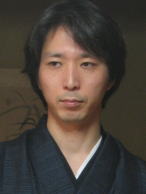
Takeo Suga is an Associate Professor at Waseda University's Department of Applied Chemistry within the Faculty of Science and Engineering. He holds a Doctor of Engineering degree from Waseda University (2007) and has been at the institution since 2007, progressing from Research Associate to his current tenured position. His academic career spans multiple roles including Post-doctoral Fellow at Virginia Tech (2005-2007) and various committee roles in professional societies. Research Interests Education Professional Memberships Scientific Awards Teaching Experience Professor Suga's research focuses on Polymer Synthesis for Functional Polymers and Organic Electronic Devices . His work addresses energy conversion and storage through dielectric materials, redox-active polymers, and photocatalytic systems. Key contributions include developing isotactic polyacrylonitrile for high-energy-density capacitors and designing redox-switchable block copolymers for resistive memory devices. His publications demonstrate expertise in Materials Science , Electrochemistry , and Chemical Engineering . Notable achievements include enhancing TEMPO-based polymers for battery applications, optimizing interdomain spacing in polythiourea dielectrics, and pioneering metal-free photocathodes for water splitting. These studies span from fundamental polymer chemistry to industrial applications in solar cells and fuel cells. 15+ peer-reviewed articles in journals like Advanced Materials , ACS Macro Letters , and Macromolecules Over 3000 Scopus citations and 3900+ Google Scholar citations h-index of 24 (Scopus) and 27 (Google Scholar) Scientific Recognition: Mizuno Award (Waseda University, 2007) WISE Fellowship (2004) Multiple awards from the Society of Polymer Science Japan (2006-2017) IUPAC Macro2012 Lecture Award He actively contributes to academic communities through roles in the Kanto Branch of The Chemical Society of Japan and the Society of Polymer Science, Japan . His research integrates polymer chemistry with energy technologies, fostering collaborations across materials science and electrochemistry.