Edison Pignaton de Freitas is an Associate Professor at the Institute of Informatics of the Federal University of Rio Grande do Sul (UFRGS) since 2014. His research focuses on computer networks, distributed systems, avionics, AI, robotics, and IoT. He holds a PhD from Halmstad University (2011) and has collaborated with institutions like Linköping University and Ruhr Universität Bochum. Previously, he worked at the Brazilian Army (2004–2013) on defense systems and interned at Airbus on the A380 avionics project. Education: Bachelor's in Computer Engineering, Military Institute of Engineering (Brazil, 2003) MSc in Computer Science, UFRGS (Brazil, 2007) PhD in Sensor Networks, Halmstad University (Sweden, 2011) Research interests include tactical edge networks, unmanned platforms, missile navigation, aerospace defense systems, and multi-agent systems. He maintains international collaborations and has experience in specification engineering for avionics systems.
Prof. Luis C. Lamb is a Professor at the Institute of Informatics (Universidade Federal do Rio Grande do Sul, UFRGS), specializing in Foundations of Computer Science and Artificial Intelligence. His research focuses on Neurosymbolic AI, AI Ethics, and Technology Strategy. He holds a DIC and PhD. Research Interests: Integrated Machine Learning & Reasoning, AI Ethics, Social Computing, and Innovation Strategy. Notable work includes Neurosymbolic AI frameworks and studies on collective intelligence in problem-solving. Recent contributions include talks at AAAI, IBM Neuro-Symbolic AI workshops, and the Montreal AI Debate. His work bridges statistical and symbolic AI approaches, emphasizing ethical considerations and hybrid models.
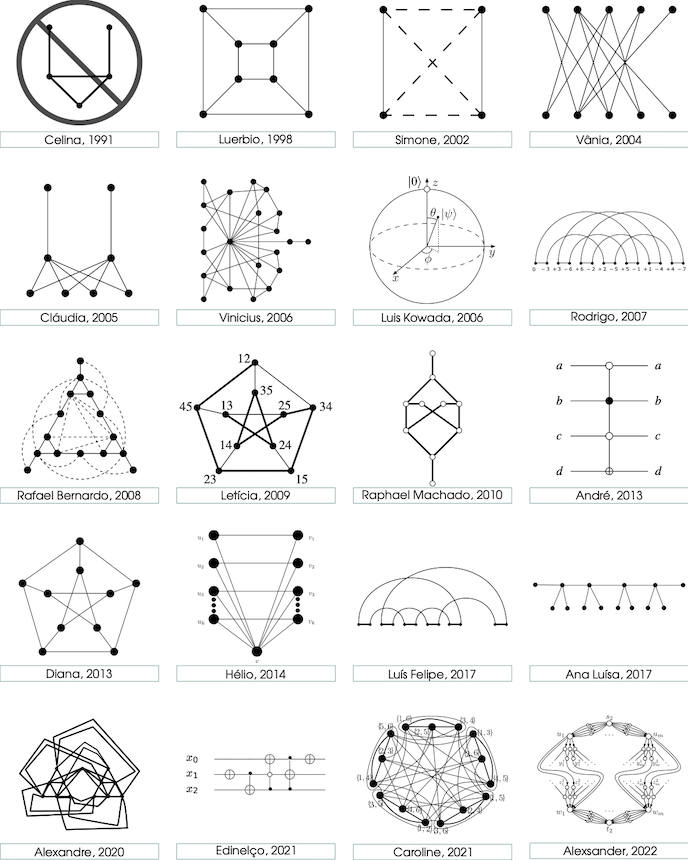
Celina Miraglia Herrera de Figueiredo is a full Professor at the Systems Engineering and Computer Science Program (PESC) of COPPE, the Alberto Luiz Coimbra Institute for Graduate Studies and Research in Engineering at the Federal University of Rio de Janeiro (UFRJ). She holds a PhD in systems and computer engineering from UFRJ and a postdoctoral degree from the University of Waterloo, Canada. She is a CNPq Level 1A Research Fellow and a FAPERJ Cientista do Nosso Estado awardee, and leads the algorithms and combinatorics research group at COPPE/UFRJ. University: Federal University of Rio de Janeiro School: Alberto Luiz Coimbra Institute for Graduate Studies and Research in Engineering Department: Systems Engineering and Computer Science Program Academic Rank: Professor Email: celina@cos.ufrj.br Her research centers on theoretical computer science, with a focus on graph theory, algorithms, computational complexity, and combinatorial optimization. She has made significant contributions to the understanding of graph classes such as perfect graphs and snarks, algorithm design, and computational complexity. Her work is grounded in the Mathematics Subject Classification codes 05-XX (Combinatorics), 68-XX (Computer Science), and 90-XX (Operations Research). The most recent publications indicate a strong trend in analyzing the computational complexity of graph problems (e.g., MaxCut, Steiner Tree, total coloring) on structured graph classes such as interval, permutation, and path graphs. Her work frequently involves proving NP-completeness results, developing parameterized algorithms, and studying graph invariants like pebbling numbers and chromatic numbers. She consistently publishes in high-quality journals such as Discrete Mathematics , Discrete Applied Mathematics , and RAIRO Operations Research . Giulio Massarani Award for Academic Merit (2006) COPPE Fifty Years Award (2013) CNPq Research Fellowship (Level 1A) FAPERJ Cientista do Nosso Estado Member of the Brazilian Academy of Sciences (2023) Celina has advised numerous students, including Raphael Machado, Vinícius de Sá, Alexsander Melo, and Ana Silva, and has secured significant research funding from CNPq and FAPERJ. She is deeply involved in the academic community, serving on the editorial boards of RAIRO Theoretical Informatics and Applications, Bulletin of the Brazilian Mathematical Society, and Matemática Contemporânea. She has also been a key organizer and committee member for major international conferences such as LAGOS, WG, LATIN, and FCT, reflecting her leadership in the fields of algorithms and combinatorics. She coordinates the Center of Excellence in Randomized, Quantum, and Approximative Algorithms and has been a driving force in promoting women in science, serving on the jury of the L'Oréal–UNESCO–ABC Program for Women in Science. Her Erdős number is 2, highlighting her extensive collaborative network in mathematics and computer science.
Edgardo Brigatti is an Associate Professor at the Institute of Physics, Federal University of Rio de Janeiro, where he conducts research and teaches in the field of Physics of Complex Systems. His email contact is edgardo@if.ufrj.br. Education: PhD in Physics (Brazilian Center for Research in Physics, CBPF) Brigatti specializes in the Physics of Complex Systems , applying theoretical frameworks to biological, social, and economic sciences. His work bridges computational modeling and analytical techniques to address interdisciplinary challenges, such as pattern analysis in social networks, dynamical systems in biological contexts, and agent-based modeling in economic scenarios.
Marta Feijó Barroso is an Associate Professor at the Institute of Physics, Federal University of Rio de Janeiro (UFRJ), where she earned her PhD in Physics. She teaches graduate courses in Physics Learning within the Master's Degree in Physics Teaching program, as well as undergraduate Physics 1 courses and Introduction to Physics A and B for Mathematical and Earth Sciences students. Her research focuses on physics and science teaching methodologies, with particular emphasis on educational assessment frameworks like PISA and ENEM. She has developed computational applications for physics teaching and conducted extensive research on student retention and dropout rates in physics programs. Her work bridges theoretical educational concepts with practical classroom applications. Her publication record from 2003-2009 reveals consistent contributions to physics education research, with particular focus on teacher training, educational technology applications, and assessment methodologies. The research shows a progression from foundational studies on student conceptions of physics concepts toward more comprehensive analyses of educational systems and international comparative studies. As coordinator of the Research and Development Laboratory in Mathematics and Science Teaching, she leads a multidisciplinary team including Tatiana da Silva, Eduardo Gama, Geraldo Felipe, and others. Her laboratory has produced numerous teaching materials, video resources, and computational applications for physics education at various levels. Dr. Barroso has secured funding from multiple sources including MEC/SEB (National Teacher Training Network), FAPERJ (School Support), FINEP (Digital Teaching Materials), and CNPq (Scientific Dissemination) to support her educational research initiatives and extension projects.