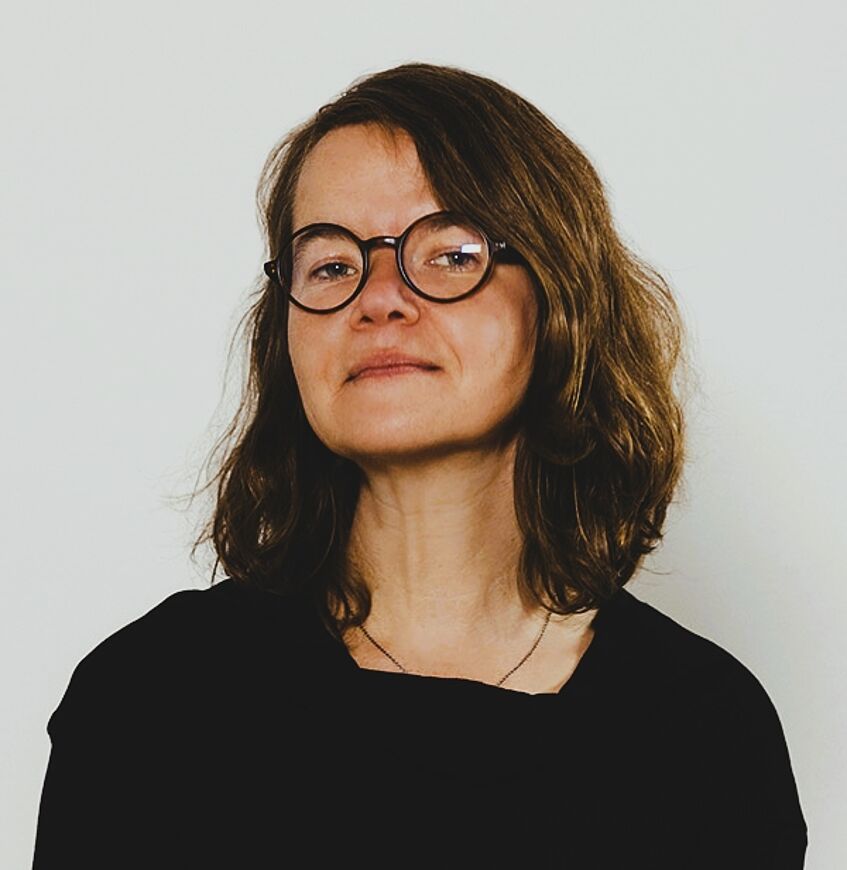
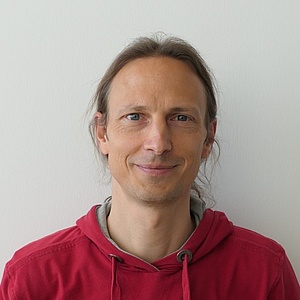
Dr. Human-Friedrich Unterrainer is an Associate Professor at the Institute of Psychology, Faculty of Natural Sciences, Karl-Franzens-University Graz. His research focuses on the intersection of brain function and human behavior, contributing to interdisciplinary understanding of psychological processes. Participates in the "Brain and behavior" research network Active in academic and clinical neuroscience research Notable scientific awards: Dissertation Award (2009) - Medical University of Graz 2nd Place (2009) - Medical University of Graz BA-CA Research Prize (2006) - Bank Austria
Sonja Walcher is a researcher at the Institute of Psychology, Faculty of Natural Sciences, Karl-Franzens-University Graz. Her work focuses on the intersection of cognitive psychology and neuroscience, particularly investigating how eye movements correlate with internal cognitive processes. Education: BSc, MSc, and Dr.rer.nat. in psychology/neuroscience Institutional Affiliation: Karl-Franzens-University Graz Her research primarily explores oculometric indicators of internal attention , examining how eye behavior reflects mental states during visuospatial working memory, mental imagery, and attentional tasks. This includes studies on: Eye movement coupling to cognitive load Perceptual decoupling during internal focus Pupillary response modulation by attention Distraction susceptibility metrics Neurophysiological correlates of mental effort She has received funding from the Austrian Science Fund (FWF) for projects such as Ocular mechanisms in internally directed cognition (2021-2024) and Oculometric investigation of internally directed cognition (2016-2021).
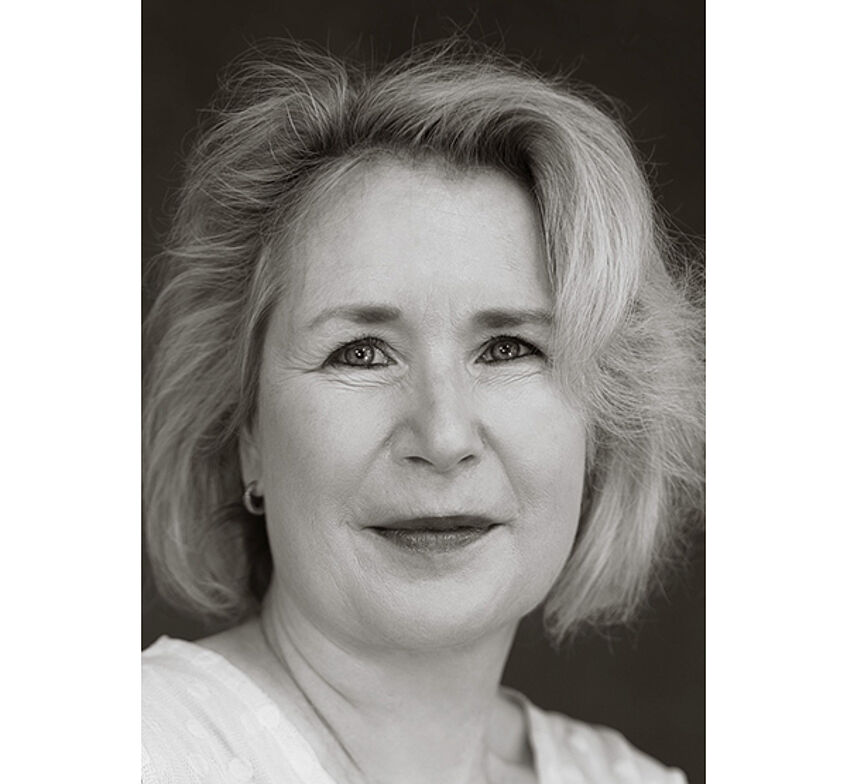
Julia Sophia Crone serves as Senior Scientist at the University of Vienna's Vienna Cognitive Science Hub where she heads the Crone Neurocognition Lab. Her research integrates computational neuroimaging, ultrasonic brain stimulation, and psychopharmacological neuromodulation to investigate complex brain network dynamics underlying conscious and aesthetic experiences in both healthy and diseased brains. Dr. Crone's research focuses on the intersection of neuroscience, consciousness studies, and artistic expression. Her lab employs cutting-edge methodologies to explore how transformative experiences and brain network dynamics influence hedonic responses, particularly in psychedelic contexts. A significant portion of her work examines the relationship between neurodegenerative diseases like Parkinson's and artistic creativity, developing novel arts-based therapeutic approaches. Analysis of her recent publications reveals strong thematic continuity in exploring brain network dynamics through multiple lenses: ultrasonic brain stimulation techniques (2025), Parkinson's disease and artistic expression (2024), and the diagnostic potential of artistic style changes in neurodegenerative conditions (2023). Her work consistently bridges computational neuroscience with clinical applications, particularly in consciousness research and neuromodulation therapies. Dr. Crone actively mentors doctoral researchers including Nicola Weiss, who holds an ÖAW Doc-Stipendium under her supervision. She has secured substantial research funding including a $900,000 grant from the Tiny Blue Dot Foundation (2023), a €1 million FWF grant (2021), and a €300,000 Interuniversity Cluster Project (2020). Her work demonstrates strong transdisciplinary collaboration across neuroscience, psychology, and medical research domains. The Crone Neurocognition Lab maintains active partnerships with the Medical University of Vienna and participates in major initiatives including fMRIprep development. Her team combines expertise in computational modeling, clinical neuroscience, and artistic interventions to advance understanding of brain network dynamics in both health and disease states.
Laura M. König is a Professor at the University of Vienna's Faculty of Psychology, heading the Health Psychology Working Group. She has held academic positions at the University of Bayreuth, University of Cambridge, and University of Konstanz, with a Ph.D. in Psychology from Konstanz (2018). Her research focuses on health behavior change, particularly in dietary patterns, physical activity, and digital interventions. She contributes to developing eHealth curricula and investigates measurement reactivity in health monitoring tools. Current research trends: Digital behavior change interventions (2025), sustainable diets, obesity management Methodological emphasis: Ecological momentary assessment, cross-cultural comparisons, clinical trials Climate communication intersections: Linking weather attribution science with policy support Scientific recognition includes: Stan Maes Early Career Award (2022) Stiftung-Schmieder-Preis (2018) Active in academic service as: Editor-in-Chief of In-Mind Magazine (German edition) Associate Editor at Health Psychology Review Member of German Nutrition Society steering committee Labs and teams: Health Psychology Working Group at University of Vienna, collaborating with international research networks.
Ingrid Reiweger is an Associate Professor at the University of Natural Resources and Life Sciences, Vienna (BOKU), where she conducts research at the Institute of Mountain Risk Engineering within the Department of Civil Engineering and Natural Hazards. Her work focuses on snow physics, avalanche dynamics, and mountain risk management, bridging fundamental research with practical safety applications. Dr. Reiweger's research spans snow mechanics, glaciology, and cryospheric sciences, emphasizing both theoretical modeling and field applications. Her work combines physics-based approaches with innovative measurement techniques to understand snowpack stability, avalanche formation mechanisms, and risk assessment methodologies. Recent projects highlight her expertise in developing sensor technologies for snow monitoring and analyzing the impacts of changing snow conditions on avalanche hazards. Analysis of her recent publications reveals a strong emphasis on practical applications of snow science, particularly in developing monitoring systems using drones and sensor arrays, optimizing avalanche simulation parameters, and addressing specific challenges like glide-snow avalanches in construction sites. Her research demonstrates a clear trajectory from fundamental snow physics toward increasingly applied studies that directly inform mountain safety practices. International Snow Science Workshop (ISSW) Avalanche Divas Award (2018) Marie Heim-Vögtlin Grant of the Swiss National Science Foundation (2014) Multiple ISSW Avalanche Divas travel grants (2016, 2010) Young Scientists Award at Swiss Geoscience Meeting (2009) Dr. Reiweger actively supervises graduate students and leads multiple research projects funded by national companies and federal ministries. Her work often involves transdisciplinary collaboration with practitioners in avalanche control, mountain rescue services, and winter tourism. She maintains a strong international research network, evidenced by her ongoing summer research visits to the WSL Institute for Snow and Avalanche Research SLF in Davos.
Barbara Schedl serves as an Associate Professor at the Institute of Art History within the Faculty of History and Cultural Studies at the University of Vienna. She maintains her office in Room 3F.EG.05 at Garnisongasse 13, University Campus Hof 9, 1090 Vienna. With a distinguished academic career spanning over two decades, Dr. Schedl has established herself as a leading expert in medieval architectural history, particularly focusing on religious buildings and their liturgical contexts. Her research interests center on Architecture and liturgy in the Middle Ages with a focus on religious communities, Written sources on medieval construction, and New media & computer animations in art history. Dr. Schedl's work demonstrates a consistent focus on the intersection of architectural form, religious practice, and social organization in medieval Europe, with particular emphasis on Austrian ecclesiastical structures. She has pioneered the application of digital reconstructions and virtual modeling to understand historical architectural spaces. Analysis of her recent publications reveals a strong thematic concentration on St. Stephen's Cathedral in Vienna, examining its construction history, architectural evolution, and liturgical function from multiple perspectives. Her work increasingly explores the relationship between urban development and sacred architecture, donor networks, and the social dynamics that shaped medieval building projects. She frequently employs interdisciplinary approaches, combining architectural analysis with historical, liturgical, and social perspectives. Dr. Schedl has secured significant research funding, most notably from the Austrian Science Fund (FWF) for multiple projects including the current "Donor Networks: The Viennese Major Construction Projects of St. Stephen's and St. Michael's in the 15th Century" (2021-2025). She has also collaborated on international projects including the "North Alpine Building Culture of the Late Middle Ages" network and previously managed the UCLA Center for Medieval & Renaissance Studies project on "The Plan of St. Gall." Her academic leadership includes project management for several major research initiatives and collaboration with institutions including the Cathedral Chapter of St. Stephen's Church in Vienna. Dr. Schedl maintains active scholarly engagement through conference organization and participation, as evidenced by her co-edited volume "St. Stephen's Cathedral in Vienna. The Duke's Workshop" from a 2017 international conference.
Sohvi Luukkonen is a researcher at the Institute for Machine Learning at Johannes Kepler University Linz, Austria. She maintains an office at Science Park 3, Floor 5, Room 507, with contact numbers +43 732 2468 4483 and +43 732 2468 4539. Her research focuses on machine learning and artificial intelligence, with specific interests in deep learning, data science, neural networks, and computer vision. While detailed research projects aren't specified in the available information, her institutional affiliation indicates active work in these cutting-edge computational fields. Dr. Luukkonen maintains sections for publications, talks, research projects, and patents on her profile, suggesting an active research trajectory in machine learning applications. Her work appears to be integrated with the broader research initiatives of the Institute for Machine Learning at JKU. She is supported by the university infrastructure including the library, campus facilities, and academic resources available at Johannes Kepler University Linz.
Fabrizio Baiardi serves as Professor in the Department of Computer Science at the University of Pisa, holding continuous faculty appointments since 1984. His career progression includes Associate Professor (1984-1988), Professor (1988-2004), and current Full Professor status since 2004. He chaired the Applied Computer Science degree program from 2005-2013 and maintains active research leadership in cybersecurity. His research fundamentally explores blockchain applications for security-critical systems, with emphasis on trust modeling in decentralized environments. Key contributions span vaccine distribution networks using Hyperledger Fabric, IoT access control frameworks (TACL), and cyber risk minimization through digital twin patching. Recent work demonstrates consistent focus on translating theoretical security concepts into healthcare, agricultural, and democratic infrastructure implementations. Analysis of 2020-2023 publications reveals dominant themes: blockchain-enabled security for IoT ecosystems (42% of output), voting system integrity (25%), and social media trust architectures (18%). His methodology consistently combines formal security modeling with practical deployment constraints, evidenced by case studies in smart agriculture and vaccine logistics. The research trajectory shows increasing industry collaboration, particularly with IEEE Access as primary publication venue. Scientific Awards: No awards documented in source materials. Advising and Grants: Student supervision details and grant funding information were not provided in available documentation.
Felix Resch is a PreDoc Researcher at the Cyber-Physical Systems department of Vienna University of Technology (TU Wien). His work focuses on neuromorphic computing and autonomous systems. Education: BSc, Technische Universität Wien Role: Project Assistant (Projektass. Dipl.-Ing.) and PreDoc Researcher Research interests include neuromorphic sensing-processing integration and attention-based neural networks for autonomous applications. Current work involves the NimbleAI project (2022–2026) and AI-driven autonomous racing systems. Recent publications highlight trends in 3D-integrated neuromorphic chips and attention-based neural networks for autonomous systems. He is affiliated with the Cyber-Physical Systems group (E191-01) at TU Wien. Contact: felix.resch@tuwien.ac.at | Phone: +43-1-58801-18225
Stefan Badelt holds a PhD and Magister degree in Theoretical Chemistry, currently active within the Faculty of Chemistry at an Austrian institution (likely University of Vienna based on academic conventions). His research spans computational RNA biology, bioinformatics, and molecular engineering with continuous publication output from 2011 through projected 2025 activities. RNA Folding (100%) Protein Secondary Structure (67%) Transcription Processes (45%) Circular RNA Mechanics Alu Element Biology His research focuses on cotranscriptional RNA folding dynamics, developing computational tools like DrForna for visualization and DrTransformer for heuristic folding prediction. Recent work critically examines deep learning limitations in RNA structure prediction while advancing nearest-neighbor energy models. His fingerprint reveals strong specialization in RNA polymerase II dynamics and non-pseudoknotted structural systems. Publication trends show consistent output in high-impact bioinformatics journals, with 2022-2023 featuring significant algorithmic contributions. His work bridges computational methods with experimental validation, particularly in RNA folding pathways and DNA strand-displacement systems. While no specific awards are documented, his publications demonstrate substantial scholarly impact with multiple papers exceeding 10 Mendeley readers and significant citation metrics. Badelt actively mentors students through collaborative projects, evidenced by co-authored publications with Laurenz Miksch and others. His research receives support through computational biology grants enabling development of tools like the commit-and-delay model for RNA dynamics. Future work includes domain-level design of cotranscriptional folding pathways presented at upcoming 2024-2025 conferences. He operates within the Theoretical Chemistry research ecosystem, collaborating closely with Ivo Hofacker's group on RNA bioinformatics. Current activities focus on exact coarse-grained dynamics modeling and pseudoknot-free pathway design, positioning his lab at the intersection of computational biology and molecular engineering.
Harald Schöbel is a Professor of MCI Group , affiliated with Venice.ai. His academic journey includes roles as a researcher, teacher, and innovator in the field of Biophotonics and Biotechnology. He currently holds the position of Professor at MCI | The Entrepreneurial School® in Innsbruck, Austria. Education: PhD in Physics from the University of Innsbruck (2011) Magister in Physics from the University of Innsbruck (2007) BSc in Management and Economics from the University of Innsbruck (2012) PostDoc at the University of Innsbruck (2011) Research Focus: Dr. Schöbel's work spans Biophotonics, LED applications in biotechnology, antimicrobial strategies using UV-C LEDs, microbial diversity analysis, and light-mediated biosynthesis . He has pioneered projects like BIOcubed (bacterial detection) and TerAGuard (antimicrobial coatings). His research integrates physics with biotechnology to address challenges in healthcare, food safety, and environmental sustainability. Awards & Recognition: Recognition Award (Eduard Wallnöfer Foundation, 2022) Ars Docendi Nomination (2019) Promotio sub auspiciis Praesidentis (2012) BMWFW Appreciation Award (2011) Grants & Projects: Lead projects such as TerAGuard (FFG), BIOcubed (FFG), and InCanPres (food packaging disinfection). His work bridges academia and industry, focusing on UV-C LED technology, bioprocess optimization, and sustainable antimicrobial solutions. Labs & Collaborations: Collaborates with institutions like K Kommunalkredit , FFG , and University of Innsbruck . His lab develops advanced optical systems for bioprocesses and environmental applications.
Mirella Lapata is a Professor at the School of Informatics, University of Edinburgh, with visiting roles at the University of Washington and MIT. Her research focuses on natural language processing, machine learning, computational linguistics, and natural language generation. She has held academic positions since 2002, progressing from Lecturer at the University of Sheffield and University of Edinburgh to Reader (2007) and eventually Professor (2012). Key awards include Fellowships from the Royal Society of Edinburgh (2019) and ACL (2019), as well as the Royal Society Wolfson Merit Award (2018). She leads major grants such as the £6.8M UKRI Centre for Doctoral Training in Natural Language Processing (2019) and the €1.9M ERC Consolidator Grant (2016). Her work spans semantic parsing, neural networks, text generation, and machine learning applications. She has delivered keynote speeches at major conferences like ACL, EMNLP, and ICLR. Professional service roles include associate editorships for Royal Society Open Science and JAIR, and conference chairs for EACL and EMNLP.
Professor Keqin Li is a globally recognized academic holding concurrent professorships at Hunan University (China) and State University of New York (USA). He has held distinguished titles including National Distinguished Professor and SUNY Distinguished Professor. His research focuses on computer networking, heterogeneous systems, energy-efficient computing, and distributed systems. He has authored over 800 publications with an h-index of 64 and secured major grants from Chinese National Science Foundation and Ministry of Science and Technology. Education: PhD in Computer Science from University of Houston (1990), B.S. from Tsinghua University (1985). Research Interests: Includes parallel computing architectures, cloud-edge computing integration, energy-efficient algorithms, and task scheduling optimization. His work spans foundational studies to applied solutions in distributed systems, with notable contributions to network function virtualization and secure cloud data sharing. Awards: Ranked top globally in distributed computing by Scopus citation metrics (2020-2021) IEEE Fellow (2015) Recipient of 1000 Plan Chinese Talent Program (2013) Professional Activities: Editorships at ACM Computing Surveys, IEEE Transactions on Parallel and Distributed Systems, and over 190 conference organizing roles. Principal Investigator of 12+ major research projects (2013-2025). Labs/Teams: Leads research groups focused on parallel computing, cloud-edge systems, and energy-efficient architectures across multiple institutions.
Maurizio Lenzerini is a Professor at Sapienza University of Rome , where he has held positions since 1990. He has served as Chairman of the Bachelor Program in Computer Engineering (1993–2000), PhD Program in Computer Science and Engineering (2002–2008), and currently as Chairman of the PhD School in Information and Communication Technologies. His research focuses on database theory, data modeling, artificial intelligence, knowledge representation, and ontology languages , with applications in service modeling and healthcare. Lenzerini has supervised numerous PhD students, many of whom hold academic positions in Europe. He has been a member of the Editorial Board of journals including Information Systems , IEEE Transactions on Knowledge and Data Engineering , and Logical Methods in Computer Science . He has also served as Program Chair for conferences such as PODS 2008 and ICDT 2003. His scientific awards include: 2009 ACM Fellow 2008 IBM Faculty Award on Service Science 2008 ACM Recognition of Service Award 2008 ECCAI Fellow 2005 IBM Shared University Research Award in P2P Data Management 2003 IBM Shared University Research Award in Information Integration 2018 ACM PODS Alberto Mendelzon Test-of-Time Award AAAI Fellow EurAI Fellow ER Fellow AAIA Fellow Member of Academia Europaea Lenzerini leads a world-renowned research group in ontology-based data management since 1987. His work spans query answering, knowledge graphs, data integration, and semantic technologies, with applications in healthcare (e.g., AMD-STITCH project) and healthcare analytics. He has organized international conferences and delivered keynotes at major events like PODS and IJCAI.
Assoc. Prof. Roman Kern is affiliated with the Institute of Machine Learning and Neural Computation at Graz University of Technology and serves as Chief Scientific Officer at Know-Center Research GmbH , a competence center for Big Data analytics. His research bridges natural language processing, data science, and machine learning with a focus on causal inference and discovery, applied to scientific publication mining, intelligent transportation systems, and smart production. Research Interests : Causal inference, NLP, data science, trustworthy AI, knowledge discovery, and interdisciplinary applications. Projects : VanillaFlow (sustainable electrolytes for batteries), REWAI (causal discovery in textile manufacturing), and EPN-2024-RI (planetary science infrastructure). Teaching : Courses include Knowledge Discovery, Natural Language Processing, and Introduction to Scientific Working at TU Graz. His recent publications analyze causal relationships in semiconductor manufacturing, differential privacy, and LLM applications in healthcare and environmental monitoring. Roman Kern actively mentors students through thesis topics on causality, LLMs, and data privacy frameworks, while leading applied research projects with industry partners.