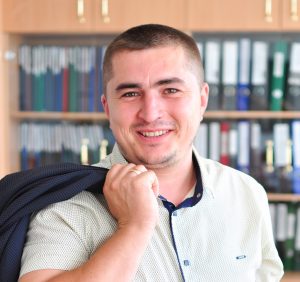
Georgi Ivanov Mihalev is an Assistant Professor at the Technical University - Gabrovo, working within the Faculty of Electrical Engineering and Electronics, specifically in the Department of Automation, Information and Control Technology. Holding a Doctorate in Technical Sciences (scientific and educational), he has established himself as a significant contributor to control systems engineering and related fields. His academic career spans over a decade with continuous publication output since 2012. Dr. Mihalev's research interests focus on advanced control methodologies, particularly in electro-hydraulic servo systems, artificial neural networks applications, and image processing techniques. His work demonstrates a consistent pattern of applying theoretical control concepts to practical engineering problems across diverse domains including robotics, waste management systems, and image encryption. The breadth of his research shows particular strength in developing novel control algorithms that combine traditional approaches with machine learning techniques. Analysis of his publication record reveals a strong emphasis on practical implementation of control systems, with numerous papers addressing electro-hydraulic servo systems (appearing in approximately 40% of his recent work), followed by applications of artificial intelligence techniques to engineering problems. His 2025 Journal of Imaging paper demonstrates his expanding research scope into secure image transmission, showing increasing interdisciplinary work that combines control theory with cryptography. Dr. Mihalev has been actively involved in multiple international conferences in Bulgaria including AUTOMATICS AND INFORMATICS, UNITECH, and UTEOS symposiums, establishing himself as a regular contributor to the Bulgarian engineering research community. His collaborative work patterns show consistent partnerships with researchers including S. Yordanov, H. Stoycheva, and K. Ormandzhiev across multiple publications and research projects. His laboratory work appears to focus on practical implementation of control systems, with documented research on electro-hydraulic servo systems, robotic manipulators, vibratory bowl feeders, and intelligent waste collection systems. This suggests hands-on experimental research capabilities alongside theoretical contributions.