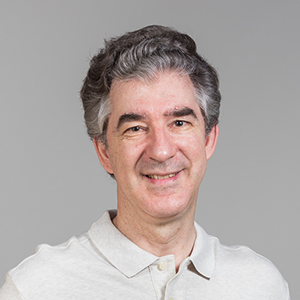
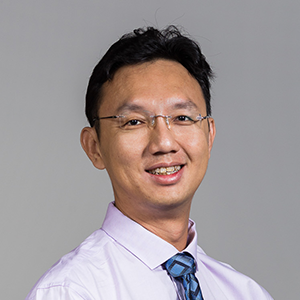
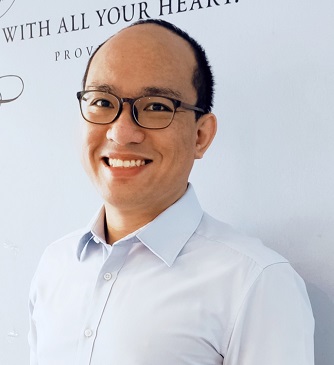
Shruti Tople is a Principal Researcher at Microsoft Research in the Azure Research – Security and Privacy group. She holds a Ph.D. from the School of Computing at the National University of Singapore (NUS) , where she received the Dean's Graduate Research Excellence Award . Her work focuses on quantifying and mitigating information leakage in machine learning models while preserving their utility. Key Research Areas include: Systems Security Privacy in Machine Learning Differential Privacy Causal Learning Transfer Learning for Vision & Language Models Recent Publications address challenges such as membership inference attacks, federated backdoor defense, and privacy-enhanced deep learning. Her open-source projects like Analyzing PII Leakage and RobustDG provide practical tools for differential privacy and domain generalization. She collaborates with interns from institutions like NUS , University of Waterloo , and Imperial College London . Scientific Awards : Dean's Graduate Research Excellence Award (NUS)
Roger Zimmermann is a Full Professor at the School of Computing, National University of Singapore (NUS), where he is also a Co-PI at the Grab-NUS AI Lab and leads the Location AI project. He previously served as Deputy Director of the NUS Smart Systems Institute (SSI) and Co-Director of the Centre of Social Media Innovations for Communities (COSMIC), both funded by Singapore’s National Research Foundation (NRF). Before joining NUS, he was a Research Area Director and Research Assistant Professor at the University of Southern California (USC). Ph.D. in Computer Science, University of Southern California (1998) M.S. in Computer Science, University of Southern California (1994) His research focuses on multimedia systems , spatio-temporal data management , streaming media architectures (especially DASH), machine learning applications , AR/VR , and location-based services . He leads the Media Management Research Lab (MMRL) at NUS, which conducts cutting-edge work in distributed multimedia and intelligent systems. His work combines theoretical depth with real-world applications in urban computing, smart mobility, and immersive media. The recent publications reflect a strong trend toward multimodal learning , spatio-temporal AI , adaptive streaming , and urban intelligence . His team explores zero-shot learning, 3D scene understanding, traffic forecasting, and open-vocabulary audio-visual segmentation, often leveraging foundational models and deep neural architectures. There is a clear emphasis on real-time, scalable systems for smart cities and immersive experiences. Dr. Zimmermann has received numerous accolades, including: DASH-IF Excellence in DASH Award (multiple years) Best Paper Awards at ACM SIGSPATIAL, IEEE ICME, and ACM MMSys Silver Award at ACM MMSys 2020 Grand Challenge IEEE Communications Society Best Editor Award (2017) ACM Distinguished Member (2017) Top 1% Publons Reviewer in Computer Science (2018) He has advised numerous students and led major research initiatives funded by MOE, NRF, A*STAR, NSF, and industry partners like Seagate, Intel, and HP. He has served as General Chair for IEEE MIPR 2023, ACM Multimedia 2020, and IEEE ISM 2015, and as TPC Co-Chair for several top-tier conferences. His editorial roles include Associate Editor for IEEE Transactions on Multimedia (TMM), ACM TOMM, and IEEE OJ-COMS. He leads the Media Management Research Lab (MMRL) , which focuses on intelligent multimedia systems, spatiotemporal data mining, and immersive media technologies. The lab develops scalable solutions for real-world challenges in urban computing, smart transportation, and interactive media.
Dr. Ben Leong is an Associate Professor of Computer Science at the National University of Singapore (NUS), holding roles as Assistant Dean, Director of the Centre for Computing for Social Good and Philanthropy (CCSGP), and Director of the AI Centre for Educational Technologies (AICET). He earned his S.B., M.Eng., and Ph.D. from MIT (Computer Science, 2006). His research focuses on computer networking and distributed systems, including low-latency TCP, mobile cellular networks, and software-defined networks. He has published extensively at top venues like SIGCOMM and CoNEXT. Dr. Leong is a recipient of the NUS Outstanding Educator Award (2015) and multiple teaching excellence awards. He has supervised numerous PhD students and contributed to educational initiatives, including Coursemology, a gamified learning platform. Beyond academia, he serves as Chief Data Officer at AI Singapore and leads software development for the Ministry of Education. His research group explores modern network protocols, congestion control, and distributed systems. Notable projects include improving TCP performance in cellular networks and mitigating packet loss in datacenters. He has also pioneered innovations in educational technology, blending gamification with programming feedback systems.
Sanghyun Park is a PYP Assistant Professor in the Department of Strategy and Policy at the National University of Singapore. His research focuses on organizational design, learning processes, artificial intelligence, and computational social science. He investigates how organizational structures influence multi-agent systems and employs methods like formal modeling, experiments, and NLP. PhD in Strategy from INSEAD (2018–2024) Master's in Strategy from Seoul National University (2015–2018) Bachelor's in Physics, Economics, and Business Administration from Seoul National University (2008–2015) Research interests include decision-making dynamics, AI-driven problem-solving, and the coevolution of organizational structures. His work bridges formal theory with computational methods, addressing challenges in multi-agent learning and human-AI collaboration. Recipient of the Will Mitchell Dissertation Research Grant (WMDRG) from the Strategy Research Foundation (SRF). Current research explores ambiguity in human-AI communication and organizational learning mechanisms.
Assoc Prof Ser Aik QUEK is an Honorary Fellow in the Department of Analytics and Operations at the National University of Singapore (NUS) Business School since January 2022. He holds a PhD in Sciences from the University of California, Berkeley (1987), preceded by a Master of Science from MIT (1981), a Diploma in Mathematical Statistics from the University of Cambridge (1978), and a First-Class Honors Bachelor of Science from Victoria University of Manchester (1975). His research focuses on Transportation & Logistics , Applied Mathematics , and Machine Learning , with notable contributions to manufacturing strategy, healthcare operations, and appointment systems optimization. His work often employs advanced statistical methods like the ACE algorithm to analyze nonlinear relationships in complex systems. Teaching Philosophy: Prioritizes student empowerment through personalized engagement, encouraging innovation and integrity. Courses taught include Predictive Analytics, Decision Analytics, and Business Analytics fundamentals, blending technical skills with strategic thinking. Collaborations: Available for projects in industry partnerships, advisory roles, and interdisciplinary initiatives. Proficient in English and Mandarin. Active on LinkedIn and Facebook for academic networking.
Chaithanya Bandi is an Associate Professor at the National University of Singapore (NUS) in the Analytics and Operations Department of the NUS Business School, with a joint appointment in the Department of Mathematics. His research focuses on decision-making under uncertainty, robust optimization, and their applications in operations management, healthcare, e-commerce, and energy systems. He develops robust optimization models for queueing control, risk optimization, and mechanism design. Key research areas include robust queue inference, two-stage distributionally robust optimization, and multi-item auction mechanisms. He has contributed to operational challenges in healthcare (e.g., patient re-entry scheduling), energy systems (electricity generation optimization), and e-commerce (price optimization for fashion products). His work integrates theoretical advancements with practical implementations in large-scale systems. Recent publications emphasize adversarial evaluation of large language models, dynamic scheduling algorithms, and robust policies for uncertain environments. His methodologies often involve novel optimization frameworks and scalable computational approaches. Dr. Bandi holds a PhD in Operations Research and has collaborated with industry leaders like Flipkart and healthcare providers to apply his models in real-world settings. His contributions bridge theoretical rigor and practical applicability in complex operational systems.
Dr Chung Wei Bernard Leong is an Adjunct Associate Professor of Strategy and Policy at the National University of Singapore (NUS Business School) and an Adjunct Lecturer in Artificial Intelligence at the Institute of Systems Science. He holds a PhD from the University of Cambridge and has extensive corporate experience, including roles as CEO/co-founder of Dorje AI, Head of AI/ML at Amazon Web Services (ASEAN), and leadership positions at Singapore Post and Woh Hup. His research interests span artificial intelligence, business strategy, digital transformation, and media studies. Education: PhD in Mathematics from the University of Cambridge (2003), MASt in Mathematics (2000), and BSc (Merit) from NUS (1998). Certifications include Senior Accredited Director (SID) and Fellow of the Singapore Computer Society. Research focuses on the intersection of AI, entrepreneurship, and digital ecosystems. Notable articles include analyses of startup management, media communication theory, and the application of thermodynamics principles to information systems. He hosts the Analyse Asia podcast and is an active angel investor in AI/Web3 startups via the XA Network. Awards include recognition as a Fellow of the Singapore Computer Society and certifications in data protection governance. His professional networks span academia and industry, with contributions to Singapore's entrepreneurial ecosystem and digital policy development.
Aditya Nair is an Nanyang Assistant Professor at the Lee Kong Chian School of Medicine , Nanyang Technological University , Singapore, and a Principal Investigator at the Institute of Molecular and Cellular Biology , A*STAR Singapore. His research focuses on integrating data-driven machine learning with high-throughput neural recordings to understand how emotional states are encoded in neural circuits. Dr. Nair obtained his Ph.D. in Computation and Neural Systems from Caltech in 2024, followed by postdoctoral training at Stanford and Caltech (2025) under Scott Linderman, Pietro Perona, and David J. Anderson. He has co-founded the Chen Institute Data Science and AI for Neuroscience Summer School at Caltech and mentored numerous undergraduates who pursued graduate studies at institutions like Princeton and EPFL. 2025 Science and Chen Institute Prize for AI-Accelerated Research (Finalist) 2025 Ferguson Prize for Ph.D. Thesis in Biology 2024 Gruber International Research Prize in Neuroscience 2024 NIH NeuroAI Early Career Scholar His lab actively recruits research assistants, graduate students, and postdoctoral scholars, focusing on AI-augmented neuroscience, mental health disorders, and computational modeling of affective states.
Lai Changquan is an Assistant Professor at Nanyang Technological University (NTU), holding positions in both the School of Mechanical & Aerospace Engineering and the School of Materials Science & Engineering. He is the Principal Investigator for the Advanced Materials Design and Synthesis (AMDS) Lab, which he established in November 2017, and received the prestigious Nanyang Assistant Professorship in 2022. Education: B.Eng in Mechanical Engineering, National University of Singapore (2009) M.Eng in Materials Science and Engineering, Massachusetts Institute of Technology (2010) Ph.D. in Advanced Materials for Micro- and Nano- Systems, National University of Singapore (2014) Dr. Lai's research spans multiple interdisciplinary fields with a focus on functional structural materials and waste valorization for circular economy applications. His work integrates design, materials science, and manufacturing innovation to engineer novel structures and surfaces. Key research areas include additive manufacturing, nanomaterials, metamaterials, structural batteries, sustainable materials, and machine learning applications in materials science. His lab has made significant contributions to the development of architected materials with exceptional mechanical properties and sustainable manufacturing processes, including turning wastepaper into battery anodes which was featured by the World Economic Forum. Analysis of Dr. Lai's recent publications reveals a strong focus on advanced materials design, particularly in structural metamaterials, additive manufacturing of metals and composites, and sustainable energy applications. His research increasingly incorporates machine learning techniques for materials prediction and optimization while maintaining experimental validation. There's a clear progression toward practical applications in renewable energy, particularly in battery technologies and sustainable manufacturing processes that align with circular economy principles. Scientific Awards: Nanyang Assistant Professorship (2022) Temasek Labs - Best Research Award (Bronze) (2021, 2022, 2023, 2024) Singapore Teaching and Academic Research Talent Scholarship (2021) Temasek Research Fellowship (2016) SMART Postdoctoral Fellowship (2015) Dr. Lai actively mentors a diverse group of graduate students and postdoctoral researchers in the AMDS Lab, including Po-Ju Chiang who became the lab's first PhD graduate in 2024. His research is supported by multiple grants through the HP-NTU Digital Manufacturing Joint Lab and other industry partnerships. He has successfully guided several PhD students through their research on topics including site-specific control of alloy properties through binder jet 3D printing and structural battery development. The Advanced Materials Design and Synthesis Lab maintains strong industry collaborations and has received significant media attention for its innovative work. The lab's research on sustainable materials has been featured in numerous international outlets including The Straits Times, Science Daily, and The Engineer (UK), demonstrating the real-world impact of their work on waste valorization and sustainable manufacturing technologies.