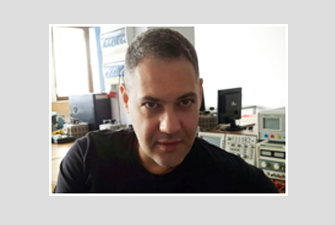
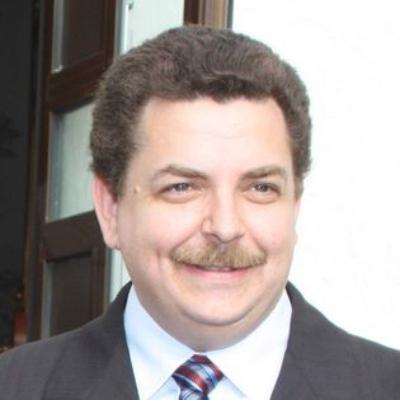
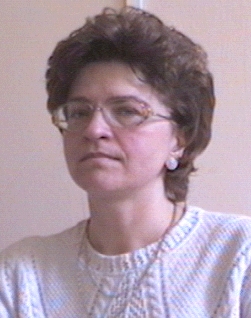
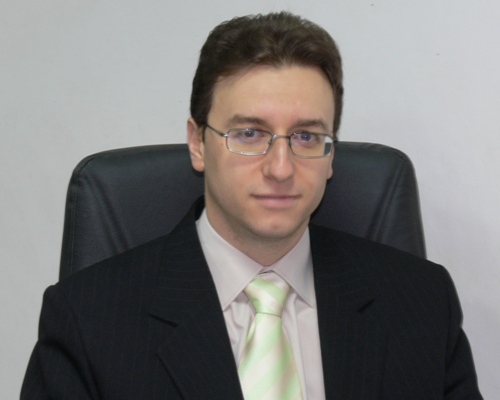
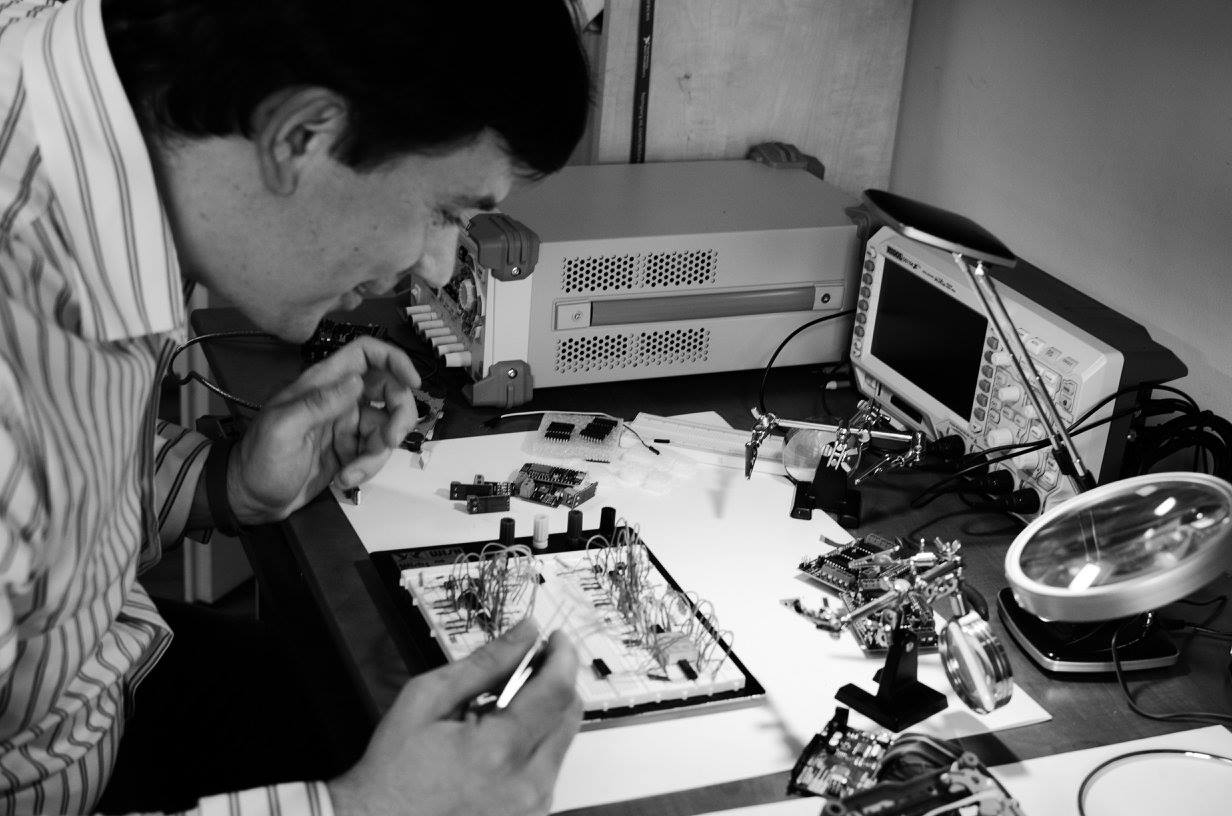
Cosmin Stoica Spahiu is a Senior Lecturer in the Department of Computer Science and Information Technology at the University of Craiova's Faculty of Automatic Control, Computers and Electronics. He holds a PhD in Computer Science from the University Politehnica of Bucharest (advisor: Prof. Mircea Petrescu) and graduated with a Software Engineering degree in 2004. Courses: Database Design, Human-Computer Interaction, Software Testing Research Focus: Multimedia and image processing, particularly in medical imaging and semantic processing Scientific Recognition: Received two Best Paper awards at international conferences (MMEDIA 2010, ICCGI 2010). Participated in 7 national/international research projects related to medical imaging, distributed databases, and content-based retrieval systems.
Corina Botoca is an Associate Professor at the Politehnica University of Timișoara, Faculty of Electronics and Telecommunications. She joined the university in 1988 as an assistant, progressing to works manager (1996–2006), and has held her current position since 2006. Her research focuses on neural networks applied to signal processing, telecommunications, and medical diagnostics, with notable contributions in nonlinear systems and image analysis. She has authored/co-authored books on neural networks and signal processing techniques, and her work includes pioneering studies on prostate cancer prediction using neural networks (accuracy exceeding 95%). Botoca has received the ETC Excellence Award in 2004 and 2006. She serves on multiple academic committees, including quality assurance and accreditation, and has led significant grants such as the PN II bilateral project on facial expression recognition (2009–2010). Her teaching innovations include courses on cellular neural networks and data communications. She has established research labs like B712 (Data Communications) and B219 (Selected Topics on Communications Networks), advancing interdisciplinary research in medical imaging and telecommunications. Her publications span over three decades, with key articles in IEEE and WSEAS journals. Notable works include 'Nonlinear complex channel equalization using a radial basis function neural network' (2004) and 'Cellular neural network processing of CEUS examination' (2016). Botoca’s administrative roles include membership in the Department Council and leadership in quality assurance initiatives, reflecting her dual commitment to research and institutional governance.
Professor Marian-Gabriel Hâncean holds a faculty position at the University of Bucharest's Faculty of Sociology and Social Work. His research focuses on network science, particularly social networks analysis, organizational sociology, and the interplay between societal structures and health outcomes. He leads the GraphNets research team, which explores applications ranging from migration corridors to climate impact on disease spread (e.g., the COSMOS project). Research Interests: Social Network Analysis, Sociology of Organizations, Organizational Behavior, Public Health, Complex Systems Key Projects: COSMOS Project (climate & mobility's role in pandemic spread), migration corridor analysis, and global health policy studies His work bridges mathematical modeling with sociological theory, addressing contemporary challenges like pandemic dynamics and organizational efficiency. Recent collaborations include transnational social field sampling and multinational pandemic response strategies.
Prof. Donciu Codrin is a full professor at the Department of Electric Power Engineering, Technical University of Iasi. His research spans interdisciplinary fields including signal processing, image processing, earthquake early warning systems, and textile engineering. He leads projects on seismic response analysis using uniaxial shaking tables, non-invasive eye safety systems (e.g., Opto-Guard), and ESD-protective textiles. His work integrates hardware design (e.g., electrodynamic actuators) with advanced algorithm development for applications like video-based distance measurement and apparel sizing estimation. Research projects include: Signal Processing : OFDM modulation, DFT/FFT algorithms, and seismic waveform analysis Computer Vision : Pattern recognition, 3D reconstruction, and human-centric interface design Structural Engineering : Earthquake simulation platforms and early warning system validation Textile Innovation : Conductive fabric development for ESD protection and functional garments Recent publications focus on seismic wave analysis (2023–2025), optoelectronic safety systems (2022), and ultrasonic sensing technologies (2020–2021). His work bridges theoretical signal processing with real-world applications in disaster preparedness and ergonomic design.
Delia Monica Duca Iliescu is a Lecturer in the Department of Computer Science at the Faculty of Mathematics and Computer Science of Transilvania University of Brașov. Her research focuses on Artificial Intelligence, Machine Learning, and Game Theory, with applications in e-learning, health informatics, and digital twin architectures. She has published works on AI’s impact on chess, didactic methods in modern learning environments, and health parameter monitoring systems. Her recent research explores educational technology innovations and telecommunications-based health data management. She holds a formal academic email address: delia.duca@unitbv.ro.
Ilarion Mihăilă is a Scientific Researcher III at the Department of Exact Sciences and Natural Sciences, CERNESIM Center, Alexandru Ioan Cuza University of Iasi. He specializes in plasma physics, with expertise in plasma diagnostics, laser ablation, and thin film deposition. His work spans environmental, biomedical, and materials science applications. PhD in Physics (Plasma Physics), Faculty of Science and Engineering, Saga University, Japan Master’s and Bachelor’s in Physics (Plasma Physics), Faculty of Physics, Alexandru Ioan Cuza University of Iasi Research interests: Production and diagnosis of DC, AC, and RF plasmas (low pressure/atmospheric pressure), laser ablation for thin film deposition, mass spectrometry, and applications in pollutant destruction, biomedical treatments, and astrophysical carbon dust analogues. His studies explore plasma-seed interactions, flexible electronics substrates, and plasma-activated media in cancer therapy. Prominent article trends: Recent works focus on non-thermal plasma applications in agriculture (quinoa seed germination under saline stress), biomedical innovations (plasma-assisted chemotherapy), and materials science (surface relief gratings for flexible electronics). His plasma jet diagnostics and computational modeling address industrial and environmental challenges, while earlier studies emphasize magnetron sputtering, laser ablation, and fundamental plasma physics.
Laurentiu Dimitriu is a Professor at the Gheorghe Asachi Technical University of Iasi , affiliated with the Faculty of Electrical Engineering. His research focuses on Automotive Electronics , Real-Time Systems , and Control System Diagnostics , with significant contributions to microprocessor-based control systems and sensor technology. Teaching: Power Supplies and Circuits, Electronic Measuring and Control Devices, Automotive Electronics Contact: dimitriu@etc.tuiasi.ro Research Interests span automotive control systems, thermal engine management, and fuzzy logic applications in engine optimization. His work addresses hardware/software co-design for microprocessor control units, fuel efficiency, and cooling systems. Engineering Trends in his publications highlight real-time communication protocols, sensor diagnostics, and airflow control mechanisms. Over 84 works (including books and patents) demonstrate his expertise in integrating embedded systems with automotive engineering. Scientific Contributions include 14 invention patents for electroacupuncture devices, engine control systems, and sensor technologies. His 1995 book Sisteme electronice de control pentru automobile remains a seminal reference in automotive electronics. Collaborations extend to INMT Bucharest, Transloc R.A. Botosani, and academic-industrial partnerships for real-time engine testing systems.
Adriana Sirbu is a Professor at the Department of Telecommunications, Technical University of Iasi. She holds a Doctorate in Engineering (Electronics) and has conducted research at institutions in Italy (Politecnico di Torino), the UK (Southampton Institute), and France (Université de Lille). Her expertise spans power electronics, coding theory, and hybrid systems modeling. Key research areas include power converter design, error-correcting codes, and MATLAB/Simulink-based simulation tools. She has authored over 50 scientific articles and three books, including Proiectarea asistata de calculator a convertoarelor electronice de putere . Her work emphasizes energy-efficient control systems and robust Fourier analysis in dynamic systems. She is affiliated with the I.C.S.I.T.E. research institute in Bucharest. Research interests include computer-aided design of electronic circuits, hybrid system theory, and optimizing power converter performance. Her publications span journals like European Transactions on Electrical Power Engineering and conferences such as IMACS and EPE. Notable contributions include hybrid rectifier designs and genetic algorithm applications in sensor networks and robotics. She has collaborated internationally on projects involving bond graph frameworks and nonlinear control systems.
Prof. Petru Adrian COTFAS holds a position as Professor in the Department of Electronic and Computers at the Faculty of Electrical Engineering and Computer Science, Technical University of Brașov (UNITBV). His work focuses on advancing renewable energy systems, hybrid energy technologies, and IoT-based monitoring solutions. He leads research on photovoltaic cell optimization, thermoelectric generator performance, and cybersecurity in smart energy systems. His contributions include developing virtual instrumentation frameworks (e.g., LabVIEW-based tools) and experimental setups like the RELab system for studying solar/wind energy dynamics. Research Interests: Characterization of renewable energy systems (hybrid photovoltaic-thermoelectric configurations) IoT integration for remote energy monitoring and control Metaheuristic algorithms for parameter extraction in solar cells Cybersecurity resilience for smart energy infrastructure Energy efficiency in industrial systems (e.g., AHU optimization) Key Contributions: Prof. COTFAS has pioneered studies on dust impact mitigation for solar panels, developed novel methods for concentrated solar power systems, and addressed cybersecurity vulnerabilities in IoT-enabled energy grids. His work bridges theoretical models (e.g., multi-junction solar cell theory) with practical implementations like FPGA-based remote laboratories. Over 60 peer-reviewed articles since 2016 showcase his interdisciplinary approach to energy sustainability and technological innovation.
Vlad Popescu is an Associate Professor at the Department of Electronics and Computers, Faculty of Electrical Engineering and Computer Science, Technical University of Brasov. His research focuses on telecommunications, IoT, cognitive radio systems, and multimedia applications. He has authored numerous publications in top journals and conferences, including work on 6G-enabled smart cities, edge-cloud orchestration, and QoE-driven smart home systems. His research explores cutting-edge topics such as immersive multi-sensory experiences, real-time object detection, and energy-efficient architectures for Android TV integration. Popescu has contributed to open-source satellite simulators and pioneered studies on blockchain-based TV advertising systems. His work bridges theoretical advancements with practical implementations in smart home environments, IoT gateways, and next-generation wireless networks. Award-winning research includes innovations in SDR-based satellite gateways and hardware-software partitioning for embedded systems. His collaborative projects address challenges in distributed video applications, D2D communications, and social IoT frameworks for smart tourism management.
Dr. Popirlan Claudiu Ionut is a Lecturer in the Computer Science Department at the Faculty of Exact Sciences, University of Craiova, Romania. He has been actively involved in academic and research activities since 2004, progressing from Assistant Lecturer to Assistant Professor and currently serving as a Lecturer. He holds a Ph.D. in Computer Science from the University of Pitesti and has extensive teaching experience in advanced programming, databases, GIS, and software engineering. His educational background includes: Ph.D. in Computer Science, University of Pitesti (2005–2009) Master in Artificial Intelligence, University of Craiova (2003–2004) B.Sc. in Computer Science, University of Craiova (1999–2003) Secondary Education, Fratii Buzesti National College (1995–1999) Dr. Popirlan's research is centered on Artificial Intelligence, with a strong emphasis on Mobile Agents and Multiagent Systems. His work explores knowledge representation, processing, and management using agent-based architectures, with applications in robotics, contact centers, and virtual organizations. He has also contributed to web-based 3D visualization and modeling in mechanical engineering. His technical expertise spans Java technologies, databases, and software engineering. The analysis of his recent publications reveals a consistent focus on mobile agents for knowledge processing, distributed systems, and intelligent control. Themes include agent architectures, knowledge base management, pathfinding algorithms, and simulation systems, indicating a deep and sustained research trajectory in autonomous and intelligent software systems. He has received research grants such as TD CNCSIS and CNCSIS IDEI, where he served as director and team member respectively, focusing on mobile agents and knowledge management. His editorial roles include Scientific Referent for INFO-PRACTIC and Editorial Secretary for the Annals of the University of Craiova. Dr. Popirlan is an active member of the academic community, affiliated with IEEE, IEEE Computer Society, ACM, IBM Academic Initiative, Microsoft Faculty Connection, and the Romanian Mathematical Society. He is also part of the Research Center of Artificial Intelligence in Craiova.
Dr. Timenko Artur Valentynovych serves as Senior Lecturer at Zaporizhia National Technical University's Department of Computer Systems and Networks within the Faculty of Computer Science and Technologies. Holding a specialist degree in Computer Systems and Networks (2010), he maintains active roles in both teaching and research. His educational background includes graduation from Zaporizhia National Technical University in 2010 with specialization in Computer Systems and Networks. Professional development is evidenced through continuous research output and curriculum development activities. Research focuses on Internet of Things , computer networks , and neural networks , with particular emphasis on protocol verification, device interoperability, and embedded system optimization. Recent work explores semantic chatbots for IoT management, air quality monitoring systems, and MQTT protocol compatibility analysis. His methodology integrates formal verification techniques with practical hardware implementation. Publication trends from 2020-2024 reveal consistent contributions to IoT infrastructure (45%), network protocols (30%), and AI applications (25%). Key journals include Shipbuilding & Marine Infrastructure and Scientific Notes of Vernadsky University. Research demonstrates strong industry relevance with applications in smart homes, environmental monitoring, and critical systems. Teaching responsibilities encompass Python programming basics, computer network design, IoT fundamentals, and wireless technologies. His laboratory guidelines for Embedded Computer Systems and IoT disciplines reflect practical, hands-on pedagogy. Current projects involve developing automated temperature control systems and network anomaly detection using hybrid neural networks. Professional activities include active participation in Ukrainian academic conferences and international collaborations through ZNTU's research infrastructure. His work contributes to the university's strategic focus on digital innovation and sustainable technology development.
Eugen Borcoci serves as a Full Professor in the Department of Telecommunications at the National University of Science and Technology Politehnica Bucharest. With an extensive publication record spanning networking technologies, he has established himself as a significant contributor to the field of telecommunications research. His work bridges theoretical networking concepts with practical implementations, particularly in next-generation network architectures. Professor Borcoci's research interests focus on advanced networking paradigms including Software Defined Networking (SDN), Network Function Virtualization (NFV), and 5G/6G network architectures. He has pioneered work in network slicing technologies, particularly for vehicular communications and Internet of Vehicles applications. His research demonstrates a consistent emphasis on practical implementations and validation of theoretical networking concepts through experimental frameworks and open-source platforms. His recent publication trajectory (2021-2025) reveals a strong focus on Open Source MANO for network automation, SDN controller optimization across different network topologies, and specialized applications of network slicing for electric vehicle infrastructure and vehicular communications. This work demonstrates a clear progression from theoretical networking concepts to practical deployment scenarios with industry relevance. Professor Borcoci actively collaborates with international researchers, particularly with Marius Vochin, Frank Y. Li, and Andra Ciobanu, indicating strong international research connections. His work appears primarily in networking conferences and journals focused on telecommunications infrastructure and next-generation network architectures.
Dr. Libal András is an Associate Professor at the Faculty of Mathematics and Computer Science of Babes-Bolyai University , Romania. His research spans soft condensed matter physics , active matter systems , and artificial spin ice , with a focus on computational modeling and GPU/CPU optimization. He collaborates with institutions like Los Alamos National Laboratory and has contributed seminal work on colloidal spin ice. Alma Mater: Bathory Istvan High School (Cluj), Babes-Bolyai University (BSc), University of Notre Dame (PhD) Past affiliations: Argonne National Lab, Los Alamos National Lab, Johns Hopkins University, Universiteit Antwerpen Research interests include: Computer simulation of soft condensed matter and active matter systems Topological defects in spin ice and granular materials Development of Arduino-based microcontroller applications and IoT systems GPU-accelerated simulation methods Publications focus on vortex dynamics , jamming transitions , colloidal crystals , and active matter across physics, materials science, and computational epidemiology. No scientific awards are explicitly mentioned in available sources.
Adrian ALEXANDRESCU is an Associate Professor at the Department of Computer Science and Engineering within the Faculty of Automatic Control and Computer Engineering at “Gheorghe Asachi” Technical University of Iași. He is a member of the Open Infrastructure Research Center and specializes in interdisciplinary research areas such as blockchain technology, distributed systems, artificial intelligence (genetic algorithms, neural networks), and IoT applications. His work bridges theoretical computer science with practical implementations in education, healthcare, and smart technologies. His research interests focus on leveraging blockchain for secure transactions, optimizing distributed systems, and enhancing e-learning through gamification. He has contributed to projects involving sensor networks for health monitoring, real-time driver sobriety tracking, and decentralized identity management systems. His academic contributions span over 20 years, with notable work on genetic algorithms for task mapping in heterogeneous systems and cloud-based solutions for ambient assisted living. Dr. ALEXANDRESCU’s publications emphasize blockchain’s role in trustless systems, IoT-driven healthcare environments, and AI-driven solutions for education and logistics. His work on decentralized article retrieval systems and plagiarism detection frameworks underscores his commitment to ethical and efficient digital ecosystems. Despite no explicitly listed awards, his prolific publication record reflects sustained academic excellence. He advises on projects at the intersection of cloud computing, distributed architectures, and smart technologies. His labs and collaborations focus on developing scalable solutions for real-world challenges such as secure real estate transactions and community-driven academic publishing systems.