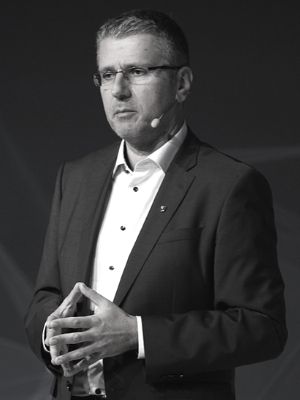
Christodoulou Chris is a Professor at the Department of Computer Science, University of Cyprus. He joined in 2005 and holds a Visiting Research Fellowship at Birkbeck College, University of London. His educational background includes a BEng in Electronic Engineering from Queen Mary and Westfield College (1991), a PhD in Neural Networks from King's College London (1997), and a BA in German from Birkbeck College (2008). His research focuses on Computational Neuroscience, Neural Networks, and Machine Learning, with specific interests in neural coding, self-control modeling, computational neuronal modeling, multi-agent reinforcement learning, and practical machine learning applications. Recent publications (2013-2025) demonstrate interdisciplinary approaches combining neuroscience, computer science, and optimization techniques, with emerging emphasis on protein structure prediction and biomedical applications. Scientific awards include: Best Paper Award, ICSR 2015 Best Paper Award, MODELS 2008 Doctoral Symposium He leads the Computational Intelligence and Neuroscience (CIN) research group and has secured funding from European projects (SocioCoast, CYberSafety, TAMIT). He mentors students through Google Summer of Code and collaborates internationally.
Dr. Michael Georgiades is an Assistant Professor at Neapolis University of Pafos, specializing in computer networks. He holds a BEng (First Class Honours) from King’s College London, an MSc from University College London, and a PhD from the University of Surrey. His career includes roles as R&D Manager at Primetel PLC, Research Fellow at the Centre of Communication Systems Research (CCSR), and Systems Development Engineer at INSIG Ltd. He has contributed to EU-funded ICT projects, holds patents, and authored IETF standards. His research focuses on Tactile Internet, Mobile Edge Computing, Vehicular Networks, IoT, and Edge Intelligence. Research Interests: Tactile Internet Mobile Edge Computing Vehicular Networks IoT Edge Intelligence Awards: Nokia Prize for Research Excellence Primetel Awards for Excellence EPSRC and British Council Studentships Publications span cutting-edge topics like adversarial ML attacks on IoT networks, cryptocurrency market analysis, and satellite-backhauled 5G systems. His work bridges theoretical advancements with practical applications in healthcare, agriculture, and transportation systems.
Professor George Giaglis is a prominent academic in the School of Business at the University of Cyprus, serving as Director of the Institute for the Future. He holds a PhD in Information Systems from Brunel University and a BSc (Hons) in Information Systems from the Athens University of Economics and Business. His academic journey includes roles such as Professor, Vice Rector, and Associate Professor at the Athens University of Economics and Business (2002–2017) and prior positions at the University of the Aegean and Brunel University. His research focuses on blockchain technology, IoT, digital currencies, and pervasive information systems. He has contributed to over 200 publications, exploring topics like blockchain integration in marine systems, NFTs, CBDCs, and social network dynamics. His work bridges technology and business, addressing digital transformation challenges and ethical implications of emerging technologies. Giaglis has organized major conferences like Decentralized 2019 and contributed to EU blockchain policy discussions. His research emphasizes practical applications of technology in sectors like healthcare, finance, and urban logistics. Despite prolific output, no specific awards are noted, though his h-index of 25 reflects significant academic impact. His current roles involve advancing the Institute for the Future’s projects, advising on digital innovation strategies, and mentoring researchers in decentralized systems. Ongoing work includes exploring AI-blockchain synergies and regulatory frameworks for digital currencies.
George Pallis is a Professor in the Department of Informatics at the University of Cyprus, affiliated with the School of Science. He holds a BSc and PhD from Aristotle University of Thessaloniki. His research focuses on Distributed and Network Computing, Big Data Analytics, and Cloud/Edge/Fog Computing. He leads the Master's Program in Data Science and has secured over €5.5M in research funding from the EU, Cyprus, and industry partners like Google. Education: BSc (2001), PhD (2006) from Aristotle University of Thessaloniki. Research Interests include Internet technologies, large-scale network environments, and cloud computing. He has published over 100 articles in top-tier journals and conferences (e.g., IEEE TKDE, ACM TOIT, WWW, ICDCS) and contributed to international standards (DIN, CEN). His work spans topics like fake news detection, edge computing frameworks, and energy-efficient micro-data centers. Key Achievements: Editor-in-Chief Emeritus of IEEE Internet Computing, recipient of multiple best paper awards, and contributor to projects like RAINBOW (H2020), UNICORN, and ICARUS. His research explores cutting-edge areas such as LLM manipulation, polarization detection, and carbon-aware computing. He has supervised five PhD students and served as General Chair for IEEE/ACM SEC 2024 and IEEE IC2E 2024. His work bridges academia and industry through collaborations on AI, IoT, and sustainable computing.
Savvas G. Loizou is a faculty member at the Cyprus University of Technology , affiliated with the Department of Mechanical and Materials Science and Engineering . He established the Robotics, Control, and Decision Systems Laboratory (RCDS Laboratory) in 2011. Education: PhD in Mechanical Engineering (2005) and Eng. Diploma (2000) from National Technical University of Athens (NTUA). Postdoctoral Experience: GRASP Laboratory, University of Pennsylvania (2005–2007). His research focuses on control theory for autonomous robotic systems , with applications in underwater, aerial, ground, and micro-robotics . Key areas include multi-agent coordination , human-robot interaction , task planning , and sensor-based navigation . Recent work emphasizes logistics automation , UAV hardware platforms , and bounded control algorithms . Dr. Loizou has contributed to multi-agent formation control , underwater vision systems , and nonlinear model predictive control for electric vehicles. He is active in control system design and navigation transformations for complex environments. His laboratory, RCDS , serves as a hub for research in autonomous systems and decision-making algorithms.
Assoc. Prof. Dr. Adnan Acan is a faculty member in the Department of Computer Engineering at Eastern Mediterranean University (EMU). He holds a PhD from Middle East Technical University, specializing in Electrical Engineering. His academic roles include teaching and supervising numerous graduate students in areas such as optimization algorithms, computer vision, and biomedical signal processing. Education: PhD, Electrical Engineering, Middle East Technical University (1992) MS, Electrical Engineering, Middle East Technical University (1985) BS, Electrical Engineering, Middle East Technical University (1983) Research Interests: His research focuses on optimization algorithms, machine learning, pattern recognition, and biomedical applications. Notable areas include metaheuristic algorithms (e.g., particle filters, great deluge), multi-agent systems, and ECG/heartbeat classification. He has contributed to advancements in computational intelligence, evolutionary algorithms, and medical diagnostics. Advising & Students: He has supervised over 30 graduate students, including PhDs such as JAMSHID TAMOUK (2021) and ZAHRA GOLRIZ KHATAMI (2019), and master’s students like MILAD ROSTAMPOUR (2023). His work spans applications in robotics, face recognition, and numerical optimization. Labs & Collaboration: His teaching and research involve courses in artificial intelligence, algorithms, and computer engineering. He actively contributes to academic service, including roles as a session chair and reviewer in conferences. His lab focuses on developing innovative solutions to complex computational and biomedical challenges.
Costas S. Patrickios is a Professor in the Department of Chemistry at the University of Cyprus, within the School of Natural and Applied Sciences. His academic career spans over two decades, beginning as an Assistant Professor in 1998 and progressing to his current position as Professor. His research is centered on advanced polymer systems with applications spanning materials science, nanotechnology, and biomaterials. Dr. Patrickios received his Diploma in Chemical Engineering from the National Technical University of Athens (NTUA) in 1988, followed by a Master of Science in Chemical Engineering Practice from MIT in 1990. He completed his PhD at MIT in 1993 and conducted postdoctoral research at the University of Sussex from 1994-1996. His academic journey continued with a lectureship at UMIST before joining the University of Cyprus in 1998. His research focuses on dynamic covalent chemistry , amphiphilic copolymer networks , and microphase separation in polymer systems. Patrickios has made significant contributions to the understanding of polymer synthesis , controlled polymerizations , and degradable polymer networks . His work often bridges experimental and computational approaches, particularly in coarse-grained molecular dynamics simulations of polymer behavior. Recent research has expanded into applications related to RNA and DNA yield , demonstrating the versatility of his polymer systems. Analysis of his publication record reveals a strong focus on amphiphilic polymer conetworks, with consistent exploration of their synthesis, characterization, and applications. His work shows increasing integration of computational methods with experimental approaches, particularly in understanding structure-property relationships. The research spans fundamental polymer science to applied areas including energy materials, biomaterials, and smart responsive systems. Dr. Patrickios has also contributed significantly to the field through book editing, including the comprehensive volumes Amphiphilic Polymer Co-networks: Synthesis, Properties, Modelling and Applications (2020) and Polymer Networks: Synthesis, Properties, Theory and Applications (2010), which have become important references in the field. His collaborative research approach is evident through numerous international partnerships, with co-authors from institutions across Europe and beyond. This collaborative network has enabled multidisciplinary research that bridges chemistry, materials science, and engineering perspectives.
Dr. Andria Procopiou is a Lecturer in Artificial Intelligence and Cybersecurity at the University of Central Lancashire Cyprus, serving as Course Leader for the MSc Computing program and Deputy Course Leader for the MSc Cybersecurity. She holds a PhD in Computer Science (City, University of London, 2022), an MSc in Human-Computer Interaction (University College London, 2014), and a BSc in Computer Science (University of Surrey, 2013). Her research spans AI applications in sports analytics, cybersecurity for smart cities/IoT, hate speech detection, and metaverse safety. She has led modules in User Experience Design, Penetration Testing, and Cybersecurity. Research interests include AI-driven solutions for sports injury prediction, real-time DDoS detection in IoT networks, and ethical challenges in the metaverse. Her work emphasizes explainable AI (XAI) for transparency in decision-making systems. She has published extensively in journals like Wireless Communications and Mobile Computing and conferences such as IEEE CYBER and the International Conference on Human-Computer Interaction. Education: PhD Computer Science (City University London), MSc HCI (UCL), BSc Computer Science (University of Surrey) Key Roles: Course Leader (MSc Computing), Deputy Course Leader (MSc Cybersecurity) Administrative Contributions: Module leadership in AI, Cybersecurity, and Digital Forensics Her recent publications address critical issues like privacy concerns in smart campuses, gender-based hate speech in virtual spaces, and injury patterns in professional football using data analytics. She collaborates with industry on IoT security solutions and metaverse governance frameworks.
Professor HADJINICOLAS GEORGE holds a faculty position at the University of Cyprus, Department of Business Administration and Public Administration under the School of Economics and Management. His research focuses on production-marketing interface, international manufacturing systems, and product positioning methods. He earned a Ph.D. in Business Administration (Operations Management) from the University of Southern California in 1993, preceded by MS degrees in Statistics (1990) and Computer Engineering (1989), and a BS in Electrical Engineering (Cum Laude, 1988). His research interests emphasize optimizing production systems through interdisciplinary approaches, integrating marketing and operational decisions. Key themes include cost reduction in serial production systems, resource allocation for service quality, and strategic product positioning using advanced analytics like self-organizing maps. His publication trends reflect sustained contributions to operations management and decision sciences, with notable work on journal evaluation metrics and production-marketing interface challenges. Over two decades, his research has addressed both theoretical frameworks (e.g., asymptotic distribution analysis) and practical applications (e.g., hotel service optimization). He has advised numerous studies on manufacturing systems and marketing strategies, though specific student names are not listed here. His work bridges engineering and business disciplines, addressing global operational challenges through quantitative methodologies.
Michalis Michaelides is an Assistant Professor at the Department of Electrical Engineering, Computer Engineering and Informatics at the Cyprus University of Technology , where he has held a tenure-track position since 2012. He holds a PhD in Electrical Engineering from the University of Cyprus (2009), and earlier degrees from Purdue University (MSEE, 1998; BSEE, 1997). His research focuses on communication systems, wireless sensor networks, environmental monitoring, and computational intelligence applications in maritime logistics and smart infrastructure. He received the Elsevier Building and Environment Journal Best Paper Award in 2014. His work spans smart port operations , IoT integration , and data-driven environmental modeling . Recent publications address berth allocation optimization, vessel arrival prediction, CO2-based virus transmission risk analysis, and AI-driven maritime terminal management. His interdisciplinary approach combines signal processing, optimization algorithms, and sensor networks to solve challenges in transportation, environmental sustainability, and public health. Education: PhD in Electrical Engineering, University of Cyprus (2009) MSEE, Purdue University (1998) BSEE, Purdue University (1997) Awards: Elsevier Building and Environment Journal Best Paper Award (2014) His research group collaborates on projects like intelligent irrigation systems and coastal eutrophication analysis , leveraging computational intelligence for real-world applications. Ongoing work emphasizes port efficiency, sensor network reliability, and decision support systems for maritime logistics.
Panos K. Chrysanthis is a Professor of Computer Science at the University of Pittsburgh and an adjunct Professor at Carnegie-Mellon University and the University of Cyprus. He holds a BS in Physics with a Computer Science concentration from the University of Athens, Greece, and MS and PhD degrees in Computer and Information Sciences from the University of Massachusetts Amherst. He has been affiliated with the University of Pittsburgh since 1991, serving as Director of the Advanced Data Management Technologies (ADMT) Lab. His research focuses on database systems, mobile and pervasive data management, distributed computing, and real-time systems, with recent emphasis on data streams and energy-efficient data management for IoT and sensor networks. Chrysanthis has authored over 100 peer-reviewed publications, including a book on transaction processing and consistency in distributed databases. He has received the NSF CAREER Award (1995) and the University of Pittsburgh's Provost Award for Excellence in Mentoring (2015). He has held editorial roles at the VLDB Journal, IEEE TKDE, and DAPD, and has organized major conferences like ICDE and MDM. His work bridges theoretical database research with practical applications in urban informatics, healthcare, and sustainability. Chrysanthis has advised numerous students, contributed to grants focused on big data and healthcare analytics, and co-developed tools like the ADMT Lab's experimental platforms for urban mobility and congestion. He is a Senior Member of IEEE and an ACM Distinguished Scientist.
Vasos Vassiliou is an Associate Professor in the Department of Computer Science at the University of Cyprus and Founding Academic Member & Research Group Leader at the Smart Networked Systems (SNS) Multidisciplinary Research Group within the CYENS Research Center. His work focuses on systems and protocols for improving network performance, reliability, and security in next-generation communication systems (5G/6G), with a strong emphasis on distributed AI/ML techniques, device-to-device (D2D) networking, IoT security, programmable metasurfaces, and intelligent network resource management. Department of Computer Science, University of Cyprus CYENS Research Center, Cyprus His research spans multiple subfields including D2D communication (interference management, device discovery), IoT security (blockchain solutions, intrusion detection), network optimization (traffic prediction, power management), and programmable metasurfaces for advanced beam steering. Recent projects like ERMIS (3D Indoor Positioning), ADROIT-6G (DAI-driven architecture), and METACITIES (digital twins/metaverse) demonstrate his leadership in cutting-edge research. His publications reveal a strong focus on distributed intelligence , machine learning applications , and security protocols across wireless systems. He has supervised multiple PhD students to completion and actively contributes to IEEE/ACM as Senior Member. IEEE Senior Member ACM Senior Member Teaching responsibilities include core courses like Computer Networks and specialized postgraduate modules on IoT Networks .
Fatma Rızaner is a Senior Lecturer at the Department of Mathematics, Faculty of Arts and Sciences, Eastern Mediterranean University, North Cyprus. She earned her Ph.D. in Mathematics from the same institution and focuses on nonlinear dynamical systems and ecological modeling. B.S. in Applied Mathematics and Computers (1996-2000) M.S. in Mathematics (2000-2002) Ph.D. in Mathematics (2006-2012) Her research explores stability in nonlinear systems, habitat fluctuations, and the Allee effect in population dynamics, often integrating harvesting models and ecological theory. Recent publications highlight her work in computational methods for differential equations (2018) and ecological modeling (2012). These studies span topics like neural networks, population sustainability, and environmental variability. Contact: fatma.rizaner@emu.edu.tr | Web Page
Kristis Alexandrou is a Researcher at the Science and Technology in Archaeology and Culture Research Center (STARC) of The Cyprus Institute. He holds a Master’s degree in Architecture (MA) and a Ph.D. in Architectural Engineering from the University of Cyprus, focusing on hybrid bending-active structural systems. His research emphasizes Structural Design, Computational Methods, and BIM applications in heritage conservation. He contributes to projects like ENI-CBC-MED BEEP, RIF-UrbanPeriscope, and Horizon Infra, advancing BIM interoperability for cultural heritage data management. His professional experience includes architectural design and heritage retrofitting in Cyprus. At STARC’s Virtual Environments Lab (VElab), he develops BIM-based workflows to address data interoperability challenges in arts and humanities. Key projects include 'BIM to BPS interoperability' leadership in the BEEP Project and semantic data integration for Mediterranean heritage sites. His work bridges computational innovation with sustainable heritage preservation.
Ahsan Fayyaz is a Research Engineer I at the KIOS Research and Innovation Center of Excellence and a current M.Sc. student in Artificial Intelligence jointly offered by the Department of Electrical and Computer Engineering and the Department of Computer Science at the University of Cyprus. He holds a BS in Electrical Engineering from COMSATS University Islamabad (2021).