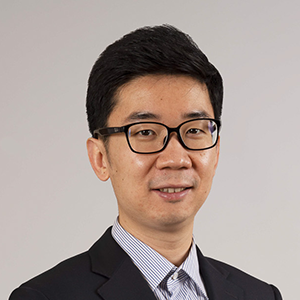
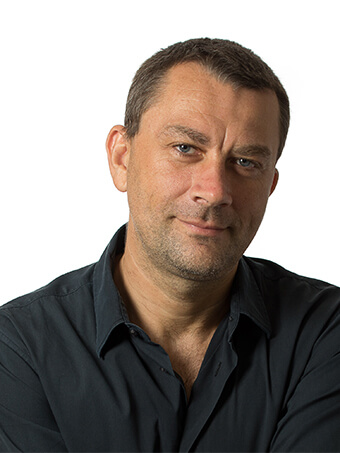
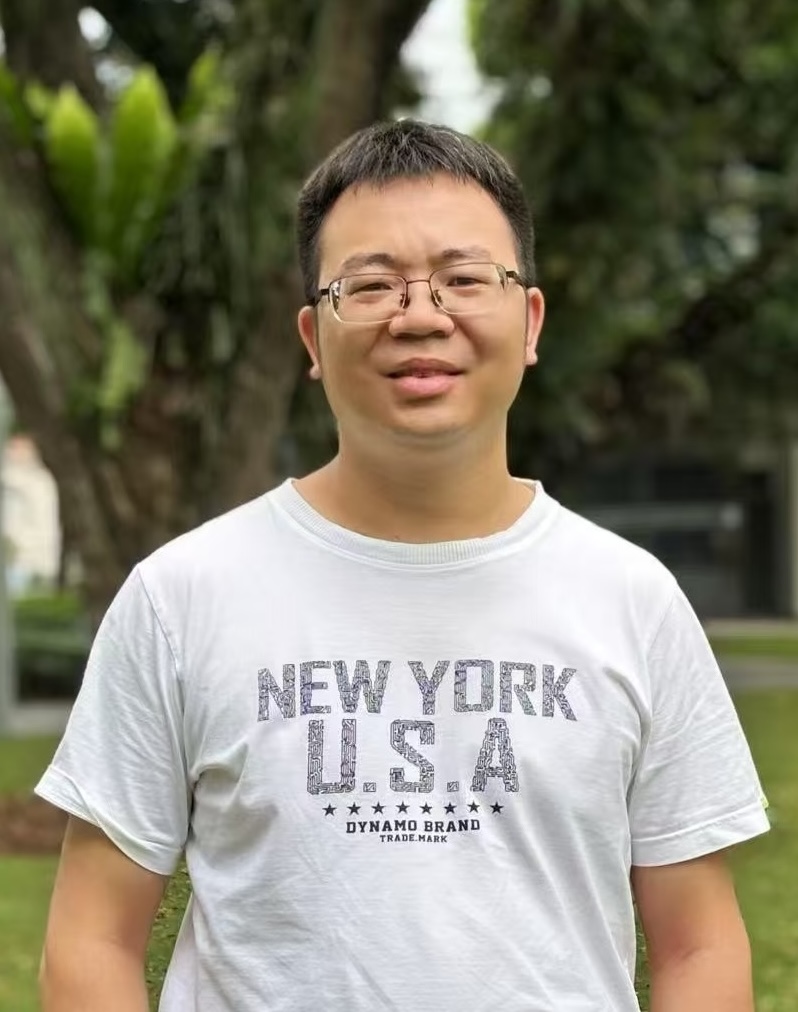
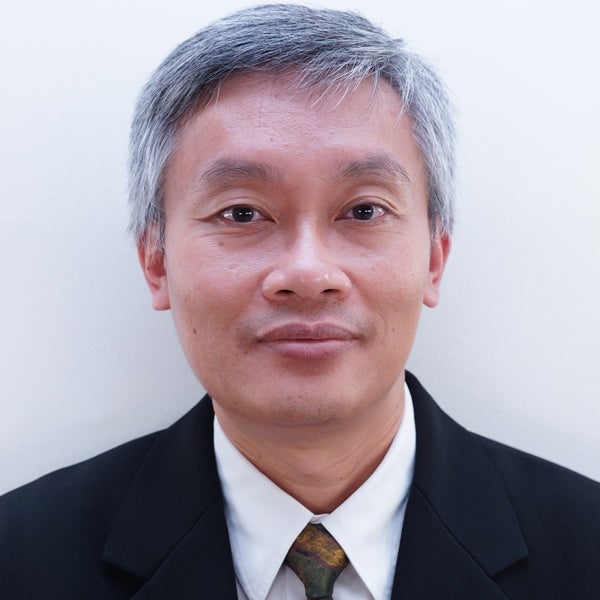
Associate Professor Ilya Sergey leads the Verified Systems Engineering (VERSE) lab at the School of Computing, National University of Singapore (NUS). He holds a PhD in Computer Science from KU Leuven and an MSc in Mathematics from Saint Petersburg State University. His research focuses on programming languages, software verification, distributed systems, and program synthesis. He is a recipient of the AITO Dahl-Nygaard Junior Prize (2019) and multiple ACM SIGPLAN Distinguished Paper Awards. His work includes developing the Scilla smart contract language and the Veil verification framework, emphasizing formal methods for ensuring software correctness. **Education**: PhD in Computer Science, KU Leuven, Belgium (2012) MSc in Mathematics and Computer Science, Saint Petersburg State University, Russia (2008) **Research Interests**: Design and Implementation of Programming Languages Formal Verification using Separation Logic Distributed Systems and Concurrency Program Synthesis and Automated Proof Repair **Recent Articles Trends**: His recent work emphasizes automated verification tools (e.g., Veil), exploit generation via synthesis, and compositional verification of Byzantine protocols. These contributions bridge foundational theory with practical applications in distributed systems and smart contracts. **Awards**: AITO Dahl-Nygaard Junior Prize (2019) ACM SIGPLAN Distinguished Paper Awards (PLDI'23, PLDI'21, POPL'19) Google, Facebook, and Amazon Research Awards **Advising & Grants**: He actively mentors PhD students in formal methods and verification. His grants include support from Google and industry partnerships. He organizes the ICFP Programming Contest and co-chairs ICFP'25. **Labs & Teams**: Leads the VERSE lab, part of the PLSE@NUS group, focusing on verified software systems and program synthesis.
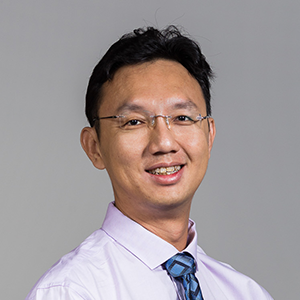
Dr. LI Jialin is an Assistant Professor at the Department of Computer Science, School of Computing, National University of Singapore (NUS). His research focuses on Systems & Networking, with specific interests in Operating Systems and Distributed Systems. He teaches courses including CS2106 (Introduction to Operating Systems) and CS5223 (Distributed Systems). Dr. LI holds a PhD in Computer Science and Engineering from the University of Washington (2019), an M.S. from the same university (2014), and a B.S.E. in Computer Engineering from the University of Michigan (2012). His research explores cutting-edge topics in material science and nanotechnology, with recent work focusing on 2D materials (e.g., phosphorene, antimonene), surface chemistry, and nanoscale device fabrication. Key contributions include studies on metal-organic frameworks, surface functionalization, and electronic property modulation in layered materials. Publications span experimental and theoretical investigations of material synthesis, surface dynamics, and nanoelectronic device applications. His work bridges fundamental material science with practical applications in electronics and optoelectronics. Dr. LI’s research has been recognized through collaborations with leading institutions and contributions to prestigious journals in materials science and surface chemistry.
Dagomir Kaszlikowski is an Associate Professor at the Department of Physics, Faculty of Science, National University of Singapore (NUS), and a Principal Investigator at the Centre for Quantum Technologies (CQT). His research focuses on foundational aspects of quantum theory, particularly correlations in quantum systems, which underpin quantum nonlocality, contextuality, and quantum information processing. He leads the Dagomir Kaszlikowski Group, exploring topics like quantum supremacy through alternative formulations of quantum mechanics and the social/economic impacts of quantum technologies. His recent work includes studies on electric-magnetic duality in lattice gauge theory, quantum geometric invariance, and spatiotemporal frameworks for quantum processes. He collaborates extensively with researchers such as Jia Zhian, Sheng Tan, and Pawel Kurzynski. His group investigates quantum correlations, quantum computing, and the intersection of quantum mechanics with thermodynamic properties. His research group's publications demonstrate a consistent focus on quantum information theory, nonlocality, and contextuality across multiple platforms including optical systems and lattice models. Key themes include entanglement, quantum algorithms, and fundamental tests of quantum theory. Contact: phykd@nus.edu.sg | Office: S15-06-09, NUS
Wei Luo is Assistant Professor in Geography at the National University of Singapore with a joint appointment at the Saw Swee Hock School of Public Health. He founded the GeoSpatialX Lab and researches geo-social visual analytics—integrating spatial analysis, social networks, and machine learning to study complex systems. His work has two primary applications: 1) Infectious disease transmission modeling (COVID-19, dengue, influenza) using geospatial and network approaches, and 2) International trade/supply chain analysis through firm and national networks. Luo received recognition as Geospatial World's 50 Rising Stars (2023) and multiple paper awards for innovations in geovisual analytics. He teaches Spatial Programming, GIS Design, and Big Spatial Data Analytics. Current research compares dengue transmission patterns pre/during COVID-19 across Southeast Asia and develops AI frameworks for map analysis.
Assoc Prof Wang Jue is an Associate Professor at the School of Social Sciences and Director of the Nanyang Centre for Public Administration (NCPA) at Nanyang Technological University (NTU). She holds a PhD in Public Policy from Georgia Tech. Her work focuses on innovation management, science policy analysis, and AI applications in governance. Current projects explore AI implications for policy research and cross-border innovation systems. Education: PhD in Public Policy (Georgia Tech) Prof Wang’s research interests span Entrepreneurship and Innovation , Artificial Intelligence Governance , Regional Innovation Systems , and Public Policy Evaluation . She examines how technological advancements reshape policy frameworks and global talent dynamics, with notable studies on Hong Kong-Shenzhen innovation collaboration and global academic labor markets. Her recent articles analyze disciplinary AI adoption patterns in education, policy diffusion mechanisms in China, and LLM biases in public opinion modeling. These studies highlight emerging trends in computational policy analysis and cross-border knowledge ecosystems. Labs/Teams: Leads the Nanyang Centre for Public Administration, focusing on public sector innovation and governance research. Grants/Advising: Active in securing research funding on science policy and innovation metrics, though specific grants are not detailed here.
Georg Weissenbacher is a Full Professor of Computer Science at Vienna University of Technology (TU Wien), working in the Institute of Logic and Computation within the Faculty of Informatics. He leads the Formal Methods in Systems Engineering research group and has established himself as a leading researcher in formal verification and automated reasoning. His educational background includes a DPhil from Oxford University (2008-2010), research at ETH Zürich (2005-2010), and a Master's degree from TU Graz (completed by 2003). He completed his Habilitation at TU Wien in 2016 with a thesis on Logical Methods in Automated Hardware and Software Verification. Weissenbacher's research focuses on developing automated tools for software and hardware verification, with particular emphasis on detecting and explaining bugs in complex systems. He is renowned for his work on heisenbugs - bugs that disappear when analyzed, which are particularly challenging in concurrent and multi-core systems. His research bridges theoretical foundations in logic with practical applications in software engineering, with significant contributions to interpolation-based verification techniques and SAT/SMT solving applications. His recent publications show a clear progression from traditional software verification toward emerging challenges in AI security, neural network verification, and sophisticated concurrency models. The research trajectory demonstrates increasing sophistication in handling complex systems properties, with a growing emphasis on probabilistic guarantees and formal methods applied to modern computing challenges. OOPSLA'18 Distinguished Paper Award for 'Randomized Testing of Distributed Systems with Probabilistic Guarantees' Weissenbacher has advised numerous PhD students and postdocs, including current researchers Mai AL-Zu'bi, Katalin Fazekas, and Sarah Sallinger. His research has been supported by significant grants including the Vienna Research Groups for Young Investigators (2011), the National Research Network 'Rigorous Systems Engineering' funded by FWF, and a Microsoft Research PhD Scholarship (2016). He actively contributes to the academic community through his service as co-chair for major conferences including CAV 2018 and FMCAD 2017. As leader of the FORSYTE research group at TU Wien, Weissenbacher oversees a vibrant research team working at the intersection of logic, verification, and practical software engineering challenges. The group is currently involved in the Doctoral College on Automated Reasoning, funded by FWF, which aims to train the next generation of researchers in this critical field.
Zhou Pan is a tenure-track Assistant Professor and Lee Kong Chian Fellow at Singapore Management University, where he directs the Language & Vision Lab. His research develops efficient AI systems for visual cognition and interaction, focusing on self-supervised learning, network architecture design, and optimization algorithms. He teaches Computer Vision and AI courses. Current research includes 3D generation models, vision-language alignment, and accelerated optimization methods. As research advisor to ZOU Xiandong, he mentors graduate research in computer vision and deep learning.
Professor Zhang Hanqin is a faculty member at the Department of Analytics & Operations, National University of Singapore (NUS), affiliated with the Institute of Operations Research and Analytics (IORA), part of NUS’s Smart Nation Research Cluster. His research focuses on stochastic models, applied probability, algorithms in stochastic systems, supply chain management, and queueing theory. He has contributed extensively to optimization in inventory systems, manufacturing systems, and service operations. His work spans theoretical advancements and practical applications, including optimal staffing for queues, assemble-to-order systems, and quantity flexible contracts. Recent studies address time-varying queues, minimal phase-type distributions, and impulse control strategies. His research bridges stochastic processes, operations research, and applied mathematics with real-world systems. Key achievements include foundational contributions to diffusion approximations, Coxian representations, and policy design for complex systems. His articles often explore multi-source inventory systems, tandem queues, and expediting strategies, reflecting a deep engagement with both theoretical rigor and industrial relevance.
Dr. Luo Wei is an Assistant Professor at the National University of Singapore (NUS), holding joint appointments in the Department of Geography (Faculty of Arts & Social Sciences) and the Saw Swee Hock School of Public Health. His research focuses on spatial epidemiology, infectious disease modeling, phylogeography, and health inequality. He leads a multidisciplinary team combining expertise in geography, public health, computational biology, statistics, and environmental sciences. Dr. Luo's educational background includes a PhD and Master’s in Geography from The Pennsylvania State University and University at Buffalo, respectively. His work bridges geospatial analytics with public health challenges, particularly in understanding disease transmission dynamics and intervention strategies for pathogens like COVID-19, influenza, dengue, and HIV. Research interests include spatiotemporal disease surveillance, geo-social interaction patterns, and the application of big data and machine learning in health systems. Key contributions include pandemic modeling during the global health crisis and exploring vaccine efficacy and public opinion using social media analysis. Awarded the Waldo-Tobler Young Researcher Award for GIScience contributions, his research has been published in high-impact journals such as Physics Reports and JMIR Public Health and Surveillance . His career includes a Research Associate role at Boston Children’s Hospital and Harvard Medical School (2019–2020). Dr. Luo actively collaborates across disciplines, advancing geovisual analytics tools and frameworks like MapReader. He teaches courses in spatial big data, geocomputation, and GIScience.
Dr. Wawan Solihin is an adjunct lecturer in the Civil Engineering Department at the National University of Singapore (NUS), specializing in Building Information Modelling (BIM) and spatial data management. With over 30 years of professional experience, his research focuses on automated code compliance, BIM interoperability, and applying AI to enhance building data interrogation. He earned his PhD from Georgia Institute of Technology in 2016 under Prof. Chuck Eastman, pioneering solutions for BIM-based compliance checks. Education: PhD (Design Computing), Georgia Institute of Technology, USA (2016) Research Interests: AI-driven BIM data quality and automation Automated code compliance for buildings Integration of spatial data and BIM OpenBIM and data interoperability standards Key Projects & Contributions: Core contributor to Singapore’s BIM initiatives (e.g., PUB’s BIM Checker, URA’s GFA Autochecker) Co-developer of Fornaxcloud for cloud-based BIM validation Active in standardization via buildingSMART International and Singapore Technical Committees Advising & Grants: Co-supervises PhD and final-year students on AI-BIM integration Leads industry-funded projects in compliance automation Labs & Teams: Member of buildingSMART’s Regulatory Domain Steering Committee Technical coordinator for Singapore’s BIM standardization efforts
Jungpil Hahn is a Provost's Chair Professor at the National University of Singapore (NUS) School of Computing, where he holds multiple leadership positions including Vice-Dean of Communications, Director of the NUS Fintech Lab, Deputy Director of AI Singapore (AI Governance), and Deputy Director of the Centre for Technology, Robotics, Artificial Intelligence & the Law. Previously, he served as Head of the Department of Information Systems and Analytics from July 2015 to June 2021. Before joining NUS, he was an Assistant Professor at Purdue University's Krannert School of Management and a Visiting Assistant Professor at Carnegie Mellon University's Tepper School of Business. Ph.D. in Information & Decision Sciences, University of Minnesota (2003) M.B.A. in Business Administration, Yonsei University, Seoul (1998) B.B.A. in Business Administration, Yonsei University, Seoul (1998) Professor Hahn's research spans multiple cutting-edge domains, with a particular focus on organizational learning in digital contexts, open innovation, and the impact of emerging technologies on business processes. His work examines how organizations adapt to technological change, with special attention to decentralized autonomous organizations (DAOs), blockchain governance, and the effects of privacy-enhancing technologies on business analytics. He investigates the intersection of human behavior and technology, particularly in crowdsourcing platforms and software development teams, exploring how team composition, knowledge diversity, and organizational structures impact innovation outcomes. His research also addresses practical challenges in data science, including missing data problems and the impact of privacy technologies on firms' analytics capabilities. His recent publications reveal a strong trend toward studying decentralized organizational forms enabled by blockchain technology, with multiple papers examining DAOs and consensus mechanisms. There's also a clear focus on the practical challenges of implementing AI and data analytics in business settings, particularly around data quality issues and the impact of privacy technologies. His work bridges theoretical organizational science with practical business applications, often using simulation-based approaches to develop and test theories. Recipient of multiple Best Paper Awards at ICIS (2020-2023) AIS Distinguished Member (2022) Faculty Teaching Excellence Award at NUS School of Computing (2014) Best 2013 Published Paper Award from Academy of Management's OCIS Division Best Reviewer Award from INFORMS Information Systems Society (2009) Professor Hahn has successfully mentored numerous PhD students who have secured prestigious academic positions at institutions worldwide, including the University of Colorado, Georgia State University, and Central University of Finance and Economics. His research is supported by significant grants focused on digital transformation, blockchain applications, and AI governance. He serves as Senior Editor of MIS Quarterly and has previously served as Associate Editor of Information Systems Research, demonstrating his leadership in the academic community. His research projects often involve interdisciplinary collaboration with computer scientists, economists, and legal scholars. He leads the Garbage Can Lab (https://garbcan.com/), which conducts research on complex socio-technical systems using an 'organized anarchy' approach inspired by the Garbage Can Model of Organizational Choice. The lab brings together researchers from diverse backgrounds to tackle problems related to digital transformation, platform innovation, computational social science, and data science. Current projects include studying organizational learning in DAOs, AI-enabled organizational decision-making, interventions for crowdsourcing platforms, and the impact of privacy technologies on business analytics.
Shruti Tople is a Principal Researcher at Microsoft Research in the Azure Research – Security and Privacy group. She holds a Ph.D. from the School of Computing at the National University of Singapore (NUS) , where she received the Dean's Graduate Research Excellence Award . Her work focuses on quantifying and mitigating information leakage in machine learning models while preserving their utility. Key Research Areas include: Systems Security Privacy in Machine Learning Differential Privacy Causal Learning Transfer Learning for Vision & Language Models Recent Publications address challenges such as membership inference attacks, federated backdoor defense, and privacy-enhanced deep learning. Her open-source projects like Analyzing PII Leakage and RobustDG provide practical tools for differential privacy and domain generalization. She collaborates with interns from institutions like NUS , University of Waterloo , and Imperial College London . Scientific Awards : Dean's Graduate Research Excellence Award (NUS)
Roger Zimmermann is a Full Professor at the School of Computing, National University of Singapore (NUS), where he is also a Co-PI at the Grab-NUS AI Lab and leads the Location AI project. He previously served as Deputy Director of the NUS Smart Systems Institute (SSI) and Co-Director of the Centre of Social Media Innovations for Communities (COSMIC), both funded by Singapore’s National Research Foundation (NRF). Before joining NUS, he was a Research Area Director and Research Assistant Professor at the University of Southern California (USC). Ph.D. in Computer Science, University of Southern California (1998) M.S. in Computer Science, University of Southern California (1994) His research focuses on multimedia systems , spatio-temporal data management , streaming media architectures (especially DASH), machine learning applications , AR/VR , and location-based services . He leads the Media Management Research Lab (MMRL) at NUS, which conducts cutting-edge work in distributed multimedia and intelligent systems. His work combines theoretical depth with real-world applications in urban computing, smart mobility, and immersive media. The recent publications reflect a strong trend toward multimodal learning , spatio-temporal AI , adaptive streaming , and urban intelligence . His team explores zero-shot learning, 3D scene understanding, traffic forecasting, and open-vocabulary audio-visual segmentation, often leveraging foundational models and deep neural architectures. There is a clear emphasis on real-time, scalable systems for smart cities and immersive experiences. Dr. Zimmermann has received numerous accolades, including: DASH-IF Excellence in DASH Award (multiple years) Best Paper Awards at ACM SIGSPATIAL, IEEE ICME, and ACM MMSys Silver Award at ACM MMSys 2020 Grand Challenge IEEE Communications Society Best Editor Award (2017) ACM Distinguished Member (2017) Top 1% Publons Reviewer in Computer Science (2018) He has advised numerous students and led major research initiatives funded by MOE, NRF, A*STAR, NSF, and industry partners like Seagate, Intel, and HP. He has served as General Chair for IEEE MIPR 2023, ACM Multimedia 2020, and IEEE ISM 2015, and as TPC Co-Chair for several top-tier conferences. His editorial roles include Associate Editor for IEEE Transactions on Multimedia (TMM), ACM TOMM, and IEEE OJ-COMS. He leads the Media Management Research Lab (MMRL) , which focuses on intelligent multimedia systems, spatiotemporal data mining, and immersive media technologies. The lab develops scalable solutions for real-world challenges in urban computing, smart transportation, and interactive media.
Dr. Ben Leong is an Associate Professor of Computer Science at the National University of Singapore (NUS), holding roles as Assistant Dean, Director of the Centre for Computing for Social Good and Philanthropy (CCSGP), and Director of the AI Centre for Educational Technologies (AICET). He earned his S.B., M.Eng., and Ph.D. from MIT (Computer Science, 2006). His research focuses on computer networking and distributed systems, including low-latency TCP, mobile cellular networks, and software-defined networks. He has published extensively at top venues like SIGCOMM and CoNEXT. Dr. Leong is a recipient of the NUS Outstanding Educator Award (2015) and multiple teaching excellence awards. He has supervised numerous PhD students and contributed to educational initiatives, including Coursemology, a gamified learning platform. Beyond academia, he serves as Chief Data Officer at AI Singapore and leads software development for the Ministry of Education. His research group explores modern network protocols, congestion control, and distributed systems. Notable projects include improving TCP performance in cellular networks and mitigating packet loss in datacenters. He has also pioneered innovations in educational technology, blending gamification with programming feedback systems.
WANG Xinrun is an Assistant Professor and Lee Kong Chian Fellow at the School of Computing and Information Systems, Singapore Management University, where he joined in July 2024. He holds a PhD from Nanyang Technological University (2020). His research spans: Fundamental decision making (single/multi-agent reinforcement learning) Applied decision systems (FinTech, urban security, scientific AI) Foundation agents (computer control, automated research) with emphasis on unified frameworks for complex problem-solving. His publication portfolio (15 most recent shown) demonstrates consistent focus on reinforcement learning innovations, multi-agent game theory, and financial AI applications, with papers in ICLR, NeurIPS, AAAI, and KDD. Key trends include foundation model integration, decision-making unification, and real-world deployment. Awards include the Lee Kong Chian Fellowship. He advises PhD student ZHOU Shunchao and leads a research group developing: Reinforcement learning for FinTech Multi-agent systems for urban security Foundation agents for scientific discovery while actively recruiting students and collaborators for these initiatives.