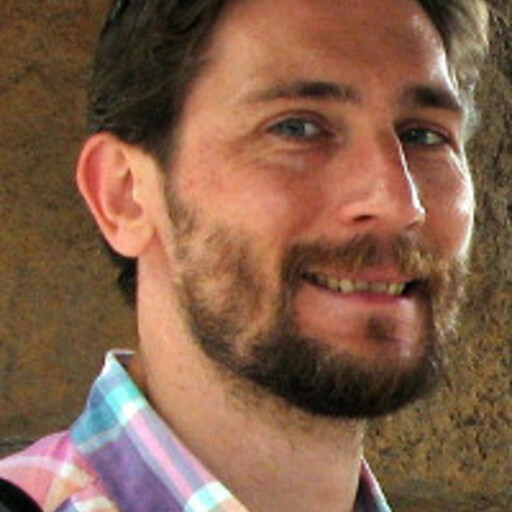
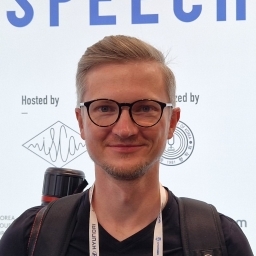
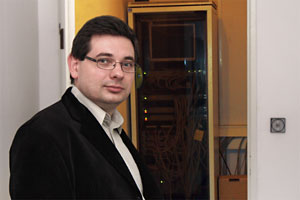
Roman Szewczyk is a Professor at the Institute of Metrology and Biomedical Engineering within the Faculty of Mechatronics at Warsaw University of Technology (Politechnika Warszawska). He also maintains an affiliation with the Łukasiewicz Research Network – Industrial Research Institute for Automation and Measurements PIAP. His academic career spans over two decades since earning his doctorate in 2003. Professor Szewczyk's research interests are highly interdisciplinary, focusing on the intersection of mechanical engineering, materials science, and biomedical applications. His primary expertise lies in magnetic sensors, metrology, and the development of measurement systems. He has made significant contributions to understanding magnetostrictive effects, magnetic permeability in electrical steels, and the application of finite element methods for sensor development. His work bridges theoretical physics with practical engineering applications, particularly in the fields of automation and biomedical instrumentation. An analysis of his recent publications reveals a strong focus on precision measurement systems, magnetic sensor development, and materials characterization. His work spans from fundamental physics of magnetoelastic effects to practical applications in robotics, biomedical devices, and environmental sustainability. The consistent publication output across multiple domains demonstrates his ability to integrate knowledge from diverse fields to solve complex engineering problems. With an impressive record of 342 publications and an h-index of 18 (Scopus) and 17 (Web of Science), Professor Szewczyk has established himself as a significant contributor to his fields of expertise. His work has practical applications across various industries including medical technology, power systems, and precision manufacturing. Professor Szewczyk has supervised 120 promoted theses, indicating his substantial contribution to academic mentoring and the development of future engineers. His involvement in 4 research projects demonstrates his ability to secure funding and lead research initiatives. While specific grant details aren't provided in the available information, his publication record suggests successful acquisition of research funding to support his extensive work. His laboratory work appears to focus on precision measurement systems, particularly those involving magnetic phenomena. The research group likely maintains facilities for materials testing, sensor development, and computational modeling, given the nature of his publications. The connection to the Institute of Metrology and Biomedical Engineering suggests strong capabilities in precision instrumentation and biomedical applications of engineering principles.