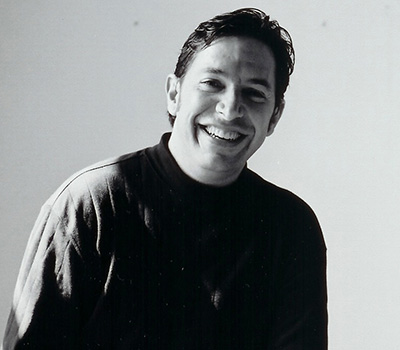
Juan Restrepo is a Professor of Mathematics with courtesy appointments in Statistics, EECS, and Physical Oceanography at Oregon State University, where he holds a Courtesy Faculty position in the Department of Mathematics within the College of Science. He is also affiliated with the University of Tennessee and Oak Ridge National Laboratory, where he holds appointments in the Computer Science and Mathematics Division. He serves as Co-Director of the Dynamics and Data Science Institute (D2SI), a leading interdisciplinary research center. Ph.D. in Physics, Pennsylvania State University, 1992 M.S. in Engineering (Acoustics), Pennsylvania State University, 1987 B.S. in Music, New York University, 1983 Restrepo's research lies at the intersection of data science and dynamics, with two primary tracts: (1) applying statistical physics and data science to complex non-equilibrium systems such as climate and financial markets; and (2) studying ocean dynamics and transport in climate and nearshore processes. His work emphasizes uncertainty quantification, adaptive time series analysis, extreme events, and data assimilation. His recent publications reflect a strong focus on modeling geophysical systems under uncertainty, using advanced computational and statistical techniques. Themes include climate sensitivity, oil spill dispersion, sediment transport, wave breaking, and high-performance computing for large-scale simulations. His work integrates machine learning, stochastic modeling, and dynamical systems theory. SIAM Fellow SIAM Geosciences Career Award ORISE Distinguished Post-doctoral Fellow DOE Young Investigator Award Ruth Homeyer Graduate Student Award Restrepo has secured over $30 million in research funding from NSF, DOE, NASA, and GoMRI. He has advised numerous students in applied mathematics and computational sciences, and has held leadership roles in professional societies, including President of the Nonlinear Geophysics Section at the American Geophysical Union. He is actively involved in promoting diversity in science and mentoring underrepresented groups. He leads interdisciplinary research teams at D2SI and collaborates with national labs such as Argonne and Los Alamos. His work bridges applied mathematics, climate science, oceanography, and computational engineering, making significant contributions to both theory and real-world applications.