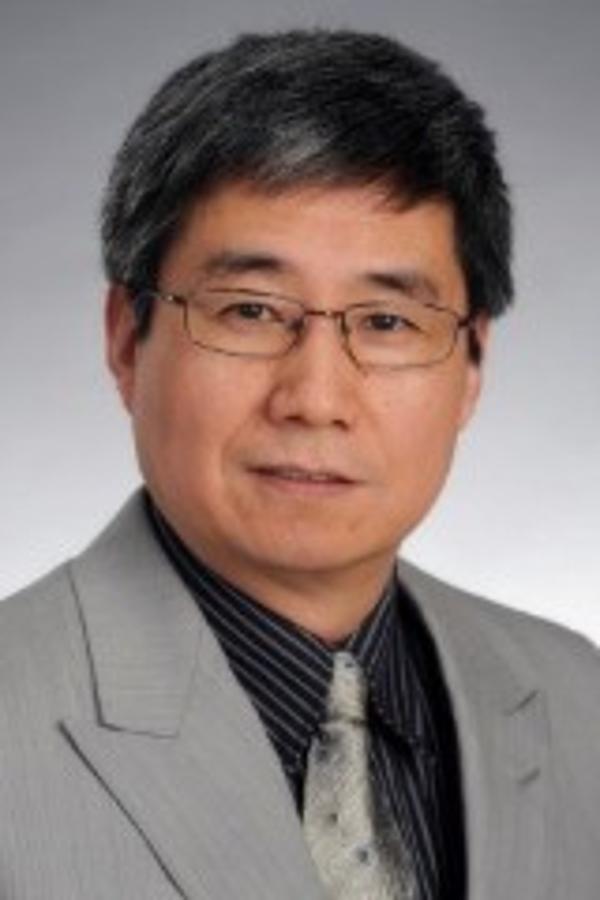
Gordon Geoffrey J. is a Professor at Carnegie Mellon University, specializing in Machine Learning , Artificial Intelligence , and Computer Science . His research spans Reinforcement Learning , Domain Adaptation , Graph-based Planning , and Relational Learning , with significant contributions to Adversarial Learning , Deep Learning Dynamics , and Mobile Sensor Networks . He has pioneered algorithms like ARA* and Anytime Dynamic A* for efficient planning under constraints. Key research areas: Transfer Learning , Bayesian Knowledge Tracing , Multi-agent Systems , Database Optimization His work has been cited thousands of times across foundational topics in AI and robotics, demonstrating sustained impact in algorithm design and applications to complex systems.
Kwang Moo Yi is an Assistant Professor in the Department of Computer Science at the University of British Columbia (UBC), where he conducts research in computer vision and machine learning. He is affiliated with the Computer Vision Lab, CAIDA (Centre for Artificial Intelligence Decision-making and Action), and ICICS (Institute for Computing, Information and Cognitive Systems) at UBC. Education: B.Sc. from Seoul National University Ph.D. from Seoul National University under Prof. Jin Young Choi Post-doctoral researcher at École Polytechnique Fédérale de Lausanne (EPFL) with Prof. Pascal Fua and Prof. Vincent Lepetit Dr. Yi's research focuses on Visual Geometry with the goal of understanding local environments, adapting to them, and acting within them. His work spans applications in autonomous vehicles, drones, robots, and Augmented/Mixed Reality systems. He employs machine learning, particularly deep learning, as the primary tool for advancing computer vision capabilities. His recent publications demonstrate a strong focus on neural rendering techniques, especially 3D Gaussian Splatting and Neural Radiance Fields (NeRF). The research trends show increasing sophistication in handling occlusions, improving rendering quality, and developing more efficient training methods for neural fields. There's also significant work connecting computer vision with practical applications in industrial settings and energy systems. Dr. Yi serves as an area chair for top computer vision and machine learning conferences including CVPR, ICCV, ECCV, NeurIPS, ICML, and AAAI. He was part of the organizing committee for CVPR 2023. He supervises graduate students including Eric (who recently completed his PhD), Gopal (now at Samsung Research), and Jeong-Gi (joining as a postdoctoral fellow). His teaching includes CPSC 425: Computer Vision and CPSC 533Y: 3D Computer Vision with Deep Learning. Dr. Yi is actively involved with the Computer Vision Lab at UBC, collaborating with researchers across CAIDA and ICICS. His work bridges theoretical computer vision with practical applications in various domains including astronomy, industrial automation, and energy systems.
David Jao is a Professor in the Department of Combinatorics and Optimization at the University of Waterloo. His research focuses on post-quantum cryptography, particularly leveraging isogenies of supersingular elliptic curves for secure cryptographic protocols. He is renowned for co-developing the Supersingular Isogeny Key Encapsulation (SIKE) protocol, a leading candidate for post-quantum cryptography standards. His work spans theoretical foundations and practical implementations, including optimizing isogeny-based systems for embedded devices and ARM processors. Research interests include isogeny-based cryptosystems, elliptic curve cryptography, zero-knowledge proofs, and cryptographic security against quantum attacks. He explores applications of expander graphs and Ramanujan graphs in cryptography, alongside algorithmic improvements for cryptographic protocols such as SIDH (Supersingular Isogeny Diffie-Hellman). Key contributions include advancements in key compression techniques for SIKE, side-channel attack mitigation, and formalizing security models for post-quantum key exchange. His publications analyze cryptographic hardness assumptions, such as the discrete logarithm problem in finite groups and the semidirect product structure in isogeny-based systems. Jao’s work bridges theoretical mathematics and applied cryptography, with a focus on ensuring practical security in next-generation cryptographic systems. His research addresses challenges in quantum-resistant authentication, key establishment, and digital signatures, often emphasizing efficiency and resistance to both classical and quantum attacks.
Keval Vora is an Associate Professor at the School of Computing Science, Simon Fraser University. His research focuses on scalable solutions for modern data analytics systems, particularly in graph processing and distributed computing. He leads the Parallel Data and Computing Lab (PDCL), developing systems like Peregrine , GraphBolt , and GraphBolt . Contact: TASC1 9419, keval@sfu.ca. Education: PhD in Computer Science from the University of California, Riverside (2017). Previously worked at Morgan Stanley on low-latency trading software. Teaching: Courses include Distributed Systems (CMPT 431) and Special Topics in Networks and Systems (CMPT 982). Advises graduate and undergraduate students on projects involving distributed systems and graph analytics. Research Interests: Parallel/Distributed Computing, Irregular Big Data Processing, High-Performance Computing. His work emphasizes efficient techniques with provable guarantees for large-scale systems. Software Contributions: Peregrine (pattern-based analytics), GraphBolt (dynamic graph processing), and Lumos (disk-based graph processing). These systems address challenges in scalability, efficiency, and real-time data handling.
Anoop Sarkar is a Professor in the School of Computing Science at Simon Fraser University (SFU), leading the Natural Language Lab. His research focuses on multilingual natural language processing, machine learning applications in NLP, and machine reading with visualization techniques. He has held significant grants including NSERC Discovery Accelerator Supplements (2012–2023) and multiple Google/IBM Faculty Awards. His teaching includes advanced NLP courses and compiler design. Over 38 students have graduated under his supervision, with a strong emphasis on computational linguistics and machine translation. His research explores areas such as statistical machine translation, decipherment of ancient scripts, and semi-supervised learning. Key software contributions include the TroFi toolkit and metaphor dataset. He has served as area chair for EMNLP (2023) and co-chair of NAACL (2015). The Natural Language Lab hosts weekly meetings open to collaboration. His work bridges theory and application, addressing challenges in low-resource language processing. Recent publications (2023–2024) highlight advancements in entity linking, cognate alignment, and structured prediction. Grants span foundational and applied NLP research, supported by NSERC and industry partnerships. His advising spans 12 PhD and 26 MSc graduates, reflecting a sustained impact on the next generation of NLP researchers.
Bilal Farooq is an Associate Professor and Program Director for the Master of Engineering in Interdisciplinary Engineering (MEIE) at Toronto Metropolitan University, holding the Canada Research Chair in Disruptive Transportation Technologies and Services within the Department of Civil Engineering. His educational background includes a PhD from the University of Toronto (2011), MASc from Lahore University of Management Sciences (2004), and BSc from the University of Engineering and Technology (2001). Dr. Farooq's research pioneers disruptive transportation solutions through cyber-physical systems, AI/machine learning applications, behavioral modeling, and optimization techniques. His work specifically targets on-demand multimodal systems, sustainable urban transportation, urban air mobility, automated vehicles, and extended reality applications, addressing critical urban mobility challenges with human-centered approaches. Analysis of his recent publications reveals a strong trend toward quantum-enhanced computational methods, privacy-preserving federated learning frameworks, and sustainability-focused decarbonization strategies across transportation domains, with increasing emphasis on human factors and real-world implementation. Notable scientific awards include: Ontario Early Researcher Award (2018) Canada Research Chair (2017) MassMotion Academic Pedestrian Modelling Project of the Year (2016) Québec Early Researcher Award (2014) Dr. Farooq actively supervises graduate students and secures significant research funding through his Canada Research Chair position and Early Researcher Awards. He directs the Laboratory of Innovations in Transportation (LiTrans), which develops interdisciplinary solutions integrating mathematics, engineering, computer science, and economics to address emerging transportation challenges. LiTrans focuses on disruptive transportation technologies, complete streets design, cyber-physical systems, pedestrian dynamics, resilience, and climate change impacts, collaborating with industry and government partners to translate research into practical urban mobility innovations for smart cities worldwide.
Scott Hopkins is a Professor in the Department of Chemistry at the University of Waterloo, specializing in Physical Chemistry. His research integrates machine learning with experimental techniques to study ion mobility, mass spectrometry, and spectroscopic analysis. He directs the Hopkins Laboratory, focusing on computational predictions of chemical behaviors and molecular interactions. His work addresses fundamental questions in gas-phase chemistry, cluster formation, and analytical method development. Research interests span physical chemistry, computational modeling, and analytical instrumentation, with a strong emphasis on developing predictive tools for complex chemical systems. Recent investigations explore ion-solvent dynamics, fragmentation mechanisms, and machine-learning applications for spectral interpretation.
Roberto A. Chica is a Full Professor in the Department of Chemistry and Biomolecular Sciences at the University of Ottawa, Faculty of Science. His research focuses on computational and experimental protein engineering, particularly in designing novel enzymes and fluorescent proteins for biotechnological applications. He develops advanced algorithms for protein design and investigates enzyme dynamics using molecular modeling and structural biology approaches. Key research interests include biocatalysis, structural biology, and the application of computational methods to engineer proteins with tailored functions. His lab integrates experimental protein chemistry with computational simulations to understand catalytic mechanisms and design proteins for industrial and biomedical uses. Recent work emphasizes ensemble-based computational enzyme design, exploring how conformational landscapes influence catalytic efficiency. His articles highlight advancements in artificial enzyme creation, substrate specificity modulation, and fluorescent protein optimization. Chica’s contributions bridge fundamental biochemistry with applied innovations in protein engineering. Notable achievements include the design of bright red fluorescent proteins via computational approaches and the development of biosensors for protein expression monitoring. His research has implications for drug discovery, biocatalytic synthesis, and personalized medicine.
Mazdak Nik-Bakht is an Associate Professor at Concordia University's School of Building, Civil, and Environmental Engineering. His work bridges construction engineering with digital innovation, focusing on smart infrastructure and sustainable development. PhD, Construction Engineering & Mgmt., University of Toronto PhD, Structural Engineering, Iran University of Science & Technology MASc & BASc, Structural and Civil Engineering, Iran University of Science & Technology His research integrates Artificial Intelligence and Social Network Analysis into construction management systems. Key areas include: Smart infrastructure and urban computing Deconstruction and circular economy principles Building Information Modeling (BIM) and digital twinning Process mining in Architecture, Engineering, and Construction (AEC) industry Decision models in construction project management Semantic computing and computational linguistics applications Recent publications show a focus on BIM analytics , urban resilience , and social media's role in infrastructure planning . Papers often combine AI and network theory to solve complex construction challenges. 2015 Outstanding paper award - Built Environment Project and Asset Management journal He teaches courses on: Big Data Analytics for Smart City Infrastructure Building Information Modeling (BIM) for Construction Building Economics Project Cost Estimating
Golnoosh Farnadi is an Assistant Professor at McGill University's School of Computer Science and an Adjunct Professor at the University of Montréal. She serves as a Visiting Faculty Researcher at Google, a Core Academic Member at MILA (Quebec Institute for Learning Algorithms), and holds a prestigious Canada CIFAR AI Chair. Farnadi co-directs McGill's Collaborative for AI & Society (McCAIS) and founded the EQUAL Lab (EQuity & EQuality Using AI and Learning algorithms), which focuses on advancing algorithmic fairness and responsible AI. Her educational background includes a Ph.D. in Computer Science from KU Leuven and Ghent University (2017), with postdoctoral research at the University of Montreal/MILA (2018-2020) and the University of California, Santa Cruz (2017-2018). During her doctoral studies, she was a visiting scholar at UCLA, University of Washington, Tsinghua University, and Microsoft Research. Dr. Farnadi's research centers on developing mathematical tools and algorithms for fairness-aware machine learning systems. Her work addresses bias and discrimination in AI decision-making across critical domains including healthcare, criminal justice, financial services, and social media. She has pioneered approaches to ensure fairness in deep learning models, particularly in sequential decision-making under uncertainty. Her research bridges theoretical foundations with practical applications, examining how AI systems can be designed to promote equity while maintaining performance. Analysis of her recent publications reveals a strong focus on practical implementations of fairness mechanisms across diverse AI applications. Her work spans technical domains from generative models and large language models to recommender systems and healthcare optimization. A unifying theme is the development of mathematically rigorous frameworks that balance performance with fairness considerations, with increasing attention to cultural diversity in multilingual AI systems and privacy-preserving fairness approaches. Google Scholar Award (2021) Facebook Research Award (2021) Rising Stars in AI Ethics (2021) Google Award for Inclusion Research (2023) WAI Responsible AI Leader of the Year Finalist (2023) 100 Brilliant Women in AI Ethics (2023) Canada CIFAR AI Chair Dr. Farnadi advises numerous doctoral and master's students across McGill University, University of Montréal, and MILA, with research focusing on fairness, privacy, and responsible AI. Her EQUAL Lab brings together researchers from computer science, social sciences, and policy domains to address systemic challenges in AI ethics. She has secured significant research funding from Google and other major organizations to support her work on fairness-aware AI systems, with applications spanning healthcare, social media safety, and public policy. The EQUAL Lab serves as a hub for interdisciplinary research on algorithmic fairness, bringing together computer scientists, social scientists, and policy experts. The lab's work spans theoretical foundations of fairness metrics, practical implementations in real-world systems, and policy recommendations for responsible AI deployment. Current projects include developing frameworks for fair kidney exchange programs, mitigating cultural stereotypes in multilingual language models, and creating privacy-preserving approaches for detecting online harms while protecting user data.
Xiaohui Yu is a Professor and Graduate Program Director in the School of Information Technology at York University. He holds a BSc from Nanjing University, an MPhil from the Chinese University of Hong Kong, and a PhD from the University of Toronto. His research focuses on the intersection of data management and machine learning, including ML-based database systems, large-scale machine learning, and spatio-temporal data analysis in contexts like intelligent transportation systems and social networks. Supported by grants from NSERC and industry partners, his work has been published in top venues such as SIGMOD, VLDB, and TKDE. He serves as an Associate Editor for journals like IEEE TKDE and ACM TKDD, and actively participates in conference program committees. Education: BSc (Nanjing University), MPhil (Chinese University of Hong Kong), PhD (University of Toronto). Research Interests: Big data management, database systems, machine learning, spatio-temporal data analytics, and video query processing. Recent articles emphasize ML-driven database components, efficient video query optimization, and scalable algorithms for large-scale data. His work addresses challenges in query processing, indexing, and real-time systems. Service: Serves on editorial boards (e.g., Information Systems), and chairs/workshops (e.g., Symposium on Data Markets). Active in program committees for SIGMOD, ICDE, and other leading conferences. Advising & Grants: Directs graduate programs and leads research groups. Collaborates with industry on data marketplaces and AI model integration. No specific student names listed, but actively recruits PhD/Master’s candidates.
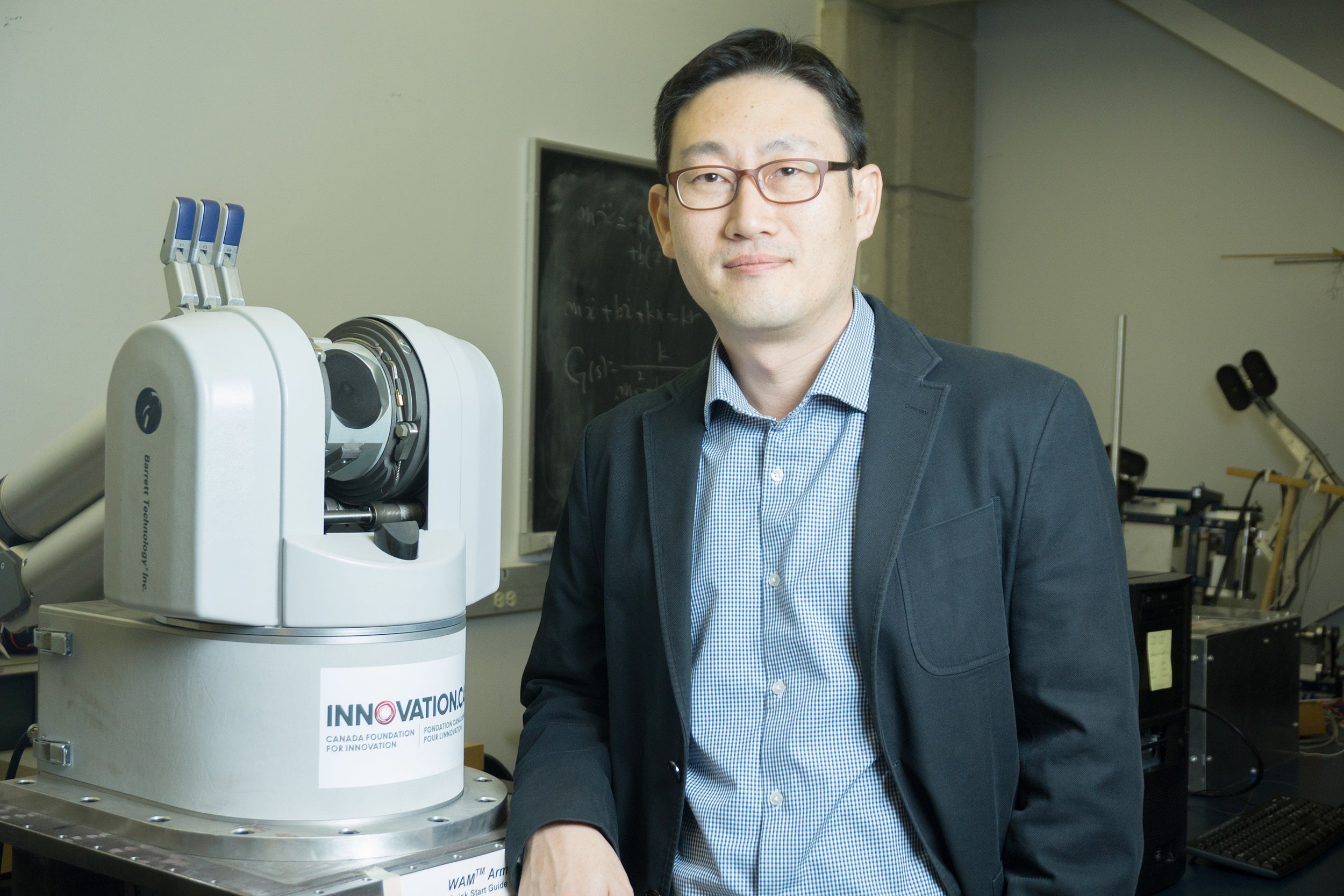
Soo Jeon is a Professor in the Department of Mechanical and Mechatronics Engineering at the University of Waterloo, part of the Faculty of Engineering. He holds a PhD from the University of California at Berkeley (2007) and prior degrees from Seoul National University. His research focuses on mechatronics, dynamic systems, and control, with applications in robotics, autonomous systems, and precision motion control. He has held roles as Assistant Professor (2009–2015), Associate Professor (2015–2024), and Full Professor (2024–present). Professor Jeon’s expertise includes intelligent sensing and control for mechatronic systems, nonlinear dynamics, and autonomous systems. He has received notable awards such as the 2022 Engineer of the Year Award (AKCSE/KOFST), 2015 NSERC Discovery Accelerator Supplement, and 2010 ASME Rudolf Kalman Best Paper Award. He serves as an Associate Editor for several journals, including the ASME Journal of Dynamic Systems and IEEE Transactions on Automation Science and Engineering. His research interests span robotics, control systems, and automation, with recent work on autonomous navigation, tactile exploration, and model predictive control. He supervises graduate students in MASc and PhD programs and teaches courses like ME 649 (Control of Machines and Processes) and ME 360 (Introduction to Control Systems). Jeon holds patents in areas like low-power magnetic locks and remote plasma source seasoning. His lab, the Waterloo Mechanical Systems & Control Laboratory (WMSCL), focuses on advanced mechatronics and robotics projects, including collaborations with international institutions such as the Korea Institute of Machinery & Materials (KIMM).
Aaron Smith is an Associate Professor in the Department of Mathematics and Statistics at the University of Ottawa, affiliated with the Faculty of Science. He holds a PhD from Stanford University. His research focuses on applied probability, computational statistics, Monte Carlo methods, and Markov chains, with an emphasis on advancing theoretical understanding and practical applications of these methodologies. Dr. Smith's work includes contributions to community detection algorithms, Markov chain mixing times, and synthetic health data generation. His recent publications explore topics such as nonstandard Dirichlet form representations, perturbation analysis of MCMC algorithms, and sparse Bayesian multidimensional scaling. He advises students in applied probability and has supervised postdoctoral researchers in related fields. His research interests span a wide range of topics, including stochastic processes, statistical inference, and algorithm design. He is particularly known for his analysis of convergence rates in Markov chains and the development of efficient sampling techniques for complex models. His interdisciplinary work bridges theoretical mathematics and practical computational challenges in data science and healthcare. Dr. Smith collaborates on projects involving synthetic data frameworks for privacy-preserving applications and has contributed to foundational work on mixing times and perturbation effects in stochastic systems.
About Marin Litoiu is a Professor at York University, holding dual affiliations in the Department of Electrical Engineering and Computer Science at the Lassonde School of Engineering and the School of Information Technology in the Faculty of Liberal Arts and Professional Studies. He is a Fellow of the Canadian Academy of Engineering and a recipient of the 2020 IBM Faculty of the Year Award. His research focuses on cloud computing, self-adaptive systems, DevOps, IoT, and machine learning-driven performance engineering. Research & Awards Litoiu leads the Dependable Internet-of-Things Applications (DITA) program, funded by NSERC, and co-founded Bitnobi Inc., acquired by Myant. His notable awards include the CASCON 2019 Most Influential Paper Award and Best Paper Awards at multiple conferences. His work emphasizes practical applications of adaptive systems, cybersecurity, and smart infrastructure integration. Grants & Projects NSERC CREATE Program: $1.65M for the DITA program (2018) York Innovation, TIAP, NSERC, and OCI-funded Bitnobi incubation Leadership in multiple CASCON workshops on cloud computing and AIOps Labs & Teams Litoiu’s lab has produced impactful startups like Bitnobi and pioneered research in self-driving systems, edge computing, and AI-driven operations. His team collaborates with industry partners like IBM and explores cutting-edge topics such as LLMs in performance optimization and fault detection.
Yiyu Yao is a Professor in the Department of Computer Science at the University of Regina, Faculty of Science. He holds a B.Eng. from Xi'an Jiaotong University and earned both his M.Sc. and Ph.D. from the University of Regina. His office is located in College West 308.6, and he can be reached at Yiyu.Yao@uregina.ca or by phone at (306) 585-5226. Dr. Yao's research spans multiple interconnected domains in intelligent systems. His primary focus is on three-way decisions, which serves as a unifying framework for his work in granular computing, rough sets, and decision-theoretic models. He has developed significant theoretical contributions to decision-theoretic rough sets (DTRS) and probabilistic rough sets, creating bridges between uncertainty management and practical decision-making applications. His work extends to web intelligence, information retrieval systems, and multiview data analysis, where he applies his theoretical frameworks to real-world problems in data science and artificial intelligence. Analysis of Dr. Yao's recent publications reveals a strong continuing focus on three-way decision theory, with increasing applications across diverse domains. His work demonstrates evolution from foundational theoretical contributions to sophisticated applications in multi-criteria decision making, conflict analysis, and explainable AI. The research shows integration of granular computing principles with modern machine learning techniques, particularly in handling uncertainty and developing interpretable models. Recent publications indicate growing interest in the intersection of three-way decisions with fuzzy sets, shadowed sets, and cognitive approaches to data analysis. Dr. Yao has mentored numerous graduate students and has hosted many visiting scholars, primarily from Chinese institutions including Nanjing University Posts and Telecommunication, Harbin Normal University, Shaanxi Normal University, and others. He serves as Area Editor on Rough Sets for the International Journal of Approximate Reasoning and as Associate Editor for Information Sciences. He is also Associate Editor-in-Chief for the Journal of Emerging Technologies in Web Intelligence and serves on multiple editorial boards including LNCS Transactions on Rough Sets and Web Intelligence and Agent Systems. He has organized significant conferences including the International Joint Conference on Rough Sets (IJCRS 2017) and served on the Steering Committee for the International Symposium on Fuzzy and Rough Sets.