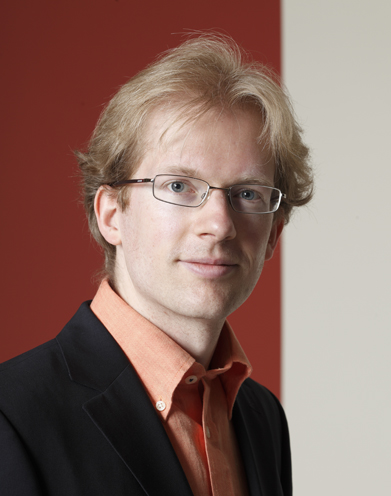
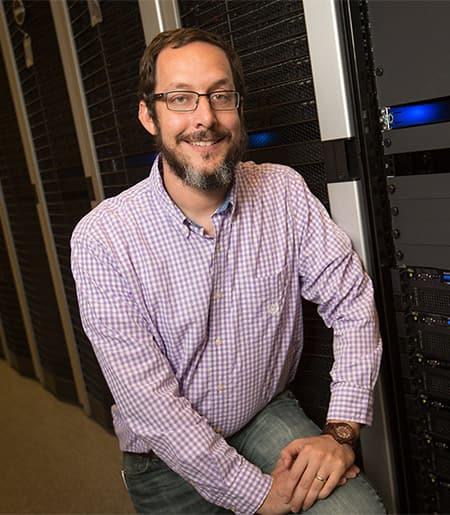
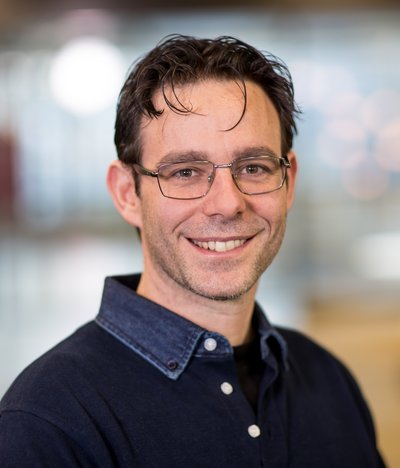
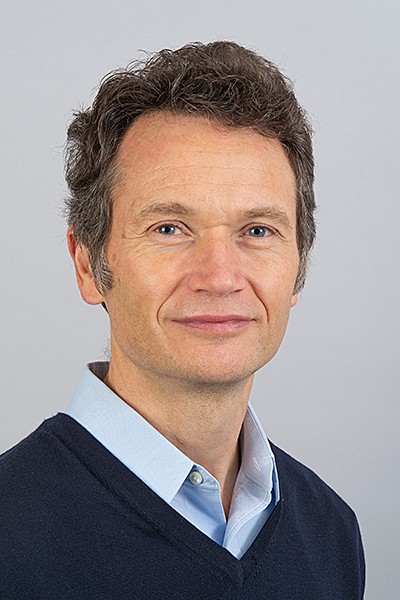
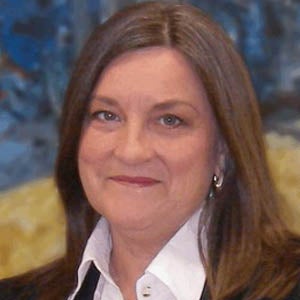
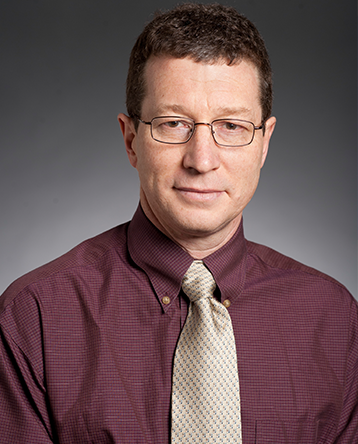
Peter Gingell is a Researcher at the University of Warwick's Physics Centre for Fusion, Space and Astrophysics. His work focuses on plasma dynamics in fusion and space environments, particularly ion-gyro-scale blobs in magnetically confined plasmas. He developed a 2D hybrid code for simulating plasma blob evolution, combining kinetic ion treatments with electron fluid models. His research addresses coherent plasma structures critical to understanding energy transport in fusion devices like tokamaks. Funded by the Engineering and Physical Sciences Research Council (EPSRC), his project is supervised by Prof Sandra Chapman and Prof Richard Dendy. He has published in Plasma Physics and Controlled Fusion , contributing to advancements in plasma simulation methodologies. His office is PS143, and he can be reached at p.gingell@warwick.ac.uk.
Harvey B. Meyer is a Professor of Theoretical Physics at Johannes Gutenberg University Mainz since 2014. Previously, he held positions including Junior Professor at Mainz (2010), Fellow at CERN's Theoretical Physics Division (2009), Research Scientist at MIT (2008), and postdoctoral roles at MIT (2006-2008) and DESY (2004-2006). He earned his D.Phil. in Theoretical Physics from the University of Oxford (2001-2004) and a Diplome de Physique from the University of Lausanne (1996-2001). His research focuses on lattice field theory, QCD phase diagrams, thermal field theory, and hadron structure. He leads the NEPhEuQCD collaboration and has received the ERC Consolidator Grant (2018) for the SIMDAMA project. Meyer teaches courses in theoretical physics and mathematical methods at Mainz, including 'Theoretische Physik 4' and 'Mathematische Rechenmethoden'. His work integrates advanced computational techniques to address fundamental questions in particle and nuclear physics. Key achievements include pioneering studies on the muon's anomalous magnetic moment, hadronic light-by-light scattering, and quark-gluon plasma dynamics. Collaborations include MIT, CERN, and institutions globally through lattice QCD projects. His lab and team contributions are central to the PRISMA+ Cluster of Excellence at Mainz.
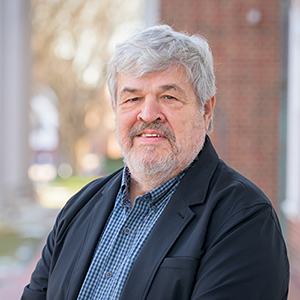
William H. Matthaeus is the Martin A. Pomerantz Chair of Physics & Astronomy at the University of Delaware, where he has been a faculty member since 1983. He is affiliated with the Bartol Research Institute, housed in the H. Rodney Sharp Laboratory on the University of Delaware campus. His work focuses on space physics, plasma physics, turbulence theory, and computational physics. Dr. Matthaeus received his B.A. degree in physics and philosophy from the University of Pennsylvania in 1973, followed by a Ph.D. from William and Mary in 1979. His academic journey included a National Academy of Sciences Research Associate position from 1980-1982 before joining the University of Delaware. Matthaeus's research spans solar wind physics, space plasmas, kinetic microinstabilities, and space mission development. His work involves theoretical, computational, and observational approaches to understanding plasma turbulence and magnetic reconnection in space environments. He has made significant contributions to understanding energy transfer in magnetohydrodynamic turbulence, solar wind dynamics, and particle acceleration mechanisms. His recent publications demonstrate a continued focus on multiscale plasma phenomena, with particular attention to turbulence in the solar wind, magnetosheath, and near-Sun environments. The research utilizes data from multiple spacecraft missions including Parker Solar Probe, MMS, and HelioSwarm, combined with sophisticated numerical simulations. James Clerk Maxwell Prize in Plasma Physics (2019) from the American Physical Society James B. Macelwane Award from the American Physical Society University of Delaware College of Arts & Sciences Scholarship Award Fellow of the American Physical Society Fellow of the American Geophysical Union Fellow of the American Association for the Advancement of Science Fellow of The Institute of Physics Dr. Matthaeus serves as director of the Delaware NASA Space Grant Consortium and the Delaware NASA EPSCoR program. He is a co-investigator on several major spacecraft missions including Cluster/PEACE, the Magnetospheric Multiscale mission, the Parker Solar Probe ISOIS instruments, the Interstellar Mapping and Acceleration Probe, PUNCH and Helioswarm. For over a decade, he has organized the Arcetri Workshop on Plasma Astrophysics in Florence, Italy, fostering international collaboration in the field. His research group at the Bartol Research Institute maintains active collaborations with scientists worldwide and contributes to advancing our understanding of fundamental plasma processes that govern space weather and astrophysical phenomena.
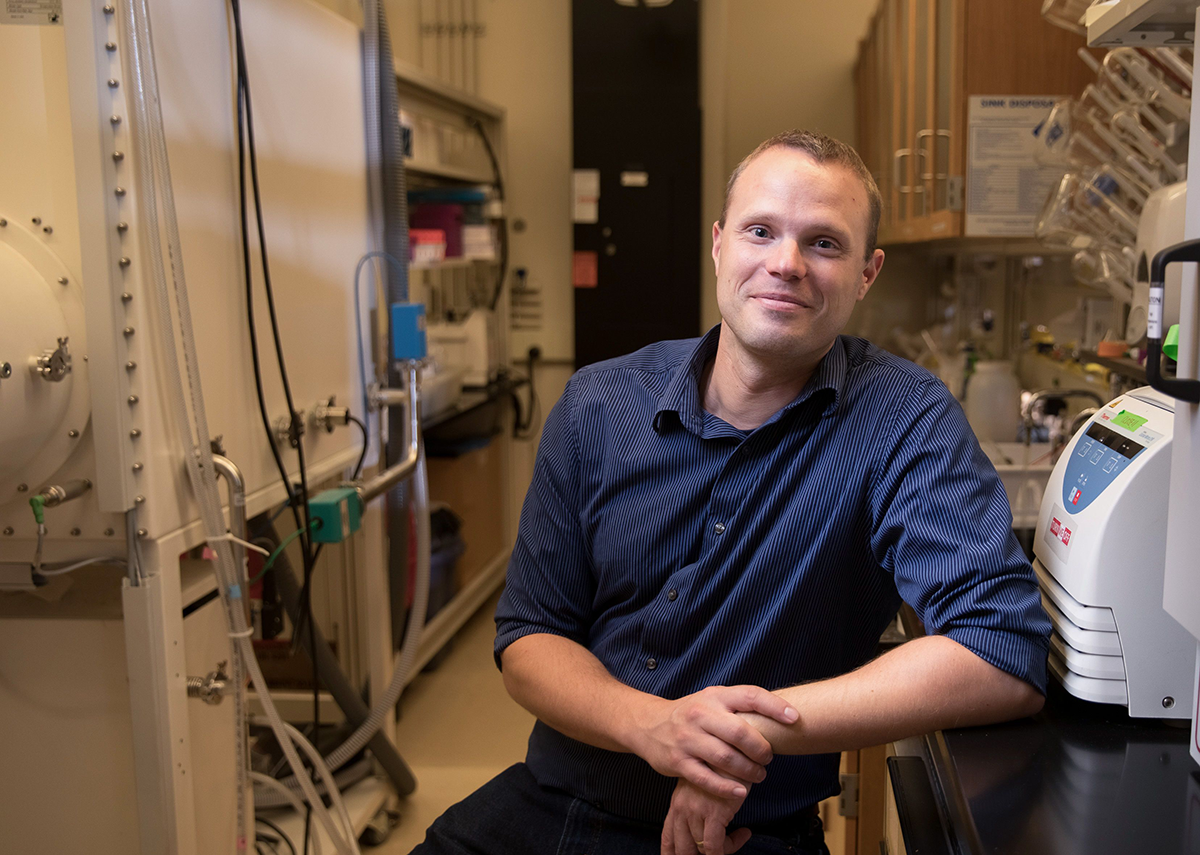
Bradley D. Olsen is a full professor in the Department of Chemical Engineering at the Massachusetts Institute of Technology (MIT), where he leads research at the intersection of polymer science, soft matter physics, and bioengineering. His work focuses on designing materials for critical applications in biotechnology, hemostasis, and sustainable polymer development while advancing fundamental understanding of polymer network mechanics and self-assembly. Education: Ph.D. in Chemical Engineering, University of California Berkeley (2007) S.B. in Chemical Engineering, Massachusetts Institute of Technology (2003) Olsen's research spans protein-based materials, block copolymer phase behavior, and mechanochemical hydrogels. He has pioneered methods for quantifying polymer network topology, developing hemostatic nanoparticles, and creating bio-inspired materials for selective biomolecular transport and medical applications. His recent publications emphasize data-driven approaches to polymer characterization and educational outreach in materials science. Scientific Awards: American Physical Society (APS) Fellow (2023) Fulbright Amazonia Scholar (2023) Alexander and I. Michael Kasser Chair in Chemical Engineering (2021) ACS Macro Letters Young Investigator Award (2021) MIT Committed to Caring Honor (2019) AIChE Owens Corning Early Career Award (2019) APS Dillon Medal (2018) Kavli Emerging Leader in Chemistry (2017) ACS Polymer Division Fellow (2016) Camille Dreyfus-Teacher Scholar (2015) Alfred P. Sloan Research Fellow (2014) NSF Career Grant (2013) NIH Postdoctoral Fellowship (2008-2009) Hertz Fellow (2003-2007) Barry M. Goldwater Scholarship (2002) Olsen has received significant grant support including NSF Career (2013) and AFOSR (2012) awards. His teaching activities include innovative international outreach like the 2025 soccer-themed science camp in Brazil. The Olsen Group at MIT explores advanced materials with applications ranging from trauma care to sustainable polymers.
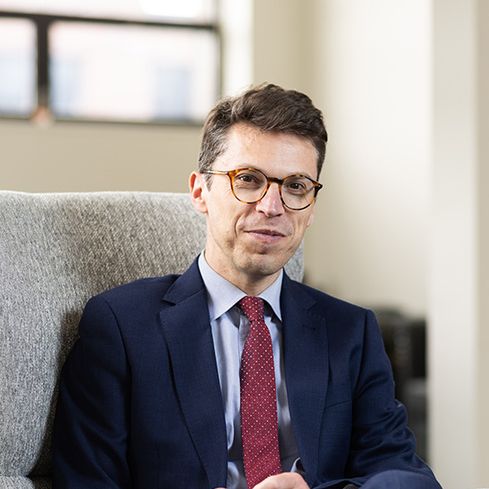
Nuno F. Loureiro is Professor of Nuclear Science and Engineering and the Herman Feshbach (1942) Professor of Physics at MIT, and serves as Director of MIT's Plasma Science and Fusion Center (PSFC) since May 2024. He holds joint appointments in MIT's School of Engineering and School of Science, and is affiliated with the MIT Kavli Institute for Astrophysics and Space Research and the MIT Energy Initiative. Director, Plasma Science and Fusion Center (2024-present) Professor of Nuclear Science and Engineering (2016-present) Herman Feshbach (1942) Professor of Physics (current) Loureiro earned his MEng in Physics from Instituto Superior Técnico in Lisbon (2000) and his PhD in Physics from Imperial College London (2005). He completed postdoctoral work at Princeton Plasma Physics Laboratory (2005-07) and UKAEA Culham Centre for Fusion Energy (2007-09) before returning to lead the Theory and Modeling Group at the Institute for Plasmas and Nuclear Fusion at IST Lisbon. Loureiro's research focuses on fundamental aspects of magnetized plasma dynamics, with particular emphasis on magnetic reconnection, magnetic field generation and amplification, confinement and transport in fusion plasmas, and turbulence in strongly magnetized, weakly collisional plasmas. His work bridges theoretical physics with computational simulations using state-of-the-art tools like the Viriato code, which he developed for reduced-gyrokinetic modeling. His research has significant implications for both understanding cosmic phenomena and advancing practical fusion energy solutions. Analysis of Loureiro's recent publications reveals a strong focus on magnetic reconnection mechanisms across multiple scales, from electron-only reconnection to relativistic plasma turbulence. His work increasingly incorporates computational innovations, including quantum computing approaches for plasma modeling. The research spans applications from solar physics and astrophysical phenomena to practical fusion energy challenges, demonstrating the unifying nature of plasma physics across disciplines. NSF Presidential Early Career Award for Scientists and Engineers (PECASE) (2025) American Physical Society Fellow (2022) NSF CAREER Award (2017) Thomas H. Stix Award for Outstanding Early Career Contributions (2015) Loureiro leads the Loureiro Group at MIT, which conducts research at the interface of analytical theory and numerical simulations on supercomputers. His laboratory has developed the Viriato code for plasma simulations and investigates phenomena relevant to both fusion energy and astrophysical plasmas. As Director of the PSFC, he oversees one of MIT's largest research laboratories with over 250 full-time researchers, staff members, and students working across 250,000 square feet of lab space.
David Bindel is an Associate Professor in the Department of Mathematics at Cornell University, affiliated with the College of Arts and Sciences, College of Engineering, and Cornell Ann S. Bowers College of Computing and Information Science. He earned his Ph.D. in Mathematics from the University of California, Berkeley in 2006. His research focuses on applied numerical linear algebra, eigenvalue problems, and their applications in plasma physics, network analysis, and nonlinear systems. He develops methods for analyzing complex systems, including magnetic confinement in stellarators, stability of MHD systems, and community detection in networks. His work bridges theoretical foundations with practical computational tools, such as formal verification of linear algebra algorithms and scalable Gaussian process models. Bindel’s research explores the interplay between structure and computation, leveraging eigenvalue analysis to address challenges in computer vision, opinion dynamics, and engineering design. He has contributed to advancements in numerical methods for large-scale systems, including iterative solvers, spectral approximation techniques, and stochastic optimization. His interdisciplinary approach spans applied mathematics, computer science, and physics, with applications in fusion energy, machine learning, and network science. Recent work highlights include high-order expansions for magnetic confinement, adaptive filtering for dynamical systems, and Bayesian optimization strategies. His publications emphasize rigorous analysis alongside computational scalability, addressing both theoretical and practical aspects of modern scientific computing. Despite no explicitly listed awards, his contributions reflect significant impact in his fields.
Nuno Loureiro is an Associate Professor at the Department of Nuclear Science and Engineering at MIT, with a secondary appointment in the Physics Department. He obtained his PhD in Physics from Imperial College London in 2005 and held postdoctoral positions at Princeton University and the UK’s Culham Centre for Fusion Energy before joining MIT in 2016. His research focuses on plasma physics , particularly theory and simulations of astrophysical and laboratory plasmas , including magnetic reconnection, turbulence, and kinetic effects. His work bridges classical plasma dynamics with emerging quantum computing applications. The 15 most recent publications highlight advancements in quantum algorithms for plasma simulations , magnetic reconnection mechanisms , and turbulence dynamics across relativistic and non-relativistic plasmas. Topics include plasmoid-mediated inverse energy transfer, data-driven fluid closures, and ion-acoustic instability impacts. 2015 Thomas H. Stix Award (American Physical Society) NSF CAREER Award
James F. Drake is a Distinguished University Professor in the Department of Physics at the University of Maryland, College Park, with affiliations at the Institute for Physical Science and Technology (IPST) and the Institute for Research in Electronics and Applied Physics (IREAP). He holds a B.S., M.S., and Ph.D. in Physics from UCLA (1975). His research focuses on theoretical plasma physics, particularly magnetic reconnection and plasma turbulence, with applications to space physics, solar flares, and magnetic fusion. Key contributions include elucidating the role of whistler waves in reconnection dynamics and advancing understanding of energy release mechanisms in plasmas. Dr. Drake’s awards include the American Physical Society Fellowship and the Humboldt Senior Scientist Research Award. He teaches advanced physics courses (e.g., Physics 604, 611, 761-762) and has pioneered computational models to study reconnection, turbulence, and particle acceleration. Recent work leverages Parker Solar Probe data to explore solar wind dynamics and reconnection in near-Sun environments. Education: UCLA (B.S., M.S., Ph.D. in Physics, 1975) Research Themes: Magnetic Reconnection, Plasma Turbulence, Space Plasma Dynamics Notable Achievements: Leader in reconnection theory; developer of kinetic simulation frameworks; contributor to NASA missions
Massimo Mischi is a Full Professor at the Faculty of Electrical Engineering of the Eindhoven University of Technology (TU/e) and chairs the Signal Processing Systems (SPS) Division , the largest division at TU/e with over 250 researchers. He founded the Biomedical Diagnostics (BM/d) Lab in 2012, which now includes 180 researchers and clinical/industrial advisors, focusing on biomedical signal processing for diagnostics and monitoring.
Professor Hala Zreiqat AM is a leading biomedical engineer at The University of Sydney , serving as the Director of the ARC Training Centre for Innovative BioEngineering . A Fellow of all major Australian academies (AAS, ATSE, FAHMS, FRSN), she develops 3D printed bioceramics for bone regeneration while championing diversity through initiatives like the IDEAL Society and BIOTech Futures mentorship program. Her work bridges academia, clinical practice, and industry in musculoskeletal research . Research Focus: Her lab creates synthetic bone scaffolds that mimic natural bone architecture, strength, and porosity, enabling non-rejected bone regeneration via patient-matched implants. Key applications include orthopaedic, dental, and maxillofacial repair , with over $18M in competitive funding and multiple patents. Current projects explore AI-driven scaffold performance prediction and anti-senescence strategies for aging-related bone loss. Scientific Trends: Recent publications highlight 3D printed nanovoxelated ceramics , antisenescence biomaterials , and multifunctional theranostic platforms . Her team integrates machine learning for scaffold design, atom probe tomography for interface analysis, and two-photon imaging for cellular monitoring in 3D environments. 2021-2022 Fulbright Senior Scholar 2018 NSW Premier's Woman of the Year 2019 Eureka Prize for Innovative Use of Technology Fellow of Australian Academy of Science (2021) Over $18M in research funding Teaching & Leadership: She designed core courses like Tissue Engineering and Nanomaterials in Medicine , mentoring 158 students in 2020 alone. As Chair of CAAR (2020-2023), she strengthens Australia-Arab collaborations. Her lab trains early-career researchers , with alumni now in academia and industry.
Anne E. White is the School of Engineering Distinguished Professor of Engineering and associate vice president for research administration at the Massachusetts Institute of Technology (MIT). She serves in the Department of Nuclear Science and Engineering within MIT's School of Engineering and is a key researcher at the Plasma Science and Fusion Center (PSFC). White has held significant leadership roles including NSE department head from 2019 to 2023 and co-chair of the MIT Climate Nucleus from 2021 to 2024. She currently chairs the Fusion Energy Sciences Advisory Committee (FESAC), providing federal advisory input to the U.S. Department of Energy Office of Science. White received her PhD in physics from UCLA, where she conducted research at the Electric Tokamak. Her early career included research positions at the National Spherical Torus Experiment at Princeton Plasma Physics Laboratory and the DIII-D National Fusion Facility at General Atomics before joining MIT as a faculty member. Her educational background laid the foundation for her expertise in plasma physics and fusion energy research. Professor White's research focuses on magnetic fusion energy, specifically on understanding turbulent transport in magnetically confined fusion plasmas. Her work spans diagnostic development, novel experimentation, and validation of nonlinear gyrokinetic codes. She aims to demonstrate nuclear fusion as a practical part of the world's sustainable energy future. Her group develops and uses radiometers, reflectometers, and interferometers to measure fluctuations in plasma density, temperature, and flows in tokamaks. This research is critical for improving predictive capabilities of turbulent transport models, which is essential for developing viable fusion reactors. Analysis of Professor White's recent publications reveals a strong focus on plasma diagnostics and turbulence measurements across multiple tokamak facilities. Her work spans experimental measurements on ASDEX Upgrade, Alcator C-Mod, NSTX, and DIII-D tokamaks, with particular emphasis on electron temperature fluctuations, turbulence characterization, and transport model validation. A significant theme is the development and application of novel diagnostic techniques for simultaneous measurements of multiple plasma parameters. Her research increasingly incorporates computational approaches, including gyrokinetic simulations and machine learning methods, to interpret experimental data and advance predictive capabilities in fusion plasma physics. Professor White has received numerous prestigious awards throughout her career: Fellow, American Physical Society Division of Plasma Physics (2019) Cecil and Ida Green Career Development Professor, MIT (2014) American Physical Society Katherine E. Weimer Award (2014) Fusion Power Associates Excellence in Fusion Engineering Award (2014) Junior Bose Award for Excellence in Teaching, MIT (2014) PAI Outstanding Faculty Award from MIT student chapter of the American Nuclear Society (2013) Norman C. Rosenbluth Career Development Professor, MIT (2012-2014) Department of Energy Early Career Award (2011-2016) Marshall N. Rosenbluth Outstanding Doctoral Thesis Award (2009) As an educator and mentor, Professor White has advised numerous students through MIT's Department of Nuclear Science and Engineering. She has taught courses including Principles of Plasma Diagnostics, Seminar in Fusion & Plasma Physics, and Introduction to Plasma Physics. Her leadership extends to developing educational resources, notably leading a team in 2018 to create a free MITx MOOC focused on nuclear science and engineering for global high school learners. Professor White has secured significant research funding through Department of Energy awards, including the Early Career Award (2011-2016) and various fusion energy fellowships throughout her career. Her research group at MIT's Plasma Science and Fusion Center has contributed to multiple major fusion facilities and has been instrumental in advancing understanding of plasma turbulence and transport. Professor White leads the Fusion and Plasmas Lab at MIT, which focuses on diagnostic development and turbulence measurements in fusion plasmas. Her team has made significant contributions to research on four major tokamaks: Alcator C-Mod, ASDEX Upgrade, DIII-D, and National Spherical Torus Experiment Upgrade. At MIT's Plasma Science and Fusion Center, she previously served as assistant division head for magnetic fusion energy collaborations and ran the Gyrokinetic Simulation Working Group and the Alcator C-Mod Transport Group. Her lab maintains close collaboration between experimental work, theoretical modeling, and computational simulation to advance the understanding of plasma turbulence and transport phenomena critical for fusion energy development.
Thomas M. Antonsen Jr. is a Distinguished University Professor at the University of Maryland, holding joint appointments in the Department of Electrical and Computer Engineering and the Department of Physics. He is affiliated with the Institute for Research in Electronics & Applied Physics (IREAP), Maryland Energy Innovation Institute, and the Institute of Physical Science and Technology. His research focuses on plasma physics, nonlinear dynamics, and high-power coherent radiation sources. Antonsen earned his B.S., M.S., and Ph.D. in electrical engineering from Cornell University (1973–1977) and has held visiting positions at institutions such as the University of California, Santa Barbara, and the École Polytechnique in France. **Education:** B.S., Electrical Engineering, Cornell University, 1973 M.S., Electrical Engineering, Cornell University, 1976 Ph.D., Electrical Engineering, Cornell University, 1977 **Research Interests:** Antonsen’s work spans magnetically confined plasmas, laser-plasma interactions, and advanced vacuum electronics. He has pioneered adjoint methods for optimizing beam-wave interaction systems and contributed to the development of high-power microwave amplifiers. His recent projects include wave chaos in complex systems and machine learning applications in nonlinear dynamics. **Awards & Honors:** James Clerk Maxwell Award (American Physical Society, 2023) IEEE Marie Sklodowska-Curie Award (2022) University of Maryland Distinguished University Professor (2017) IEEE Fellow (2012) **Teaching & Mentorship:** Antonsen teaches courses such as Physics 132 (Biophysics), Electrodynamics, and Plasma Physics. He mentors graduate students in plasma physics and vacuum electronics through his research groups at IREAP and the Bright Beams Collective. **Labs & Collaborations:** His research is supported by grants from the Department of Energy, NASA, and the Office of Naval Research. Key collaborations include the National Institute of Standards and Technology (NIST) and the European XFEL facility.
Eugene Demler is a Full Professor at the Department of Physics, ETH Zurich. Previously, he held academic positions at Harvard University from 1998 to 2021, including Assistant Professor (2001-2004), Associate Professor (unspecified dates), and Full Professor (2005-2021). His work bridges theoretical condensed matter physics, atomic and molecular physics, quantum optics, and quantum simulations. Education: MSc in Physics, Moscow Institute of Physics and Technology (1993) Diploma work, Lebedev Physics Institute (1992-1993) PhD in Theoretical Physics, Stanford University (1998), supervised by S.C. Zhang Demler's research focuses on strongly correlated quantum systems, spintronics, quantum sensing, and photo-induced phase transitions. His recent publications explore topics such as quantum polarons, Josephson plasmons, magnon dynamics, and terahertz spectroscopy in superconductors. He has pioneered hybrid quantum-classical methods for electron-phonon systems and cavity-mediated quantum materials. His Google Scholar articles (2023-2025) span theoretical and experimental domains, with keywords including Quantum Physics , Condensed Matter Physics , and Quantum Optics . Subfields include Quantum Control , Superconductivity , Spin Waves , Quantum Sensing , Non-Equilibrium Dynamics , and Quantum Simulation . Scientific Awards: Hamburg Prize for Theoretical Physics (2021) Simons Investigator (2021) Moore Distinguished Scholar (2020) Hanna Visiting Scholar (2019) Highly Cited Researcher (2017-2020) Senior Fellow at ETH Zurich's Institute for Theoretical Studies (2015) Simons Fellowship (2015) Distinguished Scholar at Max Planck Institute of Quantum Optics (2015) Thomson Reuters Highly Cited Researcher (2014) Siemens Research Award (2006) Johannes Gutenberg Lecture Award (2006) NSF Career Award (2002) Sloan Fellowship (2002) Demler teaches courses such as Statistical Physics and Strongly Correlated Systems in Atomic and Condensed Matter Physics . His work integrates theoretical modeling with experimental collaborations, particularly in quantum optics and condensed matter systems.
Professor Patricia H. Reiff is a Professor in the Department of Physics and Astronomy at Rice University and Associate Director for Outreach Programs at the Rice Space Institute. Her research focuses on space plasma physics, magnetospheric dynamics, auroras, and space weather. She has led missions like the Magnetospheric Multiscale (MMS) and contributed to the Dynamics Explorer, Polar, and Cluster missions. Reiff has pioneered public education initiatives, including the Discovery Dome portable planetarium system and the 'Totality!' planetarium show, reaching global audiences. She has trained fourteen PhD students and directs the Master of Science Teaching (MST) program, which has produced 36 teacher alumni as of 2024. Education: B.S. Physics (Oklahoma State University, 1971), M.S. Space Science (Rice University, 1974), and Ph.D. Space Physics and Astronomy (Rice University, 1975). Her research uses data from missions like MMS and citizen science projects like Citizen CATE to study magnetic reconnection and space weather effects. Key research interests include solar wind-magnetosphere-ionosphere interactions, magnetospheric reconnection, and the societal impacts of space weather. She has authored over 160 refereed publications and holds an H-index of 40. Reiff’s awards include AGU Fellow (1997), the Athelstan Spilhaus Award (2009), and NASA Group Achievement Awards. She is a vocal advocate for STEM education, frequently appearing in media to discuss eclipses and space science, including her role as a solar eclipse tour guide and science commentator.
Maarten de Boer is a Professor in the Department of Mechanical Engineering at Carnegie Mellon University (CMU), with a courtesy appointment in Materials Science and Engineering. He joined CMU in 2007 after roles as a process engineer at Hewlett-Packard (1983–1991) and principal member of technical staff at Sandia National Labs (1996–2010). He holds a Ph.D. in Materials Science (University of Minnesota, 1996), an MS in Electrical Engineering (University of Colorado, 1982), and a BS in Electrical Engineering (Cornell University, 1981). His research focuses on nanomechanical behavior of materials, MEMS, and additive manufacturing. Key projects include tantalum-based thermal actuators, high-entropy alloys, and micromachine reliability. His work is funded by the DOE, NSF, NASA, and the Army Research Lab. He has authored over 90 peer-reviewed articles, holds seven US patents, and advises students in the de Boer Group. Research Themes: Micro/Nano Manufacturing, Thin Film Mechanics, Friction & Wear, MEMS Reliability Funding Sources: NSF, DOE, NASA, ARL Courses Taught: Mechanics of Materials, Material Selection, Electronics for Sensing, Thermodynamics Notable collaborations include Gianluca Piazza (NSF LEAP-HI grant), Jack Beuth, and Bryan Webler (high-entropy alloys). Media highlights include breakthroughs in tantalum MEMS and ultra-strong polymer nanofibers. His group operates advanced test facilities for in-situ environmental studies of materials.