
Larry Abbott is the William Bloor Professor of Theoretical Neuroscience at Columbia University, with joint appointments in the Department of Physiology and Cellular Biophysics (within Biological Sciences) and the Mortimer B. Zuckerman Mind Brain Behavior Institute. He serves as Co-Director of the Center for Theoretical Neuroscience and is a Senior Fellow at HHMI Janelia Farm. PhD in Physics (1977), Brandeis University His research focuses on computational and mathematical modeling of neurons and neural networks, emphasizing spike-timing-dependent plasticity, sensory encoding in olfaction, and dynamics of internally generated neural activity. He explores how chaotic neural activity is harnessed for motor output and how perception involves dynamic inference and synaptic plasticity. Recent publications highlight applications of recurrent neural networks, hierarchical control mechanisms, and sensory-motor integration. Collaborative work spans institutions like MIT, Hebrew University, and the Allen Institute for Brain Science. Awards include the NIH Director’s Pioneer Award and the Swartz Prize in Theoretical Neuroscience. NIH Director’s Pioneer Award (2004) Swartz Prize (2010) First Annual Prize in Mathematical Neuroscience (2013) Irving Institute Mentor of the Year (2013)
جستوجوی استاد و پژوهشگر
استاد راهنما، استاد دانشگاه یا پژوهشگر مناسب برای مسیر پژوهشیتان را پیدا کنید و با او ارتباط بگیرید.
نمایش ۷۳۶-۷۵۰ از ۲۴٬۱۶۱ استاد راهنما
اطلاعات این پروفایلها از صفحات عمومی دانشگاهها جمعآوری شده و ممکن است بهروز نباشد.
Uwe Zdun is a Professor at the Faculty of Computer Science, University of Vienna, where he serves as Vice-Director of Studies for Computer Science and Head of the Research Group Software Architecture. His teaching portfolio includes core courses such as Software Engineering 2, Advanced Software Engineering, and Practical Software Courses for Bachelor's and Master's theses across multiple semesters (2024W-2025S). His research spans software architecture with emphasis on microservices, cloud computing, and DevOps. Key focus areas include architectural design decisions, infrastructure-as-code conformance, security in distributed systems, and the integration of machine learning operations (MLOps/RLOps). He investigates cognitive aspects of architecture practices through controlled experiments and develops model-driven approaches for quality assessment in complex systems. Recent publications (2024-2026) reveal three dominant trends: (1) Security and coupling analysis in infrastructure-as-code deployments, (2) MLOps/RLOps integration for Industry 4.0 cyber-physical systems, and (3) Performance optimization patterns for CI/CD pipelines and autoscaling. His work bridges theoretical architecture models with industrial practice, particularly in microservice ecosystems and reinforcement learning applications. Professor Zdun leads the Research Group Software Architecture at the University of Vienna's Faculty of Computer Science. The group focuses on empirical validation of architectural patterns, tool development for conformance checking, and advancing design decision methodologies in cloud-native and AI-driven systems.
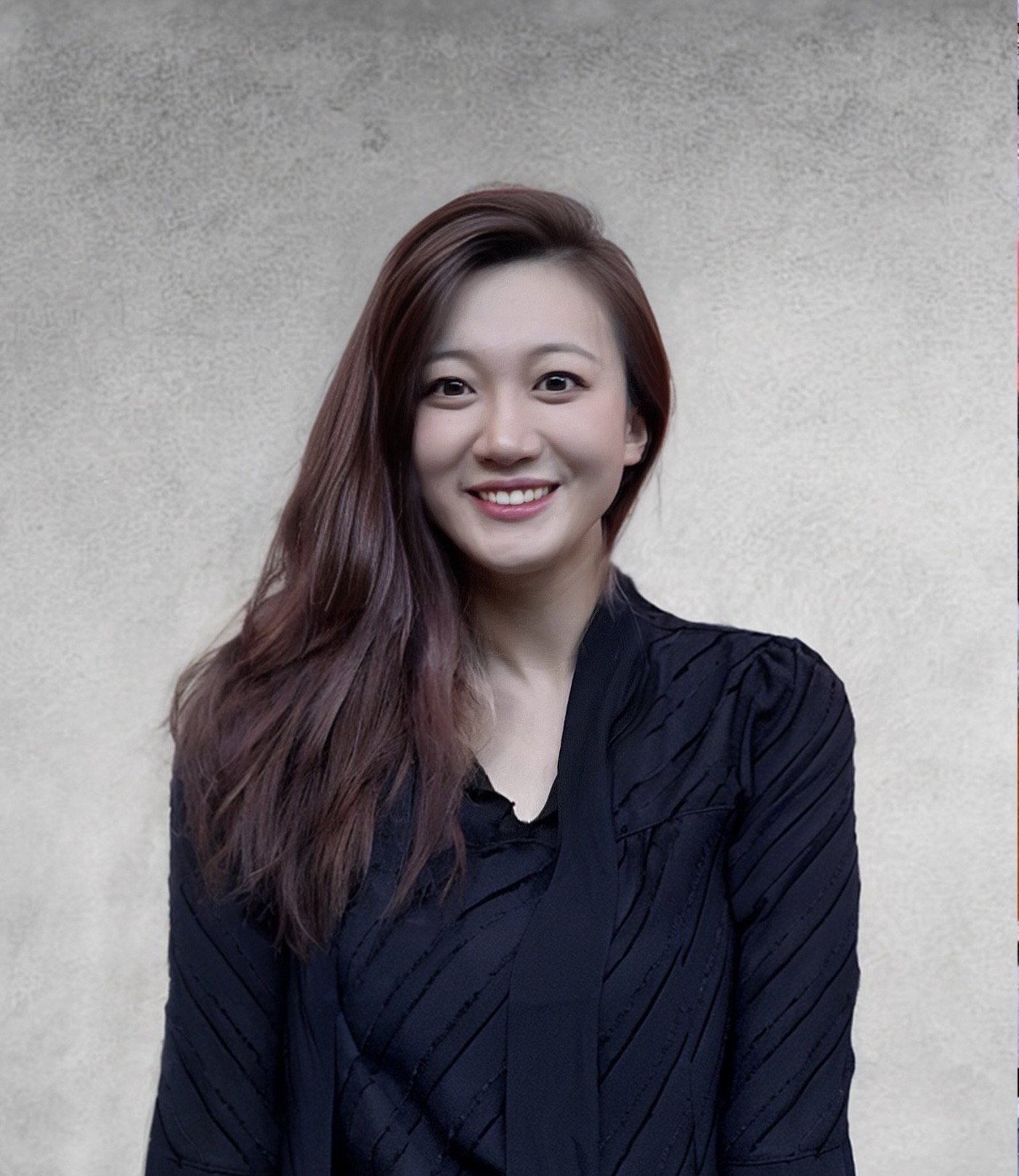
Qiaoning Carol Zhang serves as Assistant Professor of Human Systems Engineering within The Polytechnic School at Arizona State University's Ira A. Fulton Schools of Engineering. Her research investigates the critical intersection of human perception, social contexts, and emerging technologies including artificial intelligence, robotics, and automated vehicles, with emphasis on creating intuitive, user-friendly, and inclusive systems. Her academic foundation includes: Ph.D. in Information, University of Michigan (2023) M.S. in Industrial and Operations Engineering, University of Michigan (2018) B.S. in Industrial Engineering, Hunan University (2016) Dr. Zhang's research program centers on understanding how individual differences and social dynamics shape technology interactions. Key focus areas include Human-AI Collaboration , Human-Robot Interaction , Human Factors in Automated Vehicles , and User Experience Design . Her work employs interdisciplinary methodologies to ensure technology adapts to diverse user needs across complex socio-technical environments, particularly in transportation and healthcare robotics. Analysis of her 15 most recent publications (2021-2025) reveals dominant themes in trust dynamics within automated vehicles, with significant attention to explainable AI interfaces. Research consistently examines how voice characteristics (gender, similarity), explanation modalities, and individual differences (age, personality) impact cognitive and affective trust. Recent work extends to healthcare robotics for elderly populations using Kano model analysis to identify critical user requirements. No scientific awards are documented in the provided materials. Dr. Zhang actively recruits Ph.D. candidates and undergraduate/master's researchers with backgrounds in human-computer interaction, data science, and interdisciplinary fields (design, computer science, cognitive science). She emphasizes opportunities in transportation technology, healthcare robotics, AI, and UX research/design, requiring applicants to submit CVs, research statements, and representative work samples. While specific grants aren't detailed, her research scope indicates substantial funding in human factors and emerging technology domains. Her research team focuses on developing empathetic technology through projects examining trust calibration in automated vehicles and healthcare robot design for older adults. Current initiatives include voice interface optimization for diverse user groups and Kano model applications in home healthcare robotics, aiming to bridge technical capabilities with human-centered design principles.
Jim Luedtke is a Professor in the Department of Industrial and Systems Engineering at the University of Wisconsin-Madison. His research focuses on operations research, integer programming, and stochastic optimization methods for solving discrete and uncertain decision problems. Educational Background: BS in Industrial Engineering from University of Wisconsin-Madison MS in Operations Research from Georgia Institute of Technology PhD in Industrial and Systems Engineering from Georgia Institute of Technology Postdoctoral Research at IBM T.J. Watson Research Center His work spans applications in power systems optimization, healthcare analytics, and network design, with particular emphasis on developing cutting-edge algorithms for chance-constrained and multistage stochastic programming problems. Recent publications demonstrate strong focus on Benders decomposition techniques, Lagrangian dual methods, and distributionally robust optimization frameworks. Scientific Awards: NSF CAREER Award (2010) for "Risk Management via Stochastic Programming: Models, Computation, and Applications"
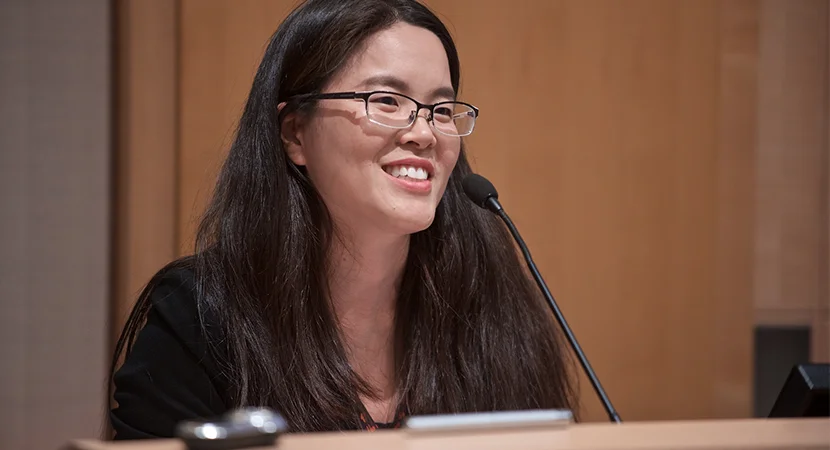
Su Ryon Shinمشاهده پروفایل
استادیار
- Bioengineering
- Tissue Engineering
- 3D Bioprinting
- +۷ مورد دیگر
Dr. Su Ryon Shin is an Assistant Professor in the Division of Engineering in Medicine at Harvard Medical School and Brigham and Women's Hospital (BWH) in Cambridge, MA. She leads an active research laboratory focused on bioengineering, tissue engineering, and regenerative medicine, with particular expertise in 3D bioprinting, biomaterials, and organ-on-a-chip technology. Her research interests span biohybrid robotics, decellularized extracellular matrix, stem cell-based tissue engineering, and volumetric muscle regeneration . Dr. Shin's work integrates advanced biomaterials with cellular systems to create innovative solutions for tissue regeneration and disease modeling. She has pioneered approaches using human stem cell-derived materials for volumetric tissue regeneration and developed biohybrid neuromuscular robots powered by living cardiac muscle cells. Her publication record demonstrates consistent productivity with over 180 publications, including numerous first/senior author papers in high-impact journals like Science Robotics, Advanced Materials, and Nature Reviews Bioengineering . Her work shows a clear progression from fundamental biomaterials development to increasingly complex tissue engineering applications and translational research. Dr. Shin has received significant recognition including being named a 2025 BWH Health & Technology Innovation Awardee , Highly Cited Researcher 2024 by Web of Science, and multiple Stepping Strong Innovator Awards (2015, 2018, 2020). Her research has been featured in Nature Reviews Bioengineering for breakthrough work on biohybrid robots. She actively mentors students and postdocs, with former lab members accepted to prestigious programs like MIT's PhD program in Chemical Engineering. Her collaborative approach is evident through numerous interdisciplinary projects with researchers across Harvard Medical School, BWH, and international institutions.
Christian Coester is an Associate Professor of Computer Science at the University of Oxford and a Tutorial Fellow at St Anne's College. His research focuses on theoretical computer science, particularly in the design and analysis of algorithms for problems involving uncertainty and incomplete information. His primary research areas include: Online algorithms, with groundbreaking work on the k-server problem (including refuting the randomized k-server conjecture, which earned the STOC 2023 Best Paper Award) Learning-augmented algorithms (algorithms with predictions) that leverage machine learning predictions while maintaining robustness guarantees Fundamental problems such as the k-taxi problem, metrical task systems, and online shortest paths Coester's theoretical work aims to develop algorithms with provable performance guarantees, particularly focusing on competitive ratios that measure worst-case performance against optimal offline solutions. His research often addresses problems that are 'simple to state and hard to solve,' leading to techniques with broad applicability across theoretical computer science. His publications span top venues including STOC, FOCS, SODA, and ICML, showing consistent contributions to both classical online algorithms and the emerging field of learning-augmented algorithms. The publications reveal a strong focus on metric spaces, competitive analysis, and the integration of prediction models into traditional algorithmic frameworks. Coester has received significant recognition including the STOC 2023 Best Paper Award and a substantial ERC Starting Grant (EUR 1.5M) for 'Challenges in Competitive Online Optimisation' (2025-2029). He actively supervises PhD students and welcomes inquiries from mathematically skilled candidates interested in theoretical computer science.
Muhammad Ali Gulzar is an Assistant Professor in the Computer Science Department at Virginia Tech and an Amazon Scholar at Amazon Web Services. His research focuses on improving developer productivity through automated debugging and testing for applications in emerging domains, including data-intensive software such as dataflow programs, ML/AI applications, and computational notebooks. Education Ph.D. in Computer Science from University of California, Los Angeles (Google Ph.D. Fellow 2017-2020) Research Interests Gulzar's research spans three primary areas: (1) automated tracking-code localization techniques in web applications, (2) re-engineering testing and debugging for data-intensive applications, and (3) advancing current testing and debugging practices in Federated Learning Applications. His work addresses the challenges of debugging in complex systems where traditional approaches fail due to the scale and distributed nature of modern applications. His research has significant implications for improving software quality, developer productivity, and accessibility in web applications. Research Trends Recent publications demonstrate a strong focus on debugging and testing challenges in emerging application domains. His work bridges traditional software engineering with machine learning, data-intensive systems, and web technologies. Notably, he has made significant contributions to Federated Learning debugging (FedDebug), accessibility challenges in ad-driven web applications, and semantic caching for Large Language Models. His approach often combines novel algorithmic insights with practical implementations that address real-world challenges in software development and maintenance. Scientific Awards Google Ph.D. Fellow (2017-2020) $1.1 million NSF award for Federated Learning research ACM CCS 2024 Distinguished Artifact Award Advising and Grants Gulzar leads a productive research group with multiple students contributing to publications in top-tier venues. His NSF-funded research on Federated Learning demonstrates his ability to secure competitive funding for innovative projects. His advising style appears to emphasize practical impact alongside theoretical contributions, with students often taking lead roles in publications. Current research directions include debugging techniques for Large Language Models, accessibility challenges in modern web applications, and novel testing approaches for distributed data processing systems.
Jason Yiمشاهده پروفایل
استادیار
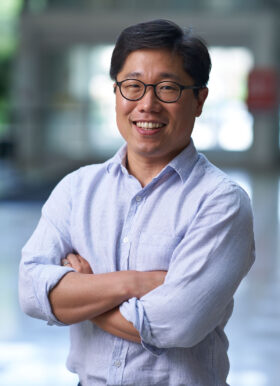
Dr. Jason Yi is an Assistant Professor of Neuroscience at Washington University School of Medicine (WashU Medicine). His research focuses on understanding the molecular pathways that shape nervous system development and function, with particular emphasis on autism spectrum disorders (ASD). He leads the Yi Lab, which investigates the role of the ubiquitin ligase UBE3A in the brain and its implications for neurodevelopmental disorders. Dr. Yi received his BS in Biochemistry and Molecular Biology from Dickinson College in 2001 and his PhD in Pharmacology from Duke University in 2009. His laboratory is broadly interested in the molecular pathways that shape nervous system development and function, with the ultimate goal of understanding how dysfunction in these pathways contributes to disease. The current focus is on autism spectrum disorders (ASD), using genetic information from human patients to guide in vitro and in vivo experiments employing biochemical, genetic manipulation, cell biological, and microscopy techniques. Dr. Yi's research has significant clinical implications, particularly in understanding how UBE3A dysfunction relates to both Angelman syndrome (caused by lack of UBE3A activity) and autism (caused by excessive UBE3A activity). His lab discovered that a single phosphorylation event in UBE3A turns off its ubiquitin ligase activity, and that mutations in this site are linked to autism. This work bridges disease genetics with a mechanistic understanding of ASD neurobiology and aims to define developmental timepoints for ASD onset. Dr. Yi's research has been recognized with numerous prestigious awards: Ruth K. Broad Biomedical Research Foundation Predoctoral Fellowship (2006) F32 Kirschstein National Research Service Award (2011) Christina Castellana Postdoctoral Fellowship (2011-2014) The University of North Carolina Postdoctoral Award for Research Excellence (2015) Bridge to Independence Award, The Simons Foundation (2017) NARSAD Young Investigator Award, Brain and Behavior Research Foundation (2018) Whitehall Foundation Research Grant (2018) Alfred P. Sloan Foundation Research Fellowship (2019) Dr. Yi's research program is supported by significant grant funding from organizations including The Simons Foundation, Brain and Behavior Research Foundation, and the Whitehall Foundation. His work bridges basic molecular neuroscience with clinical implications for neurodevelopmental disorders, particularly autism spectrum disorders. Through his research, Dr. Yi is contributing to a deeper understanding of the molecular mechanisms underlying ASD, which may ultimately lead to new therapeutic approaches and interventions. The Yi Lab maintains a collaborative research environment focused on cutting-edge neuroscience techniques. The lab combines molecular, cellular, and genetic approaches to study UBE3A function and its role in neurodevelopment. Their work utilizes patient-derived genetic information to guide experimental approaches, ensuring clinical relevance to autism spectrum disorders. Dr. Yi is also actively involved in mentoring graduate students and postdoctoral fellows, contributing to the training of the next generation of neuroscientists.
Philipp Schlatter is a Professor in the Department of Mechanics at KTH Royal Institute of Technology. His research focuses on fluid mechanics, turbulence, and computational fluid dynamics (CFD), with expertise in high-performance computing and direct numerical simulations (DNS). He leads projects involving scalable CFD frameworks like Neko and Nek5000, and investigates turbulent boundary layers, flow control, and coherent flow structures. His work includes experimental and numerical studies of wing profiles, rotating systems, and transition dynamics. Schlatter teaches courses on computational fluid dynamics and turbulence, emphasizing both theoretical and practical aspects of fluid mechanics. Key research interests include developing numerical methods for high-fidelity simulations, understanding turbulence mechanisms, and optimizing flow control strategies. His contributions span aerodynamics, heat transfer, and the application of machine learning to fluid dynamics problems. Schlatter collaborates extensively on interdisciplinary projects, leveraging advanced computing resources to address complex fluid flow phenomena. Publications highlight advancements in DNS frameworks, Bayesian optimization for flow control, and analysis of turbulent structures in pipe and boundary layer flows. His research also addresses challenges in measurement techniques and uncertainty quantification in CFD simulations.
Mikko Kurimo is a Full Professor at Aalto University's Department of Information and Communications Engineering, School of Electrical Engineering. He earned his M.Sc., Lic.Tech., and D.Sc.(Tech.) from Helsinki University of Technology (1992, 1994, 1997) and pioneered neural networks for automatic speech recognition (ASR) in his PhD thesis. After research roles at IDIAP (Swiss AI center) and visiting positions at University of Colorado, Edinburgh, SRI, ICSI, and Nitech, he leads Aalto's ASR group since 2000. His work focuses on unsupervised subword modeling for morphologically complex languages (Finnish, Estonian, Turkish, Arabic) and large speech foundation models. PhD in Neural ASR (Helsinki University of Technology, 1997) Research Scientist at IDIAP (Switzerland) Visiting Fellow at University of Colorado, Edinburgh, SRI, ICSI, Nitech Head of Aalto ASR Group (2000-present) His research spans deep learning for ASR, spoken language modeling , and low-resource language solutions . Recent work explores continued pre-training of self-supervised models, multimodal emotion recognition, and pronunciation assessment using LLMs. He led the winning team in the 2017 Multi-Genre Broadcast challenge and secured competitive funding in Tekes Challenge Finland and EC's H2020-ICT-2017. Key article trends include: Advancements in children's speech recognition and dysarthric speech processing Integration of generative AI for language learning feedback Specialization in low-resource Uralic languages (Finnish, Northern Sámi) Development of robust ASR systems for complex phonetic environments Scientific Awards ACM Multimedia 2023 Computational Paralinguistics Challenge Prize First place in MGB3 2017 Arabic ASR Challenge ISCA Best Student Paper Award (2011) Professeur Invité at Université de Saint-Etienne (2005-2006) Royal Society International Short Visit Fellowship (2004) Professor Kurimo leads the Speech Recognition Group at Aalto, collaborating with COIN (Centre of Excellence in Computational Inference) and AIRC (Adaptive Informatics Research Centre). His projects like CaptainA mobile app demonstrate practical applications of ASR in language education. He has supervised numerous publications with co-authors in domains spanning bandwidth extension, stuttering detection, and speech sound disorder assessment.
Thomas Berger is a Professor at the University of Hohenheim , affiliated with the Faculty of Agricultural Sciences and leading the Department of Economics of Land Use . He also contributes to the Computational Science Hub and Hohenheim Tropics initiatives. Focus Areas: Climate change adaptation, land-use modeling, biodiversity-productivity trade-offs, agent-based simulation, and machine learning in agricultural systems. Key Projects: Simulation frameworks for smallholder resilience in Ethiopia, bioeconomic modeling in the Amazon, and hybrid intelligence applications in European agricultural policy. Recent Publications: 2025 study on climate change effects on insecticide reduction in Germany, 2024 work on reconciling biodiversity with productivity via hybrid models, and 2023 methodological contributions to surrogate modeling and seasonal forecast integration. Research Trends: Interdisciplinary integration of climate science, agricultural economics, and computational modeling, with increasing emphasis on AI-assisted decision support systems and sustainability policy validation. Teaching & Outreach: Offers Agricultural Economics seminars and Hohenheim Tropics discussions, requiring advance email registration for office hours.
Joshua Ignatius is a Professor of Business Analytics at the Aston Business School, part of the College of Business and Social Sciences at Aston University. He focuses on research areas including supply chain analytics, prescriptive analytics, electronic commerce, and operations management. His work often addresses challenges such as information asymmetry in supply chains, user recommender systems, and logistics optimization. He is currently accepting PhD students in topics like Information Asymmetry in Supply Chains, User Recommender Systems, and Supply Chain Analytics. His research interests are centered on leveraging data-driven approaches to improve decision-making in supply chain and operational contexts. This includes studying disruption risk management, dynamic data modeling, and the integration of AI in cloud services. He also explores strategic decisions in e-commerce logistics, customer segmentation strategies, and environmental sustainability. Recent publications highlight his contributions to supply chain resilience, optimal security in cloud computing, and sustainable manufacturing processes. For instance, his 2025 work on supply chain network viability addresses disruption risks through dynamic data strategies. Another key area is the analysis of customer behavior in product upgrades, utilizing online review data to inform quality differentiation strategies. Dr. Ignatius has collaborated on projects involving platform information sharing, manufacturer encroachment, and logistics sourcing for e-commerce firms. His research often bridges theoretical frameworks with real-world applications, emphasizing practical solutions for operational challenges. He holds a strong record of supervising PhD students and guiding projects that combine academic rigor with industry relevance. His work frequently appears in leading journals such as the European Journal of Operational Research and Journal of Operations Management.

John F. Brady is the Chevron Professor of Chemical Engineering and Mechanical Engineering at the California Institute of Technology. He earned his B.S. from the University of Pennsylvania (1975), M.S. (1977) and Ph.D. (1981) from Stanford University, and has held academic roles at Caltech since 1985, including Executive Officer for Chemical Engineering (1993-99; 2013-19). His research focuses on fluid mechanics, transport processes, and complex/multiphase fluids. Elected to the National Academy of Sciences (20XX) Elected to the American Academy of Arts and Sciences (20XX) Brady's publications reveal expertise in active matter dynamics, microrheology, and non-equilibrium systems. His work spans fundamental fluid mechanics to applied biomedical device design, with a strong emphasis on computational modeling and experimental validation in colloidal and soft matter physics.
Fengling Hanمشاهده پروفایل
دانشیار
Associate Professor Fengling Han is affiliated with RMIT University's School of Computing Technologies in Melbourne, Australia. He holds the rank of Associate Professor since January 2022. His research focuses on complex networks, industrial electronics, AI/machine learning, and network security. Notable contributions include steganography frameworks for healthcare data, sliding mode control for energy systems, and blockchain applications in surveillance and voting systems. His work spans interdisciplinary areas such as renewable energy integration, battery management systems, and privacy-preserving recommendation systems. He has supervised numerous projects, including AI-driven chatbots, medical imaging watermarking, and peer-to-peer energy trading systems. Han's service roles include conference reviewing and committee memberships in international conferences like IEEE and ISMST. Research Interests: His expertise spans electrical engineering, control systems, and AI applications. Key areas include battery management, cybersecurity, and smart manufacturing. Recent projects emphasize Industry 5.0 technologies, blockchain for data integrity, and deep learning for steganalysis. Teaching and Supervision: Teaches network security, data communication, and IT infrastructure. Current supervision includes AI-powered business modeling, medical imaging tampering detection, and renewable energy sharing systems. Over 14 research projects are documented, reflecting his interdisciplinary impact. Awards and Recognition: While specific awards are not listed, his extensive publications (over 150 outputs) and high citation counts (e.g., 119 citations for the Industry 5.0 survey) highlight his scholarly contributions.
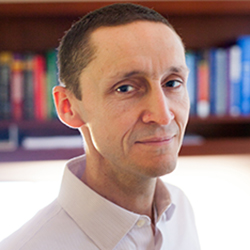
Lincoln J. Lauhon is a Professor of Materials Science and Engineering at Northwestern University. His research focuses on nanoscale structure-property relationships in low-dimensional materials, emphasizing synthesis, characterization, and device applications. He leads the Lauhon Research Group, which explores nanowires, 2D semiconductors, and heterostructures for quantum computing, high-power electronics, and energy conversion. Lauhon holds significant recognition including the Camille Dreyfus Teacher-Scholar Award (2008) and National Science Foundation CAREER Award (2005). His work bridges fundamental materials science with practical technologies through advanced microscopy and modeling techniques. Education: Postdoc in Chemistry at Harvard University, Ph.D. in Physics from Cornell University, and B.S. in Physics (Honors) from the University of Michigan. Research interests span nanowire synthesis, 3D nanotomography, scanning probe microscopy, and computational modeling. Current projects include III-As-Sb nanowire networks for quantum computing, GaN diodes for power electronics, and ferroelectric 2D materials. Lauhon's lab emphasizes collaboration across disciplines, with contributions to high-impact journals like Science Advances and Nano Letters . Awards highlight his dual excellence in teaching and research, including the Teacher of the Year award (2006). Professional service includes leadership roles in the Materials Research Society and organizing conferences on electronic materials. His team's innovations include novel nanomaterial synthesis methods and device architectures, with applications in computing, energy, and optoelectronics. The group actively engages in graduate and undergraduate training, fostering future leaders in nanotechnology.
فقط ۷۵۰ نتیجه اول نمایش داده میشود. برای رسیدن به نتایج دقیقتر، جستوجو را با فیلترها محدودتر کنید.