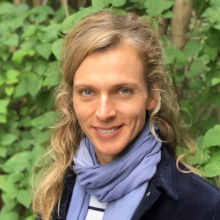
Timothy D. O'Connor is an Associate Professor in the Department of Medicine at the University of Maryland School of Medicine, serving as Co-Director for the Program in Health Equity and Population Health (HEPH). His research focuses on the evolutionary and population genetic influences on disease and phenotypic diversity, integrating evolutionary theory with large genomic datasets. He leads the O’Connor Evolutionary Genomics Group, emphasizing collaboration and multi-omics approaches. Education: B.S. Bioinformatics, Brigham Young University (2001-2007) Ph.D. Evolutionary Genetics, University of Cambridge (2007-2011), supported by the Gates Cambridge Scholarship Senior Research Fellow, University of Washington (2010-2013) Research Interests: Dr. O’Connor’s work spans human evolutionary genetics, computational biology, and genetic epidemiology. His lab develops novel algorithms to analyze large genomic datasets, with a focus on New World populations, including studies of Peruvian genomic dynamics, malaria parasite migration, and the evolutionary origins of phenotypic diversity. He emphasizes interdisciplinary collaboration and the application of evolutionary principles to modern biomedical challenges. Grants & Awards: NIH/NIAID R01 (2020-2025): $499,998 for malaria genomic migration studies in Cambodia/Thailand NIH/NIGMS R35 (2019-2024): $299,713 for evolutionary multi-omics research 2021 Faculty Mentoring Award 2019 Teacher of the Year Award Labs & Collaborations: His lab is part of the TOPMed Program, co-leading the Population Genetics Working Group. He also collaborates on projects like the Peruvian Genome Project and the Gynecological Cancer Center of Excellence. His work bridges academia and clinical practice, addressing disparities in genomic medicine through initiatives like the PENGUIN model for patient engagement.
Kaitlyn Crawford is an Associate Professor of Materials Science and Engineering at the University of Central Florida, with a secondary appointment in Chemistry. She directs the Functional Materials and Sensors Lab, focusing on sustainable soft materials for flexible electronics and biomedical applications. Her research integrates polymer science and engineering to develop wearable sensors for health monitoring, biodegradable materials to reduce e-waste, and natural polymer composites. Current projects include a $1.5M DHS-funded wearable for firefighter heat-stress monitoring and NASA-funded space applications. Her recent publications emphasize sustainable polymers, bionic devices, and AI-driven diagnostics. Awards include the 2024 ACS PMSE Early Investigator Award and a Jewish National Fund fellowship. She leads multiple graduate students in biomedical and materials research. Awards: 2024 ACS PMSE Early Investigator Award Faculty Fellowship Program in Israel, Jewish National Fund Faculty Excellence Honoree, Women’s History Month (UCF)
Deborah McGuinness is a Professor of Computer Science, Cognitive Science, and Industrial and Systems Engineering at Rensselaer Polytechnic Institute (RPI), holding the Tetherless World Senior Constellation Chair. She leads research in semantic web technologies, ontology engineering, explainable AI, and applications in health and environmental informatics. Her work emphasizes semantic technologies to enhance human-machine collaboration through knowledge representation and reasoning. Education: B.S./B.A. (Computer Science & Mathematics, Duke University, 1980), M.S. (Computer Science, UC Berkeley, 1981), Ph.D. (Knowledge Representation, Rutgers University, 1997). Research interests include: ontology creation/evolution, commonsense AI, machine learning fairness, clinical decision support systems, knowledge graphs for scientific data, and policy modeling. Recent work focuses on AI explainability, semantic data dictionaries for public health surveys, and leveraging knowledge graphs for personalized health recommendations. Her publications span semantic web standards, AI commonsense benchmarks, clinical informatics applications, and policy frameworks. Notable projects include the Explanation Ontology for user-centered AI and the CHEAR Data Repository for environmental health research. McGuinness has pioneered semantic technologies for data integration across diverse domains like nanomaterials science and stroke care policy analysis.
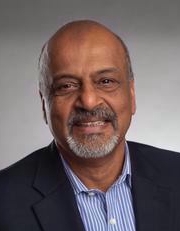
Dr. Raj M. Manglik is a Professor of Mechanical & Materials Engineering and Director of the Thermal-Fluids & Thermal Processing Laboratory at the University of Cincinnati. His research focuses on interfacial phenomena, molecular dynamics, heat transfer enhancement, and thermal systems design. He holds a Ph.D. from Rensselaer Polytechnic Institute, an M.S. from Iowa State University, and a B.Tech. from Indian Institute of Technology Madras. Dr. Manglik has secured over $9.5M in grants, including recent projects on advanced dry-cooling systems, 3D printed ceramic heat exchangers, and thermal energy storage. His work spans experimental and computational studies of heat exchangers, non-Newtonian fluids, and phase-change materials. He has authored numerous peer-reviewed publications and co-edited books such as Principles of Heat Transfer . Awards include the ASME Heat Transfer Memorial Award (2016), ASME James Harry Potter Gold Medal (2018), and multiple university teaching and research accolades. His lab explores topics like boiling heat transfer, drop impact dynamics, and energy-water nexus solutions in power plants.
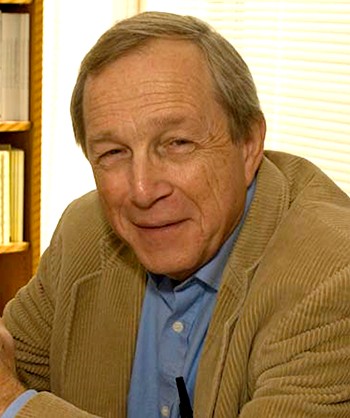
James E. Anderson serves as the William B. Neenan, S.J. Millennium Professor in the Department of Economics at Boston College. His research centers on international trade theory, with particular expertise in gravity models, trade policy analysis, and economic history. Anderson maintains an active research program with recent publications addressing contemporary trade challenges including the China shock and zero trade flows. His research interests focus on International Economics and Economic History , specializing in gravity model applications, trade policy diagnostics, and the interplay between institutions and trade patterns. Anderson's work bridges theoretical frameworks with empirical trade analysis, often developing novel methodologies for measuring trade restrictiveness and policy impacts. His influential 2003 paper "Gravity with Gravitas: A Solution to the Border Puzzle" (co-authored with Eric van Wincoop) revolutionized trade cost measurement. Anderson's publication trends reveal sustained contributions to trade theory since the 1990s, with recent work emphasizing non-parametric gravity approaches, export diversification dynamics, and institutional impacts on North-South trade. His research consistently addresses methodological challenges in trade modeling while providing policy-relevant insights for trade liberalization and agreement design. William B. Neenan, S.J. Millennium Professor (endowed chair) Anderson maintains an extensive research portfolio with over 30 working papers through Boston College's Economics Department. His work includes significant contributions to trade policy aggregation methods, tariff reform diagnostics, and the development of computable general equilibrium models for trade analysis. Anderson actively collaborates with leading economists including Yoto V. Yotov, J. Peter Neary, and Eric van Wincoop, and disseminates his research through RePEc, Google Scholar, and his personal website.
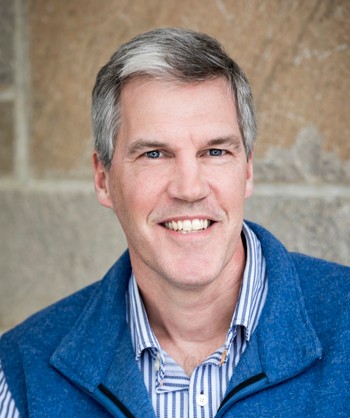
Michael Russell is a Professor in the Department of Measurement, Evaluation, Statistics & Assessment at Boston College's Lynch School of Education and Human Development. His expertise spans educational measurement, systemic racism in testing, and accessibility in assessment design. He holds a Ph.D. and M.Ed. from Boston College and a B.A. from Brown University. Russell leads research addressing racism in educational measurement, including his book Systemic Racism and Educational Measurement (2023), which critiques the influence of systemic racism on testing practices. His work emphasizes anti-racist methodologies, intersectionality, and equitable assessment design. Key research interests include innovative uses of computer-based technologies, large-scale assessment design, and Universal Design principles. Russell has published extensively on topics like differential item functioning, deficit narratives in quantitative research, and the social justice implications of testing. He collaborates on redesigning graduate programs to prepare scholars for anti-racist research. His courses include Foundations in Research Methodology and Assessment Programs . Russell's work bridges critical theory with practical assessment tools, advocating for equitable educational practices.
Ain A. Grooms serves as an Assistant Professor in the Educational Leadership and Policy Analysis Department at the University of Wisconsin-Madison School of Education. Her research centers on K-12 educational equity, specifically examining access and outcomes for students of color and traditionally disenfranchised communities through the critical lens of race and place. She investigates how educational policies impact student achievement and leadership practices across school, district, and state levels. Her primary research domains include: Educational equity frameworks and implementation Race and place intersections in policy analysis Retention strategies for educators of color Equity-focused principal pipeline development Computer science education policy implementation Chronic absenteeism in marginalized communities Analysis of Dr. Grooms' recent publications reveals a consistent focus on dismantling systemic barriers through leadership development and policy innovation. Her work examines how educational leaders navigate racialized contexts, with particular attention to computer science equity, pandemic response adaptations, and the sustainability of equity-focused initiatives. Publications span high-impact journals including Educational Policy and Urban Education, demonstrating rigorous mixed-methods approaches to educational justice. Her scholarship connects theoretical frameworks with practical leadership applications, emphasizing community-engaged solutions to persistent educational inequities. Current projects investigate institutional responses to demographic shifts and the development of counterspaces for marginalized students and educators.
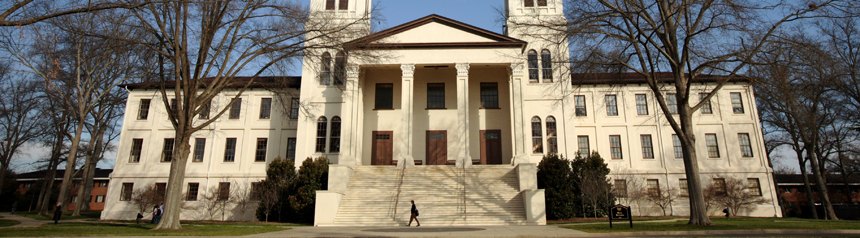
Dr. Katherine Mickley Steinmetz is a Professor in the Department of Psychology at Wofford College, where she directs the Neuroscience of Cognition and Emotion Lab. Her office is located in the R. Milliken Science Center 231D, and she can be reached at (864) 597-4643 or steinmetzkr@wofford.edu. She has established herself as a prominent researcher in emotional memory and cognition through her extensive publication record and laboratory work. Dr. Steinmetz earned her undergraduate degree in Psychology and Neuroscience from Allegheny College, where she participated in the Neuroscience in the Humanities program and completed a thesis on electrophysiological changes caused by learning words in emotional contexts. She then pursued graduate studies at Boston College under Dr. Elizabeth Kensinger, using neuroimaging (fMRI), eye-tracking, electrophysiological, and behavioral techniques to investigate neural mechanisms influencing memory for emotional events. Following this, she completed a post-doctoral fellowship focusing on stress and sleep effects on memory at Boston College and Notre Dame. Her research program focuses on understanding the neuroscience behind how emotional processing influences attention and memory. Dr. Steinmetz combines behavioral testing, event-related potential (ERP) recordings, and salivary hormonal assays to examine both cognitive and neural processes guiding attention toward and memory for emotional information. She is particularly interested in how factors like stress and anxiety modulate these processes. Her work spans multiple domains including emotional memory enhancement, cross-cultural differences in memory, physiological correlates of emotional processing, and the interaction between sleep, stress hormones, and memory consolidation. Analysis of Dr. Steinmetz's publication history reveals consistent focus on emotional memory mechanisms across various contexts. Her research demonstrates how emotional content differentially affects item versus background memory, how stress hormones like cortisol modulate memory processes, and how attentional mechanisms interact with emotional processing. Her methodological approach integrates multiple techniques including ERP, eye-tracking, physiological monitoring, and behavioral paradigms to provide comprehensive insights into emotion-cognition interactions. Dr. Steinmetz has authored numerous peer-reviewed publications in prominent journals including Journal of American College Health, Frontiers in Physiology, Cognition and Emotion, Memory, and Affective Science. She has also contributed book chapters and co-authored the book "How Does Emotion Affect Attention & Memory?" (2010) with Elizabeth A. Kensinger, which reviews behavioral and neuroimaging evidence on emotion's effects on memory and attention in individuals with and without PTSD. As an educator, Dr. Steinmetz has focused on developing effective undergraduate research experiences in cognitive neuroscience. Her work in this area addresses the challenges of preparing students for careers in this interdisciplinary field while maintaining sustainable faculty development. She appears to be actively involved in mentoring undergraduate researchers through her laboratory work at Wofford College. Dr. Steinmetz's Neuroscience of Cognition and Emotion Lab serves as the primary research hub for her investigations. The lab employs multiple methodological approaches to study emotion-cognition interactions, providing students with hands-on research experience in cognitive neuroscience techniques. Her research program demonstrates continuity from her graduate and postdoctoral training while developing its own distinct focus on the interplay between emotional processing, attention, and memory.
Paul Nuyujukian serves as an Assistant Professor of Bioengineering and Neurosurgery, with courtesy appointment in Electrical Engineering at Stanford University. He is a Faculty Scholar of the Wu Tsai Neurosciences Institute, directing the Brain Interfacing Laboratory where his team develops neural interface technologies for clinical applications in stroke and epilepsy. Education: MD, Stanford University (2014) PhD in Bioengineering, Stanford University (2012) BS, UCLA (2006) Dr. Nuyujukian's research integrates motor systems neuroscience with neuroengineering to decode brain activity during movement and recovery from injury. His laboratory pioneers brain-machine interface (BMI) platforms that translate neural signals into communication and control systems, with particular emphasis on intracranial EEG recording and real-time neural decoding. Current work focuses on developing clinically viable BMI solutions for neurological conditions through both preclinical models and human trials, advancing our understanding of neural population dynamics in health and disease. Recent publications reveal strong trends in intracranial EEG acquisition systems, seizure detection algorithms using information theory, and closed-loop BMI applications for ambulatory neuroscience. His work bridges fundamental neuroscience with clinical translation, particularly in epilepsy monitoring, chronic pain management, and neural prosthetics for paralysis. A notable emphasis exists on creating scalable, minimally invasive recording platforms that reduce clinical burden while maintaining high-fidelity neural data. Scientific Awards: No specific awards listed in provided materials As director of the Brain Interfacing Laboratory, Dr. Nuyujukian mentors students and collaborators in neural engineering research while securing grant funding for BMI development. His group maintains active collaborations with Stanford's Department of Neurosurgery and Neurology for clinical translation, with current projects including real-time decision-state decoding and personalized network mapping for pain management. The laboratory operates advanced facilities for both animal and human neural recording, emphasizing seamless integration of engineering innovation with clinical neuroscience. The Brain Interfacing Laboratory comprises multidisciplinary scientists and engineers developing next-generation neural interfaces. Current initiatives include the LiCoRICE platform for ambulatory neuroscience, seizure detection systems using compression-enabled entropy estimation, and ketamine's effects on hippocampal connectivity. The team actively participates in clinical trials for BMI applications in stroke rehabilitation and epilepsy, with strong partnerships across Stanford's medical and engineering schools to accelerate technology translation.
Christopher Thomas Ryan is an Associate Professor in the Operations and Logistics Division at the UBC Sauder School of Business. He holds a PhD and BA from UBC in Management Science and Mathematics, respectively. His research spans optimization theory, game theory, theoretical economics, video game design, and pedagogy for business education. He has held positions at the University of Chicago Booth School of Business and is affiliated with the Colibri Learning Foundation. Education: BA (Mathematics) and PhD (Management Science) from UBC; BA (Sociology and Economics) from University of Guelph. He has authored numerous textbooks and case studies, including works on research careers, operations management, and teaching methodologies. His work integrates human-centric approaches to operations and education systems. Research Interests include small business operations, education operations, theoretical economics, and the design of video games. He has published in top journals like Management Science, Econometrica, and Mathematical Programming. His grants include SSHRC and NSERC awards. Ryan advises students across multiple institutions and has mentored prominent faculty in marketing, operations, and MIS fields. Teaching focuses on core operations management for MBA programs and pedagogical innovation. He has developed cases on AI in education, early childhood development, and small business sustainability. Ryan’s work bridges academic research with practical applications in business and education sectors.
Kathleen L. Komar is a Distinguished Professor in the Department of Comparative Literature at the University of California, Los Angeles (UCLA), part of the UCLA College. She holds a Ph.D. in Comparative Literature from Princeton University (1977). Her primary language expertise includes German, reflecting her focus on German literary traditions. Professor Komar’s research spans feminist theory, modernist literature, and post-symbolist poetry, with significant contributions to the study of Rainer Maria Rilke, Hermann Broch, and Robert Musil. She has authored and edited works analyzing mythological reinterpretation, gender dynamics in literature, and the intersection of digital humanities with traditional literary studies. Her academic career includes leadership roles such as serving as ACLA President, where she championed interdisciplinary approaches and the evolution of comparative literature as a discipline. Komar’s scholarship bridges historical analysis and contemporary critical theory, addressing themes like utopianism, postcommunism, and the role of silence in postwar discourses. She has also explored pedagogical innovations in teaching world literature and the application of predictive analytics in educational technology. Notable research areas include: Reinterpretation of classical myths (e.g., Klytemnestra) Modernist aesthetic theory in German literature Electronic poetry and digital textuality Feminist explorations of literary space Comparative studies of European and American literary traditions Her publications reflect a commitment to interdisciplinary dialogue, spanning edited companions, critical essays, and theoretical interventions in both print and digital formats. Komar’s work frequently emphasizes the transformative potential of literature to interrogate cultural, political, and gendered structures.
Stephanie Posthumus serves as Associate Professor at McGill University, specializing in contemporary French and Québécois literature through the lens of ecocriticism, animal studies, and plant studies. Her research interrogates representations of the non-human across European literary traditions while examining cultural specificities in environmental discourse. Professor Posthumus develops French-specific ecocritical frameworks by engaging with thinkers like Guattari ( écosophie ), Latour ( nature-culture ), and Serres ( contrat naturel ), arguing against universal ecocritical models. Her work spans three interconnected domains: constructing French ecocriticism through monographs like French Écocritique (2017); analyzing animal representations via co-edited volumes including French Thinking about Animals (2015); and pioneering plant studies in Québécois contexts through recent works like Entre les feuilles (2024). She further bridges digital and environmental humanities through SSHRC-funded platform development. Her publication trajectory (2016-2024) reveals intensifying focus on vegetal agency and digital methodologies within ecocritical practice. Articles consistently address cultural differences in environmental representation, with increasing attention to sensory plant studies and posthumanist reconfigurations of human/non-human boundaries across French and Québécois literary landscapes. Professor Posthumus leads the Digital Environmental Humanities initiative, which functions as a research hub featuring digital exhibits, analytical tools like topic modeling, and pedagogical resources. This SSHRC Connections grant project (2013) exemplifies her commitment to interdisciplinary knowledge mobilization through digital innovation. She currently directs collaborative research networks connecting Canadian environmental humanities scholars with digital humanities practitioners, fostering experimental approaches to ecological representation through multimodal projects examining plant intelligence and sensory environmental engagement.
Geoffrey Thün is a Professor of Architecture at the Taubman College of Architecture and Urban Planning at the University of Michigan . He is a founding partner of the research-based practice RVTR and serves as Associate Vice President for Research: Social Sciences, Humanities, and the Arts at the University of Michigan Office of Research. His work spans scales from regional territories to high-performance building envelopes, integrating complex systems thinking to address societal, environmental, and cultural challenges. Master of Urban Design, University of Toronto Bachelor of Architecture, University of Waterloo Thün’s research focuses on responsive and kinetic envelopes , sustainable urbanism , and smart-city technologies , often leveraging complex systems approaches to mediate energy, atmosphere, and social space. His funded projects with institutions like the U.S. Department of Energy and Ford Motor Company emphasize transdisciplinary solutions to the Food, Energy, Water (FEW) Nexus and climate futures . Recent publications highlight his contributions to topological design optimization and robotic architecture , reflecting trends in digital fabrication, additive manufacturing, and energy-efficient building systems. RVTR’s work has been exhibited internationally, including at the Biennale Architettura in Venice (2016) and Yale University. Scientific Awards R&D Award from Architecture Magazine (2010, 2016) Best Design as Research Article (2013) Architizer A+ Jury Award (2013) ACSA Faculty Design Award (2012, 2014) RAIC Award of Excellence (2011) Canadian Prix de Rome (2009) Young Architect’s Forum Award (2008) Thün co-directs the Urban Collaboratory and previously served as Associate Dean for Research at Taubman College (2014-2021). His funded work includes grants from the National Science Foundation and collaborations with industry leaders like Guardian Industries and Ford Motor Company.
Professor Ashley Ward is a Professor of Animal Behaviour at the University of Sydney's School of Life and Environmental Sciences. His research focuses on social behaviour, collective animal behaviour, and the ecology of fish, particularly in group-living species. He leads the Animal Behaviour Lab and has authored influential books like Sociality: The Behaviour of Group-Living Animals (2016) and Questions and Answers on Aquarium Fishes (2007–2008). His work integrates experimental and theoretical approaches to understand how animals make decisions in groups, navigate risks, and adapt to environmental challenges. Research interests include predator-prey dynamics, immune system effects on social behavior, and the role of social context in camouflage. Notable grants include 'Understanding animals through movement' (2018) and 'Advancing fauna conservation in post-fire landscapes' (2021). His recent studies explore collective decision-making, immune-challenge responses in fish, and the impact of environmental cues on shoaling behavior. Awards and recognitions are not explicitly listed, but his contributions to fish behavior research are widely cited. He advises on grants and collaborates internationally, with over 100 peer-reviewed articles and books. His lab emphasizes field and laboratory experiments, combining behavioral observations with computational modeling to uncover principles of collective behavior and social organization.
Professor Robert von Fay-Siebenburgen is a faculty member at the University of Sheffield, serving as Professor in the Department of Applied Mathematics and Head of the Solar Physics & Upper-Atmosphere Research Group (SPARG). His research focuses on space plasma physics, particularly solar atmospheric heating, MHD waves, and helioseismology. He holds a CSc (Physics) from the Hungarian Academy of Sciences and a PhD from K.U. Leuven, both with Summa cum laude honors. Affiliations: School of Mathematical and Physical Sciences, Department of Applied Mathematics, SPARG Education: 1997 CSc (Physics) with Summa cum laude, Hungarian Academy of Sciences 1996 PhD (Applied Maths) with Summa cum laude, K.U. Leuven 1991 M.A. in History, Eötvös University 1988 M.Sc. in Physics and Astronomy, Eötvös University Research Interests: Solar Physics, Space Weather, Computational Magnetohydrodynamics (CMHD), Helioseismology, Stability of MHD shear flows. His work bridges theoretical models with observational data from satellites like SOHO and TRACE. Notable projects include studying resonant MHD waves, nano-scale reconnection, and coronal seismology. Grants & Awards: Over 30 grants as PI/co-PI, including EU and UKSTC funding. Recipient of top prizes in Hungarian research conferences (1st and 2nd place in 1987). Member of prestigious societies like RAS, AAS, and IAU. Labs/Teams: Leads SPARG and co-leads the Solar Physics and Space Plasma Research Centre (SP2RC). Involved in international collaborations like WISER and ESA/NASA missions.