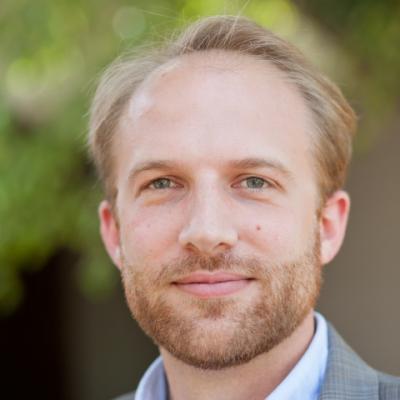
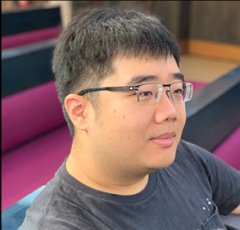
B. B. Cael is an interdisciplinary climate and ocean scientist affiliated with the Department of the Geophysical Sciences at the University of Chicago and the Climate Systems Engineering Initiative . His work integrates data analysis and theoretical models to investigate global-scale questions about Earth's carbon cycle and climate system. Cael's research interests span climate mitigation , climate sensitivity , climatic extremes , ocean biogeochemistry , plankton ecology , remote sensing , and paleoclimate . His publications focus on ocean carbon fluxes, climate feedbacks, and marine ecosystem dynamics, with recent work applying machine learning to oceanographic data. His academic journey includes a PhD from the MIT-WHOI Joint Program , a Simons Foundation Postdoctoral Fellowship at the University of Hawai’i at Manoa, and a Principal Scientist role at the UK's National Oceanography Centre. Current research at UChicago addresses both carbon dioxide removal and solar geoengineering strategies. Scientific Awards Simons Foundation Postdoctoral Research Fellow
Fatiha Idmhand is a Professor at the University of Poitiers , specializing in Contemporary Hispanic Literature and Digital Humanities. She leads the Archivos CRLA team and contributes to the Multilingualism, Translation, Creation Team . Her research examines creative processes under situational constraints (wars, exiles, imprisonments), focusing on cultural transfers and digital humanities methodologies. She is currently a researcher in residence at the Musée national Picasso Paris (2023-2024). PI of 10 projects (2013-2025), including Pablo Picasso en toutes lettres (2018-present) and Archivos 3.0 (2019-2022) 2023: Deputy Coordinator, Consortium ARIANE (HumaNum) 2021-2023: President, Humanistica association Her digital humanities work integrates computer science with text analysis, developing tools like e-Man and CHispa for Hispanic manuscript digitization. She advocates for FAIR data principles in author corpus management. Major publications appear in Digital Humanities Quarterly , La Gazette des Archives , and Word and Text . She actively participates in international conferences like DH and Humanistica , with recent presentations on AI-humanities collaboration.
Sean Lawson is a Professor in the Communication department at the University of Utah, where he has been employed since July 2023. Previously, he served as an Associate Professor at the same institution from July 2015 to June 2023. He was also an Adjunct Scholar at the Modern War Institute (United States Military Academy at West Point) from 2019 to 2020. PhD in Science & Technology Studies from Rensselaer Polytechnic Institute (2008) MA in Arab Studies from Georgetown University (2003) BA in History from California State University, Stanislaus (2000) Dr. Lawson's research centers on the intersections of science, technology, and security, with a focus on national security, military thought, and information/communication technologies (ICTs). His work explores how cyber-doom rhetoric, nonlinear science (chaos and complexity theories), and social media dynamics shape cybersecurity policies and conflict narratives. His publications include analyses of cyberwarfare metaphors, the influence industry, and drone journalism. He has co-authored works on UAVs, cybersecurity discourse, and the role of social media in social movements like Occupy Wall Street. Nonlinear Science and Warfare (2013) Cybersecurity Discourse in the United States (2019) Masspersonal Social Engineering (2024) Dr. Lawson has received awards such as the Simmons Fellow in History and Communication (2009), Faculty Fellow Award (2011), and Non-Resident Fellow status (2020). He teaches courses like "IT & Global Conflict" and "Great Science Books" and has been involved in projects examining drones, cybersecurity, and military imaginaries.
Emma Spiro is an Associate Professor at the University of Washington Information School, with adjunct appointments in the Department of Sociology and Human Centered Design & Engineering. She co-founded the Center for an Informed Public (CIP) and directs the Social Media Lab (SoMeLab) and Data Science and Analytics Lab (DataLab). Her research focuses on online communication, misinformation dynamics, and network structures in both digital and physical contexts. Dr. Spiro’s work explores social networks and computational social science, analyzing how misinformation spreads during crises and elections. Her research has been funded by the National Science Foundation and Army Research Office, and published in top journals like PNAS, Social Networks, and Information, Communication & Society. She holds a Ph.D. in Sociology from UC Irvine and dual B.A.s in Applied Mathematics and Science, Technology & Society from Pomona College. As a Data Science Fellow at UW’s eScience Institute, she bridges technical and social science methodologies to study information integrity. Her affiliations include the UW Center for Statistics & the Social Sciences (CSSS) and the Center for Studies in Demography & Ecology (CSDE). She actively collaborates across disciplines to address strategic misinformation through labs, institutes, and multi-institutional initiatives like the Disinformation Summer Institute.
David Clingingsmith is an Associate Professor in the Department of Economics at the Weatherhead School of Management, Case Western Reserve University, where he has been faculty since 2007. His research integrates economic theory with empirical analysis across diverse domains including automation, entrepreneurship, and social behavior. Education: PhD in Economics, Harvard University (2007) MA in Anthropology, University of Chicago (1998) BA, University of Toronto (1994) His research program explores the socioeconomic impacts of technological change, particularly how automation transforms manufacturing work and entrepreneurship. He employs mixed methodologies spanning causal inference econometrics, lab/field experiments, and qualitative analysis, with recent work developing AI techniques for analyzing interview corpora. Current projects examine job design in craft entrepreneurship and historical automation effects. Publication trends reveal strong focus on automation's economic consequences (2022-2024), pitch dynamics in entrepreneurship (2018-2023), and crisis policy responses (2020). His work consistently bridges economic history with contemporary issues, showing particular interest in behavioral mechanisms underlying status, consumption, and charitable behavior. Scientific Awards: Academy of Management Prize for Best Paper in Organizational Neuroscience (2021) Academy of Management Lewis-Progressive Fellowship (2016) Weatherhead School of Management Explorations Prize (2009) Dr. Clingingsmith serves as reviewer for top journals including Journal of Political Economy and Quarterly Journal of Economics, and participates in institutional governance through the Academic Integrity Board. While no specific grants are detailed in source materials, his research appears in leading outlets like Management Science and Experimental Economics. He also contributed COVID-19 policy analysis through Economic Policy Ideas for COVID-19 initiatives. He collaborates with interdisciplinary teams including healthcare economists (Helper, Shane) and development researchers (Khwaja, Kremer), and maintains an active ceramics practice at Brick Ceramic + Design studio since 2023.
Fausto Cattaneo is a Professor and Deputy Chair for Academic Affairs at the Department of Astronomy and Astrophysics, University of Chicago. He is affiliated with the FLASH Center for Computational Science and conducts research in computational astrophysics and solar physics. Dr. Cattaneo received his PhD from the University of Cambridge in 1984 and completed his undergraduate studies at Bristol University in 1979. His research focuses on computational modeling of fundamental astrophysical processes, particularly the generation of magnetic fields, transport of angular momentum in accretion discs, and energy transport by turbulent convection. His work primarily investigates magnetohydrodynamic phenomena in astrophysical contexts, with particular emphasis on dynamo theory, turbulence, and the magnetorotational instability that drives accretion in disks. His research combines theoretical analysis with advanced computational techniques to model complex plasma behaviors in space environments, addressing questions about magnetic field generation and transport mechanisms across various cosmic scales. Dr. Cattaneo's publication record demonstrates consistent focus on plasma astrophysics, magnetic helicities, dynamo action, and turbulence. His most recent work (2022) addresses research opportunities in plasma astrophysics, while his longstanding expertise in magnetorotational instability and MHD turbulence is evident throughout his publication history spanning several decades. As Deputy Chair for Academic Affairs, Dr. Cattaneo plays an important administrative role in his department while maintaining an active research program that continues to advance our understanding of astrophysical plasma processes. His work bridges theoretical astrophysics and computational methods, contributing significantly to our knowledge of fundamental processes governing cosmic magnetic fields and fluid dynamics.
Andreas Weber is an Associate Professor at the University of Twente's Digital Society Institute , specializing in the Knowledge, Transformation & Society (KiTeS) research group . His work examines the long-term historical and global relationship between Science, Technology, and Society , with particular focus on colonial histories of natural history, chemistry, and sustainability , as well as computational technologies for contextualizing digitized archives . He leads the HAICu project (2023–2029) on digital cultural heritage and coordinates STS PhD training for the Netherlands Graduate Research School (2019–2024). MA & PhD in History (2005 & 2012), Leiden University Assistant Professor (2017–2023), University of Twente Andreas' research integrates digital humanities with colonial science history , emphasizing global histories of minerals , digital humanism , and AI's societal context . His 15 most recent publications (2016–2025) explore topics like colonial bias in natural history collections , FAIR data implementation , and semantic annotation of handwritten archives , spanning disciplines from history of science to computer science and museum studies . He has received 7 scientific awards , including multiple Best Teacher Awards (2020–2023) and the IEEE eScience Best Poster Award (2018). Andreas supervises PhD and postdoctoral projects while engaging in media commentary on colonial heritage issues and co-organizing international conferences like Hydrogen Pasts and Futures (2024).
Ericka Johnson is a Professor and Deputy Prefect at Linköping University, working within Gender Studies in the Department of Thematic Studies. She is affiliated with the Center for Medical Humanities and Bioethics (CMBS), Bodies Hub, and the P6: Body, Knowledge, Subjectivity research collective. Her work bridges Science & Technology Studies, medical humanities, and gender studies, with a focus on how data representation intersects with AI systems and how technologies 'refract' invisible discourses to make them visible. Johnson's research program investigates how the world becomes data, exploring connections between ontologies, epistemologies, and AI. She employs feminist science studies frameworks to examine medical technologies and material-discursive practices around the body. Her metaphor of refraction—comparing how technologies reveal hidden discourses to how prisms refract light into visible spectra—has become influential in feminist technoscience research. She is particularly known for identifying 'intersectional hallucinations' in synthetic medical data, where AI systems generate data that misrepresents complex, overlapping identities. Her major projects include 'Social complexity and fairness in synthetic medical data' (funded by WASP-HS and Vinnova), which examines how machine learning-generated data can overrepresent 'standard' patients while underrepresenting minorities, and 'The Constant Torment' project exploring prostate anxiety and its relationship to masculinity, resulting in her book 'A Cultural Biography of the Prostate.' Her recent publications span critical data studies, human-robot interaction, and the sociotechnical dimensions of AI, consistently examining how technologies shape and are shaped by social, cultural, and gendered contexts. As a supervisor, Johnson mentors doctoral students Isabel García Velázquez, Alexandra Gribble, and Dominika Lisy, as well as postdoctoral researcher Maria Arnelid. Her research is supported by major grants from WASP-HS (NetX) and Vinnova, focusing on fair and representative synthetic data, and she participates in the Wallenberg Autonomous Systems Program (WASP) Humanities and Society initiative. Johnson is actively involved in interdisciplinary research communities including the Center for Medical Humanities and Bioethics, Bodies Hub (researching bodies, identity, and gender), and the P6 research collective. These frameworks support her collaborative work at technology's intersection with gender, society, and healthcare, with practical implications for developing more equitable AI systems in medical contexts.
Elizabeth Brainerd is the Robert P. Brown Professor of Biology and Professor of Medical Science in the Department of Ecology and Evolutionary Biology at Brown University. She has been a leading figure in vertebrate biomechanics and evolutionary morphology since joining Brown in 2005, where she directs the Keck XROMM Core Facility. Previously, she served as Assistant Professor (1994-1999) and Associate Professor (2000-2005) at the University of Massachusetts Amherst. Her research focuses on biomechanics and evolutionary morphology, combining anatomical studies with engineering principles to understand animal movement. Brainerd is a pioneer of X-ray Reconstruction of Moving Morphology (XROMM) technology, which enables 3D visualization of skeletal movement in living animals. Her work spans diverse vertebrate groups including fish, amphibians, reptiles, birds, and mammals, with applications to feeding, breathing, and locomotion mechanics. Brainerd's research has been consistently supported by major NSF grants, including the development of microXROMM for high-resolution imaging of small animals. Her publications reveal a trajectory from foundational work on breathing mechanics to innovative applications of XROMM technology across multiple vertebrate systems, particularly in suction feeding mechanics and skeletal kinematics. Her scientific recognition includes: Fellow of the American Association for the Advancement of Science (2004) Distinguished Research Achievement Award from Brown University (2019) Fellow of the American Association for Anatomy (2020) Joseph S. Nelson Lifetime Achievement Award in Ichthyology (2021) Bidder Prize Lecture from the Society for Experimental Biology (2023) Brainerd has mentored 7 doctoral students and 5 MS students to completion, plus over 50 undergraduate researchers. She has served as President of both the International Society of Vertebrate Morphology (2016-2019) and the Society for Integrative and Comparative Biology (2019-2021). Her teaching includes undergraduate courses in Comparative Anatomy, Comparative Physiology, and Human Physiology, graduate courses in Muscle Architecture and Biomechanics, and medical education in Human Anatomy.
Erich Schweighofer serves as Associate Professor at the University of Vienna within the Institute for European, International and Comparative Law, specifically affiliated with the Department of International Law and International Relations. His research activities are centered at the Juridicum building (Schottenbastei 10-16, 1010 Vienna), where he maintains an active office presence with scheduled consultation hours. His scholarly focus spans Legal Informatics , Artificial Intelligence and Law , Data Protection , and Legal Knowledge Representation , with particular emphasis on explainable AI systems for legal contexts and formal methodologies for translating legal norms into computational frameworks. This interdisciplinary work bridges jurisprudence and computer science through projects examining biometric regulation, autonomous vehicle governance, and natural language processing applications in legal domains. Analysis of his 2021-2024 publications reveals consistent thematic progression toward operationalizing legal principles in AI systems, with increasing focus on transparency mechanisms, temporal logic for dynamic regulations, and cross-jurisdictional compliance challenges. His work predominantly appears in the International Legal Informatics Symposium (IRIS) proceedings and JURIX conferences, reflecting deep engagement with the legal informatics community. Professor Schweighofer leads a dedicated research team including project assistants Mag. Jessica Fleisch, Mag. Jonas Pfister, Felix Schmautzer, and Mag. Jakob Zanol, while actively participating in the University of Vienna's Working Group on Legal Informatics (Arbeitsgruppe Rechtsinformatik). His collaborative approach extends to organizing the biennial IRIS symposium, which has established itself as a cornerstone event for European legal informatics scholarship since 1998.
Professor Angela Woods serves as Professor of Medical Humanities in Durham University's Department of English Studies, with an associate appointment in the Department of Philosophy. She directs both the Institute for Medical Humanities and the £9.5m Wellcome Trust-funded Discovery Research Platform for Medical Humanities (2023-2030). Education: PhD in Literary and Cultural Studies, University of Melbourne Her research integrates three core domains: clinical-experiential-cultural analyses of voice-hearing and psychosis; narrative frameworks for understanding health; and interdisciplinary research dynamics. She pioneers work on voice-hearing phenomenology/hermeneutics, narrative mental health approaches, and critical medical humanities, emphasizing non-clinical voice experiences and spiritual dimensions. Her scholarship challenges traditional medical paradigms through literary-cultural lenses while maintaining clinical relevance. Recent publications (2020-2025) reveal sustained focus on voice-hearing across the psychosis continuum, particularly non-clinical experiences, spiritual voices, and narrative uncertainty. She employs innovative interdisciplinary methods bridging literary studies, psychology, linguistics, and clinical practice, establishing critical medical humanities as a distinct field with robust theoretical and practical applications. Professor Woods currently co-supervises four PhD students: Katharine Cheston (women's shame/stigma in complex conditions), Ariel Swyer (non-clinical voice-hearing), Georgia Poplett (postpartum psychosis narratives), and Sarah White. Her major funding includes the Wellcome Trust's £9.5m Discovery Platform award (2023-2030) and the decade-long Hearing the Voice project (2012-2022). She leads Durham's Institute for Medical Humanities and Discovery Research Platform, fostering transdisciplinary collaboration through The Polyphony digital publication and Bloomsbury book series. Previously, she co-directed Hearing the Voice and curated the world's first major voice-hearing exhibition, demonstrating commitment to public engagement and innovative knowledge dissemination.
Jan Kratochvíl serves as a Lecturer at the Department of Drawing within the Faculty of Architecture at Brno University of Technology, where he also holds the position of Vice-dean for BSP and MSP Studies. His academic profile spans architectural design, parametric modeling, and sustainable urban development, with active involvement in both educational and professional projects. His research interests focus on parametric design methodologies , Building Information Modeling (BIM) , and 21st-century library architecture , emphasizing sustainable practices and cultural context. Kratochvíl bridges theoretical frameworks with practical applications through projects like Rekonstrukce obecních knihoven and Cesty do Benátek , exploring regional identity and digital design innovation. His publication trends reveal a consistent engagement with architectural theory (e.g., Vitruvian principles in modern contexts) and practical design solutions for residential, public, and cultural spaces. Projects frequently address sustainability, historical preservation, and community-centered design, reflecting his commitment to architecture as a socially responsive discipline. Kratochvíl teaches courses including BIM-NE Computer Skills , Parametric Design , and Marketing for Architects , while leading initiatives like Nové digitální techniky v architektonickém navrhování . His artistic outputs span realized buildings (e.g., Vila v Brně-Jundrově ), competition entries, and exhibitions such as Galerie Zdeňka Buriana , demonstrating applied research in urban and landscape design.
Jan Theeuwes is a full Professor and current Head of Department at Vrije Universiteit Amsterdam's Department of Cognitive Psychology. With over 250 peer-reviewed publications, he leads research in visual attention, statistical learning, and distractor suppression mechanisms. His work bridges fundamental cognitive science with practical applications in road design and human factors. His educational background includes: BSc in Mechanical Engineering (1981) BSc and MSc in Experimental Psychology with highest honors (cum laude) from Tilburg University (1987) PhD from Vrije Universiteit with highest honors (1992) Theeuwes' research focuses on fundamental knowledge acquisition regarding perception, attention, memory, and emotion using diverse methodologies including behavioral measurements, eye tracking, fMRI, psychophysiological recordings, patient studies, and computational modeling. His specific contributions span attentional and oculomotor capture, working memory, multimodal integration, remapping, face perception, visual search, emotion processing, unconscious processing, the attentional blink, reward processing, and applied road design research. His recent work demonstrates how statistical learning shapes attentional selection by creating predictive models of where and when to expect relevant information. Analysis of his recent publications reveals a strong focus on the neural and behavioral mechanisms of learned distractor suppression, with particular emphasis on how statistical regularities in the environment shape attentional priority maps. His research increasingly integrates electrophysiological methods with behavioral paradigms to uncover the temporal dynamics of attentional selection and suppression processes. His notable scientific achievements include: Election to the Royal Dutch Academy of Science (KNAW) in 2010 Receiving the first Bertelson Award for outstanding psychological research from the European Society for Cognitive Psychology in 2001 Serving as president of ESCOP (European Society for Cognitive Psychology) from 2016 to 2018 Theeuwes serves as principal advisor to the Dutch Department of Transportation (Rijkswaterstaat) regarding road design and signing. In 2023, he co-founded Attention Architects with two former PhD students, a company applying eye-tracking research to practical settings. His work has received substantial research funding supporting his investigations into attentional mechanisms and their real-world applications. Theeuwes has established collaborations across multiple institutions and mentored numerous researchers who have gone on to establish their own careers in cognitive science. He leads the Cognition Team at Vrije Universiteit Amsterdam, which investigates fundamental attentional processes using cutting-edge methodologies. The team maintains strong connections with applied research settings through projects with government agencies and industry partners, particularly in transportation safety. Their current work focuses on how statistical learning dynamically shapes attentional selection in complex visual environments.
Scott Nesbit serves as an Associate Professor of Digital Humanities in the College of Environment and Design at the University of Georgia, where his work bridges computational methods and humanistic inquiry focused on the American South's historical geography. His research examines spatial dynamics of slavery, emancipation, and Civil War-era transformations through digital mapping frameworks. His academic foundation includes: PhD in History, University of Virginia (2013) Nesbit's scholarly contributions center on Digital History, U.S. 19th & 20th Century studies, the U.S. South, War and Diplomacy, Public History, and Race and Slavery. He pioneered the Visualizing Emancipation project that synthesized military records and runaway slave advertisements to spatially reconstruct slavery's collapse during the Civil War, demonstrating innovative digital historiography. No scientific awards were documented in the source materials. The available information does not specify graduate student mentorship or research grant activities. Previously, Nesbit directed digital scholarship initiatives as Associate Director of the University of Richmond's Digital Scholarship Lab (2009-2014), establishing expertise in spatial humanities before joining UGA's faculty where he continues developing digital methodologies for historical analysis within the College of Environment and Design.
Tse-Hsun (Peter) Chen is an Associate Professor in the Department of Computer Science and Software Engineering at Concordia University in Montreal, Canada. He serves as Director of the SPEAR lab (Software Performance, Analysis, and Reliability lab), which focuses on improving the quality of large-scale software systems through research in log analysis and AIOps, software performance analysis, software testing, and mining software repositories. His research group maintains extensive collaborations with industry partners including ERA Environmental, Ericsson, Microsoft, and BlackBerry. Dr. Chen received his PhD and MSc in Computer Science from Queen's University and his BSc in Computer Science from the University of British Columbia. Dr. Chen's research addresses critical challenges in modern software engineering, including leveraging Large Language Models to assist developers with development, debugging, and maintenance; helping developers debug production systems by utilizing rich software data; providing optimization suggestions by analyzing user usage data; improving software quality assurances in DevOps environments; and mining software development history for useful developer suggestions. His work spans Software Engineering, Performance Engineering, DevOps & AIOps, Software Testing, and Mining Software Repositories, with a strong emphasis on practical applications that bridge academic research and industrial practice. His recent publications (2024-2025) demonstrate a pronounced shift toward integrating Large Language Models into various aspects of the software engineering lifecycle, particularly in log analysis, fault localization, code generation, and performance testing. This trend reflects the growing importance of AI in software engineering research and practice. Gina Cody Research award (2022) Ranked as one of the most active software engineering researchers worldwide by an independent study published in JSS Dr. Chen has successfully advised numerous PhD and Master's students, many of whom have secured prestigious academic positions. Several of his graduated PhD students now hold tenure-track assistant professor positions at institutions including York University, University of Alberta, DePaul University, and IIT Gandhinagar. His SPEAR lab has developed research tools that have been integrated into industrial practice for ensuring the quality of large-scale enterprise systems. The SPEAR lab, under Dr. Chen's leadership, has established itself as a leading research group in software engineering, with particular expertise in software performance analysis, log analysis, and AI applications for software engineering. The lab maintains strong industry connections and has produced numerous high-impact publications in top-tier software engineering venues including ICSE, FSE, ASE, and TSE.