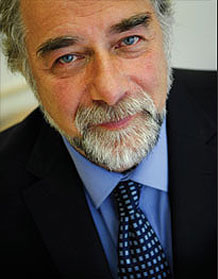
Bruce Brown is Pro-Vice-Chancellor for Research at the University of Brighton , overseeing research across life, physical, social sciences, and arts and humanities. He previously served as Dean of the Faculty of Arts and Architecture (1989–2006) and Head of the Department of Design (1984–1989). Administrative Leadership : REF2014/RAE2008 Chair, International Governor at Shenkar College, and advisor to academic bodies in Hong Kong, Portugal, and Italy. Research Interests : Visual memory, arts education, and research leadership, with publications spanning design history, spatial design, and cultural policy. Scientific Awards : 2007 WHO’s WHO (A&C Black) 2005 Honorary Fellow (University for the Creative Arts) 2004 Honorary Fellow (Royal College of Art) 1985 Elected Member (Designers and Art Directors Association) 1978 Sanderson and Herbert Read Awards (Royal College of Art) 1970 Elected Fellow (Royal Society of Arts) Articles focus on visual communication, design policy, and cultural memory, reflecting his expertise in design research and higher education leadership . He is currently an Editor of Design Issues: Research Journal (MIT Press).
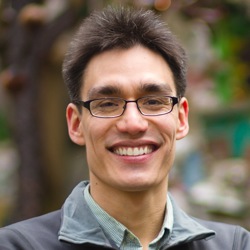
Wolfgang Merkle is a Privatdozent at Universität Heidelberg's Institut für Informatik, affiliated with the Faculty of Mathematics and Computer Science. His research focuses on Theoretical Computer Science and Discrete Mathematics, particularly randomized algorithms and Kolmogorov complexity. He teaches courses including 'Randomized Algorithms' and seminars on Kolmogorov complexity for Bachelor and Master programs. Research interests span algorithmic randomness, computational complexity, and information theory, with significant contributions to understanding computability limits and the foundations of theoretical computer science. His recent publications explore the interplay between randomness and computational efficiency, with works examining superspeedability, relativized depth, and information distance theories.
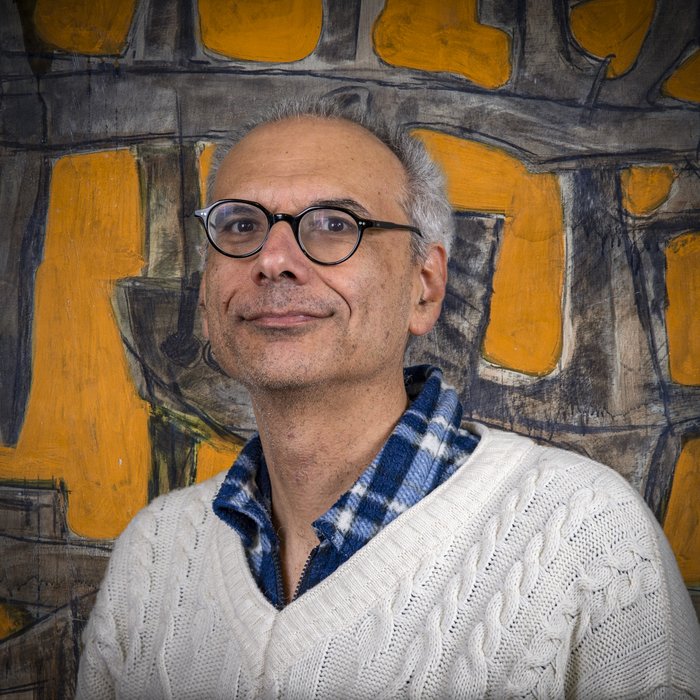
Joseph Devietti is an Associate Professor in the Department of Computer & Information Science at the University of Pennsylvania. His research focuses on improving programmability and performance of multiprocessor systems through architectural and programming model innovations. He actively advises PhD students and has supervised numerous graduates now employed at leading tech companies and academic institutions. Education: PhD (2012), MS (2009) in Computer Science and Engineering from University of Washington; BSE (2006) in Computer Science and BA (2006) in English from University of Pennsylvania. Employment: Associate Professor (2020–present), Assistant Professor (2013–2020) at University of Pennsylvania; Principal Scientist & Co-founder at Cloudseal, Inc. (2018–2020). Devietti’s research spans computer architecture, parallel programming, and deterministic execution. Key areas include cache/memory optimization (prefetching, false sharing repair), GPU programming models (race detection, block-size independence), and hardware-software co-design for concurrency safety. His recent work addresses dynamic runtime prefetch tuning (RPG 2 ), online code layout optimization (OCOLOS), and intelligent BTB prefetching (Twig) for data center applications. His publications from 2024–2017 reveal trends in instruction/cache optimization (2024–2020), GPU determinism (2018–2017), and race detection (2018–2016). Awards include the 2024 Penn Engineering Ford Motor Company Award, Radhia Cousot Best Paper (2018), and IEEE Micro Top Picks recognition (2023, 2009, 2008). Scientific Awards : 2024 Penn Engineering Ford Motor Company Award Radhia Cousot Young Researcher Best Paper Award (SAS 2018) IEEE Micro Top Picks (2023, 2009, 2008) Intel Early Career Faculty Honor Program (2013) Intel Ph.D. Fellowship (2011) Advising : Supervised 15+ PhD/Master’s students with placements at Google, Microsoft, Amazon, NYU, and the United States Naval Academy. Collaborations : Works with industry leaders (NVIDIA, Facebook) and academic institutions (University of Washington, Penn).
Jeffrey Doser is an Assistant Professor in the Department of Forestry and Environmental Resources at North Carolina State University (NC State), within the College of Natural Resources. His research focuses on ecological modeling, species distribution analysis, spatial statistics, and biodiversity monitoring. He specializes in developing R software tools for ecological data analysis, such as the spAbundance and spOccupancy packages. His work emphasizes improving statistical methods for occupancy models, integrating acoustic and survey data, and addressing environmental challenges like invasive species and climate change impacts on ecosystems. Key research themes include species-environment interactions, spatially varying coefficients in ecological models, and functional reproducibility in scientific coding. His recent studies address topics such as American chestnut restoration, wild bee community dynamics, and early detection of invasive aquatic species. Doser collaborates on interdisciplinary projects involving forest inventory, avian soundscapes, and long-term ecological monitoring. His publications (2020–2025) highlight methodological advancements in species distribution modeling, occupancy frameworks for multi-season data, and applications of Bayesian approaches. He advocates for rigorous statistical practices and reproducible research in ecology.
Paolo Bussotti is an Associate Professor of History of Science and Technology at the University of Udine's DIUM department. His academic career includes roles at Ludwig Maximilian University (Munich), Bayerische Akademie der Wissenschaften, and Berlin-Brandenburg Academy of Sciences through Humboldt Fellowships. He holds a PhD in Historical Sciences from the University of San Marino (1996). Education : Bachelor of History of Science and Technology, University of Pisa (1991) PhD in Historical Sciences, University of San Marino (1996) Research Interests : 17th-Century Physics/Astronomy (Kepler, Galileo, Descartes, Leibniz, Newton) Mathematics History: Number Theory (Fermat-Gauss), Projective Geometry Philosophy of Mathematics: Foundations at the turn of the 20th century Science Education: Integrating history into math teaching Key Projects : Galileo's Sidereus Nuncius translation (2001) Kepler Commission collaboration (2005) Enriques Study Center directorship (2008-2010) Grants/Awards : Three Humboldt Fellowships (2003, 2013-2014, 2019) Research grants from DIUM and DMIF (Udine) Labs/Teams : Collaborations with Munich Center for Mathematical Philosophy, Berlin-Brandenburg Academy, and Bayerische Akademie der Wissenschaften.
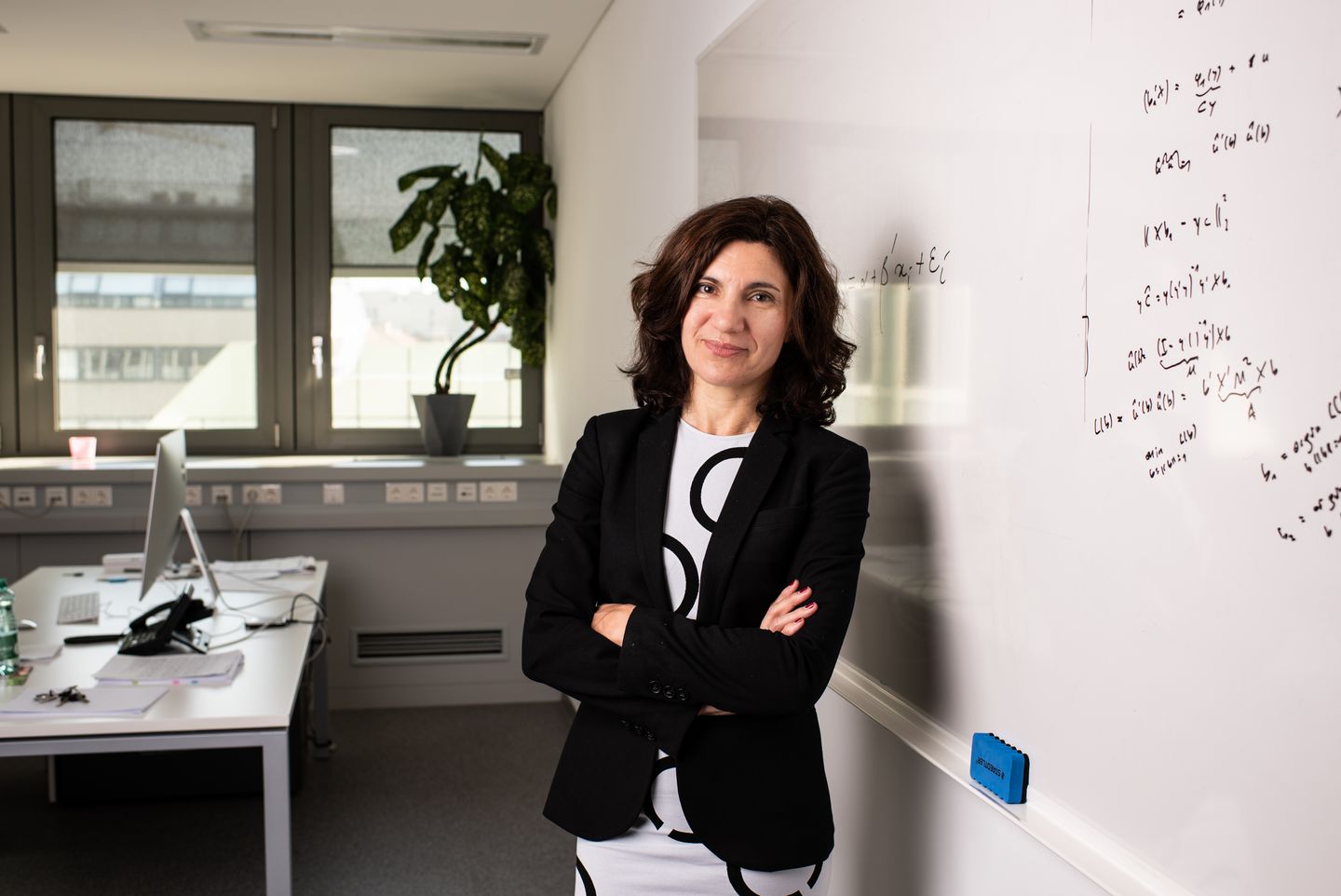
Efstathia Bura is a Professor heading the Applied Statistics Research Unit (ASTAT) within the Institute of Statistics and Mathematical Methods in Economics at TU Wien's Faculty of Mathematics and Geoinformation. Her research focuses on dimension reduction techniques in regression and classification, high-dimensional statistics, and their applications in biostatistics, econometrics, and legal statistics. She leads projects like ProbInG (WWTF-funded) and the SecInt Doctoral College on statistical verification of cyber-physical systems. Her work integrates advanced statistical methodologies with interdisciplinary applications, emphasizing practical solutions for complex data challenges. Current projects explore probabilistic program analysis, security properties in cyber-physical systems, and dynamic econometric modeling. She collaborates internationally, with notable contributions to statistical theory and applications in law, healthcare, and telecommunications. Key research themes include time-varying regression models, sufficient dimension reduction for mixed predictors, and fusion of statistical methods with machine learning. Her publications bridge theoretical advancements and real-world problem-solving, reflecting her role as a leading academic in modern applied statistics. Her team includes postdocs and assistants working on WWTF and SecInt grants, focusing on probabilistic systems and statistical verification. While no formal student advisees are listed, her collaborative projects engage junior researchers in cutting-edge statistical research.
Alexander Refsum Jensenius is a Professor of Music Technology and Director of the RITMO Centre for Interdisciplinary Studies in Rhythm, Time and Motion at the University of Oslo. He also leads the fourMs Lab and co-founded the MishMash Centre for AI and Creativity. His work bridges musicology, psychology, and technology, focusing on embodied music cognition, human motion analysis, and creative applications of AI. Notably, he pioneered research on air guitar motion and human micromotion through projects like the Oslo Standstill Database . Educated at the University of Oslo (BA in Music and Mathematics, MA in Musicology) and Chalmers University of Technology (MSc in Applied IT), Jensenius holds a PhD in Music Technology from UiO. He has held visiting researcher roles at UC Berkeley, McGill University, and KTH. Leadership roles include Department of Musicology Head (2013–2016) and Steering Committee Chair for the International Conference on New Interfaces for Musical Expression (NIME, 2011–2022). Research interests span music-related body motion, AI in creative contexts, and open research practices. Key contributions include the Music Moves and Motion Capture MOOCs, the Musical Gestures Toolbox software, and monographs like Sound Actions and Sonic Design . His work emphasizes interdisciplinary collaboration, with projects addressing ventilation systems' acoustic properties and cell culture vibrational effects. Awards include the European Open Data Champion recognition. He advocates for open science and maintains extensive digital archives of research materials, emphasizing institutional web pages as critical research infrastructure.
June P Tangney is a Professor in the Psychology Department at George Mason University, specializing in moral emotions , self-control , and criminology . Her work bridges clinical psychology and corrections, focusing on interventions for incarcerated populations. Education : PhD in Clinical Psychology from UCLA Her research explores the interplay between shame/guilt dynamics , substance misuse , and recidivism , with recent studies on mindfulness-based interventions and computer-assisted jail programs . She has pioneered tools like the Mindfulness Inventory: Nine Dimensions and the Criminogenic Cognitions Scale . Key article trends show her work spans 2014-2025 , with subtopics including borderline personality disorder in correctional settings, family contact during incarceration , and self-stigma in offenders. Funding sources include NIDA, NICHD, NSF, and the John Templeton Foundation. Awards : International Society for Self and Identity Distinguished Lifetime Career Award Fellow of Association for Psychological Science Fellow of APA Division 8 (Personality & Social Psychology) George Mason University Teaching Excellence Award As Editor of Self & Identity and former Associate Editor of American Psychologist , she has mentored numerous students (e.g., Sajida Yasmeen, Shannon Schrader) and co-authored major texts like Shame and Guilt and Shame in the Therapy Hour . Her lab integrates social-clinical-community perspectives to develop restorative justice interventions .
Jeffrey A. Lee is a Professor in the Department of Geosciences at Texas Tech University, specializing in aeolian geomorphology and environmental processes. With academic appointments since 1988, his work focuses on wind-driven sediment transport and dune dynamics across multiple continents. Education: B.A. in Geography (1979), University of California, Los Angeles M.A. in Geography (1984), University of California, Los Angeles Ph.D. in Geography (1990), Arizona State University Research interests center on aeolian processes, particularly dust emission dynamics and wind erosion patterns. His work examines temporal trends in blowing dust across Texas and the American Southwest, while also investigating long-term shifts in wind climate patterns. Professor Lee teaches foundational physical geography courses including Global Environmental Science and advanced topics in arid land geomorphology. Recent publications demonstrate interdisciplinary focus across aeolian geomorphology, environmental monitoring, and climate science. Key themes include dust source characterization using satellite data, drought legacy effects on erosion, and historical analysis of environmental disasters like the Dust Bowl. Contact: jeff.lee@ttu.edu | 213 Holden Hall, Texas Tech University | (806) 834-8228
Mark Brown is a Professor at the Department of Communication and Culture at BI Norwegian Business School. He holds a PhD from the University of Oslo (2008) and has extensive experience in academia since 1998, transitioning from business roles in sales and IT. His research focuses on the intersection of language, business, and environmental discourse, emphasizing sustainability communication, corporate social responsibility, and ethical stakeholder dialogue. He has published widely on topics such as corporate environmental rhetoric, Wendell Berry’s ecological philosophy, and the application of John Rawls’ political theory to business ethics. Education Background: PhD in Humanities (2008), University of Oslo MPhil in English (1997), University of Oslo Bachelor of Arts (1995), University of Oslo MSc in Chemical Engineering (1982), Imperial College London Research Interests: Combines linguistic analysis with environmental and business ethics, exploring how corporations construct discourses around sustainability and nature. Key themes include corporate greenwashing, stakeholder communication dynamics, and the rhetorical framing of ecological issues. Teaching: Specializes in intercultural communication at the undergraduate level, including courses on business cultures, ethical dilemmas, negotiation strategies, and presentation skills. His pedagogical work integrates digital learning tools and higher-level cognitive development in students. Grants/Advising: No explicit grants listed, but his research has been supported through institutional affiliations and academic collaborations. He has advised on educational initiatives like the Learning Lab Pilot Programme (2014–2015). Labs/Teams: Active in interdisciplinary research groups focusing on communication studies, sustainability, and ethics. Collaborates frequently with colleagues in humanities and business schools.
Peter D. Dragic is an Associate Professor in the Department of Electrical and Computer Engineering at the University of Illinois at Urbana-Champaign (UIUC). His research focuses on interdisciplinary advancements in optical fiber technology, materials science, and laser systems. Dr. Dragic leads efforts to overcome nonlinear limitations in optical fibers by integrating materials science innovations with waveguide engineering, targeting applications like high-power lasers, distributed sensing, and coherent LIDAR systems. Education & Affiliations: PhD in Optical Engineering (assumed based on academic rank) Director of the Micro & Nanotechnology Lab at UIUC Collaborations with Clemson University’s COMSET center Research Interests: Design of novel optical fibers using fluorosilicate, aluminosilicate, and crystalline materials Reducing quantum defects in fiber lasers to mitigate thermal effects Development of hypersonic acoustic wave-engineered fibers for Brillouin scattering suppression Laser-based remote sensing and LiDAR systems Key Achievements: Optica Fellow recognition (2020s) Over 50 peer-reviewed publications, including high-impact studies in Optics Letters and Nature Photonics Development of sapphire-derived all-glass fibers and fluorosilicate Yb-doped fibers Grants & Funding: Air Force Office of Scientific Research (FA9550-16-1-0383) U.S. Department of Defense DE JTO (N00014-17-1-2546)
Georg Vogeler is Professor of Digital Humanities at the Institute for Digital Humanities, Faculty of Humanities, University of Graz. He leads research in digital scholarly editing, digital diplomatics, and semantic technologies in humanities. He is also associated with the Austrian Centre for Digital Humanities of the Austrian Academy of Sciences, where he served as Scientific Director from 2018 to 2022. Professor, Center for Information Modeling, University of Graz (since 2016) Scientific Director, Austrian Centre for Digital Humanities (2018–2022) Member, Profile Area 'Dimensions of Europe', University of Graz Participant, Research Network 'Human Factor in Digital Transformation' Georg Vogeler's research centers on the intersection of digital technologies and historical scholarship. His work emphasizes digital diplomatics , digital editing , and the application of semantic web technologies to medieval sources. He specializes in late medieval financial records and the administrative practices of Emperor Frederick II. His methodological focus includes information modeling and digital infrastructure for humanities scholarship. The recent publications reflect a strong trend in rethinking traditional scholarly editing through digital methods. His work bridges historical auxiliary sciences with computational approaches, emphasizing structured data, distant reading, and machine-actionable editions. Keywords across his articles include digital humanities, medieval history, scholarly editing, and semantic modeling, with subfields such as text encoding, document analysis, and digital philology. Scientific Awards: No awards explicitly listed. Advising and Grants: Supervised Master’s thesis by Toni Büchel (University of Vienna, 2021–2022) Doctoral supervisor for Frederike Neuber (2017–2018) Principal Investigator, FWF-funded project 'The Reichstag of 1576' (2018–2022) Principal Investigator, EU-funded project 'From Digital to Distant Diplomatics' (2022–2026) Involved in international digital publishing infrastructure projects with Stanford and University of Virginia Labs, Teams, and Research Groups: Georg Vogeler is affiliated with the Center for Information Modeling at the University of Graz and has led major collaborative efforts in digital humanities. He participates in the 'Human Factor in Digital Transformation' research network and contributes to international initiatives such as the TEI Consortium, Biblissima, and COST-Action CA16204. He is a co-editor of key book series and serves on editorial boards, indicating strong integration into global digital humanities communities.
Sal Hagen is a postdoctoral researcher at the Institute for Logic, Language and Computation (ILLC) at the University of Amsterdam, working within the Natural Language Processing & Digital Humanities group. His research focuses on the intersection of computational methods and cultural analysis, particularly examining online communities, political discourse, and meme culture. His educational background includes a Research Master's in Media Studies from the University of Amsterdam, for which he received the prestigious 2018 Internet Thesis Prize in the Internet & Social Sciences or Humanities category for his work "Here I Am, Praying to an Egyptian Frog: Exploring Political Fluidity on 4chan/pol/". He also won the Audience Award for his presentation at the ceremony. Hagen's research interests center on understanding the dynamics of online communities, with particular expertise in 4chan and related platforms. His work combines qualitative and quantitative approaches to analyze political discourse, far-right movements, and the evolution of memes across digital spaces. He examines how anonymity, platform architecture, and cultural context shape online interactions and political expression. His publication record demonstrates a consistent focus on tracing political movements through digital footprints, with particular attention to the interplay between platform-specific cultures and broader political trends. Hagen's work often bridges computational social science with cultural studies, creating methodologies that capture both the quantitative patterns and qualitative meanings of online discourse. Scientific Awards: 2018 Internet Thesis Prize (Internet & Social Sciences or Humanities category) Audience Award for presentation at Internet Thesis Prize ceremony Hagen has secured significant research funding, including an NWO PhD grant for humanities research running from 2019-2024. He has been involved in multiple research projects including the CAT4SMR project (2024), OILab (2017-present), and the ERC-funded ODYCCEUS project (2018-2019). As part of OILab (Online Intelligence Lab), Hagen contributes to research on online political subcultures, while his work on the CAT4SMR project focuses on stabilizing and developing tools for social media data collection and analysis. He is also the developer of the 4CAT Capture and Analysis Toolkit, which provides transparent and traceable methods for social media research.
Gonzalo Nápoles is an Assistant Professor at Tilburg University's School of Humanities and Digital Sciences, Department of Cognitive Science and AI. He holds a Doctoral Degree in Computer Science from Rough Cognitive Networks (2014–2017). His research focuses on AI applications in cognitive modeling, pattern classification, and neural networks with interdisciplinary applications in healthcare, finance, and social sciences. Key research areas include Fuzzy Cognitive Maps, data augmentation techniques for neuroimaging, and interpretable machine learning systems. He actively contributes to UN Sustainable Development Goals related to education and innovation. Recent work explores AI ethics, financial risk assessment using dynamic networks, and sensory processing disorder analysis through neural networks. Education: Doctoral Degree in Computer Science, 2017 (Thesis: Rough Cognitive Networks) Prize-winning research includes Best Paper Awards at CIARP 2021 and IWAIPR 2023. He collaborates internationally, hosting academic visitors and serving on multiple PhD committees. Current projects involve stock prediction using graph neural networks and fMRI data augmentation methodologies. Awards: Best Paper Award - CIARP 2021 Best Paper Award - IWAIPR 2023 Nápoles advises on PhD theses in cognitive science and AI applications. His work bridges theoretical advancements with practical implementations in healthcare, finance, and urban systems.
Koumudi Patil serves as an Associate Professor in the Department of Humanities and Social Sciences at Indian Institute of Technology Kanpur (IIT Kanpur), specializing in Craft Thinking and Installation Art. Her academic journey includes a PhD from the Industrial Design Center at IIT Powai, an MFA from Vishwabharati University, and a BFA from Sir J.J. School of Fine Arts. Her research focuses on the intersection of traditional crafts, design thinking, and community-based innovation. Her work on Banarasi toys demonstrates how linguistic categories reveal cultural worldviews embedded in craft traditions. She leads the Frugal Innovation for Design and Innovation for Grassroot Communities initiative, operating from FB-153 at IIT Kanpur. Patil's scholarly work shows a consistent trajectory exploring how traditional knowledge systems can inform contemporary design practices, particularly in resource-constrained contexts. Her publications reveal interdisciplinary connections between anthropology, linguistics, and design methodologies. Best Research award from International Toy Research Association (2014) Fellow of Arts Network Asia (2008-2009) Patent holder for innovative furniture design Key contributor to national craft initiative launched by Prime Minister Modi As an academic leader, she has served as Executive member of the Board of International Toy Research Association (2014-2017) and maintains active engagement with both theoretical and applied aspects of design. Her work bridges academic research with practical social impact through frugal innovation approaches.