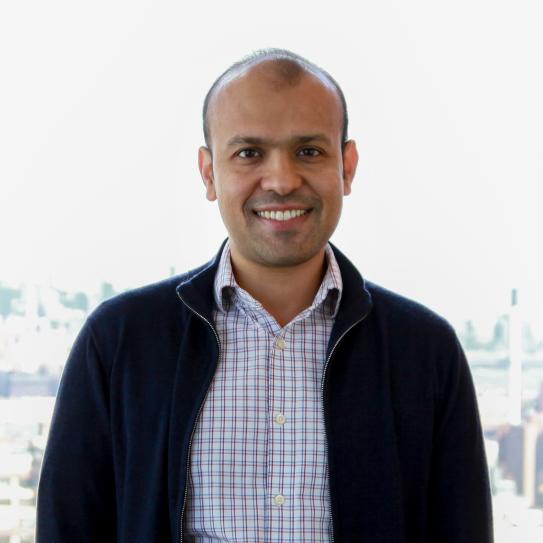
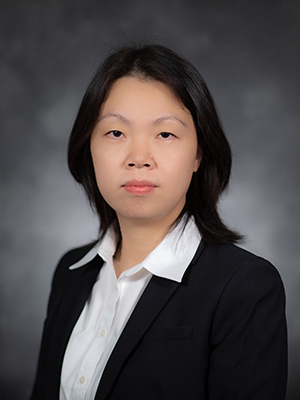
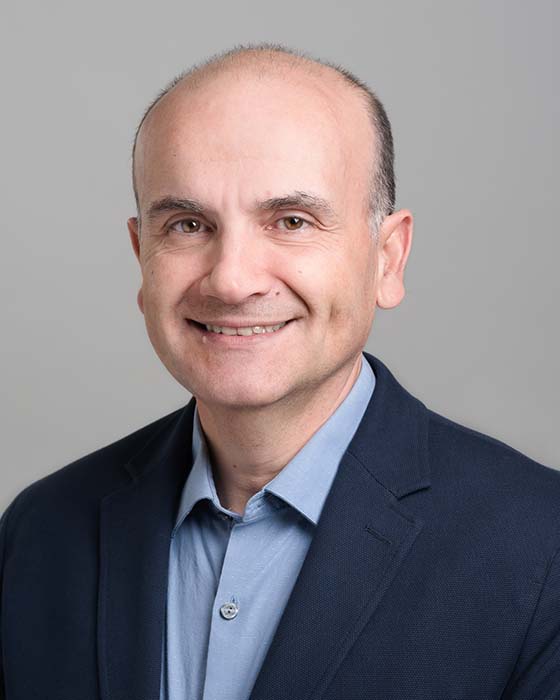
Yu Huang is an Assistant Professor of Computer Science at Vanderbilt University with a secondary appointment in the Department of Teaching and Learning at the Peabody School of Education. She is affiliated with the Institute for Software Integrated Systems, the Frist Center for Autism and Innovation, the Vanderbilt Lab for Immersive AI Translation (VALIANT), and the Vanderbilt LIVE Learning Innovation Incubator. Her research focuses on human-centered AI for software engineering, combining human cognition with machine intelligence to enhance software development processes. Educated at the University of Michigan (PhD, 2021), University of Virginia (MS, 2015), and Harbin Institute of Technology (BS, 2011), her work spans software engineering, human factors, AI, and medical imaging. Key projects include the MIND Lab, studying programmer expertise and cognitive processes, and the HumanAISE workshop on Human-Centered AI for Software Engineering. Huang has received significant recognition, including the 2025 ICPC Vaclav Rajlich Early Career Achievement Award and three ACM SIGSOFT Distinguished Paper Awards. Her research is supported by NSF, GitHub, and Vanderbilt initiatives. She advises numerous graduate and undergraduate students, emphasizing diversity and innovation in programming education.
Professor Aniruddha Desai is a Research Professor and Director of the Centre for Technology Infusion (CTI) at La Trobe University. He holds a Bachelor’s in Industrial Electronics, a Master’s in Micro-electronics, and a PhD in Computer Science. His expertise spans microelectronics, AI, IoT, and sensor networks, with a focus on socially impactful applications like transportation, healthcare, and precision agriculture. Research Interests: Ultra-low power systems Micro-nano electronics AI/ML and edge computing IoT and sensor networks Transportation and logistics Major Projects: Led multi-million-dollar R&D programs in areas such as smart cities, energy management, and smart farming. Notable collaborations include the IIT Kanpur - La Trobe University Research Academy and the Asian Smart Cities Research and Innovation Network. Awards: Recipient of the 2016 Vice-Chancellor’s Award for Research Excellence and the 2020 Victorian Tall Poppy Award for Science. Served on advisory panels for the Australian Research Council and provided expert testimony in parliamentary inquiries. Labs/Teams: Directs the CTI, which delivers technology-based innovations to industry and government. Co-founded the Asian Smart Cities network to advance urban technology solutions.
Paris Avgeriou is a Professor of Software Engineering at the University of Groningen, affiliated with the Faculty of Science and Engineering and the Bernoulli Institute. He leads the Software Engineering and Architecture research group and serves as Editor-in-Chief of the Journal of Systems and Software . His expertise spans technical debt management, software architecture, self-adaptive systems, and embedded systems design. Avgeriou holds an office at Nijenborgh 9, Groningen, and actively advises academic institutions and funding bodies globally. Research Interests: Avgeriou's work focuses on advancing software architecture principles, technical debt lifecycle management, and the integration of AI in software engineering. His research emphasizes practical solutions for improving software quality, maintainability, and system dependability, particularly in embedded and self-adaptive contexts. Recent Contributions: Recent studies include frameworks for benefit-cost-risk decision-making in self-adaptive systems, automated technical debt management using ML, and tools for tracing architecture-related debt. He collaborates internationally, contributing to standards like the Copenhagen Manifesto for human-centered AI in software engineering. Grants & Awards: While no specific awards are listed, his editorial role and frequent conference contributions reflect recognition in the field. He chairs conference tracks and oversees workshops, fostering early-career researchers and artifact evaluation. Labs & Teams: His group is part of the Bernoulli Institute, working on platforms like SDK4ED for embedded systems and tools such as DebtViz for technical debt monitoring. The team explores intersections between systems engineering and software architecture in complex systems-of-systems.
Ediz Cetin is an Associate Professor in Digital Electronics Engineering at Macquarie University's School of Engineering and a member of the Astrophysics and Space Technologies Research Centre. He serves as Course Director for the MEng Electronics Engineering program and Chair of the School's Postgraduate Coursework Committee. His research focuses on radio frequency interference mitigation, fault-tolerant reconfigurable circuits for space applications, machine learning in RF signal analysis, and low-power digital circuit design. Education: PhD in Signal Processing (Unsupervised Adaptive Signal Processing Techniques for Wireless Receivers) B.Eng. (Hons.) in Control and Computer Engineering Research Interests: RF interference detection and localization GNSS anti-jamming and spoofing detection FPGA-based reconfigurable systems Space instrumentation and CubeSat technologies Machine learning for signal processing Awards: Excellence in Learning Innovation (FSE Teaching Award, 2022) Highly Commended Finalist – Vice-Chancellor’s Award for Learning Innovation (2022) Innovative Approaches – Highly Commended (FSE Teaching Award, 2020) Key Projects: SmartSat CRC (2020–2026): Smart Satellite Technologies and Analytics Spacecraft Innovation Lab (2021–2022) CubeSat Biological Payload (2019–2022) Teaching Contributions: Led the 'Improving Student Engagement with Anywhere and Any-time Laboratory Access' initiative (2019–2020), enhancing remote lab accessibility for students.
Siddharth Garg is the Institute Associate Professor of Electrical and Computer Engineering at NYU Tandon School of Engineering, leading the EnSuRe Research Group. He holds a Ph.D. from Carnegie Mellon University (2009) and a B.Tech. from IIT Madras. His research focuses on secure and energy-efficient computing systems, integrating machine learning, cybersecurity, and hardware design. He previously held roles as Assistant Professor at NYU Tandon (2014-2020) and the University of Waterloo (2010-2014). Key affiliations include NYU Center for Cybersecurity (CCS), NYU Wireless, and the Center for Advanced Technology in Telecommunications. His work has been recognized with prestigious awards like the NSF CAREER Award (2015) and inclusion in Popular Science’s 'Brilliant 10' (2016). Notable research includes private inference optimization, secure hardware IP protection, and adversarial machine learning defenses. Publications highlight advancements in zero-knowledge proofs, AI-driven chip design, and mitigating backdoor attacks in neural networks. His grants include funding from NYU Wireless and NSF initiatives like the Chips4All project. The EnSuRe group emphasizes bridging software and hardware design gaps using AI and fostering cybersecurity education.
Dr. Jingjing Qiu is an Associate Professor in the Department of Mechanical Engineering at Texas A&M University (TAMU), leading the Advanced Materials & Manufacturing (AM²) Lab. Her research focuses on advanced manufacturing, nanomaterials, multifunctional composites, sustainable materials, energy harvesting, and healthcare applications. She holds a Ph.D. in Industrial & Manufacturing Engineering from Florida State University (2008), and M.S./B.S. degrees in Materials Science from Beihang University (2004/2001). Prior to academia, she gained 1 year of industrial experience as a Quality Engineer at SAIC Motor. Research interests include AI-driven nanomaterials synthesis, low-carbon manufacturing processes, and biomedical innovations such as drug delivery systems for brain tumors. The AM² Lab emphasizes interdisciplinary collaboration in materials science, data science, and sensor integration for energy and medical devices. Recent work highlights include AI-assisted microplastics removal, thermoelectric energy harvesting via graphene aerogels, and neuromorphic computing systems. Her team actively pursues postdoctoral and PhD candidates for research in energy/healthcare materials, requiring expertise in nanomaterials characterization (e.g., SEM, XPS, electrochemical techniques) and interdisciplinary problem-solving. Lab facilities support cutting-edge fabrication and testing of functional materials. Publications span over 15 years, with recent trends in sustainable manufacturing, soft robotics, and bio-inspired materials. Ongoing projects include DOE-funded initiatives on rare earth recycling and low-carbon ceramic production. No scientific awards are explicitly listed in the provided texts.
Gabe Kaptchuk is an Assistant Professor in the Computer Science Department at the University of Maryland, College Park (UMD), focusing on cryptography, privacy, and their social implications. He is affiliated with UMD's MC² (Maryland Cybersecurity Center) and UMIACS (Institute for Advanced Computer Studies). Previously, he was research faculty at Boston University and earned his PhD from Johns Hopkins University under advisors Avi Rubin and Matt Green. Research Interests: Kaptchuk's work bridges theoretical cryptography and social applications, emphasizing secure multiparty computation (MPC), zero-knowledge proofs, and steganography. He also explores the intersection of cryptography with law, policy, and human-centered design. Notable projects include Meteor (secure steganography using generative models) and Pulsar (MPC for dynamic participants). Teaching: Courses include Governing Algorithms (UMD) and Law and Algorithms (BU), focusing on algorithmic governance, privacy, and legal implications of technology. He has taught computer security and networks at Johns Hopkins and BU. Grants & Funding: Recent NSF awards include Collaborative Research: ReDDDoT Phase 2 (2024) for participatory privacy protections in AI training data. Active in deploying MPC for social good, such as analyses for Boston Women’s Workforce Council. Labs/Teams: Collaborates with researchers at Georgetown, Columbia, and institutions like the Wikimedia Foundation. Co-authors include Rachel Cummings, Elissa Redmiles, and Matthew Green on privacy and usability topics.
Prof. Dr. Christian Plessl is a W3 Professor of High-Performance Computing at the Institute of Computer Science, University of Paderborn. He leads the Paderborn Center for Parallel Computing (PC²), a national HPC center within the NHR alliance. His roles include Director of PC², Board Member of the NHR association, and member of the Sonderforschungsbereich 901. Education: PhD (Dr. sc. ETH) in Computer Engineering, ETH Zürich (2006) MSc in Electrical Engineering, ETH Zürich (2001) Postdoc at ETH Zürich (2007–2011) Research Interests: Architecture and tools for high-performance parallel and reconfigurable computing, FPGA acceleration, quantum chemistry, scientific computing, adaptive systems, and energy-efficient HPC solutions. Key projects include EKI-App (FPGA-based neural networks), FPGA4XPCS (X-ray spectroscopy), and HighPerMeshes (unstructured grid frameworks). Publications: Over 100 peer-reviewed works, focusing on FPGA acceleration, HPC frameworks, and quantum computing. Recent trends emphasize energy-efficient neural networks, FPGA-based quantum computing, and scalable HPC algorithms. Awards: Best Paper Awards at HEART 2023, ReConFig 2012/2014 Paderborn University Research Awards (2018, 2009) SEW-EURODRIVE Student Award (2001) Grants & Projects: Principal investigator in DFG, BMBF, and EU-funded projects. Collaborates with AMD/Xilinx, Intel/Altera, and Fujitsu. Leads initiatives like PerficienCC (custom computing) and HighPerMeshes. Labs/Teams: Directs the High-Performance Computing group at PC², focusing on FPGA supercomputing and HPC infrastructure. Active in the NHR alliance for national HPC coordination.
Andreas Moshovos is a Professor in the Department of Electrical and Computer Engineering at the University of Toronto's Faculty of Applied Science and Engineering. He holds a Bachelor's and Master's degree from the University of Crete, and a PhD from the University of Wisconsin-Madison. Previously, he taught at Northwestern University, École Polytechnique Fédérale de Lausanne, University of Athens, and Hellenic Open University. His research focuses on designing optimized computing hardware for performance, energy efficiency, and cost. Primary interests include: Deep Learning acceleration through value-based optimization (exploiting sparsity/precision variability) Hardware specialization for neural networks Efficient data management systems High-performance processor/memory architecture His publications demonstrate consistent focus on hardware acceleration techniques for deep learning, particularly leveraging value sparsity, dynamic precision adaptation, and ineffectual computation elimination to boost performance and energy efficiency in neural network processing. Significant Awards: ACM SIGARCH Maurice-Wilkes Award (2010) 2× IEEE MICRO Top Picks Awards (2006, 2010) 2× IBM Faculty Awards (2008, 2009) NSF CAREER Award (2000) MICRO Hall of Fame Award He leads the NSERC COHESA Network on Machine Learning Hardware Acceleration (19 researchers across 7 universities) and advises multiple PhD/Master's students in computer architecture and deep learning acceleration. His lab develops specialized hardware for computational imaging, gene sequencing, and neural network optimization.
Stefan Hougardy is a Professor at the Research Institute for Discrete Mathematics, part of the Mathematisch-Naturwissenschaftliche Fakultät at the University of Bonn. He is actively engaged in research and teaching, with a focus on discrete mathematics and combinatorial optimization. He contributes to academic governance through roles in examination boards, teaching mentoring, and faculty committees. Stefan Hougardy's research lies at the intersection of theoretical computer science and practical optimization. His primary interests include approximation algorithms, the Traveling Salesman Problem (TSP), Steiner trees, graph theory, and VLSI design automation. He develops efficient algorithms for NP-hard problems and analyzes their theoretical performance guarantees. His work often bridges theory and application, particularly in electronic design automation and mathematical programming. His recent publications demonstrate a strong focus on the complexity and approximation of combinatorial optimization problems. Key themes include the analysis of local search heuristics like k-opt for TSP, edge elimination techniques, fast matching algorithms, and optimal legalization in chip design. His work combines rigorous theoretical analysis with practical implementation and computational experiments. MPC 'Outstanding Paper of the Year' Award 2024 Stefan Hougardy supervises graduate students and leads seminars on discrete mathematics and optimization. He is involved in the Bonn International Graduate School of Mathematics and the Hausdorff Center for Mathematics, contributing to doctoral education and mentoring. While specific grant details are not listed, his sustained research output and leadership roles suggest active funding support. He also contributes to curriculum development and academic quality assurance through various institutional committees. He is affiliated with the Research Institute for Discrete Mathematics at the University of Bonn, a leading center for combinatorial optimization and algorithmic research. The institute is closely linked with the Hausdorff Center for Mathematics, fostering collaboration in discrete and applied mathematics.
Dr Graeme Bragg is a Senior Teaching Fellow at the University of Southampton within the Department of Electronics and Computer Science . His work spans teaching, research, and technical development with a focus on event-driven computing, bioinformatics, and computational modeling. He actively supervises PhD students and collaborates on interdisciplinary projects. Research Interests: Parallel computing, event-driven systems, genotype imputation, Petri net simulations, subglacial hydrology modeling Teaching: Specializes in hardware description languages and computational methods for engineering students Technical Expertise: RISC-V architecture, FPGA acceleration, bespoke compute fabric development His recent publications demonstrate expertise in applying event-driven computing to diverse problems including: 2025: Automated marking systems for SystemVerilog labs 2025: Seasonal dynamics in subglacial hydrology 2023: Genotype imputation using custom hardware 2022: Optimization algorithms and graph analysis Current research explores: Custom RISC-V FPGA clusters for bioinformatics Event-triggered systems for scientific simulations Parallel computing solutions for molecular modeling Contact: gmb@ecs.soton.ac.uk | +44 23 8059 2784
Reetuparna Das is an Associate Professor at the University of Michigan in the Department of Computer Science and Engineering, School of Electrical Engineering and Computer Science (EECS). She previously worked as a research scientist at Intel Labs and as researcher-in-residence for the Center for Future Architectures Research (C-FAR). She co-founded the precision medicine start-up Sequal Inc. and leads the M-Bits research group, which is part of the Computer Engineering Lab at Michigan. Her research focuses on computer architecture and its intersections with software systems and device/VLSI technologies . Key projects include in-memory computing for BigData and ML, fine-grain heterogeneous architectures for mobile systems, and energy-efficient network-on-chip (NoC) designs for many-core processors. Her work has been funded by the NSF, C-FAR, Semiconductor Research Corporation, and Intel. She has authored over 50 papers, filed 7 patents, and received numerous awards, including the Sloan Foundation Faculty Fellowship CRA-W Borg Early Career Award NSF CAREER IEEE Top Picks MICRO/ISCA Hall of Fame inductions Das has served on over 40 program committees, is associate editor for TACO, and co-founded initiatives like WiCArch (Women In Computer Architecture) to promote diversity. She mentors students through outreach programs like Girls Encoded and Ada Lovelace opera events.
Dr Ian Gray serves as a Senior Lecturer in the Department of Computer Science at the University of York, where he also holds the position of Deputy Head of Department (Teaching). His academic career at York began as a Research Associate in 2010, progressing to Research Fellow in 2012, Lecturer in 2017, and ultimately Senior Lecturer. His research focuses on real-time systems and their programming models , with significant contributions to embedded systems, FPGA and reconfigurable computing architectures, and many-core/multicore system design. His work extends to application-specific high-performance computing solutions and cloud computing infrastructure within distributed systems frameworks. Gray maintains active involvement in the Real-Time and Distributed Systems research group, where his expertise bridges theoretical computer science with practical hardware implementation challenges. Gray's professional trajectory demonstrates steady progression from industry (as Lead Software Developer at Stockholm Environment Institute in 2005) into academia, where he has developed substantial expertise across multiple computing domains requiring precise timing constraints and efficient resource utilization. His leadership role as Deputy Head of Department (Teaching) reflects his significant contribution to curriculum development and academic administration within the department.
Daehyeok Kim is an Assistant Professor in the Department of Computer Science at The University of Texas at Austin, where he co-leads the UT Networked Systems Research Group and participates in the Wireless Networking and Communications Group and 6G@UT. He serves as co-PI for the LDOS NSF Expeditions in Computing project, a major initiative rethinking operating systems through AI. His educational background includes a Ph.D. in Computer Science from Carnegie Mellon University under advisors Vyas Sekar and Srinivasan Seshan, where his dissertation introduced abstractions for elastic in-network computing. He also earned B.S. and M.S. degrees in Computer Science and Engineering from POSTECH, South Korea, followed by research scientist work at KAIST prior to his Ph.D. Kim's research centers on hardware-software co-design for cloud and edge data centers, targeting speed, efficiency, and resilience. Key projects include resource management for programmable infrastructure, robust cellular network design, end-to-end network transport frameworks, and learning-directed operating systems. His work bridges computer networks, operating systems, distributed systems, and 5G/6G technologies, with emphasis on virtualized radio access networks (vRAN) and edge computing challenges. Analysis of his recent publications reveals a dominant focus on enhancing 5G/6G infrastructure reliability—particularly in virtualized RANs—through innovations in failover mechanisms, integrity protection, and latency-sensitive resource allocation. His research consistently addresses critical industry pain points like sub-second availability requirements, fronthaul security vulnerabilities, and end-to-end service-level objective (SLO) guarantees for mobile-edge applications. Notable scientific awards include: NSF CAREER Award (2025) for advancing cloud hardware efficiency Microsoft Research PhD Fellowship (2019) Bronze Award at Samsung HumanTech Paper Awards (2018) Qualcomm Innovation Awards (2016) His grant portfolio features leadership in the $10M+ LDOS NSF Expeditions project and the NSF CAREER award, both driving transformative work in AI-integrated operating systems and resilient network infrastructure. These projects demonstrate strong industry-academia collaboration with Microsoft Research, wireless vendors, and cloud providers. Kim co-leads the UT Networked Systems Research Group, which operates within the Wireless Networking and Communications Group and 6G@UT consortium. These labs maintain a 5G/6G testbed for Open RAN validation and focus on solving real-world problems in cellular infrastructure, edge computing, and network security through close partnerships with industry leaders.
Matthew J. Marinella serves as an Associate Professor in the School of Electrical, Computer and Energy Engineering at Arizona State University, where his research bridges semiconductor device physics and next-generation computing architectures. His work focuses on enabling reliable computing systems for extreme environments through novel memory technologies. His academic foundation includes: Ph.D. in Electrical Engineering, Arizona State University (2008) Marinella's research centers on nonvolatile memory devices (particularly ECRAM and SONOS technologies), neuromorphic computing systems, and radiation effects characterization. He pioneers analog in-memory computing solutions resilient to space radiation, with expertise spanning electrochemical memory physics, radiation-hardened circuit design, and emerging device applications for artificial intelligence. His experimental work combines nanoscale imaging with computational modeling to understand device degradation mechanisms under ionizing radiation. Analysis of his 2023-2025 publications reveals a dominant focus on radiation-tolerant neuromorphic systems, with 70% of recent work addressing radiation effects on emerging memories. Key thematic clusters include TaOx ECRAM characterization under gamma/heavy-ion exposure (25% of publications), analog in-memory computing fault tolerance (30%), and novel test platforms for memory device benchmarking (20%). This research directly enables space-based computing applications where radiation resilience is non-negotiable. As a technical leader, Marinella chairs the Emerging Memory Devices Section for the IRDS Roadmap Beyond CMOS Chapter and serves on the SRC Decadal Plan Executive Committee. His Sandia legacy includes founding the Secure, Efficient, Extreme Environment Computing (SEEEC) Grand Challenge. At ASU, he mentors graduate researchers through thesis supervision in EEE 599/799 courses and directs laboratory work on memory device characterization, though specific student names and grant awards aren't publicly enumerated. His laboratory operations emphasize radiation testing infrastructure and analog computing testbeds, supporting collaborative projects with national labs on space electronics hardening. Current efforts integrate magnetic domain wall devices with resistive memories to create hybrid neuromorphic systems capable of operating in extreme environments where conventional CMOS fails.