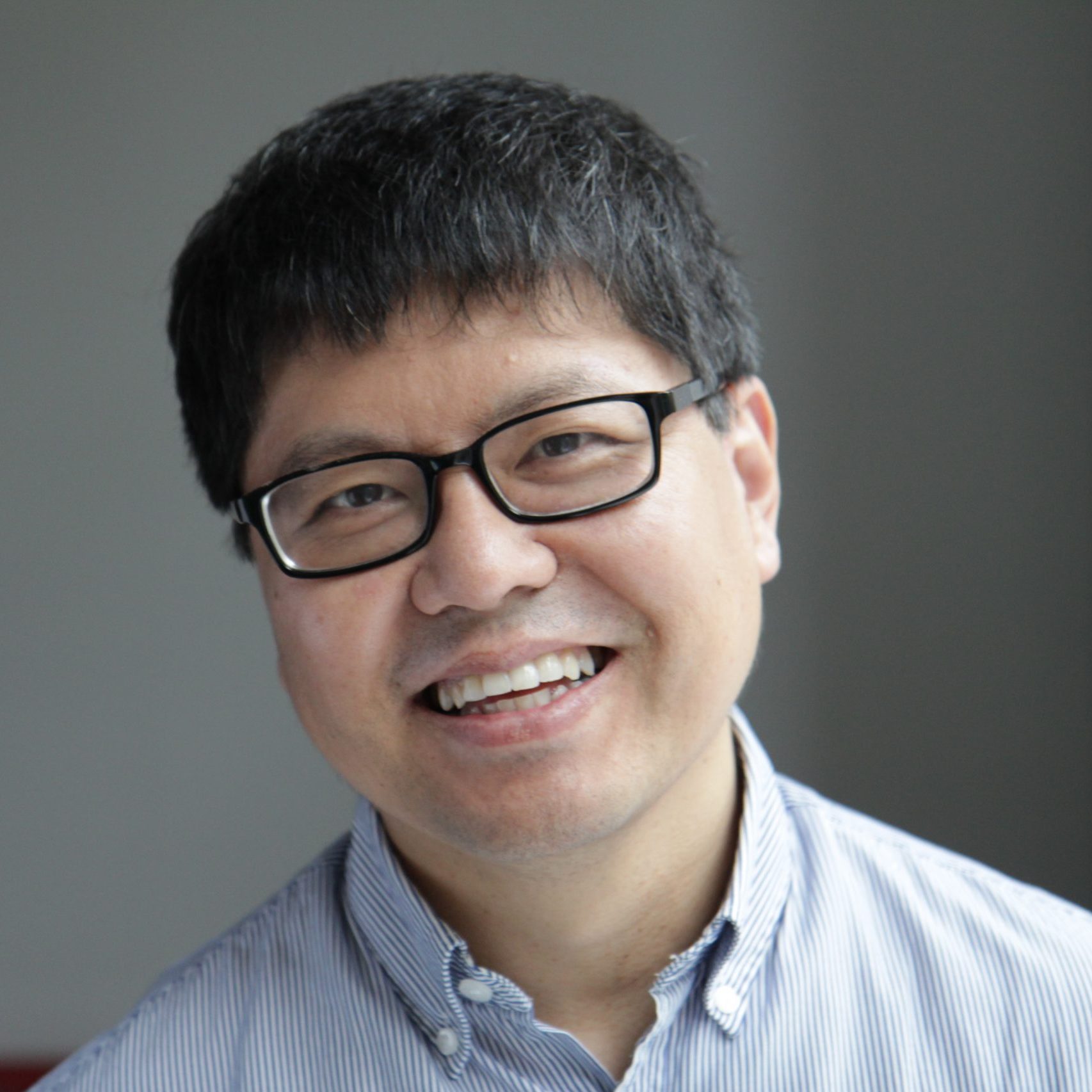
Tove Helldin is a Senior Lecturer at the School of Informatics, University of Skövde, Sweden. Her research focuses on anomaly detection , topic modeling , and human-computer interaction , particularly in telecommunications networks and decision support systems . She has led projects in AI for climate adaptation and future sepsis diagnostics , emphasizing team effectiveness and trust calibration in automated systems. PhD in Computer Science (2014), University of Skövde Licentiate in Computer Science (2012) MSc in Computer Science (2009) Her scientific work spans interactive machine learning , visualization of causal relationships , and transparency in military threat evaluation . She has contributed to automotive UI design and fighter aircraft automation , with publications in venues like ACM Computing Surveys and IEEE conferences. Notably, her work explores topic modeling applications in network monitoring and interpretable AI frameworks.
Michael Doggett is an Associate Professor and Senior Lecturer in the Department of Computer Science at Lund University, affiliated with ELLIIT and the LTH Profile Area: AI and Digitalization. His research focuses on image synthesis leveraging custom and programmable hardware, with contributions to real-time rendering, GPU programming, and augmented reality. He holds roles as Director of Third Cycle Studies and Project Manager, and has led initiatives in efficient GPU programming and real-time pixel synthesis. Education details are not explicitly listed, but his work aligns with UN Sustainable Development Goals related to innovation and infrastructure. His research interests emphasize hardware acceleration, light transport algorithms, and rendering efficiency. Recent publications explore opacity micromaps, sparse shading in AR, and caustics modeling. He supervises PhD projects such as 'DLXR: Real-Time Pixel Synthesis' and 'Efficient GPU Programming'. Notable collaborations include work with Facebook (2018-2020) and organizing the ACM SIGGRAPH Symposium. His grants include projects funded by the Swedish Research Council and ELLIIT. Michael is a member of Lund University's Parallel Systems research group and actively contributes to academic conferences and peer review.
Erik Englesson is a Researcher at the Division of Robotics, Perception and Learning at KTH Royal Institute of Technology. His work is supported by the Wallenberg AI, Autonomous Systems and Software Program (WASP-AI/MLX). He holds a PhD from KTH Royal Institute of Technology, focusing on label noise in image classification from an aleatoric uncertainty perspective. His research interests center on robustness and uncertainty quantification in deep learning, particularly addressing label noise and combining aleatoric and epistemic uncertainties. He teaches Probabilistic Graphical Models (DD2420) at KTH. Recent publications explore topics like gradient-based explanation methods, autoencoder parameterization, and noise-robust classification strategies. His work frequently intersects with computer vision and theoretical deep learning principles. Englesson collaborates with prominent researchers like Hossein Azizpour and receives funding from strategic initiatives in AI and autonomous systems. His research bridges foundational theory with practical applications in healthcare imaging and robust model design.
Tatjana Pavlenko is a Professor in Statistics at Uppsala University, affiliated with the Department of Statistics. Her research bridges mathematical statistics, probability theory, and computational methods, focusing on high-dimensional data analysis in biomedical and machine learning contexts. Key research areas include: High-dimensional statistical inference and Bayesian graph structure learning Sparse signal detection and adaptive thresholding methods Statistical machine learning with applications to biomedical datasets Her recent publications demonstrate expertise in: Bayesian model averaging and junction tree sampling Asymptotic theory for high-dimensional classifiers Testing independence and covariance structures L2-type statistics and empirical process theory She supervises PhD students working on: High-dimensional causal inference in media Bayesian graphical models Sparse classification algorithms Currently active in Uppsala University's AI4Research initiative, Pavlenko develops adaptive data-driven procedures for statistical learning problems with complex sparsity patterns.
Beáta Megyesi is a Professor of Computational Linguistics at Uppsala University's Department of Linguistics and Philology, currently on leave from August 2023 to December 2025. She holds a PhD in Speech Communication from the Royal Institute of Technology (KTH) and has been a prominent figure in computational linguistics research and education at Uppsala University since at least 2000. Her academic background includes: PhD in Speech Communication, Department of Speech, Music and Hearing, KTH (2002) BA in Computational Linguistics, Department of Linguistics, Stockholm University (2000) Megyesi's research focuses on the intersection of computational methods and humanities, particularly historical cryptology and digital philology. She develops innovative tools that enable humanists and social scientists to obtain quantitative analyses of historical texts, with special emphasis on automatically cracking historical ciphers. Her work bridges linguistic analysis, computer science, and historical research, creating methodologies for processing and analyzing encoded historical documents. She has pioneered approaches to automatic transcription, key structure extraction, and deciphering techniques for historical manuscripts, making significant contributions to both computational linguistics and historical research. Analysis of her recent publications reveals a strong trend toward interdisciplinary research combining historical cryptology with advanced computational methods. Her work demonstrates increasing sophistication in handling historical ciphers through machine learning, image processing, and language modeling techniques. The research spans multiple languages and historical periods, with particular focus on early modern European diplomatic correspondence. Her publications show consistent contributions to both theoretical frameworks and practical tools for historical document analysis, with growing attention to privacy concerns in language learner data. Megyesi has held significant leadership roles including: President of Northern European Association for Language Technology (NEALT, 2020-2021) Head of Department, Department of Linguistics and Philology (2009-2018) Director of English Park Campus, Uppsala University (2017-2018) Member of Swedish Research Council's preparatory group for Linguistics (2021-2023) As an educator, Megyesi has supervised graduate students including Eva Pettersson and Mojgan Seraji, and has taught courses on language technology, digital philology, and computational linguistics at both undergraduate and graduate levels. She has received research funding from Vetenskapsrådet (Swedish Research Council) for multiple projects including DECRYPT (2018-2024) and DECODE (2015-2017), demonstrating sustained research productivity and external recognition of her work's significance. Megyesi leads the DECRYPT project focused on developing methods to automatically crack historical ciphers, working with interdisciplinary teams of linguists, computer scientists, and historians. Her research group has developed specialized tools for transcription of encrypted manuscripts and created important resources like the DECODE Database of Historical Ciphers and Keys. She is an active participant in the international historical cryptology community, frequently organizing and contributing to conferences in this specialized field.
Haibo Li is a Full Professor of Media Technology at KTH Royal Institute of Technology, affiliated with the School of Electrical Engineering and Computer Science and Digital Futures Faculty. His roles include leading the Media Lab in MID, directing Master’s programs in Media Technology, and teaching courses like Generative AI for Media Technology and Video Technology. He holds a Technical Doctorate from Linköping University (1993) and received the Nordic Best PhD Thesis Award (1994) and Docent title in Image Coding (1997). Research focuses on digital media technologies, including image/video compression, human-computer interaction, and AI-driven media systems. He pioneered the Digital Media Lab at Umeå University and co-founded UCIT. His work spans blind image deblurring, thermal comfort sensing, and multimodal emotion recognition. Over 250 publications and six patents highlight contributions to multimedia, AI, and signal processing. Key projects include developing contactless thermal measurement systems for smart buildings, real-time gesture recognition for wearable devices, and advanced neural networks for image restoration. Awards include the Nordic Best Thesis and leadership in EU projects. He chairs conferences and actively participates in MPEG standardization efforts.
Alessandro Iop is a researcher at KTH Royal Institute of Technology's School of Electrical Engineering and Computer Science, specializing in the application of extended reality technologies to medical education and neurosurgical training. His work bridges computer science, human-computer interaction, and clinical medicine with significant contributions to virtual reality applications in healthcare. He earned his MSc in Interactive Media Technology with a Visual Media track from KTH and previously worked as a research engineer in Extended Reality for neurosurgical education at Karolinska University Hospital. This clinical experience directly informs his current research trajectory at the university. Dr. Iop's research focuses on several key areas including depth perception in virtual environments for minimally invasive procedures, objective performance metrics for surgical simulations, and systematic evaluations of extended reality applications in medical training. His work also explores social interactions with virtual agents and multimodal perception of emotions, demonstrating breadth across human-computer interaction domains. His publication record from 2020-2024 shows a clear evolution from fundamental perception studies toward clinically relevant applications, with recent work concentrating on neurosurgical training systems. The interdisciplinary nature of his research connects computer science with practical medical education needs. At KTH, Dr. Iop contributes to academic instruction as an assistant for Advanced Graphics and Interaction (DH2413), Advanced Topics in Visualization and Computer Graphics (DD2470), and Information Visualization (DH2321) courses, and serves as a teacher for Degree Projects in Computer Science and Engineering specializing in Interactive Media Technology (DA232X).
Robin Palmberg is a Researcher and Doctoral Student at KTH Royal Institute of Technology, focusing on digital solutions for individuals with special needs, particularly elderly populations with dementia. His work integrates Human-Computer Interaction, Internet of Things, and Computer Graphics to enhance assistive technologies. He holds a BSc in Media Technology and dual MSc degrees in Human-Computer Interaction and Engineering in Media Technology. Major projects include ProsocialLearn (Horizon 2020), NOESIS (Horizon 2020), and MERGEN (ITRL). His research emphasizes multimodal interaction, biometric data analysis, and optimizing transport systems for aging populations. Awards include the 2017 Ultimaker Education Challenge for integrating 3D printing in educational game design. Robin’s contributions span academic conferences and workshops, addressing themes such as dementia-friendly transportation and aging urban societies. His work bridges technology and societal challenges, aiming to improve quality of life through innovative solutions.
Renan Guarese is a Postdoctoral Researcher in Human-Computer Interaction at KTH Royal Institute of Technology , Sweden, focusing on AR/VR applications for pharmaceutical manufacturing through the SMART Industry project with AstraZeneca. He holds a Ph.D. from RMIT (Australia) and M.Sc. from UFRGS (Brazil), with expertise in assistive technologies, situated data visualization, and accessibility. His roles include teaching assistant for courses like Advanced Graphics and Multimodal Interaction, and M.Sc. thesis supervision. He has over 10 years of academic experience across institutions like RMIT, Halmstad University, and UFRGS, with projects ranging from assistive AR for visually impaired individuals to educational AR platforms. Research Interests: Human-Computer Interaction (HCI), Augmented and Virtual Reality (AR/VR), assistive technologies, situated visualization, and accessibility design. He specializes in applications like sonified AR interfaces, industrial training, and empathy-building experiences for marginalized users. Awards: Best Doctoral Thesis (SVR 2024) Finalist, Cross-Reality Systems Competition (IEEE ISMAR 2023) Nomination for Best Paper Award (IEEE VR 2023) Latin American PhD Scholarship (ATN grant) Advising & Grants: Supervising 3 current M.Sc. theses (2025) and co-authoring grants focused on conversational AI in industrial training and predictive maintenance. His work bridges HCI with real-world industry needs, emphasizing accessibility and immersive solutions. Labs/Teams: Active in KTH's Digital Futures initiative and collaborates with AstraZeneca on pharmaceutical AR/VR applications. Engages in international conferences like IEEE VR, ISMAR, and CHI through peer reviewing, workshop organizing, and panel participation.
Mattias Rylander is an Artistic Senior Lecturer in Informatics at Kristianstad University's Faculty of Economics and Design Department, specializing in creative design. He actively explores the intersection of immersion, interaction, experience design, and game design through an artistic lens as a set designer, graphic designer, and concept developer. Specialization: Creative Design Research Focus: Immersive Technology, Interactive Media, Artificial Intelligence in Art Collaborations: Human-machine interaction, AI-based opera projects His recent publications (2023-2024) demonstrate strong connections between digital art and AI, particularly through interactive operas and game-based installations like "The Delphic Room" and "The Artificial Lyricist." These works combine theatrical elements with computational systems to create novel artistic experiences. Rylander's research fingerprint highlights key areas: Opera (100%), Interactive Media (100%), Artificial Intelligence (100%), Immersive Design (50%), Game Design (50%), and Ritualistic Spaces (50%). This reflects his focus on blending classical performing arts with cutting-edge technology. He participates in public lectures, symposiums, and collaborative events that examine the relationship between humans, technology, and creativity, often working with colleagues like Helen Jalhed and Kristina Åberg.
Mikael Fridenfalk is a Senior lecturer at the Department of Game Design, Uppsala University, Campus Gotland. He received his PhD in robotics from Lund University in 2003 and completed a postdoctoral research associate position at MIT (2003-2004). Since then, he has been affiliated with Uppsala University Campus Gotland (formerly Gotland University), initially as a lecturer and from 2005 as an associate professor and researcher within computer engineering and AI. With over 40 years of experience in computer programming, primarily using C++, Fridenfalk specializes in artificial intelligence and computer graphics applications. His research spans multiple domains including game design, digital twins, cellular automata, and neural networks. His work demonstrates a consistent focus on the intersection of mathematical principles and practical applications in computer science. Fridenfalk's recent publications (2022-2025) show a shift toward applied research in digital twins for industrial metaverse applications, cloud-edge-terminal collaboration, and game environment design using modular architecture. This reflects an evolution from his earlier theoretical work to more industry-relevant applications while maintaining strong mathematical foundations. Scientific Contributions: Extensive research on cellular automata and modular spaces across numerous publications Development of analytical methods for neural network weight evaluation Innovative applications of L-systems in game environment and music generation Pioneering work on digital twin technology for industrial and marine applications Contributions to photogrammetry techniques for game environments Methods for examination problem distribution in e-learning environments Fridenfalk's work bridges theoretical computer science with practical applications across multiple domains, demonstrating remarkable versatility while maintaining mathematical rigor. His research has been cited in various contexts, including academic papers and Wikipedia references, indicating impact across disciplines.
Camilla Forsell is an Associate Professor in evaluation methodology and visualization at Linköping University, affiliated with the Department of Science and Technology (ITN) and the Media and Information Technology (MIT) division. She holds roles as Director of Undergraduate Studies and Deputy Head of the Division. Her academic journey includes a master's in cognitive science (Linköping University, 2003) and a doctorate in human-computer interaction (Uppsala University, 2007). Her research focuses on user-centered evaluation methodologies, information visualization, and medical visualization. Key areas include developing evaluation frameworks, analyzing high-dimensional data, and exploring multimodal interaction. She collaborates with interdisciplinary groups to advance visualization tools for scientific and medical applications. Teaching responsibilities include courses in Media Technology, Graphic Design, and postgraduate user-centered evaluation. She actively supervises thesis work and contributes to curriculum development. Camilla is part of the Information Visualization research group at MIT, emphasizing exploratory analysis and interactive visualization methods for complex data. Her publications span evaluation techniques, haptic interfaces, and medical visualization, reflecting her commitment to bridging theoretical and applied research. She has contributed to standards in visualization assessment and user-centered design principles.
Yvonne Eriksson is a Professor at Mälardalen University, leading the Division of Information Design and heading the MDH Living Lab@IPR. Her research focuses on visual communication, socio-cultural perspectives in design, and inclusive design practices. She explores how visuals mediate communication in complex organizations and their impact on culture and cognition. Current projects include developing accessible personal protective equipment instructions, studying dyslexia and multimodal texts, and analyzing crisis communication strategies. She co-authored Different Perspectives on Design Thinking (2021) and Introduction to Visual Communication (2022). As division head, she fosters collaboration between academia and industry to innovate co-creation methods. Her work bridges education, industry, and societal challenges through interdisciplinary approaches. Education background includes extensive academic training in visual communication and design. Her research spans visual literacy, gender representation in media, and tactile design for accessibility. She leads national and international collaborations, such as with RISE and Stockholm University, addressing global market communication strategies and inclusive design solutions. Research projects emphasize practical applications like improving assembly instructions via VR, designing interfaces for visually impaired users, and enhancing educational materials for children with disabilities. She advocates for visual management systems in dynamic organizational change and strategic innovation environments.
Johan Henrik Koskinen is a Senior Lecturer in Statistics at Stockholm University . He previously held academic positions at the Universities of Melbourne, Oxford, Manchester, and Linkoping . Teaching: Courses in Multivariate Methods and Generalized Linear Models (GLM). Advising: Supervises master’s and PhD students in applied statistics, including Jonathan Januar (funded by ARO Grant W911NF-21-1-0335 for research on missing data in covert networks). Research Interests: Specializes in Bayesian inference and statistical modeling for social networks, focusing on: Partially observed network data and missing data mechanisms Longitudinal and dynamic network analysis Exponential Random Graph Models (ERGM) and stochastic actor-oriented models Computational methods for complex network data Grants: Co-investigator on ARO Grant W911NF-21-1-0335 for covert network analysis Named non-US partner on NSF Proposal No 2005661 for multidimensional networks in car purchases Software Contributions: Development of RSiena (R package for longitudinal network analysis) Maintains MPNet (graphical interface for ERGM)
Ingemar Markström is a Research Engineer at KTH Royal Institute of Technology's Division of Computational Science and Technology since 2019. Previously, he taught computer science courses at KTH from 2006 onwards, serving as a General Tutor in the EECS department and contributing to numerous programming courses including DD1320, DD1310, DD1339, DD2387, DD1361, DD1343, DD1396, and DD1315. He holds a Master's thesis in computer science focusing on visualization and computer graphics: 'Comparing normal estimation methods for the rendering of unorganized point clouds.' His research interests span visualization techniques, computer graphics, and innovative programming pedagogy. He has also explored recreational mathematics through the publication 'More ties than we thought,' analyzing combinatorial knot theory in necktie tying. Currently involved as an assistant in Advanced Graphics and Interaction (DH2413), Information Visualization (DH2321), and as a teacher for Program Development for Interactive Media (DM1595). Markström is affiliated with the Visualization studio VIC and maintains a creative outlet through music, playing in band Kalabalik (contemporary medieval music) and producing electronic music. No scientific awards are explicitly listed, though his work demonstrates interdisciplinary curiosity.