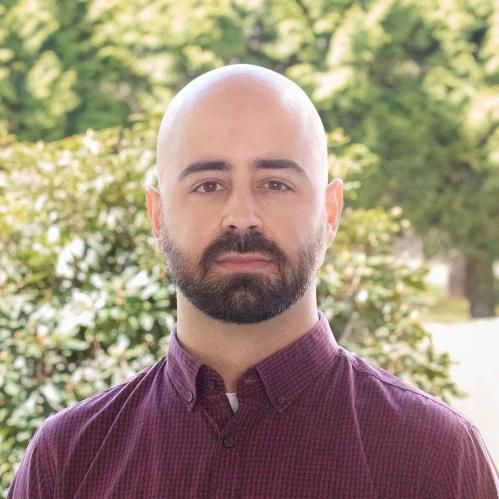
Francesc Xavier Gaya Morey is a researcher at the University of the Balearic Islands (UIB) and a member of the Graphics, Vision, and Artificial Intelligence Unit (UGiVIA). He holds a Computer Engineering degree (2021) and a Master's in Intelligent Systems (MUSI, 2022), and is currently pursuing a doctoral thesis in Information and Communications Technologies with an FPU CAIB scholarship. Education BSc in Computer Engineering (UIB, 2021) MSc in Intelligent Systems (MUSI, UIB, 2022) Research Interests His work focuses on computer vision and explainable artificial intelligence , contributing to interdisciplinary advancements in graphics, vision, and AI systems. As part of UGiVIA, he engages in collaborative R&D projects within computer science and mathematical sciences. Teaching He teaches programming languages and foundational informatics courses across multiple UIB degree programs (Computer Engineering, Mathematics, Telematics Engineering), requiring appointment-based tutoring sessions. Scientific Awards FPU CAIB Scholarship
Manuel González Hidalgo is a University Professor at the Department of Computer Science and Artificial Intelligence, School of Mathematics and Computer Science, University of the Balearic Islands (UIB). Since 1988, he has taught mathematics and computer science courses, currently specializing in the Mathematics degree program at UIB's School of Engineering. His research focuses on computer vision, image analysis, 3D modeling, and fuzzy mathematical morphology applications to medical imaging. PhD in Computer Science (1995) from UIB Licenciado in Mathematics (1988) from University of Valencia His teaching portfolio includes advanced mathematics courses like Calculus in Several Variables and Complex Variable Functions , alongside technical communication subjects. Recent research emphasizes aggregation operators and fuzzy mathematical morphology, with publications in international journals and conference proceedings. As Deputy Director of the Artificial Intelligence Research Institute and principal investigator in the SCOPIA group (Soft Computing, Image Processing, and Aggregation), he collaborates with the UGiVIA group (Graphics, Computer Vision, and Artificial Intelligence). He serves as referee for multiple journals and organizes special conference sessions.
Cristina Suemay Manresa Yee is a Full Professor at the University of the Balearic Islands within the Computer Science and Artificial Intelligence Department at the Higher Polytechnic School . She has been affiliated with the university since 2013 as a Profesor Contratado doctor and holds a PhD in Computer Science (2009) from the same institution. Research Focus : Human-Computer Interaction, Computer Vision, and Assistive Technology for Users with Special Needs. Teaching Roles : Courses include Programming , Data Structures , Scientific Research Methodology , and Final Degree Projects across Computer Science, Mathematics, and joint degree programs. Research Group : Member of the Graphics, Vision, and Artificial Intelligence Unit (UGIVIA) , a consolidated R&D&I group.
Ramon Mas Sansó is a Full Professor at the Department of Mathematical Sciences and Computer Science, University of the Balearic Islands (UIB), and has been a full-time academic since 2000. He serves as Director of the Master's Degree in Intelligent Systems (since 2018) and Secretary of the Doctoral School (since 2019), with past roles including Deputy Director of the Higher Polytechnic School (12 years, 8 months) and Secretary of his department (1 year, 5 months). Education: Graduated in Computer Science from the Autonomous University of Barcelona (1988), earned a PhD in Computer Science from UIB (1996, Cum Laude) with the thesis 'Balance Control of Multiple-Supported Articulated Systems for Computer Animation,' and holds a European Doctor Mention (1997). Research Focus: Specializes in computer graphics, vision, and artificial intelligence, with recent work on user interfaces, usability, and Human-Computer Interaction (HCI). He is a member of the Computer Graphics, Vision, and AI Unit (UGIVIA), affiliated with UIB's ANEP Computer Science and Information Technology area. Collaborates with UIB's Nursing and Physiotherapy Department on multidisciplinary research, resulting in indexed journal publications. Academic Contributions: Participated in curriculum design for UIB's Computer Science and Artificial Intelligence degrees. Supervised one doctoral thesis, numerous undergraduate and master's theses, and contributed to over 20 national/European research projects. His output includes over 20 international journal/book publications and 50+ conference contributions. Teaching: Currently teaches 'Algorithms and Data Structures II' across multiple UIB campuses and dual degrees (Computer Engineering/Mathematics) and supervises final degree/master's projects. Previously taught 'Intelligent Systems,' 'Human-Computer Interaction,' 'Data Structures,' and 'Artificial Intelligence' courses.
Juan Antonio Montes de Oca Durán is a Full Professor at the School of Mathematics and Computer Science, University of the Balearic Islands (UIB), where he has worked since 1988. He earned his Computer Science degree from the Autonomous University of Barcelona in 1987 and completed doctoral courses in Computer Graphics and Artificial Intelligence there (1988–1990). In 1998, he submitted his research thesis titled 'An Application for the Speech and Expression of 3D Synthetic Characters' at UIB. He has held leadership roles, including directing the MA ISCA 3D Animation Master’s Program (founded in 1990 under the EEC's MEDIA program) and leading the LADAT unit for animation and audiovisual technologies at UIB since 1995. His work spans research, development, and education in technological audiovisual creation. PhD thesis: 'Una aplicación para el habla y expresión de personajes sintéticos 3D' (1998) Doctoral courses: Computer Graphics and Artificial Intelligence at Autonomous University of Barcelona (1988–1990) His research focuses on Computer Graphics , Artificial Intelligence , and 3D Animation , particularly in creating synthetic 3D characters and audiovisual technologies. He has contributed to European research and training projects under the EEC framework, emphasizing technological innovation in animation. His academic work includes developing software features for 3D animation tools during his 1990 collaboration with BSCA in Paris. Scientific achievements include receiving the Mundos Digitales award (2008) for computer animation and being named a full member of the Royal Academy of Fine Arts of San Sebastián in 2008. The MA ISCA Master’s Program he co-founded has also garnered international awards and nominations. As an educator, he teaches foundational programming courses (20302 - Programming I, 21707 - Programming II, 21717 - Data Structures) across multiple degree programs at UIB, including Computer Engineering, Mathematics, and Telematics Engineering. He has served as director of the LADAT unit since 1995, focusing on training, production, and R&D in audiovisual technology.
Dr. Marc Munar Covas is an Assistant Professor at the Department of Mathematical Sciences and Computer Science, University of the Balearic Islands, where he has worked since 2020. He holds a PhD in Information and Communication Technologies (2024), a Master in Intelligent Systems (2020), and a Bachelor in Mathematics (2019) from the same institution. His research focuses on theoretical and applied aspects of fuzzy logic operators, mathematical morphology, and artificial intelligence. He has contributed to abdominal surgery image processing through the development of the clinically validated mobile application Redscar , which detects infection signs using AI analysis of patient photographs and health questionnaires. Currently undergoing multicenter validation, this tool aims to improve postoperative care in Spanish hospitals. He has also developed MIA4LUNG , a web platform for lung region segmentation and pathology detection (e.g., COVID-19, tuberculosis) using deep learning and information aggregation techniques. As a member of the Soft Computing, Image Processing and Aggregation (SCOPIA) research group and collaborator of the Graphics and Computer Vision Unit and Artificial Intelligence (UGIVIA), he has participated in national and regional competitive projects. His international research experience includes a three-month stay at LORIA (Nancy, France). Teaching activities center on mathematical analysis and statistics across multiple degree programs, including dual degrees in Mathematics with Computer Engineering and Telecommunications Engineering. He has taught courses like Integral Calculus in Several Variables , Statistics , and Linear Algebra Methods since 2020.
Francisco José Perales López is a Full Professor at the Department of Computer Science and Artificial Intelligence within the College of Mathematical Sciences and Computer Science at the University of the Balearic Islands (UIB). With a career spanning nearly four decades, he has taught courses in programming, computer graphics, and computer vision since 1986. Education: BSc in Computer Science (1986, Universitat Autònoma de Barcelona), PhD in Computer Science (1993, UIB). Research Leadership: Director of the Consolidated Research Group UGIVIA (Graphics and Computer Vision Unit & Artificial Intelligence) and member of the R&D structures LAIA@UIB and IUNICS (Neurosciences area). His research focuses on human-computer interaction and artificial intelligence applications , with participation in interdisciplinary projects bridging computer science and neurosciences. Teaching activities include leading the course Informática Gráfica (Computer Graphics) across multiple degree programs and campuses, and supervising final-year projects for Computer Engineering and Mathematics students. Teaching Roles (2020-25): Computer Graphics (Grado en Ingeniería Informática, Plan 2010/2014) Distributed Internet Applications and User Interfaces Graphical User Interfaces
Maria Francesca Roig Maimó is a Professor at the Department of Computer Science and Artificial Intelligence within the School of Mathematics and Computer Science at the University of the Balearic Islands . She earned a BSc in Computer Science in 2010 and a PhD in Information and Communications Technologies in 2018 from the same university. Teaching: Courses include Algorithmics and Data Structures II, Final Degree Projects, Human-Computer Interaction, and Distributed Internet Applications since 2017. Research: Focuses on Human-Computer Interaction (mobile devices), performance evaluation, computer graphics, and AI. Affiliation: Member of the Computer Graphics, Vision, and AI Unit (UGIVIA) . Contact: Office 221, Anselm Turmeda Building. Tutoring requires prior appointment via her staff page at personal.uib.es/xisca.roig .
Federico Thomas is a Professor of Research at the Spanish National Research Council (CSIC), based at the Institut de Robótica i Informàtica Industrial (IRI), affiliated with the Technical University of Catalonia (UPC), Barcelona, Spain. He has held visiting and invited professorships at the University of Massachusetts, Oxford University, École Centrale de Nantes, and the University of Ferrara. Telecommunications Engineering Degree, 1984, UPC Ph.D. in Computer Science, 1988, UPC NATO Postdoctoral Fellow, University of Massachusetts, 1991 His research lies at the intersection of Geometry and Kinematics , with strong applications in Robotics , Computer Vision , and Computer Graphics . He specializes in Distance Geometry and Clifford Algebras , developing mathematical frameworks for solving complex robotic motion and configuration problems. His work enables precise modeling of mechanisms such as lobster-inspired arms and parallel robots. His recent publications (2022–2025) reveal a deep engagement with geometric computation, focusing on rotation matrices, sphere tangents, ellipse intersections, and singularity analysis in parallel robots. These works consistently apply advanced algebraic and geometric methods to practical robotic challenges, demonstrating a trajectory of theoretical rigor with engineering relevance. His scientific honors include the NATO Postdoctoral Fellowship. He has served as an Associate Editor for IEEE Transactions on Robotics (2005–2009, and currently), ASME Journal of Mechanisms and Robotics (2009–2012, and currently), and The International Journal of Mechanics and Control . Federico Thomas was the former director of IRI. He advises students in robotics and geometry, as indicated by the 'Students' section on his homepage. He has not received major grants explicitly listed, but his sustained publication record and editorial roles suggest continuous research support. His 'Art and Science Tapas' initiative reflects an interdisciplinary outreach effort, blending history, art, and science. He leads research activities within the IRI, particularly in computational robotics and geometric methods. His team likely includes collaborators such as J.M. Porta, S. Sarabandi, and B. Bongardt, with whom he co-authors frequently. The 'Kinematics Virtual Library' and 'Tapas' projects suggest an educational and cultural component to his lab’s mission.
Dr. Andreu Antoni Moià Pol is a Professor in the Department of Industrial Engineering and Construction at the School of Engineering, University of the Balearic Islands (UIB). He is a member of the Mechanical Engineering Area and the Interdisciplinary Group on Energy and Sustainable Technologies (GIEST). His research focuses on Energy Efficiency and Certification of Buildings , Installations , and Renewable Energies . He specializes in Solar Energy, Unconventional Energy Sources, and Energy Transmission systems. His work involves designing new energy systems with practical applications for industry and public administration. Dr. Moià Pol has participated in more than twelve competitive R&D projects and is the inventor of several international patents. His scholarly output includes over seventy publications comprising journal articles and conference papers. Professor at the School of Engineering since 2002 Former Director of the Waste Reduction Office at the Regional Ministry of the Environment Former freelance professional in building installation design and execution He teaches Renewable Energies, Graphic Expression and Computer-Aided Design, and Building Installations across multiple engineering degree programs at UIB, including Agricultural Engineering, Electronic Industrial Engineering, and Building Engineering programs.
Jordi Llabrés Bordoy is a Senior Lecturer at the Department of Psychology, University of the Balearic Islands (UIB), where he earned his PhD in Psychology in 2000. His research focuses on integrating Information and Communication Technologies (ICT) into Behavioral Therapy, with applications such as software design for attention deficit disorder evaluation, computer-assisted treatment for fear of flying, and anxiety prevention in adolescents via social networks. He has participated in 20 competitively funded research projects and co-authored over 50 scientific papers. Research Affiliations: Member of the Consolidated R+D+I Groups 'Cognitive Affective Neuroscience & Clinical Psychology (CANCLIP)' and 'Computer Graphics, Vision and Artificial Intelligence Unit (UGIVIA)' Leadership Roles: Former Secretary and Director of the Department of Psychology, Vice-Rector of Innovation at UIB, and current leader of the Behaviour and Technology Laboratory His academic career spans 25 years, during which he has taught courses on behavior modification techniques, ICT in clinical psychology, and coordinated external internships for the Psychology Department. Recent teaching includes subjects like Psychological Intervention Techniques and Cognitive Therapies for undergraduate and master's programs. Key Projects and Contributions Computer-aided gardening training program for Esment Foundation On-site airport intervention for fear of flying (Palma Airport collaboration with Air Europa) tSalut - Award-winning digital health business plan
José Antonio López Vázquez is a faculty member at the University of A Coruña , specifically within the Industrial Engineering Department at the School of Engineering of Ferrol . His academic career focuses on teaching and research in areas such as Graphic Expression in Engineering and BIM (Building Information Modeling) applied to industrial and sustainable projects. He has contributed to research through collaborations on topics including energy efficiency in buildings, BIM methodology for healthcare centers, and renewable energy installations. His work spans both theoretical and practical applications, with involvement in projects like the development of BIM models for health centers and energy-efficient design of industrial facilities. José Antonio López Vázquez provides mandatory and optional courses such as Graphic Expression and BIM Methodology , with significant teaching hours dedicated to Industrial Engineering and Energy Efficiency and Sustainability programs. He also supervises Bachelor's and Master's theses related to industrial design, renewable energy, and construction projects.
ROI MENDEZ FERNANDEZ is a Professor at the University of Santiago de Compostela, affiliated with the Department of Communication Sciences within the Faculty of Communication Sciences. He is also part of the Institute of Studies and Development of Galicia (IDEGA) and the Audiovisual studies research group focused on audiovisual communication technologies. His academic career includes a doctoral thesis in 2017 titled Advanced visualization and interaction applied to virtual scenarios , supervised by Dr. Julian C. Flores González and Dr. Enrique Castelló Mayo. His research interests center on virtual TV set technologies , mixed reality applications in education , motion capture systems , and cloud-based educational platforms . Recent work explores the viability of tools like Cloudclass in primary education, telepresence in art education, and benchmarking human pose estimation solutions for virtual television. Notable contributions include developing distributed virtual TV architectures, cyclorama illumination calibration, and low-cost sensor integration for natural interaction systems. His projects often bridge academic research with practical applications in media production and educational technology. He actively collaborates with the COGRADE research group on computer graphics and data engineering.
Alfredo Pina Calafi is a Professor at the Public University of Navarra's Department of Statistics, Computer Science and Mathematics. His work focuses on educational technology, computer graphics, and multimedia systems, with significant contributions to e-learning and technology integration in education. He is actively involved in curriculum adaptation to the European Higher Education Area (EHEA) and has pioneered projects like the Virtual Classroom initiative recognized with the 3rd Prize in National Awards for Educational Innovation (2005). His research spans augmented reality applications for linguistic heritage preservation, educational robotics in primary education, and interactive digital solutions for science learning. Education: PhD in Computer Science (University of Zaragoza, 2001) Key Projects: ALFA T_GAME (teaching materials exchange for computer graphics), VideoPlanet (planetarium visualization systems), and mobile emergency decision-making systems for Pamplona's bull run Research interests emphasize bridging technology and education through innovative tools. Over 25 years of academic contributions include directing three doctoral theses and co-authoring books on educational robotics and digital narratives. He has coordinated major educational adaptation projects and led teams developing virtual environments and intelligent systems for diverse applications. Notable collaborations include work with institutions like the European Center for Soft Computing and participation in international congresses on artificial intelligence and educational informatics. His work consistently integrates pedagogical theory with cutting-edge technological solutions.
Pedro Ignacio Álvarez Peñín is a Professor at the University of Oviedo, Department of Construction and Manufacturing Engineering, specializing in Graphic Expression in Engineering. His research focuses on Computer-Aided Design (CAD), educational technology, and applications of graphic engineering. He has directed four doctoral theses and actively contributes to academic conferences and publications. Notable projects include the development of platforms like DIBUTEC and Selfcad, which enhance interactive learning in CAD and engineering graphics. His work integrates CAD with medical imaging for surgical simulations and explores BIM technology in industrial education. He has collaborated extensively on projects addressing curriculum adaptation to European standards and modernizing technical drawing education through multimedia and web-based tools. Institutions: University of Oviedo (1988–present) Education: Ph.D. in Graphic Design Systems from the University of Oviedo (1988). Research Interests: CAD in education, interactive learning systems, BIM technology, medical imaging applications, graphic engineering pedagogy, and software integration for engineering projects. He emphasizes practical applications of CAD tools in both academic and industrial contexts. Articles Trends: His work spans CAD education, software development for engineering documentation, and the integration of technology into teaching. Recent projects highlight cross-platform tools (e.g., DIBUTEC), mobile applications for energy simulation, and BIM-based industrial training. Earlier contributions explored algorithmic approaches to CAD systems and 3D modeling for surgical planning. Directed Theses: Bernardo Busto Parra (2016): Industrial project management with ICT. Pablo Pando Cerra (2006): 3D CAD learning environments. Ramón Rubio-García (2003): Modular CAD applications. Maximo Roman Perez Morales (2002): Descriptive geometry teaching tools. Grants/Projects: Multiple collaborations on EU-funded educational technology initiatives and graphic engineering research. Labs/Teams: Part of the University of Oviedo’s Graphic Engineering research group, focusing on CAD integration and educational innovation.