Michaela Bačíková is an Assistant Professor at the Faculty of Electrical Engineering and Informatics (FEI) of the Technical University of Košice (TUKE). Her research focuses on Human-Computer Interaction (HCI), domain usability, and domain analysis, with an emphasis on graphical user interfaces (GUIs), domain-specific languages (DSLs), and gesture-driven interaction. She leads the development of the DEAL tool, a domain analysis framework for extracting domain models from software systems. Her teaching includes courses on component-based programming, web technologies, and user interface design. Research Projects: DEAL (Domain Extraction ALgorithm) : A tool for analyzing GUIs to generate DSLs, ontologies, and usability metrics. EU Project: 'Evolving Architectural Knowledge in the Edge-to-Cloud Continuum' (participant). Educational initiatives: Integrating gesture-driven IDEs and social networks for mentoring in programming courses. Research Interests : Automated domain usability evaluation using DEAL. DSL-driven GUI generation and feature modeling. Innovations in teaching software development and user experience design. Grants & Labs : Recipient of FEI TUKE Grant no. FEI-2015-16 for domain usability metrics research. Active in the FEI lab developing DEAL and related tools.
Robert Makar is an Associate Professor and Head of the Department of Graphics and Other Media at the Academy of Fine Arts and Design in Bratislava (VŠVU). He maintains an active teaching schedule with office hours on Tuesdays and Thursdays from 8:00-12:00 and teaches the Preparatory Course of Graphics. His research and artistic interests focus on contemporary graphic arts, digital graphics, visual communication, and new media art. Makar's work bridges traditional printmaking techniques with digital media, exploring conceptual approaches to visual narrative and material experimentation. His artistic practice spans small format works, installations, and digital compositions that often engage with literary and philosophical themes. Makar has exhibited extensively internationally, with recent works including the 'Preinvented Experience' series (2018) and 'Graphics for Juraj Meliš' (2022). His artistic output demonstrates consistent engagement with both traditional graphic media and contemporary digital techniques, reflecting his dual role as educator and practicing artist. He has participated in numerous international exhibitions across Europe and North America, including the Triennial of Book Art in Martin (2010), Space of Gravity at Aircraft Gallery in Bratislava (2010), and exhibitions at the University of Houston-Clear Lake (2011). His work appears in collections including the Orava Gallery. Makar maintains professional connections through social media platforms including Instagram (@makar.robert) and his website www.portalvs.sk, demonstrating engagement with contemporary art discourse and digital presentation of artistic work.
Assoc. Prof. Matej Novotný is an Associate Professor in the Department of Digital Arts at the Academy of Fine Arts and Design in Bratislava. He specializes in creative programming, game design, and virtual environments. His courses include Creative Programming I-IV, Studio Galaxy Guide, and Creating Games and Virtual Environments I & II. He holds a PhD and M.Sc., and his work bridges artistic creativity with digital technologies. His teaching focuses on interdisciplinary approaches to digital media, emphasizing practical studio-based learning. He maintains an online presence at www.digitalneumenia.sk/posadka and can be contacted at novotny@vsvu.sk.
Martin Schwarz, PhD., serves as Assistant Professor at the Academy of Fine Arts in Bratislava (VŠVU), specializing in the Drawing cabinet department. Born December 30, 1992 in Podkriván, he graduated from the Academy of Fine Arts under Prof. Dušan Kállay and Assoc. Prof. Ľuboslav Paľ, and has been teaching figurative drawing, typography, and computer graphics at the School of Design since 2017. Currently pursuing doctoral studies at UCM in Trnava, Schwarz focuses on visual storytelling research while maintaining active artistic practice. His research interests center on visual narrative techniques, with particular emphasis on historical comics, biographical illustration, and the interplay of light and shadow in monochromatic drawing. Schwarz has developed a distinctive approach to figure drawing that emphasizes emotional expression through hand studies and drapery techniques, informed by his academic position teaching these subjects. His work bridges traditional drawing methods with contemporary digital tools like Procreate on iPad, creating a unique hybrid practice that informs both his artistic output and pedagogical approach. Schwarz's most significant publications form part of the fourteen-part MÓRIC comic series about Slovak historical figure Móric Beňovský, where he collaborates with multiple artists across different volumes. His contributions demonstrate an evolving artistic approach, moving from sepia flashback sequences in the first volume to more complex narrative techniques in subsequent issues. The series has gained international recognition for its historical accuracy, particularly in uniform and setting details, reflecting Schwarz's commitment to historical research in visual storytelling. 1st place 69th Premio Salvi "Piccola Europa" Italy (2019) The most beautiful children's book of the winter (BUBIANA award) for "Friends from the Wall" (2018) 1st place (Egon Schiele Prize) in the FIGURAMA Competition (2018) As an external teacher at the Academy of Fine Arts since 2020 and active member of the POMIMO association, Schwarz contributes significantly to the Slovak comics community through both teaching and collaborative projects. His work on the crowdfunding-supported MÓRIC series demonstrates innovative approaches to comic book production and distribution in the Slovak context. Schwarz also participates in international art projects like ArtMentoring's "Bridging the Gap" and has exhibited his work in solo and group exhibitions across Slovakia and the Czech Republic.
Šlapak Eugen is an Assistant Professor at the Technical University of Košice. His research focuses on autonomous driving systems, edge computing, and network optimization, with a particular emphasis on applying neural networks and blockchain technologies in vehicular and 5G networks. Eugen Šlapak holds a PhD in [specific field not explicitly stated, likely Engineering/Computer Science] and an Ing. (engineer) degree. His academic background combines technical expertise in telecommunications and computer science. His research interests span autonomous driving technologies, including simulation and control systems, as well as edge computing and metaverse integration. He also explores blockchain applications in vehicular networks, resource allocation in 5G and beyond, and the use of graph neural networks for network optimization. His work intersects machine learning, robotics, and telecommunications to address challenges in modern communication systems and intelligent transportation. Recent publications highlight advancements in neural radiance fields for industrial robotics, distributed edge video compression for autonomous driving, and blockchain-based resource allocation in connected vehicles. Earlier work includes optimization of UAV-assisted networks and HetNet topology design using machine learning clustering methods. While no formal awards are listed, his contributions to vehicular networks, edge computing, and AI-driven network design reflect significant scholarly impact. Advising details are not documented here, but his research collaborations likely involve cross-disciplinary teams focusing on autonomous systems and 5G infrastructure. No lab affiliations or teams are explicitly mentioned, though his teaching role in the course Stochastické modelovanie a analýza dát (SMaAD) suggests involvement in data analysis and stochastic modeling initiatives.
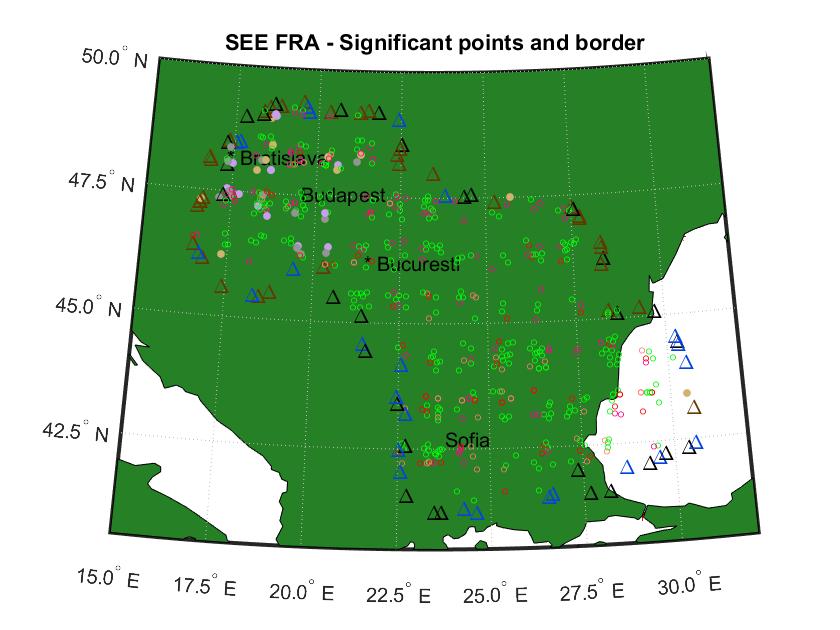
Peter Szabó is an Associate Professor at the Department of Aviation Technical Training , Faculty of Aeronautics , Technical University of Košice , Slovakia. He is actively involved in research at the intersection of mathematics, computer algebra, and aerospace engineering. Academic Affiliation: Technical University of Košice, Faculty of Aeronautics, Department of Aviation Technical Training Research Interests include: Mathematical modeling in aviation (Free Route Airspace, complex networks) Linear algebra and numerical methods with MATLAB/SageMath Calculus education and computational techniques Graph theory applications to air traffic systems Recent Article Trends highlight: Integration of calculus and numerical analysis for educational tools (2025) Mathematical axioms for airspace modeling (2022) Cloud computing in aviation research (2022) Linear algebra textbooks and computational exercises (2019) Advising : Mentored students on topics ranging from satellite stabilization to air traffic optimization.
Ladislav Végh, PhD., serves as an Associate Professor in the Department of Informatics at the Faculty of Economics and Informatics, J. Selye University in Komárno, Slovakia. With an office in TP3C and contactable via veghl@ujs.sk, he has maintained continuous academic employment at the university since 2005. His academic journey includes university studies in teaching mathematics-informatics at Constantine the Philosopher University in Nitra (1994-1999), examina rigorosa in teaching informatics at J. Selye University (2007-2008), and PhD studies in Basics and Methodology of Informatics at ELTE, Budapest (2009-2018). Végh's research focuses on innovative approaches to computer science education, particularly teaching programming through interactive methods. His primary research interests include teaching programming using animations, machine learning applications in education, and artificial intelligence integration in pedagogical contexts. He has consistently explored how game-based learning and visual representations can enhance students' understanding of complex programming concepts, with particular emphasis on algorithmic thinking and object-oriented programming principles. His publication record demonstrates a clear trajectory from foundational work on algorithm animations for teaching sorting concepts toward increasingly sophisticated applications of machine learning and deep learning in educational contexts. Recent publications show expansion into medical informatics applications, cultural heritage preservation through 3D modeling, and pandemic-era educational adaptations, while maintaining his core focus on programming education methodologies. His work frequently appears in reputable international conferences and journals, with growing citation impact. Electronic support of teaching programming (2008-2010) Terminology in e-learning (2009-2011) Modeling and animation-simulation models in e-learning (2011-2013) Modelling, simulation and animation in education (2014-2016) Interactive animation and simulation models in education (2018-2020) Analysis of natural and mathematical education at high schools (2019-2021) Interactive animation and simulation models for deep learning (2021-2023) Intelligent Animation-Simulation Models for Deep Learning (2024-2026) Végh has secured significant research funding through multiple KEGA and VEGA projects, demonstrating sustained research productivity and relevance. His work bridges theoretical computer science concepts with practical educational applications, particularly focusing on how interactive visualizations and game mechanics can transform programming education. His current projects indicate continued exploration of deep learning applications in educational contexts, suggesting an evolving research agenda that maintains educational technology at its core while expanding into more advanced AI methodologies.
Prof. Annamária Várkonyiné Kóczy is a Professor at the Department of Informatics within the Faculty of Economics and Informatics at J. Selye University. She holds a joint appointment as a professor at Óbuda University's Institute of Software Design and Software Development. Her academic journey includes: Electrical Engineering studies (Measurement and Control) at Technical University of Budapest (1975-1981) Mechanical Engineering degree (Mechanical Engineer-Teacher) from the same institution (1978-1983) PhD in Computer Science from Technical University of Budapest (1996) DSc (Doctor of Sciences) from Hungarian Academy of Sciences (2010) Habilitation from Széchenyi István University (2017) Her research spans digital signal processing, soft computing, and hybrid techniques for complex systems, with applications in medical diagnostics, intelligent control, and sustainable technologies. She leads projects in computational intelligence and has developed novel algorithms for real-time processing in resource-constrained environments. Recent publications demonstrate strong focus on AI-driven solutions: machine learning for bioacoustic analysis (beehive swarming), fuzzy logic optimizations for edge computing, medical imaging diagnostics (COVID-19 detection), and sustainable energy control systems. Her work consistently bridges theoretical models with practical implementations in healthcare, environmental monitoring, and industrial diagnostics. She has secured multiple research grants including: OTKA K 105846: Intelligent Space and robotics (2012-2017) OTKA K 78576: Intelligent techniques in signal/image processing (2009-2013) GVOP-3.3.1: Intelligent 3D modeling systems (2006-2007) EU Structural Funds projects on vehicle industry collaborations She mentors graduate researchers in applied informatics and leads international collaborations across Europe and Asia, focusing on intelligent systems development.
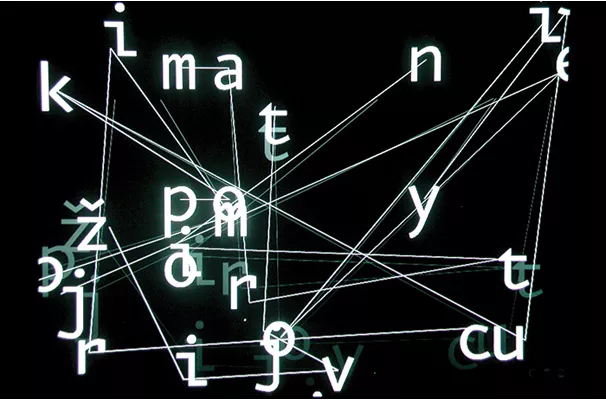
Assoc. Prof. Ján Šicko is an Associate Professor and Department Chairperson at the Department of Visual Communication at the Academy of Fine Arts and Design in Bratislava (VSVU). He leads the Multimedia Studio and Preparatory Course, focusing on interactive multimedia, digital art, and educational technology. His work bridges traditional art forms with digital innovation through installations, authorial software, and interactive design. Research interests emphasize digital interactivity in art, including interactive scenography, multimedia authoring tools, and computational processes in creative practice. His projects like Hit Bonacic (2012) and Cyprian's Herbarium (2011) showcase interdisciplinary approaches to digital media. Recent works (2003–2012) explore topics ranging from digital calligraphy to real-time interactive systems, reflecting a commitment to pushing boundaries in new media art education and practice.
Assoc. Prof. Ing. Csaba Szabó, PhD is an Associate Professor at the Faculty of Electrical Engineering and Informatics, Technical University of Košice . His research focuses on Green Software/IT, Software and Testware Evolution, Behavioral Description of Software, Computer Simulation, Virtual Reality, Information/Web/Cloud Systems, and Autonomic Computing (Self-Healing/Self-Testing). He teaches courses in Software Engineering, Database Systems, and Modeling/Prototyping. Projects: ERASMUS+ KA1 Coordinator, CEEPUS Coordinator, Type Theory Education in IT, Bridge Prestressing Forces Analysis Conference Roles: Organizing Committee (Informatics'11, '15), Program Committee (AIeLE’15, IeLSs 2012), Reviewer (SISY 2013–2018, SCYR 2012–2017). Publications: Authored monographs on parallel computing, software testing, and large data processing. His 2015 work on compressor station throughput modeling was published in Nonlinear Analysis: Modelling and Control .
Branislav Sobota is an Associate Professor at the Technical University of Kosice. He teaches courses such as Virtual Reality Systems (VRS), including both lectures and laboratory exercises, and conducts research in computer graphics, virtual reality technologies, user interfaces, and parallel computing. He is affiliated with the university's Letná 9 building, specifically room B515 (formerly B527). His consultation hours are currently undefined. Research Focus: Computer Graphics Virtual Reality Technologies User Interface Design Parallel Computing Teaching Activities: Virtual Reality Systems (VRS) lectures and laboratory exercises Dr. Sobota's work integrates theoretical and applied aspects of interactive technologies, with a focus on advancing virtual reality systems and optimizing computational methods for real-time graphics and interface design. His research profile is documented on Publons .
RNDr. Ján Lacko, PhD is the Dean of the Faculty of Informatics at Paneurópska Vysoká Škola and heads the Laboratory of Virtual and Augmented Reality (part of the global VR First network). His teaching focuses on web technologies, visual computing, multimedia, 3D modeling, animation, and virtual/augmented reality. His research centers on applications of virtual reality in healthcare, museum data presentation, education, and industry. He has led multiple research projects including: InovEduc (Nórsky fondy, 2015) Multimedia & Communication in Education & Science (NAWA, 2019) Methods of virtual reality for stroke rehabilitation (GAAA, 2015) Early Warning of Alzheimer (OPVaI, 2020) Advanced AI applications in industrial/medical domains (GAAA, 2015) With 50 publications and 116 citations, his work is accessible through Google Scholar and ResearchGate.
Assoc. Prof. RNDr. Eugen Ružický, CSc. serves as Vice-Dean for Research and International Relations at the Faculty of Informatics, Paneuropean University PEVŠ. With a background in computer graphics and image processing, he has supervised doctoral students now working at universities in Japan, the USA, and the UK. Founder of the internationally recognized Computer Graphics SSCG conference Principal investigator for projects like "Interactive Automated Design System" and "Comgraph System" Collaborated on stereotactic brain operation systems (1990-1995) Active in international research collaborations (Norway Grants, Visegrad Fund) His expertise spans GPU/WSN algorithms, 4G simulation, and computer-aided design systems, with over 100 publications. Currently teaches Bachelor's thesis courses and Project Management.