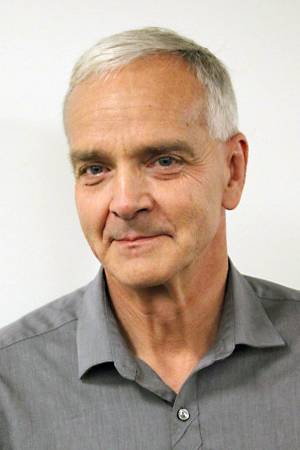
Martial Hebert is the Dean and University Professor of Robotics at Carnegie Mellon University's School of Computer Science (SCS), leading since August 2019. His career spans decades at CMU's Robotics Institute (RI), where he served as Director (2014-2019) and Professor (1999-present). Broad research interests in computer vision, perception for autonomous systems, and 3D environment modeling. Current PhD advisees include Zhipeng Bao, with numerous past PhD and Master's students listed. Editor-in-Chief of the International Journal of Computer Vision and member of IEEE Robotics and Automation Society. His research focuses on computer vision and robotics , emphasizing 3D data interpretation, object recognition, and machine learning applications. Recent articles highlight advancements in 3D vision , diffusion models , and disaster response robotics , reflecting a trajectory from foundational algorithms to applied autonomous systems. Notably, he pioneered the first master's program in computer vision in the U.S. Hebert's leadership in academic and research spheres includes directing the RI and securing an operating budget peak during his tenure. His work bridges perception, intelligence, and autonomous systems, with applications in disaster scenarios , LiDAR point cloud detection , and video forecasting .
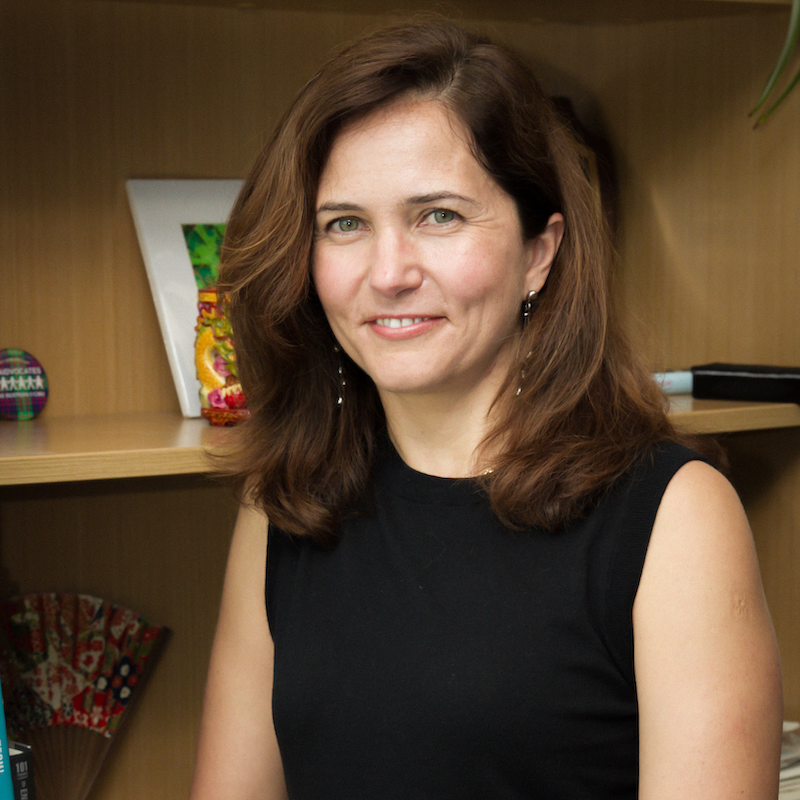
Matthew A. Smith is a Professor in the Department of Biomedical Engineering and the Carnegie Mellon Neuroscience Institute, where he serves as Co-Director of the Center for the Neural Basis of Cognition. His research bridges computational and experimental neuroscience to understand visual perception, cognition, and motor control. Dr. Smith's research focuses on neural engineering, visual perception, cognition, eye movements, and neural circuits . His laboratory investigates how groups of neurons interact to construct visual perception and translate it into cognitive processes and motor outputs. The lab employs a multi-scale approach combining single-neuron electrophysiology with global signals like EEG and near-infrared imaging, examining both normal and disease states of the brain. Analysis of his recent publications reveals strong trends in brain stimulation optimization (e.g., MiSO/OMiSO frameworks), neural population dynamics during cognitive tasks, visual cortex plasticity , and non-invasive neurotechnology development. His work spans fundamental neuroscience questions about working memory and perception while developing practical tools for brain monitoring and intervention. NIH K99/R00 Pathway to Independence Award Research to Prevent Blindness Career Development Award Dr. Smith has secured substantial funding from NIH, NSF, Research to Prevent Blindness, Schaffer Foundation for Glaucoma Research, and Hillman Foundation to support his research program. His laboratory actively develops novel methodologies for neural recording and stimulation while investigating fundamental mechanisms of visual processing and cognition. The lab maintains strong collaborative ties within Carnegie Mellon's neuroscience ecosystem through the Center for the Neural Basis of Cognition.
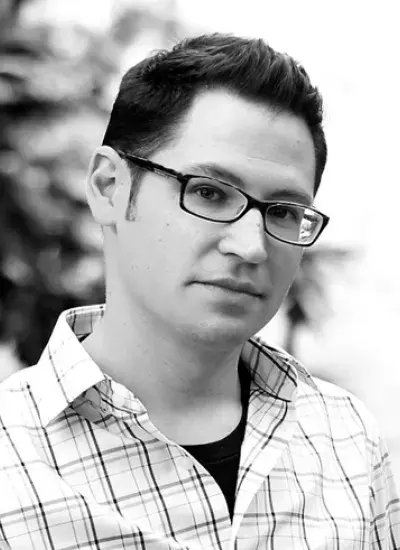
Dr. Burcu Akinci is the Paul Christiano Professor and Department Head of Civil and Environmental Engineering at Carnegie Mellon University (CMU), with a courtesy appointment in Electrical and Computer Engineering. She holds a BS from Middle East Technical University, an MBA from Bilkent University, and MS/PhD from Stanford University. Her research focuses on integrating BIM with 3D imaging/sensor data to create digital twins for construction and infrastructure management, emphasizing predictive operations and fault diagnosis in HVAC systems. She has secured over $16M in grants, authored 70+ journal papers, and pioneered methodologies for as-built BIM generation and infrastructure monitoring. Education : PhD 2000 - Stanford University (Civil & Environmental Engineering) MS 1995 - Stanford University MBA 1993 - Bilkent University BS 1991 - Middle East Technical University Research Interests : Dr. Akinci develops technologies to streamline construction and infrastructure operations through digital twins. Key areas include: BIM integration with IoT/sensor networks 3D imaging for asset management Fault detection in HVAC systems Autonomous environmental control for space habitats Predictive maintenance using AI Grants & Patents : $6M+ PI grants, $10M+ co-PI grants (federal/state/industry) 2 patents issued, 1 provisional patent Labs & Teams : Active in the Scott Institute for Energy Innovation, leading projects on smart buildings and infrastructure resilience.
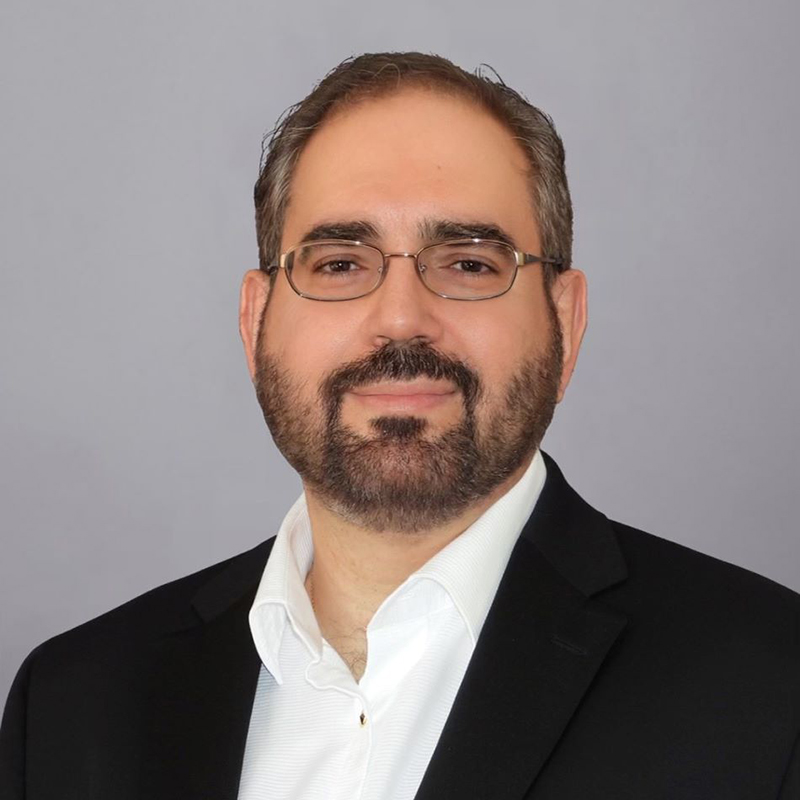
Adam Perer is an Associate Professor at Carnegie Mellon University, where he is a member of the Human-Computer Interaction Institute within the School of Computer Science. He serves as Co-Director of the Data Interaction Group and holds leadership positions as Area Papers Chair at IEEE VIS and Visualization Subcommittee Papers Chair at ACM CHI. Previously, he worked as a Research Scientist at IBM Research. Ph.D. in Computer Science from the University of Maryland, College Park Perer's research integrates data visualization and machine learning techniques to create visual interactive systems that help users make sense of big data. His work focuses on human-centered data science, extracting insights from clinical data to support data-driven medicine, and facilitating human-AI collaboration. He investigates how people engage with and make decisions using data, designing new interfaces to interact with complex information while assisting impactful domains drowning in data. His recent publications reveal a strong trend toward healthcare applications of AI and visualization, particularly in clinical decision support and overdose prevention. There's also a significant focus on explainable AI (XAI), with multiple papers examining how imperfect explanations affect human-AI collaboration and decision-making in critical contexts like healthcare. His work consistently bridges visualization theory with practical applications in high-stakes domains. Best Paper Honorable Mention for 'Dead or Alive: Continuous Data Profiling for Interactive Data Science' (VIS 2023) Best Paper for 'Neo: Generalizing Confusion Matrix Visualization' (CHI 2022) Most Reproducible Paper Award for 'SQLShare' (SIGMOD 2016) Perer actively mentors students across all levels, with PhD students focusing on human-AI collaboration in healthcare settings, visualization techniques, and clinical decision support systems. His lab receives funding for projects related to human-centered AI, data visualization in healthcare, and explainable machine learning systems. The Data Interaction Group, which he co-directs, focuses on empowering everyone to analyze and communicate data through interactive systems. His research has been supported by collaborations with medical institutions and appears in premier venues for visualization, human-computer interaction, and medical informatics. Current projects include Eye into AI (improving XAI interpretability), Predicting and Visualizing Overdose Risk, and AI applications in intensive care units.
Marios Savvides is the Bossa Nova Robotics Professor of Artificial Intelligence and a Full Tenured Professor in the Electrical and Computer Engineering Department at Carnegie Mellon University (CMU). He is also the Founder and Director of the CyLab Biometrics Center. His research focuses on AI algorithms for biometrics, facial recognition, iris scanning, and object detection under challenging conditions. He holds a BEng from the University of Manchester, an MS in Robotics from CMU, and a PhD in Electrical and Computer Engineering from CMU. Education: BEng, Microelectronics Systems Engineering, University of Manchester Institute of Science and Technology (1997) MS, Robotics, Carnegie Mellon University (2000) PhD, Electrical and Computer Engineering, Carnegie Mellon University (2004) Research Interests: Core AI and machine learning for robust biometric systems Long-range iris capture and matching Low-shot object detection and scene understanding Applications in retail automation, airport security, and medical imaging Key Achievements: Recipient of seven Best Paper Awards and the 2022 PIPLA Inventor of the Year Recipient of the 2015 Edison Gold Award, 2018 Immigrant Entrepreneur Award, and 2020 AI Excellence Award Developed AI algorithms deployed in over 3 million ADT security cameras and Bossa Nova robots Spun off startups including HawXeye and Oosto, serving as CTO/Chief AI Scientist Grants and Partnerships: Collaborations with Bossa Nova Robotics, Egen, UltronAI, and CMKL University Research on facial recognition for stock market prediction and medical imaging privacy risks Labs and Teams: Director of the CyLab Biometrics Center Member of IEEE Biometric Council and contributor to the IEEE Certified Biometrics Professional program
Peter Spirtes serves as the Marianna Brown Dietrich Professor and Head of the Department of Philosophy at Carnegie Mellon University's Dietrich College of Humanities and Social Sciences. His academic career spans multiple disciplines including philosophy, statistics, graph theory, and computer science, with a primary focus on causal inference methodology. Spirtes' research interests center on developing theoretical frameworks and practical algorithms for inferring causal relationships from observational data when controlled experiments are impossible. His work addresses fundamental questions about the relationship between probability and causality, with applications across epidemiology, econometrics, sociology, and political science. He leads the influential TETRAD project, which has produced computer programs for causal structure discovery. His extensive publication record demonstrates consistent contributions to causal discovery methodology, with recent work extending into 2024-2025. Spirtes' research increasingly addresses challenges in high-dimensional data, confounding variables, and the integration of causal methods with machine learning. As department head, Spirtes oversees academic programs including the Logic & Computation program, which combines philosophical and computational approaches to reasoning. His leadership position reflects his standing as a senior scholar in both philosophy and interdisciplinary causal methodology.
Haohan Wang is an Assistant Professor at the University of Illinois Urbana-Champaign's School of Information Sciences, with affiliations to the Carl R. Woese Institute for Genomic Biology and the National Center for Supercomputing Applications. His research focuses on developing trustworthy machine learning methods for computational biology and healthcare applications , emphasizing robustness , causality , and interpretability in vision-based models. Recent research trends in his work include: Large Language Model interactions with biomedical challenges (GenoAgent, GenoTex) Adversarial security in language and vision models (Guard, Jailbreakzoo) Genomic data analysis through robust machine learning frameworks (Precision Lasso, Kernel Mixed Models) Interactive toolkits like Robustar for data annotation and model training Scientific awards include recognition as Baidu's Top 50 AI+X Rising Young Scholars (2022), Best Paper Honorable Mention at WSDM 2023, and Broad Institute's Next Generation status (2019). Current projects explore AI-made scientists for biomedical discovery and Robustar development for GUI-based robust vision learning.
Benoit Hudson is an Assistant Professor at the Toyota Technological Institute at Chicago, specializing in computational geometry and algorithm design with theoretical guarantees. His work bridges practical implementation and theoretical analysis in mesh refinement, with applications to scientific computing and computer graphics. He has also contributed to auction theory and hybrid systems simulation. Research interests include: Computational geometry Mesh refinement algorithms Scientific computing Data structures Algorithm design His recent publications analyze: Volume mesh size complexity Linear-time surface reconstruction Delaunay refinement guarantees Dynamic mesh updating Parallel mesh generation He maintains the sparse-meshing.com resource and previously worked on spacecraft diagnosis systems at NASA Ames Research Center. His academic advisors included Gary Miller (Carnegie Mellon University) and Tuomas Sandholm during early PhD years.
Andrej Risteski is an Associate Professor at the Machine Learning Department of Carnegie Mellon University (CMU) since 2025. He previously held the Norbert Wiener Research Fellow position jointly between the Applied Math Department and IDSS at MIT (2017–2019) after completing his PhD in Computer Science at Princeton University (2012–2017) under Sanjeev Arora . His research focuses on the intersection of machine learning, statistics, and theoretical computer science , emphasizing generative models, representation learning, and out-of-distribution generalization with applications to natural language processing and scientific domains . His recent publications explore edge embeddings in Graph Neural Networks (GNNs) , score matching efficiency , and theoretical foundations of diffusion models . Key contributions include analyzing computational bottlene.com/activities/statistical-and-computational-challenges-in-probabilistic-scientific-machine-learning-sciml/">NSF CAREER Award , DOE Computational Science Graduate Fellowship for Stephen Huan, and co-organizing the COLT workshop on Theory of AI for Scientific Computing . He advises PhD students across Machine Learning, Computer Science, and Mathematics , including Bingbin Liu (Kempner Institute Fellow) and Elan Rosenfeld (Google Research Scientist). Teaching includes Probabilistic Graphical Models and Advanced Deep Learning at CMU, plus Applied Mathematics at MIT. His work is supported by NSF, DoD , and OpenAI Superalignment grants. Education : PhD in Computer Science (Princeton), BSc in Computer Science (Princeton) Current Positions : Associate Professor, CMU Machine Learning Department Former Positions : Norbert Wiener Fellow, MIT IDSS & Applied Mathematics Research Areas : Generative Models (GANs, Diffusion Models) Representation Learning Out-of-Distribution Generalization Neural Language Models AI for Scientific Applications Sampling and Optimization Algorithms Scientific Awards : NSF CAREER Award (2023) Google Research Award (2024) Amazon Research Award (2022) OpenAI Superalignment Grant (2023) Recent Talks (2023–2025): "Architectural Nuances and Benchmark Gaps in Scientific ML" (UC Berkeley, 2025) "The Statistical Cost of Score-Based Losses" (Simons Institute Boot Camp, 2024) "Neural Networks for PDEs" (ETH Zurich, 2024) "Discernible Patterns in Transformers" (Theory of Interpretable AI, 2024) He leads a research group producing work at the interface of computational complexity and graph learning , with empirical validation on topological bottlenecks and hub node dynamics . Current projects include ICML 2025 paper on edge embeddings in GNNs and COLT 2025 workshop on AI for Scientific Computing co-organized with MIT, Duke, and ETH Zurich collaborators.
Victor Akinwande is a doctoral researcher at Carnegie Mellon University's Computer Science Department under advisor J. Zico Kolter. His research focuses on robust machine learning systems, causal inference for global health applications, and advancing vision-language models through generative modeling techniques. He holds an MSc in Information Technology (CMU, 2016–2018) and a BSc in Computer Science from the University of Ilorin (2011–2015). His work spans key areas including adversarial robustness, generalization bounds for prompt-based learning, and causal effect estimation in public health. Notable contributions include HyperCLIP (2024), AcceleratedLiNGAM (2024), and foundational work on subset scanning for anomaly detection in health data (2020–2022). Victor has been recognized with an Outstanding Paper Award (ICLR 2024 workshop) and a Distinguished Paper Award Nomination (AMIA 2022). His research bridges theoretical machine learning advancements with practical applications in global health systems and AI safety.
Yang P. Liu is an Assistant Professor in the Computer Science Department at Carnegie Mellon University. Previously, he was a Postdoctoral Member at the Institute for Advanced Study and earned his PhD from Stanford University under the supervision of Aaron Sidford. His research focuses on theoretical computer science and mathematics, emphasizing graph algorithms, optimization, high-dimensional geometry, and additive combinatorics. He has received notable awards including the A.W. Tucker Prize and Google PhD Fellowship, alongside multiple best paper recognitions at major conferences like FOCS, STOC, and ITCS. Education: PhD in Computer Science from Stanford University (2023); BS from MIT (2018). Research Interests: Graph Algorithms Optimization (especially convex and high-dimensional) Algorithmic Techniques in Additive Combinatorics Geometric and Structural Aspects of Computation Teaching: Currently instructing CS 15-759: A Principled Approach to Optimization (Spring 2025), covering topics like gradient descent, interior-point methods, and sparsification techniques. Course emphasizes rigorous mathematical foundations. Awards: Recognized for contributions to optimization theory and algorithmic complexity. His work bridges discrete mathematics and continuous optimization paradigms.
Johannes DeYoung is an Associate Professor of Electronic and Time-Based Media at Carnegie Mellon University's School of Art. His work bridges computational processes and material practices, with exhibitions at global venues like MoMA PS1, National Taiwan Museum of Fine Arts, and B3 Biennale of the Moving Image. He co-founded the web journal Lookie-Lookie and has held leadership roles, including Director of the Center for Collaborative Arts and Media at Yale University School of Art (2008–2018). DeYoung’s research explores immersive media, blockchain/NFTs in art, and animation pedagogy, supported by projects like the Blended Reality program in immersive media. Education: MFA from Cranbrook Academy of Art (2006). Professional affiliations include roles with the New Foundations Board of Study at Purchase College (SUNY), Lyme Academy College of Fine Arts, and Pennsylvania Academy of the Fine Arts as a Digital Literacy Consultant. Research interests focus on digital art’s intersection with technology, including NFTs, virtual reality, and collaborative animation. Recent publications analyze blockchain’s impact on art economies and VR navigation. His works have been featured in The New York Times , Dossier Journal , and festivals like Digital Graffiti Festival (2024 Curator’s Choice). Teaching spans Yale School of Drama (Lecturer in Design) and current roles at CMU. His projects emphasize experimental media, digital literacy, and interdisciplinary collaboration in art education.
Riccardo Paccagnella is an Assistant Professor of Computer Science at Carnegie Mellon University, where he is a core faculty member in the Software and Societal Systems Department (S3D) and CyLab's Security and Privacy Institute, with a courtesy appointment in the Electrical and Computer Engineering Department (ECE). His work focuses on system and hardware security, with particular expertise in microarchitectural vulnerabilities and their implications for secure software. Paccagnella earned his Ph.D. in Computer Science from the University of Illinois Urbana-Champaign in 2023, where he was advised by Chris Fletcher. His doctoral research laid the foundation for his continuing work on hardware security vulnerabilities. Dr. Paccagnella's research centers on system and hardware security, with a focus on uncovering and mitigating new classes of microarchitectural vulnerabilities. His work examines how hardware features like data memory-dependent prefetchers, dynamic frequency scaling, and on-chip interconnects can be exploited to leak sensitive information. He has made significant contributions to understanding side-channel attacks on cryptographic implementations, particularly those related to power and timing analysis. His research bridges the gap between theoretical security models and practical hardware implementations, revealing vulnerabilities in widely used processors from Apple, Intel, and AMD. Paccagnella's recent publications reveal a strong focus on microarchitectural side-channel attacks, particularly those exploiting hardware prefetchers, frequency scaling mechanisms, and on-chip interconnects. His work has demonstrated novel attacks like GoFetch (targeting Apple's M-series chips) and Hertzbleed (turning power side channels into remote timing attacks), which have fundamentally challenged assumptions about constant-time cryptographic implementations. His research spans both theoretical analysis and practical demonstrations, with many of his findings receiving industry recognition through awards like the Pwnie Awards. Dr. Paccagnella's research has been recognized with numerous prestigious awards, including the Pwnie 2024 Award for Best Cryptographic Attack for his GoFetch research, multiple Pwnie Award nominations, the IEEE Micro Top Picks 2023 recognition, and the Intel Bug Bounty Award. His work has also been selected for the Top Picks in Hardware and Embedded Security 2024. These accolades reflect the significant impact of his research on both academic and industry understanding of hardware security vulnerabilities. Paccagnella advises PhD students including Inwhan Chun and Isabella Siu, and is actively recruiting new students for CMU's Security and Privacy-focused PhD programs. His research has been supported by significant funding from the Air Force Office of Scientific Research (AFOSR), the Defense Advanced Research Projects Agency (DARPA), the National Science Foundation (NSF), the Alfred P. Sloan Research Fellowship, and industry partners including Intel, Qualcomm, and Cisco. As a core faculty member of CyLab's Security and Privacy Institute at CMU, Paccagnella collaborates with a broad network of security researchers across multiple departments. His work often involves cross-institutional collaborations, particularly with researchers from the University of Illinois Urbana-Champaign, University of Texas at Austin, and Georgia Institute of Technology. He is part of CMU's vibrant security research ecosystem that includes the Software and Societal Systems Department and the Electrical and Computer Engineering Department.
Laszlo A. Jeni is an Assistant Research Professor at Carnegie Mellon University's Robotics Institute, leading the Computational Behavior (CUBE) Lab. His research focuses on computer vision, digital humans, and computational behavior science, with applications in healthcare, affective computing, and assistive technologies. He develops methods to model human behavior using multi-modal sensors, including facial, body, and physiological data. Current research emphasizes human motion synthesis, clinical movement analysis, and 3D scene reconstruction. Key research topics include action recognition for clinical applications, generative models for 4D scene synthesis, and video-based physiological estimation. Jeni supervises a team of PhD and master's students in the CUBE Lab, advancing interdisciplinary projects at the intersection of AI and behavioral science. His work has led to innovations in non-contact health monitoring and virtual avatar control systems. Notable contributions include frameworks for sim-to-real transfer in human mesh recovery, diffusion-based camera alignment, and video transformers optimized for efficiency. Jeni's lab actively participates in challenges like the V4V (Vision for Vitals) initiative and benchmarks for 3D facial alignment, maintaining a strong presence in both academic and applied computer vision communities.
Robert E. Kass is the Maurice Falk University Professor of Statistics and Computational Neuroscience at Carnegie Mellon University, with affiliations in the Department of Statistics & Data Science, Machine Learning Department, and Neuroscience Institute. His career spans statistics, machine learning, and neuroscience, focusing on statistical methods for analyzing neural data, particularly spike trains and brain connectivity. Research highlights include: Developing statistical frameworks for neural data analysis Investigating neural oscillations and cross-regional interactions Contributing to neuroscience education through Neuromatch Academy Exploring intersections between statistics, machine learning, and scientific inference Scientific awards and recognitions include: Outstanding Statistical Application Award (ASA) Distinguished Achievement Award (COPSS, 2017) Election to National Academy of Sciences (2023) Fellowships in ASA, IMS, AAAS His recent publications focus on: Neural circuit oscillations and phase-amplitude analysis Latent dynamic modeling of high-dimensional neural recordings Population-level neural interactions and connectivity Educational frameworks for computational neuroscience training Methodological bridges between statistics and machine learning Advanced graphical models for neural synchronization studies