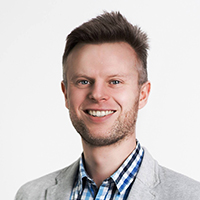
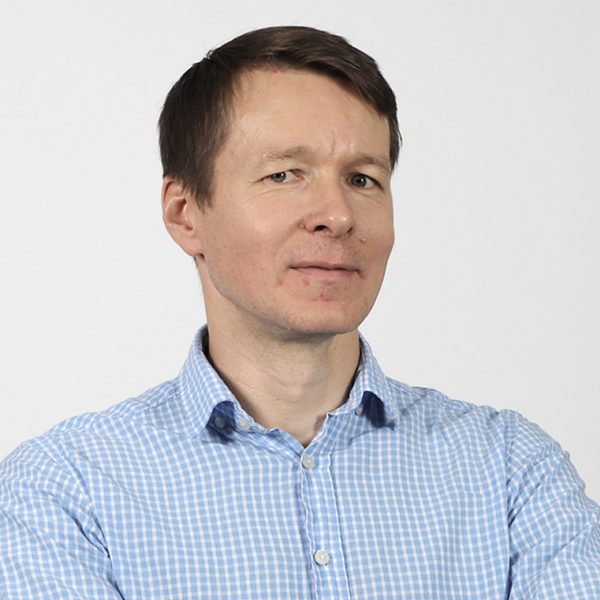
Dariusz Całus is a university professor at the Częstochowa University of Technology , specifically affiliated with the Faculty of Electrical Engineering . He has been actively involved in teaching programming and informatics courses since at least 2013. Consultation hours: Fridays 12:00-14:00, Saturdays 9:00-11:00 Teaching subjects include: Basics of programming, Algorithms and Complexity, Computer Networks, 3D Graphics Programming His research interests center around computer science with a focus on algorithm design , software development , and digital visualization . He has also explored multimedia technologies through courses like Digital Photography. Professor Całus has coordinated numerous programming courses across multiple departments including WE-AIR , WE-ELE , and WE-INF , indicating interdisciplinary involvement in academic programs.
Dr. Eng. Marek Daniel Dudzik serves as a Lecturer in the Department of Infotronics and Cybersecurity at the Faculty of Electrical and Computer Engineering, Cracow University of Technology. His academic profile demonstrates a strong research focus on artificial intelligence applications across diverse engineering domains, with particular expertise in neural network modeling for complex physical systems. Dr. Dudzik's research interests span multiple engineering disciplines, with primary focus on applying neural networks to solve challenging problems in materials science, particularly regarding aluminum foams and cellular materials under compression. His work bridges theoretical neural network development with practical applications in building automation systems, environmental monitoring, and mining engineering. The research portfolio reveals a consistent pattern of interdisciplinary work connecting electrical engineering principles with computational intelligence techniques. The publication record shows a clear trend toward increasingly sophisticated neural network applications across multiple domains. Early work focused on traction systems and electrical engineering applications, while more recent publications demonstrate expansion into building automation, environmental monitoring, and materials science. The research methodology consistently employs neural networks to model complex physical phenomena that are difficult to characterize through traditional analytical approaches, with particular emphasis on practical implementation and verification of results. Dr. Dudzik's work demonstrates strong connections between theoretical neural network development and practical engineering applications across diverse fields. His collaborations span multiple departments and institutions, reflecting the interdisciplinary nature of his research. The publication record indicates active participation in both theoretical development and practical implementation of neural network solutions for complex engineering problems.
Professor Andrzej Jaszkiewicz is a faculty member at the Faculty of Computer Science and Telecommunications, Poznań University of Technology, where he works in the Institute of Informatics. He holds the position of full professor with extensive experience in multiobjective optimization and evolutionary algorithms, as evidenced by his habilitation completed in 2001 and continuous research output through 2025. Professor Jaszkiewicz's research focuses on theoretical and practical aspects of multiobjective optimization, particularly addressing the challenges of many-objective problems. His work spans quality indicator development (hypervolume, R2), efficient data structures (ND-Trees), evolutionary algorithm design, and applications to combinatorial optimization problems. His publications demonstrate consistent theoretical rigor combined with practical implementation considerations. Recent publications (2022-2025) reveal continued productivity with multiple articles in top journals like IEEE Transactions on Evolutionary Computation and Physics of Fluids. These works explore theoretical properties of quality indicators, efficient calculation methods, and novel applications of optimization techniques to complex problems including fluid dynamics. Professor Jaszkiewicz has supervised doctoral research including Tarek Alkhaeir's 2021 dissertation on software quality metrics and Marek Kubiak's 2009 work on memetic algorithms. He has also reviewed numerous doctoral dissertations in related fields, demonstrating his standing in the academic community and commitment to graduate education. His scholarly output includes journal articles, conference papers, book chapters, and two books. The 2005 edited volume 'Advanced OR and AI methods in transportation' reflects his interest in practical applications of optimization techniques. His research demonstrates sustained scholarly activity from the 1990s to the present, with particular emphasis on advancing the state-of-the-art in multiobjective optimization theory and practice.
Kamil Zaleski serves as Assistant Professor at the Faculty of Graphic Arts, Academy of Fine Arts in Warsaw. He earned his Doctor of Fine Arts in 2012 (supervised by Prof. Andrzej Węcławski) and a painting degree from the Academy of Fine Arts in Gdańsk in 2008. Educational milestones: PhD (Doctor of Fine Arts), Academy of Fine Arts in Warsaw, 2012 BFA in Painting, Academy of Fine Arts in Gdańsk, 2008 Zaleski specializes in graphic arts and painting, utilizing digital and screen printing. His research explores conceptual frameworks through series like "Resuscitation" (doctoral work) and "Exercises/Repetitions", which reinterpret 1980s-90s computer game aesthetics. His practice bridges traditional printmaking with digital media, examining repetition and seriality in contemporary visual culture. His artistic trajectory demonstrates consistent innovation in digital print techniques. The "Exercises/Repetitions" series (2003-2004) transforms pixel-based game imagery into fine art prints, creating critical dialogue between analog and digital reproduction systems while investigating mass media visual language. Award highlights: Marshal of Pomeranian Voivodeship Award (Gdynia Digital Graphics Triennial, 2019) Lublin Voivodeship Honorable Mention (Graphics and Drawing Competition, 2007) Zaleski has presented 18 solo exhibitions globally (including Kyiv, Gdańsk, Wrocław) and 120+ group shows. He actively contributes to artistic communities as a member of Otwarta Pracownia, Intergrafia, and the Society of California Printmakers. Recent projects like the 2024 Wrocław exhibition received Ministry of Culture funding under "New Art Ecosystems". His studio collaborations span institutions like the Concrete Gallery and Łaźnia Centre for Contemporary Art, fostering interdisciplinary dialogue through digital print innovation and conceptual graphic experimentation within Poland's contemporary art landscape.
Dr. Paulina Buźniak serves as a lecturer at the Academy of Fine Arts in Warsaw, Faculty of Graphic Arts, specializing in lithography, textile art, illustration, and graphic design since 2011. She earned her degree from the Academy of Fine Arts in Warsaw (2006-2011), graduating with Rector's Distinction from the Lithography Studio under Professor Błażej Ostoja Lniski for her thesis '[O]BŁĘDY' (Errors), and holds an additional diploma from the Illustration Studio under Professor Zygmunt Januszewski. Her creative research focuses on experimental approaches in lithographic printing, textile-based visual narratives, contemporary illustration techniques, and digital graphic design methodologies, blending traditional craftsmanship with modern artistic expression. Dr. Buźniak's professional recognition includes: Scholarship from the Minister of Culture and National Heritage for outstanding academic achievements (2010/2011) Two-time winner of the Poznań Textile Art Biennial Multiple awards in national graphic design competitions She actively mentors students through the Book and Illustration Studio while developing foundational skills in the Computer Techniques Studio for first-year graphic arts students. Her pedagogical work emphasizes hands-on studio practice within Warsaw's vibrant artistic academic community.
Andrzej Rysiński serves as a Professor at the Faculty of Painting, Academy of Fine Arts in Warsaw, where he maintains an active academic and artistic presence rooted in the institution's legacy. Education Academy of Fine Arts in Warsaw, Faculty of Painting (1984–1989) Graduate of Professor Tadeusz Dominik's Painting Studio Graduate of Professor Edward Tarkowski's Mural Painting Studio Artistic Research Focus Rysiński's practice critically engages with Painting , Drawing , Graphic Arts , and Computer Art , demonstrating a sustained exploration of hybrid methodologies where traditional fine art techniques intersect with digital innovation. His work challenges conventional boundaries through experimental visual language development and material synthesis across analog and computational domains. No scientific awards, student advisement records, or grant activities were documented in the source material.
Dr. Eng. Krzysztof Kalinowski serves as an academic lecturer at the Department of Stage Design, Academy of Fine Arts in Warsaw, with nearly 20 years of teaching experience. He operates at the critical intersection of computer science and artistic practice. His educational foundation includes a Master of Science in Computer Science (specializing in systems programming, administration, multimedia, and artificial intelligence) and a Doctor of Fine Arts. This dual expertise informs his research philosophy centered on building bridges between technological tools and artistic expression. Research interests focus on 3D graphics, virtual environment creation for computer games, and multimedia technology integration into stage design. His work emphasizes technology as an enabler for new artistic languages rather than an end in itself. As an educator, he actively supervises numerous theses while leading the 3D Lab (www.3dlab.pja.edu.pl), which serves as an experimental hub for digital scenography and game world development.
Piotr Lewandowski serves as a Lecturer in the postgraduate Computer Graphics program at the University of Economics and Innovation in Lublin since 2012, combining academic instruction with extensive industry experience as a Full Stack Developer and UX Designer. His professional trajectory spans over two decades, beginning in 2000 with pioneering work in Poland's first virtual university (2001-2005), followed by co-ownership of e-learning specialist Oxigo (2005-2018), and current leadership at process automation firm Kodooy (2018-present). He has executed 100+ IT projects covering full-stack development, UX implementation, and digital marketing strategies for enterprises of all scales. His research and professional focus centers on: Web Development User Experience (UX) Design E-Learning Systems Internet Marketing Computer Graphics Search Engine Optimization No scientific awards or academic advisees were documented in the source material. His industry engagements in e-learning application design and business process automation represent his primary professional output beyond teaching responsibilities.
Piotr Gryz serves as Assistant Professor at the Władysław Strzemiński Academy of Fine Arts in Łódź, leading the Digital Media Workshop within the Institute of New Media and Composition. His academic responsibilities include developing curricula for bachelor's degree students in room 171 of the academy's pavilion B at 121 Wojska Polskiego Street, Łódź. His research and pedagogical focus centers on Digital Media and New Media, with specialized expertise in Digital Imaging techniques. The workshop curriculum comprehensively covers raster, vector, and 3D graphics; real-time image generation for games and visualizations; interface design as both artistic tool and medium; and interdisciplinary applications including discursive geometry and dynamic media. Instruction emphasizes integrating traditional artistic principles with contemporary digital technologies while exploring critical art, appropriation practices, and transmedia creation. Dr. Gryz's educational philosophy bridges technical proficiency in digital image preparation (for video, projection, and print) with conceptual development, encouraging students to leverage technical devices as creative instruments. The program contextualizes digital media within modern discourse, addressing propagation methods through television, internet, and mobile channels while prioritizing artistic intuition over transient technological trends. He collaborates with Marta Kosior, M.A. on workshop coordination, maintaining the institute's mission to merge classical art education with new media innovation. The Digital Media Workshop specifically trains students to produce message-driven visual works that navigate the evolving relationship between technology and artistic expression in contemporary culture.
Piotr Kucharski serves as a University Professor at the Institute of Animation and Games within the Władysław Strzemiński Academy of Fine Arts in Łódź. He holds leadership positions in both the Digital Image Editing Workshop (room 301, Franciszkańska Street 76/78) and the Animation Graphics Studio (rooms 102/301), directing educational programs that bridge traditional graphic design with dynamic time-based media for film, television, and interactive applications. His research focuses on motion graphics design and visual effects, emphasizing the integration of temporal elements, sound, and spatial dimensions with foundational design principles. Key interests include kinetic typography, virtual reality creation, and the transition from static two-dimensional to immersive three-dimensional graphics. His work explores creative applications in animated television credits, graphic symbol animation, and web-based motion sequences, utilizing software tools to produce outputs ranging from hyperrealistic renders to experimental motion narratives that combine photography, 3D models, and video footage. Through the Digital Image Editing Workshop, Kucharski trains students in two- and three-dimensional graphics programs for vector graphics, four-dimensional multimedia, and animated spatial compositions with sound integration. The Animation Graphics Studio specifically develops competencies in motion design principles, where students master techniques for creating cohesive moving image narratives while building on core disciplines including drawing, painting, composition, and sculpture. These facilities serve as professional development hubs for emerging designers in Poland's digital animation and visual effects industry.
Monika Wanyura-Kurosad serves as Professor in the Department of Scenography at the Faculty of Painting, Jan Matejko Academy of Fine Arts in Krakow. A distinguished scenographer, costume designer, and film interior decorator, she maintains an active international exhibition profile with works featured in over 120 exhibitions across Europe, Asia, and the Americas. Her academic foundation includes: Graduate of Graphic Arts Faculty at Academy of Fine Arts in Katowice with distinction (Intaglio Printing Studio under Prof. Stanisław Kluska and Painting Studio under Prof. Jacek Rykała) Postgraduate Studies in Scenography at Academy of Fine Arts in Krakow (Theatrical Scenography for Opera Studio under Prof. Andrzej Kreutz-Majewski) Professor Wanyura-Kurosad's research integrates traditional graphic techniques with contemporary digital media, focusing on spatial narratives and cultural memory. Her artistic practice spans theatrical productions, film scenography, and immersive installations, with works held in permanent collections including National Museum in Krakow, Manggha Museum of Japanese Art and Technology, and Jagiellonian Library. International recognition includes exhibitions across 11 countries and acquisitions by institutions like Art Museum Cluj-Napoca and Association of Fine Artists of Serbia. Recent artistic output demonstrates evolving trends from traditional printmaking toward digital spatial installations, with recurring explorations of time, cultural identity, and literary adaptation. Her 2023-2024 works particularly emphasize interdisciplinary connections between film, theater, and graphic arts within contemporary European contexts. Major distinctions include: Special Osten Award at Osten Biennial of Drawing Skopje (2020) Golden Osten Award at Osten Biennial of Drawing Skopje (2022) Lorenzo il Magnifico Award at Florence Biennale (2023) Grand Prix – Graphic of the Year (2021) Honorable Mention in ZPAP's 'Graphic of the Month' (2020) Professional practice encompasses significant contributions to Polish cultural productions including television plays ('Chłopcy', 'Lekcja polskiego'), historical series ('Stulecie Winnych', 'Lokatorka II'), and theatrical adaptations ('Król Lear', 'Harpagon'). Her scenographic work demonstrates rigorous historical research combined with innovative visual storytelling techniques across film, television, and stage mediums. Active in international biennale circuits including Tbilisi Stage Design Biennale and Florence Biennale, she maintains collaborative relationships with cultural institutions across Central and Eastern Europe while contributing to the global discourse on contemporary scenography and graphic arts.
Krzysztof Groń serves as Assistant Professor at the Department of Design and Qualitative Research in Architecture, Faculty of Architecture, Silesian University of Technology in Gliwice, Poland, where he bridges academic research with industrial applications through design innovation. He earned his Doctor of Fine Arts from Eugeniusz Geppert Academy of Fine Arts in Wrocław (2004) with dissertation "Industrial production and the forms of contemporary seats" under Prof. Edward Zielonka. His research integrates Industrial Design, Architecture, and Fine Arts with strong emphasis on Design Thinking implementation in industry. He actively collaborates with producers to transform conceptual designs into mass-produced commercial products while maintaining artistic practice in painting and computer graphics exhibited internationally. His scholarly output includes 108 publications, 20 patents, and 14 commercialized products, supported by bibliometric indicators including Web of Science h-index of 3 and Scopus h-index of 1. Professional recognition includes membership in the Association of Polish Visual Artists and Ergonomics Society, reflecting his interdisciplinary contributions to design theory and practice.
Paweł Sitkiewicz is an Associate Professor at the Department of Film and Media within the Institute of Culture Studies, Faculty of Languages, University of Gdańsk. Appointed professor UG in 2014, he has held significant academic roles including vice-dean for education (2016-2020) and coordinator of Erasmus+ programs (2011-2012), while currently serving as scientific advisor for the student Film Studies Club. His academic journey began with a Master's in Polish Philology from UG (2004), followed by a PhD in Film Studies (2007) and habilitation (2013) based on his seminal work 'Polish School of Animation'. MA Polish Philology, University of Gdańsk (2004) PhD in Film Studies, UG Faculty of Philology and History (2007) Habilitation, UG Faculty of Philology (2013) Sitkiewicz's research centers on animation history with particular emphasis on Polish animation, interwar mass culture, and silent cinema. His work explores cinema as social practice (movie-going), experimental film techniques, and intermedial connections between film, literature, and visual arts. He has pioneered studies on pre-war Polish animation, Disney's reception in Poland, and the cultural history of comics, often contextualizing these within broader European frameworks. Key research pillars: Historical analysis of animation techniques, Cultural reception of cinema, Interwar visual culture, Comics historiography. His publication portfolio reveals a consistent focus on historical and cultural dimensions of film and animation, with recurring themes of Polish cinematic identity, technological transitions (e.g., digital revolution's impact on animation), and cross-media influences. The works demonstrate deep engagement with primary sources from interwar Poland while connecting to contemporary theoretical frameworks in film studies. Scientific recognition includes: Nominations for Bolesław Michałek Award (2010, 2012) Distinction in UG 'Teacher of the Year' competition (2016) Finalist for Gdynia Literary Award (2020) Finalist for Warsaw Literary Award (2020) UG Rector's First Degree Award (2020) As an academic mentor, Sitkiewicz supervised the Film Studies Student Club for nine years (2007-2016). His grant leadership includes Erasmus+ coordination, National Classification Frameworks development, and EU-funded ProUG project management (2018-2020), alongside contributions to UG's e-learning initiatives (2016-2020). These projects focused on educational innovation and institutional development within humanities. He maintains active roles in the Polish Society for Film and Media Studies, Literary Society of Adam Mickiewicz, and serves on editorial boards for 'Panoptikum' and 'Zeszyty Komiksowe'. His participation in the 'Anatomia Fantastyki' Scientific Council and comics studies forums demonstrates commitment to interdisciplinary dialogue between film, animation, and graphic narrative communities.
Dr. Katarzyna Wądołowska-Lesner serves as Senior Lecturer at the Institute of Russian and Eastern Studies within the Faculty of Languages at the University of Gdańsk, concurrently holding the position of Deputy Director for Education at the Institute. Her academic career centers on advancing Russian language pedagogy through empirical research on textual comprehension and didactic methodologies. Her educational foundation includes a Master's degree in Russian Philology (2004) and a PhD in Humanities specializing in Linguistics (2013), both earned at the University of Gdańsk. These qualifications underpin her expertise in Slavic linguistics and language education. Wądołowska-Lesner's research focuses on quantifiable aspects of text readability, particularly examining compositional-graphic elements, paragraph structure, and linguistic difficulty metrics in Russian didactic materials. Her work investigates multimedia applications in vocabulary acquisition, silent versus aloud reading comprehension, and cross-linguistic challenges for Polish learners of Russian. This research bridges theoretical linguistics with practical classroom applications, emphasizing empirical validation of teaching strategies. Analysis of her 15 most recent publications reveals a consistent trajectory in text readability research, evolving from foundational studies on paragraph usage (2012) and multimedia tools (2011) toward sophisticated difficulty measurement formulas (2010) and business Russian applications (2008). Her scholarship demonstrates methodological rigor through student-based empirical studies while maintaining strong relevance to Slavic language education curricula. As an active member of the Polish Neophilological Society and the Polish Association of Teachers and Lecturers of the Russian Language, she contributes to national academic discourse. Her service as Deputy Director for Education at the Institute of Russian and Eastern Studies reflects institutional recognition of her administrative capabilities alongside scholarly contributions. While specific grant details are unreported, her sustained publication record indicates consistent research activity within the University of Gdańsk's academic framework.