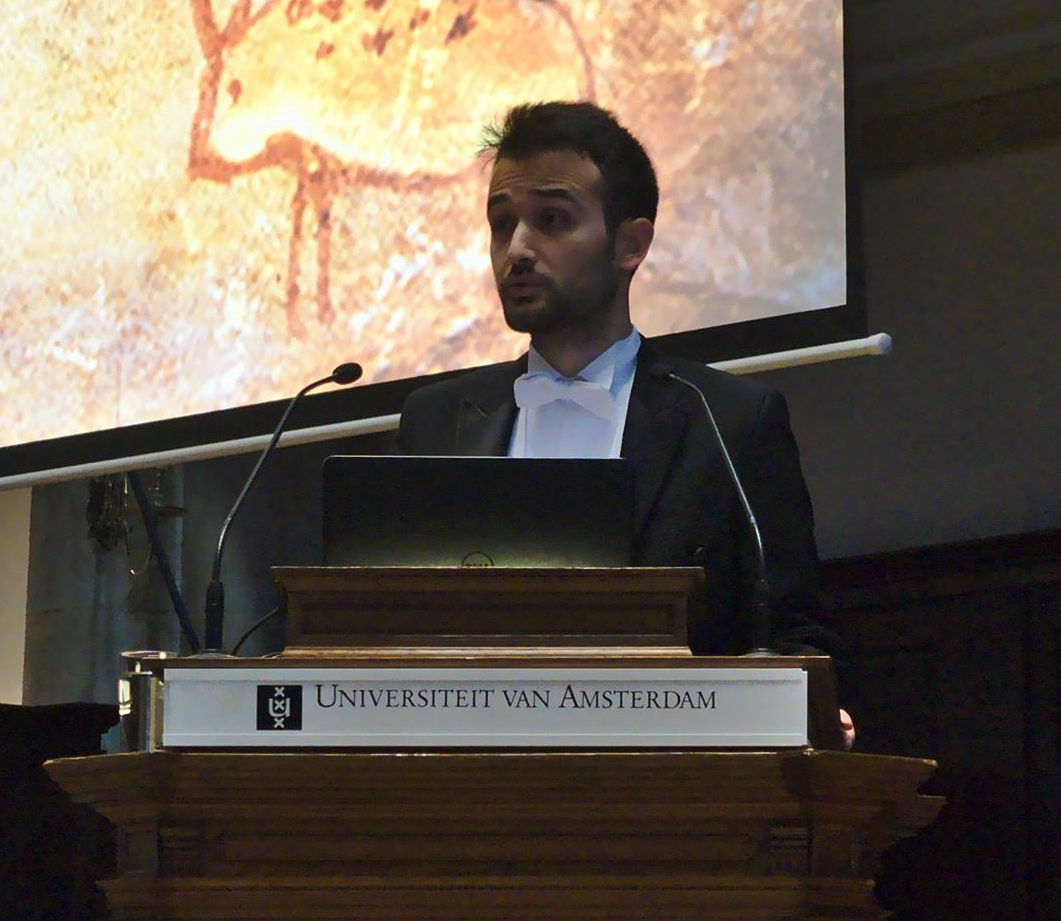
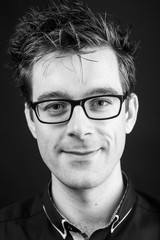
Lourens Waldorp is an Associate Professor at the University of Amsterdam within the Faculty of Social and Behavioural Sciences , specifically the Department of Psychological Methods . His research focuses on network theory, causal inference, and statistical modeling in psychology and neuroscience. University of Amsterdam IAS Fellow (2024) His research interests include: Network psychometrics Causal inference in psychological models High-dimensional statistical methods Dynamical systems in psychopathology Graph theory applications Signal processing for biophysical data The trends in his recent publications center on causal modeling, network analysis of psychopathology, and statistical techniques for time-series data. He has developed methods for perturbation graphs, moderated network models, and dynamic intervention frameworks. Notable scientific awards : IAS Fellowship for 6 months (2024) He advises PhD students like Kyra Evers and collaborates with researchers across disciplines, including J. Haslbeck , D. Borsboom , and O. Ryan . His work intersects with network theory and clinical psychology .
Dr. Peter J.F. Lucas is a Full Professor specializing in Datamanagement & Biometrics with over 35 years of experience in artificial intelligence, probabilistic graphical models, and clinical decision support systems. His research spans intelligent systems, machine learning, and eHealth, with a focus on applying Bayesian networks and probabilistic logic to medical and non-medical domains.
Sara Magliacane is an Assistant Professor at the University of Amsterdam , affiliated with the Amsterdam Machine Learning Lab (AMLab) and the Informatics Institute . She also holds a Research Scientist position at the MIT-IBM Watson AI Lab and has been an ELLIS Scholar since 2022. Education PhD in Artificial Intelligence (2017), VU Amsterdam MSc in Computer Engineering (2011), Politecnico di Milano BSc in Computer Engineering (2008), Università degli Studi di Trieste Research Focus : At the intersection of Causality and Machine Learning , her work addresses Causal Representation Learning from high-dimensional data (images, sequences) Causal Discovery in latent confounder scenarios Causality-inspired Reinforcement Learning for robustness and adaptability Neurosymbolic AI for theoretical guarantees Publication Trends : Her recent work explores Factored adaptation in non-stationary environments (NeurIPS 2022) Temporal causal identifiability (ICML 2022) Binary interaction-based causal discovery (UAI 2023) Safe exploration in visual RL (HSCC 2021) Structure learning lower bounds (NeurIPS 2020) Scientific Recognition : ELLIS Scholar (2022–present) Spotlight presentations at ICML 2022 and ICLR 2022 Advising & Collaborations : Currently supervising 6 PhD students at the University of Amsterdam and AUMC, with 12 alumni advisees. Collaborates with researchers at MIT-IBM Watson AI Lab, Simons Institute, and TUM.
Jan Draisma is a full professor of Mathematics at the University of Bern and a part-time full professor of Applied Algebra and Geometry at Eindhoven University of Technology (TU/e), where he is affiliated with the Department of Mathematics and Computer Science, specifically in Discrete Algebra and Geometry and Coding Theory and Cryptology. He obtained his Master's and Ph.D. degrees from TU/e cum laude and held a postdoctoral position at the University of Basel (2002–2005). He returned to TU/e as an assistant professor, later advancing to associate professor (2011–2016), and served as a part-time full professor at VU Amsterdam (2015–2016). His research focuses on the interplay between combinatorics, statistics, and algebraic geometry. Key areas include tropical geometry, algebraic statistics, symmetric systems of polynomial equations in infinitely many variables, and representation stability. His work often explores the structure of infinite-dimensional algebraic objects and their finite approximations. The most recent publications highlight trends in polynomial functors, topological Noetherianity, amoebas of linear spaces, and the geometry of tensor representations. These works reflect a deep integration of algebraic geometry with combinatorics and category theory, emphasizing stabilization phenomena and symmetry in algebraic structures. NWO Vici Award: Stabilisation in Algebra and Geometry (2015) NWO Vidi Award: Finite thanks to symmetry (2010) Draisma has received significant research funding, including the NWO Vidi and Vici grants, and two NWO Free Competition grants (2008, 2012). He has supervised 16 students and is actively involved in the academic community as an associate editor for Experimental Mathematics, SIAM Journal on Applied Algebra and Geometry, and Linear and Multilinear Algebra. He has held leadership roles in major conferences such as MEGA 2015 and SIAM AG 19. He is affiliated with the research groups in Discrete Algebra and Geometry and Coding Theory and Cryptology at TU/e and leads research activities centered on algebraic methods in discrete mathematics and statistics.
Joris M. Mooij is a Professor of Mathematical Statistics at the Korteweg-De Vries Institute of the University of Amsterdam, Netherlands. His research focuses on causality, spanning causal modeling, discovery, and inference with applications in biology, medicine, fairness, and business analytics. He combines mathematical modeling with statistical and algorithmic approaches in his work. Dr. Mooij received his PhD with honors from Radboud University Nijmegen in 2007, focusing on approximate inference in graphical models. After postdoctoral work at the Max Planck Institute for Biological Cybernetics in Tübingen, Germany, he obtained an NWO VENI grant in 2011 for further postdoctoral research at Radboud University. He became Assistant Professor at the University of Amsterdam's Informatics Institute in 2013, was promoted to Associate Professor in 2017, and became a full Professor of Mathematical Statistics in 2020. Dr. Mooij's research centers on causal inference, with particular expertise in structural causal models, cyclic causal systems, and causal discovery algorithms. His work addresses fundamental questions about when causal relationships can be identified from observational data and how to develop robust causal discovery methods that work in complex real-world settings with latent variables, cycles, and selection bias. He has made significant contributions to understanding the limitations of existing causal discovery approaches and developing new methods that overcome these limitations. His research group organizes the Amsterdam Causality Meeting series and develops theoretical frameworks for causal modeling that encompass both acyclic and cyclic systems. Dr. Mooij has collaborated extensively on applications of causal methods in biological systems, including protein signaling networks and gene expression data. The group's recent work explores performative predictions, causal domain adaptation, and robust causal discovery methods that account for selection bias and missing data. Dr. Mooij has received numerous awards for his research, including: Best paper award at UAI for "Establishing Markov equivalence in cyclic directed graphs" IEEE Geoscience and Remote Sensing Society 2011 Letters Prize Paper Award ICML Test of Time Honorable Mention Best student paper award at UAI 2010 He has secured competitive research funding through an NWO VENI grant, NWO VIDI grant, and an ERC Starting Grant, which supported the establishment of his research group consisting of 3 PhD students and 3 postdocs focused entirely on causality. Dr. Mooij has supervised several PhD students, including Tineke Blom, whose work on "Causality and Independence in Perfectly Adapted Dynamical Systems" significantly influenced his thinking about causality in complex systems. He has co-taught the MasterMath course on Causality and published lecture notes titled "A Mathematical Introduction to Causality." His research continues to push the boundaries of causal inference methodology and its applications across diverse scientific domains.
Ivana Nikoloska is an Assistant Professor at the Department of Electrical Engineering, Eindhoven University of Technology (TU/e). She is affiliated with the Center for Quantum Materials and Technology Eindhoven and BIASlab (Bayesian Intelligence and Stochastic Agents Lab). Her academic career includes prior roles as a Research Associate at King’s College London and a Visiting Researcher at Aalborg University. PhD: Monash University, Australia (2023) MSc & Dipl.-Ing.: University of Ss. Cyril and Methodius, North Macedonia Research Interests span foundational and applied machine learning, quantum computing, and information/communication engineering. Her work focuses on integrating Bayesian inference, variational methods, and quantum technologies for tasks like signal processing, channel estimation, and power control optimization. Quantum Machine Learning Bayesian Simulation-Based Inference Meta-learning for Wireless Systems Hybrid Quantum-Classical Architectures Stochastic Signal Processing Quantum Sensing & Metrology Notable Trends in Publications include quantum recurrent neural networks with adaptive gating, Bayesian frameworks for quantum sensing, and meta-learning applications in communication systems. She explores variational inference for planning and robust algorithms for channel estimation under non-ideal conditions.
Anna Vilanova is a Full Professor in Visual Analytics at the Department of Mathematics and Computer Science, Eindhoven University of Technology (TU/e), and is associated with the Electrical Engineering department's Signal Processing Systems. Previously, she served as Associate Professor at TU Delft (2013-2019) and Assistant Professor at TU/e (2002-2013). Her research focuses on Visual Analytics for high-dimensional data , explainable AI , and biomedical applications including Diffusion Weighted Imaging, 4D Flow, and Pangenomics. Education: Doctorate in Computer Graphics & Visualization (2001) Master in Computer Science (1997), Universitat Politècnica de Catalunya Research Highlights: Vilanova leads work on Visual Analytics systems for biomedical data, with recent publications in Diffusion MRI modeling , Tractography visualization , Explainable AI frameworks , and Pangenomic variant analysis . Her work bridges dimensionality reduction , uncertainty visualization , and medical imaging applications. Scientific Contributions: NWO-Veni grant (2005): "Visualization of global tensor information for diffusion tensor imaging" NWO-Aspasia grant (2013) Best Poster Award EuroVis (2025) Best Demo/Poster Awards (2022) Leadership & Service: Vilanova serves on the IEEE VIS Steering Committee , was EUROGRAPHICS President (2019-2022), and contributes to conferences like IEEE Visualization and EG-EuroVis . She co-founded the EAISI Health research initiative at TU/e.
Maya Daneva is an Associate Professor at the University of Twente's Digital Society Institute and part of the Semantics, Cybersecurity & Services research group. With over 200 research outputs, her work focuses on Requirements Engineering , Cybersecurity , and Agile Methodologies , particularly in digital transformation and enterprise systems. Academic Role: Associate Professor in Computer Science Institution: University of Twente Her research spans Model-Driven Engineering , security risk mitigation, and quality requirements prioritization, often employing empirical studies and systematic reviews. Recent articles explore phishing detection ontologies (2025), secure data storage architectures (2024), and digital consulting service modeling (2024). Scientific Awards: CBI 2021 Best Paper Award for work on digital IT consulting platforms EMMSAD 2025 Best Paper Award for phishing attack modeling She actively organizes academic events, serves on editorial boards (e.g., Empirical Software Engineering ), and contributes to conference peer-review, reflecting her leadership in the field.
Erik Quaeghebeur is an Assistant Professor at Eindhoven University of Technology's School of Mathematics and Computer Science, focusing on uncertainty modeling in artificial intelligence. His work spans probabilistic circuits, imprecise probability theory, and wind energy applications. PhD in Applied Mathematics (Ghent University, 2002-2009) Master's in Applied Mathematics (Université catholique de Louvain, 2001-2002) Master's in Physics Engineering (Ghent University, 1998-2001) Research interests include probabilistic modeling under uncertainty, with applications in AI and wind energy systems. His recent work explores tensor factorizations, equivariant graph neural networks, and scalable probabilistic circuits. Scientific contributions include 60 research outputs and 2 datasets . Awards encompass the ERCIM Alain Bensoussan Fellowship (2013), BOF Postdoc (2010), and B.A.E.F. Francqui Fellowship (2009). He serves on committees for the Society for Imprecise Probability and acts as editorial board member for related conferences. Foundations of Artificial Intelligence course (since 2020) Uncertainty Representations and Reasoning course (since 2021)
Tom Verhoeff is an Assistant Professor at the Faculty of Mathematics and Computing Science of Eindhoven University of Technology (TU/e) , working within the Software Engineering & Technology group. His research focuses on Model-Driven Engineering (MDE) , Domain-Specific Languages (DSLs) , and the intersection of mathematics, computing, and the arts . He teaches courses in data analytics, programming, algorithms, theoretical computer science , and logic . Verhoeff earned both his MSc and PhD in Technical Science (Mathematics and Computer Science) from TU/e. He is actively involved in promoting mathematics and informatics through initiatives like the annual Bridges conference , and serves as board member and treasurer of the Dutch Mathematics Olympiad , as well as chair of the Koos Verhoeff MathArt foundation . He has also held roles as guest lecturer in Lithuania and Finals Director for the ACM International Collegiate Programming Contest . Research Interests: Verhoeff’s work spans Model-Driven Engineering , domain-specific language development , and 3D geometric modeling . His scholarship often explores symmetry, recursion, and mathematical visualization , particularly through computational art and algorithmic puzzles . Recent publications highlight 3D rotation methods , knot theory , and mathematical art using lattice paths and geometric transformations . Scientific Awards: ACM ICPC European Founders Award (2004) IOI Distinguished Service Award (2007) Second Place in the 2022 Wolfram Computational Art Contest Notable Collaborations and Affiliations: He is affiliated with the Esprit Working Group on Asynchronous Circuit Design (ACiD-WG) , WIRE (TUE Mathematics Alumni) , ACM (Senior Member) , CSTA , IEEE Computer Society , and Royal Dutch Mathematical Society (KWG) .
Sezer Karaoglu is a Lecturer and part-time postdoctoral researcher at the Computer Vision Group, Informatics Institute, University of Amsterdam. He is also the CTO and Co-Founder of 3DUniversum, a technology spin-off of the University of Amsterdam that provides state-of-the-art 2D/3D computer vision solutions. Additionally, he has co-founded other startups including Scanm and 3DHealthScan. Dr. Karaoglu received his PhD from the Computer Vision Group, Informatics Institute, University of Amsterdam, with research funded by the COMMIT project. His educational background includes a double master's degree: an optics, image and vision master's degree from University Jean Monnet in France and a media technology master's degree from Gjovik University College in Norway. He completed his undergraduate studies with honors at Istanbul Technical University in Telecommunication Engineering. His research focuses on Artificial Intelligence and 3D Computer Vision, with specific interests in SLAM, re-localization, 3D reconstruction, 3D object detection and segmentation, synthetic media, generative AI, deep fake creation and detection, and VR/AR technologies. His work has significant applications in healthcare, particularly in using deepfake technology for therapy for victims of sexual violence-related PTSD and moral injury, as documented in a Frontiers in Psychiatry article. Analyzing his recent publications reveals a strong trend toward neural scene reconstruction, intrinsic image decomposition, and the application of diffusion models to computer vision problems. His research increasingly integrates 3D scene understanding with language models, as evidenced by his work on language-to-3D scene generation. The applications span from healthcare (deeptherapy.ai) to media authenticity (deepfake detection) and industrial applications. ICT.OPEN Poster Award (3rd Position), Oct'13 Pascal VOC'12 Classification challenge, 2nd Position, Sep'12 Pascal VOC'12 Detection challenge, 3rd Position, Sep'12 Best project award at Nokia and CIMET project competition Outstanding reviewer at CVPR'21 PROVADA Future Startup Battle winner Best Dutch AI startup by Valuer Dr. Karaoglu has supervised numerous PhD, Master's, and Bachelor's students, demonstrating his commitment to academic mentorship. His research has attracted significant media attention, with features on Dutch national TV programs including NPO, VPRO, RTL, and international outlets like BBC News. He has received research funding through the COMMIT project during his PhD studies and has successfully translated his research into commercial applications through his startups. His work on deepfake technology has been applied in innovative therapeutic contexts through DeepTherapy.ai, showing the real-world impact of his research. Dr. Karaoglu leads research efforts at the Computer Vision Group Amsterdam and through his company 3DUniversum, which has developed applications like weScan, DeepTherapy, and FairFake.ai. His team collaborates with various institutions including the Netherlands Film Academy for grief therapy applications using deepfake technology. The DeepTherapy project represents a particularly impactful application of his work, using deepfake technology to help victims of sexual violence confront perpetrators in therapeutic settings.
Dr. Susanne Poeller is an Assistant Professor in Human-Centered Computing at Utrecht University's Faculty of Science. Her research focuses on understanding motivation within digital gaming environments, with particular emphasis on how individual differences in psychological motivations affect player experiences and interactions. She examines questions related to why some players derive greater enjoyment from social gaming experiences than others and how different motivational profiles influence player behavior. Her research interests span motivation psychology, self-regulation in gaming contexts, human-computer interaction, and social dynamics in online gaming communities. She investigates how psychological theories can be applied to understand player behavior in both digital games and tabletop role-playing games, with a specific focus on how different players interact and contribute to each other's gaming experiences. Her work also addresses negative behaviors in online communities, including verbal abuse and discrimination, with the goal of developing effective solutions for creating more welcoming gaming environments. Analysis of her recent publications reveals a consistent focus on motivational psychology within gaming contexts, particularly examining how affiliation and power motives shape player behavior. Her research spans multiple gaming platforms including League of Legends, Pokémon, MMORPGs, and tabletop role-playing games, with increasing attention to gender representation, toxic behavior mitigation, and the psychological mechanisms underlying player decisions. A notable trend is her application of motive disposition theory to predict and explain behavior in digital games. Dr. Poeller actively contributes to the academic community through service on organizing committees for major conferences including ACM CHI and CHI PLAY (serving as Full Paper Associate Chair, Student Volunteer Chair, and Graphics and Design Chair across multiple years) as well as the IEEE Conference on Games. Her teaching includes courses such as Advanced Cognitive and Social Psychology for HCI and Persuasive Technologies.
National Research Institute for Mathematics and Computer ScienceNetherlands
Wouter M. Koolen-Wijkstra is a Professor of Mathematical Machine Learning at the University of Twente (Statistics group) and a Scientific Staff Member at Centrum Wiskunde & Informatica (CWI), Amsterdam, in the Machine Learning department. His research bridges theoretical machine learning, game theory, and statistics, with active projects on multi-armed bandits, online learning, and safe inference methodologies. He co-leads INRIA-CWI associate teams (6PAC and 4TUNE) and is an ELLIS Scholar. His work emphasizes provable guarantees in learning algorithms, including: Regret minimization under risk-averse scenarios Multi-scale adaptation in online decision-making Game-theoretic equilibria computation Anytime-valid statistical inference via e-processes Recent publications demonstrate a focus on robust learning frameworks , particularly in bandit problems, hypothesis testing, and Nash equilibrium characterization, often leveraging information-theoretic and optimization principles. Awards include: Veni Grant (2015) for 'Learning at the Intrinsic Task Pace' QUT Vice-Chancellor's Fellowship (2013) for multitask learning Rubicon Grant (2010) for game-theoretic online learning ELLIS Scholar recognition He teaches graduate courses on Machine Learning Theory and Graphical Models at CWI. Current grants include collaborations with INRIA (4TUNE and 6PAC teams) and industry partnerships (e.g., PPS Booking.COM).
Melvin Wong is an Assistant Professor in the Department of Urban Planning and Transportation within the Built Environment school at Eindhoven University of Technology. His research focuses on transportation engineering, machine learning applications in urban mobility, reinforcement learning for traffic systems, and sustainable transportation solutions. He utilizes advanced computational methods including graph neural networks, generative AI, and physics-informed models to address challenges in traffic prediction, electric vehicle infrastructure, and urban design. His research interests encompass transportation optimization, spatiotemporal modeling, generative design methods, and behavioral analysis in urban systems. Recent publications demonstrate a strong focus on AI-driven solutions for traffic management, battery-swapping systems, and multimodal design optimization. Dr. Wong has received recognition including the Best Research Paper Award (2024) and Swiss Government Excellence Scholarship (2020). He contributes to academic activities through conference presentations, peer reviews, and course development in urban mobility and big data analytics.
Bert de Vries is a Professor at the Signal Processing Systems Group at Eindhoven University of Technology (TU/e), where he has been employed since January 2012. He maintains a dual career, also working at GN Hearing in the hearing aids industry since April 1999, where he holds both research and managerial roles. His academic journey began at TU/e, where he earned his MSc in Electrical Engineering in 1986, followed by a PhD from the University of Florida in 1991. Between 1992 and 1999, he worked at Sarnoff Research Center in Princeton, NJ, contributing to diverse signal and image processing projects. Professor de Vries's research centers on Bayesian Machine Learning, with particular focus on the Free Energy Principle and its applications to engineering problems. His work bridges theoretical neuroscience with practical signal processing systems, especially in biomedical applications. He directs the BIASlab research team at TU/e, which develops probabilistic programming tools including RxInfer.jl, ForneyLab.jl, GraphPPL.jl, ReactiveMP.jl, and Rocket.jl. His research spans active inference, variational message passing, probabilistic programming, and Bayesian neural networks, with applications ranging from hearing aids to multi-agent systems. Analysis of his recent publications reveals a strong trend toward practical implementations of Bayesian inference frameworks, particularly through Julia-based probabilistic programming tools. His work shows increasing focus on active inference applications, message passing algorithms, and the intersection of Riemannian geometry with probabilistic modeling. The research demonstrates consistent progression from theoretical foundations toward real-world engineering applications, particularly in biomedical signal processing and autonomous systems. Professor de Vries teaches a graduate-level course on Bayesian Machine Learning at TU/e and actively contributes to open-source software development through his GitHub profile (bertdv), with recent activity as recent as August 2025. His research team has developed several influential probabilistic programming libraries that have gained significant attention in the machine learning community. The BIASlab research group continues to advance the state of the art in Bayesian inference methods with applications in hearing technology, robotics, and signal processing.