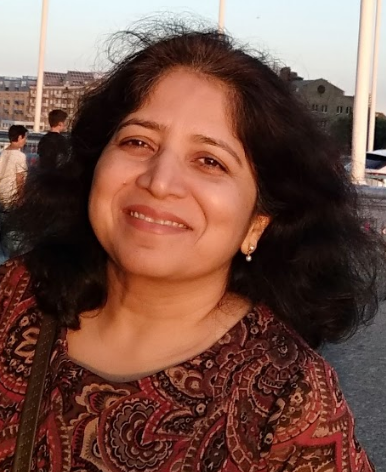
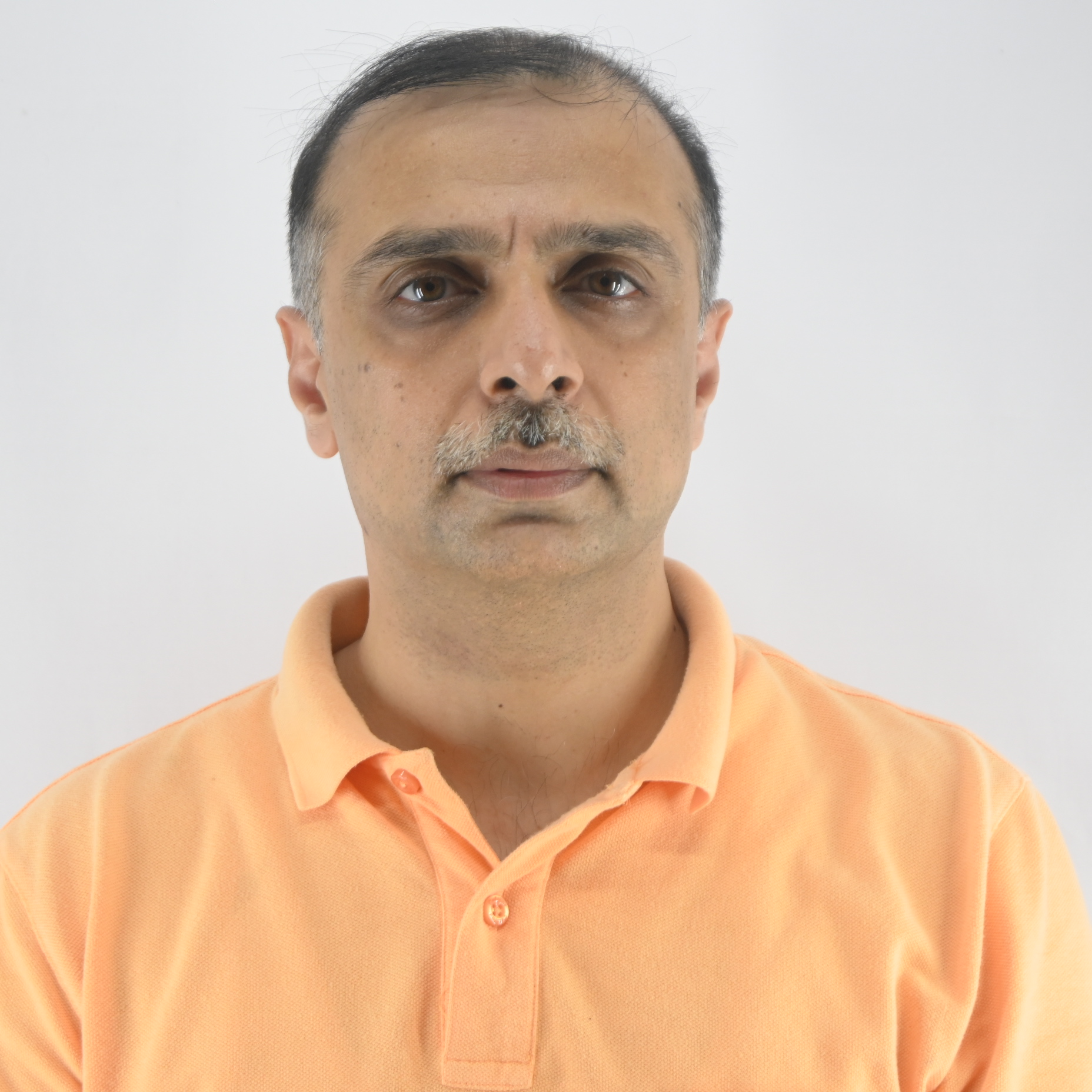
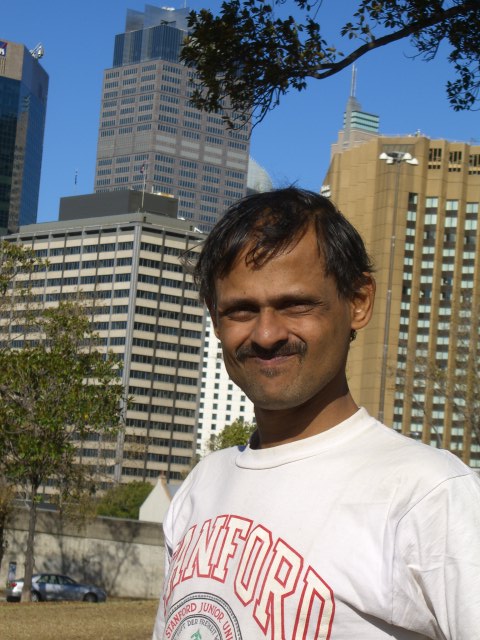
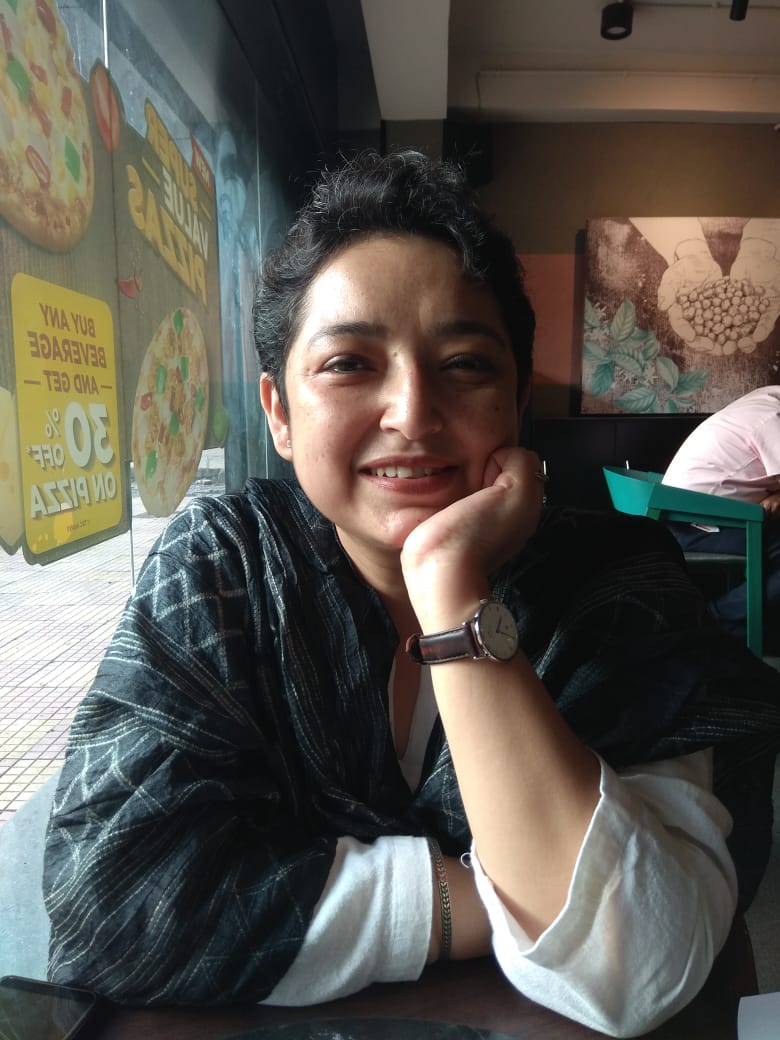
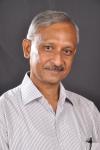
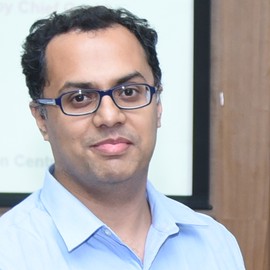
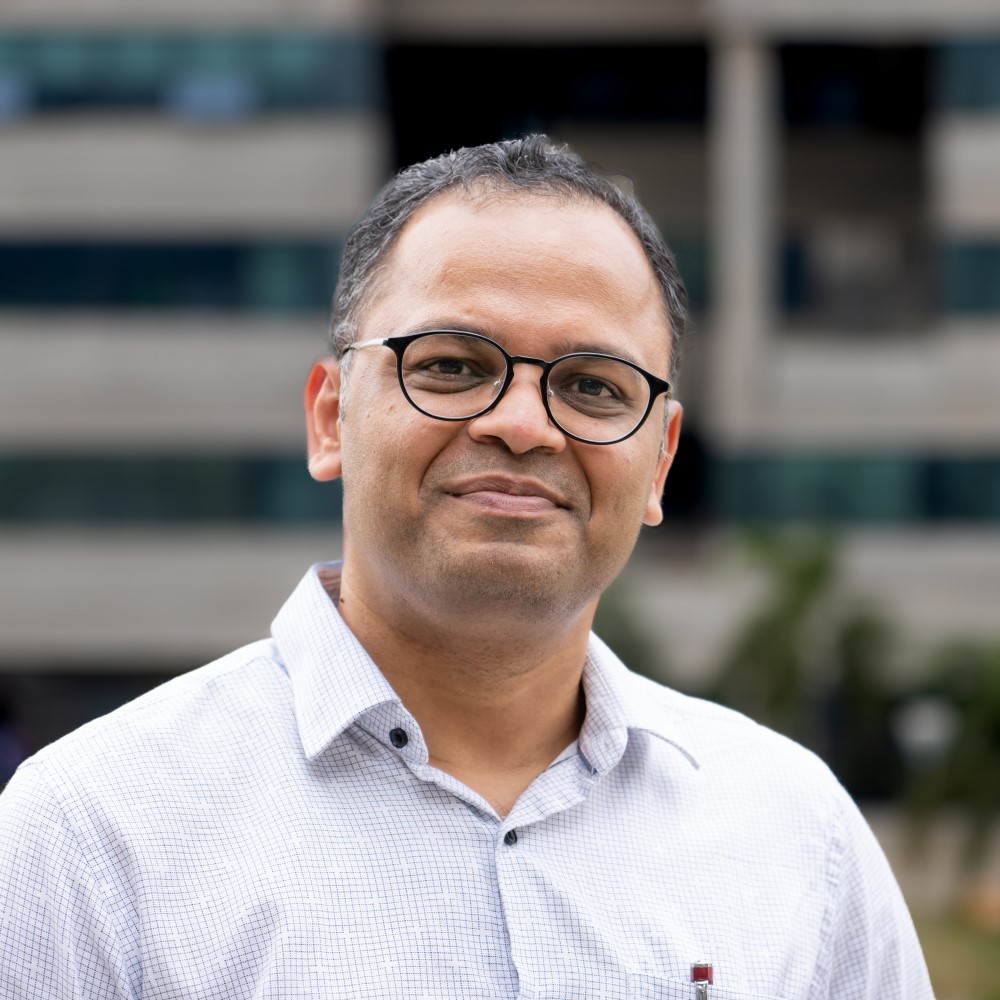
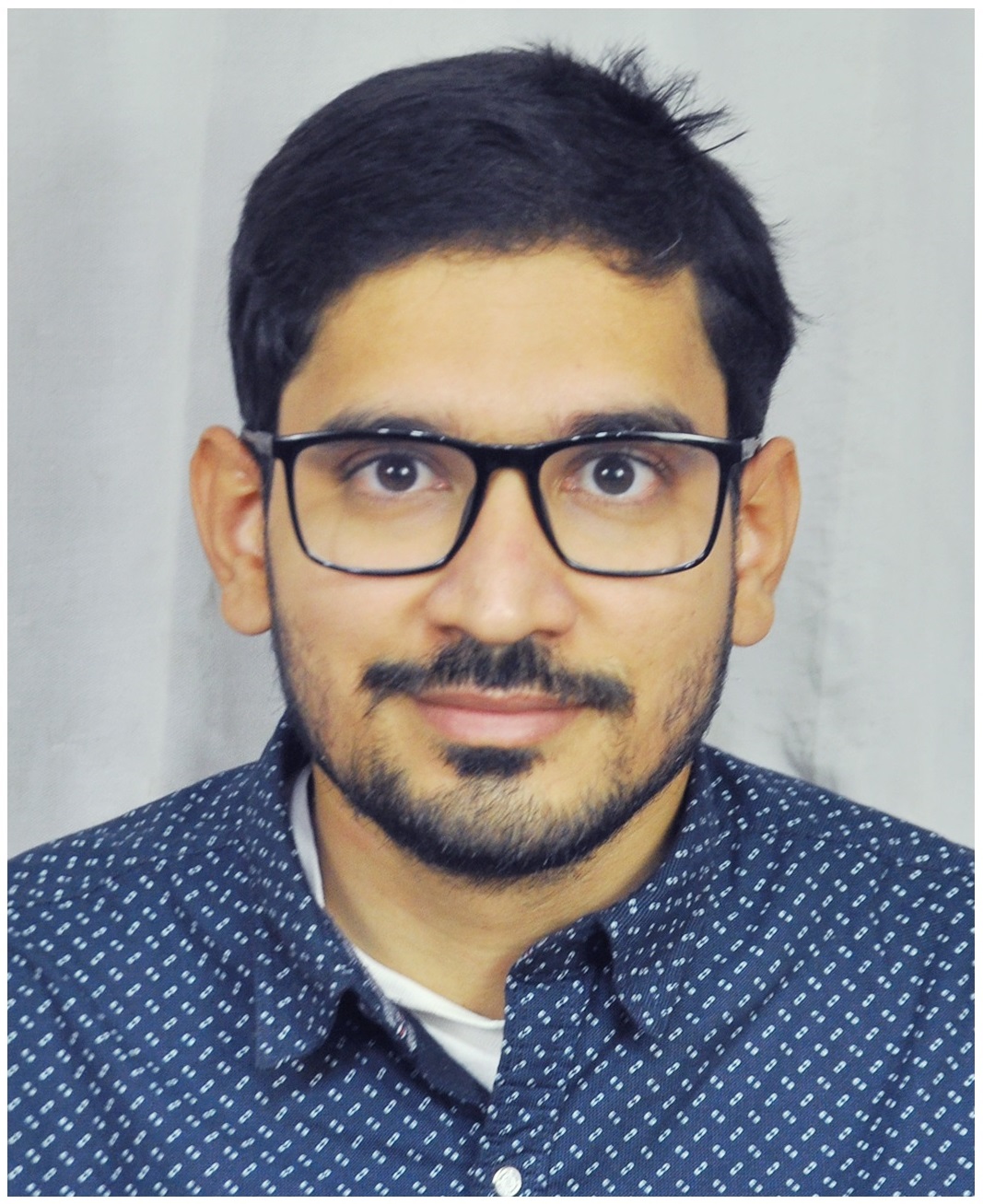
Sunita Sarawagi is a Professor at Computer Science and Engineering , IIT Bombay, and a member of AI Labs@CSE . She is also associated with the Center for Machine Intelligence and Data Science (CMInDS), which she founded in 2020. Education: PhD in Computer Science from UC Berkeley (Thesis: Query Processing in Tertiary Memory Databases), BTech in Computer Science from IIT Kharagpur Research Interests span machine learning , data analytics , graphical models , and structured learning , with applications in text segmentation, sequence modeling, domain adaptation, and human-in-the-loop systems. Her publications reveal a strong focus on integrating data mining with database systems , temporal data analysis , and information extraction using probabilistic methods. Professional Activities include serving on the IEEE John Von Neumann Medal committee (2017-), VLDB 2011 Research Track Co-chair , and multiple program committee roles at top conferences like ICML, KDD, and SIGMOD. Labs & Teams : Leads the SS Lab , a research group focused on probabilistic graphical models, sequence modeling, and data integration techniques.
Ajit Rajwade is a Professor at the Department of Computer Science and Engineering , Indian Institute of Technology Bombay. His research spans Artificial Intelligence , Compressed Sensing , and Medical Imaging , with affiliations to the Centre for Machine Intelligence and Data Science and the Koita Centre for Digital Health . Education : PhD in Computer and Information Science and Engineering, University of Florida (2010) MSc in Computer Science, McGill University (2004) BTech in Computer Engineering, University of Pune (2002) His research interests focus on intelligent data acquisition, particularly in neural network analysis , graph signal processing , and medical imaging . He develops compressed sensing algorithms for inverse problems like tomography and MRI reconstruction , alongside applying group testing to pandemic response. Scientific awards include the Prof. S. P. Sukhatme Award (2024) and Departmental Teaching Excellence (2019). His publications demonstrate expertise in image restoration , noise modeling , and epidemiological algorithms . He has advised PhD students like Sabyasachi Ghosh and Jerin Geo James , with a focus on computationally efficient methods in medical imaging and machine learning .
Sharat Chandran is a Professor in the Department of Computer Science and Engineering at the Indian Institute of Technology Bombay (IIT Bombay), where he has been actively engaged in teaching and research for several decades. His office is located in Room KR102 (also known as A202) in the Rekhi Building on the IIT Campus in Mumbai, India. His primary research interests span two major areas in computing: Computer Graphics and Computer Vision . He has extensively worked in these fields with his students and research staff, producing various publications, talks, and research projects over the years. His current teaching focus includes Math for Visual Computing (CS 740), a course designed for postgraduate students new to the IIT system who may have some apprehension about mathematics. Professor Chandran has supervised numerous PhD students whose work covers diverse topics including 3D modeling, efficient computing with tomographic measurements, vision for drones, cancer prognosis, hierarchical visibility, projector-camera systems, arterial pulse analysis, and optimization algorithms for motion factorization. His teaching portfolio is extensive, having offered courses such as Basic Freshman Programming, Software Systems, Parallel Programming Paradigms, Graphics I & II, Multimedia Systems, Computer Vision, Digital Image Processing, Algorithms, and Spatial Data Structures. He has held multiple administrative and service roles at departmental, institutional, and external levels. Departmental roles include PhD Faculty Advisor, Awards Committee Chair, Faculty Search Chair, and Web Team Chair. At the institutional level, he served as Founding PMRF Coordinator, Head of the Application Software Centre, and IIT Research Fellowship Initiative Coordinator. Externally, he has coordinated the DST India Digital Heritage Project and served as Program Co-Chair for conferences like Mysore Park Vision Conference and ICVGIP. Professor Chandran is actively involved in campus community activities including Sanskriti @ IITB, Taekwando @ IITB, and serves as Secretary for Kendriya Vidyalaya PTA. His office hours are from 12:30 PM to 1:00 PM on Monday, Tuesday, and Thursday, and he emphasizes using Piazza rather than email for student communications.
Soumya Dutta is an Assistant Professor in the Department of Computer Science and Engineering at the Indian Institute of Technology Kanpur (IITK), where he leads the INSIGHT: Intelligent Scientific and Visual Computing of Big Data Research Group. He joined IIT Kanpur in October 2022 after working as a Scientist II at Los Alamos National Laboratory (LANL) from July 2019 to August 2022, and previously as a Postdoctoral Research Associate at LANL from June 2018 to July 2019. His educational background includes a Ph.D. and M.S. in Computer Science and Engineering from The Ohio State University (2011-2018), where he was part of the GRAVITY research group, and a B.Tech. in Electronics and Communication Engineering from West Bengal University of Technology, India (2005-2009). Research Interests: Dr. Dutta's research focuses on the intersection of machine learning, visual computing, big data, and high-performance computing. His primary research areas include Machine Learning for Visual Computing and Image Analysis, Big Data Visualization and Analytics, Data Science and HPC, Machine Learning for Scientific Computing, and Explainability and Interpretability of AI Models. His work addresses various big data characteristics including the 5 Vs: Volume, Velocity, Variety, Veracity, and Value. He develops techniques that make complex machine learning models more interpretable and explainable, enabling their effective adoption in real-life applications across scientific domains, social media, IoT, healthcare, and industry applications. Dr. Dutta's research group has secured multiple funded projects including: DAVi: An Intelligent Data Analytics and Visualization Framework (funded by ISRO), Intelligent Visual Computing of Extreme-scale Data for Accelerating Scientific Discovery (IIT Kanpur Initiation Grant), Enabling Interactive Big Data Analytics and Visualization at Exascale (SERB), Development of AI-Enabled National Portal for Efficient Search of Missing People (C3iHub), and Proactive and Generalized Deepfake Defense Mechanisms (C3iHub). Best Reviewer, Honorary Mention Award for IEEE Transactions on Visualization & Computer Graphics (TVCG), 2021 Best Paper Award at ISAV 2021, co-located with Supercomputing (SC) LAAP Award at Los Alamos National Laboratory, 2021 Best Paper Award at TopoInVis 2019 Best Paper Award at ISAV 2018, co-located with Supercomputing (SC) Best Poster Award in 12th Annual CSE Student Poster Exhibition, The Ohio State University, 2018 Best Poster Award in 11th Annual CSE Student Poster Exhibition, The Ohio State University, 2017 Best Paper Honorable Mention Award at IEEE Visualization Conference (IEEE VIS) 2016 Dr. Dutta actively mentors a large group of students including Ph.D., M.Tech., and B.Tech. students. His current Ph.D. students include Shanu Saklani, Sankhadeep Bhowmick, Ananya Chaturvedi, Arpita Santra, Anubhav Dixit (co-supervised), and Robin Shah. He has supervised numerous M.Tech. students with thesis topics ranging from uncertainty-aware neural networks to deepfake detection. Dr. Dutta currently teaches courses including CS360 - Introduction to Computer Graphics and CS661 - Big Data Visual Analytics. The INSIGHT research group collaborates internationally with researchers from Meta, Oak Ridge National Laboratory, and National Taiwan Normal University. The group's work focuses on building machine learning and data science-based solutions to analyze large-scale multifaceted data in a scalable way, enabling interactive and interpretable analytics of complex data from scientific simulations, social media, IoT, healthcare, and other application domains.
Dr. Shatarupa Thakurta Roy is an Associate Professor in the Department of Humanities and Social Sciences at the Indian Institute of Technology Kanpur (IIT Kanpur). She teaches courses in Art Appreciation, Design Theory, Visual Communication, and History of Art, and collaborates with IIT Kanpur's Design Programme. She holds a Ph.D. in Design from IIT Guwahati (2014), an M.F.A. (1999), and a B.F.A. (1997) from Kala Bhavana, Visva Bharati Santiniketan. Her research explores Visual Culture , Indian Folk and Minor Art , Graphic Design , and Design Theory , with fieldwork focusing on narrative folk paintings across Eastern India. She emphasizes cultural sustainability, visual storytelling, and interdisciplinary design methodologies. Her publications (2011–2022) span art theory, data visualization, HCI, and cultural preservation, reflecting trends in cross-disciplinary innovation , social impact design , and digital heritage conservation . She frequently integrates cognitive psychology, new materialism, and postcolonial perspectives. Awards & Honors: Best Paper Award, NaCoMM 2011 National Scholarship Scheme, Government of India (1997–1998) Mentorship Award for 'Toycathon 2021' (designing educational board game 'CheMystery') Advising & Grants: She has supervised 15+ Ph.D. and 35+ M.Des. theses. Funded projects include an MHRD grant (2016) for assistive interfaces for dyslexic children and a Doordarshan collaboration (2022) on sustainable farming documentaries. Administration: She has served as Warden, DPGC Convener, and lab in-charge at IIT Kanpur. She also edits academic journals and chairs conferences on art and design.
R.K. Shyamasundar is a Professor at the Indian Institute of Technology Bombay , with a focus on Real-Time and Reactive Programming, Logic Programming, Pi-Calculus, and Parallel Programs. Research spans formal verification, concurrency, and distributed systems. Key contributions include RT-CDL semantics, Esterel language extensions, and hybrid system controller synthesis. Scientific awards include JC Bose National Fellow, Fellowships at Indian Academy of Sciences and Indian National Science Academy, and Senior Membership in IEEE. His work involves collaborations with institutions like TCS Group and researchers such as Basant Rajan, N. Raja, and Deepak Kapur.
Dootika Vats is an Associate Professor in the Department of Mathematics & Statistics at Indian Institute of Technology Kanpur (IIT Kanpur). She earned her PhD in Statistics from the University of Minnesota, Twin-Cities, and her research focuses on advancing Monte Carlo and Bayesian computational methods, especially Markov chain Monte Carlo diagnostics. Education: PhD, Statistics, University of Minnesota, Twin-Cities, Feb 2017 MS, Statistics, University of Minnesota, Twin-Cities, Nov 2016 MS, Statistics, Rutgers University, New Brunswick, May 2012 BA (honors), Mathematics, University of Delhi, Lady Shri Ram College, May 2010 Research Interests: Her work lies at the intersection of computational statistics and Bayesian inference, with core emphases on: Markov chain Monte Carlo (MCMC) methodology Monte Carlo variance estimation and output analysis Bayesian computation and diagnostics Geometric ergodicity and convergence rates of MCMC algorithms Recent Publications Trend: Across her recent articles and preprints, Dr. Vats has consistently tackled open problems in MCMC output analysis, introducing new diagnostics, optimal batch-size selection, and visualization tools that directly impact practical Bayesian computation. Her contributions bridge theoretical rigor—such as proving strong consistency of spectral variance estimators—with immediately applicable software and graphical methods. Awards & Honors: Director’s Award, University of Minnesota School of Statistics, 2016 Graduate Research Partnership Program Fellowship, Summer 2016 Louise T. Dosdall Fellowship for Women in STEM, 2016–2017 School of Statistics Alumni Fellowship, 2015–2016 Martin–Buehler Fellowship in Statistics, Fall 2015 Bernard W. Lindgren Graduate Student Teaching Award, Spring 2014 Lynn Lin Fellowship in Statistics, Summer 2014 Teaching & Mentoring: At IIT Kanpur she continues to teach and mentor within the statistics curriculum. Earlier, at the University of Minnesota, she served as Instructor for STAT 3011 and as a teaching assistant across multiple undergraduate and graduate courses; at Rutgers University she was a part-time lecturer in calculus and pre-calculus. Labs & Collaboration: While no specific lab is named, her research is computational and collaborative; she has worked with James M. Flegal, Galin L. Jones, and other leading MCMC methodologists, and her Google Summer of Code participation demonstrates engagement with the open-source statistics community.
Mohammad Arshad Rahman is an Associate Professor in the Department of Economic Sciences at IIT Kanpur. His research spans Bayesian econometrics, quantile regression, machine learning, and applied econometrics. He has held positions at Zayed University and University of California, Irvine, and currently teaches econometrics and finance courses. Education: Ph.D. Economics, University of California, Irvine (2013) M.S. Statistics, UC Irvine (2011) M.A. Economics, UC Irvine (2009) M.A. Economics, Delhi School of Economics (2006) B.Sc. Economics Hons., St. Xavier's College, Kolkata (2004) Research focuses on developing Bayesian methods for econometric problems, with applications in energy economics, finance, and social policy. Research areas include: Bayesian inference techniques, quantile regression models, machine learning applications in economics, discrete choice modeling, and time series analysis. Awards and Honors: Social Science Merit Fellowship Multiple Summer Research Fellowships All India Post-Graduate Scholarship Analyst Accolade Award
Supratim Biswas is a Professor in the Department of Computer Science and Engineering at the Indian Institute of Technology Bombay, where he has served since 1995. His academic career spans over four decades, beginning as a Lecturer in the Computer Center in 1980, progressing to Assistant Professor in 1985, Associate Professor in 1990, and achieving full Professorship in 1995. He has held significant administrative roles including Dean of Academic Programs (2007-2010), Head of CSE Department (2000-2003), and Director of IITB-Monash Academy (2009-2010). His research interests focus on Programming Languages, Compiler Optimization, Parallelizing Compilers, Parallel and Distributed computing, and Combinatorial Optimization . Professor Biswas has made substantial contributions to compiler technology, particularly in parallelization techniques for modern architectures. His work bridges theoretical compiler design with practical applications in high-performance computing and CAD systems, demonstrating how compiler optimizations can significantly enhance computational efficiency in real-world applications. The publication record shows a consistent research trajectory spanning nearly four decades, with recent work (2012-2015) focusing on GPU-based parallel algorithms, loop parallelization techniques for non-uniform data dependencies, and mesh processing for CAD applications. His research demonstrates evolution from foundational compiler theory to contemporary parallel architectures, maintaining relevance through practical applications in computational geometry, CAD systems, and high-performance computing. Excellence in Teaching Award (2000) Professor Biswas has supervised over 60 doctoral and master's students, establishing himself as a dedicated mentor in systems software education. His sponsored research portfolio includes significant projects with CDAC (350 lacs), MIT (133 lacs), TCS (81.3 lacs), and Intel Corporation (10 lacs), demonstrating strong industry-academic collaboration. His teaching portfolio spans both undergraduate and postgraduate levels, including foundational courses like Discrete Structures and advanced topics like Parallelizing Compilers, reflecting his commitment to curriculum development across multiple generations of computer science education. His laboratory work has supported students across B.Tech, M.Tech, and Ph.D. programs, with particular emphasis on compiler construction and operating systems. Through the Continuing Education Program, he has extended his expertise to industry professionals, conducting numerous specialized courses for organizations including VSNL, TCS, DRDO, and Reliance.
Parag Chaudhuri is a Professor in the Department of Computer Science and Engineering at the Indian Institute of Technology Bombay. His research centers on computer graphics, animation, and virtual reality, developing computational models to replicate real-world phenomena for enriched virtual experiences. His educational background includes: Ph.D. from IIT Delhi under Prem Kalra and Subhashis Banerjee Postdoctoral research at MIRALab, University of Geneva with Nadia Magnenat Thalmann Bachelor's degree in Civil Engineering from Delhi College of Engineering Professor Chaudhuri's research spans Computer Graphics with core focus areas in character/natural phenomena animation, visual data understanding, and 2D/3D content generation. His work integrates computer vision, physics simulation, and machine learning to address challenges in virtual worlds. Specific interests include rendering, modeling, VR/AR systems, and vision-based graphics. Applications extend to medical simulation, entertainment, industrial processes, and digital heritage preservation through physics-driven approaches. Recent publications (2022-2025) reveal strong trends in document analysis for multilingual text recognition (especially Indic scripts), real-time hand/character animation in AR environments, and physics-based fracture/deformation systems. His work bridges graphics with machine learning for practical solutions in visual data processing. At IIT Bombay, he mentors graduate students requiring foundational courses CS675 and CS775. He accepts Ph.D./M.S. candidates through official CSE department procedures but does not offer internships to non-IITB students. He leads a research group advancing computational techniques for virtual world creation, focusing on interactive animation systems and visual data synthesis.
Rajesh Kedia is an Assistant Professor in the Department of Computer Science & Engineering at Indian Institute of Technology Hyderabad . He received his Ph.D. from IIT Delhi under the supervision of Prof. M. Balakrishnan and Prof. Kolin Paul, and holds a B.Tech. in Electronics and Communication Engineering from MNIT Jaipur (2006). His research focuses on computer architecture , embedded systems , and VLSI design automation , with specific emphasis on thermal management of processors and memories , shared resource management , and FPGA-based accelerator design . His recent publications address CNN execution time prediction, thermal modeling for 3D systems, and efficient resource allocation in multi-accelerator environments. Rajesh has received multiple scientific awards including the Visvesvaraya Ph.D. fellowship , IEEE Senior Member designation, and a BEST PAPER NOMINATION at DATE 2022 . He has mentored several Ph.D. and M.Tech students, including Lakshay Arora , Venugopal Ramamurthy , and M A Muneeb , with research topics spanning compilers, thermal management, and RISC-V architecture. He actively contributes to the academic community as a reviewer for leading conferences/journals (ASPDAC, DAC, IEEE ESL, CODES+ISSS) and previously served as Design Contest co-chair for ISLPED 2024 . His work has been supported by a SERB startup research grant (INR 20.26L) for shared resource management research.
Sutanu Gayen is an Assistant Professor in the Department of Computer Science and Engineering at the Indian Institute of Technology Kanpur. His research focuses on theoretical aspects of machine learning, algorithms, and computational statistics. Designing algorithms for Bayesian networks and causality Complexity analysis of distribution learning Applications in high-dimensional statistical modeling His recent publications explore challenges in total variation distance computation, Gaussian tree models, and interventional distribution learning. Courses taught include advanced algorithms for machine learning and data structures. Research connects fundamental computational limits with practical statistical learning tasks.
Mainak Chaudhuri serves as a Professor in the Department of Computer Science and Engineering at the Indian Institute of Technology Kanpur, where he specializes in computer architecture research and teaching. Doctor of Philosophy, Cornell University, 2004 Master of Science, Cornell University, 2001 Bachelor of Technology, Indian Institute of Technology Kharagpur, 1999 Professor Chaudhuri's research focuses exclusively on computer architecture, with particular expertise in cache management systems, memory hierarchy optimization, and processor design. His work addresses critical challenges in modern computing systems where efficient memory access patterns significantly impact overall system performance across various computing platforms. His recent publications demonstrate consistent contributions to cache management research, particularly in last-level cache algorithms for both traditional processors and graphics processing units. The publications show an evolving research trajectory from general cache algorithms toward specialized implementations for graphics workloads, indicating strategic expansion of his research domain while maintaining core expertise in memory systems. Best paper award in the 11th IEEE International Symposium on High-Performance Computer Architecture, February 2005 While specific details about graduate student supervision aren't provided in the available documentation, his publication record suggests active research mentorship within computer architecture. The absence of explicit grant information in the source material prevents detailed commentary on funded research projects, though his award-winning work indicates successful research proposal development. Though not explicitly mentioned in the source documents, his specialization in computer architecture suggests potential involvement with computer systems laboratories at IIT Kanpur where architectural simulations and hardware implementations would be conducted, supporting both his research and educational mission in advanced computing systems.
Subrahmanya Swamy Peruru is an Assistant Professor in the Department of Electrical Engineering at the Indian Institute of Technology Kanpur (IIT Kanpur). His research focuses on wireless networks, artificial intelligence, and probabilistic graphical models, contributing significantly to the field of network optimization and machine learning applications in communication systems. Dr. Peruru completed his educational journey with excellence: PhD in Electrical Engineering from Indian Institute of Technology Madras (2018) M.S. (by Research) from Indian Institute of Technology Madras (2018) B.Tech in Electronics and Communication Engineering from Sastra University (2011) Dr. Peruru's research interests lie at the intersection of wireless communications and artificial intelligence. His work primarily focuses on developing efficient algorithms for wireless network scheduling, leveraging reinforcement learning and graph neural networks to optimize network throughput and minimize delays. He has made significant contributions to CSMA (Carrier Sense Multiple Access) protocols, particularly in adapting them to SINR (Signal-to-Interference-plus-Noise Ratio) models using advanced approximation techniques from statistical physics. His research on probabilistic graphical models has enabled more efficient network resource allocation and has potential applications in 5G and beyond wireless systems. Dr. Peruru's interdisciplinary approach bridges theoretical computer science, electrical engineering, and machine learning to solve practical challenges in modern communication networks. His publication record demonstrates a consistent focus on wireless network optimization, with a recent shift toward incorporating machine learning techniques. Starting with foundational work on CSMA protocols and regional approximations (2015-2018), his research has evolved to include reinforcement learning (2023) and graph neural networks (2021) for network scheduling. This progression reflects the broader trend in networking research toward data-driven and AI-enhanced approaches. His work spans both theoretical contributions (approximation algorithms, convergence analysis) and practical implementations (scheduling algorithms with throughput guarantees). Dr. Peruru previously served as a Senior Research Engineer in the Machine Learning R&D team at Pramati Technologies, Chennai (2018-2020), where he likely applied his academic expertise to industry challenges before joining IIT Kanpur as faculty.