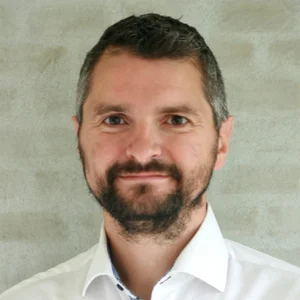
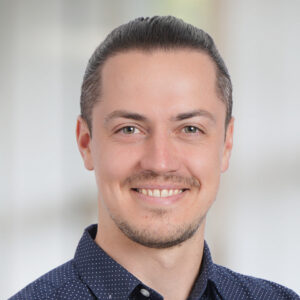
Associate Professor Gabriel Eilertsen is affiliated with Linköping University's Department of Science and Technology (ITN) and the Media and Information Technology (MIT) research group. He holds a PhD in computer graphics and image processing, with expertise in high dynamic range (HDR) imaging and machine learning. As a core member of the Analytic Imaging Diagnostics Arena (AIDA) and affiliated researcher at CMIV (Center for Medical Image Science and Visualization) , he bridges academia and healthcare innovation. Research focuses on machine learning applications in computer vision , medical imaging diagnostics , and data-centric deep learning . Current projects include synthetic image generation for neural network training, evaluation of HDR reconstruction methods, and enhancing fairness in GANs. He leads a CENIIT-funded project on generative deep learning for medical imaging. Key contributions span synthetic data synthesis techniques, HDR imaging protocols, and AI-driven healthcare solutions. Notable work includes leveraging deepfake-like technology for generating AI-based medical images from the SCAPIS study. His interdisciplinary approach addresses challenges in domain adaptation, uncertainty quantification, and perceptual evaluation metrics for imaging systems. Affiliations include the Wallenberg AI, Autonomous Systems and Software Program (WASP) as an AI/MLX Assistant Professor, reflecting his leadership in national AI initiatives. His research emphasizes practical applications of AI in healthcare diagnostics and fundamental advancements in image generation and processing algorithms.
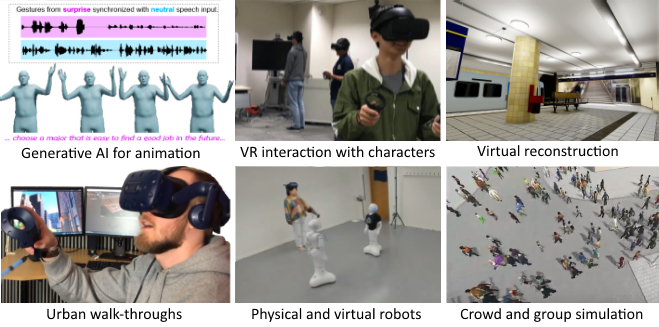
Christopher Peters is a Professor and Director of the Embodied Social Agents Lab (ESAL) at KTH Royal Institute of Technology. He holds a PhD from Trinity College Dublin (2004) and is affiliated with the Department of Computational Science and Technology (CST) within the School of Electrical Engineering and Computer Science (EECS). His work focuses on Socially Interactive Agents and Embodied AI, exploring computational models of visual attention, affect, memory, and theory of mind. Peters leads projects on human-agent interaction, urban spatial contexts, and multimodal systems involving humanoid agents and robots. Education: PhD in Computer Science, Trinity College Dublin, 2004. Research Interests: Peters investigates embodied AI through socially interactive agents, emphasizing real-time control systems for gaze, emotion, and group dynamics. His studies span virtual characters, physical robots, and VR applications. Key areas include politeness behaviors in human-robot interactions, crowd navigation algorithms, and urban spatial analysis. Recent work includes the CreativeBot project, leveraging LLMs to enhance child creativity through storytelling robots. Projects & Grants: Peters is Principal Investigator for EU Horizon 2020 projects CLIPE (€4M), ANIMATAS (€3.9M), and ProsocialLearn. He leads a Swedish Research Council grant (4 MSEK) on VR applications for human-robot collaboration. His projects address societal challenges in urban planning, digital transportation, and educational robotics. Labs & Teams: Directs ESAL, a lab developing embodied agents for social interaction. Collaborates with industry and academic partners in Europe and globally through projects like METROPOLIS and HUMAINE.
Mårten Sjöström is a Professor in Signal Processing at Mid Sweden University, where he serves as the highest representative of the research subject Computer and System Sciences and is part of the managerial group of the Department of Information and Communication Systems (IKS). He leads the Realistic 3D research group and has extensive experience in both academic and industrial settings. His educational background includes a Master of Science from Linköping University (Applied Physics and Electrical Engineering, 1992), a Technical Licentiate degree from the Royal Institute of Technology, Stockholm (Signal Processing, 1998), and a PhD from Ecole Polytechnique Federale de Lausanne (Modelling of Non-linear Systems, 2001). He obtained his Docent degree (Associate Professor) in 2008 and Professor's degree in Signal Processing in 2013. His primary research focuses on Multi-Dimensional Signal Processing with emphasis on System Modelling and Identification. He has successfully applied these techniques to Image and Video Processing, Multi-media Communications, and currently specializes in Multi-Scopic 3D and Light Field Technology including capture, processing, coding, and presentation/visualization. His work spans theoretical foundations to practical implementations across various application domains. His recent publication record demonstrates a clear trajectory toward advanced light field and 3D imaging technologies, with significant contributions to compression algorithms, depth estimation techniques, quality assessment metrics, and telepresence applications. His research bridges theoretical signal processing with practical industrial implementations, particularly in remote operation, mining applications, and immersive visualization systems. Best Paper Award at MMEDIA 2013 Quality Reviewer Award at ICME 2013 Professor Sjöström has supervised an extensive number of doctoral and licentiate students, with numerous current PhD candidates expected to complete their degrees in 2025. His teaching portfolio covers a wide range of subjects including Applied Signal Processing, Automatic Control, Computer Hardware and Architecture, and specialized PhD courses in Video Processing and Realistic 3D. He has led numerous research projects both current and completed, including IMMERSE, PLENOPTIMA, and various initiatives in 3D video technology and visualization. As founder and head of the Realistic 3D research group, he directs activities focused on synthesis and capture of 3D images and video, rendering techniques for virtual perspective views, system modeling for 3D capture and presentation, coding of 3D content, quality metrics and assessments, and remote control and measurement systems. The group maintains strong industrial collaborations across multiple sectors.
Tingting Zhang is a Professor at Mid Sweden University's Department of Computer and Electrical Engineering (DET), affiliated with the STC Research Centre. Her work focuses on wireless sensor networks, industrial IoT, and privacy-preserving protocols in vehicular and IoT networks. Research spans VANETs, machine learning for anomaly detection, light field imaging, and secure communication systems. Current projects include PLENOPTIMA, COINS, DAWN, and Smart Industry Sweden. Publications emphasize network reliability, security frameworks for IoT/VANETs, and machine learning applications in sensor networks. She has contributed to patents in wireless communication and video noise reduction. Recent work explores cross-layer optimization, privacy-preserving protocols, and GPU-accelerated light field rendering. Collaborations include institutions in Sweden, Finland, and China.
Anders Bjorholm Dahl is a Professor in 3D Image Analysis at the Department of Applied Mathematics and Computer Science , Technical University of Denmark (DTU). He leads the Image Analysis and Computer Graphics section and the QIM Center for quantification of imaging data from MAX IV. His academic work bridges computer vision, image analysis, and structural characterization. PhD in Computer Vision Degree in Forestry His research focuses on learning-based 3D image analysis methods, including volumetric segmentation, feature-based representations, and graphical models. He contributes to quantitative imaging data analysis through the QIM Center, which supports advanced imaging techniques at MAX IV. As a LINXS Imaging Working Group Member and LINXS Fellow , he engages with interdisciplinary imaging research networks.
Jonas Unger is a Professor at Linköping University's Department of Engineering and Natural Sciences (ITN) and Media and Information Technology (MIT). As a research leader in computer graphics and image processing, he contributes to advanced visualization techniques, GPU computing, and AI applications in healthcare and climate adaptation. Specializes in BRDF modeling, spectral light field imaging, and augmented intelligence Active in AI4Climateadaptation and Wallenberg Autonomous Systems Program (WASP) Recipient of the 2023 Chester Carlson Research Prize Develops AI methods for medical imaging (SCAPIS dataset) and autonomous systems His recent work focuses on deep learning for material acquisition, real-time rendering optimizations, and visual analytics pipelines for disaster response systems. Current projects include multi-agent reinforcement learning for air traffic control and GPU-accelerated signal processing techniques. Scientific awards include: Chester Carlson Research Prize (2023) He collaborates with Visual Sweden's Augmented Intelligence platform, co-leads major visualization conferences, and contributes to Horizon 2020 Marie Skłodowska-Curie funded research. Contact: jonas.unger@liu.se
Andrii Matviienko is an Assistant Professor (tenure track) in Computer Science specializing in Human-Computer Interaction at KTH Royal Institute of Technology, Sweden. He works at the Department of Media Technology and Interaction Design (MID) within the School of Electrical Engineering and Computer Science. His research focuses on Extended Reality (XR) and interaction with and within immersive spaces, where he leads the Immersive Technologies Lab. Dr. Matviienko received his Ph.D. in Computer Science from the University of Oldenburg while working at the Media Informatics and Multimedia Systems group with Susanne Boll. His academic journey includes: Postdoctoral researcher at the Telecooperation Lab, Technical University of Darmstadt, Germany Research visit at the Multimodal Interaction Group, University of Glasgow (UK), working with Stephen Brewster Work at the Exertion Games Lab led by Florian 'Floyd' Mueller at Monash University (Australia) His research focuses on Extended Reality (XR) and interaction with and within immersive spaces. He leads the Immersive Technologies Lab, where his team explores ways of improving users' XR experiences through novel input techniques, haptic feedback, locomotion methods, taste interfaces, simulations, and exertion games. His work particularly emphasizes cycling interfaces and safety systems for cyclists, as well as child-computer interaction and tangible interfaces. He has made significant contributions to understanding how people interact with technology in physical movement contexts, especially while cycling. Analysis of Dr. Matviienko's recent publications (2023-2025) reveals a strong focus on immersive technologies with several key trends emerging. His work spans virtual reality, augmented reality, and mixed reality applications across diverse domains including cycling safety, medical training, social interaction, and multisensory experiences. A significant portion of his research investigates novel input methods and sensory feedback in XR environments, with particular attention to how physical movement and embodiment affect user experience. His publications demonstrate growing interest in AI integration with immersive technologies, as seen in projects involving generative AI for museum experiences and human-AI interaction for dementia care. Dr. Matviienko actively mentors students and collaborates with researchers worldwide. He encourages students interested in thesis work to reach out to him and his team. His research is supported by various grants that enable: Development of VR bicycle simulators and cycling safety systems Exploration of haptic feedback and novel input techniques in XR Investigation of multisensory experiences, including taste modulation Creation of medical simulation tools for surgical training Dr. Matviienko leads the Immersive Technologies Lab at KTH, where his team explores ways of improving users' XR experiences via novel input techniques, haptic feedback, locomotion, taste, simulations, and exertion games. The lab collaborates with international partners including researchers from Monash University, Technical University of Darmstadt, and University of Glasgow. Current projects focus on cycling interfaces, social navigation in VR, medical simulations, and multisensory experiences that integrate audio, visual, and taste stimuli.
Stefan Gustavson is an Associate Professor at Linköping University, affiliated with the Department of Science and Technology (ITN) and the Media and Information Technology (MIT) division. His research focuses on computer graphics and image processing, particularly in areas such as procedural textures, HDR video reconstruction, and image-based lighting. He collaborates extensively with colleagues including Joel Kronander and Jonas Unger. Gustavson holds a position at Linköping University, where he contributes to both research and education within visual information technology. Research Interests: Procedural Texture Synthesis HDR Video and Image Reconstruction Multi-Sensor Data Fusion Image-Based Lighting Techniques Publications highlight advancements in HDR video frameworks and procedural texture methodologies. His work bridges theoretical foundations and practical applications in media technology. Collaborative projects emphasize interdisciplinary approaches to visual information challenges.
Ehsan Miandji is an Assistant Professor and Docent at Linköping University's Department of Science and Technology (ITN), part of the Faculty of Science and Engineering. His research focuses on computer graphics, computer vision, and machine learning, with a particular emphasis on BRDF modeling, light field imaging, compressed sensing, and sparse representation techniques. He is affiliated with the Computer Graphics and Image Processing group and the Wallenberg Autonomous Systems Program (WASP). His work spans both theoretical advancements and applied methodologies in visual data processing. Recent research includes optimizing BRDF acquisition via FROST-BRDF, advancing multidimensional compressed sensing for spectral light fields, and developing sparse representation frameworks for bidirectional texture functions (BTF). Miandji collaborates with interdisciplinary teams within the Media and Information Technology (MIT) division, contributing to projects that bridge computational imaging, algorithm design, and real-world applications. His publications reflect a strong commitment to pushing boundaries in visual data compression, rendering efficiency, and perceptual quality assessment of material models.
Niklas Rönnberg is an Associate Professor and Senior Lecturer in Sound Technology at Linköping University's Department of Science and Technology (ITN), part of the Institute of Technology. His research focuses on sonification as a complementary modality in interdisciplinary applications, including information visualization, interaction design, and cognitive psychology. He teaches courses in sound technology, research methodology, and digital media production for Media Technology, AI and Engineering, and Graphic Design & Communication programs. His academic journey includes a Master's in Communication Science and a PhD in Technical Audiology (2014). He has led projects like 'Sound of Art,' where sonification transformed Nordic artworks into musical experiences. His work explores how musical elements enhance data understanding and interaction in fields like process control and decision support. Rönnberg actively promotes sonification's societal impact through conferences like the International Conference on Auditory Display. Research affiliations include Media and Information Technology (MIT) and Visualization and Interaction Design (VID) groups. He has contributed to over 30 peer-reviewed publications, focusing on sonification's role in urban planning, AI education, and multimodal interfaces. His current interests emphasize making sonification accessible beyond academia, particularly in public spaces and creative industries.
Björn Thuresson is a Researcher at the Division of Computational Science and Technology, KTH Royal Institute of Technology. He manages the Visualisation Studio VIC, a resource supporting advanced graphics, interaction, and visualization for teaching, research, and industry collaboration. Located on KTH’s main campus, VIC focuses on strategic utilization of visualization tools and technologies. Thuresson holds a background in Cinema Studies, Journalism, and Communication Studies, with professional experience in film production, educational multimedia, software development, and IT management. His research emphasizes effective use of visualization infrastructure, cross-modal collaboration, and innovative interaction design. He coordinates national and international projects in areas such as environmental monitoring systems and distributed workplace dynamics. He teaches courses including Computer Game Design (course responsible), Advanced Graphics and Interaction, and Cooperative IT-design. His work bridges technical and human-centric aspects of digital systems, emphasizing practical and pedagogical applications. Research interests span visualization infrastructure development, human-computer interaction, educational technology, and the socio-technical dimensions of distributed work environments. His publications address topics like embodied interaction, gesture-based interfaces, and video-mediated collaboration.
Fernando Alonso Fernandez is a Professor at the School of Information Technology, Halmstad University, Sweden , with a permanent position since 2017 and a full professorship since 2025. He also serves as an External Collaborator at the University of the Balearic Islands, Spain since 2019. Research Interests : Biometrics (face, iris, periocular, fingerprint analysis), Soft-Biometrics, Mobile Biometrics, Forensic Analysis, Privacy and Security, with foundational expertise in Artificial Intelligence, Signal/Image Processing, Computer Vision . His work spans EU projects like Horizon PopEye (3.2M€) and national grants totaling over 9.4MSEK from the Swedish Research Council and Innovation Agency. 2025: Horizon Europe PopEye (3.2M€) - Biometrics on-the-move for border control 2022: Swedish Innovation Agency Grant (2.6MSEK) - AI-Powered Crime Scene Analysis 2022: Swedish Research Council Grant (3.6MSEK) - Facial Analysis in the Era of Biometric Masks Awards & Editorial Roles : Distinguished Lecturer (IEEE Biometrics Council 2022-2024), Associate Editor for IEEE Transactions on Information Forensics and Security , Pattern Recognition Letters , and IEEE Biometrics Council Newsletter . Co-chaired ICB2016 and EAB-RPC 2024 Round Table on Generative AI. Education : MSc/PhD in Telecommunications Engineering from Universidad Politécnica de Madrid, Spain (2003/2008). Postdoc at Halmstad University with Marie Curie IEF and Swedish Research Council Fellowship (2010-2017). Publications : Over 140 international papers with h-index 43 (Google Scholar 2025). Recent work explores adversarial attacks in de-identification, CNN pruning for mobile face recognition, and nano-drones for crime scene analysis.
Fredrik Kahl is a Professor at Chalmers University of Technology, leading the Computer Vision Group under the Department of Signal Processing and Medical Technology. His research spans Computer Vision , Machine Learning , and Medical Image Analysis , with a focus on geometric deep learning and 3D reconstruction. University: Chalmers University of Technology Department: Signal Processing and Medical Technology Email: fredrik.kahl@chalmers.se His work addresses rotation equivariance , out-of-distribution detection , and privacy-preserving representations . Recent publications explore Gaussian splatting for 3D edge mapping, semi-supervised learning frameworks, and symmetry encoding in ReLU networks. Projects include collaborations with institutions like Wallenberg AI, Autonomous Systems and Software Program and grants from VINNOVA and Vetenskapsrådet (VR) .
Anders Heyden is a Professor at the Centre for Mathematical Sciences, Lund University, serving as deputy dean at the Faculty of Engineering with responsibility for research and research education. He is affiliated with multiple research initiatives including the Mathematical Imaging Group, eSSENCE: The e-Science Collaboration, and ELLIIT: the Linköping-Lund initiative on IT and mobile communication. His profile areas include Engineering Health, AI and Digitalization, Natural and Artificial Cognition, and Proactive Ageing at Lund University. Heyden received his M.Sc. in Engineering Physics in 1989 and Ph.D. in Mathematics in 1995 from Lund University. His doctoral thesis, "Geometry and algebra of multiple projective transformations," focused on computer vision. He has progressed through academic ranks from post-doctoral research fellow to associate professor and is now a full professor. His research spans image analysis, pattern recognition, machine learning, computer vision for autonomous systems, and medical image analysis. His work contributes to multiple UN Sustainable Development Goals, particularly in medical imaging, geometry, and computer graphics. His research fingerprint shows strong activity in images engineering (100%), mathematics (43%), algorithms (36%), calibration (29%), models (24%), projective geometry (18%), experiments (18%), and homography (18%). IAPR fellow Sparbanken Skåne Innovation Award 2023 Senior member of IEEE Member of the Royal Swedish Physiographic Society Former president of the Swedish Society for Automated Image Analysis (2010-2014) Former member of the International Association for Pattern Recognition governing board (2010-2018) Heyden has co-founded three startup companies: Ludesi, Mometric, and 23°N, with the latter winning the Sparbanken Skåne Innovation Award 2023. His supervised work includes 28 students and researchers across various projects. Current projects include EDAP (Early diagnostics and prognostics of Alzheimer's disease), machine learning-based image analysis of antibody function, Semantic Structure from Motion, DOGS (Digital Pathology for Optimized Gleason Score), and ELLIIT LU P07: Deep Vision: Multiple Object Tracking.
Roger G Nyberg is a Senior Lecturer at Dalarna University's School of Information and Engineering, Department of Information Science. He holds a PhD from Edinburgh Napier University (2016) and teaches courses in artificial intelligence, data science, software engineering, and project management. As head of the Informatics main field of studies, he oversees programs in Systems Science, Graphic Design and Web Development, and Digital Services. His research focuses on Data Science, Machine Learning, Machine Vision, and Monitoring, with applications in transportation, healthcare, and e-commerce. Key areas include automating decision-making processes, analyzing road conditions using acoustic and visual data, and studying hygrothermal transfer in building materials. Recent publications highlight work on gravel road condition evaluation using multimodal deep learning, CO2 emissions in parking systems, and exercise interventions for musculoskeletal pain. Nyberg supervises undergraduate and advanced theses and actively contributes to academic boards and committees at Dalarna University.