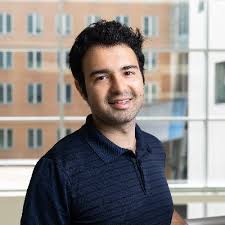
Aran Nayebi is an Assistant Professor at Carnegie Mellon University, affiliated with the Machine Learning & Neuroscience Institute. His research focuses on integrating machine learning and neuroscience to understand biological intelligence and develop biologically plausible AI models. He explores embodied agents, neural network dynamics, and human-AI alignment through game-theoretic frameworks. Key research interests include reverse-engineering natural intelligence through embodied agents, developing models that align with brain dynamics (e.g., zebrafish agents, rodent tactile processing), and addressing ethical challenges in AI alignment. His work bridges computational neuroscience and neural network design, emphasizing scalable models and biologically inspired algorithms. Recent publications span topics such as AI-driven economic policy (Universal Basic Income), neuroAI turing tests, and model-brain comparison techniques. His interdisciplinary approach addresses both technical challenges (e.g., neural network scaling) and societal implications of AI.
Rick White was a respected researcher and leader in applied statistics and data science at the University of British Columbia's Department of Statistics, part of the Faculty of Science. He earned his BSc in Mathematics (1990) and MSc in Statistics (1992) from UBC. As Managing Director of the Applied Statistics and Data Science Group (ASDa), he pioneered statistical consulting and training for researchers across disciplines. His work emphasized collaborative research and data-driven solutions for academic and administrative challenges. Rick's research interests spanned applied statistics, data science, and biostatistics, with a focus on improving diagnostic protocols, healthcare analytics, and interdisciplinary collaboration. He mentored students in projects like the award-winning STAT 450 case study analyzing employee resignations. His legacy is honored through the Rick White Memorial Fund and the annual Rick White Award, recognizing students excelling in collaborative statistical applications. Outside academia, Rick was known for his humor, generosity, and passions for music (particularly Rush) and historical board games. His contributions to statistical education and consulting left a lasting impact on UBC's research community.
Professor Steve Alpern is a faculty member at the University of Warwick, affiliated with the ISM-Analytics (ISMA) Group within the Warwick Business School. He holds the academic rank of Professor of Operational Research. Prior to this role, he was Professor of Mathematics and Operational Research at the London School of Economics (LSE). His academic journey began in the United States, where he earned an AB from Princeton University (under Oskar Morgenstern) and a PhD from the Courant Institute at New York University (specializing in dynamical systems under Peter Lax). He has taught at NYU, UCLA, Bryn Mawr, and Yale before moving to the UK. Professor Alpern's research spans game theory and operational research, with a focus on search theory, rendezvous search, and decentralized matching theory. His recent work applies search theory to animal behavior (e.g., predator-prey dynamics and caching strategies) and group decision-making (e.g., jury voting and committee selection). He has also contributed to patrolling games, caching games, and network search strategies. His research bridges theoretical foundations with practical applications in ecology, economics, and security. He currently teaches modules in Mathematical Game Theory, Mathematical Programming, and related subjects. His scholarly contributions include co-authoring influential books like Search Theory: A Game Theoretic Perspective and The Theory of Search Games and Rendezvous . While no specific awards are listed in the text, his extensive publications and academic roles reflect his expertise in operational research and game theory. His advising and grant activities are not detailed here, but his research collaborations span institutions globally. He is actively involved in the ISMA Group, contributing to interdisciplinary research in analytics and operational decision-making.
Niall L. Williams is a Faculty Fellow & Postdoc at New York University Tandon School of Engineering , Department of Computer Science and Engineering, and a member of the Immersive Computing Lab led by Prof. Qi Sun. He earned his PhD in Computer Science from the University of Maryland, College Park where he belonged to the GAMMA lab and was advised by Profs. Dinesh Manocha, Aniket Bera, and Ming C. Lin. His dissertation introduced computational methods for natural walking in virtual reality, integrating visual perception, motion planning, computational geometry, and statistical modeling. Education: PhD in Computer Science, University of Maryland, College Park (2024) B.S. with High Honors in Computer Science, Davidson College (2019) Research Interests: Williams’ work sits at the intersection of applied human perception , computer graphics , and virtual/augmented reality . He develops rigorous algorithms that steer users through unseen physical spaces while they experience expansive virtual worlds, studies perceptual thresholds for display artifacts, and designs robotic haptic proxies that provide context-aware force feedback in mixed reality. Publications Trend: Across 15 recent papers he repeatedly targets redirected walking and locomotion perception (6 papers), near-eye display artifacts and gaze/optic-flow perception (3 papers), haptics & robotics for VR (2 papers), plus influential open-source tools (PettingZoo). Best-paper honors at IEEE VR and ISMAR underscore the community impact of his algorithms. Scientific Awards & Honors: IEEE VR 2022 Best Paper Honorable Mention IEEE ISMAR 2021 Best Paper Honorable Mention IEEE VR 2021 Best Paper Honorable Mention Teaching & Service: At NYU he has already served as Instructor for Introduction to Programming and Problem Solving (Spring 2025) and Information Visualization (Fall 2024). Previously he was Head TA for Advances in XR at UMD and a long-time TA for game-programming and data-structures courses. He reviews regularly for IEEE TVCG, IEEE VR, ISMAR, CHI, and sits on the SIGGRAPH Research Career Development Committee. Labs & Teams: Williams is affiliated with the Immersive Computing Lab at NYU Tandon and previously the GAMMA Lab (UMD) and DRIVE Lab (Davidson College).
Tamas Foldes is a Postdoctoral Researcher at the Oxford Internet Institute (OII), University of Oxford, combining cognitive psychology expertise with reproducible science methodologies. His research focuses on decision-making, memory consolidation, and mental health, particularly exploring how digital environments influence cognitive processes. He advocates for transparent, large-scale online studies to advance scientific understanding. Research Projects : Leading the Capturing the Digital Footprints of Video Game Play initiative, developing open-source methods to collect behavioral video game data for rigorous research independent of industry collaboration. Research Interests : Explores intersections between motivation, memory systems, and digital platforms. Active in computational modeling of memory consolidation mechanisms and sleep-related cognitive benefits, with recent work on targeted memory reactivation and REM sleep interventions.
Dr. Martin Roth is a Research Fellow at Ritsumeikan University's Graduate School of Core Ethics and Frontier Sciences and holds a position at Stuttgart Media University’s Institute of Applied Artificial Intelligence. His research focuses on Japanese visual media, digital humanities, and videogame studies, particularly exploring themes like cultural identity, digital space, and media assemblages. He is the author of Thought-Provoking Play: Political Philosophies in Science Fictional Videogame Spaces from Japan (ETC Press, 2017). His research interests include the intersection of technology, culture, and media, with a focus on Japan's contemporary media landscape. Key areas include the analysis of videogame design, fan communities, and digital spatiality. His work often bridges theoretical frameworks with empirical studies of digital media practices. Roth's recent publications (2020-2022) emphasize the development of knowledge graphs for Japanese visual media, cross-platform community practices, and the socio-cultural implications of digital platforms. His analyses of games like Dark Souls and Animal Crossing highlight themes of cultural representation, spatial dynamics, and player engagement. Research Highlights: Japanese Visual Media Graph project (collaborative knowledge aggregation) Investigations into game ratings systems in Europe and Japan Analytical frameworks for digital spatiality and cultural boundaries His work is published in venues such as Journal of Intercultural Studies , Asiascape: Digital Asia , and Journal of the Japanese Association for Digital Humanities .
Abraham Meneu Oset is an Adjunct Professor in the Entertainment Design department at ArtCenter College of Design. He has extensive industry experience, including roles at Anibyte in England and DreamWorks Animation, contributing to major films like The Croods , How to Train Your Dragon series, and Trolls . His expertise spans 3D modeling, game cinematics, and feature film animation. Abraham's career began in Spain in the late 1980s, evolving through key projects such as Planet 51 and advertising campaigns in London. At ArtCenter, he teaches courses like Modeling 3 , bridging academic instruction with professional industry standards. His work focuses on character and environment modeling, reflecting a deep integration of technical skill and creative storytelling in animation.
Tiffany Tseng is an Assistant Professor of Computer Science at Barnard College, Columbia University, and director of the Design Tools Lab. Her research focuses on creating design software to empower creative expression and knowledge sharing across diverse user groups, including youth and professional designers. She holds a Ph.D. in Media Arts and Sciences from MIT, an M.S. in Mechanical Engineering from Stanford University, and a B.S. in Mechanical Engineering from MIT. Her work combines computational technologies with design-based research, emphasizing collaboration with community partners like museums and schools. Prior roles include Research Scientist at Apple, Project Assistant Professor at the University of Tokyo, and UX design roles at Autodesk and IDEO. She has developed tools for animation, machine learning, electronics prototyping, and 3D design. Key research areas include collaborative machine learning (Co-ML), interactive plush toys with AI integration (PlushPal), and tools like Circuit Assemblies for hybrid 3D-printed electronics. Her work has received accolades including the 2023 IDC Honorable Mention and 2021 IDC Best Paper Award. She currently oversees the Design Tools Lab and has pioneered platforms like Build in Progress for process-oriented documentation. Her projects emphasize democratizing design through accessible, creative technologies.
Cortney Bell is a Visiting Professor in the Animation Program at California College of the Arts (CCA). His work focuses on creating animations with deeper narrative meaning to provoke thought and question assumptions. He has professional experience collaborating with advertising agencies, game studios (including EA and Epic Games), medical device companies, and legal firms. Education: M.F.A. in Computer Animation from The Art Institute of California – San Francisco (200X) and B.A. in Animation from The University of Toledo (200X). Research interests emphasize storytelling techniques that engage viewers intellectually and emotionally, blending technical animation skills with philosophical inquiry. His creative philosophy prioritizes narratives that linger in the audience's mind post-viewing.
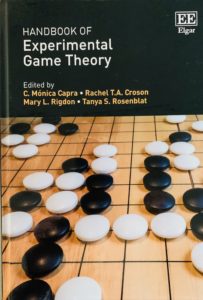
Monica Capra is a Professor of Economic Sciences at Claremont Graduate University (CGU). Her expertise spans experimental economics, behavioral economics, and neuroeconomics. She holds editorial roles including Associate Editor of the Journal of Behavioral and Experimental Economics and membership on the editorial boards of Experimental Economics and Journal of the Experimental Science Association . A Fellow of the Bolivian Academy of Economic Sciences, she is also part of the executive committee of the Economic Science Association. Dr. Capra earned her PhD in Economics from the University of Virginia and a BA in Economics from Franklin & Marshall College. Her research focuses on decision-making processes, experimental game theory, and the intersection of biology and economics. Notable themes include moral psychology, environmental behavior, and prosocial incentives. She frequently employs experimental methods to study consumer behavior, risk preferences, and social dynamics. Her recent work explores how behaviors like meat consumption influence ethical attitudes, the role of pledges in volunteering, and the cognitive underpinnings of cooperation. She has also examined neural mechanisms underlying economic decisions and the impact of cultural diversity on AI models. Her publications bridge economics with neuroscience, psychology, and environmental science, emphasizing real-world applications of theoretical insights. Awards: Fellow of the Bolivian Academy of Economic Sciences Editorial Roles: Journal of Behavioral and Experimental Economics (Associate Editor), Experimental Economics (Editorial Board)
Daniel Buckstein is an Adjunct Professor in the Division of Information Technology & Sciences at Champlain College, teaching in the Computer Science & Innovation and Game Programming programs. He holds a Master of Science from the University of Ontario Institute of Technology. His expertise includes 3D math, computer graphics, animation systems programming, and augmented reality. His research interests extend to game engine design and low-level programming for virtual and augmented reality applications. He emphasizes innovative teaching methods to engage students in complex technical topics. Buckstein's academic background combines computer science and game development, with a focus on applying mathematical principles to animation algorithms and graphics programming. He actively contributes to both academic and industry contexts, blending practical development skills with educational outreach.
Thomas Kollakowsky is a Researcher at the Westfälische Hochschule's Faculty of Computer Science and Communication, affiliated with the Computer Science I Department. He collaborates under Prof. Katja Becker and Prof. Dr. Gregor Lux. His expertise spans computer graphics, virtual reality, and IT administration, including server management (Windows/Linux), game engine development (Unity, Unreal), and 3D modeling tools. Office: A4.2.18, Neidenburger Str. 43, 45897 Gelsenkirchen Contact: Phone 0209/9596-414 | Email via 'Write an email' link Research focuses on real-time rendering, VR technology development, and 3D software engineering. He supports practical training in 3D graphics, animation, game development, and virtual environments. Active in labs: Computer Graphics Lab (cg.ik.w-hs.de), CG Lab (cglab.ik.w-hs.de), and Design Lab (designlab.ik.w-hs.de).
Dr. Lucy Yang serves as the Dean of Talwar College of Engineering and Computer Sciences at Indiana Tech, a position she has held since September 2024. Previously, she was Chair and Professor of Computer Science and Engineering at Fairfield University (2022–2024) and held roles including Faculty Fellow for Academic Affairs at Purdue University Northwest (2005–2022). She holds a Ph.D. in Electrical Engineering from China University of Mining and Technology, an M.A.Sc. in Systems and Computer Engineering from Carleton University, and multiple bachelor's and master's degrees in Engineering from Taiyuan University of Technology. Her research focuses on cybersecurity education, artificial intelligence, virtual reality, and innovative teaching methodologies. She has secured significant grants from the National Science Foundation (NSF), NASA, and other organizations, totaling over $2 million in recent years. Notable projects include developing cybersecurity curricula for high schoolers and creating immersive learning frameworks using AI and VR. Dr. Yang’s work emphasizes interdisciplinary collaboration, with grants such as the NSF-funded IntelEUI project (2021–2023) aimed at enhancing workforce productivity in energy and utilities through AI and extended reality. She has also been a PI on initiatives like the Connecticut Space Grant Consortium’s cognitive workload analysis project (2024). Her publications span peer-reviewed journals and conferences, with a focus on cybersecurity education, AR/VR applications, and health informatics. A key achievement includes co-authoring a Springer textbook on genetics education and receiving a Best Paper Award in 2021 for the 'Permission Educator' app. Her advising and grant work includes leading interdisciplinary teams and mentoring students in cybersecurity, AI, and engineering. Current efforts involve expanding access to STEM education through hands-on curricula and virtual learning tools.
Chun-Hua Chang is an Adjunct Professor in the Department of Animation & Game Art at Maine College of Art. Their expertise lies in digital animation and game design, contributing to the fields of interactive media and visual storytelling.
Lauren Duda is an Adjunct Professor in the Department of Animation & Game Art at Maine College of Art. She holds a BFA from the Savannah College of Art and Design. Her expertise spans animation techniques, game art design, and digital media creation. While no specific research awards or grants are mentioned, her role involves teaching and contributing to the field of visual arts education. No laboratory affiliations or detailed advising information is available in the provided text.