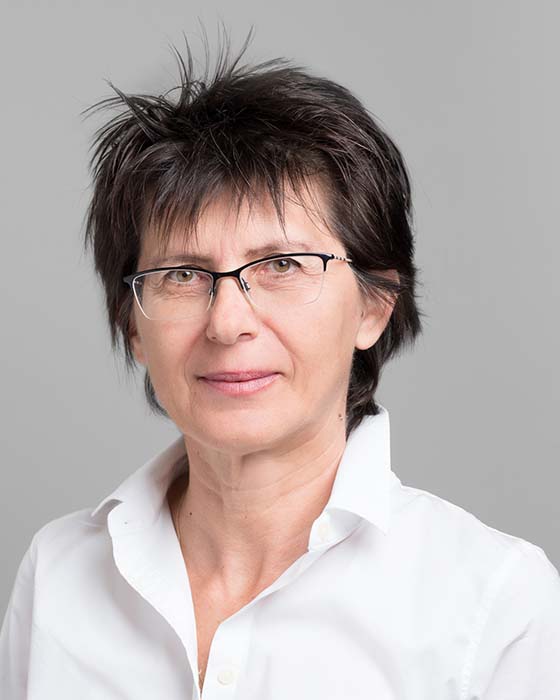
Tanja Blascheck is a PostDoc Researcher and Margarete von Wrangell Fellow at the Institute for Visualization and Interactive Systems (VIS) at the University of Stuttgart. Her work focuses on visual analytics , eye tracking , and microvisualizations for smartwatches and other wearable devices.
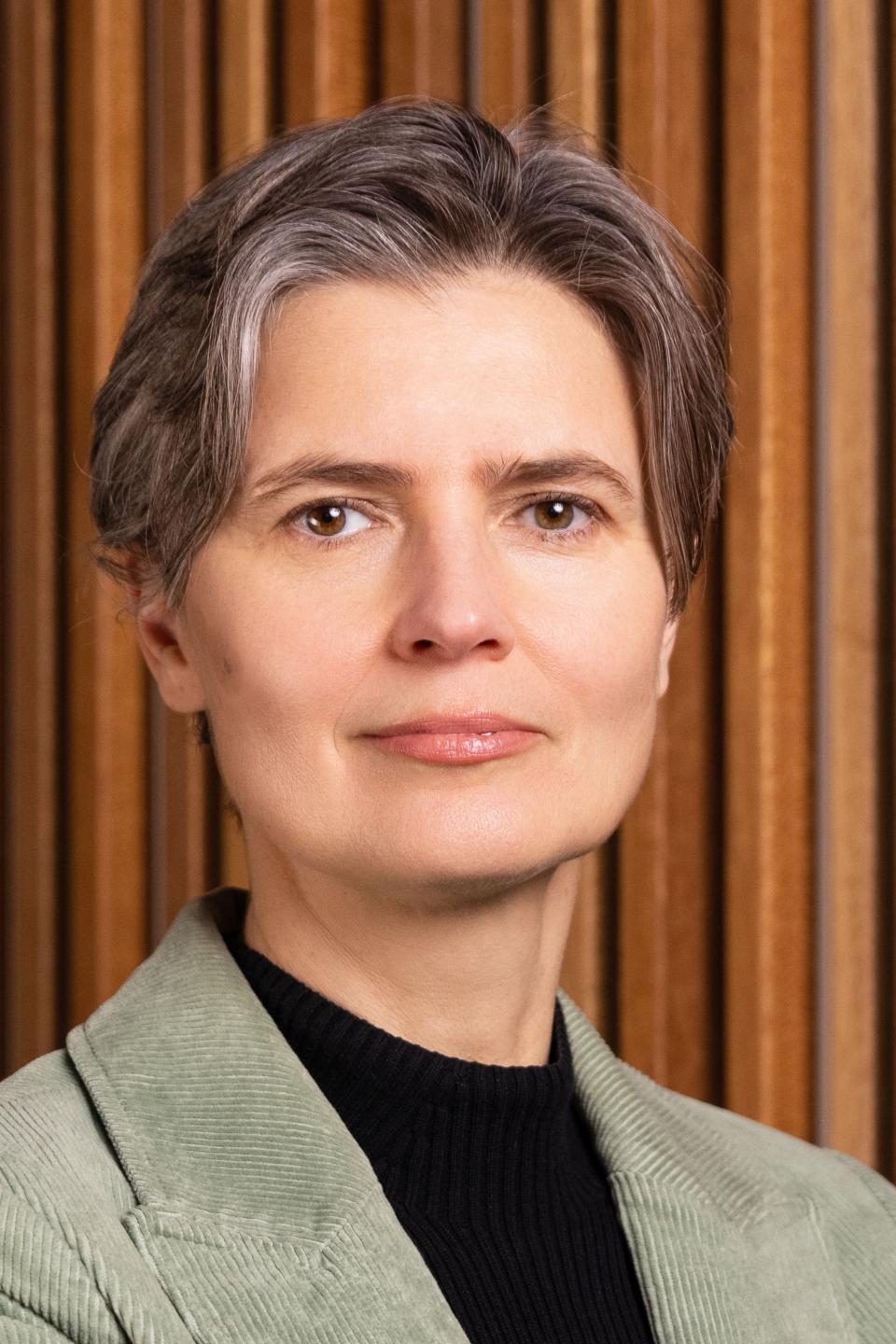
Lacra Pavel is a Professor in the Edward S. Rogers Sr. Department of Electrical and Computer Engineering at the University of Toronto, Faculty of Applied Science and Engineering. She joined the department in August 2002 after industry experience at Nortel Networks and Solinet Systems, and remains active in the System Control Group and Photonics Group. Her educational background includes: Diploma of Engineering (with distinction) in Automatic Control, Technical University Gh. Asachi of Iasi, Romania (1989) PhD in Electrical and Computer Engineering, Queen's University at Kingston (1996) Research focuses on integrating game theory, control theory, and optimization within networked systems. She pioneered applications in noncooperative/evolutionary game theory for network control, nonlinear/robust control frameworks, and energy-efficient optical/transportation networks. Current work develops mathematical foundations for learning in games via control-theoretic approaches to enable autonomous multi-agent network optimization. Recent publications (2019-2013) reveal dominant trends: distributed Nash equilibrium seeking using passivity-based and operator-splitting methods, stability analysis for optical network power control with time-delays, and extensions to transportation systems like railway timetabling. Key subfields include graphical games, ADMM algorithms, and Lyapunov-based boundary control for distributed parameter systems. Scientific recognition includes: Fellow of the IEEE (2025) for contributions to game theory, control, and optimization for network systems Connaught New Staff Award, University of Toronto (2003) New Opportunities Infrastructure Award, CFI/OIT (2003) Award for Innovation, Solinet Systems (2001, 2002) Inventor Recognition Award, Nortel Networks (2000) She has advised over 20 graduate students including current PhD candidates and former students now at MIT, Princeton, Amazon, and Ciena. Major grants include the CFI/OIT New Opportunities Infrastructure Award (2003). Her research bridges theoretical game control with practical implementations in optical and transportation networks. As co-director of the System Control Group and member of the Photonics Group, she leads teams developing algorithms for autonomous network optimization. Current projects focus on stochastic approximation methods for multi-agent learning and energy-efficient network design.
Shachar Lovett is a researcher at the University of California, San Diego (UCSD), specializing in computational complexity, combinatorics, and theoretical computer science. His work spans advanced topics in communication complexity, pseudorandomness, and coding theory, often intersecting with problems in additive combinatorics and Boolean function analysis. Education : Not explicitly detailed in the provided text. Research Interests : Lovett's research focuses on computational complexity, particularly in communication and circuit complexity, combinatorial structures like sunflowers and high-dimensional expanders, and the analysis of Boolean functions through Fourier and Gowers norms. His work explores the limits of deterministic vs. randomized computation, the structure of codes over finite fields, and the interplay between additive combinatorics and theoretical computer science. Article Trends : His recent publications address exact vs. approximate representations of Boolean functions, quasipolynomial bounds in combinatorics, hypercontractivity in high-dimensional expanders, and advancements in the log-rank conjecture. These works emphasize connections between computational complexity, discrete mathematics, and pseudorandomness, often yielding improved bounds or novel frameworks for understanding Boolean function behavior. Scientific Awards : No specific awards or honors were mentioned in the provided text. Advising and Collaborations : Lovett collaborates extensively with researchers like Hamed Hatami, Kaave Hosseini, and Jiapeng Zhang, contributing to fields such as non-malleable codes, matrix multiplication algorithms, and communication complexity. No formal student advising details were provided.
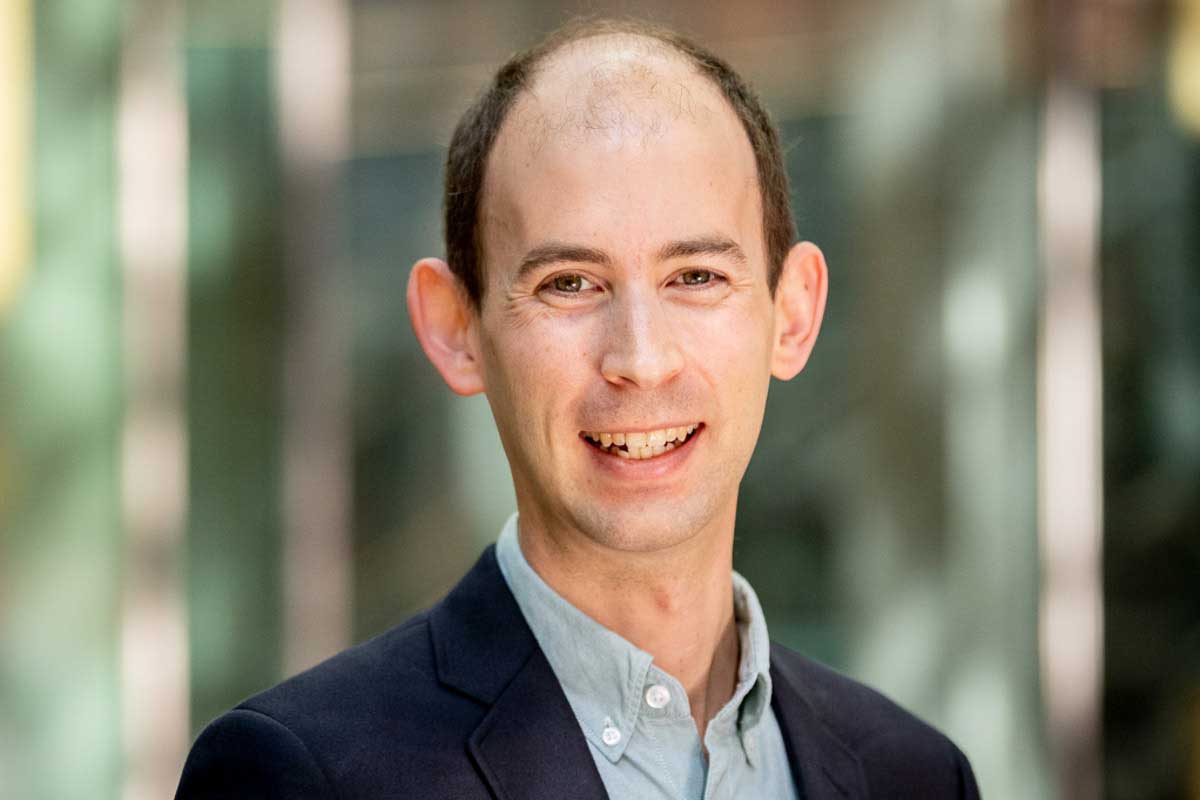
Adam Bouland is an Assistant Professor of Computer Science at Stanford University, where he leads the CS Theory Group. His research focuses on quantum computation, computational complexity theory, and their connections to physics. He completed his Ph.D. at MIT under Scott Aaronson, followed by postdoctoral research at UC Berkeley and the Simons Institute under Umesh Vazirani. His research explores fundamental questions in quantum computing including quantum complexity classes, quantum supremacy demonstrations, pseudorandom quantum states, quantum algorithm design, and connections to high-energy physics through AdS/CFT correspondence. Recent work investigates computational aspects of quantum systems, quantum learning theory, and noise resilience in quantum devices. Professor Bouland leads an active research group including 6 PhD students and 1 postdoctoral researcher, with joint appointments across Computer Science, Physics, and ICME departments. He regularly teaches graduate courses on Quantum Computation (CS259Q) and Quantum Complexity Theory (CS359D). His service includes program committee membership for major theoretical computer science conferences including FOCS, STOC, ITCS, and QIP.
Jonathan Bell is an Associate Professor at Northeastern University in the Khoury College of Computer Sciences , with prior appointments at George Mason University. His research spans Software Engineering , Program Analysis , and Ethics of Artificial Intelligence . PhD in Computer Science from Columbia University (2011) Recipient of the 2020 Dahl-Nygaard Junior Researcher Prize and NSF CAREER award His research focuses on: Resolving flaky tests in Continuous Integration systems Advancing dynamic taint tracking (e.g., Phosphor ) Formalizing software supply chain vulnerabilities Addressing ethical dimensions in automated decision-making Recent publications span flaky test prediction, semantic versioning analysis, and ethics of opaque AI systems. He co-founded the Clowdr open source project and a related startup. Awards include: 2020 Dahl-Nygaard Junior Researcher Prize 2025 NSF CAREER award 2019 GMU Teacher of Distinction award He advises PhD students like Liam DeVoe and Katherine Hough, and serves on committees for conferences such as ICSE , PLDI , and ASE . Contact: j.bell@northeastern.edu | jon@jonbell.net
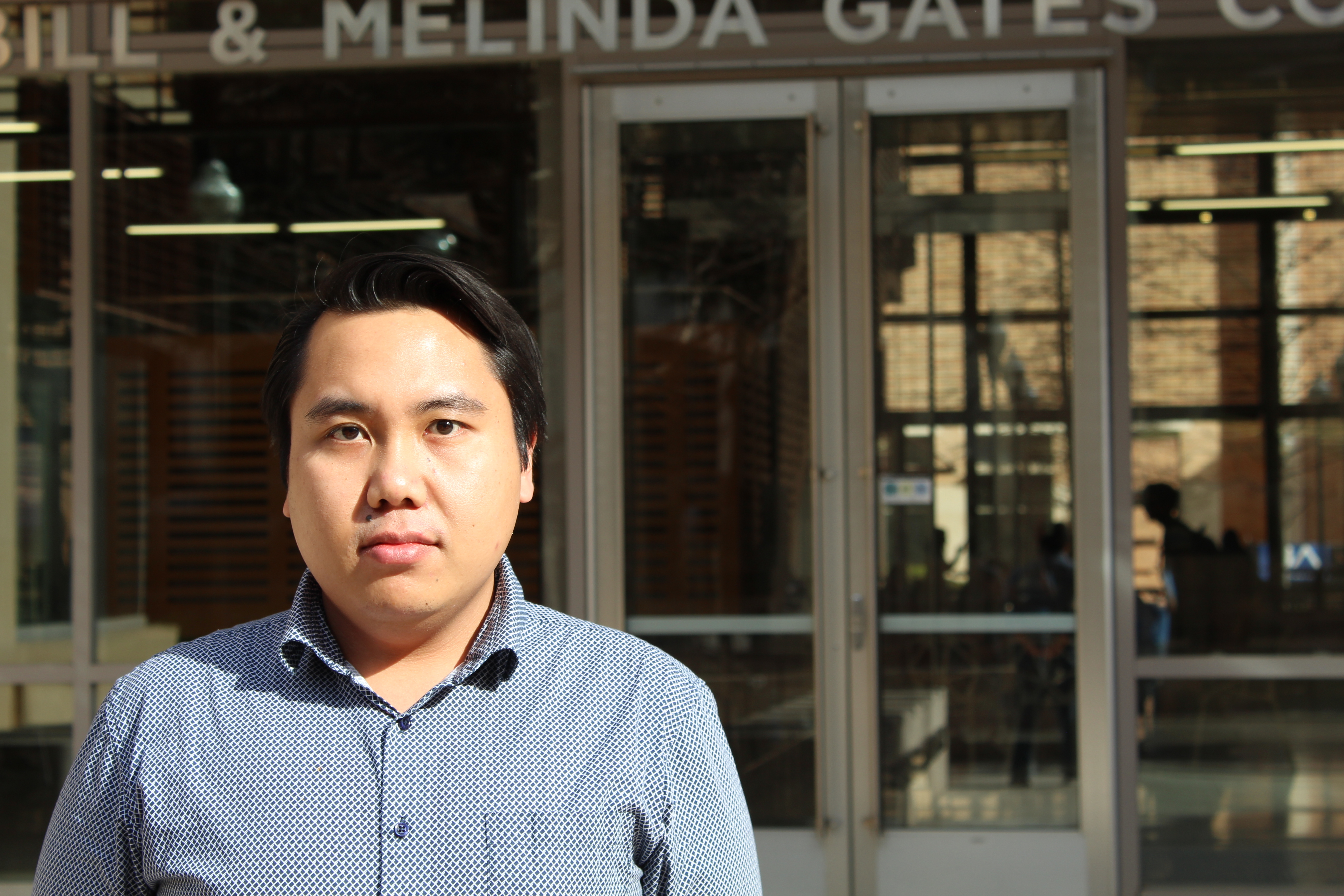
Dr Zhe Wang is a Senior Lecturer at the School of Information and Communication Technology, Griffith University, focusing on artificial intelligence, knowledge graphs, and semantic technologies. He earned his PhD in Computer Science from Griffith University (2011) and previously worked as a Research Fellow at the University of Oxford (2011-2013) on ontology-based systems. Research: Specializes in knowledge graph construction, rule mining for explainable AI, and integrating machine learning with logical reasoning. Led development of the scalable RLvLR rule-mining system and contributed to the HermiT ontology reasoner. Teaching: Instructs undergraduate and postgraduate courses including Introduction to Artificial Intelligence, Secure Development Operations, and Software Engineering Fundamentals. Grants: Funded by Australia's Economic Accelerator Ignite Grant (2025) for AI-driven marine life survey systems and Office of National Intelligence projects (2021-2022). Publications: Active in top venues like AAAI, ICASSP, and ISWC, with recent work on temporal knowledge graph reasoning, auction design algorithms, and neurosymbolic AI systems.
Erik Quaeghebeur is an Assistant Professor at Eindhoven University of Technology's School of Mathematics and Computer Science, focusing on uncertainty modeling in artificial intelligence. His work spans probabilistic circuits, imprecise probability theory, and wind energy applications. PhD in Applied Mathematics (Ghent University, 2002-2009) Master's in Applied Mathematics (Université catholique de Louvain, 2001-2002) Master's in Physics Engineering (Ghent University, 1998-2001) Research interests include probabilistic modeling under uncertainty, with applications in AI and wind energy systems. His recent work explores tensor factorizations, equivariant graph neural networks, and scalable probabilistic circuits. Scientific contributions include 60 research outputs and 2 datasets . Awards encompass the ERCIM Alain Bensoussan Fellowship (2013), BOF Postdoc (2010), and B.A.E.F. Francqui Fellowship (2009). He serves on committees for the Society for Imprecise Probability and acts as editorial board member for related conferences. Foundations of Artificial Intelligence course (since 2020) Uncertainty Representations and Reasoning course (since 2021)
Gedas Adomavicius is a Professor at the University of Minnesota ’s Carlson School of Management , holding the Larson Endowed Chair for Excellence in Business Education. He obtained his PhD in Computer Science from New York University (2002) , with prior degrees in Mathematics (BS/MS, Vilnius University, 1995) and Computer Science (MS, NYU, 1998). Research Focus: Personalization technologies, recommender systems, and machine learning for decision-making in information-intensive environments. Key Contributions: Pioneered techniques for improving recommendation stability, reducing biases, and integrating contextual information into recommendation algorithms. Grants & Recognition: Recipient of the U.S. National Science Foundation CAREER award, INFORMS Information Systems Society Distinguished Fellow Award, and Association for Information Systems Fellow Award. Publications: His work spans leading journals across computer science, information systems, and biomedical informatics. Key trends include advancements in recommender systems (context-aware, multi-stakeholder, and bias-aware models), machine learning for health analytics , and e-market mechanism design . He has over 33,000 citations according to Google Scholar. Education: Diploma (BS/MS) in Mathematics from Vilnius University, 1995 MS in Computer Science from New York University, 1998 PhD in Computer Science from New York University, 2002 Awards & Grants: INFORMS Information Systems Society Distinguished Fellow Award Association for Information Systems Fellow Award National Science Foundation CAREER award Academic Leadership: Served as Senior Editor for Information Systems Research and MIS Quarterly , and as department chair and academic director of the MSBA program at the Carlson School.
Matti Minkkinen is a Docent at the Turku School of Economics (University of Turku) and a Postdoctoral Researcher in Information Systems Science at the Department of Management and Entrepreneurship. His work bridges futures studies with ethics, privacy, and socio-technical systems in digital transformation. Recent roles focus on responsible AI governance and foresight methodologies. University: University of Turku School: Turku School of Economics Department: Department of Management and Entrepreneurship His research explores how digital technologies reshape organizational practices, emphasizing Futures Consciousness as a human capacity. Key themes include responsible AI , privacy protection , and causal layered analysis in scenario planning. Publications highlight ethical governance frameworks and EU policy debates. Recent articles address generative AI ethics , ML system integration , and AI auditing across journals like Communications of the Association for Information Systems and Information and Management . Topics cluster around socio-technical systems, digital ethics, and institutional adaptation to AI. Teaching and editorial roles include co-curating student research collections at Finland Futures Research Centre. No explicit scientific awards are listed, but his work contributes to foresight theory and practice.
Arrasy Rahman is a Postdoctoral Research Fellow at Professor Peter Stone’s Learning Agents Research Group (LARG) in the College of Natural Sciences at The University of Texas at Austin. His research focuses on creating adaptive autonomous agents for collaborative tasks, with expertise in game theory, reinforcement learning, and graph neural networks, particularly applied to the ad hoc teamwork (AHT) problem. Education: PhD and MSc from the University of Edinburgh, BSc from Universitas Indonesia His work explores methods to generate diverse teammate policies for training robust agents capable of collaborating with unseen teammates. Recent projects include partnerships with Lockheed Martin Corporation and organizing a workshop at AAAI-24. Arrasy’s research aims to build intelligent agents that assist humans in real-world collaborative decision-making challenges. Research trends in his publications include ad hoc teamwork, reinforcement learning, graph-based policy learning, and multi-agent systems. He has contributed to advancing techniques for best-response diversity and sub-task curriculum frameworks in autonomous agent collaboration. Labs and teams: Arrasy collaborates with the Autonomous Agents Research Group at the University of Edinburgh and the Learning Agents Research Group (LARG) at UT Austin. He is also involved in organizing the Ad-Hoc Teamwork Seminar Series and a AAAI-24 workshop.
Adriana Iamnitchi is a Full Professor and Key Domain Chair for Computational Science at Maastricht University's Faculty of Science and Engineering, affiliated with the Department of Advanced Computing Sciences. Her research focuses on computational social science, social media dynamics, and misinformation detection. Her primary research interests include: Analysis of coordinated information campaigns across social platforms Development of LLM-based synthetic data generation for social media research Polarization quantification in multi-community networks Policy compliance frameworks for digital regulation (e.g., EU's Digital Services Act) Ethical AI applications for content moderation and transparency Her recent publications (2023-2025) demonstrate strong focus on: Cross-platform disinformation detection using multimodal embeddings Generative AI for synthetic social media datasets Quantitative analysis of toxicity monetization in creator economies Regulatory compliance automation for content transparency
Anna Wilbik is a Professor in Data Fusion and Intelligent Interaction at the Department of Advanced Computing Sciences, Faculty of Science and Engineering, Maastricht University (The Netherlands). Her research bridges data understanding and human-machine synergy in complex systems, focusing on multi-criteria decision making, explainable AI, and data fusion techniques. PhD in Computer Science (with honors), Systems Research Institute, Polish Academy of Science (2010) Postdoctoral Fellow, University of Missouri (2011) Stanford University TOP500 Innovators Program Alumnus Research Pillars: Intelligent human-machine interaction for joint decision making Data fusion methods for heterogeneous data integration Contextualized multi-criteria decision frameworks Fuzzy logic and linguistic summaries for explainability Federated learning systems Article Trends: Recent work focuses on intuitionistic fuzzy sets for knowledge-intensive processes, federated learning with uncertainty handling, and linguistic summarization techniques for interpretable AI. She actively explores explainability , collaborative business models , and driver behavior analysis through attention-based models. Professional Leadership: Vice-chair of IEEE Fuzzy Systems Technical Committee Organizer of IEEE World Congress on Computational Intelligence (2024)
Patrick Jaillet is the Dugald C. Jackson Professor in the Department of Electrical Engineering and Computer Science at MIT's School of Engineering. He holds joint appointments with the Laboratory for Information and Decision Systems (LIDS), the Operations Research Center (ORC), the Operations Research and Statistics Group at MIT Sloan, and the Department of Civil and Environmental Engineering. Previously, he served as Head of Civil and Environmental Engineering at MIT (2002-2009) and Chair of the Department of Management Science and Information Systems at UT Austin (1997-2002). Dr. Jaillet's research focuses on online optimization and learning, sequential decision-making under uncertainty, and security and resilience in complex networks. His work spans theoretical foundations in optimization and machine learning with applications in transportation, online market analytics, and network security. He has developed mathematical frameworks for problems involving uncertainty, dynamic resource allocation, and strategic behavior in complex systems. His recent publications reveal strong trends in bridging theoretical optimization with practical machine learning applications. Key themes include Bayesian optimization for black-box functions, online learning with limited information, mechanism design for resource allocation, and network security applications. His work increasingly integrates large language models with traditional optimization techniques, reflecting the evolving landscape of AI-driven decision-making systems. Fulbright Scholar (1990) Fellow of the Institute for Operations Research and Management Science (INFORMS) Best Applications Paper Award at ICAPS 2019 Long-standing Associate Editor for top journals including Operations Research and Transportation Science Dr. Jaillet has advised over 40 doctoral students who now hold prominent positions in academia and industry, including faculty positions at MIT, Georgia Tech, and ETH Zurich, and research scientist roles at Amazon, Microsoft Research, and Google. His research has been consistently funded by major agencies including NSF, ONR, AFOSR, and international partners like Singapore NRF, with current projects focusing on learning algorithms for autonomous security and fundamental tradeoffs in optimization. He leads a vibrant research group spanning MIT's EECS department and ORC, with current funding supporting work on neural bandits, federated optimization, and network security applications. His research group operates at the intersection of theory and practice, with strong connections to industry through collaborations with IBM, Microsoft, Google, and various transportation and technology companies. The group maintains active partnerships with international institutions, particularly through SMART in Singapore, reflecting Dr. Jaillet's global research impact.
Stefan Wildermann is a Professor at Friedrich-Alexander-Universität Erlangen-Nürnberg (FAU), where he leads the Reconfigurable Computing Group within the Chair of Computer Science 12 (Hardware-Software Co-Design) in the Department of Computer Science. He has maintained continuous research activity at FAU since 2006, progressing from researcher to his current leadership position. Dr. Wildermann earned his Diploma degree in Computer Science from FAU in 2006 and completed his doctorate (Dr.-Ing.) in Computer Science at the same institution in July 2012. His academic career has been entirely rooted at FAU, demonstrating a strong institutional commitment and progression through the ranks. His research spans multiple cutting-edge areas in computer science and engineering, with particular emphasis on reconfigurable systems and hardware-software co-design. Wildermann's work in edge computing explores efficient processing at the network periphery, while his research in organic computing investigates self-organizing systems that can adapt to changing environments. His expertise extends to optimization techniques for embedded systems, applying game theory principles and convex optimization methods to solve complex resource allocation problems. More recently, he has integrated reinforcement learning approaches to enhance system adaptability and performance. His teaching portfolio includes courses on event-driven systems, computer engineering fundamentals, embedded systems, and hardware-software co-design. Analysis of Wildermann's publication record from 2021-2025 reveals a strong focus on hardware acceleration, security, and embedded systems. His work demonstrates consistent evolution from foundational research in reconfigurable architectures toward practical applications in IoT, robotics, and secure computing. A significant portion of his recent work addresses near-data processing using FPGAs for database acceleration, while maintaining parallel research streams in side-channel security analysis and energy-efficient embedded systems design. His publications frequently appear in top-tier conferences including DATE, FPL, ASP-DAC, and HOST, reflecting strong recognition within the computer architecture and embedded systems communities. Wildermann has held significant leadership roles including Head of the Reconfigurable Computing Group since 2015 and previously served as Head of the Self-organizing Systems Group (2012-2015) and Lab Leader of the Automotive Lab within the Embedded Systems Initiative (2016-2020). His research has been consistently funded through multiple projects investigating invasive computing, reconfigurable architectures, and embedded systems design methodologies. Currently based in Room 02.116 at Cauerstr. 11, 91058 Erlangen, Wildermann continues to lead active research in the Hardware-Software Co-Design group, supervising projects that bridge theoretical computer science with practical hardware implementation challenges.
John Horty is a Distinguished University Professor in the Philosophy Department at the University of Maryland, with affiliate appointments in the Institute for Advanced Computer Studies and the Computer Science Department. His research integrates logic, artificial intelligence, ethics, epistemology, philosophy of language, and philosophy of law to address complex questions in human cognition, legal systems, and normative reasoning. Horty holds a BA in Classics and Philosophy from Oberlin College and a PhD in Philosophy from the University of Pittsburgh. He has authored four books and over 40 papers, exploring topics such as defeasible reasoning, stit semantics, and the open texture of legal language. Education: BA (Oberlin College), PhD (University of Pittsburgh) Research Interests: Logic, artificial intelligence, ethics, epistemology, philosophy of law, and philosophy of language. Article Trends: Focus on computational legal reasoning, default logic, stit semantics, and the intersection of law and nonmonotonic logic. Scientific Awards and Grants: Humboldt Research Award Three National Endowment for Humanities Fellowships Visiting Fellowships at the Netherlands Institute for Advanced Studies and Stanford’s Center for Advanced Studies in Behavioral Sciences Carole Hafner Best Paper Award (2017), Honorable Mention at AAAI-87 NSF Grants for interdisciplinary research Teaching and Affiliations Teaches courses in symbolic logic, legal reasoning, and defeasible reasoning Affiliate in the University of Maryland Institute for Advanced Computer Studies and the Computer Science Department