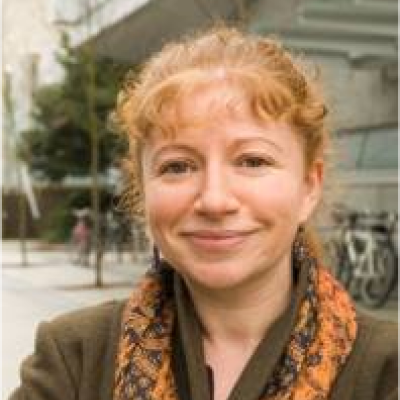
Han La Poutré is a Professor at Delft University of Technology and a Senior Researcher/Manager at CWI's Intelligent and Autonomous Systems group. His research focuses on multi-agent systems, computational intelligence, and optimization techniques for Smart Energy Systems (SES), integrating electrical engineering and economics frameworks. M.Sc. in Mathematics (1986, TU Eindhoven) Ph.D. in Computer Science (1991, Utrecht University) His work spans game theory , reinforcement learning , and market mechanism design for energy grid optimization, addressing challenges in congestion management, demand-side bidding, and AI-driven media sector innovation. Recent projects include AI, Media & Democracy Lab and RESCUE (Cyber-Physical Energy Security). Key trends in his 2020-2025 publications include: Hybrid fairness/welfare frameworks for grid congestion Double-sided auction mechanisms for heat/power markets Deep reinforcement learning in discrete action spaces Game-theoretical cybersecurity modeling Multi-temporal demand response coordination Scientific Awards 2015: Best paper award at GECCO-2015 He has led NWO-funded projects like Computational Capacity Planning in Electricity Networks and served as Vice President of ERCIM. Current affiliations include ACM Transactions on Intelligent Systems editorial board.
Kyle Moore is a Lecturer in Digital Media at Swinburne University of Technology's School of Social Sciences, Media, Film and Education. He holds a PhD in media and communications from the University of Sydney, focusing on games in urban environments. Current research: Mobile gaming distributions, location-based technology, augmented reality, and digital play cultures Teaching areas: Social media networks, media industries, and data communication Supervision: Available for PhD/Master's candidates in mobile technology and digital cultures His research explores intersections between location-based games and urban environments, examining how digital play shapes public space representation and access. Recent publications include analyses of Pokémon GO's haptic effects and Fortnite's cultural impact. Current grant: Supporting resilient HIV-positive community connections on digital platforms and technologies (2025-2026) at Swinburne University. Previously published in top-tier journals like Games and Culture , Convergence , and Media International Australia .
Professor Ole-Christoffer Granmo is a distinguished academic at the University of Agder, Norway, where he serves as Professor in the Department of Information and Communication Technology. He is the Founding Director of the Centre for Artificial Intelligence Research (CAIR) at the University of Agder, leading cutting-edge research in artificial intelligence and machine learning. Dr. Granmo obtained his master's degree in 1999 and his PhD in 2004, both from the University of Oslo. His academic journey has been marked by significant contributions to the field of AI, most notably the creation of the Tsetlin machine in 2018, for which he received the AI research paper of the decade award from the Norwegian Artificial Intelligence Consortium (NORA) in 2022. Professor Granmo's research primarily focuses on logical and causal world modeling across multiple modalities including images, sound, and natural language. His work spans logical auto-encoding, convolution, regression, transformer architectures, and reinforcement learning, all with the overarching goal of creating ultra-low-power artificial general intelligence through transparent logical learning and reasoning. His publications reveal a strong emphasis on interpretable AI systems, hardware implementations, and applications across diverse domains including cybersecurity, healthcare, social media analysis, and bioinformatics. AI Research Paper of the Decade (2022) - Norwegian Artificial Intelligence Consortium (NORA) Eight paper awards in machine learning Professor Granmo has coordinated over seven research projects and mentored 55+ master's students and nine PhD students. His leadership extends to co-founding the Norwegian Artificial Intelligence Consortium (NORA) and establishing two companies: Anzyz Technologies AS and Tsense Intelligent Healthcare AS. As an advisor at Literal Labs, he actively bridges academic research with practical industry applications, demonstrating his commitment to translating theoretical innovations into real-world solutions that address complex challenges across multiple sectors.
Bruce M. McLaren is a Professor at Carnegie Mellon University's Human-Computer Interaction Institute (HCII), where he heads the McLearn Lab. He previously served as President of the International Artificial Intelligence in Education Society (2017-2019) and has been elected to the Executive Committee of the AI-ED Executive Committee for two separate terms (2012-2017 and 2022-2027). Dr. McLaren's research focuses on how technology can support education through digital learning games , intelligent tutoring systems , and collaborative learning environments. His work has demonstrated that students can learn decimals more effectively through Internet-based learning games compared to conventional methods. He has also conducted significant research on erroneous examples in learning, showing how students benefit from working with incorrect solutions alongside intelligent tutors. His publications reveal a strong trend toward integrating artificial intelligence with educational technologies, particularly in analyzing student learning patterns, developing adaptive educational games, and creating tools that support both students and teachers in classroom settings. Recent work increasingly focuses on the application of generative AI like ChatGPT in educational contexts. Best Paper Award at ECTEL 2023 for research on ChatGPT in decimal learning Fulbright Scholarship recipient for educational technology work in Chile (2019) Multiple best paper awards at major AI in Education conferences Erskine Fellowship for teaching Intelligent Tutoring Systems in New Zealand As an advisor, Professor McLaren has mentored numerous students in the HCII program and has secured significant research funding, including NSF grants for projects like AdaptErrEx and LASAD. His lab, the McLearn Lab, serves as a hub for interdisciplinary research at the intersection of learning sciences and artificial intelligence. Beyond academia, he brings over 20 years of commercial sector experience, having served as Director of eCommerce Technologies at OpenWebs Corporation and leading expert system projects at Carnegie Group, Inc.
Ambuj K. Singh is a Professor in the Department of Computer Science at the University of California, Santa Barbara . With over 278 publications since 1987, his work spans graph neural networks, social network dynamics, and interdisciplinary applications in neuroimaging and cheminformatics. Key collaborations with researchers like Sourav Medya, Arlei Silva, and Francesco Bullo Contributions to network design, opinion dynamics, and interpretable AI His research integrates machine learning with graph theory , addressing problems in community detection , influence limitation , and explanation generation . Recent work focuses on counterfactual explainers and molecular graph analysis . He has contributed to venues like KDD, NeurIPS, WWW, and ICLR, often exploring temporal networks and polarized embeddings .
Rui Prada is a Full Professor at the Department of Computer Engineering, Instituto Superior Técnico, University of Lisbon. His research focuses on Artificial Intelligence , Game Development , and Human-Machine Interaction , with emphasis on socially intelligent agents and affective computing. His work explores Multi-Agent Systems , XR Testing , and Educational Game Design , particularly for neurodiverse populations. Recent publications highlight Procedural Content Generation , Human-AI Collaboration , and Social Power Dynamics in agent-based systems. Scientific contributions include the Best Poster Award and leadership in projects like PartiPlay and RAGE , advancing Inclusive AI and Game Technologies Marketplace frameworks.
Rajiv Sabherwal is Distinguished Professor and Edwin & Karlee Bradberry Chair in the Information Systems department at the Walton College of Business , University of Arkansas . A Fellow of IEEE, AIS, and Asia-Pacific Artificial Intelligence Association, he has performed numerous editorial roles including Editor-in-Chief for IEEE Transactions on Engineering Management and co-Deputy Editor-in-Chief for Journal of Strategic Information Systems . Education: PhD in Information Systems (University of Pittsburgh), Post Graduate Diploma in Management (IIM Calcutta), BE in Electronics Engineering (Regional Engineering College, Bhopal University) Research Interests focus on information technology management, knowledge processes, and strategic alignment. His work examines digital transformation, virtual teams, and societal impacts of generative AI, with publications in MIS Quarterly , Information Systems Research , and Management Science . Awards include: AIS LEO lifetime achievement award Fellow of IEEE Fellow of Association for Information Systems Fellow of Asia-Pacific Artificial Intelligence Association Recent Publications analyze IT investment strategies, cultural heritage preservation through technology, pandemic-era digital challenges, and mobile app security. His work appears in journals like Journal of Information Technology , Computers in Human Behavior , and Journal of Global Information Technology Management .
Leif Sörensen is a researcher at the University of Hildesheim , affiliated with the Institute of Business Administration and Business Informatics within the Faculty of Mathematics, Natural Sciences, Economics and Computer Science . His work focuses on operations research and digital transformation in public transport systems, particularly examining flexible transport models, agent-based simulations, and geoinformation system integration. Core Affiliations Researcher (since 2023) - HAWK Hochschule für Angewandte Wissenschaft und Kunst, Holzminden Doctoral Researcher - Institute of Business Administration and Business Informatics, University of Hildesheim Former Student Assistant - TU Dresden and Max Planck Institute for Self-Organization Research Focus: Sörensen's research bridges transport policy , agent-based modeling , and data analytics . He investigates how digital transformation can enhance rural mobility through flexible public transport systems , with emphasis on contractual incentives for drivers and stochastic behavior prediction . His work spans both developed and developing economies , particularly analyzing informal transit systems in South Africa. Publication Trends: Recent articles demonstrate a strong focus on operations research in transport contexts, with 7/9 publications involving agent-based simulations and DRT (Demand-Responsive Transport) . Keywords cluster around urban mobility , digital transformation , and transport resilience , while sub-fields reveal expertise in dynamic routing algorithms , passenger acceptance metrics , and GIS-integrated transport planning . Key Projects Co-author on European Commission-funded transport safety modeling Participant in Smart Hybrid research initiative (44 co-publications) Contributor to International Transportation Economics Association conferences Academic Background: Holds degrees in International Economics (University of Göttingen) and International Business and Development (University of Bayreuth). Completed internships at UNECE Geneva and KfW Entwicklungsbank Pretoria , with fieldwork in South Africa and Japan .
Dr. Jie Li is a dual-career academic and creative professional with a PhD in Industrial Design Engineering from Delft University of Technology. As an HCI/UX researcher in industry and Adjunct Professor at multiple institutions, she bridges academia and practice through work on Extended Reality (XR) , Human-AI interactions , and user experience evaluation . Her ACM Interactions column 'Bits to Bites' explores interdisciplinary research methodologies. Education: MSc in Industrial Design Engineering, Delft University of Technology PhD in Industrial Design Engineering, Delft University of Technology (2019) Her research spans social VR platforms , AI-augmented cognition , and privacy-preserving emotion detection , with recent publications analyzing LLM-assisted game design , harassment detection in VR , and XR's impact on remote collaboration . She has received Best Demo Awards (2020, 2022) and the ACM Best Paper Award (2018). Notable trends in her work include emerging immersive technologies (XR, 6DoF displays), human-AI collaboration frameworks , and cross-domain applications from medical VR clinics to cultural heritage experiences . Her advocacy for synthetic UX research and asynchronous co-creation tools reflects industry-academia hybrid innovation. Scientific Awards: Best Demo Award (2020, ACM TVX/IMX 2020) Best Demo Award (2022, ACM Multimedia) ACM Best Paper Award (2018, ACM TVX) While maintaining active roles in CHI conference committees and guest lecturing , Jie also operates a Delft-based creative cake design business , demonstrating her commitment to interdisciplinary exploration and 'slash career' balance between technical research and artistic practice.
Dr. Oliver Guidetti serves as a Level A Lecturer in Psychology at the University of Wollongong, specializing in human factors, cyber vigilance, and applied cognitive science. His interdisciplinary research bridges psychology, cybersecurity, and artificial intelligence to address critical challenges in human-machine collaboration and security operations environments. His educational foundation includes: Bachelor of Mathematics from Edith Cowan University (2011-2014) Bachelor of Science in Psychology from Edith Cowan University (2011-2014) Bachelor of Science (Psychology Honours) from Edith Cowan University (2015) Doctor of Philosophy from Edith Cowan University (2019-2022) Guidetti's research centers on the cognitive and physiological dimensions of human performance in security contexts. He investigates how eye-tracking, biometric monitoring, and neuroergonomic approaches can optimize vigilance in cybersecurity operations, while exploring socio-technical impacts of AI on human decision-making. His work extends to digital relationship literacy and AI bias mitigation, demonstrating applications across defense, healthcare, and industrial settings through collaborations with the Department of Home Affairs and Western Australian Cyber Defence Taskforce. His 2023-2024 publications reveal a cohesive research trajectory focused on cyber vigilance task design, human-AI teaming frameworks, and neuroergonomic validation methods. The corpus shows increasing integration of biometric data with cognitive theory to develop real-time performance assessment tools, alongside growing attention to ethical AI governance and cross-sector resilience in critical infrastructure protection. As an educator, Guidetti supervises Honours and PhD students in human factors and AI-driven research while teaching psychology research methods and cybersecurity applications. He co-developed an Australian Psychological Society-certified professional development course for psychologists entering cybersecurity fields, demonstrating his commitment to translating research into industry practice. His professional leadership includes advising on cyber vigilance frameworks, developing AI bias mitigation strategies, and serving on APS committees focused on digital psychology applications. Current projects involve designing AI-driven dating simulators for relationship literacy interventions and creating certified training programs for security operations personnel.
Alla Sheffer is a Professor and Associate Head of Faculty Affairs in the Department of Computer Science at the University of British Columbia, Faculty of Science. She is affiliated with multiple research centers including CAIDA (Centre for Artificial Intelligence Decision-making and Action), the Institute of Applied Mathematics, and ICICS (Institute for Computing, Information and Cognitive Systems). B.Sc., Hebrew University, Jerusalem (1991) M.Sc., Hebrew University, Jerusalem (1995) Ph.D., Hebrew University, Jerusalem (1999) Postdoctoral Research Associate, University of Illinois, Urbana-Champaign (1999-2001) Assistant Professor, Technion, Israel (2001-2003) Assistant Professor, University of British Columbia (2003-2008) Associate Professor, University of British Columbia (2008-present) Professor Sheffer's research focuses on geometry processing, addressing algorithmic challenges in digital shape modeling and manipulation. Her work primarily deals with discrete geometry representations, specifically meshes (polygonal model representations), with applications in computer graphics and computer-aided engineering. She utilizes tools from computational and differential geometry, discrete mathematics, and graph theory to generate, manipulate, and edit discrete geometric models. Her research spans virtual and augmented reality, visual computing, and 3D modeling, with significant contributions to sketch-based modeling, mesh processing, and cloth simulation. The 15 most recent publications reveal a consistent research trajectory in geometry processing, with recent work focusing on vector sketch processing, VR drawing tools, and advanced mesh manipulation techniques. Her work demonstrates a strong connection between human perception and computational methods, particularly in the interpretation of freehand sketches and the generation of perceptually-accurate geometric representations. The recurring themes across her publications include flowlines, curve networks, mesh parameterization, and the application of perceptual studies to improve algorithmic outputs. Eurographics Fellow ACM Fellow IEEE Fellow Royal Society of Canada Fellow SIGGRAPH Academy Member UBC Killam Research Prize NSERC Discovery Accelerator Supplement IBM Faculty Award Professor Sheffer has supervised numerous doctoral and master's students, with recent theses focusing on geometric mesh processing, vector sketch interpretation, VR drawing tools, and garment modeling. Her research group maintains strong connections with industry through various partnerships and has received substantial grant funding to support their innovative work in geometry processing and computer graphics. She teaches courses in computer graphics, geometric modeling, and video game programming, contributing significantly to both undergraduate and graduate education in computer science.
Pedro Antonio Garcia Tudela is a researcher at Universidad de Murcia specializing in Educational Technology, with a focus on Smart Learning Environments and Digital Entrepreneurship. He completed his PhD in 2023 with a thesis on intelligent learning environments supervised by Dr. María Paz Prendes Espinosa and Dr. Isabel María Solano Fernández. His educational background centers on advanced educational technology studies at Universidad de Murcia, culminating in his 2023 doctoral dissertation that established foundational frameworks for smart learning environments. This research positioned him at the forefront of educational innovation in Spanish-speaking contexts. Garcia Tudela's research explores the intersection of digital tools and pedagogical innovation, with emphasis on gamification, computational thinking development through Arduino, and digital entrepreneurship education. His work addresses critical gaps in teacher training for future classrooms and develops practical models like EmDigital for fostering entrepreneurial competencies in digital contexts. He investigates how educational escape rooms, flipped learning, and gender-inclusive technology integration transform learning experiences across K-12 and higher education. Analysis of his 15 most recent publications reveals a clear trajectory toward practical applications of educational technology: 40% focus on digital entrepreneurship frameworks, 30% on smart learning environment design, and 30% on gamification and computational thinking implementation. His research increasingly addresses cross-cultural applications, with comparative studies of future classrooms in Spain and Portugal. As an active thesis supervisor within the Educational Technology research group, Garcia Tudela mentors students in developing innovative educational methodologies. His work demonstrates strong industry-academia connections through practical frameworks for professional development and employability. The Educational Technology research group serves as his primary collaborative environment, driving projects that translate theoretical models into classroom applications while addressing contemporary challenges in digital education transformation.
Massimo Franceschetti is a Professor in the Department of Electrical and Computer Engineering at the University of California, San Diego (UCSD), with faculty affiliation at Calit2. His research spans mathematical engineering, focusing on control, communication, computation, and sensing, particularly in complex networks and systems. He integrates tools from statistical physics, wave propagation, and information theory to analyze and design networked systems. Born in Naples, Italy, he studied at the University of Naples Federico II and the University of Edinburgh (European exchange program), graduating in 1997. He earned his M.Sc. (1999) and PhD (2003) from Caltech, where he received the Walker von Brimer Award and the C.H. Wiltz Prize for outstanding research and thesis. After postdoctoral work at UC Berkeley (2003-2004), he joined UCSD as faculty and held visiting positions at Vrije Universiteit Amsterdam, EPFL (Switzerland), and the University of Trento (Italy). He became an IEEE Fellow in 2018 and was nominated a Guggenheim Fellow in 2019. His research includes networked control systems , stochastic geometry , electromagnetic information theory , and social dynamical systems . Recent work explores non-invasive emotional contagion in social networks, quantum limits on information entropy, and the physics of wave propagation. His publications bridge information theory , machine learning , and network science , often applying percolation theory and random walks to explain scaling laws and wireless signal behavior. Scientific accolades include the S.A. Schelkunoff Transactions Prize , IEEE Communications Society Best Tutorial Paper Award , and the IEEE Ruberti Young Researcher Prize . He co-authored two books: Random Networks for Communication (2007) and Wave Theory of Information (2018). His students have pursued careers in academia (e.g., IIT-Bombay, Notre Dame) and industry (e.g., Google, IBM, Tesla). He teaches courses on network science , information theory , and control systems , emphasizing data-driven analysis and the physical foundations of communication. His group’s work impacts cyber-physical systems , quantum network coding , and epidemic modeling on networks .
Maria Virvou serves as Professor and Chair of the Department of Informatics at the University of Piraeus, where she also directs the Graduate Program in Informatics and leads the Research Laboratory 'Software Technology'. She holds significant institutional leadership roles including membership in the University Senate and has chaired the Department of Informatics for multiple terms. As Editor-in-Chief of Springer book series 'Learning and Analytics in Intelligent Systems' and 'Artificial Intelligence-Enhanced Software and Systems Engineering', she maintains substantial academic influence across international scholarly platforms. Dr. Virvou earned her PhD in Computer Science and Artificial Intelligence from the University of Sussex with a scholarship from the State Scholarships Foundation, a Master of Science in Computer Science from University College London, and her undergraduate degree from the Department of Mathematics at the National and Kapodistrian University of Athens. Her educational background in both mathematics and computer science has provided a strong foundation for her interdisciplinary research approach. Professor Virvou's research spans Software Technology, Artificial Intelligence, Educational Software and Games, User Modeling, and Human-Computer Interaction. She has pioneered work in personalized interactive software systems, applying fuzzy logic and machine learning techniques to create adaptive educational environments. Her recent work demonstrates a strategic expansion into AI applications for healthcare, with significant contributions to medical diagnostics using large language models and multimodal AI systems. She has also made notable advances in smart tourism applications through personalization techniques. With over 400 publications to her name, Professor Virvou's scholarly output shows a clear progression from foundational work in user modeling toward increasingly sophisticated AI applications across multiple domains. Her publication trends reveal a strategic focus on explainable AI, multimodal systems, and practical implementations that bridge theoretical advances with real-world applications, particularly in healthcare and education sectors. Ranked #1 worldwide in 'User Modelling' publications (147,450 total publications) according to Scopus Ranked #1 worldwide in 'Educational Software' publications according to both Scopus and Microsoft Academic Search Recognized among the top 2% of most influential Artificial Intelligence scientists worldwide by Stanford University General Co-Chair at the 14th IISA Conference 2023 Invited Keynote Speaker at the 35th IEEE International Conference on Software Engineering Education and Training (CSEE&T 2023) As Director of the Research Laboratory 'Software Technology', Professor Virvou has built a robust research team focused on AI applications across multiple domains. She co-founded and co-chairs the IEEE Intelligent Information Systems and Applications international conference series, creating a significant platform for scholarly exchange. Her leadership extends to editorial roles with major academic publishers and active participation in international research collaborations that have secured substantial funding for innovative projects in AI and software engineering.
Prof. Dr. Sebastian von Mammen is a tenured professor at the University of Würzburg's Institute for Computer Science, where he heads the Games Engineering research group and contributes to the Chair for Human-Computer Interaction. His group leads the Games Engineering academic program. Previously, he completed his habilitation (2012-2016) at the University of Augsburg's Chair of Organic Computing and was a postdoctoral fellow at the University of Calgary. His research spans: Real-Time Interactive Systems : Visual programming, immersion techniques, software engineering Interactive Simulations : Serious games for healthcare/logistics/construction Artificial Life : Self-organisation, adaptive systems, evolutionary computation Artificial Intelligence : Agent-based modeling, procedural content generation Recent publications (2023-2025) demonstrate strong focus on: Virtual reality applications in education (femtoPro optics simulator, BrainBuilder neuroanatomy) Healthcare technology platforms (VIA-VR for medical serious games) Game mechanics analysis (Match-3, Jump'n'Run flow) AI-driven emotion recognition and interactive systems Computational modeling of biological systems He leads the Games Engineering research group and previously participated in the Evolutionary and Swarm Design group (Calgary) and LINDSAY project. His lab develops VR simulations for scientific training and serious games applications.