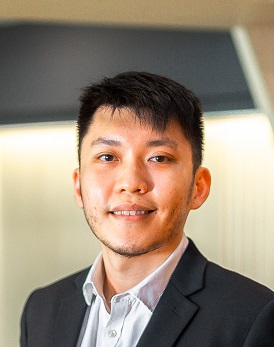
Andreas Petrovic is a Research Fellow in the Department of Radiology and Radiological Sciences at Monash University. His research focuses on advanced MRI techniques, forensic science applications, and nuclear resonance physics. Research Focus: Medical Imaging, MRI physics, contrast agents, and forensic age estimation Collaborations: Works with interdisciplinary teams in physics, radiology, and forensic science Publications: 16 research outputs (2013-2019), including high-impact articles in Journal of Magnetic Resonance , Forensic Science International , and Physical Review X Email: Andreas.Petrovic@monash.edu | ORCID: 0000-0002-1327-3783
Steve Griffin is an experienced Sessional Lecturer in Accounting at Queensland University of Technology (QUT), teaching across business and accounting disciplines since 2019. He also delivers courses at Griffith University, University of Southern Queensland (UniSQ), and Central Queensland University (CQUniversity), covering subjects including Financial Accounting, Company Accounting, Forensic Accounting, and Business Analytics across undergraduate, postgraduate, and professional certification programs. His educational background includes: MBA (With Distinction) from Queensland University of Technology Bachelor of Business (Double Major in Accountancy & Business Computing) from Queensland University of Technology Steve's teaching philosophy emphasizes critical thinking and practical application of theoretical frameworks to solve real-world business problems. His expertise spans financial reporting, corporate governance, business ethics, forensic accounting, and strategic financial management. He brings extensive industry experience to his academic work, having worked across diverse sectors including investment banking, engineering, construction, transport, public housing, education services, and health services. As a Fellow Chartered Accountant (FCA) with Chartered Accountants Australia and New Zealand (CAANZ) and Graduate of the Australian Institute of Company Directors (GAICD), Steve serves as Director and Executive Treasurer on the Boards of Queensland Churches Together and Scripture Union Queensland. He is also a mentor in the CAANZ formal Mentoring Program and provides business, financial, and strategic planning services through his consulting firm specializing in the not-for-profit and for-purpose sectors.
Dr. Armaghan Shafaei Darestani is a Lecturer and Research Fellow at Edith Cowan University's School of Science, specializing in Analytical Chemistry and Nutritional Metabolomics . Her work bridges Pharmaceutical Chemistry and Biomedical Research , with a focus on sulfur-containing compounds, glucosinolates, and metabolomic profiling in food and health contexts. Her research has produced key advancements in LC-MS/MS methods for metabolite quantification, including short-chain fatty acids and bile acids , while exploring the cardiometabolic effects of dietary compounds. Recent projects (2025) include S-methyl cysteine sulfoxide analysis and forensic proteomics grants. 2018 : Endeavour Postdoctoral Fellowship (Australian Government) 2014 : Gold Medal at ITEX International Invention Exhibition 2017 : PhD in Pharmaceutical Chemistry (University of Science Malaysia) She supervises research students in areas such as metabolomic biomarkers for polycystic kidney disease, forensic protein identification , and ellagic acid efficacy in NASH , contributing to interdisciplinary collaborations in the Centre of Integrative Metabolomics & Computational Biology (CIMCB) .
Kalin Stefanov is an ARC DECRA Fellow and Research Fellow in the Department of Human Centred Computing at Monash University. He holds a PhD in Computer Science from KTH Royal Institute of Technology and an MSc in Artificial Intelligence from the University of Amsterdam. His research focuses on Affective Computing, exploring systems that recognize and simulate human affects, with applications in social robotics, neurodiverse communication, and multimodal interaction. He has led projects on sign language translation and large-scale deepfake detection datasets. Key collaborations include work at the University of Southern California’s Institute for Creative Technologies and National Institute of Informatics. He has received accolades such as the Discovery Early Career Researcher Award (2023) and Best Paper Awards (2019, 2024). His research also contributes to UN SDG 4 (Quality Education) through accessible technologies for neurodiverse groups and visually impaired learners. Projects include the 'Active Generation of fingerspelling in Australian Sign Language' and 'Research Towards automated Australian Sign Language translation,' funded by the Australian Research Council. Stefanov’s work spans AI ethics, multimodal data platforms (e.g., OpenSense), and systems for social signal processing in human-robot interaction.
Eunus Ali is a Senior Lecturer in the Department of Software Systems & Cybersecurity within the Faculty of Information Technology at Monash University. He is actively contributing to research and academic teaching in the domain of cybersecurity and software systems, with a sustained record of scholarly output from 2008 through 2024. His research interests lie primarily in cybersecurity, secure software development, network security, and privacy-enhancing technologies. These areas are central to modern computing challenges and align with the strategic focus of his department and faculty. Eunus Ali has produced over 100 research outputs, indicating a strong and continuous engagement in academic publishing. The breadth and longevity of his publication record suggest contributions across various subdomains of software systems and cybersecurity, with a likely emphasis on practical and applied research given the nature of his collaborations and institutional context. There are no scientific awards explicitly mentioned in the available text. He is accepting PhD students, indicating active supervision and mentoring roles. While specific grant details or advising history are not listed, his sustained research output and collaborative network imply involvement in funded projects and academic guidance. Eunus Ali is part of a vibrant research ecosystem at Monash University, collaborating with researchers across institutions such as United International University, IBM Research, Swinburne University of Technology, and Bangladesh University of Engineering and Technology. His work is embedded within a global research network, particularly strong in South Asia and Australia.
Dr. Rachel Berry is an Associate Professor in the School of Medical Sciences at UNSW's Faculty of Medicine and Health, specializing in forensic anthropology, human anatomy, and cybercrime research. Her work bridges biomedical engineering with forensic applications, particularly in human decomposition analysis and AI-generated child sexual abuse material (CSAM) investigations. Education: BSc (Hons) Forensic Anthropology MSc Forensic Human Identification MPhil Forensic Stable Isotope Profiling PhD Biomedical Engineering GradCert Learning and Teaching in Higher Education Her research spans forensic anthropology, human decomposition dynamics, and cutting-edge cybercrime analysis. Current projects include Trends and Patterns in AI Generated Child Sexual Abuse Material (CSAM) in NSW (2024, $5,800) and AI and Cyber Futures Seed Funding (2024, $10,000). She pioneered 3D documentation protocols for decomposition studies and investigates post-mortem movement patterns through time-lapse imaging. Publication trends reveal an evolution from biomedical engineering (2014-2017 gastric electrophysiology studies) to forensic anthropology (2019-2023 decomposition research), culminating in 2024's focus on AI-generated CSAM analysis. Her work increasingly integrates digital forensics with traditional anthropological methods. Awards: UNSW Award for Educational Excellence (2023) UNSW Award for Adaptability and Innovation (2020) As a Consultant Forensic Anthropologist for FHID, she supervises research in child exploitation, cybercrime, and human anatomy. Her teaching portfolio includes ANAT2521 (Forensic Anthropology) and functional anatomy courses across UNSW's Medicine program campuses. Current grants focus on AI-generated CSAM trends and cybercrime prevention.
Professor Robert Barry is a distinguished academic in the School of Psychology at the University of Wollongong, Faculty of the Arts, Social Sciences and Humanities, where he has held a Professor position since 2020. His research career spans several decades with significant contributions to psychophysiology and cognitive neuroscience. Barry's research focuses on four major interconnected themes: the Orienting Reflex using his Preliminary Process Theory, electrophysiology of Attention-Deficit/Hyperactivity Disorder (ADHD), arousal and activation mechanisms, and brain dynamics. His work bridges theoretical psychophysiology with clinical applications, particularly in ADHD assessment and treatment. He has developed electrodermal skin conductance level as a gold standard measure of arousal and linked it to EEG alpha activity. His recent publications (2023-2025) reveal a strong focus on mindfulness meditation effects on EEG, sex differences in neural oscillations, and the relationship between prestimulus brain states and cognitive processing. Barry has made important contributions to understanding adaptive phase changes in brain activity and how the brain organizes ongoing activity to optimize stimulus processing. Professor Barry has supervised numerous PhD and Master's students over his career, with current supervision including projects on menstrual cycle effects on EEG, cardiac responses during music listening, and mindfulness effects on neural oscillations. He has collaborated extensively with colleagues including Clarke and Johnstone, who were his former students and are now Associate Professors. His research has been supported by multiple grants, including ARC Discovery Projects and internal University of Wollongong funding. Notable projects include investigations into electrophysiological assessment in ADHD, brain processing of musical patterns, and the effects of interstimulus interval on orienting reflex measures.
Siti Fazilah Shamsudin is a Senior Lecturer at UOW Malaysia KDU University College with over 20 years of academic experience in Computer Science and Software Engineering. She serves as Program Leader for the Diploma Program in Computing & Creative Media and plays a pivotal role in program development, curriculum design, and accreditation processes for computing degrees, all of which have achieved full accreditation. PhD in Information System (ongoing) at University Technology Mara (UiTM) Master of Information Technology from University Technology Mara (UiTM), 2002-2004 BSc (Hons) in Computer Engineering from De Montfort University, UK, 1996-1999 Dr. Shamsudin's research spans multiple interdisciplinary domains including software engineering, human-computer interaction, and computer science education. Her applied research focuses on medical imaging (particularly kidney stone and ovarian tumor detection using ultrasound), digital forensics for mobile devices, and machine learning applications in aquaculture. Her current PhD research on visual appeal interface design for slow learners bridges educational technology with user-centered design principles. Her publication record demonstrates consistent output in applied computing fields, with recent work focusing on image processing algorithms for medical diagnostics and digital forensics. The research shows a clear trajectory from theoretical foundations to practical implementations with real-world applications in healthcare, cybersecurity, and aquaculture management. Recipient of multiple UOW Malaysia KDU research grants (2014-2021) totaling over RM120,000 Appointed as Assistant Consultant for KiplePay Sdn Bhd through Islamic Science University of Malaysia (2021) Reviewer for 6th International Conference User Science and Engineering 2021 (i-USEr 2021) As the main coordinator for Final Year Projects, Dr. Shamsudin provides comprehensive guidance to students through their research journey. Her grants portfolio demonstrates strong research capability across multiple domains including medical imaging, digital forensics, and aquaculture technology. She maintains active industry connections through consultancy work and applied research projects that address real-world problems.
Kelvin Yong Sheng Chek serves as a Lecturer at Swinburne University of Technology Sarawak Campus within the Faculty of Engineering, Computing and Science. Previously, he held lecturing positions at Curtin University and conducted postdoctoral research at Universiti Malaysia Sarawak on information security projects. His research spans two distinct phases: early work on quantum cascade laser physics (2013-2016) and current cybersecurity focus (2018-present). Key interests include: Machine learning approaches for phishing detection QR code security vulnerabilities Website favicon-based authentication systems Information security threat modeling Quantum cascade laser modulation characteristics Recent publications demonstrate strong output in cybersecurity journals including Information Sciences and Expert Systems with Applications, with research evolving from theoretical laser physics to practical security solutions. His work shows consistent collaboration with Malaysian research institutions and international conference participation. Professional affiliations include: Graduate member, Board of Engineers Malaysia (BEM) Graduate member, Malaysia Board of Technologists (MBOT) Member, Institute of Electrical and Electronics Engineers (IEEE) Member, The Institution of Engineers Australia (IEAust) Associate Fellow, Advance HE (HEA) Dr. Chek actively supervises research students with emphasis on practical security tool development. He welcomes PhD/Master's candidates in cybersecurity fields and maintains connections with industry through Swinburne Innovation Malaysia. His laboratory resources include university computing infrastructure and network security testing environments.
Dr. Keshav Sood is a Senior Lecturer at Deakin University's School of Information Technology, where he leads research in cybersecurity, AI, and next-generation networks. His affiliations include roles as Graduate Research Coordinator and South Asia Country Coordinator. He completed his PhD at Deakin University and a post-doctoral fellowship at the University of Newcastle. Research Interests: Dr. Sood focuses on securing distributed systems, with emphasis on: Federated learning for intrusion detection in IoT/5G networks Biometric privacy in immersive technologies (VR/AR) RF fingerprinting for IoT device authentication Quantum-resistant software-defined networks Adversarial robustness in voice authentication systems His publications consistently explore AI-driven security frameworks, with recent work addressing data sparsity in IoT sensors, cross-domain IIoT authentication, and phishing mitigation using large language models. Awards: Professor of IT Award (2016) IEEE TNSE Excellent Reviewer (2023) Deakin HDR Supervision Award (2023) Course Team Award for Industry Certification Alignment (2021) Supervision & Grants: Dr. Sood currently advises 8 graduate researchers and has secured $655,313 in competitive funding. Key projects include: Smart Farming Cyber Resilience (DFAT Maitri Grant) Secure Access for Critical Infrastructure (Cyber CRC) IoT Data Integrity for Defense Systems (Australian Defence) He leads the Deakin Cyber Research and Innovation Centre, focusing on scalable security solutions for industry partners.