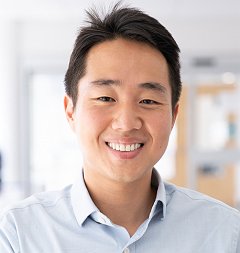
James R. Eagan is an Associate Professor in the Computer Science and Networks Department (Infres) at Télécom Paris , part of the Institut Polytechnique de Paris. He is also a Visiting Professor at the University of Colorado, Boulder for the 2024–25 academic year. His research focuses on making computers more expressive tools for human interaction, emphasizing malleable software, collaborative dynamic media, and multi-surface environments. His work spans Human-Computer Interaction , Data Visualization , and User Interface Programming . A key theme involves adapting software for user-driven customization, exemplified by projects like Webstrates (shareable dynamic media) and SchemeLens (semantic zoom for technical diagrams). He also explores uncertainty in data analytics and gesture-based interfaces for experts. Recent publications from 2020–2024 address Explainable AI (XAI) , Financial Crime Detection , and Interactive Data Analysis . His tools Tarantula and SchemeLens have received acclaim, including the 2015 ACM SIGSOFT Impact Award and Best Paper at UIST 2015. Scientific accolades include: Prix de l’Impact 2015 d’ACM SIGSOFT Best Paper Award at UIST 2015 Honorable Mention at CHI 2017 He teaches courses in Mobile Application Development , Human-Computer Interaction , and Data Visualization . His lab, DIVA (Design, Interaction, Visualization & Applications), operates within the Information Processing and Communication Laboratory (LTCI). He actively recruits PhD candidates and postdocs for research in these domains.
Fabian Suchanek is a full professor at Institut Polytechnique de Paris, specifically affiliated with Télécom Paris. He leads research in the Data, Intelligence, and Graphs (DIG) team within the Computer Science department. His academic career focuses on bridging artificial intelligence with structured knowledge representations. Suchanek's research interests span artificial intelligence, knowledge bases, and natural language processing, with particular emphasis on knowledge graph construction , rule mining , knowledge-based language models , and explainable AI . His work demonstrates how structured knowledge can enhance machine learning systems, particularly large language models, by providing factual grounding and interpretability. The research group he leads develops practical systems that address real-world knowledge management challenges. His recent publications showcase a strong trajectory in knowledge-intensive AI, with notable contributions to knowledge graph completion, rule mining techniques, and neural approaches to knowledge base validation. The research demonstrates increasing integration between symbolic and neural approaches to AI. Best Student Paper Award at KR 2024 for work on contextual reasoning Best Demo Award of IJCAI 2024 for rule mining in knowledge graphs French Open Research Award for the YAGO project Best Paper Award of ESWC 2021 for Neural Knowledge Base Repairs Suchanek has secured significant research funding, evidenced by his active recruitment of PhD students for knowledge-based language model research. He has held visiting positions, including at Nanyang Technological University (June-September 2023), and is recognized internationally through keynote invitations such as the Singapore ACM SIGKDD Symposium 2023. He has deliberately stepped back from administrative duties at Institut Polytechnique de Paris to focus on research. His laboratory maintains strong industry connections through open-source software projects including the YAGO knowledge base, AMIE for rule mining, STACI for explainable AI, and several other tools that have become standard in knowledge representation research.
Chao Liu is a Research Scientist at CNRS (French National Center for Scientific Research) since 2008, affiliated with the DEXTER team and the Department of Robotics, LIRMM at University of Montpellier, France. He earned his Ph.D. in Electrical & Electronic Engineering from Nanyang Technological University, Singapore (2006). Current research focuses on surgical robotics , haptics , teleoperation , and nonlinear control theory with applications in computer vision. His work addresses challenges in robotic-assisted telesurgery, including: Stable and transparent human-robot interaction through wave variable compensators and passivity filters Physiological motion compensation using spatio-temporal LSTM and dual Kalman filters EMG-based motion recognition for surgical skill assessment 3D soft-tissue reconstruction with stereo-endoscopes and deep learning Dr. Liu leads European and French projects like: TS2RT (CNRS-funded): Safer teleoperation with motion compensation ROBACUS (ANR-funded): Needle positioning with MPC control HaTUMoCo (CNRS-funded): Haptic teleoperation with uncertainty handling ARAKNES (EU-funded): Microrobotic systems for endoluminal surgery Scientific honors include Senior Member of IEEE and Member of Sigma Xi . He supervises Ph.D. and Master's students working on topics such as concentric tube robot optimization, haptic teleoperation, and EMG-based force estimation. Dr. Liu serves on IEEE Technical Committees for Telerobotics and Haptics , and as Technical Editor of IEEE/ASME Transactions on Mechatronics.
Olivier Sigaud is a Full Professor at Sorbonne University, affiliated with the ISIR (Intelligent Systems and Robotics Institute) and the Machine Learning and Intelligent Autonomous Systems (MLIA) team. He holds an engineering degree from ISEN and dual PhDs in Computer Science (University of Paris XI, 1996) and Philosophy (University of Paris I, 2004). Previously employed at Dassault Aviation (1995–2001), he transitioned to academia as a Lecturer and later a Professor at LIP6 and ISIR. His research focuses on reinforcement learning, robotics, computational neuroscience of decision-making in animals, and human-robot interaction. Key contributions include advances in goal-conditioned reinforcement learning, intrinsically motivated agents, and human-in-the-loop systems. He has co-authored over 100 publications in top-tier conferences (NeurIPS, ICML) and journals, with recent work exploring large language model grounding, open-ended learning frameworks, and motor skill acquisition through interactive curricula. Notable projects include the CURIOUS framework for modular multi-goal RL and the DREAM architecture for open-ended robotic learning. His work bridges theoretical AI with practical robotics applications, emphasizing interdisciplinary collaboration between computer science and neuroscience.
Stéphane Doncieux is a University Professor in Computer Science at Sorbonne University, where he is affiliated with the Institute of Intelligent Systems and Robotics (ISIR), a joint research laboratory with CNRS. Since January 2024, he has served as Director of ISIR, following a term as Deputy Director from 2019 to 2023. He leads the ASIMOV research team and is based at the Pierre and Marie Curie Campus in Paris. His primary research interests lie in cognitive and developmental robotics, with a strong focus on open-ended learning, evolutionary algorithms, and adaptive systems. He investigates how robots can autonomously learn diverse skills through mechanisms such as novelty search, quality-diversity optimization, and intrinsic motivation. His work bridges theoretical foundations in artificial life and practical applications in robotic manipulation, perception, and control. The recent publications highlight a consistent trend in advancing robotic learning under sparse rewards and in open-ended environments. Key themes include quality-diversity optimization for grasping, state representation learning, sim-to-real transfer, and the development of behavioral repertoires. These works are published in high-impact journals such as IEEE Transactions on Robotics, Evolutionary Computation, and Frontiers in Robotics and AI. Coordinator, DREAM FET H2020 project (2015–2018) Principal Investigator, ANR projects on Creative Adaptation by Evolution, Learning Movement Skills, and Grasping with Multimodal Feedback Involved in European initiatives including VeriDREAM and HumanE-AI-Net He has supervised numerous PhD and Master’s students, including Leni Le Goff, Giuseppe Paolo, Alban Laflaquière, and Achkan Salehi, often in collaboration with leading researchers like Olivier Sigaud and Jean-Baptiste Mouret. He teaches computer science and robotics at both undergraduate and graduate levels at Sorbonne University. Doncieux has been instrumental in shaping research directions in evolutionary and developmental robotics, notably through his leadership in the IEEE Task Force on Evo-Devo-Robotics and his editorial contributions. His lab, ASIMOV, fosters interdisciplinary research integrating computer science, neuroscience, and engineering to create more autonomous and intelligent robotic systems.
Jon Crowcroft is the Marconi Professor of Communications Systems in the Department of Computer Science and Technology at the University of Cambridge, and serves as the Chair of the Programme Committee at the Alan Turing Institute. He is also a Fellow of Wolfson College, Cambridge, and a visiting professor at the Department of Computing at Imperial College London. With a career spanning over three decades in computer networking research, Professor Crowcroft has made seminal contributions to the development of the Internet and continues to be highly active in cutting-edge research areas. His educational background includes: BA in Physics from Trinity College, University of Cambridge (1979) MSc in Computing from University College London (1981) PhD from University College London (1993) Professor Crowcroft's research spans multiple domains in computer networking and distributed systems. He has worked in Internet support for multimedia communications for over 30 years, with three main focus areas: scalable multicast routing, practical approaches to traffic management, and the design of deployable end-to-end protocols. His current research focuses on opportunistic communications, social networks, and techniques to scale infrastructure-free mobile systems. He is particularly known for his 'build and learn' paradigm for research and has recently been exploring decentralized digital identification systems, smart cities, and edge computing. His work often bridges theoretical foundations with practical implementations, emphasizing privacy-preserving approaches and sustainable network architectures. Professor Crowcroft has received numerous prestigious awards recognizing his contributions to the field, including: Election as Fellow of the Royal Society (2013) ACM SIGCOMM Award (2009) ACM Fellow (2002) Fellow of the Royal Academy of Engineering IEEE Fellow (2004) Chartered Fellow of the British Computer Society Throughout his career, Professor Crowcroft has advised numerous PhD students, including Mark Handley and Pan Hui, who have themselves become influential researchers in the networking community. He has authored several influential books that have been adopted internationally in academic courses, such as 'TCP/IP & Linux Protocol Implementation,' 'Internetworking Multimedia,' and 'Open Distributed Systems.' His research has been supported by various grants and collaborations with both academic institutions and industry partners, contributing to successful startup projects and influencing Internet standards. Professor Crowcroft is actively involved in several research initiatives, including serving on the Scientific Council of IMDEA Networks Institute since 2007 and the advisory board of the Max Planck Institute for Software Systems. He is also a director of the Matrix Foundation, which develops open network protocols. His current research group focuses on privacy-preserving analytics, decentralized systems, and the future of Internet architecture.
David Daney is a Senior Researcher (Directeur de recherche) at Inria and HDR-qualified academic, currently serving as Head of Science for the Inria Center at the University of Bordeaux since July 2024. He is the team leader of the Auctus research group, focusing on robotics, cobotics, and human-robot interaction. He is affiliated with Inria and the École Nationale Supérieure de Cognitique (ENSC) at the University of Bordeaux, within the College of Engineering and the Department of Robotics. His research interests include Robotics, Cobotics, Human-Robot Interaction, Human Posture Analysis, Cable-driven Robots, Parameters Identification, Calibration, Interval Analysis, and Haptic Guidance. His work bridges theoretical robotics with industrial applications, particularly in aerospace, automotive, and sustainable agriculture. He has led and participated in numerous industrial collaborations with Airbus, Stellantis, Solvay, AKKA, and Farm3. His recent publications (2023–2025) demonstrate a strong focus on human-robot physical interaction, including real-time capacity estimation (Pycapacity), haptic guidance, model predictive control for dynamic environments, and musculoskeletal modeling for collaborative robotics. These works appear in top-tier journals such as IEEE Transactions on Robotics, Journal of Biomechanical Engineering, and Robotics and Autonomous Systems. HDR (Habilitation à Diriger des Recherches) Principal Investigator of ANR Pacbot Head of Science for Inria Center at University of Bordeaux Erdös number = 3 David Daney supervises multiple PhD students, including Alicia Barsacq, Ahmed-Manaf Dahmani, and Alexis Boulay. He has been principal investigator in several research projects such as LiChIE and ANR Pacbot, focusing on satellite production and human-robot collaboration. He also leads the SHAARE associate team with KAIST’s IRiS lab, advancing shared haptic control. His team develops tools for teleoperation, ergonomic analysis, and robot calibration, with applications in industrial and assistive robotics. He leads the Auctus team at Inria, which develops control and analysis techniques for human-robot physical interaction. The team collaborates with KAIST (SHAARE), ONERA, Pprime Institute, and industrial partners. The MOVER project studies human motor variability for ergonomics, and the Farm3 collaboration explores teleoperated vertical farming robotics.
Amin Mesmoudi serves as Associate Professor in Data Engineering at the University of Poitiers' IUT (Institut Universitaire de Technologie), with dual laboratory affiliations at LIAS-ENSIP (Poitiers campus) and LIAS-ISAE-ENSMA (Chasseneuil campus). His research bridges theoretical database systems with practical large-scale data engineering challenges, particularly in semantic web technologies and machine learning applications. The laboratory maintains physical presences at both ENSIP's Bâtiment B25 in Poitiers and ISAE-ENSMA's Téléport 2 facility in Chasseneuil, facilitating cross-institutional collaboration. Mesmoudi's research program centers on scalable data management systems, with three interconnected pillars: (1) RDF and graph-based query optimization techniques for billion-triple datasets, (2) machine learning integration for spatial query performance and anomaly detection, and (3) explainability frameworks for complex black-box models. His work demonstrates consistent evolution from foundational database systems (2011-2016) toward contemporary AI-driven data engineering, particularly evident in his 2023-2025 publications on temporal dependency preservation and co-selection explainability. The Data Engineering team within LIAS laboratory provides the primary research context for these investigations. Publication analysis reveals strong methodological continuity in addressing scalability bottlenecks across database paradigms. Early work focused on SQL-on-MapReduce benchmarking for astronomy databases (2015-2016), transitioning to specialized RDF processing frameworks (2019-2021), and culminating in current hybrid approaches combining temporal modeling with machine learning (2023-2025). Key technical themes include fragmentation strategies for distributed data, optimizer feedback mechanisms, and graph-based query acceleration - all targeting real-world performance constraints in big data environments. As a core member of LIAS laboratory's Data Engineering team, Mesmoudi contributes to France's national research infrastructure in computer science and automation systems. The laboratory's dual-university structure enables unique cross-pollination between University of Poitiers' academic programs and ISAE-ENSMA's engineering specialization, with Mesmoudi's work exemplifying this synergy through applications spanning astronomy databases to wireless sensor networks.
Nicolas RAGOT is an Associate Professor at CESI, affiliated with the Engineering and Numerical Tools department. He teaches Digital and embedded electronics, Microcontroller programming, System control, and Sensors at the Bachelor and Master levels. His research focuses on Environment perception for robotics and Computer vision, particularly in unconventional applications. He leads or collaborates on major research programs including ROJUNACO (2023–2025), FUSION (2023–2027), OASIS (2022–2024), and COLIBRY (2021–2024), all addressing robotics, digital twins, and industrial automation. He co-supervises PhD students Y. Feddoul, S. Ouarab, and S. Choudhary. His work spans smart mobility, assistive technologies, and energy-efficient systems. He is a member of the Secure Electronic Transactions (TES) competitiveness cluster's expert committee. Education: PhD in Computer Vision (University of Rouen, 2009), Master in Electrical Engineering (University of Paris XI, 2003), Engineering diploma (ESIGELEC, 1999). Research interests emphasize robot perception, human-robot collaboration, and extended reality integration. His publications span object detection, SLAM algorithms, and smart wheelchair systems. Current projects emphasize industrial robotics, digital twins, and real-time 3D reconstruction. Advising and grants include leadership roles in multiple research programs and co-supervision of three PhDs. His lab work focuses on Engineering and Numerical Tools, with contributions to CESI LINEACT's collaborative robotics initiatives.
Claudia Roda is a Professor of Computer Science and Director of the Master’s program in Human Rights and Data Science at The American University of Paris (AUP). She co-founded the Technology and Cognition Lab and the Working Group on Human Rights and Digital Technology, and holds the UNESCO Chair in Artificial Intelligence and Human Rights with Prof. Perry. Her research focuses on digital technology’s impact on human behavior and social structures, including attention computing and multi-agent systems. Education: Bachelor’s in Computer Science from the University of Pisa, Italy; Master’s and PhD in Engineering from the University of London (Queen Mary and Westfield College). She has held leadership roles including Director of the Division of Arts and Science (2008–2011), Director of AUP’s collaboration with The New School (2010–2013), and Dean (2015–2018). Research interests include ethical AI, privacy by design, and the societal implications of digital technologies. Recent publications address AI governance, mental privacy, and regulatory frameworks. She has been awarded the AUP Board of Trustee Award for Research (2007), the Provost Award for Innovation (2021), and the Graduate Student Government Award (2023). Grants and collaborations include the €781K GaSP project (2015–2018) and the €1.1M PRIPARE project (2013–2015). She frequently speaks at global conferences on AI ethics, privacy, and human rights, including UNESCO’s Digital Learning Week (2024) and AI Governance Global (2024). Labs/Teams: Technology and Cognition Lab, UNESCO Chair collaboration, and the Working Group on Human Rights and Digital Technology. Current projects include exploring AI regulations and privacy challenges in digital environments.
Xavier Alameda-Pineda is a Research Director at Inria Grenoble Rhône-Alpes, where he leads the RobotLearn Team. He is affiliated with Université Grenoble Alpes and has been a key member of the Perception team. His work integrates machine learning, computer vision, and audio processing for scene understanding and human-robot interaction. Research Interests: His research lies at the intersection of multimodal machine learning and social behavior analysis. He focuses on developing algorithms for understanding human behavior in natural settings using audio-visual signals, with applications in robotics and AI companions. His work emphasizes real-world challenges such as noisy data, missing modalities, and dynamic environments. Publication Trends: His recent publications reflect a consistent focus on multimodal fusion, particularly combining vision and audio for social scene analysis. Themes include group behavior recognition, sound source separation, and cross-modal learning, often applied in robotics contexts. Scientific Awards: SIGMM Rising Star Award 2018 IEEE TMM Outstanding Associate Editor Award 2022 ACM TOMM Best Paper Award 2020 Best Paper Award, ACM MM 2015 Best Scientific Paper Award, ICPR 2016 Best Student Paper Award, IEEE WASPAA 2015 Outstanding Paper Award, ICMI 2011 Novel Technology Paper Award Finalist, IROS 2017 Advising and Grants: Xavier has mentored students and early-career researchers, evidenced by co-authored student papers. He coordinated the H2020 SPRING project on socially pertinent robots in gerontological healthcare and co-leads an AI chair on audio-visual perception for companion robots, indicating leadership in funded research initiatives. Labs and Teams: He is the leader of the RobotLearn Team at Inria and was previously part of the Perception team. He has also collaborated with the Multimodal and Human Understanding Group at the University of Trento.
Adeel AHMAD is an active Associate Professor (Maître de Conférences) conducting cutting-edge research at the intersection of artificial intelligence, industrial applications, and business process management. His academic work demonstrates strong interdisciplinary connections between computer science, industrial engineering, and business informatics. Dr. AHMAD's research interests span Explainable Artificial Intelligence (XAI), Industrial Machine Learning, Business Process Management, Ontology-Based Reasoning, and Logistics Optimization. His work focuses on developing practical AI solutions for industrial contexts, particularly in Industry 4.0 environments where human-AI collaboration is essential. He has made significant contributions to meta-learning approaches for automated algorithm selection and configuration, with particular emphasis on making these systems transparent and interpretable for domain experts. His publication record shows a clear trajectory toward integrating explainability into industrial AI systems, with recent work focusing on conversational recommendation systems for cyber-physical environments. The research demonstrates consistent evolution from foundational work in business process analysis toward sophisticated AI applications in industrial settings. Active research leadership in Explainable AI for industrial applications Significant contributions to meta-learning frameworks for automated machine learning Interdisciplinary approach bridging computer science, industrial engineering, and business processes Strong publication record in top-tier conferences and journals Dr. AHMAD demonstrates strong collaborative research patterns, frequently working with colleagues including Mourad Bouneffa, Moncef Garouani, and other researchers in the French academic community. His work shows particular relevance to manufacturing, logistics, and cyber-physical systems where AI must work alongside human domain experts.
Eunsuk Kang is an Associate Professor in the Software and Societal Systems Department at Carnegie Mellon University's School of Computer Science. Their research focuses on the intersection of software engineering and formal methods, emphasizing rigorous modeling and analysis techniques to create safe, secure, and reliable systems. PhD in Computer Science from MIT Postdoctoral scholar at NSF ExCAPE program Former connected vehicles researcher at Toyota Their research interests span software design, requirements engineering, modeling, specification and verification, system safety, security, and cyber-physical systems (CPS). Recent projects explore robustness in evolving environments, specification engineering, automated reasoning for complex systems, and safety/resilience mechanisms in ML-based CPS. Publications highlight advancements in Signal Temporal Logic decomposition, LTL specification learning, and requirement-driven adaptation frameworks. Selected scientific contributions include: tl;dr: Chill, y’all – AI will not devour SE (Onward! Essays 2024): Critical perspective on AI integration in software engineering FairSense (ICSE 2025): Long-term fairness analysis for ML-enabled systems AlloyMax (ESEC/FSE 2021): Relational specification satisfaction techniques As an educator, Kang teaches graduate courses in software design and formal methods, including: 17-423/723: Designing Large-Scale Software Systems 17-614 & 624: Formal Methods 17-445/645: Software Engineering for AI-enabled Systems 17-651: Models of Software Systems Service activities include: Program co-chair for SEAMS 2026 Co-organizer of Dagstuhl Seminar on Specification Engineering Co-organizer of International Workshop on Designing Software Program committee member for ICSE, OOPSLA, ASE, and specialized conferences Notable research collaborations include work with: Ben-hau Chia (PhD student) Parv Kapoor (PhD student) Yiliang (Leo) Liang (PhD student) Sumon Biswas (Postdoc) Rômulo Meira-Góes (Postdoc)
Sidonie Christophe is a Senior Researcher (Directrice de Recherche, DR1) at UMR LASTIG, a joint research unit of Université Gustave Eiffel, IGN-ENSG, and EIVP. She serves as co-director of the LASTIG laboratory and leads research in geovisualization, map design, and interactive spatial data exploration. She also holds a part-time advisory role (60%) at the French Ministry of Higher Education and Research in the domain of digital technology, environment, climate, and sustainable urban development. PhD in Geographic Information Sciences Senior Researcher, DR1, MTECT Co-Director, LASTIG Laboratory (since 2021) Former Team Leader, GEOVIS (Geovisualization, Interaction, and Immersion) Advisor, Environment and Urban Climate, French Ministry of Higher Education & Research Her research centers on innovative methods for 2D/3D and nD geospatial data visualization, with a focus on enabling spatio-temporal understanding through visual and non-visual spatial thinking. Her work integrates principles from geographic information science, human-computer interaction, and computer graphics. Key areas include urban climate visualization, tactile and augmented reality for accessibility, expressive cartographic rendering, and cognitive aspects of map design. She investigates how aesthetic and semiotic choices impact map comprehension and utility. The 15 most recent publications reflect a strong trend in interactive and accessible geovisualization, particularly for urban and environmental applications. Topics include neural map style transfer, 3D urban climate analysis, tactile maps for the visually impaired, augmented reality in geography, and visual analytics for crisis and climate data. There is a consistent emphasis on user-centered design, interdisciplinary integration, and the development of tools for decision-making under uncertainty. Scientific Recognition and Service: Invited speaker at major conferences (IEEEVIS, AGILE, ICC, CPGIS) Co-organizer of international workshops (e.g., GeoVIS, ISPRS AR/VR sessions) Leader of national research projects (ANR ORACLES, ANR ACTIVmap, ANR ECOCIM) Recipient of international mobility grants (AMICI I-SITE FUTURE) Contributor to national glossaries and research strategy (e.g., French photogrammetry glossary) Advising and Grants: Sidonie Christophe actively supervises PhD students and postdoctoral researchers, including Markie Jiang, Maria-Jesus Lobo, and Alexandre Mielniczek. She leads or participates in multiple funded research projects such as ANR ORACLES (marine flooding visualization), ANR ACTIVmap (tactile 3D maps), and ANR ECOCIM (eco-design of city information models). Her advisory role at the MESR involves shaping national research strategy in digital and environmental sciences. Labs and Research Teams: She is a core member of the GEOVIS team (Geovisualization, Interaction, and Immersion) at LASTIG and previously served as its leader. As co-director of LASTIG, she plays a central role in the leadership and strategic direction of the entire laboratory, which comprises over 100 researchers across four teams: ACTE, GEOVIS, MEIG, and STRUDEL.
Samir Ouchani is a Research Director at the CESI LINEACT laboratory (Aix-en-Provence, France), affiliated with the CESI Engineering School. He holds a PhD in Computer Science from Concordia University (2013) and an HDR (Accreditation to Supervise Research) from CNAM Paris (2022). His research focuses on securing cyber-physical systems (CPS) through formal methods, blockchain, and AI-driven approaches. Key roles include leading projects on resilient CPS architectures, IoT security, and federated learning in industrial contexts. Education: 2022: HDR in Security and Reliability of Smart CPS (CNAM Paris) 2013: PhD in Computer Science (Concordia University, Montreal) 2006: Master in Computer Science (Lorraine University, France) 1997: Engineering Degree in Computer Science (Djillali Liabess University, Algeria) Research Interests: His work emphasizes secure CPS design, including cryptographic protocols for IoT, formal verification frameworks, and AI applications for intrusion detection. He explores blockchain for smart cities, federated learning in distributed systems, and resilience engineering for autonomous vehicles. Recent projects include developing PUF-based authentication protocols and digital twin architectures for resource-constrained systems. Advising & Collaborations: Supervised PhD theses on IoT security (Fahem Zerrouki), smart city formal verification (Walid Miloud Dahmane), and federated learning in industrial CPS (Souhila Bedra Guendouzi). Collaborates with institutions like Blida University (Algeria) and HESAM University. Active in conferences such as CRISIS, ICFNDS, and IEEE WETICE. Labs & Teams: Leads the Engineering and Numerical Tools research team at CESI LINEACT, focusing on model-based design, CPS simulation, and cybersecurity tool development. Engaged in EU-funded projects on Industry 4.0 and smart infrastructure security.