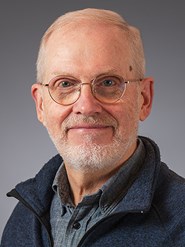
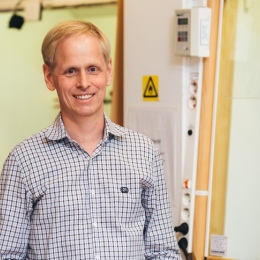
Lars-Olof Johansson is a Senior Lecturer at Halmstad University's School of Information Technology, specializing in Informatics. His research focuses on digital service innovation from a learning perspective, emphasizing collaboration between diverse stakeholders and knowledge exchange in innovation processes. He is actively involved in the LeaDS research program (Learning in a Digitalized Society) and teaches in the bachelor's program 'Digital Business Development' and the master's program 'Digital Learning'. His work bridges educational methodologies and technological innovation, particularly in fostering environments where interdisciplinary learning drives successful digital service creation. Notably recognized as an 'Excellent Teacher in Informatics,' he integrates practical experience with academic rigor, contributing to both scholarly discourse and pedagogical advancements. Key projects include SESMA (2019-2021), exploring sustainable mobility solutions, and ongoing collaborations in boundary practices for ICT innovation. His publications span topics like knowledgeability in digital service innovation, ethics in autonomous systems, and collaborative learning frameworks. His awards highlight his pedagogical impact, while his research addresses systemic challenges in innovation through interdisciplinary approaches.
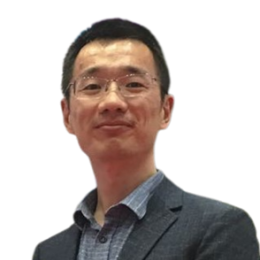
Elina Rönnberg is a Professor and Deputy Head of Department at the Department of Mathematics, Linköping University, where she leads research in discrete optimisation and intelligent decision-making. Her work bridges theoretical method development and real-world applications in sectors such as healthcare, aviation, mining, and transportation. She is actively involved in the Wallenberg AI, Autonomous Systems and Software Program (WASP) and has collaborated with industry leaders like Saab and Scania. Her research focuses on advanced optimisation techniques including Dantzig-Wolfe decomposition, Lagrangian relaxation, column generation, branch-and-price, and logic-based Benders decomposition. She also explores hybrid methods combining mathematical programming with constraint programming and machine learning. Applications span nurse rostering, electric vehicle routing, aircraft arrival scheduling, and underground mine planning. Recent publications highlight a strong trend toward integrating AI and machine learning—particularly graph neural networks—with classical optimisation frameworks to accelerate solution methods. Her work emphasizes practical impact, robustness, and scalability in solving complex scheduling and resource allocation problems. Nurse Rostering with Strategic Planning of Skills for Sick-Leave Robustness (2024) Pricing for the EVRPTW with Piecewise Linear Charging (2024) Speeding Up Logic-Based Benders Decomposition with Graph Neural Networks (2024) Elina supervises several PhD students and has co-supervised doctoral research at international institutions including Makarere University (Uganda) and the University of Exeter (UK). She has contributed to applied projects through student theses in collaboration with Scania and Saab, focusing on electric vehicle routing and search-and-rescue optimisation. She previously served as a Specialist in Optimisation at Saab Aeronautics (2014–2020) and co-founded Schemagi, a scheduling tool aimed at improving quality in healthcare. She teaches courses such as Introduction to Optimization (TAOP07) and Project - Applied Mathematics (TATA62). Her research group, 'Mathematics and algorithms for intelligent decision-making,' operates within the Division of Applied Mathematics (TIMA) at the Department of Mathematics. The team develops decision support tools that enhance efficiency and sustainability in complex systems, particularly under the growing demands of electrification and digitalisation in transport and logistics.
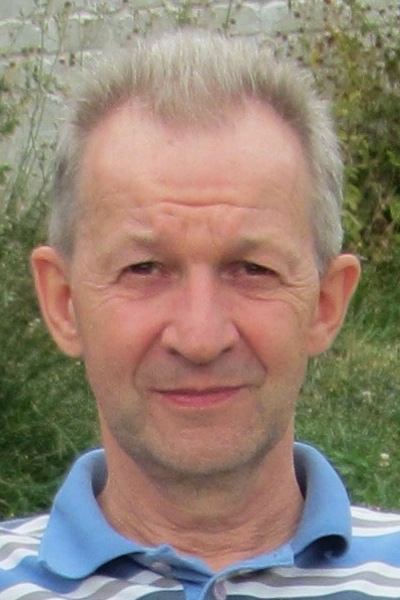
Marianna Ivashina is a Professor and Head of the Antenna Systems Research Group at Chalmers University of Technology's Department of Electrical Engineering . Her work focuses on array antennas , antenna integration with electronics , optimal beamforming , and over-the-air measurement methods . The group has achieved international recognition for innovations in ultra-wideband (UWB) feeds , Gap waveguide antennas , and Doherty-power-amplifier-integrated antennas for 5G/6G and radio telescope applications. Key projects include the SSF Sweden-Taiwan collaboration , EU Horizon 2020 MyWave , and VINNOVA ENERGETIC initiatives. Her recent publications emphasize millimeter-wave (mmWave) communication and reconfigurable intelligent surfaces (RIS) , with applications in 5G/6G networks , satellite communication (SatCom) , and advanced antenna testing chambers . She explores beamforming optimization , self-interference mitigation , and hybrid OTA environments to enhance wireless system performance. The group's work bridges theoretical advancements with practical implementations, including RFSoC testbeds and high-efficiency antenna arrays . Marianna leads major research programs funded by Ericsson , VINNOVA , and EUREKA EURIPIDES2 , addressing challenges in beamforming , antenna-IC integration , and automated design for 5G/6G . These projects highlight her role in advancing millimeter-wave communication and sensor integration technologies.
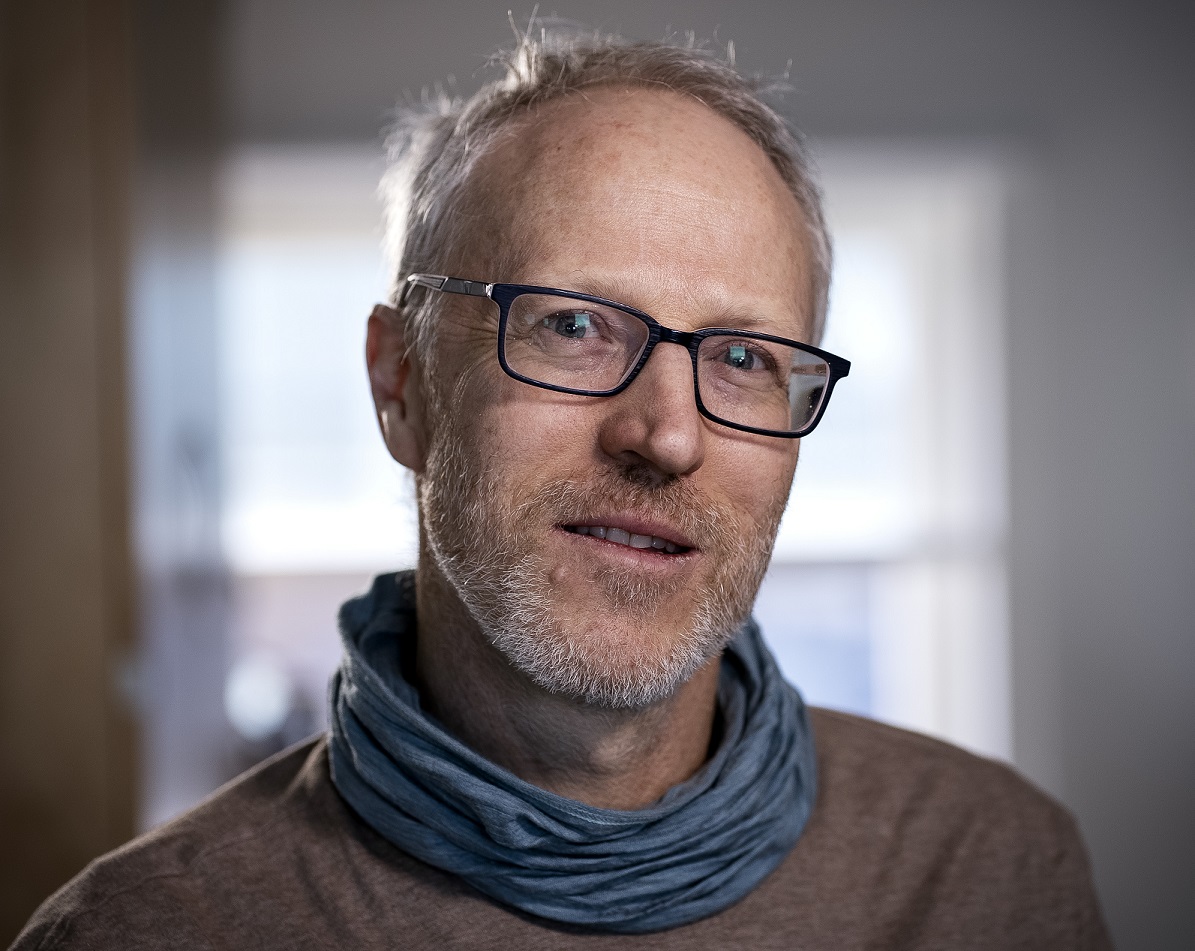
Outi Tammisola is a Professor at KTH Royal Institute of Technology, specializing in Fluid Mechanics within the Department of Mechanics. Her research focuses on non-Newtonian fluids, viscoelasticity, multiphase flows, and microfluidics. She is actively involved in teaching and course coordination for mechanics and fluid dynamics courses, including Mechanics I, Mechanics II, and Wave Motion and Hydrodynamic Stability. Her work bridges numerical methods, experimental validation, and industrial applications, with a strong emphasis on understanding complex fluid behaviors in both theoretical and applied contexts. Dr. Tammisola’s research interests span topics such as elastoviscoplastic fluids, particle migration in microchannels, and interfacial phenomena in viscoelastic systems. Her recent publications address challenges in multiphase flow dynamics, including droplet coalescence, bubble migration, and the rheology of non-Newtonian fluids. She contributes to advancements in numerical methods, such as phase-field modeling and immersed boundary techniques, to simulate complex fluid-structure interactions. Her articles highlight trends in understanding fluid behavior under extreme conditions, such as high aspect ratio microchannels and porous media. Collaborations with experimentalists and computational scientists ensure her work remains both innovative and grounded in real-world applications. While no scientific awards are explicitly mentioned, her extensive publication record reflects significant contributions to the field of fluid mechanics. Outi Tammisola is also engaged in academic leadership, overseeing degree projects and contributing to the development of educational programs at KTH. Her research group likely explores cutting-edge topics in microfluidics and viscoelastic turbulence, though specific lab or team affiliations are not detailed in the provided texts.
Jennifer Ryan is a Professor of Numerical Analysis and Division Head of Numerical Analysis, Optimization, and Systems Theory at the Department of Mathematics, KTH Royal Institute of Technology. Her research focuses on designing and developing numerical schemes to extract accuracy from simulations, particularly through superconvergence properties and computational efficiency improvements. She applies these techniques to applications such as imaging, fluid visualization, and plasma dynamics. Education: PhD in Applied Mathematics, Brown University; MS in Mathematics, Courant Institute; BA in Applied Mathematics, Rutgers University. Professional Activities: Member of editorial boards for BIT Numerical Mathematics, ESAIM:M2AN, and Communications on Applied Mathematics and Computation; Steering committee member of AWM's Women in Numerical Analysis and Scientific Computing (WINASc). Her publications emphasize discontinuous Galerkin methods, SIAC filtering, and applications in fluid dynamics. She has served on multiple grant review panels and received awards for diversity and inclusion initiatives. Grants: Principal Investigator for projects funded by the Swedish Research Council, NSF, and US Air Force Office of Scientific Research. Awards: Fellow of UK Higher Education Academy, DAAD Fellowship, and Householder Fellowship.
Ulrich Vogt is a Professor in Applied Physics at Kungliga Tekniska Högskolan (KTH) and leads the X-ray Optics and Nanoimaging group within the Bio-Opto-Nano unit. He serves as Vice-head of the Applied Physics department for undergraduate education. His research focuses on developing advanced X-ray microscopy techniques, particularly at synchrotron facilities like MAX IV’s NanoMAX beamline. He specializes in X-ray optics, nanoimaging, and diffractive optical elements for applications in materials science, biology, and medicine. Key contributions include the design of the NanoMAX beamline, optimization of X-ray zone plates via metal-assisted chemical etching, and advancements in multi-beam ptychography. Vogt has pioneered compact X-ray microscopy systems using laser-plasma sources and liquid-jet targets. His work integrates nanofabrication, computational imaging, and synchrotron instrumentation to achieve sub-100 nm resolution in hard and soft X-ray regimes. Teaching responsibilities include courses on experimental physics, photonics, and X-ray applications. His lab collaborates internationally on projects like the European XFEL, emphasizing high-brightness sources and radiation-resistant optics. Recent innovations include adaptive multi-beam ptychography and stereo X-ray imaging for 3D nanoscale visualization. Research highlights span over 100 peer-reviewed articles, with a focus on coherence characterization, beamline instrumentation, and nanostructured materials. Vogt’s grants include a Röntgen-Ångström Cluster award supporting multi-beam ptychography and cryo-microscopy advancements.
Martin Berggren is a Professor at the Department of Computing Science , Umeå University , Sweden. His work focuses on Computational Design Optimization , combining computer simulations and numerical optimization to enhance engineering designs for devices like antennas, microwave components, and loudspeakers. Berggren is also active in mathematical modeling of physical phenomena, particularly wave propagation and fluid mechanics, with a strong emphasis on finite-element methods . His research addresses large-scale conceptual design problems using thousands to millions of design variables, relying on gradient-based algorithms and adjoint-based computations of design sensitivities—similar to back-propagation in deep learning. Key application areas include acoustic and electromagnetic devices, where he investigates damping mechanisms, boundary conditions, and material distribution. Other interests, though less active, involve flow control and unsteady fluid–structure interaction . Berggren collaborates extensively on projects such as Structured Regularization , Topology Optimization of Acoustic Black Holes , and Design of Microstrip-to-Waveguide Transitions . His publications span journals like Journal of Computational Physics , Pattern Analysis and Applications , and IEEE Transactions on Antennas and Propagation , often co-authored with researchers like Linus Hägg , Eddie Wadbro , and Disi Lin .
Yu Xia is a Post Doc at the Department of Chemistry, Stockholm University, Sweden. He is affiliated with the Tom Willhammar Research Group, focusing on advanced electron microscopy and diffraction techniques for structural characterization of materials. PhD (2019–2023) from a joint program between the University of Birmingham (UK) and the Southern University of Science and Technology (China). Research emphasizes fabrication of metallic nanoparticles with non-equilibrium structures and shapes using gas-phase condensation and thermal shock methods. Specializes in scanning transmission electron microscopy (STEM), in-situ heating experiments, and electron energy loss spectroscopy (EELS) for nanoparticle analysis. Current work prioritizes 4DSTEM imaging for electron beam-sensitive materials and Python-based post-processing of electron microscopy datasets. Yu Xia's research spans Materials Science , Nanotechnology , and Electrocatalysis , with applications in photocatalytic hydrogen evolution , graphene composites , and advanced electron microscopy techniques . His work often integrates computational image processing with structural characterization to optimize material properties. Publications highlight innovations in heterostructure engineering , metallic alloy catalysts , and electron beam-sensitive material imaging . No scientific awards are explicitly mentioned in the provided text. Yu Xia's technical expertise includes Python scripting for image analysis, in-situ electron microscopy , and multifunctional graphene-based materials .
Jim Dowling is a distributed systems researcher at KTH Royal Institute of Technology, focusing on large-scale distributed systems, machine learning, and big data. His work emphasizes improving system dependability, performance, security, and scalability through middleware, peer-to-peer systems, and cloud-native solutions. He leads courses such as Advanced Course in Large Scale Machine Learning and Deep Learning and Scalable Machine Learning and Deep Learning , demonstrating his commitment to education in AI and distributed computing. His research spans topics like feature stores, Kubernetes integration, and AI-driven environmental analytics (e.g., ANIARA project for edge infrastructure automation and ExtremeEarth for Copernicus data analysis). He has contributed to scalable ML pipelines, cloud storage systems (HopsFS-S3), and hyperparameter optimization tools like Maggy. Key projects include the Hopsworks platform for machine learning operations and the development of cloud-native tools for big data analytics. His work bridges theoretical distributed systems research with practical applications in AI, healthcare, and environmental science. He has advised on numerous collaborative initiatives but no formal students are listed. His grants and lab activities are centered around Hopsworks and the ANIARA project, reflecting his focus on scalable, self-managing systems.
Pierre Flener is a Professor at the Department of Information Technology, Division of Computing Science at Uppsala University. He leads the Optimisation Group and is a member of the Centre for Interdisciplinary Mathematics. His work focuses on constraint programming and discrete optimization, addressing complex scheduling, routing, and resource allocation challenges. Flener is an Officer of the Order of Merit of Luxembourg and co-founder of NordConsNet, the Nordic Network for Constraint Programming researchers. Research Interests: Flener’s research spans constraint programming, combinatorial optimization, and algorithm design. He develops models and tools for automated decision-making in domains like air traffic management, sensor networks, and industrial robotics. His work emphasizes practical applications, leveraging constraint satisfaction techniques to solve real-world puzzles such as vehicle routing and personnel allocation. Key Contributions: Flener has authored over 100 publications on constraint solving, symmetry breaking, and CP-based approaches to industrial problems. Notable projects include airspace sectorization optimization, energy-efficient sensor networks, and financial portfolio design. He has led initiatives like Auto-Tabling for MiniZinc and collaborated on CP applications in bioinformatics and image processing. Labs & Teams: He heads the Optimisation Group at Uppsala, fostering research in CP and its applications. NordConsNet, co-founded by Flener, connects Nordic researchers and practitioners in constraint technology.
Nir Piterman is a Professor in Computer Science at the University of Gothenburg's Department of Computer Science and Engineering. Previously, he was a Lecturer and later Reader (Associate Professor) at the University of Leicester (2010-2019), following postdoctoral research at EPFL (2005-2007) and a Research Fellowship at Imperial College London (2007-2010). PhD from Weizmann Institute of Science (2005), supervised by Amir Pnueli Postdoc at EPFL with Tom Henzinger (2005-2007) Research Fellow at Imperial College London (2007-2010) Lecturer at University of Leicester (2010-2019), promoted to Reader in 2012 Universitets Lektor (Associate Professor) at University of Gothenburg (2019-2021), promoted to Professor in 2021 His research focuses on formal verification, automata theory, and synthesis from temporal specifications. Current work under the ERC Consolidator Project dSynMA extends reactive synthesis to multi-agent systems, exploring frameworks combining message passing and variable sharing, algorithmic analysis of games with partial information, and logic extensions for agent interaction. He has supervised eight PhD students, including Prabhat Kumar Jha (path planning in game solving), David Lidell (automata constructions for LTL with past), and Claudia Cauli (cloud infrastructure security reasoning, 2022), with theses covering program verification, temporal logic, and game algorithms. ERC Consolidator Grant (2021-?, dSynMA) Editor-in-Chief, Formal Methods in System Design Editor, Acta Informatica Nir has taught courses such as Principles of Concurrent Programming (Chalmers, 2019-2025), Advanced C++ Programming (University of Leicester, 2012-2017), and Synthesis from Temporal Specifications (University of Buenos Aires, 2010). He actively recruits PhD candidates and has hosted postdoctoral researchers at multiple institutions.
Mads Dam is a Professor in Teleinformatics at the School of Computer Science and Communication at Kungliga Tekniska Högskolan (KTH), where he heads the Department of Theoretical Computer Science. His research focuses on computer security, formal methods, and program logics, with particular emphasis on the formal modeling and verification of low-level hardware and software execution platforms for security and application isolation. His educational background includes: PhD in Computer Science from the University of Edinburgh (1990) MSc in Computer Engineering from Aalborg University, Denmark BSc in Information Technology from Aalborg University, Denmark Mads Dam's research interests center on computer security, formal methods, and program logics. His current work focuses on the formal modeling and verification of low-level hardware and software execution platforms such as hypervisors and OS kernels and their underlying hardware. He has made significant contributions to information flow security, verification of microarchitectural systems, and network programming language security. His research bridges theoretical foundations with practical security applications. His recent publications show a strong trend toward verifying low-level systems, with a focus on information flow security for processors, network programming languages (particularly P4), and microarchitectural vulnerabilities. His work combines formal methods with practical security concerns, developing verification techniques that address real-world security challenges in hardware and software systems. The research spans theoretical foundations in temporal and epistemic logics to practical applications in network security and processor verification. His scientific awards and recognition include: Two framework grants from the Swedish Foundation for Strategic Research A junior individual grant from the Swedish Foundation for Strategic Research Project grants and a five-year research fellowship from the Swedish Research Council (VR) Project grants from Ericsson, Microsoft Research, US Air Force, and Vinnova (the Swedish Innovation Agency) Mads Dam has been a principal investigator on numerous research projects and has supervised many graduate students. He has been a partner in several European projects including HATS, S3MS, VerifiCard, LOMAPS, and UaESMC. His research has been supported by substantial grants from major funding bodies, reflecting the significance and impact of his work in computer security and formal methods. He is a founding member of several research centers at KTH, including Access, the CASTOR software research center, and the CDIS center for cyber defense and information security. These centers bring together researchers from multiple disciplines to address complex challenges in cybersecurity and software engineering.
Mario Romero is an Associate Professor in Visualization at the Department of Computational Science and Technology (CST), KTH Royal Institute of Technology. He leads the InfraVis national research infrastructure for data visualization and is a Digital Futures Faculty member. His roles include national technical manager of InfraVis, member of the Executive Committee of Digital Futures, and Associate Director for Seminars & Workshops. Education: PhD in Computer Science (Georgia Tech, 2009), MSc in Computer Science (UIUC, 2001), and dual BSc degrees in Industrial Engineering and Construction Engineering (Universidad San Francisco de Quito, 1996). He is a Fulbright Scholar from Ecuador and holds postdoctoral experience at Uppsala University. Research focuses on Human-Computer Interaction, Visualization, and Ubiquitous Computing. Key projects include: TENT: Technology-Enhanced Neurosurgical Training VisBac: Visualizing airborne bacteria in ORs PSP: Platform for Smart People (autism support) SMART: Predictive maintenance in pharmaceuticals Homo Colossus: Energy footprint visualization Awards: Selected for IVA's 100 research2business projects (2021). Co-founded BrailleTouch (blind-friendly keyboard) and Anymaker (3D sketching app). Supervised students in C-Awards-winning projects (e.g., Yue Liu's thesis defense in 2024). Teaching: Responsible for courses like Information Visualization (DH2321) and Advanced Graphics & Interaction (DH2413). Active in organizing conferences (e.g., Eurographics 2020 Education Track Chair).
Patrik Hilber is a Professor at KTH Royal Institute of Technology, working in the Division of Electromagnetic Engineering and Fusion Science within the School of Electrical Engineering and Computer Science (EECS). He serves as Deputy Director of First and Second Cycle Education at EECS and heads the QED AM research group. He is also a board member of YH-electrical engineering. Research Interests: His research focuses on reliability engineering, asset management, maintenance optimization, and smart grid technologies in electric power systems. Key areas include transmission and distribution systems, dynamic line and transformer rating, wind power integration, multiobjective optimization, condition monitoring, and data quality in power systems. He applies advanced modeling and data-driven approaches to improve power system planning, operation, and resilience. The recent trends in his publications (2020–2025) highlight a strong emphasis on dynamic rating technologies (DLR and DTR), data quality and machine learning applications in outage analysis, reliability-centered planning for wind farms and distribution systems, and the integration of renewable energy and electric vehicles. His work bridges theoretical modeling with practical utility applications. Teaching and Academic Leadership: He is examiner and course responsible for several degree projects in electrical engineering, power systems, and energy innovation. He also teaches courses on reliability evaluation, asset management, and innovation in electric power engineering. Publications and Books: He has authored a book titled Reliability Analysis and Asset Management Applied to Power Distribution (2014) and a book chapter on cable segment replacement optimization. His scholarly output includes numerous peer-reviewed articles in leading journals such as IEEE Transactions on Power Systems , Reliability Engineering & System Safety , and Applied Energy . Education: He holds a Ph.D. (2008), a Licentiate degree (2005), and an M.Sc. (2000), all from KTH. He became a Docent (Associate Professor) in 2014.
Niklas Hedin is a Professor and Head of the Department of Chemistry at Stockholm University . His research group specializes in developing advanced materials for environmental and energy applications, with a particular focus on CO₂ capture technologies , green material synthesis , and biochar-based solutions for pollution mitigation and sustainable resource utilization. Professor at Department of Chemistry Head of Department Stockholm University affiliation The research spans from fundamental molecular spectroscopy studies to industrial-scale applications . Key projects include the use of activated limestone for Baltic Sea eutrophication control, colloidal porous liquids for energy-efficient carbon capture, and engineered biochars for dual environmental remediation and agricultural applications. Recent publications highlight 2025 breakthroughs in aminated cellulose aerogels , graphene oxide composites for direct air capture , and ultrasound-assisted hydrogen peroxide synthesis . These works demonstrate Hedin's commitment to multiscale material engineering combining experimental validation with computational modeling. The group includes several PhD students and postdoctoral researchers working on specialized aspects of material synthesis and environmental application. His team actively collaborates with industrial partners and government agencies to translate laboratory findings into real-world solutions for sustainable chemistry and climate change mitigation .