Miloš Matejić serves as an Associate Professor at the University of Kragujevac's Faculty of Engineering Sciences, within the Department of Mechanical Constructions and Mechanization. His academic position involves active research and teaching in mechanical systems design. Research interests center on advanced mechanical engineering topics including: Cycloid drive efficiency optimization and stress analysis Tribological testing methodologies and material interactions Computational modeling of gear systems using FEM Parametric design automation for mechanical components Composite materials performance in dynamic applications Recent publications demonstrate strong focus on experimental validation of cycloid reducers, novel tribometers, and material optimization. No awards, student advisories, or grant activities are documented in available sources. Institutional collaboration occurs through the Faculty of Engineering Sciences' laboratories and research centers.
Славица Кордић is an Associate Professor at the Department of Applied Computer Science, Faculty of Technical Sciences, University of Novi Sad. She has been employed at the institution since 1998 and holds the academic rank of ванредни професор. Her teaching responsibilities include multiple courses in undergraduate and master's programs related to computer science and informatics. She received her B.Sc. in Electrical Engineering (1998), M.Sc. in Technical Sciences (2006), and Ph.D. in Technical Sciences (2013), all from the Faculty of Technical Sciences, University of Novi Sad. Her research and professional focus lies in applied computer science and informatics, with contributions to the field through academic teaching and scholarly activities. She has been actively involved in the academic community at the Faculty of Technical Sciences, where she continues her role as a faculty member.
Marko T. Milojkovic is a full professor at the Faculty of Electronics, University of Nis, leading the Department of Automation since 2022. He holds a PhD in Systems Management (2012), Master's in Automation (2008), and a Bachelor's in Computer Engineering & Informatics (2003), all from the same institution. His research focuses on adaptive control systems, neural networks, and dynamical systems modeling, with 27 papers in impact-factor journals. He currently heads the Laboratory for Modeling, Simulation and Systems Management and participates in 2 national and 2 international projects. Education: PhD: Systems Management (2012) MSc: Automation (2008) BSc: Computer Engineering & Informatics (2003) Research interests include neuro-fuzzy systems, MIMO system optimization, and endocrine neural networks applied to adaptive control. His publications demonstrate expertise in quasi-orthogonal filters, sliding mode control, and time-series forecasting. No scientific awards are explicitly mentioned, but his extensive project participation highlights active collaboration in control systems and automation. Prof. Milojkovic's work bridges theoretical modeling and practical applications, with recent emphasis on intelligent control systems and nonlinear dynamics. His laboratory facilitates interdisciplinary projects addressing complex system management challenges.
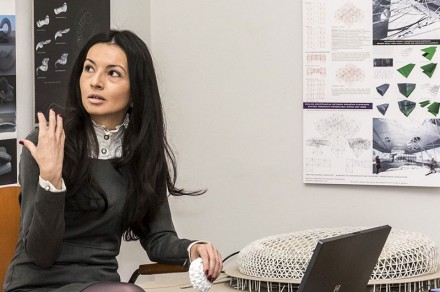
Jelena Milošević is an Assistant Professor at the Department of Architectural Technologies, University of Belgrade - Faculty of Architecture. She serves as Vice-Dean for Teaching and Student Affairs and specializes in structural systems, spatial structures, morphology, and optimization of structures. Her research combines computational design, digital fabrication, and sustainable construction methods. Education: Graduated in Architecture, University of Belgrade (2006) Enrolled in doctoral studies (2009) Her research focuses on generative design approaches for architectural structures, performance-based optimization, and applications of 3D printing in construction. She investigates biomimetic pattern applications in structural design and develops parametric workflows for complex geometries. Recent work explores circular economy potentials in architectural production through recycled materials and additive manufacturing. Publications demonstrate a strong focus on digital fabrication technologies in architectural education and practice. Recent articles examine hybrid pedagogical approaches integrating 3D printing technologies into design studios, material efficiency in additive-manufactured structural systems, and sustainable applications of recycled materials in digital fabrication. She has participated in research projects including 'Development and application of scientific methods in design and construction of highly economical structural systems using new technologies' funded by the Ministry of Education, Science and Technological Development of Serbia.
Vuk Gajić is an Assistant Professor at the Faculty of Applied Ecology, Singidunum University, where he has held academic roles since 2016. His career progression includes positions as a teaching associate (2016), assistant (2019), and current role (2023). He earned a Ph.D. in Environment and Sustainable Development from Singidunum University (2019–2022), following prior studies in environmental protection and risk management at the same institution. Research interests span environmental science, sustainable development, GIS applications, and radiation technology for waste and food treatment. He has contributed to interdisciplinary studies, including soil contamination analysis in Libya, microbial decontamination via ionizing radiation, and machine learning applications for software defect prediction and agricultural weed detection. His work bridges environmental engineering with technological innovation, emphasizing sustainability and ecological conservation. Publications reflect a focus on environmental monitoring, pollution assessment, and eco-technologies. Key themes include GIS-based environmental databases, forest fire prevention through sensor networks, and agricultural waste reuse. His research often integrates quantitative methods with geospatial tools, addressing both local and global environmental challenges. Teaching responsibilities include courses on geodiversity, sustainable development, and natural hazards. He actively participates in academic conferences, contributing to peer-reviewed journals and presenting at events like Sinteza and SETI. Current projects likely explore emerging technologies in environmental management and sustainable practices.
Jelena Gajic is a Professor at the University of Singidunum in Belgrade, Serbia, where she serves in the Faculty of Business within the Department of Marketing. With a comprehensive academic background and extensive publication record, she has established herself as a leading scholar in marketing, advertising, and consumer behavior fields. Doctoral studies at Singidunum University, Belgrade (2008-2011) Master's studies in International Marketing at Faculty of Economics, University of Belgrade (2001-2004) Basic studies in Marketing at Faculty of Economics, University of Belgrade (1992-1997) Cultural and Linguistic studies at XIII Belgrade High School (1988-1992) Professor Gajic's research spans multiple marketing domains with particular emphasis on digital transformation in marketing practices. Her work bridges traditional marketing theories with contemporary digital applications, examining how technologies like AI and neuromarketing are reshaping marketing strategies. She has made significant contributions to understanding social media marketing effectiveness, advertising in digital environments, consumer behavior in tourism contexts, and marketing challenges in higher education institutions. Her research methodology often combines theoretical frameworks with empirical testing, including A/B testing and advanced analytical approaches. Her recent publications demonstrate a clear trajectory toward technology-integrated marketing research. There's a strong emphasis on digital marketing channels, particularly social media platforms like Instagram, and their effectiveness across various contexts including higher education, tourism, and creative industries. Her work increasingly incorporates advanced analytical methods, including AI applications and neuromarketing research, to understand consumer responses. The pandemic's impact on travel behavior and digital communication strategies has also been a significant focus of her recent research, reflecting her ability to address contemporary challenges in marketing. While specific awards aren't documented in the available information, her substantial publication record in reputable journals such as The European Journal of Applied Economics, TEME - Journal of Social Sciences, and others indicates professional recognition within her academic community. Though specific advisees aren't listed in the available information, Professor Gajic's extensive publication record, particularly her work on student perspectives in higher education, suggests active involvement in mentoring and supervising student research. Her leadership in organizing conferences like Sinteza and FINIZ indicates significant contributions to academic community building. Her research on digital marketing, tourism, and consumer behavior has likely been supported by various institutional grants, though specific funding sources aren't detailed in the available information.
Dr. Vladimir M. Ciric is a Full Professor at the Faculty of Electronics, University of Niš, leading the Department of Computer Science. He directs the Laboratory for Advanced Security Systems and specializes in network security, distributed systems, and high-performance computing. His research spans intrusion detection systems, cloud computing cost modeling, and parallel algorithm design. Notable contributions include Hadoop-based network intrusion detection techniques and tiered programming pedagogy. He received the Cisco Excellence Award (2015) for network technology education. Dr. Ciric teaches courses on network design, cloud computing, and security while maintaining research collaborations in cybersecurity and distributed architectures. His recent work focuses on extreme class imbalance in intrusion datasets and sparse matrix optimizations.
Miloš K. Milčić is an Associate Professor at the Department of General and Inorganic Chemistry, Faculty of Chemistry, University of Belgrade. He holds a Ph.D. in Chemistry from the same institution and has been affiliated with the Faculty since 1999. His research focuses on computational chemistry, transition metal complexes, and molecular interactions, with a particular emphasis on crystal engineering and quantum chemical modeling. He has contributed to projects funded by the European Commission, Science Fund of Serbia, and international bodies. Education: Bachelor’s in Chemistry (1992–1998), Faculty of Chemistry, University of Belgrade Master’s in Chemistry (1998–2002), Faculty of Chemistry, University of Belgrade PhD in Chemistry (2002–2006), Faculty of Chemistry, University of Belgrade Research interests include computational studies of transition metal complexes, cation-π interactions, hydrogen bonding in porphyrin systems, and molecular modeling of catalytic materials. His work bridges theoretical chemistry and experimental crystallography, addressing fundamental questions in inorganic and organometallic chemistry. Key projects: IMPTOX (2021–2025): Investigating microplastic toxicity funded by Horizon 2020 TMMagCat (2022–2025): Designing molecular magnets funded by Serbia’s Science Fund ALG2MEAT (2023–2025): Algal extracts for cell-based meat funded by the Good Food Institute He has served as Vice Dean for Academic Affairs (2010–2013) and on committees for admissions and publishing. His work has been recognized through ORCID (0000-0002-0082-5278) and Scopus (ID 6507079694).
Tamara Papić is an Assistant Professor at Singidunum University in Belgrade, specializing in Innovation Management and Entrepreneurship. She holds a Ph.D. in Sensor Technologies from Jožef Stefan International Postgraduate School (Slovenia) and a Master's in Quality Management from Fakultet organizacionih nauka. Her research focuses on sensor technologies, dyslexia detection through eye-tracking, and the application of AI in education and marketing. Key academic contributions include developing sensor-based systems for analyzing reading patterns in children with dyslexia, leveraging machine learning models like VGG16 and autoencoders. She co-founded BabyFM, a startup creating smart thermoregulation devices for infants using sensors and mobile apps. Her work has been supported by grants from Innovation Forum Cambridge, Star Tech, and Serbia’s Innovation Fund. Professionally, she produced RTV Serbia’s entrepreneurial series 'My Hero' and 'Golden Idea,' and organized national startup competitions. She chairs strategic conferences like Smart City SEE and Belgrade Strategic Dialogue, promoting innovation ecosystems. Her cross-disciplinary projects bridge engineering, education, and business strategy.
Dr. Snezana S. Trifunovic is a full-time Researcher at the Faculty of Chemistry , University of Belgrade, affiliated with the Department of Organic Chemistry. She holds ORCID 0000-0001-9528-6686 and ResearcherID Q-5612-2016. Education: University of Belgrade PhD in Chemical Sciences (2006), Master's (1997), and BSc (1991) Academic roles: Scientific Advisor since 2018, Senior Research Associate (2012–2018), Research Associate (2007–2013), Assistant (1998), Assistant Trainee (1992) Her research focuses on phytochemistry , natural product analysis , and bioorganic chemistry , with particular interest in secondary metabolite profiling, plant-derived anticancer agents, and chemical characterisation of medicinal species. Recent projects include metabolomics for schizophrenia biomarker discovery (2021–2024) and portable GC-MS/LC-MS methods development for OPCW field testing (2017–2021). Publications emphasize bioactive natural products , polymer chemistry , and plant metabolite bioactivity across two decades of research output. Active in international collaboration with the Organisation for the Prohibition of Chemical Weapons (OPCW), she has contributed to 5 major research projects since 1998, including transgenic plant studies for anticancer compounds and chemoprotective DNA assays. Current work involves metabolomic fingerprinting of neuropsychiatric disorders and development of portable analytical devices.
Milan Milivojević is an Associate Professor at the Faculty of Technology and Metallurgy , University of Belgrade, Department of Chemical Engineering. His work focuses on bioprocess engineering , adsorption processes , and wastewater treatment . Current faculty member with expertise in chemical and environmental engineering Active in techno-economic analysis of industrial processes Key research areas: composite materials , enzyme immobilization , pneumatic reactor design His 15 most recent publications (2013–2022) emphasize biological wastewater treatment , adsorption of pollutants using alginate-based composites, and optimization of industrial chemical processes . Notable subfields include nickel/chromium removal , synthesis of functional oligosaccharides , and techno-economic modeling . He has mentored 40+ students in doctoral and master’s theses (2014–2025), covering topics like adsorption of toxic ions , bioreactor systems , and chemical process analysis . Detailed project descriptions and student theses are archived in the Faculty of Technology and Metallurgy database.
Marko Djordjevic is an Associate Professor at the Faculty of Biology, University of Belgrade. His research spans computational biology of infectious diseases, bacterial immune systems (CRISPR/Cas and restriction-modification systems), and quantitative understanding of infection progression with applications to SARS-CoV-2 and computational physics of quark-gluon plasma. Diploma in Physics, Faculty of Physics, University of Belgrade, Serbia. PhD in Biophysics and Bioinformatics, Department of Physics, Columbia University, USA. Postdoctoral training at the Mathematical Biosciences Institute, Ohio State University, USA. Djordjevic's research focuses on nonlinear regulatory dynamics of bacterial immune systems, their role in horizontal gene transfer, and modeling infection progression under social mitigation measures. His secondary interest in computational physics examines quark-gluon plasma dynamics via high-p⊥ observables and tomography. His recent publications address CRISPR/Cas regulation, restriction-modification systems, and SARS-CoV-2 transmissibility drivers. Grants from the Serbian Ministry of Science, Science Fund of Serbia, EU Marie Curie IRG, and Swiss National Science Foundation support his work.
Danijela Tadić is a Professor at the Department of Production Engineering, Faculty of Engineering, University of Kragujevac, Serbia. Her primary research focuses on decision-making models under uncertainty, manufacturing process optimization, failure mode analysis, and sustainable recycling technologies in the automotive and industrial sectors. She holds a leadership role in the Faculty of Engineering, contributing to academic governance and curriculum development. Her scientific work integrates fuzzy logic systems, multi-criteria decision-making (MCDM), and optimization algorithms to address complex engineering challenges. Notable areas include risk management in supply chains, quality improvement in manufacturing processes, and environmental impact assessment of recycling equipment. She has collaborated on projects evaluating organizational resilience, strategic failure management, and resource planning in SMEs. Prof. Tadić’s publications emphasize practical industrial applications, such as PFMEA integration with fuzzy decision tools, cloud platform selection frameworks, and electric vehicle evaluation models. Her work bridges theoretical advancements in fuzzy set theory with real-world manufacturing and environmental sustainability problems. She actively participates in academic and professional networks, contributing to conferences and journals in production engineering and industrial systems. Her expertise spans project lifecycle management, lean manufacturing, and the evaluation of recycling technologies for end-of-life vehicles (ELVs).
Prof. Dr. Miloš Ž Papić is a Full Professor at the Faculty of Technical Sciences Čačak , University of Kragujevac, Serbia. He serves as a City Councilor in Čačak for Education, Science, and Culture, spearheading initiatives like the Čačak Culture Strategy (2023-2027) and launching the Čačak Culture Portal . Education: BSc, MSc, and PhD in Industrial/Engineering Management from University of Kragujevac institutions Research Interests: Information Systems, Environmental Management, Entrepreneurial Education, and Multi-Criteria Decision Making (MCDM) His research spans interdisciplinary applications of IT in education, tourism, and environmental protection, with recent work on: Digital dialogue systems in classrooms Soil contamination analysis using MCDM Cheating behavior in academic settings Beer tourism market analysis AI in educational outcomes prediction Scientific Contributions include over 90 publications, with 15 recent articles focusing on IT integration in tourism (2023-2024), municipal waste management (2024), and educational technologies (2022). Notable collaborations involve partnerships with Dušan Garabinović on tourism analytics and Marija Blagojević on environmental modeling.
Olga Ristić is an Associate Professor at the Department of Information Technologies, Faculty of Technical Sciences Čačak, University of Kragujevac, Serbia. Her office is located at Svetog Save 65, Čačak (Office No. 237), and she can be contacted via phone (+381 32 302-714) or email. She holds a Diploma in Technics and Informatics (1997), a Master's in Technical Sciences (2006), and a PhD in Information Technologies and Systems (2016), all from the University of Kragujevac. Her research focuses on: Software testing methodologies and quality assurance Modeling and simulation of complex systems Optimization algorithms for industrial applications Educational technology and IT pedagogy Mobile applications and information systems reliability Her recent publications emphasize interdisciplinary approaches, with strong trends in machine learning applications for cybersecurity, optimization in Industry 4.0 systems, educational technology innovations, and sustainable energy management. She frequently employs simulation techniques and algorithm development across diverse domains. She has led or contributed to eight Ministry of Science-funded projects: Curriculum development for IT education programs Software quality assurance frameworks Industrial system reliability modeling Food supply chain optimization Deregulated energy distribution systems At the Faculty of Technical Sciences, she coordinates courses across all academic levels, including Data Structures, Software Testing, Mobile Applications, and Quality of Software. She also conducts professional development seminars on database design and ISTQB certification.