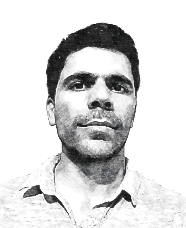
Carlos Filipe Gomes Bispo is an Assistant Professor at the Department of Electrical and Computer Engineering, Instituto Superior Técnico. His research focuses on Systems, Decision, and Control, with expertise in nonlinear and optimal control, multivariable systems, and signal processing. He is affiliated with the Institute of Systems and Robotics (ISR). Teaching Subjects: Algorithms and Data Structures, Signals and Systems, Control, Multivariable, Nonlinear and Optimal Control His academic work emphasizes theoretical and applied aspects of control systems and decision-making frameworks. No scientific awards, grants, or lab affiliations explicitly mentioned in the provided text.
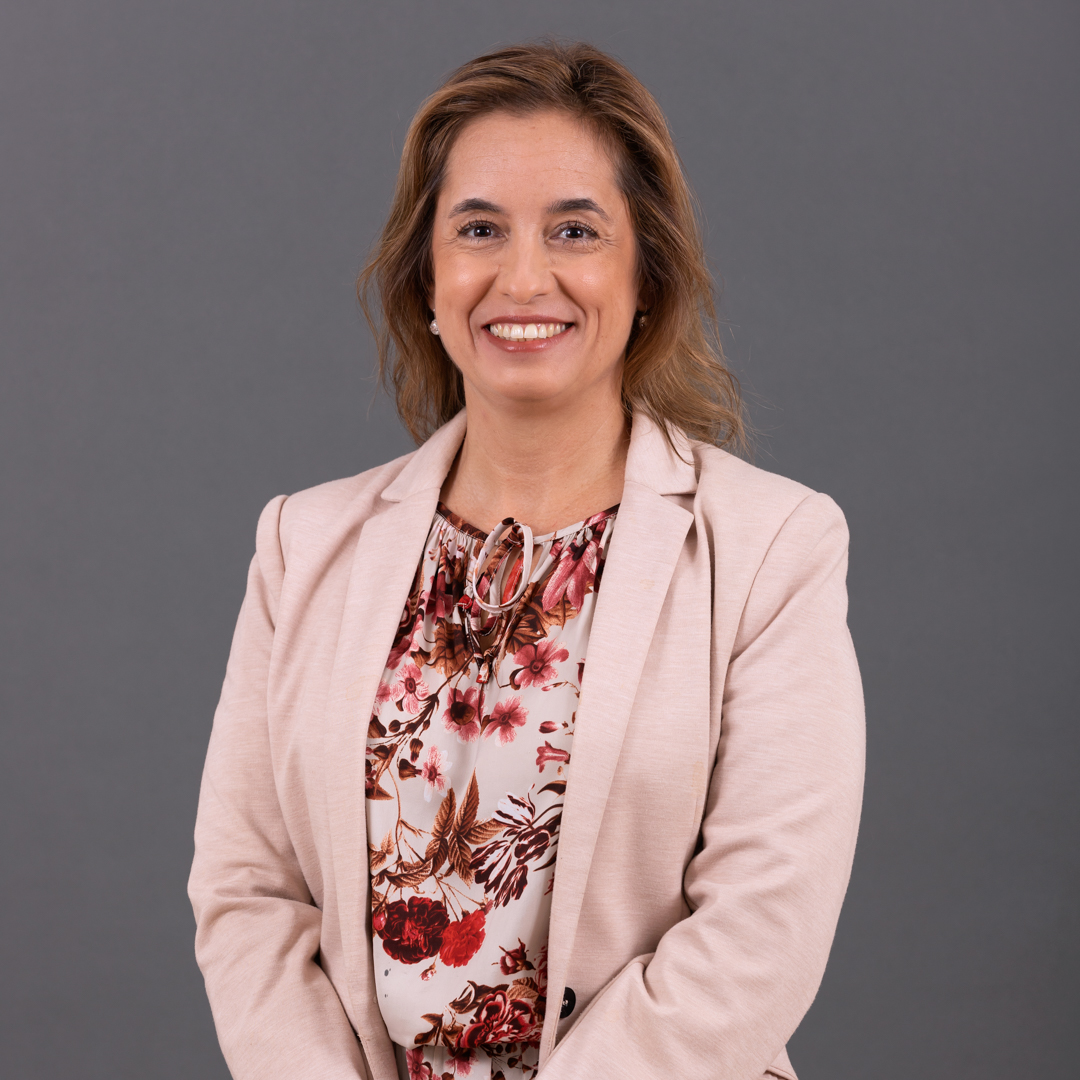
Maria Eduarda De Sampaio Pinto de Almeida Pedro is an Assistant Professor at the Department of Electrical and Computer Engineering, Instituto Superior Técnico, University of Lisbon. She teaches courses including High Voltage, Theoretical Electrical Engineering, Transitional Regimes in Networks, and supervises the 2nd Cycle Integrative Project in Electrical and Computer Engineering. Her expertise focuses on power systems, network transient analysis, and high voltage engineering applications. Currently active in the 2024/2025 academic semester, her work bridges theoretical electrical engineering principles with practical network dynamics. No specific research awards or publications are listed in the provided data.
Gonçalo Nuno Gomes Tavares is an Assistant Professor at the Instituto Superior Técnico (IST) , University of Lisbon, affiliated with the INESC-ID research unit. He teaches courses in electronics and signal processing, including General Electronics , Analog and Digital Filters , and Digital Signal Processing Systems . His academic role involves both teaching and research supervision in engineering education. His research interests focus on electronic systems design , signal processing methodologies , and educational practices in electrical engineering . While specific publications are not listed here, his teaching portfolio indicates active engagement with cutting-edge topics like embedded systems and digital filter applications. No scientific awards or grants are explicitly mentioned in the provided information. His professional activities are centered at IST, with contributions to both undergraduate and graduate engineering education through project supervision in areas like electronic engineering and computer systems.
Luís Manuel Marques Custodio is an Assistant Professor affiliated with the Institute of Systems and Robotics. He currently teaches subjects including Artificial Intelligence and Decision Systems, Modeling and Simulation, 2nd Cycle Integrative Project in Electrical and Computer Engineering, and Modeling and Automation of Industrial Processes in the 2024/2025 academic semester. His research interests align with his teaching focus, emphasizing advanced methodologies in systems engineering, industrial automation, and robotics applications. He contributes to interdisciplinary projects that bridge theoretical models with practical industrial processes. No specific scientific awards, grants, or published articles are detailed in the provided text, though his affiliation suggests involvement in robotics and systems research.
José António Da Cruz Pinto Gaspar is an Assistant Professor affiliated with the Instituto Superior Técnico , part of the Institute of Systems and Robotics . His teaching responsibilities include courses such as Fundamentals of Control, Introduction to Robotics, and Real-Time Distributed Control Systems. He also supervises the 2nd Cycle Integrative Project in Electrical and Computer Engineering and teaches Modeling and Automation of Industrial Processes. His research interests are centered on control systems, robotics, industrial automation, and real-time systems. The Institute of Systems and Robotics provides a collaborative environment for advancing these fields. No scientific awards or articles were explicitly mentioned in the provided texts. His professional activities include academic teaching and research within the listed disciplines.
Bertino Manuel D'Andrade da Costa is an Assistant Professor affiliated with INESC-ID (Instituto de Engenharia de Sistemas e Computadores, Investigação e Desenvolvimento em Lisboa) and Instituto Superior Técnico, University of Lisbon. His work focuses on research and development within computer science and engineering disciplines. Specific research interests are not explicitly detailed in the provided text, but his association with INESC-ID suggests specialization in systems engineering, computing, or related technological fields. No listed academic awards, advised students, or recent publications (articles) are mentioned in the current data. His professional role is active as of the 2nd semester 2024/2025.
Luís Filipe Soldier Grenadier Rosado is an Assistant Professor at the Department of Electrical and Computer Engineering, Instituto Superior Técnico (University of Lisbon). He is affiliated with the Telecommunications Institute's Instrumentation and Measurements Group. His teaching responsibilities include courses such as 'Large-Scale Measurement Systems' and 'Programmable Electronic Systems.' His research focuses on electronics, telecommunications, and instrumentation engineering, with emphasis on measurement systems and programmable electronic designs. Affiliations: Instituto Superior Técnico Telecommunications Institute - Instrumentation and Measurements Group Teaching Subjects: 2nd Cycle Integrative Project in Electrical and Computer Engineering 2nd Cycle Integrative Project in Electronic Engineering Large-Scale Measurement Systems Programmable Electronic Systems Instrumentation and Measurements Research Interests: Electronics design and applications Telecommunications infrastructure Advanced measurement systems Programmable logic controllers
João Filipe Pereira Fernandes is an Assistant Professor in the Department of Electrical and Computer Engineering at the Instituto Superior Técnico (University of Lisbon). His research focuses on energy systems, superconductivity applications, and electromechanical systems, with an emphasis on sustainable technologies for transportation and power grids. He teaches courses such as Electric Drives and Vehicles, Superconductivity and Applications in Engineering, and Numerical Simulation of Electromagnetic Devices. Education: Advanced degrees in Electrical Engineering (details not explicitly stated). His research interests include high-temperature superconductors, energy management systems for marine vehicles, and optimization of electrical machines. He has contributed to projects like the Frontex Smart Energy Management System for Marine Vehicles (2023-2024) and the COST Action CA19108 on superconductivity for energy transition. He is an Associate Editor of IEEE Transactions on Energy Conversion and has guest-edited special issues on electrical machine design and advanced manufacturing. He has held a sabbatical at Politecnico di Torino (2020–present) and delivered invited lectures on superconducting machines and energy efficiency at institutions like Universitat Politècnica de València and Politecnico di Torino. His work spans collaborations with industries and international partners, including contributions to reducing energy dependency in water networks (REDAWN project) and improving fault detection in power lines (FaultLoc project). Labs/Teams: Active participation in research groups focused on superconductivity, renewable energy systems, and electric propulsion at Instituto Superior Técnico.
Catarina Barata is an Assistant Professor at the Department of Electrical and Computer Engineering , Instituto Superior Técnico , Universidade de Lisboa. Her research focuses on machine learning, computer vision, and medical imaging, particularly in dermatology and healthcare applications. She teaches courses such as Machine Learning, Signals and Systems, and Big Data Processing. Her work emphasizes skin lesion analysis and automated diagnosis systems , with contributions to domain generalization, explainable AI, and clinical decision support. She has pioneered techniques like artifact-based domain adaptation for skin cancer models and sparse motion fields for trajectory prediction. Barata's research spans interdisciplinary collaborations, including robotic therapy for autism spectrum disorder, real-time attention classifiers, and fire/smoke detection using weak supervision. Her studies on biomarkers in melanoma and BRAF mutation detection highlight her impact in precision medicine. She actively contributes to international initiatives like the ISIC conference and the International Skin Imaging Collaboration (ISIC), promoting ethical AI standards and consensus guidelines for dermatological applications. Her work balances technical innovation with clinical relevance, addressing challenges in dataset bias, counterfactual explanations, and multimodal medical data integration.
João Monteiro Felício is an Assistant Professor at the Department of Electrical and Computer Engineering, Instituto Superior Técnico, University of Lisbon. He specializes in antennas, microwave imaging, and biomedical engineering applications. His research focuses on radar systems for environmental monitoring, medical imaging for cancer detection, and advanced antenna designs for telecommunications. His teaching includes courses such as 'Propagation and Antennas', 'Satellite Systems', and 'Radiopropagation for Communications and Sensors'. He actively contributes to interdisciplinary projects involving remote sensing, wildfire dynamics, and wearable medical devices. Key research areas include radar-based plastic detection, microwave breast imaging, and antenna optimization for 5G and satellite systems. His work integrates machine learning, signal processing, and material science innovations.
Manuel José Simões Loureiro is a Professor of Mathematics at the Faculty of Engineering and the School of Economic Sciences and Organisations at Lusófona University Centre, Lisbon. He holds a PhD in Mathematics from the University of Seville (2016), specializing in Mathematical Logic, Computation, and AI. His research focuses on Mathematical Logic and Mathematics Education across higher, secondary, and basic education levels. He has held roles including Director of ISPO, President of ISPO’s Technical-Scientific Council, and Deputy Director of the Research and Publications Centre at ESE Almeida Garrett. He also served as a European Parliament consultant and contributed to science policy, equal opportunities, and anti-discrimination initiatives. Current affiliations include leadership in the Territorial Transitions & Wellbeing (T2WELL) research group. His work spans academic administration, policy advising, and interdisciplinary projects in socio-economic and technological domains. Notable contributions include publications in Annals of Pure and Applied Logic and engagement in international and national research projects. He advises postgraduate programs in Agribusiness, Sustainability, and Management disciplines.
Manuela Maria Cardoso de Oliveira is an Assistant Professor at Lusófona University of Humanities and Technologies in Lisbon. She holds a PhD in Industrial Engineering and Management, focusing on fishing fleet analysis and optimization. Her professional roles include consultancy at Adecco Portugal and digital advisement at Amrop Portugal. Her research emphasizes logistics optimization, sustainable fisheries management, and process improvement in industrial systems. Education: Computer Science graduate → Master's in Operational Research → PhD in Industrial Engineering and Management Post-doctoral work: Sustainable Management Models for Artisanal Fisheries (interrupted to teach) Research interests include applying optimization techniques to fisheries management, lean manufacturing in aeronautics, and multidisciplinary approaches to solving complex socio-economic challenges. She has contributed to projects like PESCARDATA (recreational fishing data collection) and PNAB (sustainable exploitation of commercial species). Her publications span cybersecurity in military systems, lean implementation in aerospace, marine parasite studies, and fisheries governance analysis. She actively participates in international projects and has published in journals like Parasitology Research and Marine Policy . Grants/Projects: PESCARDATA (2020–): Addresses recreational fishing data gaps in Portugal PNAB (2022–): Supports sustainable management of commercial fisheries
Raquel Maria Medeiros Gaspar is an Associate Professor at the School of Economics and Management (ISEG), University of Lisbon, where she also serves as the scientific coordinator of the Master in Finance and is a member of the scientific committee of the Postgraduate Program in Financial Analysis. She holds a PhD in Finance from the Stockholm School of Economics and has advanced academic qualifications in Mathematics Applied to Economics and Management and Economics. Aggregation (Habilitation), Management Sciences, Finance, ISEG - University of Lisbon (2018) PhD in Finance, Stockholm School of Economics (2006) Master's Degree in Mathematics Applied to Economics and Management, ISEG - University of Lisbon (2001) Bachelor's Degree in Economics, Nova University of Lisbon (1998) Her research spans stochastic finance, risk management, structured products, portfolio management, and financial modeling, with a strong emphasis on both theoretical and practical applications. She has published extensively in high-quality journals and contributed to industry-oriented books. Her work often intersects with computational methods, behavioral aspects of investing, and sustainability in finance. The most recent articles (2023–2024) reveal a diverse research profile, combining traditional quantitative finance (e.g., CPPI design risk, risk parity) with emerging topics such as robo-advising, climate risk in agriculture, and neural network applications in option pricing. These contributions reflect a strong interdisciplinary approach, blending finance, economics, and computational techniques, with a noticeable focus on European financial markets and agricultural risk. She actively contributes to the academic community through peer review and editorial board participation in international scientific journals. Raquel M. Gaspar has supervised numerous Master’s theses and one PhD student, demonstrating a strong commitment to academic mentorship. Her professional experience includes industry collaboration since 1998, primarily as a consultant in structured products, bridging academic research with practical financial innovation. She has held teaching roles at ISEG and the Stockholm School of Economics. She is involved in key academic programs at ISEG, particularly in finance education, and contributes to curriculum development and academic leadership through her coordination roles.
Pedro Tiago Monteiro is an Associate Professor at the Department of Computer Science and Engineering, Higher Technical Institute (IST), Universidade de Lisboa, and a researcher at INESC-ID Lisboa within the Automated Reasoning and Software Reliability (ARSR) group. His work bridges computer science and computational biology, focusing on formal methods for biological systems. Research Interests: His research centers on the formal and static analysis of biological regulatory networks using model checking, temporal logic, and logical modeling. He investigates the impact of Boolean function structures on model dynamics and develops model revision procedures. His interests include algorithms, bioinformatics, regulatory networks, and computational modeling of microbial and epithelial systems. Projects and Tools: He contributes to key tools such as GINsim, EpiLog, and YEASTRACT+, and is part of the CoLoMoTo consortium promoting standards in logical modeling. His research is supported by multiple national and EU-funded projects including FAIRY (Horizon Europe), ERGODiC, LAIfeBlood, and CANTROL, where he serves as principal investigator or task leader. Scientific Awards: Investigador FCT Starting Grant (2013) Advising and Grants: He supervises MSc and PhD-level research, particularly through the MEIC program, which he currently coordinates. He leads multiple FCT- and EU-funded research projects focusing on AI in blood management, yeast bioeconomy, cancer dynamics, and antifungal resistance. These grants reflect a sustained record of competitive funding in interdisciplinary research. Labs and Teams: He is part of the ARSR research unit at INESC-ID Lisboa and collaborates with international groups including the IBIS group at INRIA Grenoble, MABioS at I2M Marseille, and former affiliations with IMM and IGC in Portugal.
Alberto Abad is an Associate Professor at the Department of Computer Science and Engineering (DEI), Instituto Superior Técnico (IST), University of Lisbon, and a researcher at INESC-ID. He is the coordinator of the Human Language Technologies (HLT) laboratory at INESC-ID and the deputy coordinator of the Master in Computer Science and Engineering at IST. He holds a PhD and a degree in Telecommunication Engineering from the Technical University of Catalonia (UPC). He is also an IEEE Senior Member, ACM Member, and ISCA Member. Alberto Abad’s research interests include: Robust Speech Recognition Speaker and Language Characterization Applied Machine Learning Healthcare Applications of Speech Processing Privacy-Preserving Speech Technologies Speech as a Biomarker for Disease Detection His recent publications demonstrate a strong focus on privacy-aware speech systems, healthcare diagnostics (e.g., Parkinson’s and Alzheimer’s), children’s speech recognition, and secure speaker verification. He has contributed to over 100 peer-reviewed publications in top-tier conferences and journals such as IEEE TASLP, ICASSP, Interspeech, and LREC. Alberto Abad has been Principal Investigator for multiple national and international projects, including VITHEA (FCT), DIRHA (European), Biovisualspeech (CMU-Portugal), TAPAS ITN (EU), and currently leads the INESC-ID/IST contributions in the Accelerat.ai project. He actively collaborates with industry and startups in the field of speech technology. He has supervised over 25 Master’s theses and more than five PhD students, either as advisor or co-advisor, in areas such as speech biomarkers, privacy-preserving ML, children’s ASR, and cognitive disorder detection. He teaches graduate courses including Speech Processing, Programming Fundamentals, and Master’s Dissertation in Informatics and Computer Engineering. He is involved in the development of tools and platforms such as the SPA web-based platform for speech processing, the VITHEA virtual therapist for aphasia, and the BioVisualSpeech corpus and therapy system. His work bridges theoretical advances with real-world clinical and industrial applications.