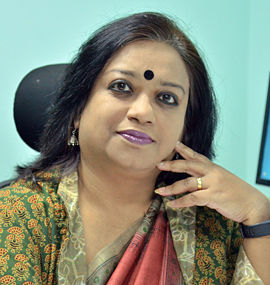
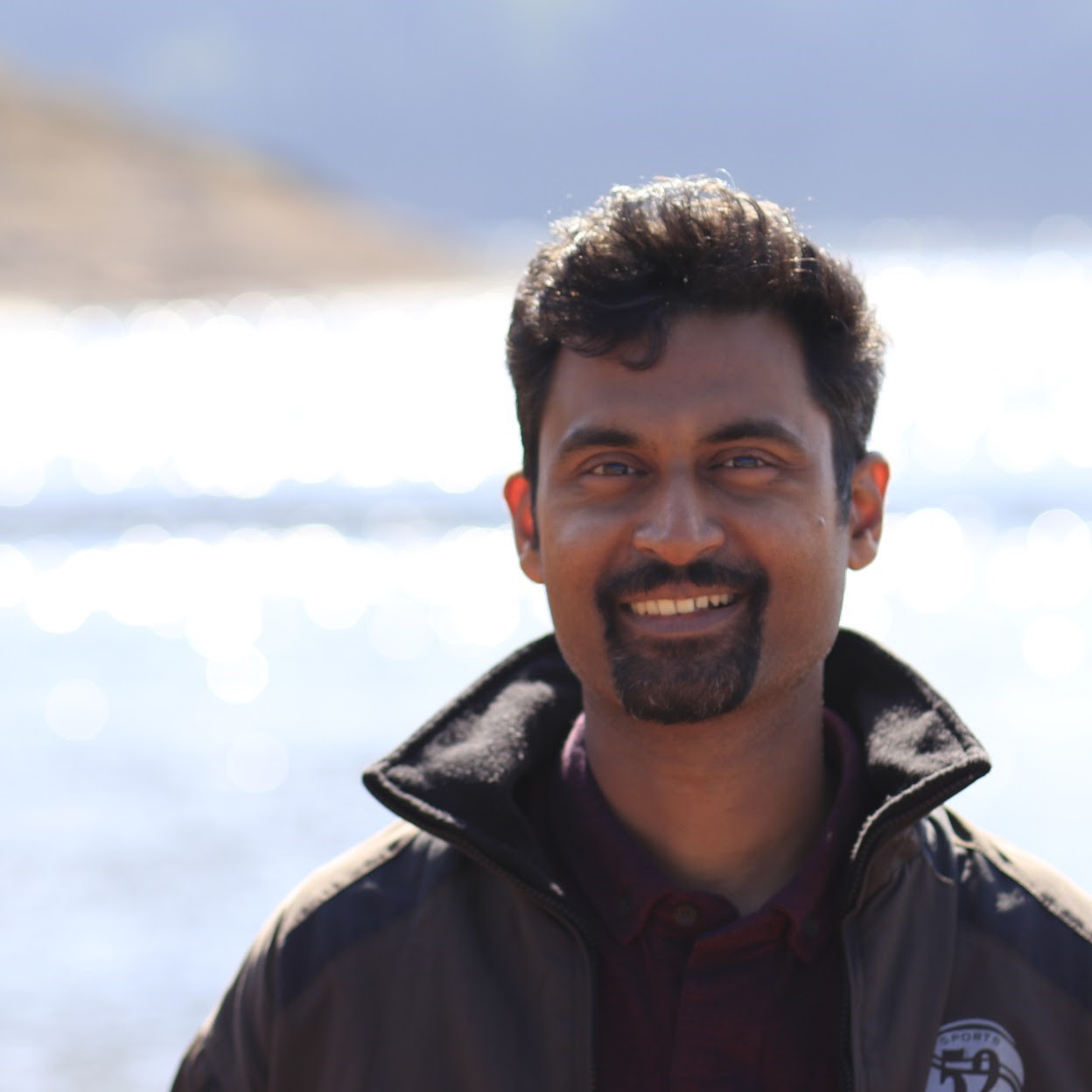
Nandini Gupta is a Professor in the Department of Electrical Engineering at the Indian Institute of Technology Kanpur . Her research focuses on high voltage engineering, dielectric materials, and plasma discharges. Education : PhD (1998) and ME (1994) from Indian Institute of Science, Bangalore; BE (1991) from Jadavpur University, Kolkata Her work explores dielectric and insulation systems , nanoparticle-enhanced materials , and space charge dynamics in polymers. She has contributed to understanding surface degradation in nanodielectrics and plasma discharge phenomena . Recent publications analyze electric tree progression , nanofiller effects on epoxy resin, and charge transport mechanisms in insulating polymers.
R.K. Shyamasundar is a Professor at the Indian Institute of Technology Bombay , with a focus on Real-Time and Reactive Programming, Logic Programming, Pi-Calculus, and Parallel Programs. Research spans formal verification, concurrency, and distributed systems. Key contributions include RT-CDL semantics, Esterel language extensions, and hybrid system controller synthesis. Scientific awards include JC Bose National Fellow, Fellowships at Indian Academy of Sciences and Indian National Science Academy, and Senior Membership in IEEE. His work involves collaborations with institutions like TCS Group and researchers such as Basant Rajan, N. Raja, and Deepak Kapur.
Rameshwar Pratap is an Associate Professor in the Department of Computer Science and Engineering at the Indian Institute of Technology Hyderabad (IIT Hyderabad). Previously, he served as an Assistant Professor at the School of Computing and Electrical Engineering, IIT Mandi for three years. Education: Ph.D. in Theoretical Computer Science, Chennai Mathematical Institute Research Interests: His research lies at the intersection of theory and practice, focusing on extremely simple yet practical approximation algorithms with provable guarantees . Key themes include: Sketching and dimensionality reduction algorithms for tensors and similarity measures Improving speed, scalability, and accuracy of existing sketching methods Applications in machine learning: node embedding in large-scale networks, itemset mining, model compression He extensively employs techniques from matrix and tensor algebra, sampling, random projection, and randomized hashing . Publications Overview: Across 2021–2025 his work has appeared in top venues such as IEEE Globecom, Theoretical Computer Science, Acta Informatica, Information Processing Letters, Algorithmica, UAI, ICALP, Machine Learning, TKDE, and ACML. Recurring themes are randomized sketching, locality-sensitive hashing, compressed matrix multiplication, variance reduction, and subspace approximation , demonstrating both theoretical depth and practical impact. Awards & Honors: Early Career Research Grant (PM-ECRG) 2025, Anusandhan National Research Foundation (ANRF) Best Paper Award, COCOON 2020 Students & Funding: First Ph.D. student: Bhisham Dev Verma (co-advised with Prof. Manoj Thakur) graduated June 2025 MS by Research student: Punit Pankaj Dubey graduated October 2022 Currently hiring 1 Junior Research Fellow for the PM-ECRG project “Improving Similarity Search in Practice” Labs & Teams: Works within the Algorithms & Theory group at IIT Hyderabad, collaborating with national and international researchers. Erdös number is 3.
Priyanka Ghosh is a Professor in the Department of Civil Engineering at the Indian Institute of Technology Kanpur (IIT Kanpur), where she has been serving since 2007, initially as Assistant Professor (2007-2012), then as Associate Professor (2012-till date), and currently as Professor. Her academic career also includes positions at IIT Kharagpur as Senior Lecturer and at BITS Pilani as Lecturer. Dr. Ghosh received her PhD from the Indian Institute of Science Bangalore in 2005, following an M.Tech from IIT Delhi in 2000 and a B.E. from the University of North Bengal in 1998. Her educational background has provided a strong foundation for her specialization in Geotechnical Engineering. Dr. Ghosh's research focuses on critical aspects of geotechnical engineering, particularly in the areas of foundation engineering and soil-structure interaction. Her work on Bearing Capacity of Foundations has contributed significantly to understanding how structures interact with soil under various loading conditions. She has extensively studied Retaining walls and Earth Pressure Theory , developing advanced methods for analyzing wall behavior under seismic conditions. Her research on Stability of Slopes addresses both static and seismic cases, providing valuable insights for infrastructure development in challenging terrain. Dr. Ghosh has also made notable contributions to understanding Pullout Resistance of Anchors , which is crucial for the design of anchored retaining structures. Dr. Ghosh's publication record demonstrates a consistent focus on applying advanced analytical methods to solve practical geotechnical problems. Her work frequently employs Numerical Analysis techniques to model complex soil behavior, with particular emphasis on seismic conditions. She has developed innovative approaches using Method of Characteristics and Upper Bound Limit Analysis to address challenging problems in foundation engineering. Her research spans both theoretical developments and practical applications, with significant contributions to understanding soil behavior under dynamic loading conditions. Dr. Ghosh's contributions to the field have been recognized through several prestigious awards including the "IEI Young Engineers Award 2011-2012" from The Institute of Engineers (India), the "Outstanding Young Investigator Award" from the International Association for Computer Methods and Advances in Geomechanics (IACMAG), and the "IUSSTF Research Fellowship" from the Indo-US S&T Forum. She has also received the "Class of 1982 Research Fellowship" from IIT Kanpur and a scholarship from the Italian Ministry of Education for her research at the University of Molise. Throughout her career, Dr. Ghosh has demonstrated excellence in both research and teaching. Her expertise in Geotechnical Engineering has established her as a respected figure in the academic community, with her work contributing to advancements in foundation design, slope stability analysis, and earthquake engineering. She continues to mentor students and contribute to the development of innovative solutions for challenging geotechnical problems.
Dr. Ajit Kumar Chaturvedi is a Professor in the Department of Electrical Engineering at the Indian Institute of Technology Kanpur (IIT Kanpur), specializing in Communications Theory and Systems. With decades of experience at IIT Kanpur, he has established himself as a leading researcher and educator in wireless communications and information theory. Dr. Chaturvedi earned his B.Tech (1986), M.Tech (1988), and PhD (1995) all in Electrical Engineering from IIT Kanpur, demonstrating his deep institutional commitment. His educational background reflects his dedication to academic excellence at his alma mater. His research focuses on Communications Theory and Systems, with specific expertise in Wireless Communications, Information Theory, and Spread Spectrum Systems. Dr. Chaturvedi's work bridges theoretical foundations with practical applications in modern communication technologies. His contributions have significantly advanced the understanding of signal processing techniques, multiuser detection methods, and error analysis in wireless systems. His research has direct implications for improving the reliability and efficiency of contemporary wireless communication standards. Dr. Chaturvedi's publication record demonstrates consistent contributions to communications engineering, spanning from fundamental signal processing techniques to complex system-level analyses. His work on ISI mitigation, orthogonal sequence design, and error rate analysis shows both theoretical rigor and practical relevance for real-world communication challenges. Distinguished Teacher award of IIT Kanpur (2007) Tan Chin Tuan Fellowship of NTU, Singapore (2008) Supervisor of Best B. Tech Project groups (2002, 2006, 2012) Plenary speaker at the 15th National Conference on Communications (2009) Mentor of IEEE Computer Society International Design Contest winning team (2002) As an educator, Dr. Chaturvedi has supervised numerous award-winning student projects, including three Best B.Tech Project awards. He has mentored teams to international recognition, such as the Microsoft Award for Innovation at the IEEE Computer Society International Design Contest World Finals in 2002. His office is located in ACES 201B at IIT Kanpur, where he continues to contribute to the academic and research mission of the institution.
Nishchal K. Verma is a Professor at the Department of Electrical Engineering, Indian Institute of Technology Kanpur. He holds a PhD from IIT Delhi (2007), an M.Tech from IIT Roorkee (2003), and a B.Tech from DEI Agra (1996). His postdoctoral research includes work at the University of Tennessee (2009) and Louisiana Tech University (2008). Specialization: Fuzzy Logic, Health Monitoring, Intelligent Informatics Current Research Interests: Intelligent Data Mining, Computer Vision, Smart Grids, Biomedical Applications His research focuses on Fuzzy Systems , Machine Learning , and Health Monitoring with applications to power systems, biomedical data, and wireless sensor networks. He has developed technologies like the Transducers and Instrumentation Virtual Laboratory and Brain Computer Interface Laboratory , emphasizing predictive modeling and fault diagnosis. Key sponsored projects include DST-funded Fuzzy Rule-Based Image Prediction and DRDO-supported Visual Surveillance Systems . His work spans 15+ years of interdisciplinary publications in journals and conferences. Scientific Awards : Devendra Shukla Young Faculty Research Fellowship (2013-16) He has served as Associate Editor for journals and Chairman of IEEE chapters, with leadership roles in academic administration at IIT Kanpur.
Aditya Saurabh is an Assistant Professor in the Department of Mechanical Engineering at the Indian Institute of Technology Kanpur. His research focuses on thermoacoustic instability, combustion dynamics, and diagnostics of reacting flows. Dr. Saurabh completed his PhD in 2017 from the Chair of Fluid Dynamics at Technical University Berlin, following a dual degree (BTech + MTech) in Aerospace Engineering from IIT Madras in 2010. He also conducted postdoctoral research at TU Berlin from 2017-2018. His research interests include dynamics of gas turbine combustors, flame dynamics, atomization of liquid fuels, alternative and biofuels in gas turbine engines, and suppression of noise and instabilities in combustors. His work employs advanced diagnostic techniques such as LDA, Hotwire anemometry, PIV, OH PLIF, Chemiluminescence, and microphones for unsteady pressure measurement. Dr. Saurabh's publications demonstrate a strong focus on understanding and controlling combustion instabilities through both experimental and numerical approaches, with applications to gas turbine technology. His work spans fundamental combustion science, nonlinear dynamics, and practical engineering solutions for cleaner and more stable combustion systems. DST-INSPIRE faculty (2018) Best Poster, Dynamic Days XXXVI (2016) TU Anschubfinanzierung (TU Berlin seed funding for research projects) (2015) IGTI Student Scholar (2012) Boeing Student Travel Grant (2010) Dr. Saurabh is actively involved in mentoring students and currently accepts Masters and PhD students for research on liquid fuel atomization, thermoacoustic instability, and combustion. He has established research collaborations with institutions including TU Berlin, IIT Ropar, IIT Madras, IIT Kanpur, University of Cincinnati, and Tokyo University of Science. He teaches courses including ME 341 (Heat transfer lab) and ME 401 (Energy Systems II).
Malay Kumar Das is a Professor in the Department of Mechanical Engineering at the Indian Institute of Technology Kanpur, specializing in Fluid and Thermal Science. His academic journey includes a PhD from Pennsylvania State University (2008), M.Tech from IIT Kanpur (2003), and B.E. from Bengal Engineering College, Shibpur (1989). Previously, he worked at the West Bengal Power Development Corporation from 1990 to 2001 before transitioning to academia. His research focuses on Energy Conversion and Storage, Hydrodynamic Instability, and Thermal Science. Dr. Das's work bridges fundamental fluid dynamics with practical applications in energy systems and biomedical engineering. His expertise spans computational fluid dynamics, heat transfer phenomena, and energy conversion technologies. Analysis of Dr. Das's recent publications reveals a strong trend toward interdisciplinary research, particularly at the intersection of fluid mechanics with biomedical applications (such as blood flow modeling in cerebral aneurysms) and sustainable energy technologies (including fuel cells, methane production, and nanofluid applications). His work demonstrates both theoretical depth and practical relevance to contemporary engineering challenges. Dr. Das actively supervises research students, currently guiding 9 PhD candidates and having successfully completed 22 MTech theses with 3 more in progress. His professional activities reflect a commitment to advancing knowledge in thermal and fluid sciences while training the next generation of engineers. Outside academic pursuits, he engages in adventure sports, photography, and aerobics.
Joel George is an Associate Professor in the Department of Aerospace Engineering at the Indian Institute of Technology Madras (IIT Madras), where he conducts advanced research in aerospace vehicle dynamics, navigation, and control systems. His work spans theoretical studies, experimental validation, and practical applications in both atmospheric flight and space exploration domains. Dr. George's research focuses on several critical areas of aerospace engineering: Hybrid rocket propulsion systems and thrust control mechanisms Spacecraft landing technologies, including soft landing applications Orbital mechanics, particularly periodic orbits around asteroids Unmanned aerial vehicle (UAV) applications for microgravity experiments Propeller modeling for small UAV systems Geophysical flows research as part of IIT Madras's Centre of Excellence His recent publications demonstrate a strong trend toward innovative propulsion systems with practical space applications. Dr. George's work on hybrid rocket motors shows particular promise for safer vertical takeoff and landing systems both in space exploration and terrestrial aviation. His research on UAV-based microgravity platforms offers cost-effective alternatives to traditional space-based microgravity research methods. As a dedicated mentor, Dr. George supervises several PhD students including Anandu Bhadran (hybrid rocket motors), Rishi (asteroid orbital dynamics), and Siddhardha (UAV microgravity platforms). His collaborative work extends to partnerships with Prof. Ramakrishna and other researchers at IIT Madras. Within the Geophysical Flows Lab, a Centre of Excellence at IIT Madras, Dr. George contributes his expertise in UAV design, automation, and environmental monitoring. The lab employs a unified approach combining field measurements, climate modeling, and laboratory studies to advance understanding of air-sea interactions in the northern Indian Ocean, with applications to weather prediction and climate science.
Dr. P.M. Mohite is a Professor at the Department of Aerospace Engineering , Indian Institute of Technology Kanpur , with a career spanning over two decades in composite materials research. He holds a PhD in Aerospace Engineering from IIT Kanpur (2007) and has been a Visiting Assistant Professor (2008-2009) and later Assistant , Associate , and Professor (2019-present) at IIT Kanpur. Research Interests include: Advanced composite structures analysis Micromechanics and damage modeling Finite element adaptive methods Metal plasticity and polymer composites Aerostructural optimization Key Publications focus on damage mechanics, structural optimization, and micromechanical characterization, with recent works on evolutionary algorithm-based composite design and boundary layer effects in laminates. Scientific Awards received: Best Student Award (B.E. Mechanical, 1998) AIAA Students Paper Contest Finalist (2006) Teaching Contributions include core courses like Composite Materials and Finite Element Methods , alongside advanced postgraduate topics in aerospace structural analysis. Advising has impacted 30+ M.Tech/Ph.D. students, including international collaborations with Université de Biskra (Algeria) and Ecole Centrale de Nantes (France).
Maria Francis is an Assistant Professor in the Department of Computer Science & Engineering at the Indian Institute of Technology Hyderabad. She previously held postdoctoral and doctoral roles in academia, focusing on computational mathematics and cryptography. Ph.D. from Indian Institute of Science (IISc), Bengaluru Bachelor's in Computer Science and Engineering from National Institute of Technology, Calicut Research Interests: Maria's work bridges computational algebra, symbolic computation, and lattice-based cryptography. She explores theoretical foundations in computer science, with applications to cybersecurity, blockchain technologies, and distributed systems. Her current focus includes algebraic structures in cryptography and secure computing paradigms. Professional Experience: Before joining IIT Hyderabad, Maria worked as a postdoctoral researcher at the Institute for Algebra, Johannes Kepler University, Linz, Austria under Prof. Manuel Kauers. She also served as a doctoral student at IISc's Computer Science and Automation department under Dr. Ambedkar Dukkipati. Earlier, she worked as a Program Manager at Microsoft India (R&D) from 2007 to 2009.
Dr. Srijith P.K. is an Associate Professor in the Department of Computer Science & Engineering at Indian Institute of Technology Hyderabad , where he leads research in probabilistic machine learning, Bayesian learning, and deep learning. He is affiliated with the BRAIN (Bayesian Reasoning And INtelligence) Lab , focusing on bridging human and machine learning through interdisciplinary applications in social networks, astrophysics, autonomous navigation, and sustainable cities. Research Interests : Probabilistic machine learning Bayesian learning Continual learning and causal learning Multi-modal learning and physics-informed neural networks Uncertainty quantification and generative modeling Scientific Awards : Sony Research Award 2021 Major Research Grants : Funding from AGC Inc, Japan, on Scientific Large Language Modeling Ministry of Education (MoE) funding for the Centre of Excellence in AI for Sustainable Cities Hyundai funding for Physics-Informed Neural Networks Sony Research India funding for Multimodal Learning JICA funding for Causal Learning in collaboration with RIKEN SERB and DST grants for projects on continual learning and astrophysical data analysis Advising : Supervises a team of students and researchers including Manisha Dubey, Rohan Tondulkar, Uddipta Bhattacharjee, Ayush Jain, Shamik Kundu, Posham Ramesh, Shikhar Sanjay, and Priyambada
Pranamesh Chakraborty serves as an Assistant Professor in the Department of Civil Engineering at the Indian Institute of Technology Kanpur (IIT Kanpur), where he specializes in Transportation Engineering with expertise spanning Intelligent Transportation Systems, Machine Learning, Big Data Analytics, and Naturalistic Driving Studies. Faculty position: Assistant Professor, Department of Civil Engineering Academic qualifications: PhD from Iowa State University (2019), M.Tech from IIT Kanpur (2014), B.E. from IIEST Shibpur (2012) Previous appointments: Assistant Professor at Techno India University and KIIT University Dr. Chakraborty's research program focuses on developing innovative computational approaches to transportation challenges, with particular emphasis on applying machine learning techniques to traffic management, incident detection, and policy analysis. His work bridges civil engineering principles with cutting-edge data science methodologies. Analysis of his publication record reveals a consistent research trajectory centered on data-driven transportation solutions, with increasing emphasis on deep learning applications and real-world policy implications. His work demonstrates strong interdisciplinary integration across engineering, computer science, and urban planning domains. Research Excellence Award, Iowa State University, 2019 Best Student Paper, TRB Managing Roadways and Transit Together Conference, Seattle, 2018 Student Essay Competition Winner, ITS America, San Jose, 2016 Academic Excellence Award, Indian Institute of Technology Kanpur, 2013 Dr. Chakraborty maintains an active research program with multiple publications in high-impact transportation journals. His previous experience includes serving as a Graduate Research Assistant at Iowa State University and teaching positions at multiple Indian institutions before joining IIT Kanpur.
Chunendra K Sahu is an Assistant Professor in the Department of Civil Engineering at the Indian Institute of Technology Kanpur (IIT Kanpur) since 2020. He holds a PhD from the University of Alberta (2012-2016), MTech from IISc Bangalore (2009-2011), and BTech from BIT Durg (2005-2009). Previously, he was a Postdoctoral Researcher at the University of Cambridge (2017-2020) and Industrial Postdoc at the University of Alberta (2016-2017). His research focuses on: Flow dynamics in porous media Buoyancy-driven flows and density variations Carbon sequestration techniques Groundwater contamination mechanisms Geothermal energy extraction His publications predominantly explore fluid transport phenomena in porous structures, with recent work emphasizing gravity currents, convection patterns, and permeability transitions in geological systems. These studies bridge fundamental fluid mechanics with environmental applications. Significant honors include: Postdoctoral Fellowship from University of Oslo (2017) All India 6th Rank in GATE 2009 Silver Medal in National Mathematics Olympiad (2003) Multiple travel awards for geophysical research Best Paper Award (2011) He has held leadership roles including President of Trinity Postdoctoral Society at Cambridge and Mechanical Engineering Graduate Students Association at Alberta.
Professor P. M. Mohite is a distinguished faculty member in the Department of Aerospace Engineering at the Indian Institute of Technology Kanpur. His academic career at IIT Kanpur spans over two decades, beginning with his B.E. from Shivaji University Kolhapur in 1998, followed by M.Tech in 2001 and PhD in 2007, all from IIT Kanpur under the guidance of Prof. C.S. Upadhyay. PhD, IIT Kanpur, 2007 M.Tech, IIT Kanpur, 2001 B.E., Shivaji University Kolhapur, 1998 Professor Mohite's research focuses on the damage mechanics and micromechanics of fibrous composites, with particular expertise in laminate modeling, adaptive finite element analysis, and composite characterization. His work bridges theoretical modeling with practical applications in structural analysis of composite materials. His research interests encompass both fundamental aspects of composite material behavior and their practical implementation in aerospace structures. His scholarly contributions demonstrate a consistent focus on computational methods for analyzing composite structures, with emphasis on adaptive finite element techniques that improve accuracy while reducing computational costs. His publications span journals like Computers and Structures and Archives of Mechanics, reflecting his interdisciplinary approach that combines mechanical engineering principles with advanced computational techniques. One of the first ten finalists for Students' Paper Contest at 47th AIAA/ASME/ASCE/AHS/ASC Structures, Structural Dynamics and Materials Conference, 1-4 May 2006, Newport Rhode Island (USA) Best Student Award for Bachelor of Engineering Programme in Mechanical Engineering (1998) Professor Mohite teaches courses in Structural Analysis, Composite Materials, Finite Element Methods, Dynamics and Vibrations, and Micromechanics and Damage Mechanics of Composites. His laboratory work in the Structural Analysis Lab (contact: 0512-259-7531 / 6111) supports both teaching and research activities in composite materials characterization and structural analysis.