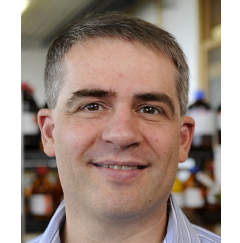
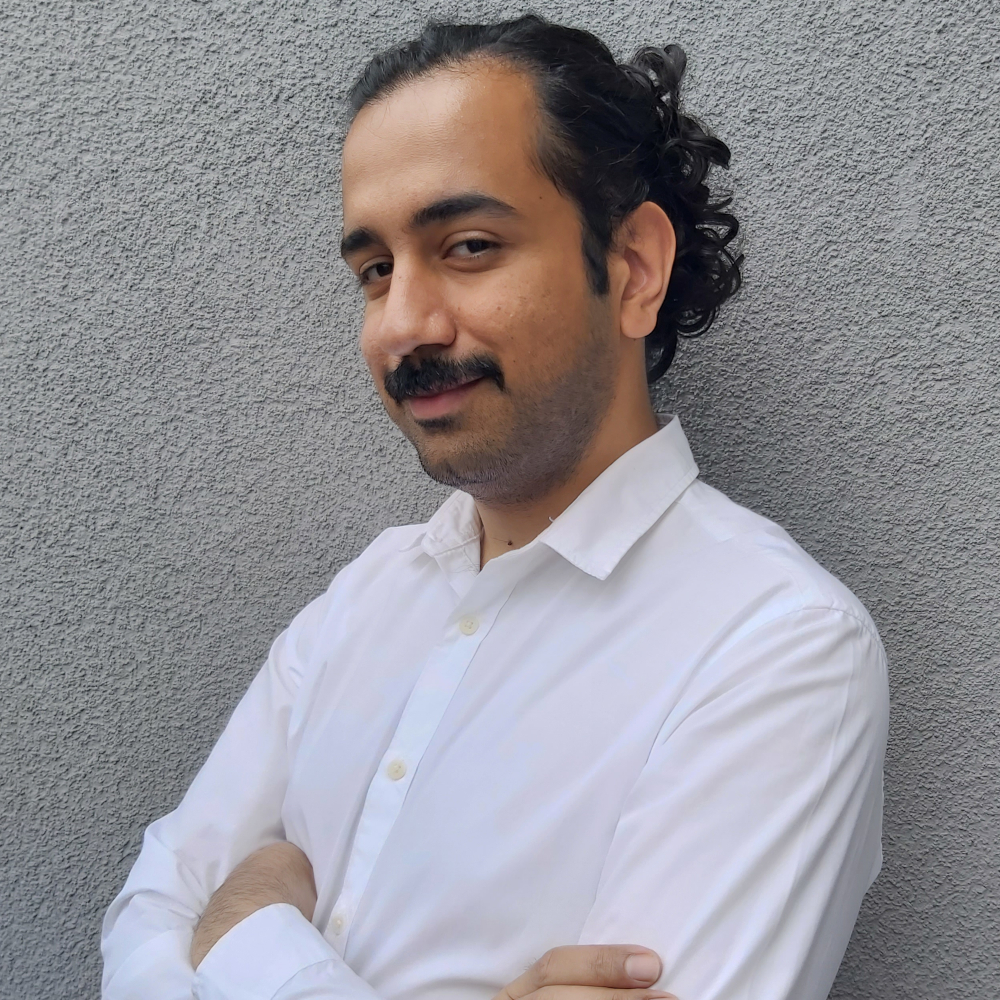
Hai (Helen) Li is a Professor and Clare Boothe Luce Associate Chair at Duke University's Electrical and Computer Engineering department. She was a TUM-IAS Hans Fischer Fellow (2017) hosted by Prof. Ulf Schlichtmann in the Neuromorphic Computing focus group. Education: B.S./M.S. from Tsinghua University, Ph.D. from Purdue University Positions: Qualcomm, Intel, Seagate, Polytechnic Institute of New York University, University of Pittsburgh Her research spans neuromorphic computing systems , machine learning acceleration , emerging memory technologies , and low-power circuits . Publications demonstrate expertise in ReRAM/memristor-based accelerators, sparse neural networks, and processing-in-memory architectures. Key contributions include cross-layer optimization frameworks and robust neuromorphic designs. Her awards include: 9 Best Paper Awards (ASPDAC, ICMLA, ISVLSI, etc.) NSF Career Award DARPA Young Faculty Award IEEE Fellow (2019) ACM Distinguished Member (2017) IEEE TCSDM Outstanding Leadership Award (2021)
Dr. Dirk Lucas serves as the Head of the Computational Fluid Dynamics department at the Helmholtz-Zentrum Dresden-Rossendorf (HZDR). His research focuses on advanced computational methods in fluid dynamics, including turbulence modeling, numerical simulation techniques, and their applications in engineering and aerodynamics. He is affiliated with the Fluid Dynamics Institute at HZDR, a leading research center in Dresden, Germany. His work contributes to advancing computational tools for understanding complex fluid systems. No specific awards, publications, or grants are explicitly listed in the provided text. Contact details include his email at d.lucas@hzdr.de and office location at Bautzner Landstraße 400, 01328 Dresden.
Choong Seon Hong is a Professor at Kyung Hee University's Department of Computer Science and Engineering in Yongin, South Korea. He earned his PhD in Instrumentation Engineering from Keio University, Japan, in 1997. His research focuses on next-generation wireless networks, with emphasis on 6G systems, federated learning, edge computing, and network optimization. Recent collaborative work explores semantic communication, UAV deployment, and multimodal learning frameworks. His publications highlight technical innovations in: Wireless network optimization for terrestrial, aerial, and satellite systems Federated learning architectures with knowledge distillation and prototype transfer Energy-efficient resource allocation in IoT and vehicular networks Security frameworks for EV charging stations and Open RAN systems Current trends show strong collaboration with Zhu Han, Walid Saad, and younger researchers like Apurba Adhikary and Yan Kyaw Tun. The work spans technical solutions for 6G non-terrestrial networks, holographic MIMO systems, and semantic communication frameworks.
Aggelos K. Katsaggelos is a Professor in the Department of Electrical Engineering and Computer Science at Northwestern University's McCormick School of Engineering. His research focuses on biomedical imaging, machine learning, and computer vision applications in healthcare. He has collaborated extensively with interdisciplinary teams, including clinicians and engineers, to develop advanced algorithms for medical diagnosis and image analysis. Key research interests include medical image processing, deep learning for diagnostics, and computational methods in cardiology. His work spans applications such as MRI and ultrasound analysis, automated pathology detection, and multimodal sensing for health monitoring. Recent articles highlight contributions to myocardial scar quantification, lung ultrasound scoring, and AI-driven cough detection. His methodologies often combine domain-specific physics with modern machine learning techniques to solve real-world clinical challenges. Notable collaborations include projects with institutions like the University of Chicago and international teams in astrophysics and cognitive science. His work emphasizes translating algorithmic advancements into practical clinical tools.
Alfonso Emilio Gerevini is a prominent researcher in artificial intelligence with over 30 years of continuous academic contributions. His work spans theoretical foundations of automated planning to practical healthcare applications, with recent publications demonstrating significant impact in both traditional AI domains and emerging interdisciplinary areas. His research interests focus on automated planning systems , temporal reasoning , and multi-agent coordination , with recent expansion into healthcare applications using machine learning techniques. Gerevini has made fundamental contributions to planning algorithms, particularly in width-based search, case-based planning, and privacy-preserving multi-agent planning. His work on PDDL (Planning Domain Definition Language) has been influential in standardizing planning representations. Analysis of his 15 most recent publications reveals a strategic evolution from core planning research toward impactful healthcare applications, particularly during the COVID-19 pandemic. While maintaining his expertise in planning algorithms, he has successfully integrated machine learning techniques to address real-world medical challenges including radiology report analysis, prognosis prediction, and lab test interpretation. His work demonstrates exceptional versatility across both theoretical and applied domains of artificial intelligence. Gerevini maintains a robust collaborative network, primarily with Italian researchers including Ivan Serina, Alessandro Saetti, and Luca Putelli. His publications appear consistently in top-tier AI venues including Artificial Intelligence journal, Journal of Artificial Intelligence Research, and AAAI/ICAPS conferences. The collaborative patterns suggest he leads a significant research group focused on advancing planning systems while applying them to critical real-world problems.
Dr. Antonio Ortiz is a Researcher at the University of Bonn, affiliated with the Life and Medical Sciences Institute (LIMES) and the IRU Mathematics and Life Sciences group. He works under the supervision of Professors Alexander Effland and Jan Hasenauer. His research focuses on Computer Vision in Medical Imaging and Machine Learning applications. He holds a Ph.D. in Electric and Electronics Engineering from Cinvestav, Mexico (2023), a Master's in Computer Science from Cicese, Mexico (2019), and a Bachelor's in Mechatronic Engineering (2017). His research integrates Bayesian methods, deep learning, and optical flow techniques for cardiac MRI segmentation, visual-inertial SLAM systems, and 3D shape measurement. Recent work emphasizes adaptive algorithms for medical imaging and robotics applications. Publications span medical imaging, robotics, and materials science, with a focus on algorithmic innovation and interdisciplinary applications. No scientific awards are explicitly mentioned, but his work demonstrates strong academic contributions. His advising activities and grants are not detailed in the provided text. He collaborates within the Effland Lab and IRT Mathematics and Life Sciences team.
Dr. Olfa Lopez-D’Angelo is a researcher at the Department of Multiscale Simulation of Particulate Systems at Friedrich-Alexander-Universität Erlangen-Nürnberg. Her research focuses on granular rheology, additive manufacturing for space applications, and the behavior of materials under microgravity conditions. She leads the Rheologie granularer Materialien unter Weltraumbedingungen project (2023–2026), funded by the German Ministry for Economic Affairs and Climate Action (BMWK). Her work bridges theoretical physics, experimental engineering, and space technology. Key research interests include granular fluid dynamics, powder-based manufacturing processes in low-gravity environments, and the structural analysis of metamaterials. She has contributed to pioneering studies on acoustically propelled macroparticles and granular piston-probing in microgravity. Her interdisciplinary approach is evident in collaborations with institutions like ESA and DLR, as well as her involvement in projects such as the VIP-DROP2 module for droplet dynamics experiments. Awards: Granular Matter Gordon Research Conference Poster Prize (2022) ELGRA Research Prize (2021) Fly Your Thesis! 2019 (2018) ESA Networking/Partnering Initiative Fellowship (2017) Dr. Lopez-D’Angelo actively disseminates her work through international conferences (e.g., DPG, IAC) and public engagement initiatives, including the podcast Talk That Science . Her research emphasizes practical applications in space exploration, such as in-situ resource utilization and advanced manufacturing systems for extraterrestrial environments.
Andrew T. Duchowski is a Professor at Clemson University, specializing in Eye Tracking Methodology, Human-Computer Interaction, and Computer Graphics. His work spans over two decades with significant contributions to gaze-based interaction systems, foveated rendering, and cognitive load measurement. He authored three editions of the influential textbook Eye Tracking Methodology (Springer, 2003/2007/2017). Duchowski's research integrates eye movement analysis with applications in virtual reality, medical imaging (e.g., colonography viewers), and aviation safety. He actively collaborates with institutions globally and serves on editorial boards for journals like Proceedings of the ACM on Human-Computer Interaction . His recent projects include developing real-time gaze analytics pipelines and exploring entropy-based metrics for visual attention analysis. Publications (selected 15 recent): Focus on advancing gaze interaction in immersive environments, optimizing 3D visualization, and measuring cognitive load through pupillary activity and microsaccades. Key co-authors include Krzysztof Krejtz, Matias Volonte, and Donald House.
Christian Eichhorn is an Assistant Professor in the Department of Computer Science at Technical University of Munich, specializing in Human-Computer Interaction, Virtual Reality, and Augmented Reality applications. His research primarily focuses on developing serious games and immersive technologies for healthcare, education, and older adults. He has established a strong collaborative network, particularly with David A. Plecher and Gudrun Klinker, resulting in numerous publications in top HCI and VR venues. Dr. Eichhorn's research interests center around creating accessible and engaging technology applications. His work demonstrates particular expertise in developing serious games for various educational purposes (language learning, history education), healthcare applications (rehabilitation, dementia care), and technologies specifically designed for older adults. His research combines technical innovation in AR/VR systems with practical applications addressing real-world challenges in healthcare and education. Analysis of his recent publications (2022-2025) reveals a consistent focus on practical applications of immersive technologies. His work spans educational tools for programming and language learning, healthcare applications for rehabilitation and clinical training, and specialized technologies for older adults. The research demonstrates a strong interdisciplinary approach, bridging computer science with healthcare, education, and gerontology. His technical contributions include innovations in AR/VR system design, collaborative environments, and novel interaction techniques. Dr. Eichhorn has been actively involved in organizing workshops and contributing to major conferences in the VR/AR field, including IEEE VR and ISMAR. His collaborative approach is evident in his extensive co-authorship network spanning multiple institutions. His laboratory work focuses on developing practical AR/VR applications, with particular emphasis on creating systems that bridge virtual and physical experiences. Current projects include serious games for health behavior change, rehabilitation assessment tools using wearable sensors, and social VR environments for older adults.
Marc Toussaint is Full Professor leading the Learning & Intelligent Systems Lab at TU Berlin's EECS Faculty. His research integrates machine learning, optimization, and AI reasoning to solve fundamental robotics problems like physical reasoning and human-robot interaction. He holds a physics diploma from University of Cologne and PhD from Ruhr-Universität Bochum. Key research themes include: Task-motion planning integration Reinforcement learning for robotics Physical simulation and control Probabilistic inference methods Recent publications focus on efficient kinodynamic planning, belief space planning under uncertainty, and neural policy learning. He develops open-source robotic tools like the 'robotic python package' used in academic courses worldwide. Toussaint collaborates with Amazon Robotics and MIT CSAIL, and has held positions at Max Planck Institute and University of Stuttgart.
Dr. Artem Odobesko is a Research Fellow in Experimental Physics II at the University of Würzburg, Germany. He holds a PhD (Dr. rer. nat.) in Physics from the Kotel'nikov Institute of Radio-engineering and Electronics of RAS (Russia) and prior degrees from the Moscow Institute of Physics and Technology (B.Sc. 2003, M.Sc. 2005). His research focuses on topological materials, scanning tunneling microscopy (STM), and superconductivity. Key interests include manipulating Dirac points in topological insulators, probing chiral symmetry, and enhancing STM resolution through novel probe designs. He contributes to the Experimental Physics II team under Prof. Matthias Bode, collaborating on projects involving topological domain walls, electronic interactions in 1D systems, and surface engineering. His work spans experimental and theoretical studies of quantum materials, with publications in journals like Nano Letters , Science Advances , and Nature Physics . He has developed advanced STM techniques and explored phenomena such as Yu-Shiba-Rusinov states and anisotropic vortices. Odobesko’s research also addresses strain effects in epitaxial films and surface preparation for superconductors.
Dr.-Ing. Nico Palleit is affiliated with the University of Rostock's Institute of Communications Engineering, part of the Faculty of Computer Science and Electrical Engineering. His research focuses on MIMO (Multiple-Input Multiple-Output) systems, channel estimation, and prediction techniques to enhance spectral efficiency. He holds a PhD titled Channel Prediction in Multi-Antenna Systems (2011) and has contributed to advancements in MIMO channel analysis, including frequency/time prediction and interference management. Research Interests: Nico's work addresses challenges in modern radio transmission systems, emphasizing the development of robust channel estimation strategies. Key areas include MIMO channel modeling, non-line-of-sight (NLOS) positioning, and optimizing transmitter-side channel state information. His research bridges theoretical frameworks with practical implementations in wireless communication systems. Publications Overview: His 15+ publications (2006–2012) span topics like MIMO channel prediction, antenna array design, and interference channel optimization. Recent work emphasizes frequency/time-domain channel prediction and power allocation strategies for maximizing system capacity. These contributions highlight interdisciplinary approaches combining signal processing with electrical engineering principles. Affiliations & Labs: As part of the Radio Communication Research Group, he collaborates on projects within the Institute's advanced wireless communication initiatives. His work supports next-generation radio systems through innovative solutions for MIMO-FDD and OFDM-based architectures.
Börge Göbel is a postdoctoral researcher at the Institute of Physics, Martin Luther University Halle-Wittenberg, within the Quantum Theory of the Solid State group led by Prof. Ingrid Mertig. He is affiliated with the Faculty of Natural Sciences II - Chemistry, Physics and Mathematics and conducts theoretical research in condensed matter physics, focusing on topological spin textures and their applications in spintronics and orbitronics. PhD in Physics (summa cum laude, 2020), Max Planck Institute Halle MSc in Physics (1.1, 2016), Martin Luther University Halle-Wittenberg BSc in Physics (1.2, 2014), Martin Luther University Halle-Wittenberg Abitur (1.0, 2011) His research centers on the interplay between topology and transport in magnetic systems, particularly skyrmions, antiskyrmions, bimerons, and hopfions. He investigates their stability, emergent electrodynamics (e.g., topological Hall effect), and dynamics under current drive, with applications in racetrack memory, neuromorphic computing, and quantum devices. A major focus is on two-dimensional materials and electron gases, where he studies spin- and orbital-to-charge interconversion. He has pioneered work in orbitronics, demonstrating the orbital Hall effect accompanying the quantum Hall effect and topological orbital Hall effects in skyrmion systems. The most recent publications show a strong trend toward the exploration of orbital angular momentum in quantum transport, the stabilization of skyrmions in van der Waals materials, and the development of neuromorphic computing concepts using biskyrmions. His work bridges fundamental theoretical insights with potential technological applications in next-generation electronics. Börge Göbel is funded by the EIC Pathfinder OPEN Grant "Orbital engineering for innovative electronics" and is a co-supervisor in the EU Horizon 2020 project "SPEAR". He has co-supervised 2 PhD, 2 master's, and 4 bachelor's students and teaches quantum mechanics, including online courses with over 30,000 participants. Co-PI, EIC Pathfinder OPEN Grant: "Orbital engineering for innovative electronics" Co-Supervisor, EU Horizon 2020 project "SPEAR" Network Postdoc, EU project "OBELIX" He collaborates extensively with experimental groups worldwide, including those of Prof. Stuart Parkin, Prof. Claudia Felser, Dr. Manuel Bibes, and Prof. Albert Fert, and has presented at major conferences such as MMM, JEMS, Gordon, DPG, and SPICE.
Dr. Norbert Jux is an Adjunct Professor at the Department of Chemistry and Pharmacy, Friedrich-Alexander-University Erlangen-Nürnberg (FAU), associated with Prof. Dr. Hirsch's Chair of Organic Chemistry II. His research focuses on advanced molecular architectures involving nanographenes, porphyrins, and their conjugates for applications in materials science and photophysics. Research Highlights: Specializes in π-extended conjugates, supramolecular complexation, and regiocontrolled synthesis of polycyclic aromatic systems. Recent Work: Explores helical nanographenes, panchromatic absorption materials, and electron transfer mechanisms in hybrid systems. Collaborations: Works with teams in synthetic chemistry, photophysical characterization, and surface science. Email: norbert.jux@fau.de | Lab Website
Iman Nematollahi is a PostDoc in Robot Learning at the University of Freiburg under Prof. Dr. Abhinav Valada, having completed his PhD under Prof. Dr. Wolfram Burgard. He holds a MSc in Embedded Systems from the University of Freiburg and a BSc in Electrical Engineering from Shahid Beheshti University. His research focuses on robot learning, world models, and reinforcement learning, particularly in enabling robots to understand physics through world models and adapt skills in unstructured environments. Education: PostDoc in Robot Learning, University of Freiburg (2025–Present) PhD in Robot Learning, University of Freiburg (2019–2024) MSc in Embedded Systems, University of Freiburg (2015–2018) BSc in Electrical Engineering, Shahid Beheshti University (2010–2015) Research Interests: Robot manipulation, world models, reinforcement learning, computer vision, and self-supervised learning. His work emphasizes intuitive physics understanding, skill generalization, and sample-efficient policy improvement. Key Articles: Recent work includes LUMOS (language-conditioned imitation learning), Bayesian optimization for policy refinement, and 3D video prediction (T3VIP). These contributions bridge theory and real-world robotic applications, emphasizing long-horizon tasks and cross-environment adaptation. Awards & Grants: No explicit awards mentioned. His research has been supported through projects like OML (Organic Machine Learning). Teaching: Taught Deep Learning Lab (2020–2022) and Introduction to Mobile Robotics (2019).