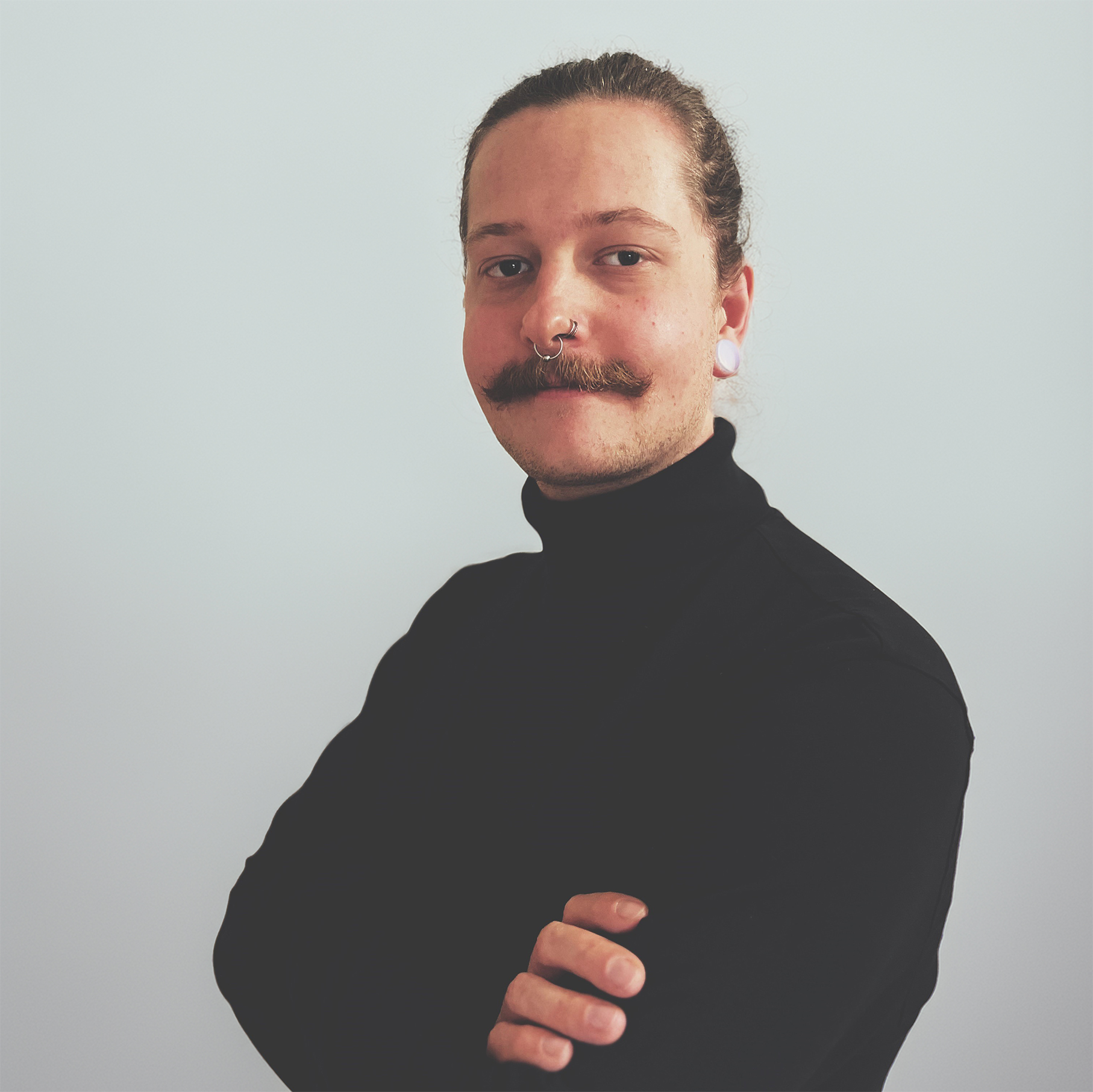
Joni Herttuainen is a Researcher at Aalto University's Department of Computer Science. His work focuses on computational systems and methodologies. Research interests include: Artificial Intelligence Data Structures Algorithms Software Engineering
برای مسیر پژوهشیتان، استاد راهنما، استاد دانشگاه و پژوهشگر مناسب را پیدا کنید و با آنها ارتباط بگیرید.
نمایش ۷۲۱-۷۳۵ از ۱٬۵۸۱ استاد راهنما
اطلاعات پروفایلها از صفحات عمومی دانشگاهها گرفته شده و ممکن است بهروز نباشد.
Joni Herttuainen is a Researcher at Aalto University's Department of Computer Science. His work focuses on computational systems and methodologies. Research interests include: Artificial Intelligence Data Structures Algorithms Software Engineering
پژوهشگر
Lobna Amin is a Doctoral Researcher at Aalto University's Department of Built Environment, specializing in environmental engineering. Her work bridges wastewater treatment technologies, microbial processes, and computational modeling. Research groups: Water and Environmental Engineering Her research interests focus on advanced water treatment systems, including: Environmental engineering for wastewater valorization Activated sludge modeling and process optimization Application of machine learning in environmental monitoring Development of bio-based polymer materials Lobna's publications reveal a consistent focus on wastewater treatment innovations, spanning from vivianite formation analysis to filamentous bulking challenges and biopolymer applications. Her collaborative work appears in journals like Science of the Total Environment and Journal of Water Process Engineering .
Andrea Marchesin is a Postdoctoral Researcher at Aalto University’s Department of Electronics and Nanoengineering. He is affiliated with the Ilkka Tittonen Group, focusing on quantum technologies and electronic engineering. His expertise spans quantum computing, algorithms, optimization, and quantum engineering.
Professor Keijo Nikoskinen is affiliated with the Department of Electronics and Nanoengineering at Aalto University. His work spans two major domains: Electromagnetics and Antenna Engineering , focusing on advanced techniques like MIMO Over-the-Air (OTA) testing, computational electromagnetic modeling (FDTD), and antenna optimization; and University Pedagogy , with contributions to interdisciplinary education and teaching methodologies. He has pioneered plane-wave field synthesis for wireless testing and explored pedagogical innovations such as 360° teaching evaluation and clicker-based assessment tools. Scientific Awards: Teaching award by the ETA faculty of Aalto University (2010) Maxwell Award, England (1998) Research Trends in his publications highlight advancements in Wireless Communication Systems (MIMO testing, synthetic propagation environments), Computational Electromagnetics (FDTD techniques, nonlinear circuit modeling), and Educational Technology (interactive learning tools, pedagogical frameworks). Key subfields include antenna testing, field synthesis, interdisciplinary curriculum design, and hybrid simulation methods.
Dr. Otto Seppälä is a Lecturer at Aalto University's Department of Computer Science. His research focuses on computing education research and educational technology, particularly in programming education, algorithm visualization, and student learning challenges. He actively contributes to curriculum development and pedagogical innovation in computer science education. Research Areas: Computing Systems, Computing Education Research, Educational Technology Academic Affiliation: Aalto University, Department of Computer Science His work explores the intersection of software engineering principles and educational methodologies, emphasizing interactive learning tools and adaptive assessment strategies. Publications highlight his contributions to understanding student struggles with algorithms, detecting prerequisite knowledge gaps, and advancing conference-based educational research. He received the prestigious Aalto High 5 Award for Education for pioneering the university's first MOOC initiative.
پژوهشگر
Minoo Zarsav is a Doctoral Researcher at the Department of Computer Science, Aalto University. Her academic role focuses on research within the broader field of computer science. Department: Department of Computer Science University: Aalto University Research interests span foundational and applied areas of computer science, including Artificial Intelligence , Machine Learning , Data Science , Software Engineering , and Human-Computer Interaction . While specific projects or publications are not detailed in the provided text, her role suggests engagement with cutting-edge computational research.
پژوهشگر
Ahmed Mohey is a Doctoral Researcher at Aalto University's Department of Electronics and Nanoengineering. His research focuses on analog and mixed-signal integrated circuit design with applications in time-domain signal processing, power management, and in-sensor/memory computing. Education: B.Sc. and M.Sc. in Electrical Engineering from Ain Shams University (2012, 2018) His research interests emphasize time-domain signal processing , sensing interfaces , and in-sensor computing for enhanced embedded systems performance. Recent publications highlight advancements in all-digital neural network accelerators and precision in-sensor processing techniques using cutting-edge 22-nm technology. He is affiliated with the Jussi Ryynänen Group , focusing on next-generation integrated circuit solutions for low-power and high-efficiency applications.
استاد مهمان
Teemu Sirkiä is a Visiting Professor at Aalto University's School of Science , Department of Computer Science, since January 2015. He specializes in Computer Science Education , Educational Technology , and Program Visualization . Research Interests include interactive learning content, SQL/Python/Java programming education, adaptive systems, and smart learning tools. His work focuses on creating educational technologies like Jsvee and Kelmu for program animation, improving engagement through interactive textbooks (Acos server), and analyzing programming misconceptions. Scientific Contributions span 15+ years, with recent work (2020-2022) on SQL programming examples, educational datasets, and Python learning systems. His publications address topics like remedial recommendations, interoperability, and eye-tracking studies in programming education. Awards : Aalto High 5 Award for Education (2015) for developing Aalto's first MOOC Collaborations include Research Professor Lauri Malmi, Peter Brusilovsky (adaptive learning), and Kerttu Pollari-Malmi (computing education). He contributes to ACM conferences like ITiCSE, UMAP, and SIGCSE.
پژوهشگر ارشد
Timo Tapio Hyart is a Research Fellow at Aalto University's School of Science, affiliated with the Department of Applied Physics and the Correlated Quantum Materials (CQM) research group. His work spans theoretical and experimental investigations of quantum materials, focusing on non-Hermitian topology, entanglement, and correlated electron systems. Research interests include: Topological properties of quantum materials Superconducting and optomechanical systems Twist-angle effects in graphene heterostructures Quantum transport and dissipation Publications highlight his expertise in non-Hermitian systems, Chern numbers, and quantum spin Hall phenomena, with collaborations across theoretical and experimental domains.
پژوهشگر
Farzeen Munir is a Postdoctoral Researcher at Aalto University's Department of Electrical Engineering and Automation, affiliated with the Mobile Robotics research group. Their work bridges robotics, computer vision, and biomedical signal processing. University: Aalto University Department: Department of Electrical Engineering and Automation Role: Researcher Email: farzeen.munir@aalto.fi Research Interests: Focus on robotics, autonomous driving, and machine learning. Key areas include: Pedestrian intent and trajectory prediction Multimodal sensor fusion (LiDAR, radar, thermal imaging) Deep learning for vehicle control and perception Domain adaptation in vision transformers Biomedical applications of evolutionary-neural systems Publication Trends: Recent work emphasizes context-aware models for autonomous driving, thermal imaging in low-light environments, and hybrid neural architectures combining attention mechanisms with domain adaptation. Collaboration spans AI, robotics, and biomedical engineering. Research Groups: Active in Aalto University's Mobile Robotics group, focusing on perception-action loops and real-world system validation.
Raphael Weidhaas is a Doctoral Researcher in Human-Centered Security at Aalto University's Department of Computer Science (School of Science). As a member of the 'Humans, Security, and Privacy' research group, his work examines how emotions influence cybersecurity behavior with a focus on social engineering. He integrates experimental and artistic approaches to data interaction and storytelling from his teaching experience at Aalto University's School of Arts. His research bridges technical and humanistic perspectives, particularly in understanding emotional responses to cyber threats. Raphael's collaborative work includes the 2025 publication 'Immersive VR-Driven Landscapes: Exploring Climate-Adaptive Ecosystem Design' with Prof. Dr. Pia Fricker, exploring cross-disciplinary applications of virtual reality in environmental design.
استادیار
Verena Distler is an Assistant Professor at Aalto University's Department of Computer Science, where she leads the Research Group Humans, Security and Privacy . Her interdisciplinary work bridges human-computer interaction and cybersecurity, focusing on human-centered defenses against social engineering attacks and behavior change strategies. Current research includes social approaches to cybersecurity, defenses against misinformation, and phishing intervention effectiveness Specializes in qualitative and quantitative social science methods applied to technology interactions Publications demonstrate a strong focus on human factors in cybersecurity appearing in venues like Computers in Human Behavior , CHI , and IEEE Security & Privacy . Key research themes include phishing resistance, cognitive vulnerabilities, and security user interface design. Scientific recognition includes a CHI Honorable Mention Award . Her work addresses critical intersections of technology, human behavior, and organizational security policies. As head of the Research Group Humans, Security and Privacy, she leads projects combining cybersecurity with behavioral science, exploring both technical and psychological dimensions of technology use. Collaborative efforts span multiple disciplines including psychology, computer science, and educational technology.
Dr. Ingemar von Ossowski is a Docent in molecular microbiology at the University of Helsinki's Faculty of Veterinary Medicine and a current grant writer at Aalto University's Research Services. His career spans academia and industry, with a focus on molecular microbiology protein chemistry microbial genomics protein engineering structural biology His research has extensively explored probiotic mechanisms , particularly in Lactobacillus rhamnosus GG and Ligilactobacillus ruminis , analyzing pilus structure , host-microbe interactions , and genomic traits . He has authored 15+ publications on topics including crystallography , gene expression tuning , and enzymatic CO2 conversion . Key article trends highlight his work in protein structure-function relationships microbial adhesion probiotic immunomodulation structural biology of pili synthetic biology tools Dr. von Ossowski has contributed to scientific writing, peer-review, and student supervision, though specific students are not listed here. He holds a PhD from the University of Manitoba and has collaborated with researchers across Finland, Canada, and international institutions.
Jouni Ojala is a Lecturer at the School of Built Environment , Aalto University. His work focuses on Transportation Systems , Urban Planning , and Human-Computer Interaction , particularly in public displays and interactive systems. He is affiliated with the Planning and Transportation research group and has contributed to studies on urban mobility and traffic management. University: Aalto University School: School of Built Environment Role: Lecturer Ojala's research spans interactive systems in public spaces and transportation engineering. His publications include studies on public-screen gaming , interactive wall interfaces , and traffic policy frameworks . He has collaborated with researchers like Giulio Jacucci and Sasu Tarkoma. Recent articles highlight his focus on urban mobility (2016-2013), traffic policy (2009-2006), and interactive systems (2014-2013). Key themes include gamification , multimodal transportation , and smart city interfaces . Contact: jouni.ojala@aalto.fi
مدرس ارشد
Tommi Junttila serves as a Senior University Lecturer in the Department of Computer Science at Aalto University, Finland, where he conducts cutting-edge research at the intersection of formal methods and computational logic. His academic profile demonstrates sustained contributions to theoretical computer science with practical applications in system verification and blockchain technology. His research program centers on advancing formal verification techniques, with core expertise in: Symmetry reduction algorithms for state space explosion SAT/SMT solving with specialized parity and XOR reasoning Bounded model checking of timed and asynchronous systems Blockchain protocol verification (notably DeFi lending pools) Canonical labeling tools for graph automorphism detection Recent work shows increasing focus on decentralized finance applications while maintaining foundational contributions to solver technology. Analysis of his publication trajectory (2011-2022) reveals consistent innovation in SAT solving methodologies, with symmetry reduction and parity reasoning forming persistent research threads. His 2022 work on DeFi lending pools represents a strategic expansion into blockchain verification, leveraging established formal methods expertise for emerging financial technologies. Tool development (bliss, PySMT) demonstrates commitment to practical research impact. No scientific awards were documented in the source materials. Similarly, no information regarding student supervision, grant funding, or laboratory affiliations was present in the provided text. His independent tool development (including bliss for graph canonical labeling and PySMT for SMT solver interfaces) indicates significant technical leadership within the formal methods community.
نمایش نتایج تا ۷۵۰ مورد اول. برای یافتن نتایج دقیقتر، جستجوی خود را با فیلترها محدود کنید.