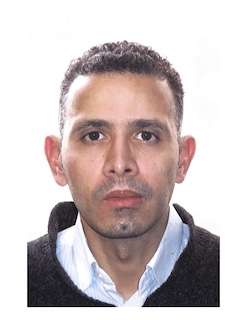
Dr. Alvo Aabloo is a Professor of Polymeric Materials at the Institute of Technology , part of the Faculty of Science and Technology at the University of Tartu . His 30-year academic career spans roles as a founder/member of robotics organizations and sustainable engineering initiatives. Education : Diploma in Physics (1989), PhD in Solid State Physics (1994) Research Focus : Specializing in electroactive polymers , polymer electrolytes , and their robotics applications , Aabloo leads computational simulations of polymer materials. His work bridges materials science with automation engineering and telecommunications . Awards : 2015: Estonian Academy of Science Engineering Award 2014: Knighted with Order of the White Star Leadership Roles : Founder of Solarcar Estonia (2020–2022) Initiator of Estonia's School Robotics Program Scientific committee member of EuroEAP network Coordinator for COST Actions in nanocomposites & artificial muscles
Triinu Visnapuu is an Associate Professor in Microbiology at the University of Tartu's Institute of Molecular and Cell Biology, Faculty of Science and Technology. Her career at this institution includes roles as Research Fellow (2012-2018), Microbial Glycobiotechnology Researcher (2018-2020), and Associate Professor (2020-present), with fractional appointments indicating part-time status during transitional periods. She completed a postdoc at the Technical University of Denmark (2015-2018). Education includes: PhD in Genetics (University of Tartu, 2012) MSc in Gene Technology (University of Tartu, 2007) BSc in Gene Technology (University of Tartu, 2005) Her research integrates glycobiology, enzymology, and biotechnology, focusing on microbial enzymes (levansucrases, endo-levanases) for functional food ingredients and prebiotic synthesis. Work spans enzyme characterization, heterologous expression in bacterial/yeast systems, fructan applications, and biopolymer development. Current investigations explore biocontrol agents and enzyme engineering for sustainable technologies. Research output demonstrates strong focus on carbohydrate-active enzymes, with recurring themes in fructan applications, enzyme structure-function relationships, and microbial biotechnology. Publications highlight innovative approaches to biocatalysis, biopolymer synthesis, and enzyme discovery from unconventional microbial sources. Honors include: University of Tartu Badge of Distinction (2021) Best Paper Award - International Journal of Molecular Sciences (2020) ASM Young Ambassador Project Grant (2020) Multiple travel awards (FEMS, ASM) Poster prizes at international conferences Supervised 4 Master's students in microbiology and glycobiotechnology. Secured funding as PI for projects including: Enzymatic production of novel prebiotics (PUT1050) Scale-up of levan production (PLTMRARENG13) Antiviral carbohydrate applications (COVSG7) Current participation in PRG1540 project on lytic polysaccharide monooxygenases. Leads microbiology courses (Microbiology I/II, Food Microbiology) and heads the Employees Professional Review Board. Member of FEMS Grant Committee (2018-2021), ASM Young Ambassador to Estonia (2018-2021), and participant in COST Actions CA18229 (Yeast4Bio) and CA18132 (GLYCONanoPROBES).
Riina Aav is a Tenured Full Professor and Research Leader of the CoE in Circular Economy at Tallinn University of Technology (TalTech), School of Science. She holds a Ph.D. in Organic Chemistry from TalTech (2005) and has been a faculty member since 2007. Her research focuses on asymmetric induction, supramolecular chemistry, and NMR methods in organic chemistry, with emphasis on chiral hemicucurbiturils and mechanochemical synthesis. She leads over 15 active projects, including the CoE in Circular Economy for Strategic Mineral and Carbon Resources (€7M funding). Aav has authored 155+ publications and received numerous awards, including Estonia's Order of the White Star (2024) and TalTech's Researcher of the Year (2024). She teaches at all academic levels and serves on editorial and advisory boards for journals such as Supramolecular Chemistry and APL Materials . Education: Ph.D. in Natural and Exact Sciences (2005), M.Sc. in Natural Sciences (1998), Engineer in Food Technology (1996), all from TalTech. Research: Specializes in chiral molecular containers, mechanochemistry, and green synthesis. Key areas include supramolecular sensors, asymmetric catalysis, and NMR applications. Awards: Over 15 accolades, including national and institutional recognitions for research and teaching excellence. Administration: Vice-Dean for R&D (2020–present), CoE leader, and member of EU COST actions on mechanochemistry. Her work bridges fundamental and applied chemistry, with industrial patents on chimeric hemicucurbiturils and mechanochemical processes. She has supervised 1 PhD student and actively participates in international conferences and grant panels.
Ravi Kashyap is an Associate Professor at the Estonian Business School (since 2021). Previously, he held academic roles including Visiting Professor at Singapore University of Social Sciences (2020–2021) and Assistant Professor at SolBridge International School of Business (2017–2020). Before academia, he worked in senior roles such as CEO and Head of Quantitative Research at institutions like Goldman Sachs, Morgan Stanley, and Citigroup. His expertise spans finance, artificial intelligence, and blockchain. Education: PhD in Finance, City University of Hong Kong (2020) MBA, Leonard N. Stern School of Business, New York University (2009) Bachelor of Technology in Computer Science and Engineering, National Institute of Technology Calicut (1999) Research Interests: Artificial Intelligence and Machine Learning applications in finance Risk management and portfolio optimization Blockchain technology and decentralized finance Economics of knowledge and uncertainty Evolutionary behavioral models and cognitive adaptation Recent Article Trends: Focus on integrating blockchain protocols with wealth management, dynamic trading cost analysis, and interdisciplinary applications of machine learning in finance and economics. Recent work addresses practical challenges in decentralized finance (DeFi) and the theoretical underpinnings of market microstructure. Grants & Industry Collaboration: Advises on AI incubation and collaborates with blockchain firms to develop methodologies for human collaboration systems. Former industry experience informs his research on financial markets and quantitative strategies.
Leonid Dolgov is an Associate Professor in Spectroscopy and Sensorics at the Institute of Physics, Faculty of Science and Technology, University of Tartu. He has held this position since February 2024, working at 70% FTE. Previously, he served as an Associate Professor and Senior Research Fellow at the same institution since 2016. His academic journey began with a Doctor's Degree in 2007 from the Institute of Physics, National Academy of Sciences, Kyiv, Ukraine. His educational background includes postgraduate studies at the Institute of Physics, National Academy of Sciences (Kyiv, Ukraine) from 2001-2004, culminating in a PhD in 2007. He earned his Diploma in Physics and Mathematics from Chernihiv State University (Chernihiv, Ukraine) between 1993-1998. Dolgov's research interests span Physics, Optics, Spectroscopy, Sensorics, Nanomaterials, Luminescence, Plasmonics, and Quantum Computing . His work focuses on experimental physics of liquid crystals and polymers, with particular emphasis on spectroscopic studies of rare earth ions in various crystal structures, plasmonic enhancement of luminescence, and applications in quantum computing and biomedical imaging. His publication record includes 104 publications, with recent work focusing on laser spectroscopy of rare earth doped crystals, plasmon-enhanced luminescence, and applications in quantum information processing and biomedical engineering. His research demonstrates strong interdisciplinary connections between fundamental physics and practical applications. Among his scientific recognitions, Dolgov received an Appreciation from the Estonian Ministry of Education in 2012 for his supervision of Master student Ardi Loot, whose thesis 'Characterizing surface plasmons and thin gold film by Kretschmann configuration' won the first National Estonian award. Dolgov has supervised PhD student Laurits Puust, whose thesis 'Surface effects on impurity fluorescence in oxide nanomaterials for applications in sensing and phosphors' was in progress as of January 2025. He has also supervised Master's student Ardi Loot to completion. His research has been supported by multiple projects, including the current EU-funded project 'Antimicrobial surface coatings sustainability and functionality in real-life usage' (2024-2027). His work is conducted within the Institute of Physics at the University of Tartu, where he collaborates with researchers across disciplines to advance understanding of optical materials and their applications.
Vitali Retšnoi is an Associate Professor at the Centre for Sciences, TTK University of Applied Sciences , with a career spanning over 15 years. His academic journey includes a Doctorate (2012) and Master’s (2003) from the University of Tartu, supervised by Maido Rahula. Education : PhD (Mathematics, University of Tartu, 2012); MSc (Mathematics, University of Tartu, 2003) Career : Lecturer (2010–2013), Associate Professor (2013–2020, 2020–present) at TTK University of Applied Sciences His research bridges pure mathematics and educational innovation, with recent publications focusing on hybrid learning models and generative AI in education. Earlier work includes Lie group representations, tensor fields, and commutative diagrams. He has contributed to environmental science via studies on heavy metal impacts on wastewater treatment. Key Trends in Recent Publications : Generative AI in higher education HyFlex and blended learning environments Self-regulation and academic performance Mathematics assessment and statistical methods Labor market adaptation in vocational training While no specific awards are listed, his collaborative research and interdisciplinary approach highlight his role in advancing both mathematical theory and educational practice. He has supervised no listed students but remains active in co-authoring studies with educational institutions across Europe.
Fatemeh Rastgar is a Researcher affiliated with the Intelligent Materials and Systems Lab at the University of Tartu. Her work focuses on optimization algorithms and robotics, particularly in trajectory planning and real-time systems. She completed her PhD under Prof. Alvo Aabloo and Arun Kumar Singh, researching topics like crowd navigation, GPU-accelerated optimization, and distributed control systems. Her research emphasizes leveraging convex optimization techniques and parallel computing (e.g., GPU acceleration) to address challenges in autonomous navigation, multi-agent coordination, and embedded systems. Key areas of interest include real-time trajectory optimization, motion planning, and robust filtering for sensor networks. Recent work highlights include developing the CrowdSurfer framework for dense crowd navigation and the PRIEST algorithm for projection-guided autonomous navigation. Her publications span robotics journals and conferences, with a focus on practical implementations for both ground and aerial vehicles. Dr. Rastgar’s contributions bridge theoretical optimization with applied robotics, addressing computational efficiency and reliability in dynamic environments. She collaborates closely with the Intelligent Materials and Systems Lab to advance interdisciplinary research in smart systems and autonomous technologies.
Ahmed Sabir is a postdoctoral researcher at the Institute of Computer Science , University of Tartu , focusing on AI Ethics (biases, fairness, and explainability in Large Language Models). He earned his Ph.D. in Computer Science from Universitat Politècnica de Catalunya (BarcelonaTech) in 2020 and an MSc from Kanagawa Institute of Technology under the Masuda AI lab. Current Research : Biases in LLMs, Explainable AI, Multimodal Fact-Checking Past Work : Gesture recognition, OCR correction via visual semantics, Image captioning Research Interests span Natural Language Processing , Computer Vision , and their intersection in Vision-Language Models and AI Ethics . His work emphasizes Context-aware multimodal learning Bias measurement and mitigation Efficient post-processing techniques Scientific Contributions include 15+ peer-reviewed publications at venues like ACL, EMNLP, CVPRW, and COLING, with datasets and re-ranking frameworks for vision-language tasks. Notable achievements: Driven advancements in semantic relatedness for OCR correction Developed visual grounding techniques for captioning Created benchmark datasets for text spotting Explored gender bias in genderless languages Technical Expertise includes Measurement electronics for industrial tools LaTeX thesis template development Participated in 48-hour Mobility Hackathon (2017)
Harri Lensen is a Lecturer at the Study Centre for Computer Systems within the Department of Computer Systems at Tallinn University of Technology. He is based at Akadeemia tee 15A, Room ICT-508 in Tallinn, Estonia. His academic affiliation focuses on computer systems education and related technical disciplines. While specific research interests are not detailed in the provided text, his departmental affiliation suggests expertise in areas such as software engineering, network security, and system architecture. No awards, grants, or publications are explicitly mentioned in the available information. Contact him via email for further inquiries.
Amirouche Moktefi is a Senior Lecturer at the Ragnar Nurkse Department of Innovation and Governance, Tallinn University of Technology. His research focuses on the history of logic, logic diagrams, and the contributions of historical figures like Lewis Carroll and John Venn. He explores diagrammatic reasoning, formal logic systems, and the intersection of mathematics with philosophical thought. His work spans academic publications analyzing historical logic developments, such as Euler and Venn diagrams, and the evolution of symbolic logic. He also engages with interdisciplinary topics like ethics education and the social dimensions of logic. Notable contributions include studies on Carroll’s logical innovations and the historical context of mathematical logic in France. His articles reflect a deep engagement with both historical and methodological aspects of logic, emphasizing visual tools and their role in reasoning. He frequently publishes in journals and conference proceedings, contributing to debates in the philosophy and history of logic.
Andres Annuk serves as a Professor in Energy Supply at the Estonian University of Life Sciences , within the Institute of Forestry and Engineering's Chair of Energy Application Engineering. His research extensively explores renewable energy integration, sustainable construction, and energy system optimization. Research interests focus on renewable energy systems (wind-solar hybrids, geothermal), energy storage technologies (battery-hydrogen solutions, phase-change materials), and data-driven approaches for energy management (machine learning for forecasting, optimization algorithms). Applications span residential microgrids, building efficiency, and waste-to-energy conversion. Recent publications (2024–2025) demonstrate strong emphasis on: 1) Machine learning applications in energy infrastructure (soil stress prediction, solar data imputation), 2) Hybrid renewable systems (wind-hydrogen microgrids, geothermal co-generation), and 3) Sustainable construction (thermal storage materials, life-cycle assessment). Technical methodologies frequently involve finite element analysis, optimization algorithms, and stochastic modeling.
Ottar Tamm is an Assistant Professor of Hydroinformatics (tenure-track) at the Chair of Rural Building and Water Management , part of the Institute of Forestry and Engineering at the Estonian University of Life Sciences in Tartu, Estonia. His research integrates hydrology, climate science, and sustainable engineering, with a focus on cold-climate applications. Research Focus Dr. Tamm specializes in: Stormwater management systems and urban flood risk mitigation Climate change adaptation strategies for water infrastructure Optimization of low-impact development (LID) solutions Hydropower potential modeling using geospatial tools Methane emission controls in landfill environments His work frequently employs computational models like SWMM and SWAT to address hydrological challenges in Nordic regions. Publication Trends Recent articles (2018-2025) demonstrate: Strong emphasis on climate change impacts on water systems Development of practical tools for stormwater management optimization Interdisciplinary approaches combining environmental engineering, geoinformatics, and climate science Field validation of sustainable technologies in cold climates
James Sunney Quaicoe is a Research Fellow at the School of Digital Technologies, Tallinn University, specializing in digital transformation, equity in education, and ICT integration in schools. His work focuses on social technical transitions, digital learning ecosystems, and lifelong learning. Teacher Education and ICT use in schools Digital Divide/Equity and Inclusion Media, Digital Literacy, and Lifelong Learning Intercultural Competence Academically, he holds a doctorate in Information Society Technology with a focus on equity in digital innovations, alongside multiple Master’s degrees in Estonian Studies, ICT in Education, and Educational Administration. His career spans teaching, lecturing, and educational administration in Ghana and international collaborations. His recent research explores voice-controlled workplace learning systems, hybrid course design, and MOOC engagement indicators. Publications highlight challenges in digital transformation across Ghanaian basic schools, algorithmic thinking through games, and the impact of teacher digital literacy on educational equity.
Dr. Koit Mauring is an Associate Professor at the Institute of Physics within the Faculty of Science and Technology at the University of Tartu, where he has maintained academic appointments since 1974. His career includes a Fulbright Scholarship at Stanford University (2000-2001) and extensive research in optical physics and biophysics. Education: PhD in Physics (Candidate of phys.math.), Estonian Academy of Sciences (1982) Higher Education in Physics, University of Tartu (1969-1974) Research Focus: Dr. Mauring's work bridges optical metrology and biomedical applications, specializing in: Optical sensor development for chemical detection Biophysical studies of fluorescent proteins Cataract diagnostics through light scattering analysis Advanced instrumentation for precision measurements Publication Trends: His 58 publications demonstrate sustained focus on optical measurement techniques, with recent emphasis on medical diagnostic devices and fluorescent protein dynamics. Work frequently appears in applied optics and biophysics journals. Awards & Honors: Estonian American Innovation Award Runner-up (2011) Fulbright Scholarship (2000) USSR Academy of Sciences Prize (1984) Projects & Leadership: Principal Investigator for cataract diagnostic device development and Estonian team leader for the CRDF-ETF collaborative grant on controlled molecular dynamics of fluorescent biopolymers. Holds a patent for quantitative cataract diagnostics apparatus. Serves on the IUPAP Commission for Metrology since 2005.
Gert Tamberg is a Senior Lecturer at Tallinn University of Technology, School of Science, Department of Cybernetics, where he has been employed since September 2019. Previously, he served as a Senior Research Fellow (2017-2019) and held various academic positions including Chair Holder of the Chair of Mathematical Analysis (2012-2016) within the Faculty of Science at Tallinn University of Technology. His academic career spans nearly two decades at this institution, demonstrating deep commitment to mathematical research and education in Estonia. Tamberg earned his PhD in Natural and Exact Sciences from Tallinn University of Technology in 2004, with a dissertation titled "On sampling operators defined by Rogosinski, Hann and Blackman windows," supervised by Andi Kivinukk. He previously obtained a Research Master's Degree from the same institution in 2000, with thesis "Approximation by generalized and by the Rogosinski-type sampling series." His educational background includes doctor's studies (2000-2004), master's studies (1996-2000), and graduate studies (1991-1996) in technical physics at Tallinn University of Technology. Dr. Tamberg's research focuses primarily on sampling theory, Fourier analysis, and functional analysis. His work bridges pure mathematics with practical applications in signal processing, image analysis, and biomedical engineering. He has made significant contributions to understanding sampling operators, particularly those involving window functions like Rogosinski, Hann, and Blackman windows. His research has evolved to include applications in wireless sensor networks and medical signal processing, demonstrating the interdisciplinary nature of modern mathematical research. Tamberg's publication record shows a clear progression from theoretical mathematics to applied research. His early work focused on pure sampling theory and approximation methods, while more recent publications demonstrate applications in biomedical engineering (particularly impedance cardiography) and wireless sensor networks. This trajectory reflects both the versatility of sampling theory and Tamberg's ability to apply mathematical concepts to solve real-world engineering problems. His work spans multiple disciplines including mathematics, electrical engineering, computer science, and biomedical engineering. Among his honors and awards, Tamberg received the II Prize in the Estonian National Contest for Young Scientists at university level in 2004 and the III Prize in the same competition in 2000, recognizing his early contributions to mathematical research. As an academic supervisor, Tamberg has guided multiple students to completion of their degrees, including Olga Orlova (Master's), Olga Graf (Master's), and Faisal Ahmed (PhD). His administrative roles are extensive, including serving as Vice President of the Estonian Mathematical Society (2022-present), IEEE SP/CAS/SSC Joint Societies Chapter Chair (2021-present), and coordinator of the Estonian Doctoral School in Mathematics and Statistics. He has also been involved in numerous research projects, with principal investigator roles in projects like "Weighted means" and "Functional transformations." Tamberg is an active participant in the international mathematical community, serving as a guest editor for the "Applied and Numerical Harmonic Analysis" series and "Sampling Theory in Signal and Image Processing." He has been instrumental in organizing major conferences including the 12th International Conference on Sampling Theory and Applications (SampTA2017) and the 17th International Conference on Mathematical Modelling and Analysis (MMA2012), demonstrating leadership in his field.